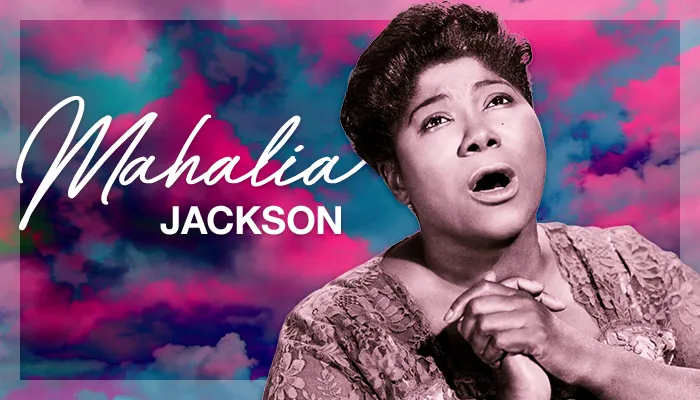
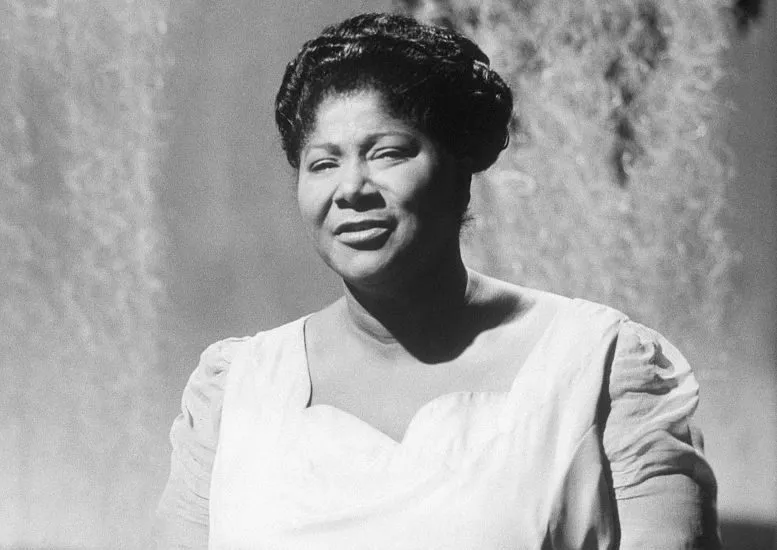
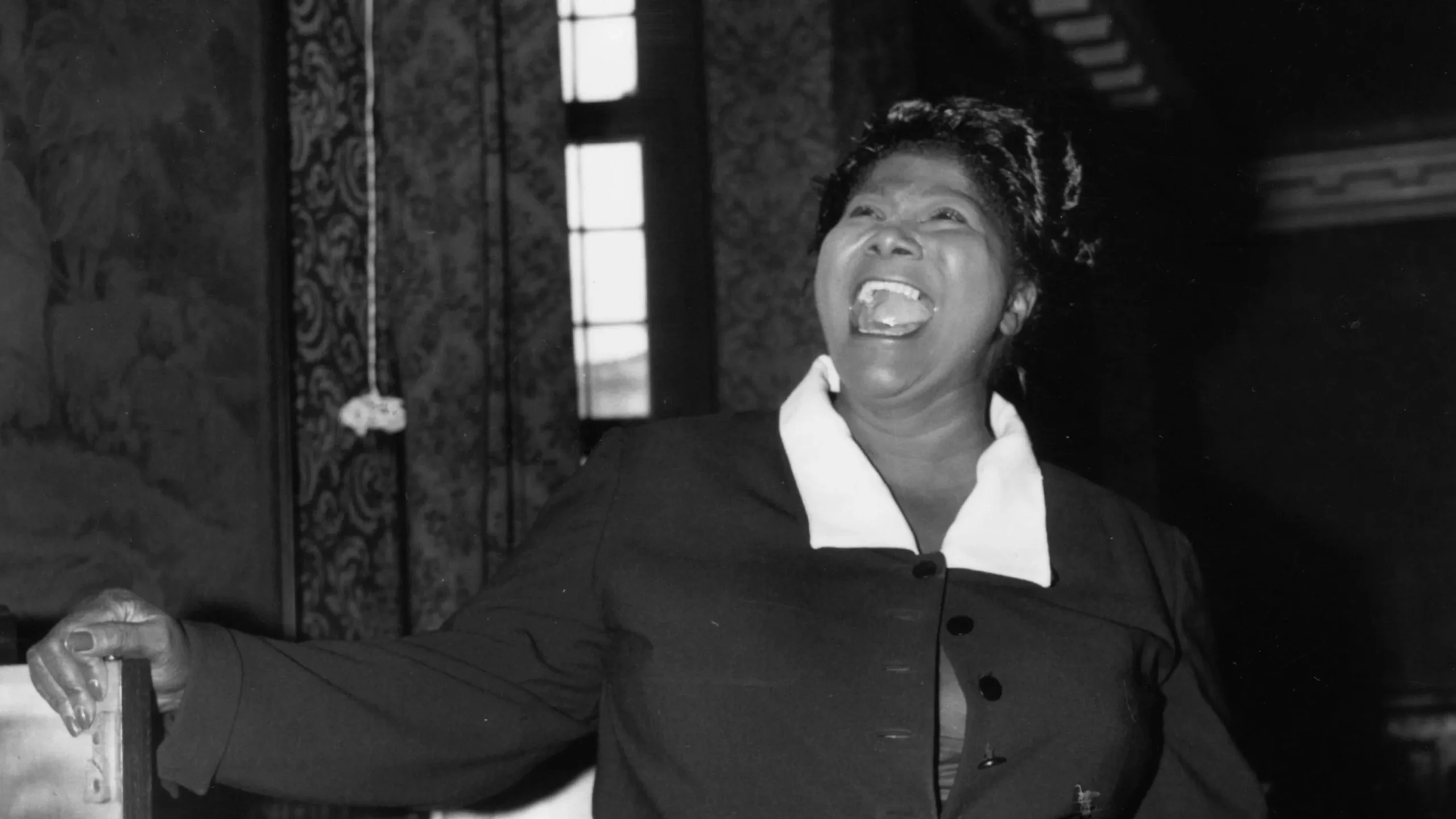
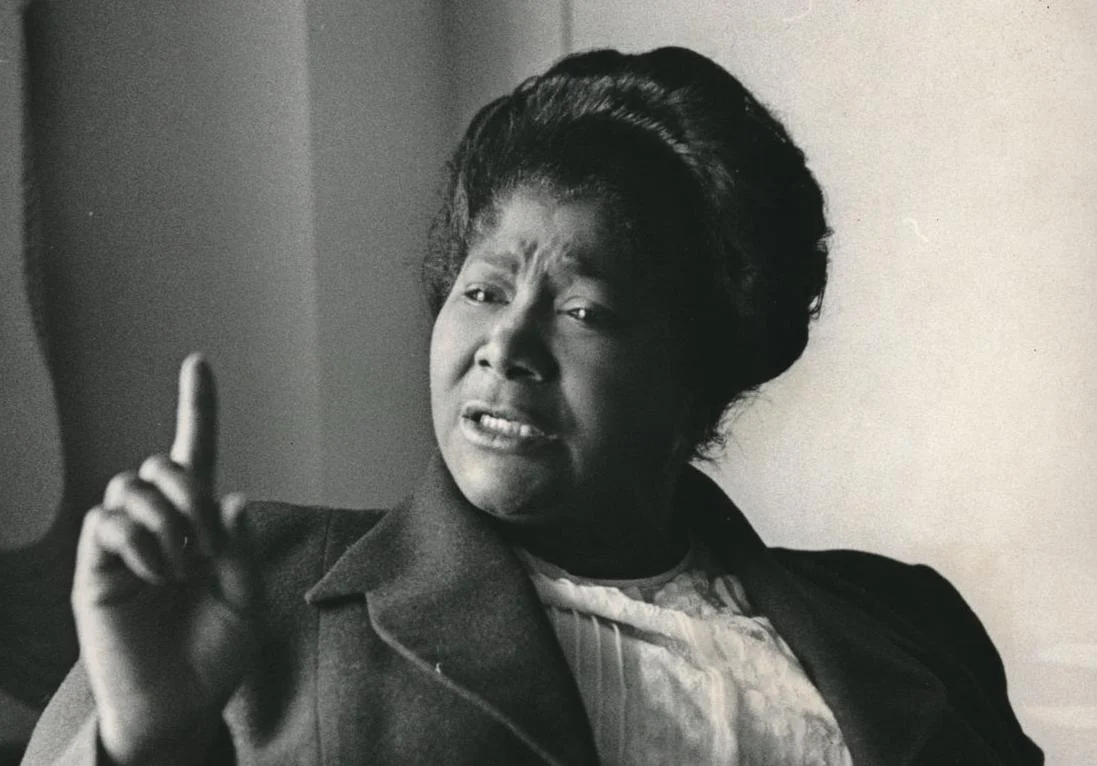
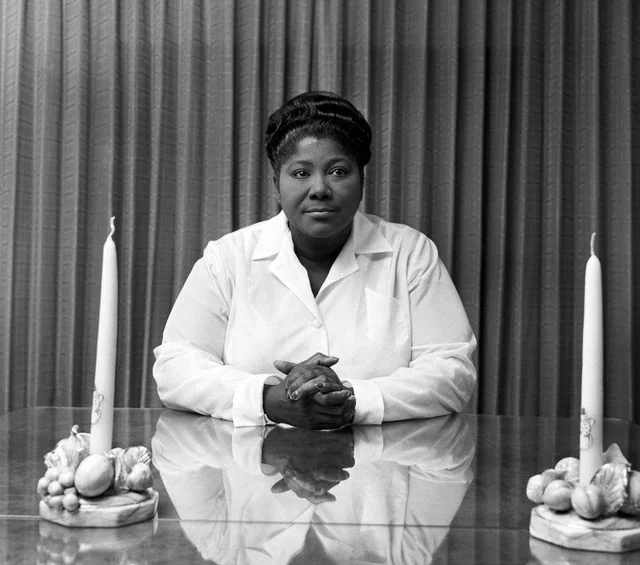
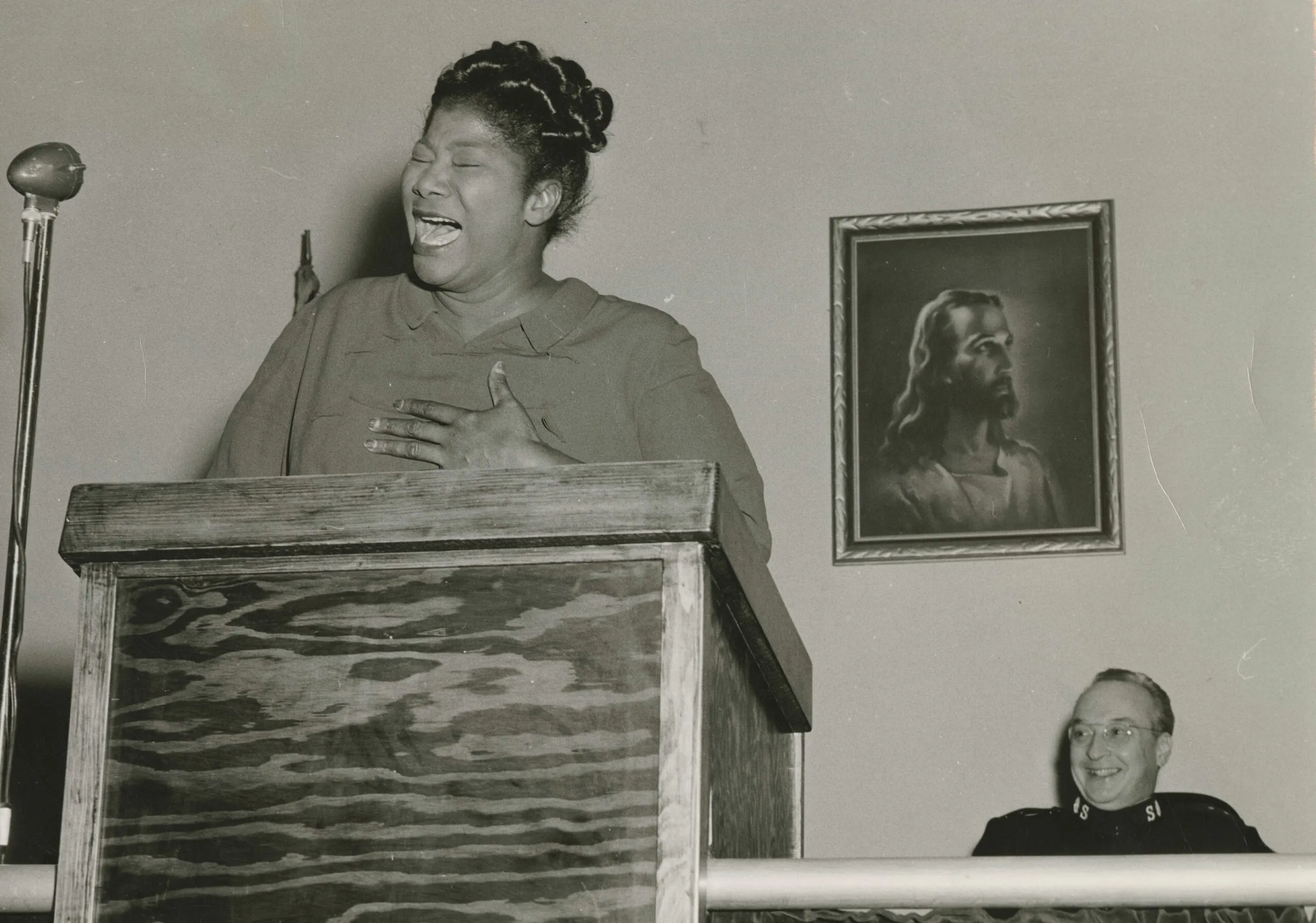
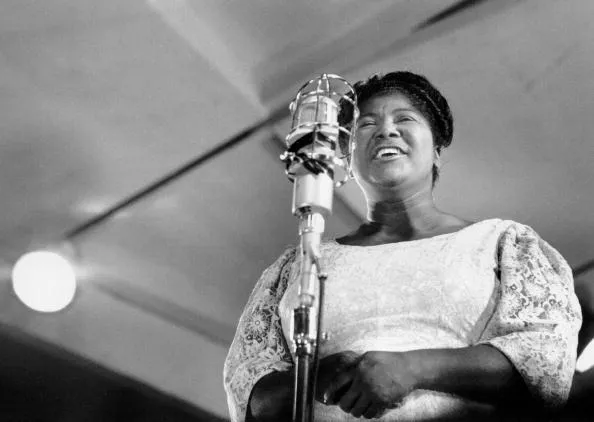
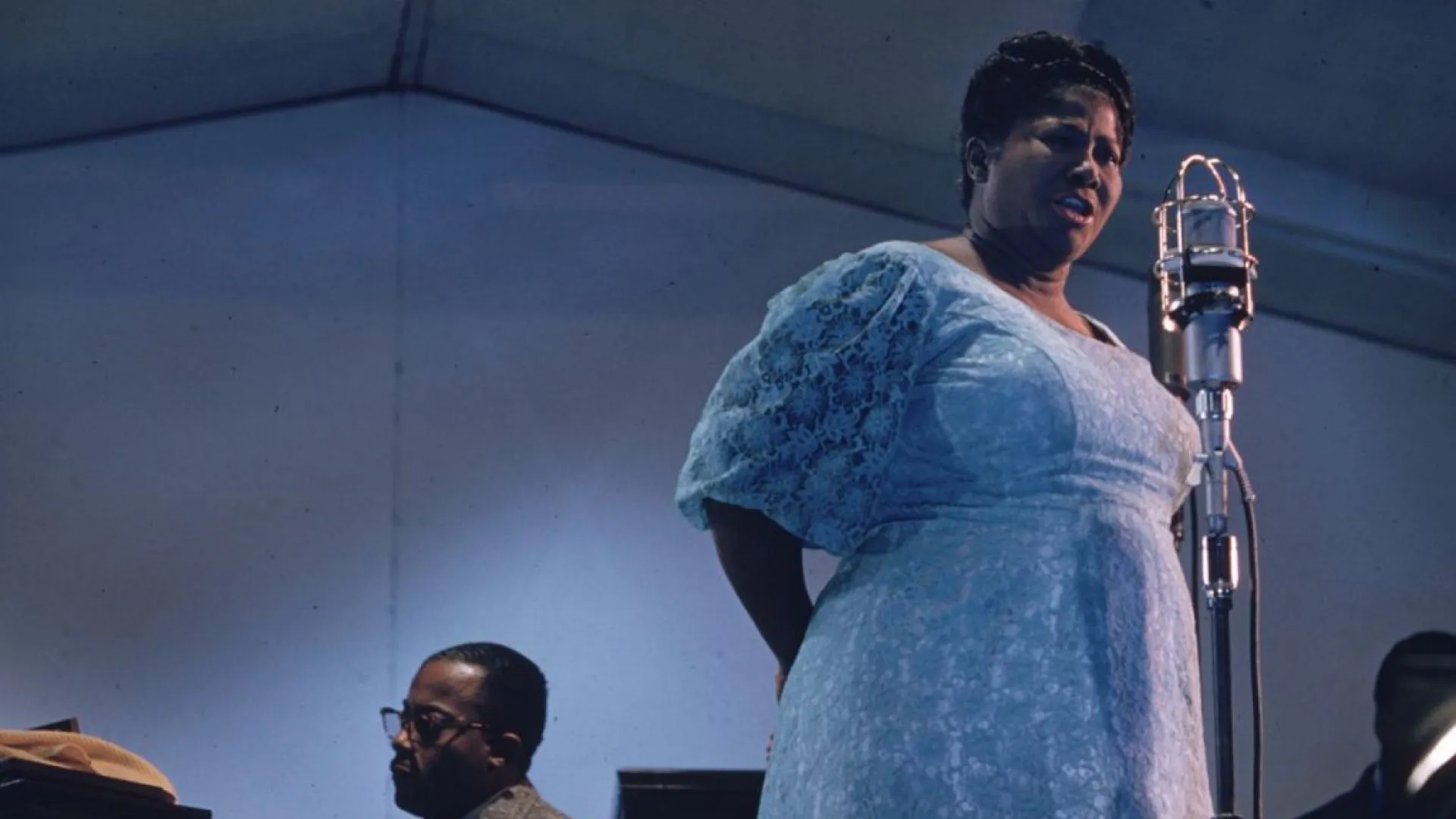
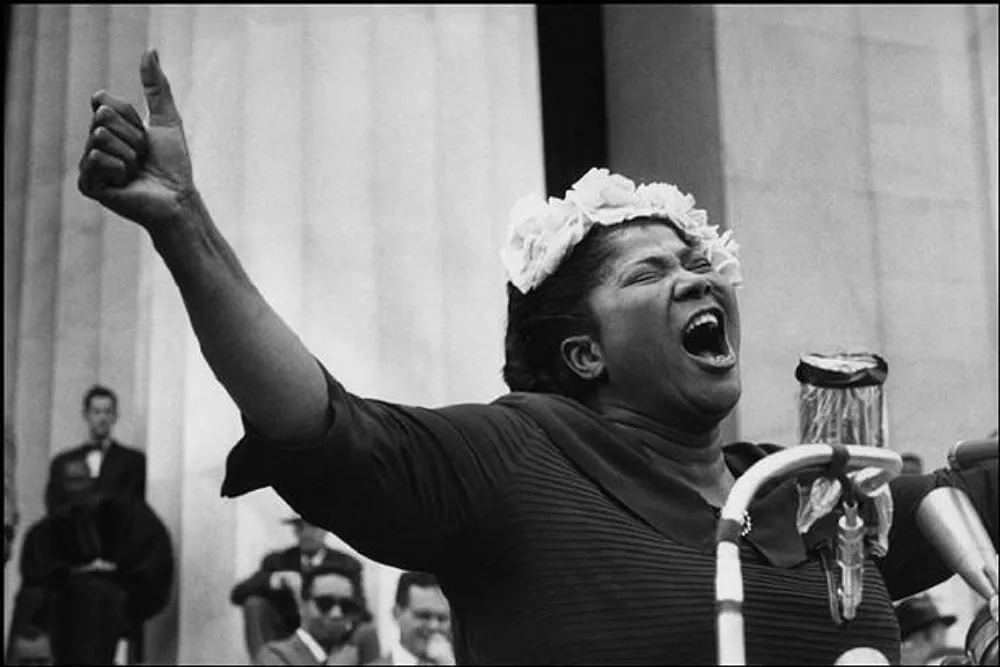
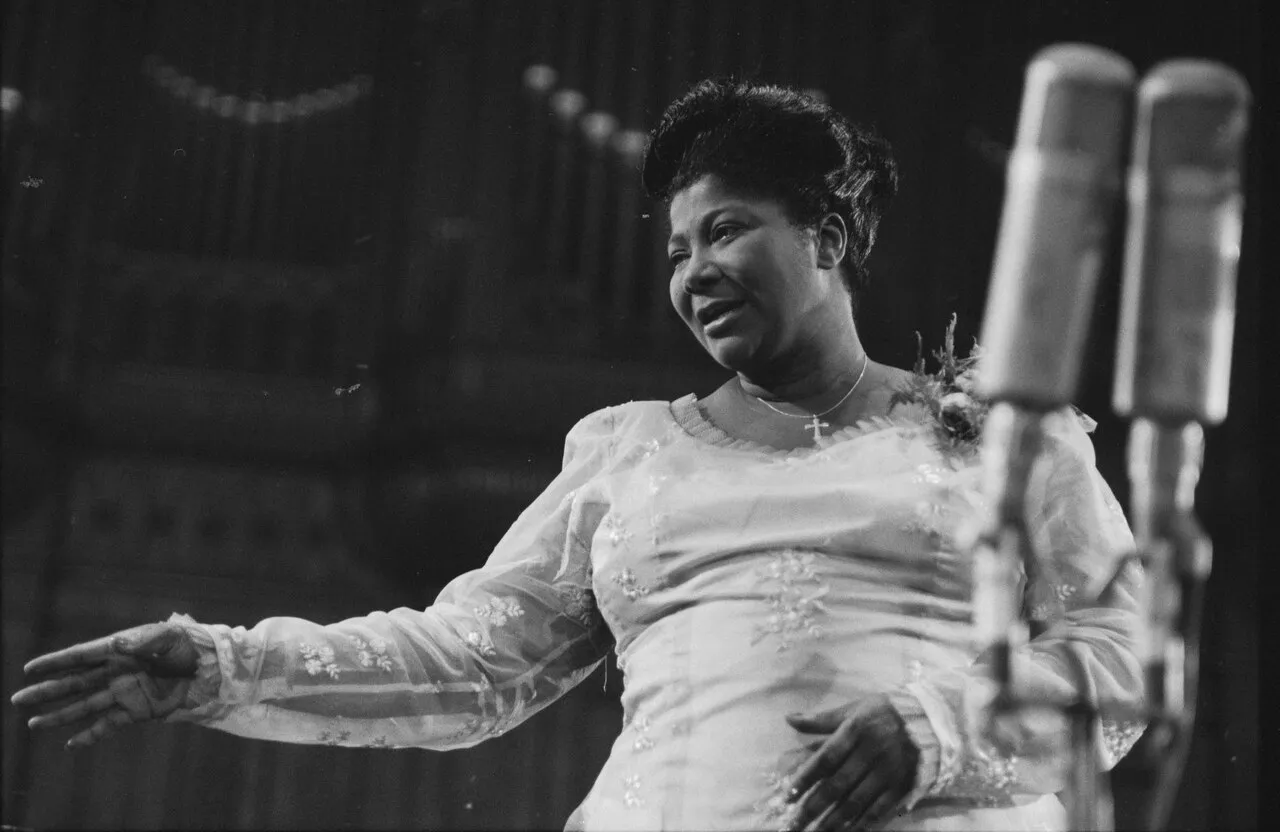
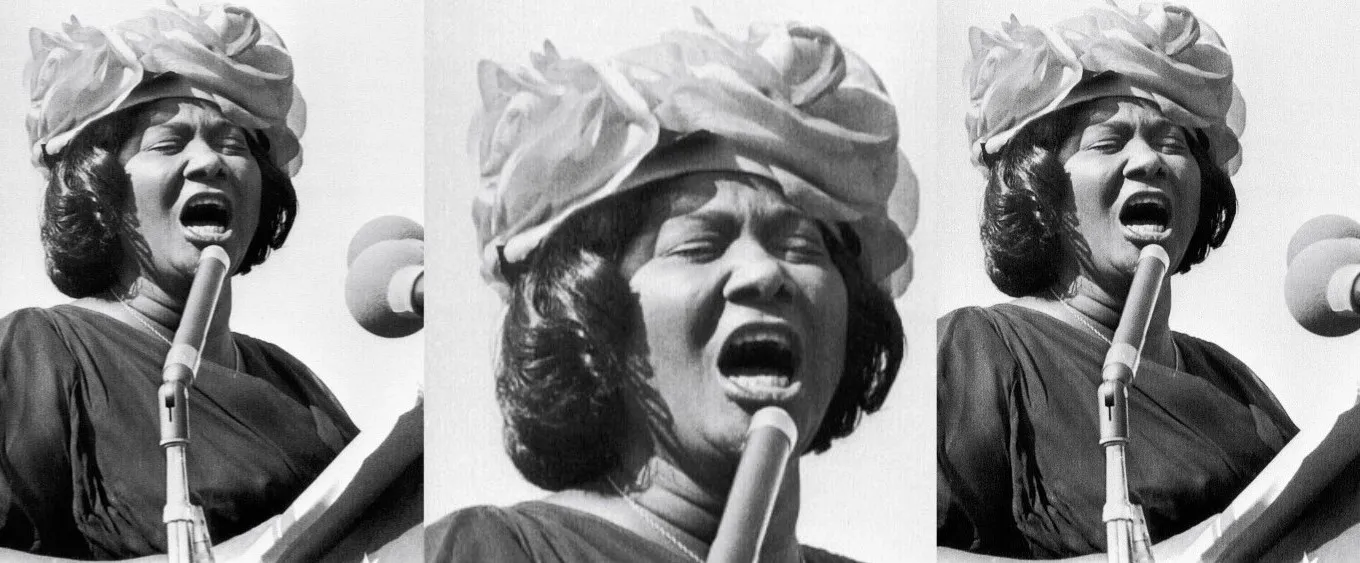
Mahalia Jackson is viewed by many as the pinnacle of gospel music. She is widely considered one of the most influential vocalists of the 20th century. She was born in New Orleans, LA, on October 26, 1911 to Charity Clark and Johnny Jackson, a stevedore and weekend barber. Clark and Jackson were unmarried, a common arrangement among Black women at the time. He lived elsewhere, never joining Charity as a parent. Both sets of Mahalia's grandparents were born into slavery. The Clarks were devout Baptists attending nearby Plymouth Rock Baptist Church. Nicknamed “Halie”, Jackson grew up in the Black Pearl section of the Carrollton neighborhood of Uptown New Orleans. Her childhood home was a tiny shotgun shack between the railroad tracks and the levee of the Mississippi River, home not only to little "Halie," and her mother and brother, but to assorted aunts and cousins, too. In total, thirteen people and a dog shared that home.
When she was born Halie suffered from genu varum, or “bowed legs.” The doctors wanted to perform surgery by breaking Halie’s legs, but one of the resident aunts opposed it. So Halie’s mother would rub her legs down with greasy dishwater. The condition never stopped young Halie from performing her dance steps for the White woman her mother and Aunt Bell cleaned house for. She began singing at the age of four in her church, the Plymouth Rock Baptist Church in New Orleans. Her mother died when Mahalia was five, adding more hardship to her young life. She was raised by her Aunt Duke who also took in her half-brother. Duke was severe and strict, with a notorious temper and who treated Mahalia and her cousins harshly when they failed to keep the family home immaculate.
She attended McDonough School, but was required to fill in for her various aunts if they were too ill to work, so she rarely attended a full week of school. When she was 10, the family needed her more at home, so Halie dropped out of school and began taking in laundry. Already possessing a big voice at age 12, she joined the junior choir. Some of her relatives were entertainers and played blues and rags in Ma Rainey's Circus. The strong musical life of New Orleans in the early 1900s made a profound impression upon the young Mahalia Jackson. As a child, Mahalia was taken in by the sounds of New Orleans. In addition to the sacred music, she was surrounded by music of the Mardi Gras, street vendors, and the bars and dance halls of New Orleans's African American community. In her bedroom at night, young Mahalia would quietly sing the songs of blues legend Bessie Smith. But Jackson’s close relatives disapproved of the blues, a music indigenous to southern Black culture, saying it was decadent and claiming that the only acceptable songs for pious Christians were the gospels of the church.
Jackson's legs began to straighten on their own when she was 14, but conflicts with Aunt Duke became more common. Whippings turned into being thrown out of the house for slights and manufactured infractions and spending many nights with one of her nearby aunts. The final confrontation caused her to move into her own rented house for a month. At 16, with only an eighth grade education but a strong ambition to become a nurse, Jackson went to Chicago to live with her Aunt Hannah. She earned her keep by washing White people’s clothes for a dollar a day. For a week she was miserably homesick, unable to move off the couch until Sunday when her aunts took her to Greater Salem Baptist Church, to which her aunt belonged, an environment she felt at home in immediately, later stating it was "the most wonderful thing that ever happened to me". When the pastor called the congregation to witness, or declare one's experience with God, Jackson was struck by the spirit and launched into a lively rendition of "Hand Me Down My Silver Trumpet, Gabriel", to an impressed but somewhat bemused audience.
As a result of this affiliation, she was befriended and begun touring with the Johnson Singers, an early professional Gospel group. She paid her dues by recording with local labels, but it would take 20 years for her to rocket to fame. The group quickly established a reputation as one of Chicago's better gospel groups, appearing regularly in concerts and gospel-song plays with Jackson in the lead. In time Mahalia, as she now chose to call herself, became exclusively a soloist. In 1929, Mahalia met the composer Thomas A. Dorsey, known as the Father of Gospel Music, a seasoned blues musician trying to transition to gospel music. He trained Jackson for two months, persuading her to sing slower songs to maximize their emotional effect. Dorsey had a motive: he needed a singer to help sell his sheet music. He recruited Jackson to stand on Chicago street corners with him and sing his songs, hoping to sell them for ten cents a page.
Though she sang traditional hymns and spirituals almost exclusively, Jackson continued to be fascinated by the blues. During the Great Depression, she knew she could earn more money singing the songs that her relatives considered profane and blasphemous. But when her beloved grandfather was struck down by a stroke and fell into a coma, Jackson vowed that if he recovered she would never even enter a theater again, much less sing songs of which he would disapprove. He survived and Jackson kept her promise, refusing to attend as a patron and rejecting opportunities to sing in theaters for her entire career. She furthermore vowed to sing gospel exclusively despite intense pressure. She wrote in her autobiography, Movin’ On Up: “I feel God heard me and wanted me to devote my life to his songs and that is why he suffered my prayers to be answered—so that nothing would distract me from being a gospel singer.”
Dorsey proposed a series of performances to promote his music and her voice and she agreed. She made her first recordings in 1931, singles that she intended to sell at National Baptist Convention meetings, though she was mostly unsuccessful. Jackson recorded "You Better Run, Run, Run". Not much is known about this recording, and it is impossible to find. She took part in a cross- country gospel crusade and began to attract attention in the Black community with such songs as "He's Got the Whole World in His Hands," "I Can Put My Trust in Jesus" and "God Gonna Separate the Wheat From the Tares". But as her audiences grew each Sunday, she began to get hired as a soloist to sing at funerals and political rallies for Louis B. Anderson and William L. Dawson.
In 1935, Jackson met Isaac "Ike" Hockenhull, a chemist working as a postman during the Depression. Impressed with his attention and manners, Jackson married him after a year-long courtship. At one point Hockenhull had been laid off and he and Jackson had less than a dollar between them. Hockenhull had a serious gambling problem. Auditions for "The Swing Mikado", a jazz-flavored retelling of the Gilbert and Sullivan opera, were taking place. Hockenhull demanded she go. The role would pay $60 a week. Even though she attended the audition, the role was offered to her, but she rejected it. He pressured Mahalia to sing secular music, since he saw no value in singing gospel and he did not consider it artful. He had repeatedly urged her to get formal training and put her voice to better use. She refused and they argued about it often. The marriage ended divorced in 1941. They had no children.
In 1937, Jackson met Mayo "Ink" Williams, a music producer who arranged a session with Decca Records. She recorded four singles: "God's Gonna Separate the Wheat From the Tares", "You Sing On, My Singer", "God Shall Wipe Away All Tears", and "Keep Me Every Day". Jackson told neither her husband or Aunt Hannah, who shared her house, of this session. The records' sales were weak, but were distributed to jukeboxes in New Orleans, one of which Jackson's entire family huddled around in a bar, listening to her again and again. Decca said they would record her further if she sang blues, and once more Jackson refused. The Johnson Singers folded in 1938, but as the Depression lightened Jackson saved some money, earned a beautician's license from Madam C. J. Walker's school, and bought a beauty salon in Bronzeville. It was located across the street from Pilgrim Baptist Church, where Dorsey had become music director.
Dorsey proposed a series of performances to promote his music and her voice and she agreed. They toured the Gospel Music circuit for 14 years together. It was regular and, they felt, necessary work. Dorsey accompanied Jackson on piano, often writing songs specifically for her. His background as a blues player gave him extensive experience improvising. He encouraged her to develop her own emotional style, which was influenced by traditional gospel songs, blues elements, and her personal faith. Jackson’s reputation as a singer and interpreter of spirituals blossomed. She was able to emote and relate to audiences profoundly well; her goal was to "wreck" a church, or cause a state of spiritual pandemonium among the audience which she did consistently. At one event, in an ecstatic moment Dorsey jumped up from the piano and proclaimed, "Mahalia Jackson is the Empress of gospel singers! She's the Empress! The Empress!!
In 1946, Mahalia Jackson signed with Apollo Records. While with Apollo records, she recorded several records that initially had slow sales, but in time would become legendary hits. In 1947, Mahalia was given the title “Queen of Gospel Music,” for her recording of "Move on up a Little Higher", which was released in January 1948. It was a spectacular success — groundbreaking, in fact, because no gospel song had ever achieved such sales on the secular side of the music industry. The song became the first top-selling gospel song and sold a reported two million copies nationwide. The best any gospel artist could expect to sell was 100,000. It landed at the #2 spot on the Billboard charts for two weeks, another first for gospel music. Stores across the nation scrambled to keep up with the demand for Mahalia Jackson's first and greatest hit. The song propelled Jackson to worldwide celebrity status, in the U.S. and later in Europe.
At the outset, however, Jackson experienced difficulty in getting her music accepted in the larger, more middle-class Black churches because of the bounce and vigor with which she performed. But as her fame spread, these churches opened their doors to her, especially when she sang some of the more traditional songs, such as "Just as I Am" and "I Have a Friend". A position as the official soloist of the National Baptist Convention was created for her, and her audiences multiplied to the tens of thousands. Time constraints forced her to give up the choir director position at St. Luke Baptist Church and sell the beauty shop. In 1950, promoter Joe Bostic approached her to perform in a gospel music revue at Carnegie Hall. That October, Mahalia became the first gospel singer to sing at Carnegie Hall in New York, a venue most often reserved for classical and well established artists. Jackson played to a packed house of Blacks and Whites.
As she became more famous, spending time in concert halls, she continued to attend and perform in Black churches, often for free, to connect with congregations and other gospel singers. Later in 1952, she toured Europe, and sang to capacity crowds performing for royalty and adoring fans throughout France, England, Denmark, and Germany. One of the most rewarding concerts for her took place in Israel, where she sang before an audience of Jews, Muslims, and Christians. Jackson had her first television appearance on Toast of the Town with Ed Sullivan in 1952. In 1954, Mitch Miller offered her a four-year contract to sign with Columbia Records and "Rusty Old Halo" became her first Columbia single. Columbia worked with a local radio affiliate in Chicago to create a half-hour radio program, "The Mahalia Jackson Show". Although it received an overwhelming positive reception the show was eventually canceled after a short run.
She made frequent appearances on the television program In Town Tonight on the local CBS affiliate in Chicago in the fall of 1954. With these activities she moved beyond the religious community even while continuing to sing gospel music. While attending the National Baptist Convention in 1956, Jackson met Martin Luther King Jr. She appeared at the 1956 Democratic National Convention, silencing a rowdy hall of attendees with "I See God". Miller, who was in attendance, was awed by it, noting "there wasn't a dry eye in the house when she got through". Motivated by her sincere appreciation that civil rights protests were being organized within churches and its participants inspired by hymns, at the request of the Rev. King, Jackson participated in the 1955 Montgomery bus boycott. She often sang to support worthy causes for no charge, such as raising money to buy a church an organ, robes for choirs, or sponsoring missionaries.
Mahalia performed at the Newport Jazz Festival in 1957 and her recording of “He’s Got the Whole World in His Hand” reached the singles chart in April 1958. Jackson broke into films playing a missionary in "St. Louis Blues" (1958) a biography of W. C. Handy starring Nat “King” Cole, and a funeral singer in the movie, "Imitation of Life" (1959), starring Juanita Moore. She returned to the Newport Jazz Festival that summer, performing with Duke Ellington, and in October she was a guest on the television special The Bing Crosby Show. Her continued television appearances with Steve Allen, Red Skelton, Milton Berle, and Jimmy Durante kept her in high demand. She toured Europe again in 1961 with incredible success, mobbed in several cities and needing police escorts.
As demand for her rose, she traveled extensively, performing 200 dates a year for ten years. She and her entourage of singers and accompanists toured deeper into the South, encountering difficulty finding safe, clean places to sleep, eat, and buy gas due to Jim Crow laws. Sometimes they had to sleep in Jackson's car, a Cadillac that she had purchased to make long trips more comfortable. Each event in her career and personal life broke another racial barrier. She often asked ushers to allow White and Black people to sit together, sometimes asking the audiences to integrate themselves by telling them that they were all Christian brothers and sisters. After years of receiving complaints about being loud when she practiced in her apartment, even in the building she owned, Jackson bought a house in the all-White Chatham Village neighborhood of Chicago. When this news spread, she began receiving death threats. The day she moved in her front window was shot. Jackson asked Richard Daley, the mayor of Chicago, for help and Daley ordered police presence outside her house for a year.
A crowning achievement of Jackson's was the invitation to sing at one of the inaugural parties of President John F. Kennedy in 1961. Jackson lent her support to King and other ministers in 1963 after their successful campaign to end segregation in Birmingham by holding a fundraising rally to pay for protestors' bail. By this time she was a personal friend of Dr. King and his wife Coretta, often hosting them when they visited Chicago. At the March on Washington on August 28, 1963, Mahalia Jackson performed “I’ve Been ’Buked and I’ve Been Scorned” earlier in the program before King, delivered his speech. King began his prepared remarks as written. Then, as he moved along—especially when the energy of the crowd started building—Mahalia Jackson, who was standing off to the side behind him, called out something to the effect of, “Tell them about the dream, Martin!” In response, King set aside his prepared text and moved into the now-famous improvised “I Have a Dream” section. A rare moment between a preacher and a gospel singer, that shaped history in real time.
Jackson attended a ceremony acknowledging Lyndon Johnson's inauguration at the White House, becoming friends with the First Lady. Through friends, Jackson met Sigmond Galloway, a former musician in the construction business. They were married in 1964 and divorced in 1967. When not on tour, she concentrated her efforts on building two philanthropies: the Mahalia Jackson Foundation which eventually paid tuition for 50 college students, and the culmination of a dream she had for ten years, a nondenominational temple for young people in Chicago to learn gospel music. As she organized two large benefit concerts for these causes, she was once more heartbroken upon learning of the assassination of Martin Luther King Jr. She reportedly broke down in grief. This wasn’t simply the loss of a leader, but of a close friend. At King’s funeral in Atlanta, Jackson sang his favorite hymn, “Take My Hand, Precious Lord.” That choice was deeply symbolic—King often asked her to sing it during stressful moments in the movement.
King’s death deepened her emotional and physical exhaustion. After 1968, her public appearances became far less frequent. Branching out into business, Jackson partnered with comedian Minnie Pearl in a chain of restaurants called Mahalia Jackson's Chicken Dinners and lent her name to a line of canned foods. Believing that black wealth and capital should be reinvested into black people, Jackson designed her line of chicken restaurants to be Black-owned and operated. At 58 years old, she returned to New Orleans, finally allowed to stay as a guest in the upscale Royal Orleans hotel, receiving red carpet treatment. She toured Japan, India and Europe in 1968. In India she gave a three‐hour concert to a cheering throng that included Prime Minister Indira Gandhi, for whom she sang, as a final encore, “We Shall Overcome,” the unofficial civil rights anthem. The tour was cut short for health reasons, but she returned in 1969 to adoring audiences. While touring Europe months later, Jackson became ill in Germany and flew home to Chicago where she was hospitalized.
In January 1972, Mahalia Jackson died in Little Company of Mary Hospital in Evergreen Park, Ill., a Chicago suburb. Dr. Joseph H. Jackson, president of the National Baptist Convention, U.S.A., Inc., of which Mahalia was the Official Soloist, delivered the eulogy. Fifty thousand people paid their respects. Aretha Franklin performed a powerful and emotional tribute at Mahalia Jackson’s funeral service on February 1, 1972. Franklin sang a heartfelt rendition of "Take My Hand, Precious Lord," which was one of Mahalia Jackson's signature songs. The performance was particularly poignant because Mahalia Jackson had famously sung the same hymn at Martin Luther King Jr.'s funeral just four years earlier. In tribute, Dr. King's widow, Mrs. Coretta Scott King, said that “the causes of justice, freedom and brotherhood have lost a real champion whose dedication and commitment knew no midnight".
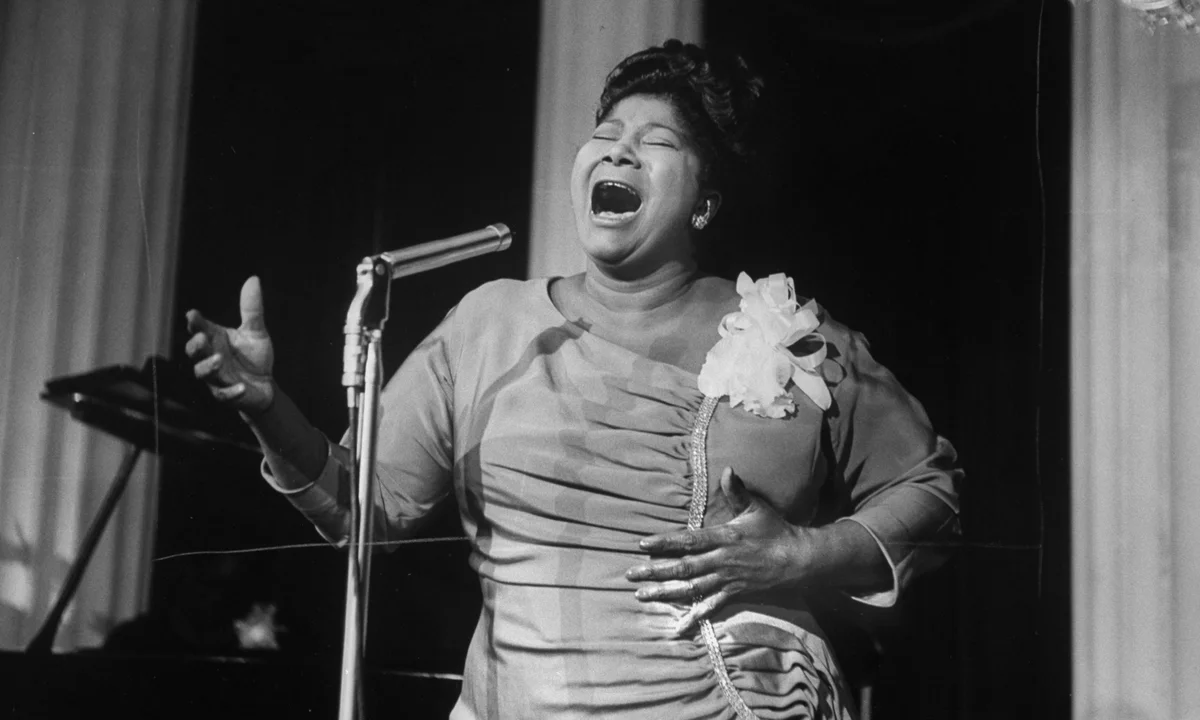
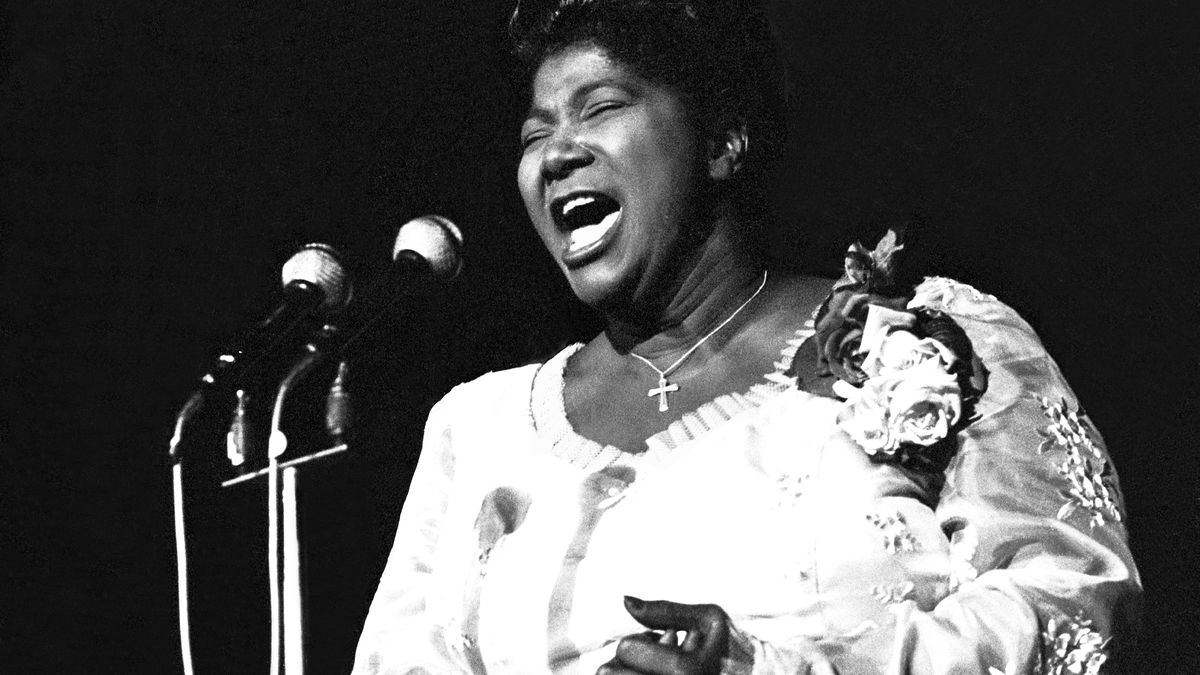
She is remembered for her strong, soul-like delivery, her deep commitment to her faith, and her lasting influence on musicians from all of different types of musical genres. Singing these and other songs to Black audiences, Miss Jackson was a woman on fire, whose combs flew out of her hair as she performed. Jackson's voice is noted for being energetic and powerful, ranging from contralto to soprano, which she switched between rapidly. She resisted labeling her voice range instead calling it "real strong and clear". Jackson moved her listeners to dancing, to shouting, to ecstasy. Many of Mahalia Jackson's songs were evocations of religious faith and were intended, in keeping with her own profound belief in God, to be devotional. Her rhythms might be syncopated, but her soaring voice aimed to obey the psalmist's injunction to "make a joyful noise unto the Lord". Mahalia Jackson received multiple Grammy Awards, including the Lifetime Achievement Award (1972). She was posthumously inducted into the Gospel Music Hall of Fame in 1978 and has a star on the Hollywood Walk of Fame.