Track and Field
The Black Track and Field Athletes from the past have made enormous contributions to the sport. Those track and field athletes had to face immense challenges and pressure to compete. Many thanks to the trailblazers who triumphed over oppression, racism and sexism that change the sport for the better. Their talent, courage, and determination paved the way for Black representation in sport.
The track and field athletes today owe so much to the pioneers of yesterday. From the first African American to win an Olympic gold medal, John Baxter Taylor, and the first the Black woman to win an Olympic gold medal, Audrey Patterson – the Black male and female track and field athletes are milestone makers, major achievers, and record setters that have revolutionize the sport.
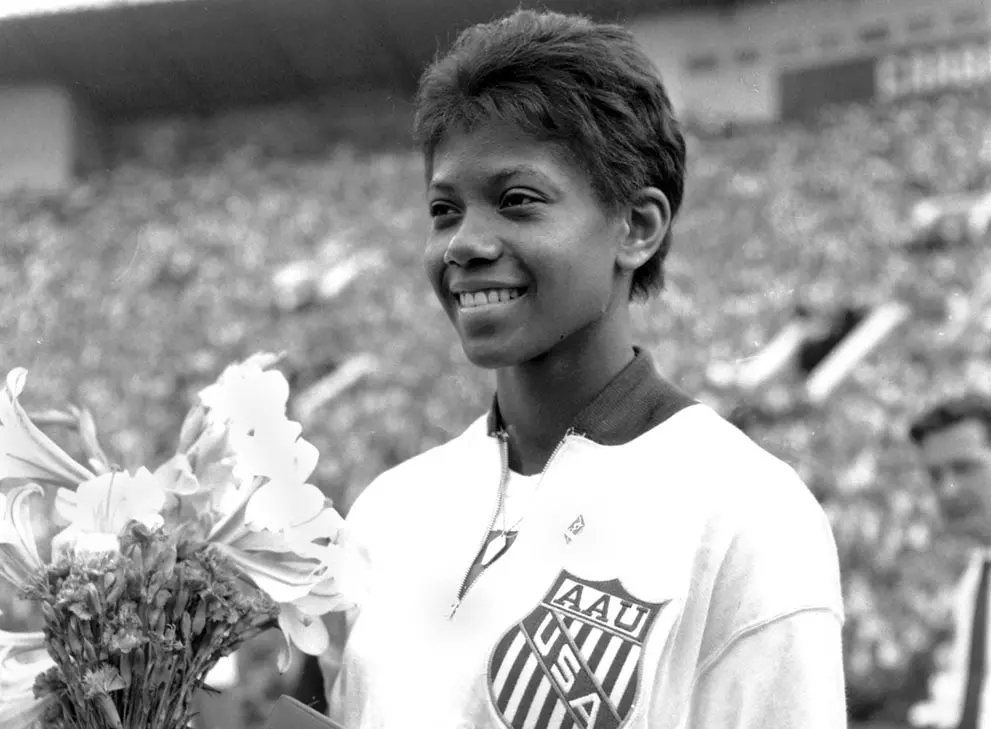
We all know the exploits of Jesse Owens, and Wilma Rudolph, on the track. However these men and women weren’t just athletes, but were civil right advocates. When Rudolph returned to her hometown of Clarksville, Tennessee after her Olympic success, she found out that a parade and banquet would be held in her honor. She refused to attend when she learned the events would be racially segregated. Because of her protest, the celebrations became the first integrated events in her town.
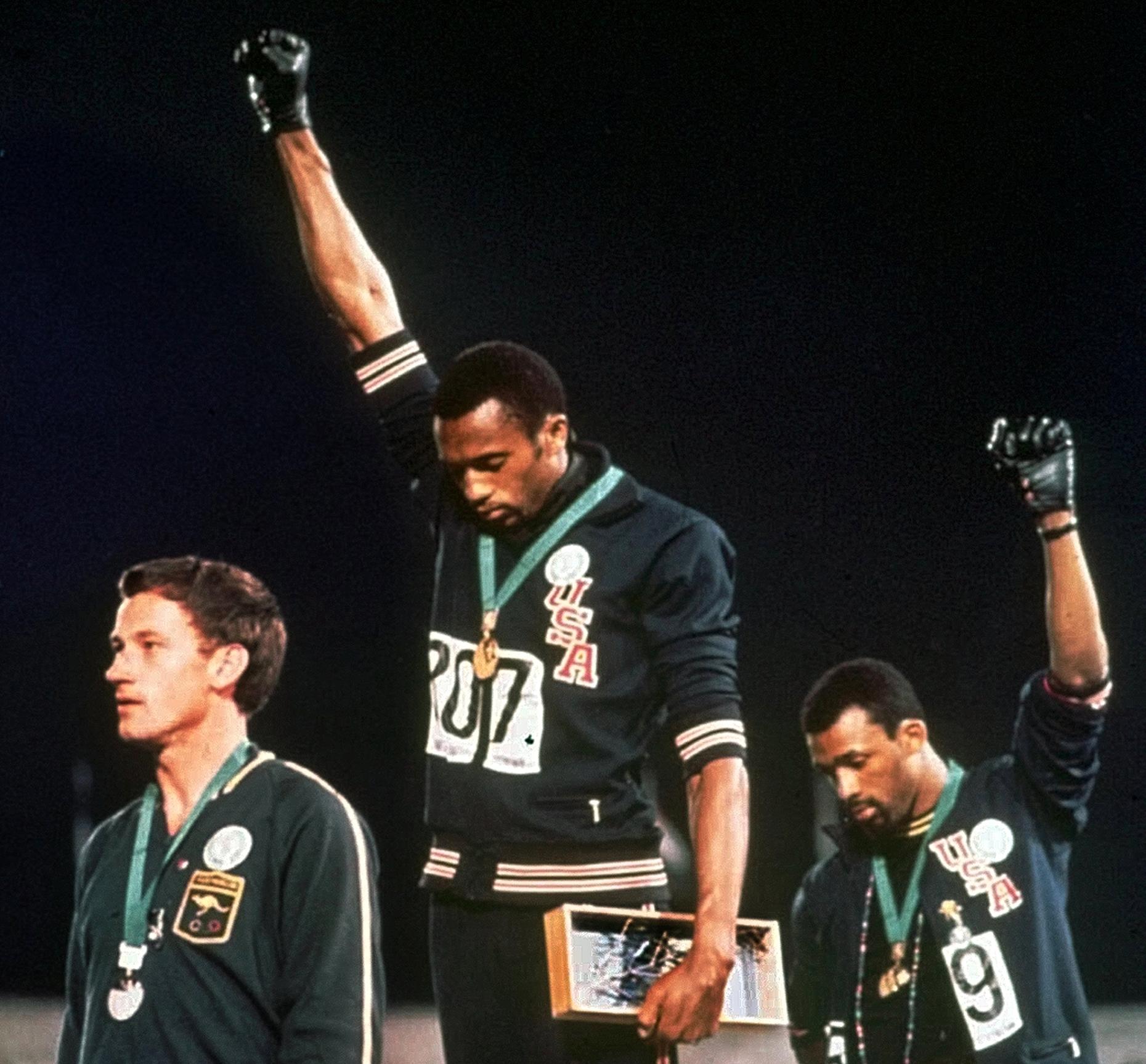
Another was sprinter Wyomia Tyus, who wore Black running shorts in the 1968 Olympics, instead of team-issued white ones, to support the Olympic Project for Human Rights – an organization formed to protest racial segregation and racism in sports. Lee Evans wore a Black beret during the same Olympics for the same support. And as for John Carlos and Tommie Smith, their protest is legendary.
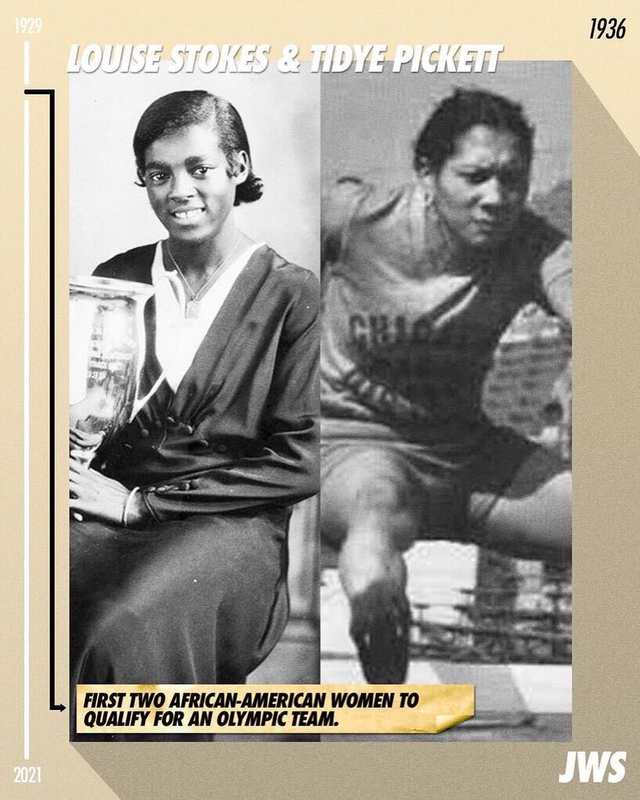
What about the Tennessee State Tigerbelles coached by Ed Temple, or Louise Stokes and Tidye Pickett, the first two Black females to qualify for the Olympics? And there is Earlene Brown who would become the first American woman to earn an Olympic medal in the shot put. Their stories and athletic achievements should be recognized and is every bit as important as the most famous ones.
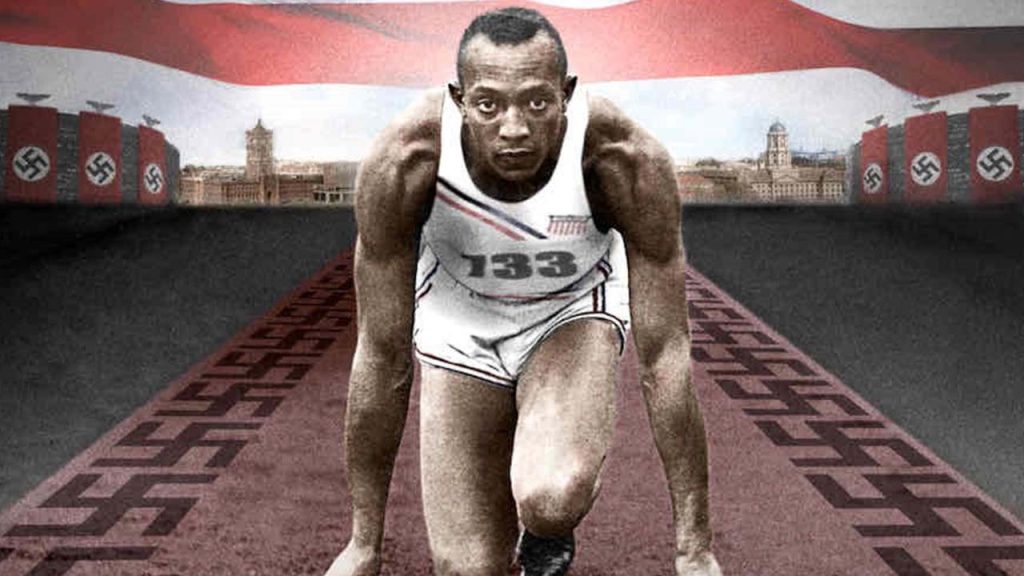
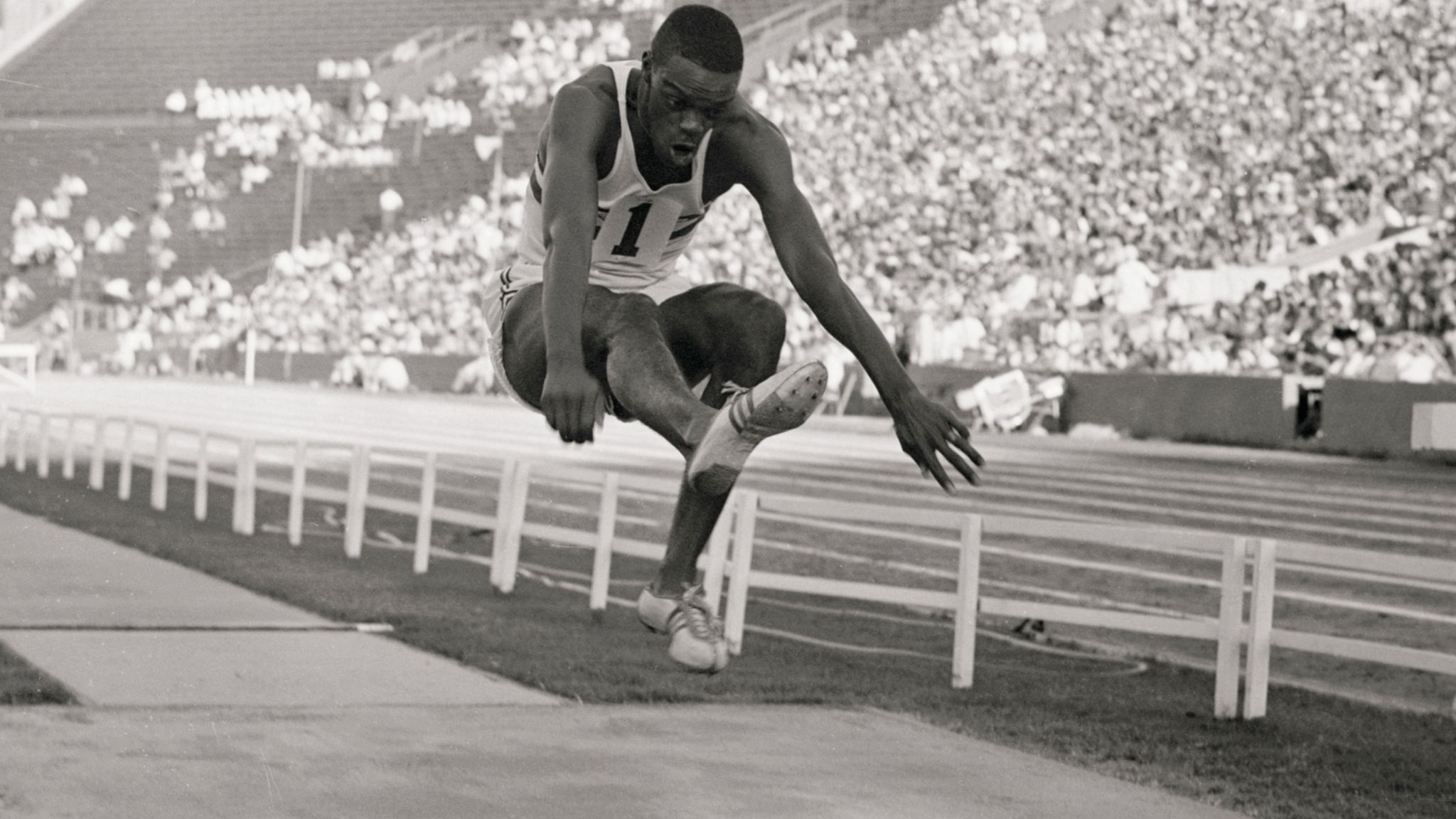
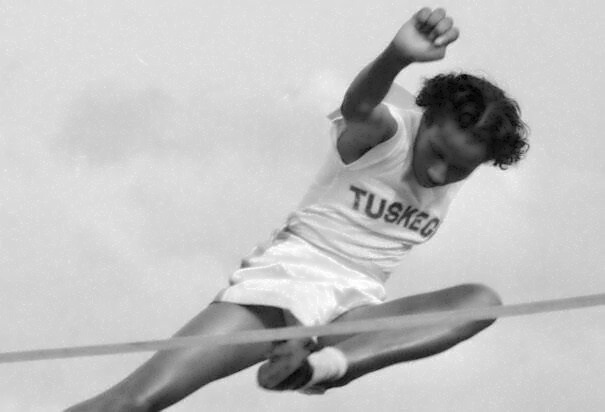
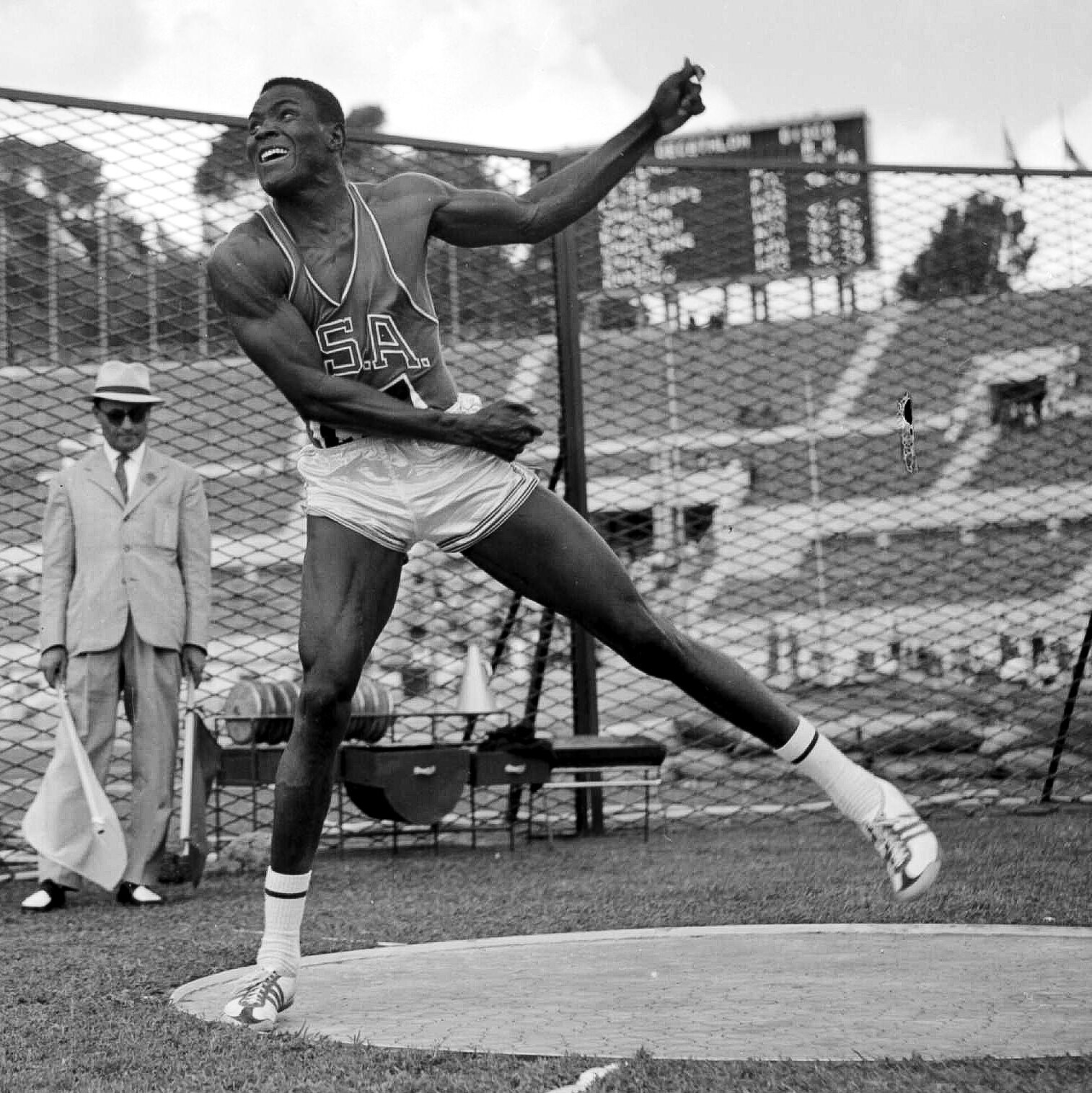
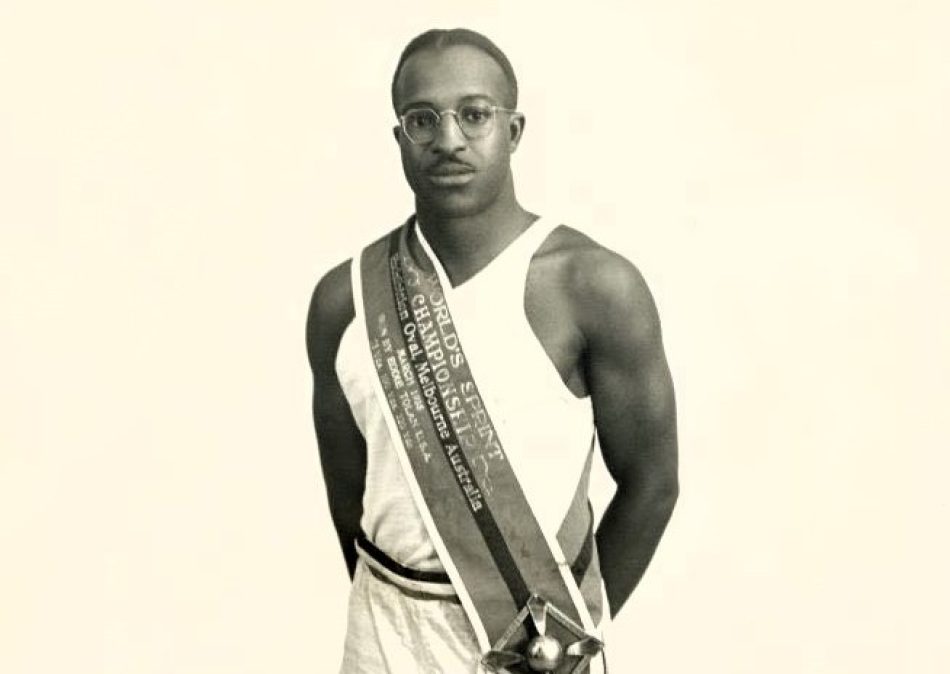
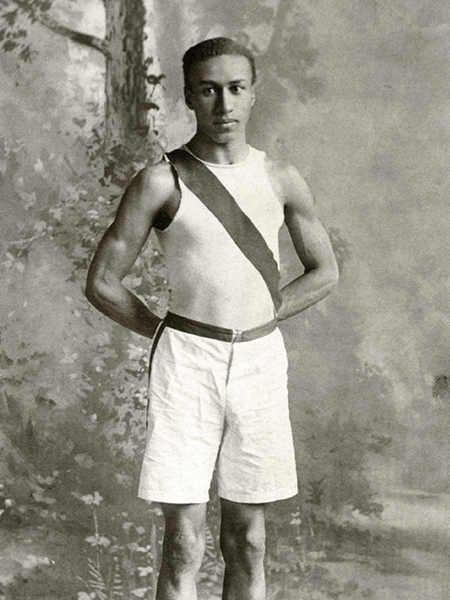
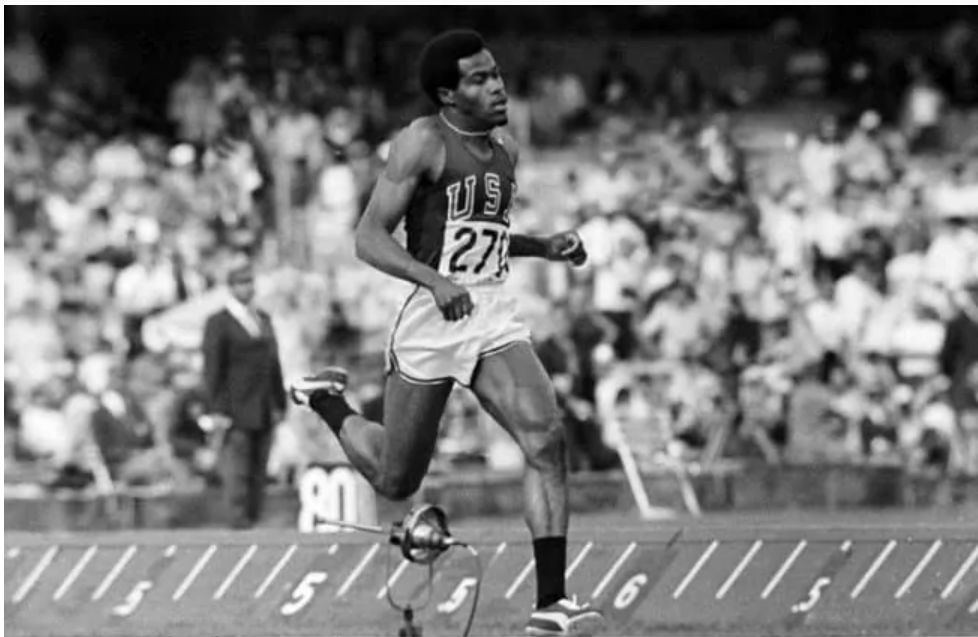
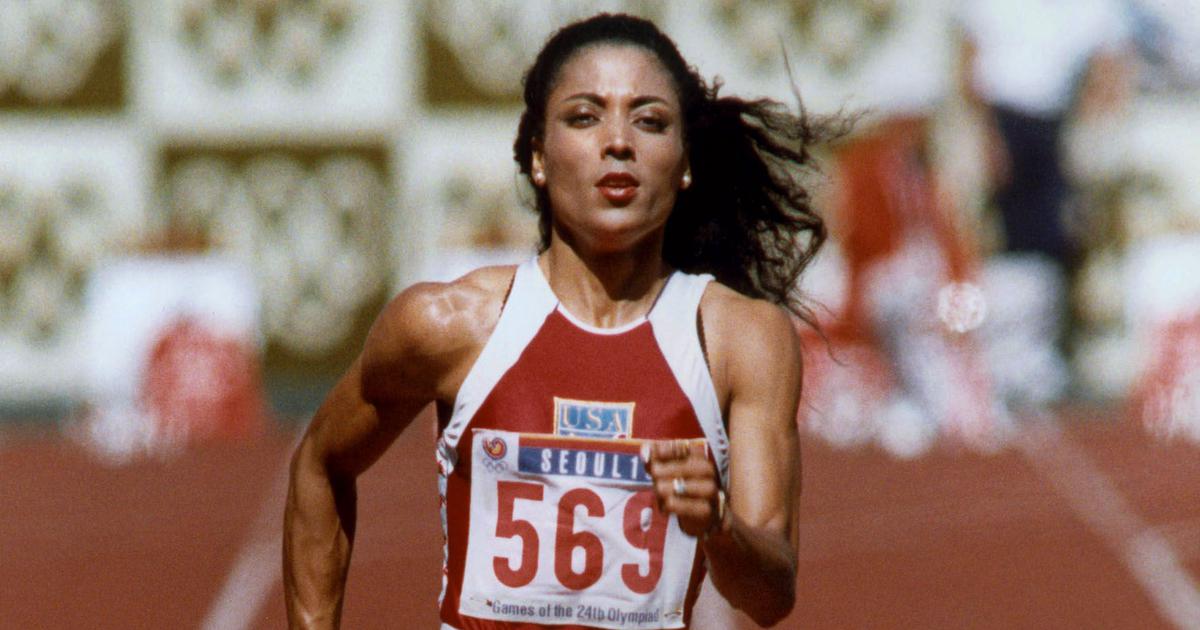
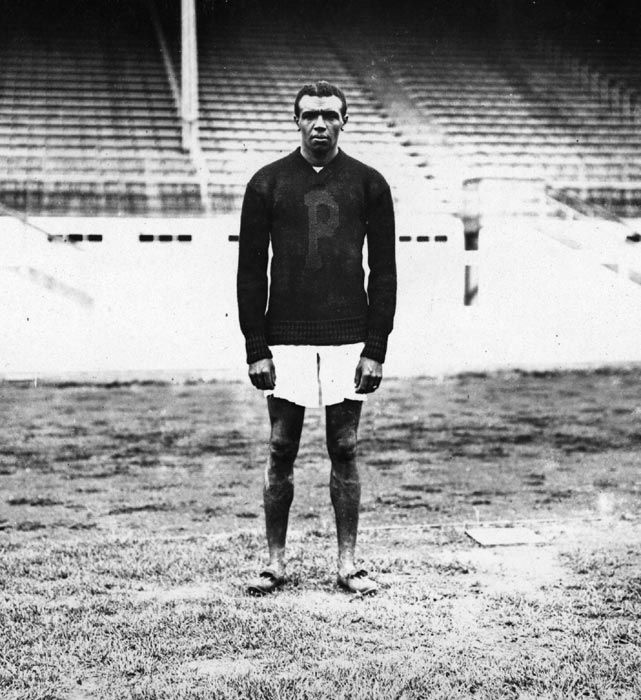
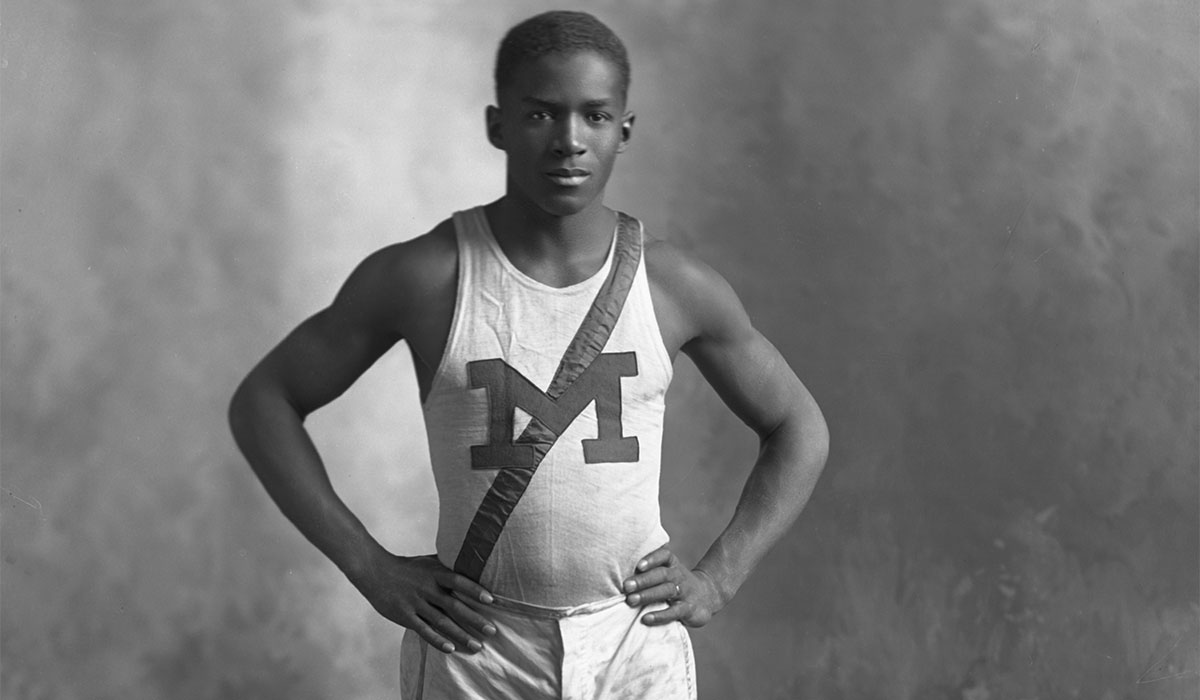
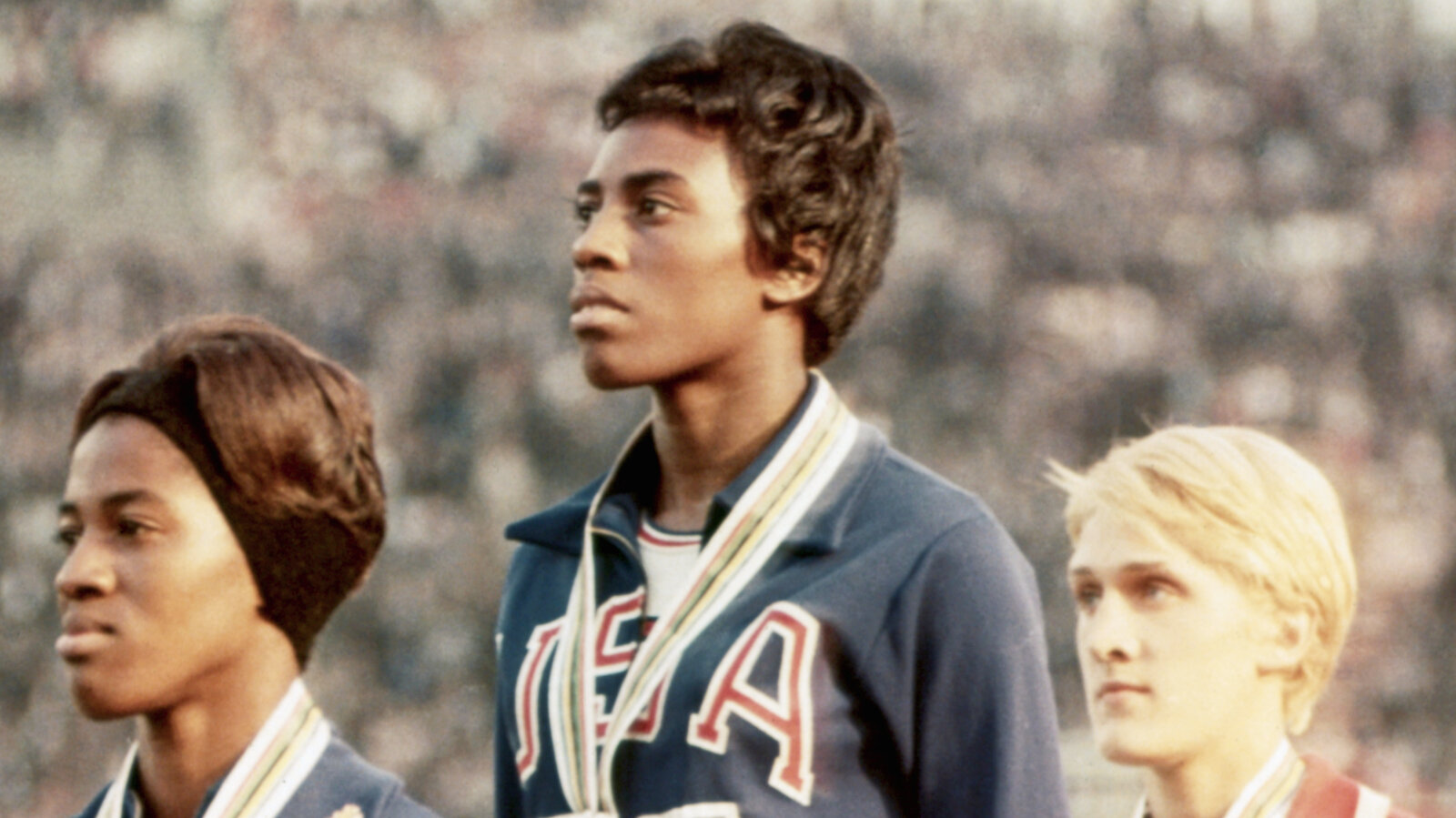
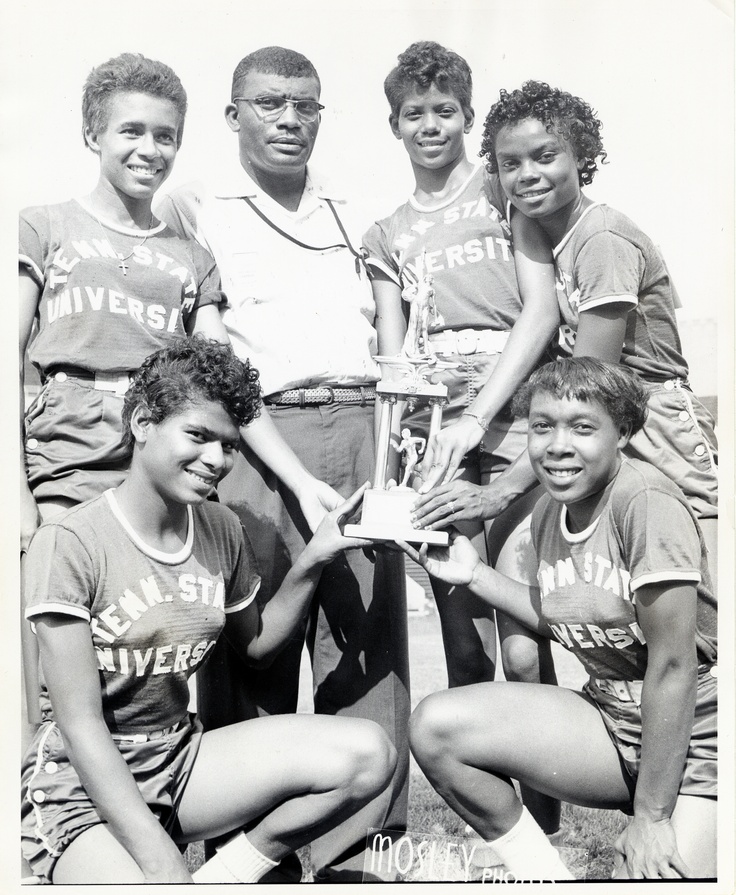
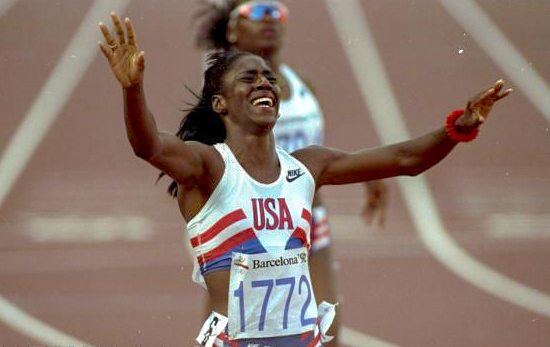
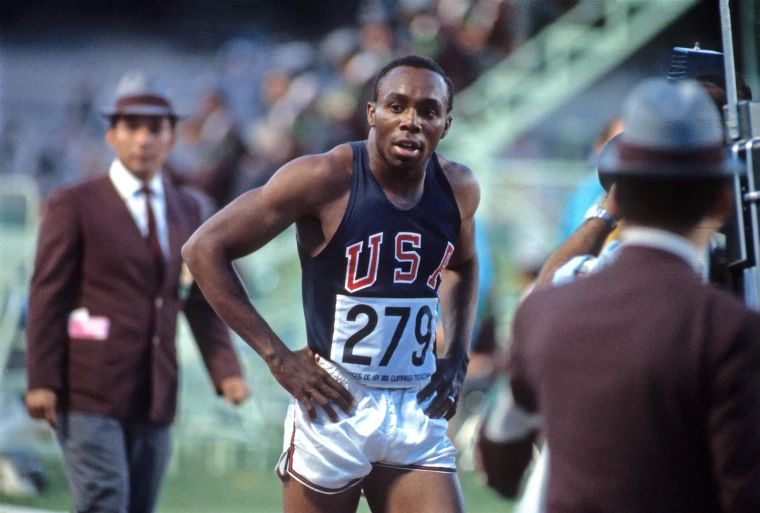
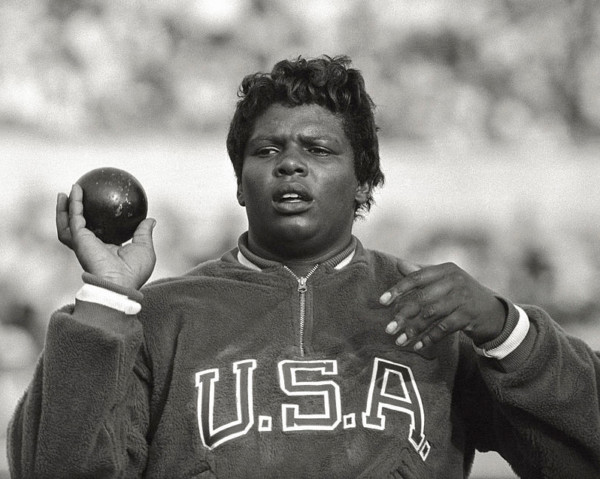
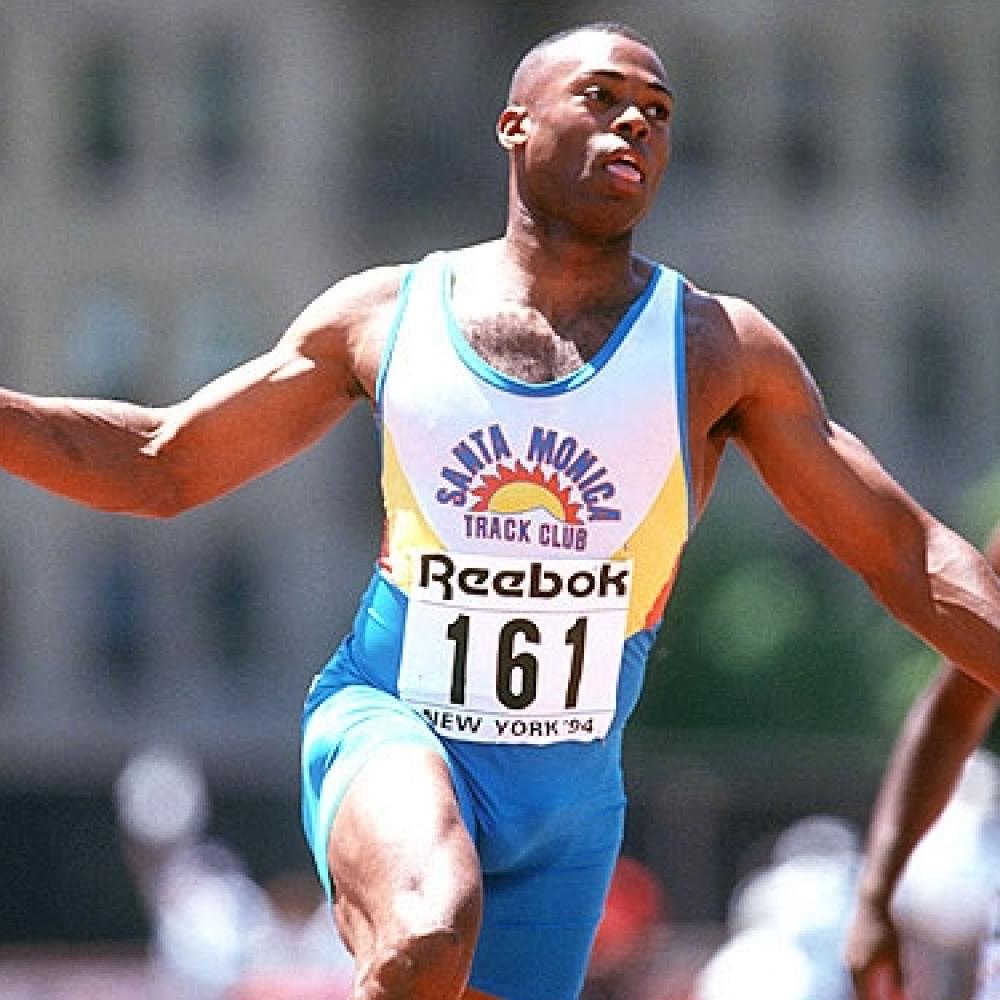
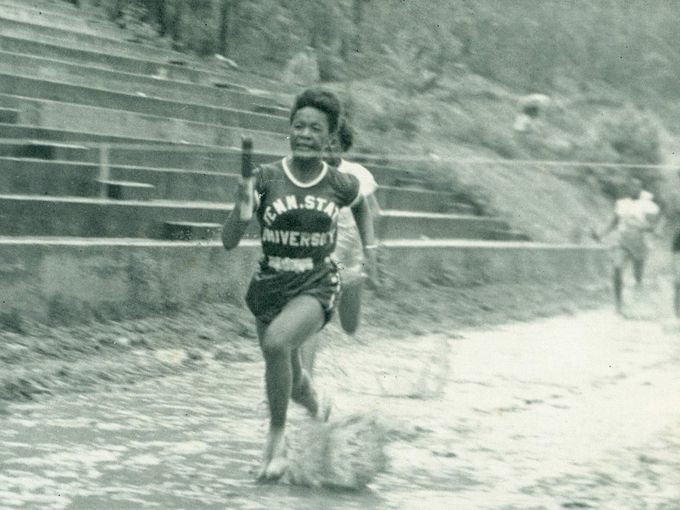
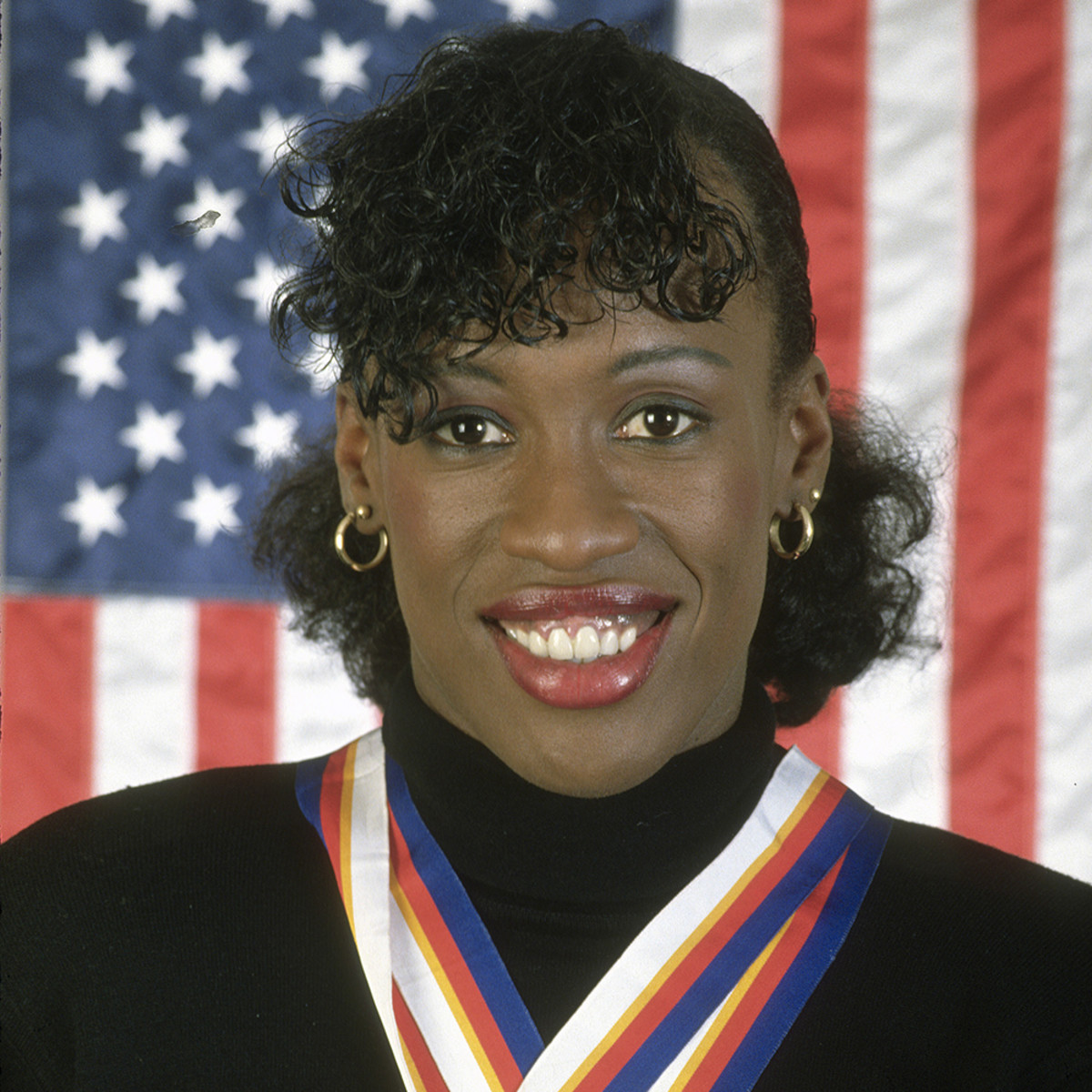
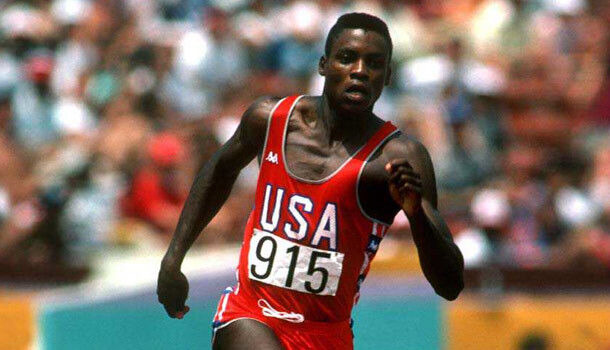
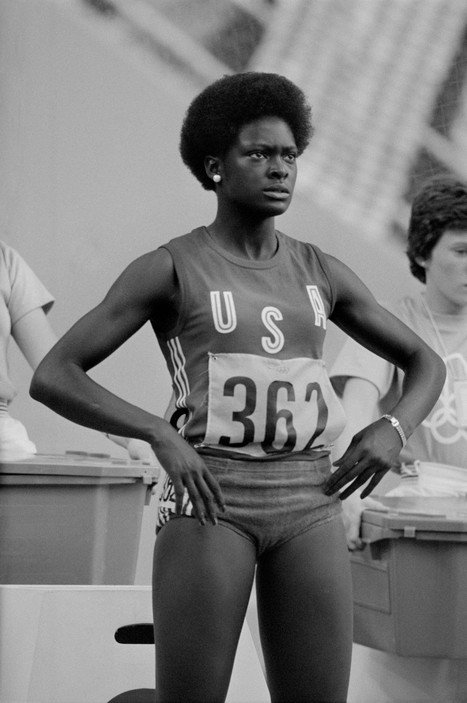
Jesse Owens
He was the first American to win four track and field medals in one Olympics, doing it as a Black man in 1936, made it all the more sweeter. James Cleveland Owens was the youngest of ten children was born on a tenant farm in Oakville, Alabama, March September 12th 1913. Jesse migrated with his family to Cleveland, OH, for better opportunities, as part of the Great Migration in 1922. When his new teacher asked his name, he said “J.C.”, but because of his strong Southern accent, she thought he said “Jesse”. The name took, and he was known as Jesse Owens for the rest of his life.
Owens's athletic talent was first noted at Fairmount Junior High School by his track coach. Jesse set a new junior high school record when he ran the 100-yard dash in 11 seconds flat. While at Fairmount, he also set records in the high jump and the long jump. Wishing to aid his struggling family, the practical Owens enrolled at East Technical High School in 1930, believing that a vocational education would guarantee future employment. As a high school senior in 1933 Jesse Owens won the 100-yard dash, the 200-yard dash, and the broad jump in the National Interscholastic Championships.
While as a student of East Technical High School in Cleveland, Owens first came to national attention. He equaled the world record of 9.4 seconds in the 100-yard dash and long-jumped 24 feet 9 1⁄2 inches at the 1933 National High School Championship. Owens was such a complete athlete, a coach said he seemed to float over the ground when he ran. He won the state championship three consecutive years. Owens’ sensational high school track career resulted in him being recruited by dozens of colleges.
Owens’s greatest achievement came in a span of 45 minutes on May 25, 1935, during Big Ten Championships, when he tied one world record and set 3 world records on the same day. Jesse entered the Big Ten Championships in 1935 with a sore back after falling down a flight of stairs. He set set world records in the long jump, 220-yard dash and 220-yard hurdles (22.6 seconds, becoming the first to break 23 seconds). Jesse recorded an official time of 9.4 seconds in the 100-yard dash, again tying the world record.
His long-jump record of 26 feet, 8 1/4 inches stood for 25 years. It remains a feat that has never been equaled. Some have called this incredible showing “the greatest single day performance in athletic history.” His dominance at the Big Ten games was par for the course for Owens that year. That year saw him win four events at the NCAA Championships, two events at the Amateur Athletic Union (AAU) Championships, and three others at the Olympic Trials. In all, Owens competed in 42 events that year, winning them all earning him the title "The Buckeye Bullet".
Owens was a star track performer in college, but he also faced major challenges. His school did not offer scholarships for track and field, as the sport was not as well respected back then, so Owens had to work a series of jobs throughout college to pay for his tuition. In addition, the University did not allow Owens to live on campus because of his race. Owens, like many Black Americans during this time period, was subject to racist treatment and was often discriminated against.
Jesse Owens greatest fame, however, came a year later, in a politically charged environment. Owens traveled to Berlin to take part in the 1936 Olympics. Owens was easily the most dominant athlete to compete. For Adolf Hitler and the Nazis, the 1936 Berlin Olympic Games were expected to be a German showcase and a statement for Aryan supremacy. The 1936 Summer Olympics were the first to be broadcast on television and took place in Berlin, Germany, during a turbulent time. International tensions were high.
Europe was on the brink of World War II, which officially broke out three years after the Summer Olympics. People were terrified. But the games and the excitement surrounding them continued in spite of the impending war. Hitler lambasted America for including Black athletes on its Olympic roster. But it was the African American participants who helped cement America’s success at the Olympic Games. The reception Owens received in Berlin was cold. Hitler criticized the United States for including athletes of color and Jewish athletes on the roster.
In all, the United States won 11 gold medals, six of them by Black athletes. Owens’s performance at the 1936 Berlin Olympics has become legend. On August 3, 1936 Jesse Owens won gold for the 100m sprint, defeating Ralph Metcalfe. The following day, he finished first in the long jump, where he set an Olympic record of 26 feet, 5 1/4 inches. On August 5th, Owens continued his win streak by taking the 200m sprint, setting an Olympic record of 20.7 seconds. After he was added to the 4 x 100 m relay team, he won his fourth gold medal on August 9th.
Winning 4 gold medals in a single Olympic year was unequaled until Carl Lewis won gold medals in the same events at the 1984 Summer Olympics. Despite the politically charged atmosphere of the Berlin Games, Owens was adored by the German public. But when the four-time Olympic gold medalist returned home, he could not even ride in the front of a bus. After a New York City ticker-tape parade of Fifth Avenue in his honor, Owens had to ride the freight elevator at the Waldorf-Astoria to reach the reception honoring him.
Jesse Owens struggled financially after the Olympics and had a hard time even completing his college degree. Despite the four gold medals Jesse Owens brought home for his country, he was soon relegated to the second class citizen status Black Americans found themselves in during the 1930's and 1940's. Interested in using the status of his name, Owens took up a wide range of jobs over the years. He raced local amateur sprinters for money. He opened a chain of dry cleaning stores, but the business failed.
In 1946 became the owner of the Portland Rosebuds, a baseball team playing in the West Coast Baseball Association (WCBA), a newly created Negro baseball league. After two months, however, the WCBA folded. He traveled around the globe as a goodwill ambassador for the U.S. government, and he booked speaking engagements with various corporate clients. Although Owens’ world records have since been broken, his athletic legacy continues. He was part of the first class of athletes to be inducted into the U.S. Olympic Hall of Fame in 1983. In 1990, President George H.W. Bush posthumously awarded him the Congressional Medal of Honor.
Ralph Boston
He was the first person to long jump more than twenty-seven feet. Track star and medalist in the 1960, 1964, and 1968 Olympic games, Ralph Boston was born in Laurel, Mississippi on May 9, 1939. Boston was born the youngest of ten children. As a Black child growing up in the Jim Crow South, Boston knew hard work at a young age. He rose early with his father to work in the fields before attending class at Oak Park Vocational School.
One of his earliest memories is of riding a mule-pulled wagon across the railroad tracks with his father, from his all-Black neighborhood of Queensburg and into the white community. It was then that he first noticed a stark contrast: the streets, the housing, the parks, and other facilities in White neighborhoods were far superior to those in Queensburg. When he was not working or studying, Boston enjoyed swimming in a creek outside Laurel, and after the city opened the Blacks-only Oak Park Pool, he became a lifeguard at the facility.
Ralph Boston was a track and field star in both his junior and senior high school years. He was virtually a one-man track team, winning or placing in hurdling, throwing, sprinting, and jumping events. His Oak Park team continued its run of high school track championships. He set a national high school record in the 180-yard hurdles and excelled as the school’s starting quarterback in football and their star forward in basketball. Boston was an elite quarterback and led the Oak Park Dragons to the Negro state football championship.
As a senior, he received scholarship offers to play football, but followed the advice of his mother, Eulalia, and his track coach, Joseph Frye, to pursue a career in track and field. In later interviews, he gave credit for his successes to the dedicated teachers at Oak Park, who also provided him with a solid academic foundation despite the lack of access to adequate educational resources and facilities. Upon graduating from Oak Park in 1957, Boston was offered a track scholarship at Tennessee State University in Nashville, Tennessee.
Boston enrolled at Tennessee State University, where he studied biochemistry. He started competing in high and low hurdles, high jump, and triple jump. His signature event, however, was the long jump. He won the 1960 Collegiate long jump title. In August, he burst onto the national scene at a conditioning meet in Los Angeles that served as a final tune up before the 1960 Rome Olympics. At the MT SAC Relays, an athletics event at San Antonio College in California, he jumped 26ft 11in, three inches longer than Jesse Owens had managed in 1935.
The U.S. track team broke four world records in that event, but it was Boston’s long jump — of 26 feet, 11 inches — that made the biggest headlines. That year he was selected as a World Athlete of the Year and as the North American Athlete of the Year. Later that year, in 1960, he travelled to Rome for the Olympics. Boston triumphed in Rome. Boston then broke the Olympic record (26 foot 7½ inches) to win the gold medal in Rome. Boston had just turned 21 and he had outleaped a legend.
The legend was humble. “I’m happy to see the record broken, and I’m just thankful that it stood up this long,” said 4-time gold medalist Owens to an AP reporter. The following year at the Modesto Relays in California, Boston extended his world record to a history-making 27ft 1/4in. Ralph Boston, was the first man to jump more than 27 feet. Ralph Boston became a world-recognized track star when he jumped further than any other recorded person in 1961. His personal best was a leap of 27 feet 5 inches at Modesto in 1965.
He entered into a rivalry with the Soviet jumper Igor Ter-Ovanesyen and broke the record four more times over the next few years – giving him six record marks, more than any other long jumper. He was favored to repeat his Olympic victory at the 1964 Games in Tokyo. A steady rain and strong winds that affected his jumps led to an unexpected upset. Lynn Davies of Britain, a relative unknown, stood at the end of the runway and waited for the wind to die down for his final jump. When the wind momentarily calmed, he jumped to first place with a distance of 26 feet 5½ inches.
Lynn Davies, took the gold with a jump that was actually shorter than Jesse Owens’s world record 33 years previously. Until then, Ter-Ovanesyan, who had never beaten Boston in an outdoor meet, was ahead going into that fifth and final jump. Boston overtook the Soviet, Ter-Ovanesyen to the silver medal, but could not overtake the new Olympic champion, Lyn Davies. He was the AAU long jump champion from 1961 to 1966. In 1967, when Bob Beamon was suspended for refusing to compete against Brigham Young University, who was accused of having racist policies, Boston stepped in to coach him unofficially.
At the 1968 Mexico City Olympics, Boston was the World and Olympic record holder in the long jump, but the three-time Olympian knew he was approaching the end of his career. He knew that Beamon had a better chance than he did to re-take the long jump Olympic championship back. At twenty-nine, he won a bronze, finishing behind Bob Beamon at the 1968 Summer Olympics in Mexico City. Boston retired internationally after the 1968 Olympics, while continuing to compete at home.
He was the field event reporter for the CBS Sports Spectacular coverage of domestic track and field events. He went on to work as an administrator and served as coordinator of minority affairs and assistant dean of students at the University of Tennessee from 1968 to 1975. He was selected to the United States Track and Field Hall of Fame in 1975, and in 1976 was the first Black athlete inducted into the Mississippi Sports Hall of Fame. In 1985 Ralph Boston was inducted into the Olympic Hall of Fame.
He became a corporate executive, eventually joining ServiceMaster Services, a cleaning company, in Stone Mountain, Georgia, as president and CEO. Boston was also known as a generous mentor and coach to fellow athletes. Beamon credited Boston for making Beamon’s record-breaking jump in Mexico City possible. “What people don’t know is that I wouldn’t have done that if it hadn’t been for Ralph Boston,” he told the news website Mississippi Today in 2021. “I fouled on my first two attempts and was about to get disqualified, and then Ralph told me I needed to adjust my footwork leading to my takeoff. I figured I had better listen to the master, and I did.”
Ralph Metcalfe
He competed in both the 1932 and 1936 Olympic Games, ending up with one gold medal, two silvers and a bronze. Ralph Metcalfe was born in Atlanta, Georgia and raised in Chicago, Illinois. His family moved north to Chicago when he was seven, during the early years of what became known as the Great Migration. Metcalfe excelled as a sprinter at Tilden Tech High School on the city’s south side, where his coach instilled in him a work ethic that encapsulated well the Black experience.
He earned a scholarship to Marquette University in Milwaukee in 1930 when he became the school's first Black student-athlete. During his sophomore year at Marquette, Metcalfe equaled the world of record of 10.3 seconds in the 100-meter dash, as well as the 200-meter world record of 20.6 seconds. He won the first of three NCAA championships from 1932 to 1934, in both the 100- and 200-meter dashes. He achieved the same double victories in the national AAU meet during those years and wound up with five straight national titles in the 200 and 220yd.
Overall, counting indoor competition, Metcalfe won 11 AAU sprint titles. In the early 1930s, Ralph Metcalfe was the prime U.S. sprinter, winning most of the national titles and tying the world records in the 100 and 200 meters. He equalled the world record in Budapest the following year, and again at competitions in the Japanese cities of Nishinomiya and Dairen in 1934. He continued to thrive on the track team and by the Spring of 1932, he had broken several world records.
On June 10, Metcalfe broke three world records and tied a fourth in the span of one hour during a track meet. He quickly gained the attention of several U.S. newspapers by qualifying for the 1932 U.S. Olympic team. The 1932 Summer Olympics were held in Los Angeles, California. Metcalfe was a favorite to win the sprint competitions along with fellow U.S. Olympians Eddie Tolan of the University of Michigan and George Simpson of Ohio State University. He won both the 100m and 200m runs at the Olympic Trials, but failed to maintain his dominance at the Los Angeles Olympics.
He raced to virtual tie with Eddie Tolan in the 100 meters. After an exhaustive review officials awarded the gold medal to Tolan and silver medal to Metcalfe. Their record setting time of 10.37-seconds remained unbroken for 32 years. In the 200m, he again was unlucky, since it appeared that he had been placed 3-4 feet behind his fellow finalists at the starting line. He was unable to make up the distance, finishing third to Tolan and fellow American George Simpson to take the bronze.
After the Olympics, Metcalfe turned more of his attention towards his education. He was elected class president and was inducted into the university’s honor society. Metcalfe was an outstanding student and campus leader. In 1933, he was inducted into Alpha Sigma Nu, which is the elite Jesuit academic honor society on campus. At the Amateur Athletic Union national championship at the former Marquette Stadium in 1934, Metcalfe bested Olympic great Jesse Owens in the 100-meter dash. Owens and Metcalfe would go on to be rivals and teammates.
In 1934, Metcalfe graduated with a bachelor’s degree in philosophy and was a member of Alpha Phi Alpha Fraternity Incorporated. He also mentored a few college athletes, including Ohio State University’s track star, Jesse Owens. In 1934, Metcalfe tied the world 100m record of 10.3 three times, as well as the 200-meter world record of 20.6 seconds during a tour of Europe and Asia. Metcalfe was undefeated in track-and-field competitions between the fall of 1932 and spring of 1936.
During that time, he was nicknamed the “World’s Fastest Human” after breaking seven world records and tying two more sprint events from the 40-yard sprint to the 200-meter sprint. This earned him a return engagement to the Olympic Games in 1936, this time staged in Berlin, where he found himself at a historic convergence of politics, race and sport - this time as a teammate of Jesse Owens, and as the track team's elder statesman. He finally won an Olympic gold medal in the 4x100m relay at the 1936 Berlin Games after taking second, and the silver to Jesse Owens in the 100m.
While long-time rivals - Metcalfe beat Owens on several occasions in the early 1930s - he and Owens also became life-long friends, with the legend crediting Metcalfe with the victory in the relay. While his starts were comparatively weak, Metcalfe had an extremely long stride and was noted for the strength of his finishes. At least eight times he equaled the world record of 10.3 for the 100 meters six times, but only three of those clockings reached the record books.
After his retirement following the 1936 Games, Metcalfe attended the University of Southern California. After his college career, he joined the armed forces and served in World War II. During World War II he joined the armed forces and fought to end Jim Crow segregation in America and end fascism abroad, better known as the Double-V movement. In June 1943, Metcalfe served as associate director of the Louisiana USO Maneuver Service. In this role, he helped organize a track meet at Fort Huachuca in collaboration with the all-Black units of the 93rd Infantry Division.
He eventually rose in rank to first lieutenant and earning the Legion of Merit for his physical education training program. Metcalfe later taught political science and coached track at Xavier College in Louisiana before becoming a successful businessman in Chicago. He began a political career in 1949, becoming an alderman for the city of Chicago. In 1952, became a Democratic committeeman for the Third Ward; Metcalfe was elected alderman in 1955 and was reelected three times.
In 1970, Metcalfe Metcalfe was elected to the U.S. House of Representatives, succeeding his mentor, the late William Dawson. Metcalfe began his career as a Daley loyalist but later broke with the mayor, becoming a strong and independent voice for his mostly African American constituency who felt ignored by the workings of the Daley machine. Metcalfe was elected to four terms in Congress. Metcalfe co-founded the Congressional Black Caucus (CBC), was inducted into the United States Track and Field Hall of Fame (1975), and was named a member of the President’s Commission on Olympic Sports.
Evelyn Ashford
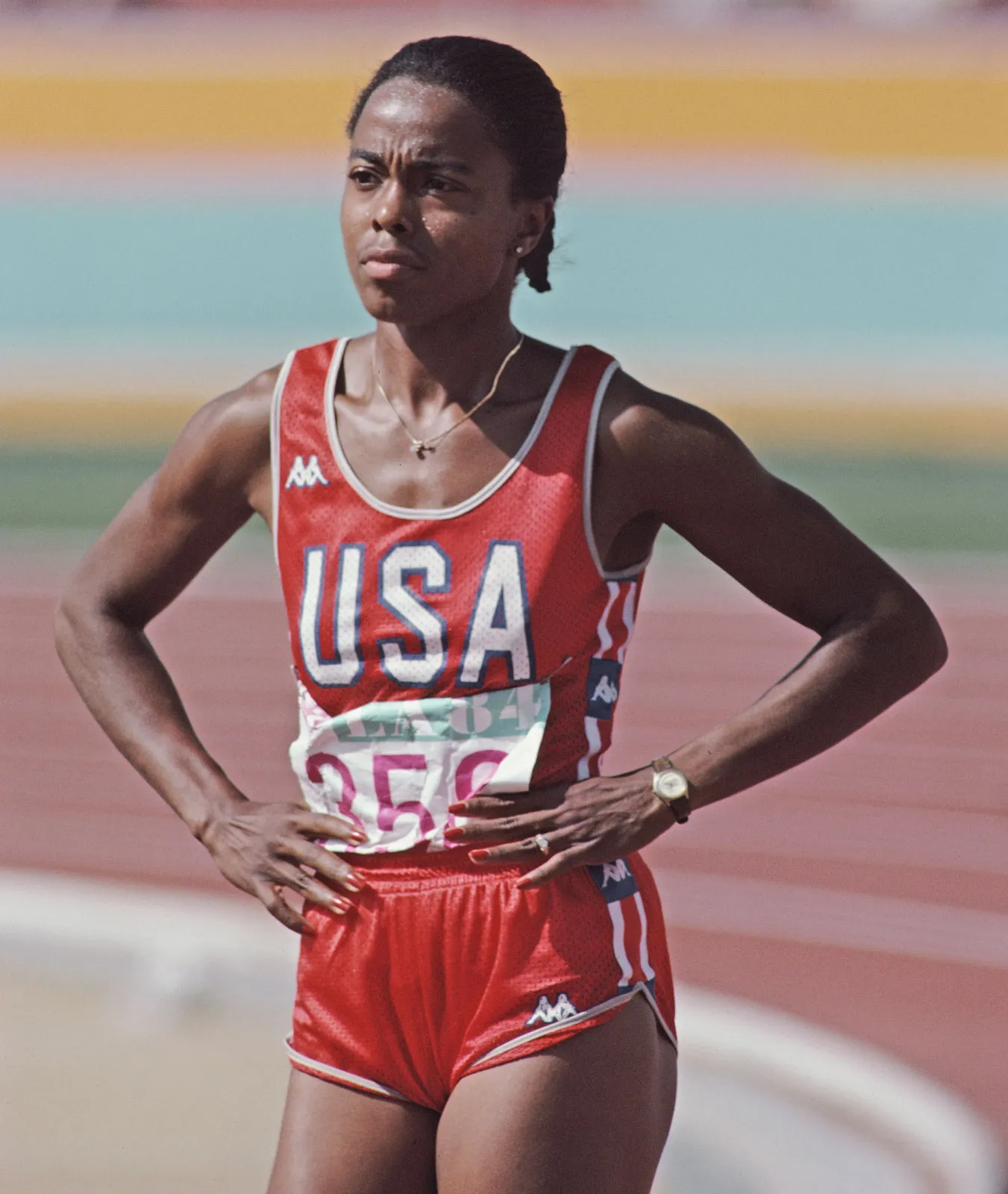
She is recognized as one of track and field history's most accomplished sprinters. Evelyn Ashford is the first woman in U.S. track history to win four Olympic gold medals—one in the 100-meter sprint and three as part of 4 × 100-meter relay teams. Born in Shreveport, LA. in April 1957, Evelyn Ashford was part of a military family. Being part of a military family, she moved quite a few times growing up. She went to four different schools in four different cities before Evelyn's family settled in Sacramento, CA area in 1973. It was here that Evelyn attended Roseville High School.
At the local high school, Ashford joined the boys’ track team because the school did not have one for girls. She won most of her races there. By the time she was 15 years old, Evelyn Ashford had to her credit 2 state and 1 national track record and had led her track team at Clements High School to back-to-back State Championships in 1971-72. She was the star of the Tigers track team and set numerous records during her high school years. Her talent caught the attention of the track coach at the University of California at Los Angeles (UCLA).
She earned a scholarship to UCLA one of the school's first women’s athletic scholarships. Former Olympian Pat Connolly coached Ashford at UCLA. At the 1976 Association of Intercollegiate Athletics for Women (AIAW) national championships, Ashford finished second in the 100 meters. She was so impressive that after her freshmen year she earned a spot on the United States Olympic team at just 19 years old. As a 19-year-old, she finished a surprise 5th at the 1976 Summer Games in Montreal in the 100 meters.
After the 1976 Olympics she returned to collegiate athletics, winning several individual and team relay events. Before long, Evelyn emerged as one of the world's greatest sprinters. She helped UCLA win the 1977 AIAW Outdoor competition earning All-American honors in 1977 and 1978. In the late 1970s she decided to drop out of college to concentrate on training. She had recently set a United States record of 21.83 seconds in the 200 meters and had beaten world-record holder Marlies Göhr of East Germany in the 100 meters at the World Cup.
Ater beating the World Record holders Marlies Gohr and Marita Koch in the 1979 World Cup, Evelyn Ashford became one of the potential gold medalists for the 1980 Summer Olympics. She was ranked No. 1 in the world by Track & Field News over 100 meters. She was the favorite to win both the 100 meters and 200 meters, but the U.S. boycott of the the 1980 Moscow Olympics kept her at home. Evelyn would have to wait four years before she would get the chance to attempt to capture an Olympic medal.
Ashford contemplated quitting track. Shortly after the boycott, she tore a hamstring muscle and took off the rest of the year. Evelyn’s work ethic and determination would not be put on hold as she prepared for the 1984 Games. She went on to win another two world championships in 1981, when she was named Woman Athlete of the Year. On July 3, 1983, she was in prime form setting the world record in the 100 meters in 10.79 seconds at the National Sports Festival in Colorado Springs, Colorado. In doing so, she became the first woman in the world to ever run under 11 seconds.
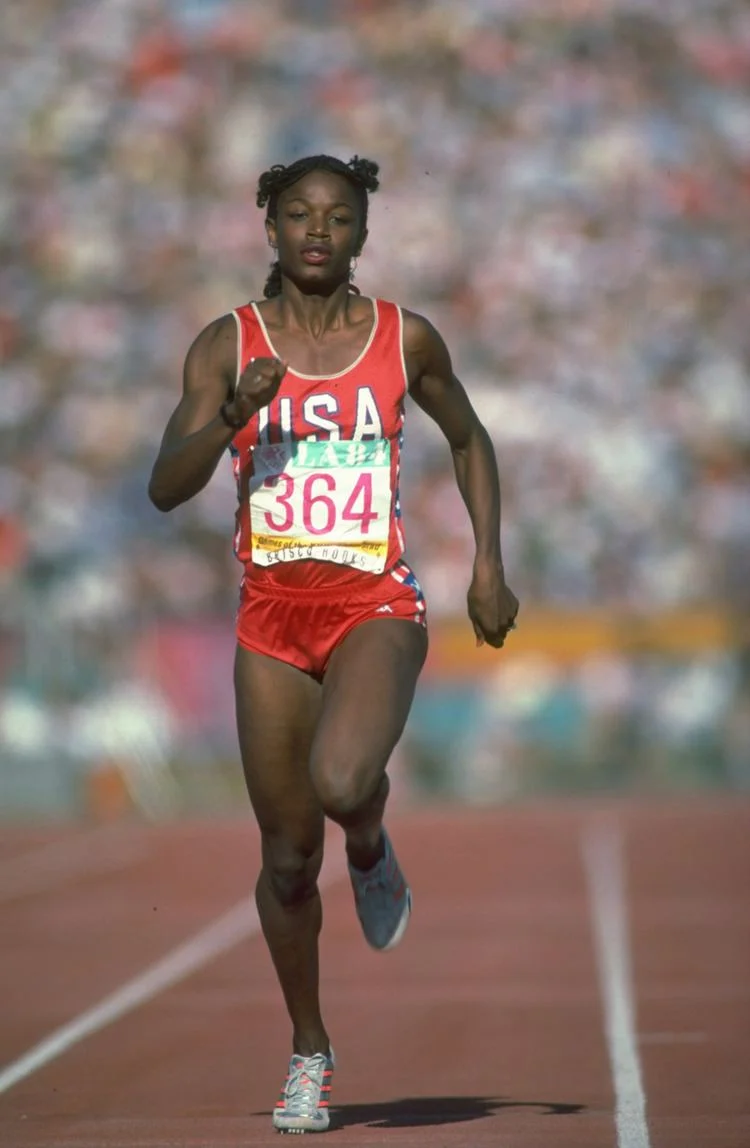
It was now time for the 1984 Olympic Games on her home turf in Los Angeles. It was Evelyn’s time to shine and she didn’t disappoint. Ashford first chance to win a medal was in the 200 meters, however she had to withdraw from the 200-meter heats due to an injury.. Evelyn won the Gold Medal in the 100m, setting a new Olympic record. She was also a member of the Gold-medal-winning 4 × 100-meter relay team that included Alice Brown, Jeanette Bolden, and Chandra Cheesborough. Later in 1984, Ashford set a world record in the 100 meters with a time of 10.76. The record stood until 1988.
In 1985, while still preparing for her next Olympics, Evelyn and her husband, Ray Washington, welcomed a baby girl, Raina. At the 1988 Seoul Summer Olympics, she was beaten in the 100 meter by Florence Griffith Joyner, who had broken her World Record earlier at the Olympic Trials. Ashford won a Silver medal in the 100 meters and a Gold medal in the 4 × 100-meter relays. But her proudest moment was being selected as the United States flag bearer during the Opening Ceremonies in the Seoul, South Korea games.
By the time the next Games would come around Evelyn would be 35 years old but that wasn’t going to stop her. History was made at the 1992 Barcelona games, as she became the oldest woman to ever win an Olympic Gold Medal in Track and Field! Evelyn earned her 4th and final Olympic gold medal as a part of the 4x100 team at the 1992 Barcelona Games. Ashford became the first Black woman to win 4 Olympic Gold medals. Evelyn’s Olympic career spanned over five Olympiads and she competed in four Olympic Games winning five medals in all - four Gold Medals and one Silvers.
Evelyn Ashford is without question one of the greatest athletes in the history of Track and Field. She is remembered for being one of the all-time greats in any sport from our area. She is a five-time Olympic medalist, four-time gold medalist and the first woman to run the 100-meter dash in under 11 seconds. Evelyn has been honored numerous times over the years for her contributions to her sport including induction into the National Track & Field Hall of Fame, UCLA Athletics Hall of Fame and the U.S. Olympic Hall of Fame.
Ralph Boston
He was the first person to long jump more than twenty-seven feet. Track star and medalist in the 1960, 1964, and 1968 Olympic games, Ralph Boston was born in Laurel, Mississippi on May 9, 1939. Boston was born the youngest of ten children. As a Black child growing up in the Jim Crow South, Boston knew hard work at a young age. He rose early with his father to work in the fields before attending class at Oak Park Vocational School.
One of his earliest memories is of riding a mule-pulled wagon across the railroad tracks with his father, from his all-Black neighborhood of Queensburg and into the white community. It was then that he first noticed a stark contrast: the streets, the housing, the parks, and other facilities in White neighborhoods were far superior to those in Queensburg. When he was not working or studying, Boston enjoyed swimming in a creek outside Laurel, and after the city opened the Blacks-only Oak Park Pool, he became a lifeguard at the facility.
Ralph Boston was a track and field star in both his junior and senior high school years. He was virtually a one-man track team, winning or placing in hurdling, throwing, sprinting, and jumping events. His Oak Park team continued its run of high school track championships. He set a national high school record in the 180-yard hurdles and excelled as the school’s starting quarterback in football and their star forward in basketball. Boston was an elite quarterback and led the Oak Park Dragons to the Negro state football championship.
As a senior, he received scholarship offers to play football, but followed the advice of his mother, Eulalia, and his track coach, Joseph Frye, to pursue a career in track and field. In later interviews, he gave credit for his successes to the dedicated teachers at Oak Park, who also provided him with a solid academic foundation despite the lack of access to adequate educational resources and facilities. Upon graduating from Oak Park in 1957, Boston was offered a track scholarship at Tennessee State University in Nashville, Tennessee.
Boston enrolled at Tennessee State University, where he studied biochemistry. He started competing in high and low hurdles, high jump, and triple jump. His signature event, however, was the long jump. He won the 1960 Collegiate long jump title. In August, he burst onto the national scene at a conditioning meet in Los Angeles that served as a final tune up before the 1960 Rome Olympics. At the MT SAC Relays, an athletics event at San Antonio College in California, he jumped 26ft 11in, three inches longer than Jesse Owens had managed in 1935.
The U.S. track team broke four world records in that event, but it was Boston’s long jump — of 26 feet, 11 inches — that made the biggest headlines. That year he was selected as a World Athlete of the Year and as the North American Athlete of the Year. Later that year, in 1960, he travelled to Rome for the Olympics. Boston triumphed in Rome. Boston then broke the Olympic record (26 foot 7½ inches) to win the gold medal in Rome. Boston had just turned 21 and he had outleaped a legend.
The legend was humble. “I’m happy to see the record broken, and I’m just thankful that it stood up this long,” said 4-time gold medalist Owens to an AP reporter. The following year at the Modesto Relays in California, Boston extended his world record to a history-making 27ft 1/4in. Ralph Boston, was the first man to jump more than 27 feet. Ralph Boston became a world-recognized track star when he jumped further than any other recorded person in 1961. His personal best was a leap of 27 feet 5 inches at Modesto in 1965.
He entered into a rivalry with the Soviet jumper Igor Ter-Ovanesyen and broke the record four more times over the next few years – giving him six record marks, more than any other long jumper. He was favored to repeat his Olympic victory at the 1964 Games in Tokyo. A steady rain and strong winds that affected his jumps led to an unexpected upset. Lynn Davies of Britain, a relative unknown, stood at the end of the runway and waited for the wind to die down for his final jump. When the wind momentarily calmed, he jumped to first place with a distance of 26 feet 5½ inches.
Lynn Davies, took the gold with a jump that was actually shorter than Jesse Owens’s world record 33 years previously. Until then, Ter-Ovanesyan, who had never beaten Boston in an outdoor meet, was ahead going into that fifth and final jump. Boston overtook the Soviet, Ter-Ovanesyen to the silver medal, but could not overtake the new Olympic champion, Lyn Davies. He was the AAU long jump champion from 1961 to 1966. In 1967, when Bob Beamon was suspended for refusing to compete against Brigham Young University, who was accused of having racist policies, Boston stepped in to coach him unofficially.
At the 1968 Mexico City Olympics, Boston was the World and Olympic record holder in the long jump, but the three-time Olympian knew he was approaching the end of his career. He knew that Beamon had a better chance than he did to re-take the long jump Olympic championship back. At twenty-nine, he won a bronze, finishing behind Bob Beamon at the 1968 Summer Olympics in Mexico City. Boston retired internationally after the 1968 Olympics, while continuing to compete at home.
He was the field event reporter for the CBS Sports Spectacular coverage of domestic track and field events. He went on to work as an administrator and served as coordinator of minority affairs and assistant dean of students at the University of Tennessee from 1968 to 1975. He was selected to the United States Track and Field Hall of Fame in 1975, and in 1976 was the first Black athlete inducted into the Mississippi Sports Hall of Fame. In 1985 Ralph Boston was inducted into the Olympic Hall of Fame.
He became a corporate executive, eventually joining ServiceMaster Services, a cleaning company, in Stone Mountain, Georgia, as president and CEO. Boston was also known as a generous mentor and coach to fellow athletes. Beamon credited Boston for making Beamon’s record-breaking jump in Mexico City possible. “What people don’t know is that I wouldn’t have done that if it hadn’t been for Ralph Boston,” he told the news website Mississippi Today in 2021. “I fouled on my first two attempts and was about to get disqualified, and then Ralph told me I needed to adjust my footwork leading to my takeoff. I figured I had better listen to the master, and I did.”
Alice Coachman
The first Black woman from any country to win an Olympic gold medal was Alice Coachman. Alice Coachman was born on November 9, 1923 in Albany, Georgia, she was the fifth of ten children born. Growing up in the segregated South, she overcame discrimination and unequal access to inspire generations of other Black athletes to reach for their athletic goals. As a child, Alice was a tomboy, but her father, influenced by society's reluctance to accept female athletes. , But at that time it wasn’t socially acceptable for women to be athletes.
Fearing for her safety as an African American in a segregated society, he initially discouraged her from sports. The family worked hard, and a young Coachman helped. Her daily routine included going to school and supplementing the family income by picking cotton, supplying corn to local mills, or picking plums and pecans to sell. Beyond these tasks, the young Coachman was also very athletic. It was her fifth-grade teacher at Monroe Street Elementary School, Cora Bailey, and her aunt, Carrie Spry, who encouraged her to continue running.
By seventh grade, she was one of the best athletes in Albany, boy or girl. Barred from training with White children or using White athletic facilities, young Coachman trained on her own. She ran barefoot on dusty roads to improve her stamina and used sticks and rope to practice the high jump. She also figured out ways to rig up a high jump bar so she could practice the sports she observed others doing. Coachman entered Madison High School in Albany in 1938 and joined the track team, soon attracting a great deal of local attention.
Within a year she caught the eye of the boys’ track coach, Harry E. Lash. He began working with her to develop what he saw as a special, natural talent. While competing for her high school track team in Albany, her ability was noted by a representative from the athletic department of the Tuskegee Institute in Alabama. In the rural south during the time when Jim Crow laws still reigned, Alice Coachman was not guaranteed an opportunity for an education. The school offered her a scholarship to come there.
At age 16, she received a scholarship to the prestigious Tuskegee Preparatory School. In 1939 she won her first Amateur Athletic Union Championship in the high jump, breaking both the collegiate and national high jump records. As a member of the track-and-field team, she won four national championships for sprinting and high jumping. High jump was her event, and from 1939 to 1948, Coachman won 10 straight championships in the high jump, as well as 25 indoor and outdoor 50- and 100-meter championships.
She was one of the best track-and-field competitors in the country, winning national titles in the 50m, 100m, and 400m relay. She also played on the Tuskegee basketball team, and they won three national titles while she was there. She was the only African American on each of the five All-American teams to which she was named. People started pushing Coachman to try out for the Olympics. The Olympics were out of reach. During Coachman's prime athletic years, the 1940 and 1944 Olympic Games were cancelled because of World War II.
Alice Coachman received a trade degree in dressmaking in 1946 from the Tuskegee Preparatory School and went on to enroll at Albany State University. In 1948, however, she finally had her chance at the 14th modern Olympics, which were held in London that year. Still wanting to go to the Olympics, Alice worked tirelessly and finally qualified for the 1948 Olympics at the age of 25, with a 5 feet 4 inch jump, breaking the previous record of 5 feet 3-1/4 inches set in 1932. Alice Coachman had achieved her dream by winning a spot on the US Olympic team!
She captured the gold in the high jump. Coachman set an Olympic record before 83,000 people in the high jump with a leap of 5 feet, 6-1/8 inches—a feat that stood for eight years. With this medal, Coachman became not only the first Black woman to win Olympic gold, but the only American woman to win a gold medal at the 1948 Olympic Games. King George VI of Great Britain put the medal around her neck. Upon returning to the United States, Coachman and several other black Olympians met with Pres. Harry Truman at the White House.
But like many of the Black soldiers returning from World War II, when Coachman returned to the United States, she was reminded of the current state of her own country. While the life at the Olympics had been fully integrated, Coachman returned home to a “hero’s welcome” in the segregated South. A parade was held in Albany, Georgia, where it culminated at the local theater, where there was a ceremony in her honor. She was the guest of honor at a party thrown by famed jazz musician William "Count" Basie.
In addition to meeting many famous people who also gave parties for her, she was given a parade in her honor, given a victory ride from Atlanta to Macon, and given a banquet by her sorority, Delta Sigma Theta. However, audience members and the people on stage all obeyed the segregation practices of the day. When she attended a celebration at the Albany Municipal Auditorium, she entered a stage divided by race—whites on one side, Blacks on the other. Coachman realized that nothing had changed despite her athletic success.
She never again competed in track events. After the 1948 Olympics, Alice Coachman retired from athletic competitions, but she remained in the public eye and was a role model. A dozen years later, she watched Wilma Rudolph, who recovered from infantile paralysis caused by polio to win three gold medals in Rome in 1960. She married N. F. Davis, had two children. Alice Coachman taught physical education, coached, and became involved in the Job Corps in Albany Georgia. She also taught at South Carolina State College, Albany State College, and Tuskegee High School.
In 1952, the Coca Cola Company offered her a contract to be a spokesman for the company, making her the first African-American female to benefit from a commercial endorsement deal. Later she established the Alice Coachman Track and Field Foundation to help support young athletes and provide assistance to retired Olympic athletes. She was one of 12 torchbearers for the 1996 Olympic games in Atlanta, GA. Alice was honored at the Olympic ceremony as one of the 100 greatest Olympians. She is a member of the USA Track and Field Hall of Fame and the United States Olympic Hall of Fame.
Rafer Johnson
At the 1960 Olympic Games he became the first African American athlete to carry the U.S. flag in the Olympic procession, and he captured the decathlon gold medal. Rafer Lewis Johnson was born on August 18, 1935, in Hillsboro, Texas. Rafer was one of six children. His brother, Jimmy Johnson, played defensive back for the San Francisco 49ers and is a member of the Pro Football Hall of Fame. In hopes of bettering their living conditions, the Johnson family moved to Kingsburg, in California's San Joaquin Valley, when Rafer was nine years old.
He attended Kingsburg High School where he was part of the football, basketball, baseball, and track teams. As a halfback, Rafer averaged more than nine yards every time he carried the football and led his team to three league championships. He was also an outstanding basketball player, averaging 17 points per game. Rafer was the center fielder in baseball, where he batted more than .400, including a .512 average in his junior year. He was also elected student body president.
The summer between his sophomore and junior years in high school, his coach drove Johnson 24 miles to Tulare and watched Bob Mathias compete in the 1952 U.S. Olympic decathlon trials. Johnson told his coach, "I could have beaten most of those guys." In the end track and field became his main sport. He won state championships in the 110-yard hurdles and the decathlon. Weeks later, Johnson competed in a high school invitational decathlon and won the event. He also won the 1953 and 1954 California state high school decathlon meets.
Rafer Johnson was offered a football scholarship but decided football was too risky for his track career. Fearing injury, he decided to quit playing football for good. Attending UCLA, Johnson was active in college pledging the Pi Lambda Phi fraternity, and being elected the class President in 1955. In 1954 as a freshman at the University of California, Los Angeles (UCLA), his progress in the event was impressive. Johnson completed in his first decathlon in 1954 as a sophomore at the University of California, Los Angeles (UCLA).
He went to the Pan Am Games in Mexico City and won the decathlon title in 1955, scoring a total of 6,994 points. He won the AAU decathlon in 1956, 1958, and 1960. At UCLA, Johnson also played basketball under legendary coach John Wooden and was a starter for the Bruins on their 1958–59 team. Johnson qualified for both the decathlon and the long jump events for the 1956 Summer Olympics. He was hampered by an injury and forfeited his place in the long jump. The old football injuries that he feared had caught up with him.
Despite this handicap, he managed to take second place to win a silver medal in the decathlon at the 1956 Summer Olympics in Melbourne, Australia behind compatriot Milt Campbell. It would turn out to be his last defeat in the event. Johnson missed the 1957 and 1959 track seasons because of injuries. Between the 1956 and 1960 Olympics, Johnson, Russian Vassily Kuznetsov, and Taiwan's C.K Yang rewrote the decathlon record book.
In 1960, Johnson made history by becoming the first Black person to carry the flag for the United States at an opening ceremony of an Olympic Games, when he did so in Rome. That year, he completed a remarkable athletic career by winning the decathlon at the 1960 Olympic Games, defeating Bruin teammate C.K. Yang in a memorable finish in Rome, Italy. His most serious rival was Yang Chuan-Kwang (C. K. Yang) of Taiwan. Yang also studied and trained at UCLA. In the decathlon, the lead swung back and forth between them.
Finally, after nine events, Johnson led Yang by a small margin, but Yang was known to be better in the final event, the 1500 meters. Johnson ran his personal best at 4:49.7 and finished just 1.2 sec slower than Yang, winning the gold by 58 points with an Olympic record total of 8,392 points. Both athletes were exhausted and drained and came to a stop a few paces past the finish line leaning against each other for support. At the age of twenty-five, Rafer Johnson had fulfilled his high school dream and earned the title as the greatest all round athlete in the world! With this victory, Johnson ended his athletic career.
He received the 1960 Sullivan Award for being the outstanding American amateur athlete of the year. Rafer was also voted "Track and Field News" world athlete of the year by the Associated Press. After the 1960 Olympics, Johnson ended his athletic career and began a new chapter of his life, appearing in films as an actor and on television as a sports commentator and announcer. He made several film appearances, mostly in the 1960s. After graduating from UCLA in 1959 Johnson got into sports announcing for a time, helping to call the 1964 Olympics from Tokyo, Japan and working for a Los Angeles television station.
Johnson worked on the presidential election campaign of United States Senator Robert F. Kennedy. He was the one to wrestle the gun from the assassin’s hand that fateful night in the kitchen of the Ambassador Hotel. Johnson worked full-time as a sportscaster in the early 1970s. Rafer Johnson, along with Eunice Kennedy Shriver and a small group of volunteers, founded Special Olympics California in 1968. Competition sessions were conducted at the Los Angeles Memorial Coliseum for 900 individuals with intellectual disabilities.
Johnson was a member of the President's Commission on Olympic Sports in the 1970s. He is a member of the National Track and Field and U.S. Olympic Halls of Fame. In 1984 Rafer Johnson was chosen to light the Olympic Flame at the Opening Ceremony of the Los Angeles Olympics. Johnson's accomplishments span far beyond the track. He worked for the Peace Corps, March of Dimes, Muscular Dystrophy Association and American Red Cross. In 1994, he was elected into the first class of the World Sports Humanitarian Hall of Fame.
Rafer Johnson was the epitome of the true athlete-humantarian. He was an excellent scholar, president of the student body, has been recognized for his community service efforts and work with youth, and one of the greatest of Olympians. As a tribute to his stellar performance in the 1960 Olympics, Rafer Johnson was chosen to ignite the Olympic Flame during the opening ceremonies of the 1984 Summer Olympics in Los Angeles. In November 2014, Johnson received the Athletes in Excellence Award from The Foundation for Global Sports Development, in recognition of his community service efforts and work with youth.
Eddie Tolan
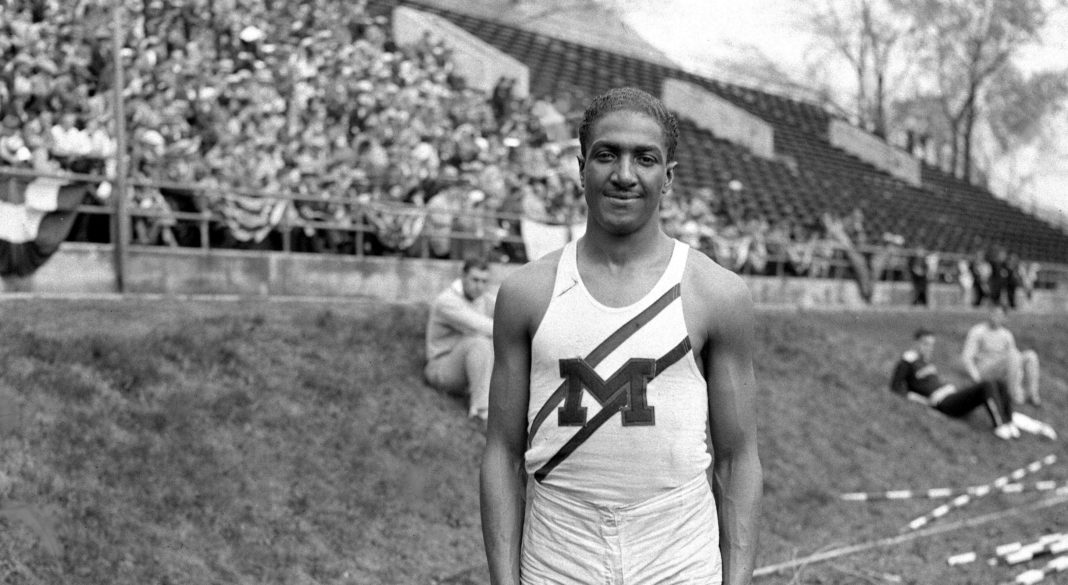
Known as known as “The Midnight Express” he snagged two gold medals in the 100-meters and 200-meters events at the 1932 Summer Olympics in Los Angeles, setting world and Olympic records. Eddie Tolan was born September 29th 1909 in Denver Colorado. Born in 1908, he moved with his family from Salt Lake City to Detroit in 1924 for better employment opportunities. A phenomenal athlete, Tolan attended Cass Technical High School, and excelled as a quarterback on the football field and a sprinter on the track and field team.
In his sophomore year of high school, he finished second place in the 50-yard dash at the first indoor scholastic meet at the University of Michigan. He blossomed into a track phenom during the outdoor season, tying the city record in the 100-yard dash with a time of 10.2 seconds and setting a city mark in the 220-yard at 23.1 seconds. Tolan was part of a two-man team that went on to win the 1925 National Interscholastic Indoor meet in Chicago winning the sprint double (100-yard and 220-yard dashes).
At the Michigan High School Athletic Association (MHSAA) championship meet, he won both the 100- and 220- yard dashes. Tolan’s senior year witnessed continued success. He won the 50-yard run at the Third Annual Indoor Meet at U-M; the 100- and 220-yard dashes at U-M’s Outdoor Interscholastic Meet; and the 100- and 220-yard races at the MHSAA championship with times of 9.8 and 21.9 seconds, respectively. During his Cass Tech career, the up-and-coming star compiled a remarkable, 94% win record in city and state individual outdoor championships.
Despite his earlier injury, Tolan was recruited by several major universities for football, in addition to track. He went on to attend the University of Michigan and intended but did not play football, however he excelled on the track. As a sophomore in 1929, Tolan broke the Big Ten Conference record and tied the world’s record for the 100 yard dash at 9.5 seconds. At the Big Ten championship in May of the following year, Tolan— then a junior—came in second place in the 100-yard dash behind the Ohio State University’s George Simpson, earning him the nickname “Midnight Express.”
Although Tolan experienced success as a sprinter in 1929 and 1930, it was the 1931 season—in which he dominated the Big Ten—that solidified his new nickname. He won the outdoor 100-yard dash in 9.6 seconds and 220-yard dash in 20.9 seconds at the championships. By the time he graduated from U-M, Tolan had competed in 100 races, losing only nine times. He was elected AAU All-College and All-American in the 220-yard dash. In addition to his involvement in collegiate athletics, Tolan became a member of the Black fraternity Alpha Phi Alpha.
After graduating from U-M, Tolan enrolled in graduate school at West Virginia State College. The program aimed to prepare students for teaching and coaching in America’s segregated education system. Tolan coached track at the school, which enabled him to stay in shape for the upcoming Olympics. At the Olympic trials at Stanford University, he finished second to Ralph Metcalfe in the 100- and 200-meter dashes. Their first and second-place finishes at the trials also meant that the top two American Olympic sprinters were, for the first time, African American.
On August 3, 1932, at the Los Angeles Memorial Coliseum, Tolan, with horn-rimmed glasses affixed to his head and a mouthful of chewing gum, broke the Olympic record in the 100 meter race with a time of 10.38 seconds. The first of his two Olympic gold medals. The end of the race came down to a photo finish between Tolan and Metcalfe, the latter of whom was originally announced the winner. In the days before technology could solve such disputes, Metcalfe was convinced the race had been a dead heat and maintained as much for the rest of his life.
In the 200-meter run, Tolan won over George Simpson, with Metcalfe finishing third. The Michigander’s 21.2-second time earned him his second gold medal, as well as another Olympic record. With two golds, Eddie Tolan became the first double Olympic sprint champion in 20 years, and he claimed the title of “World’s Fastest Human”—the first time a Black man had been given that label. The media coverage of Tolan’s Olympic triumph, however, was marred by racism. The American media referred to him as the “dusky Negro,” or “the chunky Detroit Negro,” among other phrases.
Michigan, and the city of Detroit, responded with a welcoming reception at the train station, and Governor Wilbur M. Brucker declared September 6, 1932 as Eddie Tolan Day. Unfortunately, Tolan’s U-M degree, graduate work, and international fame as the world’s fastest human came without compensation or lucrative endorsements. He was broke and jobless, and the United States was in the depths of the Great Depression. To an American society steeped in racism, Tolan was simply a “Negro.”
Just months after returning home to an official reception, he gave up his amateur status to appear in vaudeville with tapdancer Bill "Bojangles" Robinson to earn some much-needed money to support his family. However, Tolan was soon ruled to be in violation of amateur athletic laws for using his track fame to earn an income. The AAU stripped him of his status in June 1933. Tolan became a professional sprinter in November 1934. He left his job at the Registrar of Deeds office to compete in Australia.
After setting records in Australia including events at the World Professional Sprint Championship, in March 1935, Tolan returned to Detroit. As a career sprinter, Tolan became the first man to win both amateur and professional championships. Tolan returned to his job as a Clerk with the Registrar of Deeds, and worked a variety of jobs in the 1940s and 50s. He became a physical and health education teacher and taught at Irving Elementary School on Detroit’s West Side for several years.
Tolan would oftentimes visit with coaches and track runners at his alma mater, Cass Tech, where he offered friendly advice to the young athletes. However, despite being a track star in high school, a former collegiate coach, a two-time Olympic gold medalist, and the only sprinter to win both amateur and professional championships in history, Tolan was not allowed to coach high school track. Yet when he died at the age of 57, in 1967, his legacy as a torchbearer for high-achieving Black sprinters everywhere remained assured.
Audrey Patterson
Audrey Patterson is the first Black woman from the U.S. to win an Olympic medal. She won bronze in the 200-meter dash at the 1948 Olympics, the first Games to include the race for women. Audrey Patterson was born on September 27, 1926 in New Orleans, Louisiana, in the heart of the Jim Crow south. She developed a love of running during elementary school. Audrey Patterson said she felt that “love” when 1936 Olympic gold medal winner, Jesse Owens, was speaking to school in 1944 when he told a group at Gilbert Academy, “There is a boy or a girl in this audience who will go to the Olympics.”
In 1947, Patterson enrolled at Wiley College in Marshall, Texas, where she became a track star, winning the Tuskegee Relays in the 100- and 220-yard dashes and the Amateur Athletic Union National Indoor Title in the 220-yard event. She received a scholarship to Tennessee State University and competed under Tom Harris. He was brought in after coach Jessie Abbott resigned and also recruited Ed Temple. Temple eventually took over the team. Patterson transferred from Wiley College in Texas, where she dominated the 100 meter and 200 meter races at the Tuskegee Relays, to start her short career as a Tigerbelle in the spring in 1948.
Patterson went to Providence, Rhode Island, for trials in the 1948 Olympics and earned a position on the U.S. Women’s All-American Track & Field Team for the London Olympics. Audrey Patterson was one of the nine Black women in total who competed for Team USA in 1948, including fellow Tigerbelles Emma Reed (long jump) and Mae Faggs (200 meter). This was the start of a Tennessee State legacy of Olympic success that would continue throughout the next decades. The 1948 U.S. Olympic Trials were successful, but also unlucky for Audrey.
She burned her leg with an iron before the 200m qualifying races. She won her heat, returned to the dressing room, and accidentally got locked in. Her coach heard her crying and found her just in time for the next race. Audrey also qualified in the 100m, coming in second for the first time since high school. Audrey Patterson, also known as Mickey, was a 22-year running beauty, who got cheers whenever the crowd caught a glimpse of her. And Mickey did not disappoint her international fans. Audrey Patterson became was the first African-American woman to win an Olympic medal, taking the bronze in the 200 meters in the 1948 London Olympics.
She won her Olympic medal, covering the 200 meters in 25.2 seconds, the same time as Shirley Strickland of Australia. It took officials 45 minutes to decide that Miss Patterson would get the third place bronze medal. This was the first Olympic Games that offered women the 200-meter race for competition. Fanny Blankers-Koen of the Netherlands won the race, her third gold medal. The following day, her teammate Alice Coachman won the high jump and became the first Black woman to win an Olympic gold medal. No other American woman left London with a track and field medal.
Patterson and Alice Coachman were the only women of Team USA track & field to medal during the 1948 Games. Audrey’s return home to the South from the 1948 London Games was similar to teammate Alice Coachman’s experience. Audrey was celebrated by the local Black community, and largely snubbed by the Whites. Her hometown newspaper, The Times-Picayune, did not mention her victory. The mayor did not attend her celebration ceremony, sending a certificate in his stead. However, President Harry Truman invited Patterson to the White House for a congratulatory visit after her history-making Olympic performance. Paterson eventually transferred to Southern University in Baton Rouge to finish her degree.
Bob Beamon
Olympic gold medalist and record-breaking track and field star Bob Beamon was born on August 29, 1946, in Queens, New York. He was orphaned before he was eight months old. Beamon’s stepfather was by all accounts an abusive drunk who terrorized his wife and children until it landed him in prison, forcing young Bob to live with his grandmother. The violent chaos of Beamon’s world ushered him into one of the many gangs that roamed the streets of Queens. During a fight at school, Beamon struck a teacher and slapped with an assault and battery charge.
In lieu of jail time, however, he was sent to a school for juvenile delinquents – where, among other things, he learned how to read when he wasn’t borrowing shoes to compete in athletics meets. When he was allowed to return, he used sports as a means to focus his attention and energy toward positive goals. He regularly broke track records at the local and state levels. When Beamon was attending Jamaica High School, Larry Ellis, a renowned track coach, discovered him. He didn’t seem a serious prospect, initially. “I wanted to be a Globetrotter,” says Beamon.
In 1965, Beamon set a national high school triple jump record and was second in the long jump. He further distinguished himself at the Penn Relays as the outstanding competitor in the high school division. Beamon later became part of the All-American track and field team. Beamon began his college career at North Carolina Agricultural and Technical State University (North Carolina A&T). He then transferred to the University of Texas at El Paso (UTEP), where he received a track and field scholarship.
UTEP had just made history by beating uber-White Kentucky in the 1967 NCAA basketball championship. That same year, Beamon won the AAU indoor high jump title. He earned the silver medal in long jump at the 1967 Pan American Games. It looked as if he’d cruise into Mexico City. But then, Beamon along with eleven other Black athletes were dropped from the (UTEP) track and field team the week following the assassination of Martin Luther King Jr. for participating in a boycott of competition with Brigham Young University.
They had banded together ahead of a meet against the Latter-day Saints school to protest against what they characterised as the Book of Mormon’s racist teachings. “It was a very sad and dark time,” says Beamon, recalling how he was radicalised during this period of national tumult. “I became aware of the Ku Klux Klan and other racial outbursts. Black people were becoming more aware, especially of who we were as individuals. We started wearing afros, talking about Black power, Black pride, Black is beautiful.”
Beamon’s stand cost him his scholarship, and momentum. Despite losing his athletic scholarship, Beamon returned to UTEP to continue his studies after the Mexico City Olympics. "He lost the concept of the long jump,” 200 meter Bronze medal John Carlos says. So my thing was to work with him on his speed, and then when I felt he was strong enough, I told him to get with [US coach and fellow jumper] Ralph Boston to get his steps down. Fellow Olympian Ralph Boston became his unofficial coach.
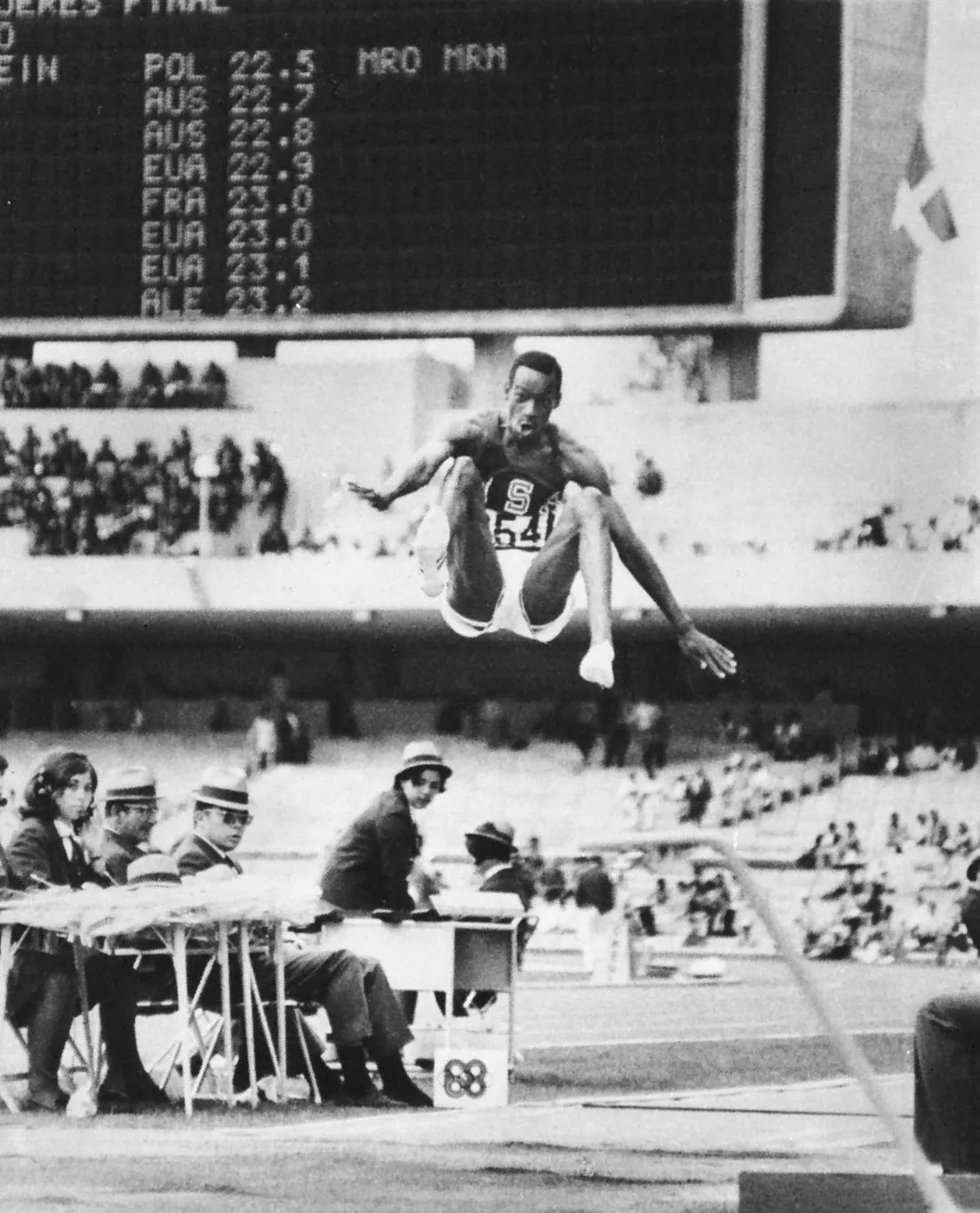
By the time the Olympics came around, it was October – the event pushed back to avoid Mexico’s rainy summer season. Beamon entered the 1968 Summer Olympics in Mexico City as the favorite to win the gold medal, having won 22 of the 23 meets he had competed in that year. They included a career-best of 8.33 meter (27 ft 3 in) and a world's best of 8.39 meter (27 ft 6 in). Beamon came close to missing the Olympic final after fouling on his first two qualifying jumps. With only one chance left, Beamon re-measured his approach run from a spot in front of the board and made a fair jump that advanced him to the final.
There, he faced the two previous gold-medal winners, fellow American Ralph Boston (1960) and Lynn Davies of Great Britain (1964), and twice bronze medallist Igor Ter-Ovanesyan of the Soviet Union. With a few gentle rocks, Beamon eased down the runway in a long, upright stance, pogoed into thin air and hung there as the crowd held its breath. A roar broke out when he finally touched down in the sand pit, well outside the range of an optical device that had been trotted out to precisely log all the jumps.
Ultimately, the judges were forced to break out their old measuring tapes. When the mark of 8.9 meters appeared on the scoreboard, Beamon, a product of the imperial system, had no idea what that meant. Just 22 years old, he landed a jump of 29 ft. 2 1/2 inches (8.90 meter), destroying the existing world record by 55 cm (21+3⁄4 in) or by 1.9 feet. That is almost two feet! When the announcer called out the distance for the jump, Beamon, unfamiliar with metric measurements, wasn't affected by it.
When his teammate and coach Ralph Boston told him that he broke the world record, an astonished Beamon collapsed to his knees and placed his hands over his face in shock. Before Beamon’s golden attempt, the long jump world record had been broken 13 times since 1901. An increase of more than 15cm was thought to be superhuman. In one of the more enduring images of the 1968 Olympic games, his competitors then helped him to his feet.
Within hours of winning Olympic gold, Beamon was back in class at El Paso. No parade. No welcome wagon. No nothing. “I walked into class and they said, ‘Open your book to page one,’” he says. Without warning, he hung up his jumping cleats just before the Munich Olympics in 1972. “People were saying, You need to go back. But what for? I had already proven that I’ve done something, that I’ve won a gold medal in the long jump. Now I needed to transition into something that, to me, would be just as exciting.”
Shortly after the Mexico City Olympics, Beamon was drafted by the Phoenix Suns in the 15th round of the 1969 NBA draft but never played in an NBA game. Beamon is in the National Track and Field Hall of Fame. In 1972, he graduated from Adelphi University with a degree in sociology. Beamon's world record stood for 23 years until it was finally broken in 1991 when Mike Powell jumped 8.95 m (29 ft 4.23 in) at the World Championships in Tokyo, but Beamon's jump is still the Olympic record. Powell broke Beamon's record by a mere 2 inches.
Edwin Moses
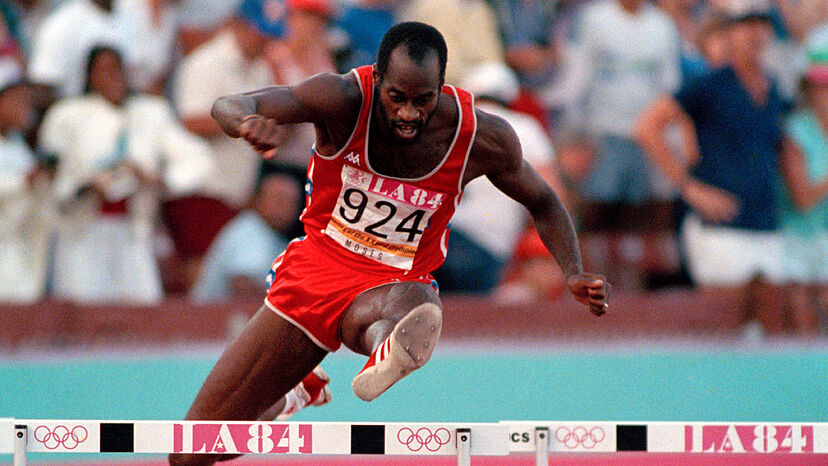
Edwin Moses, dominated the 400-meter hurdles event for a decade, winning gold medals in the race at the 1976 and 1984 Olympic Games. Edwin Corely Moses was born on August 31, 1955, in Dayton, Ohio, the second of three sons to parents who were both educators. When his high school basketball coach cut him from the team and the football coach kicked him out for fighting, Moses turned to track and gymnastics. At a young age, Moses was a lot smaller than the other runners.
In high school, he was 5-feet-7 tall and weighed 117 pounds and frequently found himself at the back of the pack during races. But as he grew physically, he got faster and progessively found himself leading races, rather than trailing. He was a serious student, even foregoing potential athletic scholarships to college in favor of attending Morehouse College in Atlanta. When Moses attended Morehouse from 1973 to 1978, there was not even a track. The track team had to run in the streets or go to Washington High School or Lakewood Stadium to practice.
When Moses entered Morehouse, he said he was not “recruit able” as an athlete because he was a “late bloomer” and was still growing into his body. So, he focused on academics, earning a degree in physics. Moses and his classmates had to improvise his practice by having him jumping over fences or jumping over chairs and garbage cans in their dorm’s hallways. A physics and engineer major – used math to calculate that he needed to take exactly 13 steps between hurdles to maximize efficiency in the 400-meter hurdles.
As a 20-year-old, unknown scholar-athlete from a renowned Black college, he burst upon the international track and field scene. In March of 1976, Moses competed in the Florida Relays in the 110-meter hurdles, the 400-meter hurdles and the 400-meters flat. He qualified for the Olympic trials in all three events. In 1976, as a 20-year-old, unknown scholar-athlete from a renowned Black college, he burst upon the international scene at the Montreal Olympics. Not only did Edwin Moses win the Olympic trials in the 400 meter hurdles, he also set an American record of 48.30 seconds.
At his first Olympics, the 1976 Montreal Games, Moses won the 400 meter hurdles in an Olympic and World Record time of 47.63 breaking John Akii-Bua's mark of 47.82. His eight-meter victory over Mike Shine was the largest winning margin in the event in the Olympics. Despite being the only American male track athlete to win an individual gold medal, Moses was not received with warmth by the public. Perhaps it was because of his serious expression, modified Afro, dark glasses and rawhide thong necklace.
At Morehouse, where he basically coached himself, Edwin Moses was known as "Bionic Man" due to his improbable, fierce workouts. He took a scientific approach to analyzing his performance and developing his training methods. The method paid off in his breaking his own world record with a 47.45 at the Pepsi Invitational, an AAU meet, in 1977. On Aug. 26, 1977 in Berlin, Edwin Moses lost to Harald Schmid, his fourth defeat in the 400 hurdles, his last loss for almost a decade. Moses then won 122 straight races between August 1977 and May 1987.
The United States boycotted the 1980 Olympic Games held in Moscow, where he likely would have captured another thereby denying Moses a second golden opportunity. However, later that year he demonstrated his excellent form in Milan, Italy when he smashed his World Record of 1977 with a new record time of 47.13 seconds. Also in 1980, Moses openly challenged the hypocrisy of the rules that prohibited amateurs from accepting money for competing and making endorsements. He believed that everything should be above-board rather than under-the-table.
Three years he broke the world record for the fourth time on his 29th birthday in Koblenz, West Germany, with his time of 47.02. During the early 1980s Edwin Moses began to speak up on controversial issues. A less popular topic among athletes, Edwin Moses also spoke out against the use of steroids and ways to improve drug testing. He recognized the disastrous affects of these drugs by athletes, could cast upon the sport of Track and Field. "Somebody had to say something," he said. "What are these people doing to their bodies? Is winning worth that price? I don't think so."
After missing the 1982 season because of injury and illness, Moses came back the next year and had the race of his life. In 1983, he won his first world title at the first World Championships at Helsinki, Finland. On that day, his 28th birthday, Moses raced to another world record, 47.02. Moses defended his Olympic title at the 1984 Games in Los Angeles. He became the second man to win two 400 hurdles. Getting off to a quick start, he won in 47.75 seconds.
Moses’ winning streak came to an end in 1987 when he finished second to Danny Harris. On June 4, 1987, in Madrid, in their first head-to-head confrontation since the Olympics, Harris ran a 47.56 to beat Moses by .11 seconds. Moses had won 122 consecutive races, set the world record twice more, won three World Cup titles, a World Championship gold, as well as his two Olympic gold medals. The closeness anyone has come to matching 122 consecutive victories in track and field is Carl Lewis's 65 straight long jump wins.
After that defeat, Moses won 10 straight, including beating Harris at the 1987 World Championships in Rome. He leaned across the finish line in 47.46 to nip Harris and Schmid by about six inches. At the Seoul, South Korea, 1988 Olympic Games, Moses took bronze in the 400-meter hurdles, 47.56 sec, even though his time was faster than his gold medal runs in 1976 and 1984. Moses retired from track afterward but took up bobsledding and won the bronze for two-man teams in a 1990 World Cup race in Germany.
Moses finished seventh at the 1991 World Championships. In 1994, Moses received his Master's from Pepperdine and was elected into the U.S. Track and Field Hall of Fame. Since 1997 he has been president of the International Amateur Athletic Association. He currently serves as chairman of the U.S. Anti-Doping Agency, a job that puts him on the front lines of a program to help Olympic athletes evade positive tests. He was responsible for the development of drug control policies and procedures as Chairman of the Substance, Abuse, Research and Education organization.
Edith McGuire
The youngest of four children, Edith McGuire was born in Atlanta, Georgia on June 3rd 1944. Athletic from an early age, Duvall’s first experience with track and field started during an elementary school’s May Day celebration. McGuire started taking track more seriously during high school at Archer High School in Atlanta. McGuire excelled at academics and sports and was consistently on the honor roll. McGuire was coached by Mrs. Marian Armstrong-Perkins. Coach Armstrong-Perkins had a prestigious reputation for training Olympic athletes, and since 1952, she had at least one former student competing on the U.S. Olympic team.
At the age of 15, she defeated the top prep-school sprinter in Atlanta. As a result of her outstanding performance, in 1960 Coach Armstrong-Perkins recommended Duvall attend Coach Edward Temple’s summer track and field training camp at Tennessee State University in Nashville. McGuire would earn herself a scholarship to Tennessee State in 1961. As a high school senior, McGuire won AAU championships in both the 50-yard and 100-meter dashes. She began in the fall of that year and majored in elementary education.
Edith McGuire became one of the top sprinters of the 1960s, winning six Amateur Athletic Union (AAU) championships. Tennessee State had a very successful women’s sprinting team in the 1960s, known as The Tigerbelles, which included Olympic champions Wilma Rudolph, Wyomia Tyus, and McGuire. She made her international entrance in 1963 at the Pan-American Games in São Paulo, Brazil. McGuire took first place in the 100-meter dash and 400-meter relay. These successes led her to the 1964 Olympic Games held in Tokyo, Japan.
She ran against fellow TSU Tigerbelle and close friend, Wyomia Tyus, considered one of the fastest sprinters in the world, in the 100 meter. She was also going against Irena Kirszenstein and Ewa Klobukowska from Poland, who had recently beaten Tyus’s and Wilma Rudolph’s 100-meter time. McGuire came in second to Tyus for a close upset and a silver medal. However, Edith McGuire achieved her fame at the 1964 Tokyo Games, with her gold medal in the 200 meter, in which she set an Olympic record of 23.05, capping an undefeated season in that event.
McGuire would also win a silver medal as part of the 400-meter relay team with Tyus and two other Tigerbelles. After her wins in Tokyo, Edith became the second African American woman to win three medals in the same Olympic Games. In recognition of her Olympic achievements, McGuire was a top ten finalist for the Sullivan Award. Established by the AAU in 1930, the Sullivan Award is presented annually to the amateur athlete chosen as doing the most “to advance the cause of sportsmanship.
She also came in fourth in the national ballot for Sportswoman of the Year. When McGuire graduated from TSU in 1966, she also retired from competitive track and field as a six time AAU-All-American. She was honored by inductions into the Tennessee Sports Hall of Fame (1975), the Track and Field Hall of Fame (1979), and the Georgia Sports Hall of Fame (1980). McGuire received the 1991 National Collegiate Athletic Association’s Anniversary Silver Award in Nashville.
George Coleman Poage
Born in Hannibal, Missouri on November 6, 1880, George Coleman Poage move to La Crosse, Wisconsin when he was 4-years old. In 1884, his family moved from Hannibal, Missouri to La Crosse, Wisconsin. Young George Poage was a good student and a good athlete. As a teen, he attended La Crosse High School where his love for athletics grew. Poage received his high school diploma in 1899 and decided to continue his education at the University of Wisconsin. He later joined the University of Wisconsin. Poage also was the first African American to run and graduate from the school.
In 1900, his first track race was against the freshman track squad at the university. He then made the varsity team his sophomore year. He consistently won points for the Badgers in his specialized events, short sprints and hurdles, quickly gaining the respect of his team mates. After graduating in 1903 with a degree in history, Poage returned to UW to take graduate classes and continue running track. The athletic department helped support Poage’s extra year on campus by hiring him to be a trainer for the football team. He continued to break barriers and set records as an athlete.
In 1903, he became the first African American Big Ten track champion (individually) by placing first in the 440-yard dash and the 220-yard hurdles. In 1904, the third Olympic Games were being held in St. Louis in conjunction with the World’s Fair. The 1904 Olympic games were far smaller than they would become. Only 496 athletes from 11 countries competed, and just 20,000 spectators attended track and field events. Poage was running for the Milwaukee Athletic Club; he was its first non-White competitor when he won bronze medals for finishing third in the 200-meter and 400-meter hurdles.
Before the games began many prominent African-American leaders called for a boycott of the events in St. Louis. The organizers of both the Olympics and the World’s Fair had constructed Jim Crow facilities for their spectators. They would not allow an integrated audience to view the spectacle. During times of nationwide segregation and an intense struggle for racial equality, Poage managed to qualifiy for the 1904 Summer Olympics with the sponsorship of The Milwaukee Athletic Club. Despite calls for Black athletes to avoid the games, Poage decided to compete.
Poage made history when he became the first African American to win a medal at the Olympics. He would not only become the first Black Olympic competitor, he would also become the first Black medalist. He took home the bronze medal in the 200-yard and 440-yard hurdles. That same day, the second Black Olympian, American Joseph Stadler, won a silver medal for the high jump. However, after the glow of his Olympic achievements faded, and despite his education and skills as a world-class athlete, Poage couldn’t find a job, thanks to Jim Crow.
Poage returned to St. Louis to teach at segregated Sumner High School, where he was the head of the English department and helped coach the school’s sports teams. At the height of the Jim Crow era, however, there were few job opportunities in Chicago open to an African-American, even a college-educated former world-class athlete. The best employer available to many Black Chicagoans was the United States Post Office. Poage secured a job as a postal clerk in 1924 and stayed on the job for nearly thirty years until his retirement in the 1950s.
Lee Evans
He became the first man to crack 44 seconds in the 400 meters, winning the gold medal at the Mexico City Games. Lee Edward Evans was born on February 25, 1947, in Madera, California. At the age of four, his family moved to Fresno. He attended Madison Elementary School and in his last year there trained for his first race by racing his friends at school. The Evans family moved to San Jose, California, during Lee's sophomore year in high school. While running for Overfelt High School, Lee Evans went undefeated during his high school track career.
Lee improved his 440-yard time from 48.2 in 1964 to 46.9 in 1965. Evans ran for the San Jose State University track team where he was coached by Hall of Famer Bud Winter. In 1966 as a freshman, he won his first AAU championship in 440 yd. He won the AAU title four years in a row (1966–1969) and again in 1972 and added the NCAA 400 m title in 1968. His only defeat during that streak came at the hands of San Jose State teammate Tommie Smith. The two were so competitive, Winter could not let them practice together.
Evans achieved his first world record in 1966, as a member of the USA national team which broke the 4 × 400 meter relay record at Los Angeles. They were the first team to better 3 minutes (2:59.6) in the event. The next year he helped break the 4 x 220 yd (201.17 m) relay world record at Fresno in a time of 1:22.1. In 1967, Evans won the 400 meters at the Pan American Games, in a time of 44.95. This was the first time anyone has broken the 45 seconds barrier. Lee Evans was ready for the Olympics.
Evans won the 1968 Olympic trials at Echo Summit, California, with a world record 44.06. Evans wanted the world to understand the way he felt about the Mexico City Olympic Games but did not want to take away from the winners and the sports themselves. But it was at the Mexico City 1968 Olympic Games that Evans, stepped onto the world stage. The previous year he had become the first person to break the 45-second mark in the 400-meter race.
He became the first person to break 44 seconds in the 400 meter, when he set a new world record of 43.86 seconds in the Mexico City Games final. That mark stood for 20 years. The winning performances were in the shadow of controversy. Evans had considered withdrawing from Olympic competition following San José State and USA teammates Tommie Smith and John Carlos were expelled from the Olympic Village. Two days earlier, Americans Tommie Smith and John Carlos finished first and second in the 200-meter race.
At the medal ceremony, they wore high black socks to the podium and, wearing a black glove, each raised one fist during the playing of the Star Spangled Banner. After the clean sweep of the medals in the 400, Mr. Evans, silver medalist Larry James and bronze medalist Ron Freeman wore black berets as their sign of support for the Olympic Project for Human Rights. Evans received death threats prior to and during the Olympics and claimed that had he not had these threats on his mind he probably could have run faster than he did, even though he broke a world record.
Evans then, anchored the U.S. 1,600 relay team to a world record of 2:56.16, winning his second gold medal. The relay record stood until 1992. Evans was an influential leader in regards to the Black Power movement. The Olympic Project for Human Rights began with Black students protesting in order to have equal housing opportunities and was made into the Black power movement. The Black athletes of the 1968 Mexico City Olympics chose not to protest the Olympics as a whole. Instead they chose to protest by wearing an article of black clothing during every event in which they participated.
After winning the AAU 400 m titles in 1969 and 1972, Evans finished only fourth in the 1972 Olympic trials, but was named a member of the 4 × 400 m relay team once more. However, when the time came the United States could not field a team because Vincent Matthews and Wayne Collett were suspended by the IOC for a demonstration at a medal ceremony similar to the one staged by Tommie Smith and John Carlos at the previous Olympics.
Evans became a professional after the 1972 season joining the International Track Association (ITA) tour. He had some success on the ITA tour notably setting a 600 m indoors world best at the first meet in Idaho State University's Minidome. The ITA folded in 1976 and Evans was reinstated as an amateur in 1980 and ran a 46.5 in one of his few appearances that year, at the age of thirty-three. Once his running career was over, Evans went on to head the national athletics programs in six different African nations.
Evans, then he accepted a position as head cross country/track & field coach at the University of South Alabama. Mr. Evans spent much of his post-competitive life on the African continent as a track and field coach and a humanitarian. He was a professor of biomechanics at the Cameroon National Institute of Youth and Sports and an associate professor of physical education at the University of Ife in Nigeria. Mr. Evans coached the national track and field teams of Qatar, Cameroon and Nigeria.
Florence Delorez Griffith Joyner
Widely recognized as the fastest woman of all time, Florence Delorez Griffith Joyner or “Flo Jo” is a household name. Florence Delorez Griffith was born on December 21, 1959 in Los Angeles, California, the seventh of 11 children. She was athletic from a young age and began running at track meets as a child. Joyner developed an early interest in track and field. She chased jackrabbits to increase her speed. When Griffith was in elementary school, she joined the Sugar Ray Robinson Organization, running in track meets on weekends.
She went on to win the Jesse Owens National Youth Games two years in a row, at the ages of 14 and 15. At Jordan High School, Griffith competed in track and field, setting school records in the long jump and sprinting events. As a high school senior in 1978, she finished sixth at the CIF California State Meet behind future teammates Alice Brown and Pam Marshall. After graduation, she attended California State University, Northridge (CSUN) and continued to compete in track and field. There she met Coach Bob Kersee, who would become instrumental to her career in professional athletics.
This team, which included Brown and Jeanette Bolden, won the national championship during Griffith's first year of college. Although Griffith was a part of the 1978 championship team, she had to drop out the following year to support her family. In 1980, Griffith returned to college with the help of Kersee. He assisted her in getting the financial aid she needed to attend the University of California, Los Angeles (UCLA), where he had started working as a coach.
Brown, Bolden, and Griffith qualified for the 100-meter final at the trials for the 1980 Summer Olympics. Griffith also ran the 200 meters, narrowly finishing fourth, a foot out of a qualifying position. However, the U.S. Government had already decided to boycott those Olympic Games, due to the invasion of Afghanistan by the Soviet Union. Griffith finished fourth in the 200-meter sprint at the first World Championship in Athletics in 1983. Also, during that year, Griffith graduated from UCLA with her bachelor's degree in psychology.
The following year, she qualified for the Olympics in the 200-meter distance with the second fastest time at the United States Olympic Trials. When her U.S. teammate Evelyn Ashford had to withdraw from the 200-meter heats due to an injury, Griffith’s chances to earn a medal increased. Griffith’s second-place finish in the race earned her a 1984 Olympic silver medal. Disappointed with her performance after the 1984 Olympic Games, she spent less time running. Griffith continued to run part-time, winning the 100-meter IAAF Grand Prix Final with the time of 11.00 seconds.
She did not compete at the 1985 U.S. National Championship. During that year, she married Al Joyner, the 1984 Olympic triple jump champion, brother of track and field star Jackie Joyner-Kersee and brother-in-law to her coach Bob Kersee. She changed her name to Florence Griffith Joyner following their marriage, which developed into the nickname “Flo-Jo.” Griffith Joyner maintained that her significantly improved times were due to her new weight training and distance running regimen. She had started a new training routine with Al Joyner after their marriage.
Flo Jo returned to athletics in April 1987. Four months later, at the 1987 World Championships in Rome, Griffith Joyner finished second in the 200-meter sprint. Her success during the 1987 season resulted in being ranked second in Track and Field News' 1987 world rankings. The 200 meters remained a stronger event for her than the 100 meters, where she was ranked seventh in the United States. She ran the 100 meter in 10.96-seconds at the 1987 Cologne Grand Prix Track and Field Meet, a personal best but the mark was not even in the top 40 of all time.
At the 1988 Olympic Trials in Indianapolis, Indiana, Griffith Joyner shattered the world record for the 100 meter, beating Evelyn Ashford’s previous record by 0.27 seconds. Her time, 10.49 seconds, was set in the quarterfinal race. At the same Olympic trials, she also set an American record at the 200-meter distance with a time of 21.77 seconds. Following the Olympic trials, in late July 1988, Griffith Joyner left coach Kersee saying she wanted a coach able to provide more personal attention. She left UCLA for UC Irvine with her husband serving as full-time coach.
Griffith made her second Olympic Games appearance in 1988, and she was the big favorite for the titles in the sprint events. Griffith Joyner went on to make history at the Seoul 1988 Summer Olympics. In the semifinal race, she set the world record for the 200 meter at 21.56 seconds. Less than two hours later, she broke her own record in the final with a time of 21.34 seconds, her first Gold medal. For her second Gold medal, in the 100-meter final, she ran a 10.54, beating her nearest rival to the world record, Evelyn Ashford, by 0.30 seconds.
At the same Olympics, Griffith Joyner also ran with the 4 × 100 m relay and the 4 × 400 m relay teams. Her team won the 4 × 100 m relay and finished second in the 4 × 400 m relay. Ultimately, she took home gold medals in three events (100 meter, 200 meter and 4 × 100 m relay) and silver in a fourth (4 × 400 m relay) at the Seoul Olympics. Her 1988 200 meter world and Olympic record of 21.34, as well as her impossibly fast 10.49 100 meter world record, still stands. These two are the longest-reigning sprinting records in track and field history.
Flo-Jo, was a household name. Her success helped her land endorsement deals in Japan as well as acting parts and cameos on American television. On Feb. 22, 1989, five months after the Olympic games in Seoul, Griffith Joyner announced her retirement from track. The month after announcing her retirement, she was selected as the winner of the James E. Sullivan Award of 1988 as the top amateur athlete in the United States. Griffith Joyner moved on with her life. She designed the 1990 NBA uniforms for the Indiana Pacers.
Griffith Joyner also served as the first female co-chair of the U.S. President's Council on Physical Fitness and Sports under former President Bill Clinton. Griffith Joyner made an attempt to compete in the 1996 Olympics in Atlanta. But an injury prevented her from qualifying — and she never competed in the Olympics again. There was no one more iconic than Florence Griffith Joyner during the time she was running. With her record-setting athleticism and eclectic personal style she became one of the most popular and enduring figures in sports. She was one of the greatest athletes in track for revolutionizing women's sprinting with both her speed and her fashion.
John Baxter Taylor
The first Black person to win an Olympic gold medal was John Baxter Taylor. John Taylor born on Nov. 3, 1882, in Washington, D.C. After his family moved to Philadelphia, Taylor attended Central High School, where he was captain of the track team. During his senior year, Taylor served as the anchor runner for Central High School’s one mile-relay team at the Penn Relays. Although Central High School finished fifth in the championship race, Taylor was considered the best quarter-mile runner in Philadelphia. John graduated from Central High School in 1902.
He was first noticed at the Brown Prep School of Philadelphia. During his year at the Brown Preparatory School in Philadelphia, John began winning races and soon established himself as the fastest quarter-miler in the country. while at Brown Preparatory School, young Taylor was a member of a team celebrated for not losing a race. During that year, Taylor won the Princeton Interscholastics as well as the Yale Interscholastics and anchored the school’s track team at the Penn Relays. Taylor entered the University of Pennsylvania in the fall of 1903.
In spring 1904, he joined the varsity track team. By the time Taylor entered his sophomore year at Penn, he had become highly-respected not only within the track and field community, but also in the Black community. By the summer of 1904, Taylor was competing in meets in Europe as well, entering competitons in both France and England. Taylor also competed in the AAU Indoor Championships in Norfolk, VA that year, setting an indoor record of 48.35 seconds for the quarter-mile.
In 1905, Taylor withdrew from school, but returned in the fall returned to track in 1906 under trainer Michael Murphy. Taylor won the 440-yard run at the Intercollegiate Association of Amateur Athletes of America (IC4A) championship and broke the intercollegiate record with a time of 49 1/5 seconds. The win landed him a spot in the 1908 Summer Olympics in London. John Taylor was the first African American to represent the United States. John Taylor had two chances for the gold. His first opportunity came when he participated in the 400-meter race.
Taylor was a favorite in the 400m, but ran a poor race. He was able to equal his time in the men’s 400 meters but that wasn’t good enough, finishing in fourth place. Ultimately, because of despite and disqualifications, for the first time in Olympic history a gold medal was won in a “walkover.” He did compete in the 4 x 400 medley relay. The 1908 Olympiad, was held in London, and was the first time athletes competed in this race that required different runners in the relay to run different lengths.
Taylor ran the third, or 400-meter, leg. As the middle link in the relay his job was to maintain whatever advantage the previous runners had and possibly extend it. In both the semi-finals and the finals, the team was victorious, increasing their time to 3:29.4. His team would walk away with the victory and a gold medal. This made John Taylor the first Black person in history to win a gold medal. Two African Americans had earned medals at the 1904 Olympic games in St. Louis — Joe Stadler had won a silver medal in the standing high jump and George Poage had won two bronze medals for the 200-meter and 400-meter hurdles. But Taylor, in 1908, became the first Black person to win Olympic gold.
William DeHart Hubbard
William DeHart Hubbard was the first Black athlete to win an individual Olympic gold medal when he won the long jump at the 1924 Paris Games. Twelve years before Jesse Owen’s monumental performance in Berlin came Michigan’s William DeHart Hubbard. Hubbard’s leap of 24-feet-5-inches at the 1924 games in Paris easily outdistanced the competition and earned him a place of honor in Olympic history. Hubbard was born on November 25, 1903, in Cincinnati, Ohio and attended Walnut Hills High School in that city.
Hubbard’s achievements on the track and in the classroom caught the attention of a University of Michigan alumnus, Lon Barringer, who saw his times posted in a Cincinnati newspaper. With the encouragement and recruiting of Barringer and other alums, Hubbard decided that he would attend the University of Michigan and run track. When Hubbard arrived at Michigan in 1921, the University of Michigan’s head track coach, Steve Farrell promptly barred him from other sports and had him focus only on jumping events.
Hubbard started jumping past 25 feet, flirting with the world record, which stood at 25 ft 23⁄4in (7.69 m) in 1921. His sophomore year was mediocre but he began to break records in his junior year. He won the Big Ten championship in the 100-meter dash, running a time of 9.8 seconds, and the long jump, jumping 24 feet 10 and ¾ inches. With performances like that, DeHart won a spot on the 1924 Olympic team to represent the United States at the Olympics in Paris, France. On 16 June 1924, the SS America departed from Hoboken, New Jersey, with more than 350 athletes, coaches, trainers, and officials aboard.
During training at the Olympic stadium, observers watched Hubbard work through his paces, practicing height, not distance. One reporter wrote he was “the center of attraction for a number of French enthusiasts.” Hubbard struggled initially at the Olympics. His second jump was a disaster, and on his sixth and final jump match he bruised his heel and committed a foul for stepping too far over the line. For his final jump, he shot down the cinder runway, kicked through the air and landed perfectly.
He cleared 24ft 6in (7.47m), not his best, but good enough for first place. Thus becoming the first African American to win a Gold medal as an individual in the Olympics. (John Baxter Taylor had won a Gold medal in the 1908 Olympics on the 4 X 400 relay team, but Hubbard became the first for an individual event). From 1923-25, there was no better athlete on the University of Michigan campus than Hubbard. The track and field star from Cincinnati, Ohio, set U-M standards that stood for several years.
Going into his senior year at Michigan in 1925, Hubbard also won the 100-yard dash at the NCAAs, tying the existing world record of 9.6 seconds. Hubbard won six straight AAU long jump titles from 1922 to 1927 and was AAU triple jump champion in 1922 and 1923. His 1925 jump of 25 feet 3 1⁄2 inches (7.71 m) stood as a Big Ten Championships record until Jesse Owens broke it on with what is now the current record of 26 feet 8+1⁄4 inches (8.13 m) in 1935 at the Big Ten Championship.
Upon college graduation, he accepted a position as the supervisor of the Department of Colored Work for the Cincinnati Public Recreation Commission. He remained in this position until 1941. He then accepted a job as the manager of Valley Homes, a public housing project in Cincinnati. In 1942 he moved to Cleveland, Ohio where he served as a race relations adviser for the Federal Housing Authority. In addition to participating in track and field events, Hubbard also was an avid bowler.
Wyomia Tyus
At the tumultuous 1968 Mexico City Games, Wyomia Tyus did something no other Olympian, man or woman, had done before. She won consecutive Olympic gold medals for the 100-meter dash. Born in Griffin, in Spalding County, on August 29, 1945, Wyomia grew up on a dairy farm in Griffin, Ga. Tyus began her high school sports career playing basketball. She enjoyed the competition so much that she decided to try the high jump for the track and field team. Though she struggled at the high jump, she realized she had a natural talent for running.
A standout high school runner, she was discovered at the age of 15 by Tennessee State coach Ed Temple, who eventually invited her to join his famed Tigerbelles track team. Temple stressed to her that she was in school to get an education. "When I was competing, all I heard was, 'You need to get out and get a job,'" says Tyus. "'You can't just run all your life. You need to do something.'" So she pursued her degree in recreation even as she dominated U.S. sprinting.
Temple invited Tyus to his summer track and field camp in Nashville, Tennessee. The next year Temple took Tyus to the 1962 Girls’ Amateur Athletic Union (AAU) championships, where she set a new American record in the 100-yard dash. In 1963 she won her age group in the 100-yard dash for a second time and competed in her first AAU senior meet, finishing second in the 100-yard dash to Edith McGuire. Also in 1963, Tyus accepted a scholarship to TSU. Now officially a Tigerbelle, Tyus continued to train and excel under the influence of Temple.
As a sprinter for Ed Temple's Tennessee State "Tigerbelles," Wyomia Tyus got early lessons in competing against the best. She won a number of AAU titles, including the 100-yard/meter dash three times (1964, 1965, and 1966) and the 220-yard dash twice (1966 and 1967). In 1964 Tyus narrowly earned a spot on the Olympic team, which she traveled to Tokyo, Japan, for the games. At the 1964 games in Tokyo, Tyus wasn’t expecting to win the 100-meters. That honor was supposed to go to Edith McGuire, the fastest Tigerbelle at the time and heir apparent to fellow famed Tigerbelle, Wilma Rudolph.
Tyus ran the 100-meter dash in 11.2 seconds in the preliminary heats, tying Wilma Rudolph's world record. She went on to win the gold medal in the 100-meter race, with a time of 11.0 seconds, beating Edith McGuire, whom she had never beaten before. She also captured a silver with the 4 × 100-meter relay team. Tyus won the 100-meter race at the AAU outdoor championships in both 1965 and 1966. Indoors, she won the 60-meter dash three consecutive years (1965-1967), setting new world records each time.
During the Mexico City games in 1968, Tyus faced an atmosphere of racial tension. African American athletes threatened to boycott the games. Although the boycott never occurred, two sprinters, bronze medalist John Carlos and gold medalist Tommie Smith, were suspended from the U.S. team for raising a Black Power salute during their victory ceremony. For Tyus the 1968 games were personally and professionally important. At the Olympic Games, Tyus was in a different position, as a favorite and trying to become the first person ever to repeat as Olympic gold medalist in the 100.
Trying to stay loose before the race, Tyus did a short dance – ironically named the “Tighten Up” — behind the starting blocks. After two teammates false-started Tyus took off winning in the world record time of 11.08 seconds. She became the first person, male or female to win back to back titles in an track event. This was something no one else had ever done. No other person would do this again until Carl Lewis twenty years later, when he won the gold in back to back Olympics 1984 and 1988.
She also won her third Olympic gold as she anchored the 4 x 100 meter relay team. Tyus and her teammates Margaret Bailes, Barbara Ferrell, and Mildrette Netter won the gold for the 4×100 relay, breaking another World Record with a time of 42.88. Only three athletes since her have duplicated the feat. The Mexico City Games are most remembered for the black-gloved fists raised by Tommie Smith and John Carlos. Wyomia Tyus slipped on a pair of black shorts for the Olympic 100m final in Mexico City in 1968, her own quiet way of protesting racial injustice.
She continued her dominance in the 100-meter event until 1972. In 1973 she was invited to compete in the 60-yard dash in the new Professional International Track Association competitions. Her first year back she won eight of eighteen events, but the following year she won every event she entered, a total of twenty-two races. Tyus went on to coach at Beverly Hills High School and was a founding member of the Women’s Sports Foundation, for which she also served as an advisory board member.
One of the most popular runners in history, Tyus capitalized on her celebrity by serving as a goodwill ambassador to Africa. She has been inducted into the Georgia Sports Hall of Fame (1976), the National Track and Field Hall of Fame (1980), and the International Women’s Sports Hall of Fame (1981). The following year Tyus entered professional track competitions and later worked as a television sports commentator. With three golds and one silver medal, Wyomia Tyus of Tennessee State was one of the most successful of all U.S. women track & field.
Tennessee State University Tigerbelles
The Tennessee State University Tigerbelles snagged 23 medals, 16 of them gold. Mae Faggs and Barbara Jones became the first Olympic-winning Tigerbelles in 1952, and the Tigerbelles won another medal in 1956. Soon, Gold Medal winners included Edith McGuire, Madeline Manning, Barbara Jones, Martha Hudson, Lucinda Williams, Chandra Cheeseborough (two), Wilma Rudolph (three), and Wyomia Tyus (three). Tyus was the first athlete to win Gold Medals in the sprints in two consecutive Olympiads (1964 and 1968).
The first star of the Tigerbelles was Wilma Goldean Rudolph. Rudolph made history in Rome, Italy in 1960 becoming the first woman to win three gold medals in the same Olympics. Not only did they excel in track, but 100 percent of the Tigerbelles graduated, many going on to receive Masters and Doctorates. The Tigerbelles were led by coach Ed Temple. When track coach Edward Temple took over the women’s program in 1950, the budget was only $300 and the facilities were poor. That program, with no financial help to start with, produced 40 Olympians and 34 national titles.
As women’s track coach at Tennessee State University for 44 years, Temple ranks among the most impressive leaders in the history of sports both nationally and internationally. He is recognized for the impact he made, not just on the lives of his Tigerbelles, but in the world of track. As important as his contributions on the track were, the legacy he created off it was significantly more lasting. Coach Temple was a gentle and humble man, but a feared and respected disciplinarian and father figure to his young charges.
Between 1956 and 1984, TSU sent 40 Tigerbelles to the Olympics, where they won 23 medals — 13 gold, six silver and four bronze. Their success has been unparalleled in NCAA history. They are the winningest track and field team, male or female, in history. As their coach, Ed Temple, once said, it was “mind boggling” how the Tigerbelles did what they did. “It was extraordinary.” This was a time when women’s sports in the United States was almost nonexistent. Jim Crow couldn’t beat those girls. Substandard equipment didn’t deter them. They were an unstoppable force.
Eight Tigerbelles, including Wilma Rudolph, Wyomia Tyus, and Chandra Cheeseborough, were inducted into the National Track and Field Hall of Fame. Tennessee State was able to produce a lot of these great athletes before the school offered athletic scholarships to the women’s track program in 1967. Coach Temple notes that one of his greatest accomplishments is that out of the 40 Olympians, 28 of them have master’s degrees and 14 of them have either a M.D. or PhD. Tennessee State’s program proved that women can compete on the same stage as the men, and they did it without assistance from the government.
Gwen Torrence
Born June 12, 1965, Gwen Torrence grew up in the East Lake Meadows district of Atlanta, GA. Her gift for athletics gave her the possibility of a university scholarship but initially she told her coaches that she wasn’t interested, as she wanted to enroll in a school for beauticians. A three-time state champion in the 100 meters and 200 meters at Columbia High School. At the 1983 TAC Junior Olympics during her senior year, she won gold medals in both these events. Torrence received an athletic scholarship to the University of Georgia and began her studies there in 1983.
There, she became a 12-time All-American and four-time NCAA champion. In 1984, Torrence qualified for the U.S. Olympic trials, but she did not believe she was good enough to make the team, so she did not go to the trials at all. In 1986, Torrence beat 1984 Olympic gold medalist Evelyn Ashford in the 55-meter dash at the Millrose Games. She won with a time of 6.57 seconds, a Millrose Games record. She won gold medals at the 1987 Pan-American Games and World University Games. Also, in 1987, she won NCAA championships in the 55 meters, 100 meters, and 200 meters.
At the 1988 Millrose Games, again held at Madison Square Garden, Torrence won her thirty-third consecutive race and became the woman to beat during the Olympics in Seoul, Korea. At 22, Torrence was selected to compete at the 1988 Olympic Games in Seoul, Korea. She reached the 100m and 200m finals, finishing fifth and sixth respectively. Florence Griffith-Joyner, shocked the world by beating Torrence and setting new world records for both the 100- and 200-meter dash. Her first taste of the Games inspired her to greater things.
She progressed quickly and ran at the 1991 World Championships in Tokyo, Japan. At the 1991 World Outdoor Championships, she was silver medalist in the 100m and 200m. The 1992 Games in Barcelona started with disappointment for Torrence, as she missed out on bronze in the 100m final by just two hundredths of a second, losing to Gail Devers. However, redemption was at hand as she won a gold medal in the 200 meters. She went on to run a terrific anchor leg in the 4x100m, crossing the line to seal victory for the USA in 42.11 seconds, giving her a second gold medal.
She earned a silver medal as she ran the second leg of the in the 4x400m relay. She won gold medals in the 4x400m relay at the 1993 World Outdoor Championships in Stuttgart, Germany. In 1995, Torrence injured her right hamstring and knee, but continued to train, and won gold medals in the 100 meter and 200 meter at the U.S. outdoor championships. Her final world championship appearance was in 1995. She earned two gold medals in the 100-meter dash and the 4×100-meter relay at the World Championships in Gothenburg, Sweden.
Torrence was also the U.S. indoor 60m champion five times and 200m champ twice. Track and Field News ranked her #1 in the world at 200 in 1994 and 1995. Torrence looked forward to the 1996 Olympics, held in her hometown of Atlanta. At the 1996 Atlanta Olympics, she won a gold medal in the 4x100m relay and a bronze in the 100 meters. Torrence quit competing after the 1997 season. Overall, Torrence is considered one of the finest female sprinters in the world. She was inducted into the Georgia Sports Hall of Fame in 2000 and the USA Track and Field Hall of Fame in 2002.
Louise Stokes and Tidye Pickett
The oldest of six children, Louise Mae Stokes was born in Malden, Massachusetts on October 27, 1913. While a junior in Malden High School in 1931, Stokes won the James Michael Curley Cup for the best women’s performance at the Mayor’s Day track meet, including a New England record 12.6 seconds in the 100-meter dash. In December of that year, she tied the world record for women’s standing broad jump at 8 feet 5 3/4 inches. This jump was her ticket to the 1932 US Olympic Team Track and Field Trials in Chicago.
The following year she traveled to Northwestern University, where she qualified for the Olympics by finishing third in the 100 yd dash. Tidye Pickett was born in Chicago, Illinois in 1914. She first got into running during sponsored picnic races at Washington Park. She started her athletic career running in her local parks district, where she also joined her first track team. She also played basketball and excelled at it, both as a player and a team leader. Pickett competed in and was invited to more local meets.
Another future Olympian, John Brooks, noticed her talent and offered to help improve her training. Tidye then began competing in events around the country, and at 17, based on race times she was selected to join the U.S. Olympic Team. In 1932, Tidye Picket and Louise Stokes became the first Black U.S. women to be selected for an Olympic team. The 1932 Olympics proved disappointing and humiliating to Louise Stokes and Tidye Pickett, and their sense of racial identity.
On the train trip to Los Angeles, the two faced their first humiliation, when at the overnight stop in Denver at the Brown Palace Hotel they experienced various snubs and discriminations. The hotel honored the Olympic team with a banquet, but the two were not allowed to share the experience, being forced to eat their meal in their room. Back on the train, Pickett was doused by a pitcher of ice water while sleeping in her compartment by the racist and generally obnoxious Babe Didrikson.
The greatest humiliation for Pickett and Stokes took place after the team arrived in Los Angeles. After two weeks of running trial sprints under Coach George Vreeland, by the eight runners considered eligible for the 400-meter relay, both Pickett and Stokes were then designated as alternates and would not be competing. The duo were replaced in the 4×100-meter relay by two White athletes, both of whom performed slower than Stokes and Pickett at the trials.
The duo watched from the grandstand as the all-White relay team captured in the 400-meter relay and won the gold medal, robbing them of their shot at glory. Four years later, the games were held in Berlin and the two qualified once more. Stokes won the semi-final of the women’s 100-meter dash, again earning her a place on the US Relay Team. But for Louise Stokes, history was to repeat itself. She learned, again, only on arrival, that a White athlete had been given her turn to hold the baton.
Meanwhile, Tidye went on to make history, however, as the first Black woman to compete at the Olympic Games, running the hurdles. She competed in the 80-meter hurdles, finishing second in the U.S. trials. Pickett survived the heats but went out in the semi-finals. During the race, Pickett’s trailing leg hit a hurdle and she broke her foot, causing her Olympic dreams to come crashing down. Thus, Tidye Pickett became the first Black woman, to compete in the Olympic Games. Both emerged at a time when Black athletes were excluded from most amateur and professional sport competitions involving White athletes. The career of both of these women exemplifies these pioneering achievements for the Black athlete and for Black America in general.
Renaldo Nehemiah
During the period from 1978 until he turned to pro football in 1981, Renaldo Nehemiah was the greatest high hurdler on the planet. Nehemiah was born March 24, 1959 in Newark, NJ. He took up hurdling as a ninth grader on a dare. Nehemiah, who earned the famed nickname “Skeets” as a child, had excellent speed entering high school. As a senior in 1977, Renaldo established himself as the nation’s top prep hurdler under coach Jean Poquette, who convinced him that training should be hard and races should be easy.
He often trained on 45-inch hurdles. By the winter of his senior year, Nehemiah was the nation’s best prep hurdler. He set national 60 yard hurdle records of 6.9 secs and 7.2 secs indoors. Then he continued outdoors in the 100 meters, to the 12.92 world record in May. Then at the International Prep Invite, he swept those events in 13.2 secs, then shredded another record with a 13.5 AAU Junior victory over the 42” hurdles. That mark would stand 27 years. The unbeaten campaign earned Nehemiah the Track and Field News HS Athlete of the Year award.
He was ranked number one in the world for four straight years, from 1978 through 1981. After graduating from Scotch Plains-Fanwood, Nehemiah attended the University of Maryland, where he won three NCAA titles including the 1978-79 NCAA Indoor Championships. As a freshman, he was the NCAA champion. Nehemiah's sophomore year at Maryland proved to be his breakout year. He broke the world record in the 110 meter hurdles twice in two weeks, running 13.16 and then 13.00. As a sophomore he was the star of the prestigious Penn Relays, being named MVP of the meet, and won another NCAA title.
He won the 1979 IAAF World Cup and Pan-American Games titles, as well as the second of four U.S. national titles. Prior to his junior year, Renaldo decided to accept an offer by Puma to turn pro. He continued to study at Maryland, but by the rules of the day he was no longer eligible to run for the school. Renaldo started to focus on the 1980 Olympics, hoping to peak in time for the Summer Games. Renaldo’s only rival was Greg Foster of UCLA. For several years, they were so far ahead of the competition that it was only matter of who would finish first, and who would finish second.
In 1981, both turned in their best times in the same 1981 race. Renaldo edged Foster with a time of 12.93 seconds in the 110 meters. He was the world record holder, the first athlete to run the high hurdles in under 13 seconds, and probably would have been the 1980 Olympic champion if the U.S. had not boycotted those games. Nehemiah received one of 461 Congressional Gold Medals created for the athletes. In 1981 Nehemiah broke the world record for the 110 meter hurdles and became the first person to ever run the race in less than 13 seconds. That same year, he won the Pan-American Games title and the World Cup.
Two years later, in Zurich, he again set the world record, cracking the 13-second barrier with a time of 12.93. During his tenure at Maryland, he also excelled as a relay runner on the 4x200m and 4x400m teams. He accepted an offer from the San Francisco 49ers to play pro football. He joined the 49ers in 1982 and was a member of the Super Bowl XIX champions in 1984. As a football player, Renaldo’s main value was stretching the defense and drawing two defenders deep down the field. Nehemiah played for the San Francisco 49ers of the National Football League from 1982 to 1985.
He was prevented from competing in the 1984 Summer Olympics in Los Angeles because the IOC claimed "he had lost his amateur status" by playing professional football, an entirely different sport. Nehemiah returned to track in 1986, achieving world rankings four more times from 1988 to 1991. In 1986, the United States Sports Academy made Nehemiah the first recipient of the Jim Thorpe All-Around Athlete Award recipient. The Jim Thorpe All-Around Award is presented to an individual who has demonstrated outstanding achievement in multiple sport or multiple events of the same sport.
He was named to the U.S. team for the 1991 World Championships, but an injury kept him from competing. At 32, he could still run the 110 in under 13.2 seconds. He became a sports agent, working for Octagon and managing their track & field clients. During his track career, Renaldo set eight world records, all between 1979 and 1982—in the 50 meters, 50 yards (twice), 55 meters, 60 yards and 110 meters (three times). Nehemiah was included into the National Track & Field Hall of Fame in 1999.
Valerie Brisco-Hooks
A relative unknown at the start of 1984, Valerie Brisco-Hooks is a classic example of an athlete whose career peaked at just the right moment, at an Olympic Games in front of a home crowd. In her case, it was the Los Angeles Olympic Games in 1984. At the 1984 Summer Olympics in Los Angeles, Calif., U.S. sprinter Valerie Brisco-Hooks became the first athlete in the history of the games to win gold medals in both the 200-meter and 400-meter races. Valerie Brisco was born on July 6, 1960, in Greenwood, Miss.
Her family moved to Los Angeles when she was 5 years old. She first achieved success as a runner during high school, at times posting the best times in the nation among her peers. A scholarship to California State University at Northridge brought Brisco under the direction of Bob Kersee, who helped her develop a strong work ethic. She won the 200 meters at the Association of Intercollegiate Athletics for Women Championships in 1979 and placed second in the Amateur Athletic Union Championships.
At the Pan-American Games that year, she was part of the victorious 4 × 100-meter relay team. She married Alvin Hooks in 1981, and the couple moved to Philadelphia, Pa., where he played professional football for the Eagles. Her fastest time of 52.08sec for 400m had been set in 1979, and her best in 1983 had been only 53.61sec. At the Track Athletic Congress in 1984, Brisco-Hooks became the first woman from the United States to run the 400 meters in less than 50 seconds.
In 1984, she improved her 400m time to 49.83sec in winning the US national championships, and qualified for the Olympic Games by coming second at the US trials to Chandra Cheeseborough. At Los Angeles, Brisco-Hooks won the first semi-final in 51.14sec, while the other semi-final was won by Cheeseborough. At the Olympic Games, she powered away from compatriot Florence Griffith in the 200m final to win in a U.S national record of 21.81sec, winning her first gold medal.
She won her second gold in the 400 meter run with a time of 48.83. She became the first woman to win the 200 and 400 meters at the same Olympics. Her amazing Olympic campaign was completed the next day when she won her third gold medal as a member of the victorious US 4x400m relay team. After her phenomenal triple gold medal winning performance at the 1984 Olympic Games, it was not surprising that Valerie Brisco-Hooks had difficulty maintaining that form the following year.
Nevertheless, she turned in some impressive performances in 1985. Her greatest achievement was a meet in Zürich, Switzerland, on August 21st. She beat the top East German sprinter Marlies Gohr over 100m in a personal best time of 11.01sec. On the same day, she defeated world record holder Marita Koch (East Germany) over 200m in 21.98sec. In 1986, she again performed better at the shorter distances, improving her 100m personal best to 10.99sec in early season meet at Westwood in May.
On September 10th that year, her best performance was at the Grand Prix final in Rome, where she won the 200m in 22.30sec. She then came in second to world record holder Marita Koch in the 400m in 50.21s. In 1988 Brisco-Hooks concentrated on the 400m in a bid to defend her Olympic title at the Seoul Olympic Games. She ran her best time (49.90sec) of the year in finishing second in her semi-final at Seoul, but in the final, finished a disappointing fourth in 50.16sec.
At the Seoul Olympic Games in 1988, Brisco-Hooks finished her career in grand style, running the third leg for the USA team which broke the existing world record, but unfortunately finished second to the team from the Soviet Union. In all Brisco-Hooks won three gold medals at the 1984 Olympics, and one silver medal at the 1988 Olympics. She was inducted in 1995 to the United States Track and Field Hall of Fame. After her Olympic triumphs she worked with young children and appeared in anti-drug films shown in schools.
Tommie Smith and John Carlos
The enduring image of Tommie Smith is of him standing completely still. His right fist is raised in the air, of course, and his head lowered, whether the image is on video with the sound of the “Star-Spangled Banner” playin. Or of a photo capturing him and John Carlos. Either way, that silent protest on the Medal Podium at the Mexico City 1968 Olympic Games literally freezes him in time. At his most iconic moment, Tommie Smith was one of the fastest men alive and had just shattered the 20-second barrier for the 200-meter dash.
Breathtaking, jaw-dropping motion was what carried the 24-year-old Smith to that moment. Plus, as Smith has made sure to point out often since, as much as his courageous stance immortalized him, the moment would not have been possible without making winning an Olympic gold medal a dream. Smith was world-class at every sprint distance. He could have run in everything in Mexico City from the 100 meters to the 400 and both relays and medaled in any of them. He had run a 10.10-second 100 meters in 1966, when the world record was 10 seconds flat.
In 1967, he broke the 400-meter record with a 44.5-second time – against Lee Evans, another San Jose State teammate and the eventual Mexico City gold medalist in the 400. Smith’s speed was giving him an ever-growing platform, and the world stage in the fall of 1968 became inevitable. Of all the jewels legendary San Jose State Coach Bud Winter had produced over the years, Smith was the brightest gem. Winter featured Smith and his technique in teaching books and videos devoured by coaches, athletes and aficionados.
The brilliant run in Mexico City – memorably sling-shotting off the curve to take the lead from Carlos down the stretch – was the crowning achievement. Smith earned his sociology degree from San Jose State the following spring (often taking night classes for his own safety), but he never competed for the U.S. again. After graduating, Smith played professional football with the Cincinnati Bengals for three years. He later became a track coach at Oberlin (Ohio) College, where he also taught sociology, and briefly coached at Santa Monica (California) College.
At the 1968 Olympic Trials, John Carlos stunned the track world when he beat Tommie Smith in the 200 meter finals and surpassed Smith's world record by 0.3 second. Though the record was never ratified because the spike formation on Carlos' shoes wasn't accepted at the time, the race reinforced his status as a world-class sprinter. Carlos had his greatest year in 1969, equaling the world 100-yard record of 9.1, winning the AAU 220-yard run, and leading San Jose State to its first NCAA championship with victories in the 100 and 220 and as a member of the 4x110-yard relay.
Carlos was also gold medalist at 200 meters at the 1967 Pan-American Games and set indoor world bests in the 60-yard dash (5.9) and 220-yard dash (20.2). Prior to his successful collegiate career at San Jose State University under Hall of Fame coach Bud Winter, Carlos attended East Texas State University, where he single-handedly won the school's first Lone Star Conference Championship. Following his track career, Carlos tried professional football, where a knee injury curtailed his one-year stint with the Philadelphia Eagles. Carlos took a job as a guidance counselor at Palm Springs High School in Southern California.
John Carlos and Tommie Smith went to the 1968 Summer Olympics in Mexico City with a plan: If they won medals, they would stage a protest against racism and injustice on the world stage. On October 16, 1968, in the Olympic Stadium in Mexico City, Tommie Smith and John Carlos placed first and third in the 200 meters Olympic final. After getting on the podium for the awards ceremony, Smith and Carlos turned themselves to the American flag hung over the stands, they bowed their head and raised a closed fist, wearing black gloves, to reaffirm the battle for Blacks civil rights in America.
Although no words were spoken, the moment was full of meaning. Smith, who had won gold in the 200m, setting a new world record, raised his right fist to represent Black Power. They chose various symbolic expedients for participating at the award ceremony, as they explained afterwards. Bronze medalist Carlos, wearing a pearl necklace, as a symbol of the stones used during the lynching of the Black Americans, raised his left fist to represent Black unity. Smith wore a black scarf, while Carlos a closed up jumpsuit to show solidarity to American workers. The socks with no shoes represented African-American poverty.
That day Carlos forgot his gloves, so Smith loaned him one: that is the reason why they raised different arms. Smith and Carlos underwent to broad critics and received threats and intimidation. The Black Power salute, as it came to be known, was a defiant statement against the systemic oppression of Black people in the US and marked a defining moment in the history of civil rights activism. The two men also placed buttons on their USA uniforms. The buttons read OPHR, which stood for Olympic Project for Human Rights.
But their use of it on October 16th, 1968 came at great personal cost to the athletes involved. Within hours, they were condemned by the International Olympic Committee. Two days later, they were suspended from the US team and sent home. There was discussion of stripping them of their medals. However, they became the heroes of the Black community and during the following decades they have received many awards and recognition for their protest. Their upraised fists became a symbol of the Black persons' refusal to submit to racial injustice.
Jesse Jackson wrote a telegram directly to Tommie Smith congratulating him for his courageous act, stating, “You may have been on the wrong side of the Olympic Committee, but on the right side of history.” Once Smith and Carlos took their stand on the medal stand, many commentators became outright hostile. "I was trying do something that would change something for your kids and grandchildren," Carlos said later. "I didn’t go there for the medal. I wanted to do something that was everlasting."
As Tommie Smith later explained, “The totality of our effort was the regaining of our Black dignity.” Both Carlos and Smith paid a high price for their actions. They received a steady stream of threats on their lives. At the time, the International Olympics Committee said the gesture was political, which the Games were not meant to be. On Nov. 1, Smith and Carlos were inducted into the U.S. Olympic and Paralympic Hall of Fame in Colorado Springs. Their official citation says they "courageously" stood up for racial equality.
Jim Hines
Born in Arkansas and raised in Oakland, California, Jim Hines was a multi-sport talent and played baseball early on until a track coach spotted his running abilities. At McClymonds high school, coach Jim Coleman plucked Hines off the baseball field to run track. By 17, he ranked among the US top 20 sprinters, and won a scholarship to the Texas Southern University in Houston, where he ran in the summers for the Houston Striders AAU club. In 1966 Hines won the U.S National 200m championship.
At the 1968 U.S. Outdoor National Track and Field Championships, where he became the first person to run the 100m in under 10 seconds, clocking an official time of 9.99 seconds. His hand-timed 9.9 seconds was equalled by the second- and third-place finishers, Charles Greene and Ronnie Ray Smith, who became joint record-breakers, although electronic timing had all three men clocked at just over 10 seconds. His world record time qualified him for the 1968 Olympics in Mexico City.
It was not until 1977 that international athletics began recognising only electronic timings, and thus the progression of world records changed. Bob Hayes’s 10-second-flat mark from the 1964 Tokyo Olympics became 10.06. Because Hines’s 9.9 performance was hand-timed, from the 1968 US outdoors, the Automatic time was actually 10.03. Hines wanted to do it again and this time at a place where it mattered. The 10 second barrier has been a milestone for decades in the Men’s 100m Dash. A time of 9.9 seconds was seen as a right of passage into becoming an elite sprinter, and among one of the best in the world.
No man had ever broken the barrier. Not until Jim Hines. A few months later, at the 1968 Summer Olympics, in Mexico City, Hines won the Gold medal in the 100m Dash and broke the 10 second barrier again. This time running an electronic time of 9.95 seconds he set a world record, which lasted 15 years until Calvin Smith ran 9.93. His American rival, Charles Greene took home the bronze. Hines’ performance was one of several world records set at the 1968 Games, which were held in Mexico City.
Those Olympics are perhaps best remembered for the on-podium protests of John Carlos and Tommie Smith, who raised black-gloved fists after winning medals in the 200-meter dash. Hines also earned gold in those games by anchoring the U.S. 4 x 100 meter relay team. Both performances were monumental. The relay was a truly dramatic event, as Hines took the baton with the U.S. in sixth place. Hines turned in a remarkable clocking of 8.2 seconds in his leg to seal the winning time of 38.2, another world record.
Featuring Hines, fellow sprinters Lee Evans and Tommie Smith, John Carlos, long jumper Bob Beamon and Wyonmia Tyus of the woman’s team, the 1968 U.S. track and field team is widely considered to be the finest in history. Immediately after the Olympics he signed to play football with the Miami Dolphins, who had chosen him late in the 1968 college draft looking for another Bob Hayes. He had two catches for 23 yards for Miami in 1969, along with one kick return for 22 yards. Following his playing career, Hines worked with inner-city youth in Houston. He was inducted into the national track and field hall of fame in 1979.
Earlene Brown
A three-time Olympian, Earlene Brown, is the only U.S. female to have ever won a medal in the Olympic shot put. She was one of the only two United States women to place at Rome and the only shot-putter to compete in three consecutive Olympics. She was also national champion in the shot put (eight-time) and the discus (three-time), and won gold in both the shot put and discus in the 1959 Pan American Games in Chicago. She was notable for her careers in track and field and roller games.
Earlene Dennis Brown, a three-time Olympian was born July 11, 1935, in Latexo, Texas, a small town, in Houston County, Texas. Brown followed her mother who joined the second Great Migration of Southern African-Americans to California and moved to Los Angeles. Dennis attended Jordan High School in South Central Los Angeles, where she played football, softball, baseball and basketball throw and discus. After graduating from high school in 1952, Dennis attended Compton Junior College and completed a machinist training program.
Brown joined the Amateur Athletic Union (AAU) at 21 in 1956. There, she started weightlifting under the tutelage of Des Koch, while America’s original javelin technician Steve Seymour coached her in shot and discus. Witnessing Brown throw, Seymour was convinced she had potential as a gold medalist and decided to send her to the 1956 Summer Olympics in Melbourne. Because Brown was an independent athlete, not at a college program at the time, she didn’t have a dedicated, proper training program for an elite athlete.
Brown finished in the top ten in the shot put and discus in the 1956 Summer Olympics in Melbourne, Australia, setting American records in both events. In 1958 she received the #1 world ranking and became the first American woman to break the 50-foot barrier in the shot put. In 1959 she won gold medals in both the shot put and discus events at the Pan American Games. Beginning in 1959, Brown was associated with the Tennessee State University “Tigerbelles”, whose coach Ed Temple was also the head coach of the U.S. Olympic Women’s Track and Field Team.
Coach Temple spent time ‘getting Brown in shape’ for the 1960 Games. During this time, Brown developed a friendship with Wilma Rudolph. In 1960, Earlene Brown became the first U.S. woman to medal in shot put at an Olympic Games, winning bronze. A U.S. woman wouldn’t medal again in shot put for more than half a century. Her ambitious mindset kept her on the road to greatness for years after. She soon became an Amateur Athletic Union Champion in 1964. At her last Olympics – Tokyo in 1964 – she placed 12th in the shot. She was “beset by both wind and rain and lost her footing and a chance to get a toehold on the crown.
In 1965, she retired from shot put competition. The same year she became a skater. As a blocker for the New York Bombers Roller Derby team, she was dubbed the “Brown Bomber.” After a brief retirement, Brown returned to roller games, skating with the World Famous, World Champion Los Angeles Thunderbirds. It was at this juncture that she became known in the sport as “747” because of her size and weight. After the 1975 season, Brown permanently retired from roller games. On December 1, 2005, Brown was posthumously inducted in the National Track and Field Hall of Fame by the USA Track and Field (USATF) during the Jesse Owens Awards and Hall of Fame Induction Ceremony.
Leroy Burrell
Olympic track and field star who set world records in the 100m and 200m sprints Leroy Burrell was born February 21, 1967 in Lansdowne, PA. Burrell first gained track and field’s national spotlight when he earned All-America honors as a senior at Penn Wood High School in Lansdowne, Pa. in 1985. He was named the Eastern Track Athlete of the Year after single-handedly winning the 1985 Class 3A State Championship. Burrell scored all of Penn Wood’s 40 points when he won the 100m, 200m, long jump and triple jump at the state meet.
In 1985-86, he broke Houston’s freshman long jump record, previously held by Carl Lewis, when he leaped 26’-9” at a dual meet against UCLA in 1986. Later that season, he faced one of the most challenging moments of his track career. After jumping 26’-7.25” in the preliminaries of the 1986 Southwest Conference Outdoor Championships, Burrell jumped almost 27 feet before landing awkwardly on his third jump. He tore his anterior cruciate ligament (ACL) in his left knee. He finished second at the meet, but many people feared the injury was career ending.
In 1988, he returned to the SWC Championships, where he finished second in the 100m and in third place in the long jump. At the NCAA Championships, Burrell earned All-America honors with a fifth-place finish in the 100m and a seventh-place showing in the long jump. The next year, he won the NCAA Indoor Championship in the long jump with a leap of 26’-5.50”. At the 1989 NCAA Outdoor meet, he set the meet record with a personal best jump of 27’-5.50”. But, Ohio State’s Joe Greene recorded a wind-aided mark of 27’ 7.25” to win the event, and left Burrell with a record-setting second-place finish.
Two weeks later, Burrell rebounded at the USA Outdoor Championships at Houston’s Robertson Stadium. He won the 100m in 9.94 seconds, which was the fastest time ever recorded by a collegian. He also teamed with Carl Lewis, Danny Everett and current UH assistant coach Floyd Heard to set a world record in the 4x200m relay with a time of 1:19.38. As a senior in 1990, Burrell won the NCAA Indoor long jump title for the second straight year with a leap of 27 feet.
At the SWC Outdoor Championships, Burrell ran one of the best sprint doubles ever recorded. He ran the fastest 200m ever run under any conditions with a wind aided time of 19.61 and ran a wind-aided 9.94 time in the 100m to easily win both races. He also won the 100m at the NCAA Outdoor Championships in Durham, N.C., when he posted a wind-aided time of 9.94 seconds and set a meet record in the semifinals with a time of 10.03 seconds.
After completing his collegiate eligibility, Burrell beat Carl Lewis for the first time on July 23, 1990, when he won the 100m in 10.05 seconds at the Goodwill Games in Seattle. He was ranked as the world’s top sprinter in 1990 and 1991 after winning 19 of his 22 races in the 100m. Burrell set his first individual 100m world record on June 14, 1991, at the USA Championships in New York City. With a time of 9.90 seconds in the 100m, he edged Lewis, who finished second with a time of 9.92.
Later that year at the World Championships in Tokyo, Burrell bettered his time to 9.88; however, he was forced to settle for the silver medal as Lewis won the race in a record time of 9.86. Burrell and Lewis joined forces in the 1992 Olympic Games in Barcelona, Spain, where they combined with Mike Marsh and Dennis Mitchell to win the gold medal and set a new world record with a time of 37.40 seconds. Burrell also had a fifth-place finish in the 100m at the Olympic Games.
In 1993, Burrell ran the anchor leg for the USA 4x100m relay team at the World Championships. The team won another gold medal and tied the world record. Burrell was a member of the 1994 Santa Monica track team that set the world record in the 4x200m relay in 1:18.68. On July 6, 1994, Burrell reclaimed the title as the “World’s Fastest Human” when he reset his world record time in the 100m with a time of 9.85 seconds. His impact on sprinting and coaching has made him a respected figure in track and field, leaving a lasting legacy in the world of athletics.
▶ Won the 1989 NCAA Indoor Long Jump Championship, held at Indianapolis
▶ Won a gold medal in the 100 m category, at the 1990 Goodwill Games, held in Seattle
▶ Clinched a gold medal in 4 x 100 m relay event and a silver medal in the 100 m at the 1991 World Championships, held in Tokyo, Japan
▶ Bagged a gold medal in 4 x 100 m relay, at the 1992 Summer Olympic Games, held in Barcelona, Spain
▶ Won a gold medal at the 1993 World Championships in Athletics, held in Stuttgart
Mae Faggs-Starr
In spite of her diminutive 5’2” frame and 118 pounds, she became a legendary sprinter. She was born Aeriwentha Mae Faggs on April 10, 1932, in Mays Landing, New Jersey, but grew up in Queens. Mae attended Bayside High School, where she became a champion sprinter. She began running track in elementary school and later became a member of the Police Athletic League. She ran for the league from 1947 till 1952. In 1948, she competed in her very first Olympics when she was only 16 years old, making her the youngest member of the team.
Mae ran in the 200 meter dash and 400 meter relay. Unfortunately, she didn’t qualify for the finals. Although she was the youngest member of the squad, she did not feel threatened by the other athletes at the games. Her failure to win at this first Olympic challenge did not daunt her spirits. She vowed she would return and be successful. She later graduated from Bayside High School in Queens, New York. In 1949, as a member of the New York City PAL team, she won her first of six 220-yard Amateur Athletic Union's (AAU), setting an American record.
Her coach on the PAL team felt she was ready to enter the trials for the 1948 U.S. Olympic team. Thus begn her monumental track career. In 1950, Mae became one of the first female athletes in the U.S. to receive a full college when she was recruited for the Tennessee State track team by coach Ed Temple. Mae Faggs was the first in a long line of female track stars to study under Tennessee State University Coach Ed Temple and attain international acclaim in the Olympics. Coach Temple points out that although she may have been the smallest competitor, but she was one of the most courageous.
Called “The First Lady of Track,” Faggs earned the distinction of being the first U.S. female to participate in three Olympiads (1948, 1952, and 1956). Mae returned to the Olympics for the second time in 1952 to help the United States win the gold medal in the 4x100 meters relay in Helsinki setting a world record. She fell short of the finals again in the 200 meters. Although, she did make the finals in the 100, where she finished sixth. In the fall of 1952, she was offered a scholarship to Tennessee State at a time when they were extremely rare for female athletes in the male-dominated world of American sport.
She proudly became a Tennessee State Tigerbelle. Mae Faggs entered Tennessee State University in 1952 having participated in two Olympics. In 1953, Mae Faggs won the 100-yard dash in the National AAU Women's Championships, setting an AAU record. Between 1949 and 1956, she won the AAU 220 yard run six times. She also was a member of the winning 800 -meter relay team in the National AAU women's Championships that year in Harrisburg, PA. In 1955, she was a member of the winning 4x100 team, and also won silver in the 200 meters.
She also won a silver medal in the 100m at the 1955 Pan American Games in Mexico City. Her time of 10.8 seconds in the 100 in 1955 set a world record. She won both the 100 meters and 200 meters at the 1955 and 1956 AAU championships. In total she won 11 National Amateur Athletic Union (AAU) titles. Mae participated in her third Olympics and won a bronze medal in the 1956 Melbourne Olympics, as a member of the 4x100 relay team. This marked her as the first American woman to compete in three Olympics! Faggs was credited by Coach Temple as the athlete who “put the Tigerbelles on the map.”
On the 1956 squad, Faggs passed the baton for the third leg to a 16-year-old who would soon reach her own great fame, Wilma Rudolph, winner of three Olympic gold medals in Rome in 1960. Faggs had met and trained with the young Rudolph at Tennessee State. It was Faggs's success which first drew national attention to Tennessee and helped persuade other talented young athletes - like Rudolph - to enroll in the program. Faggs, became a real leader of the team at Tennessee.
Following her retirement Faggs married Eddie Starr and moved to Cincinnati to start a teaching career at Lockland Wayne High School.
She became administrator in the Princeton City Schools and led the Princeton High School girls' Track and Field team to the Ohio championship in 1989. By the end of her track career at Tennessee State University, she had won 26 trophies, 3 plaques and 100 medals. In recognition of her achievements she was inducted into the National Track and Field Hall of Fame. Throughout Fagg's years in track, she demonstrated leadership skills and an ability to encourage and inspire. She was elected to the US Track & Field Hall of Fame in 1976.
Jackie Joyner-Kersee
She won three gold, one silver, and two bronze Olympic medals in those two events at four different Olympic Games. Jacqueline Joyner, better known as Jackie Joyner, was born March 3, 1962, in East St. Louis, Illinois, and was named after Jacqueline Kennedy, the First Lady of the United States. Jackie and her family lived in a poor neighborhood, in a house Jackie described as "little more than paper and sticks". Jackie was only 10 when she started to compete in track meets and winning.
When she was 14 years old Jackie Joyner won her first Junior National Title in the pentathlon. In high school she was a determined student and athlete, competing on the school’s volleyball, basketball, and track teams. As a junior, she set the Illinois high-school girls’ long jump record at 20 feet 7.5 inches. She was inspired to compete in multi-disciplinary track & field events after seeing a movie about Babe Didrikson Zaharias. she qualified for the finals in the Long Jump at the 1980 Olympic Trials, finishing 8th behind another high school student, Carol Lewis.
Her high-school success led to a scholarship to the University of California, Los Angeles (UCLA). She starred in both track & field and in women's basketball from 1980–1985. She was a starter in her forward position for each of her first four seasons. She had red-shirted during the 1983–1984 academic year to concentrate on the heptathlon for the 1984 Summer Olympics. She was voted the nation's best female collegiate track and field competitor in 1983, and was awarded the Honda-Broderick Cup, given to the nation's best female collegiate athlete in 1985.
It was at UCLA that Jackie Joyner first met Bob Kersee, her coach and future husband. Under Coach Kersee's direction, Jackie Joyner excelled at track and won the NCAA heptathlon two years in a row, as well as walking away with the 1982 USA championship. While preparing for the 1983 World Championships in Helinski, Finland, Jackie Joyner pulled her hamstring and was forced to withdraw from the competition. At the 1984 Summer Olympic Games in Los Angeles, she won the silver medal in the heptathlon.
She was the favorite heading into the event, but finished five points behind Australian Glynis Nunn. She also placed fifth in the long jump. At the 1986 Goodwill Games Joyner was the first woman to score over 7,000 points in a heptathlon event. In 1986, she received the James E. Sullivan Award as the top amateur athlete in the United States. Now known as Jackie Joyner-Kersee after marrying her coach Bob Kersee, she entered the 1988 Summer Olympics in Seoul, Korea and earned gold medals in both the heptathlon and the long jump.
Joyner-Kersee set the heptathlon world record (7,291) while winning the gold meda. Five days later, Joyner-Kersee won her second gold medal, leaping to an Olympic record of 7.40 m (24 ft 3+1⁄4 in) in the long jump. She was the first American woman to earn a gold medal in long jump as well as the first American woman to earn a gold medal in heptathlon. In the 1991 World Championships, Joyner-Kersee was everyone's favorite to retain both her World Championship titles she earned four years earlier in Rome, at the 1987 World Championships.
However, her challenge was dramatically halted when, she slipped on the take-off board and careened headfirst into the pit, avoiding serious injury. She did, however, strain a hamstring, which led to her having to pull out of the heptathlon during the 200 m at the end of the first day. In 1992 in Barcelona, she became the first athlete to win the heptathlon in consecutive Olympic Games, thus back to back gold medals. Joyner-Kersee’s best heptathlon events were the long jump, 100-meter hurdles, 200-meter run, and high jump.
In her final Olympic appearance at the 1996 Games in Atlanta, she earned a bronze medal in the long jump. A hamstring injury forced her to withdraw from the heptathlon. Being done with the Olympics didn't mean Jackie-Joyner Kersee was done with being an athlete. After the 1996 Olympics, Joyner-Kersee played professional basketball with the Richmond Rage of the fledgling American Basketball League. Returning to track, Joyner-Kersee won the heptathlon at the 1998 Goodwill Games, scoring 6,502 points.
Two years after retiring, Joyner-Kersee tried to qualify for the long jump event at the 2000 Olympics in Sydney, Australia. She placed sixth in the trials at 21–10 ¾, and did not make the Olympic team. Joyner-Kersee was involved in various philanthropic organizations after she officially retired in year 2000. Joyner-Kersee is a philanthropist in children's education, racial equality and women's rights. She is a founder of the Jackie Joyner-Kersee Foundation, which encourages young people in East St. Louis to pursue athletics and academics.
Among Joyner-Kersee’s many honors are the Jesse Owens Award (1986 and 1987), the Sullivan Award as best amateur athlete in the United States (1986), the Track & Field News Athlete of the Year title (1986), the Associated Press Female Athlete of the Year (1987), Ebony magazine Black Achievement Award (1987), the Jim Thorpe Award (1993), and the Jackie Robinson “Robie” Award (1994). Joyner-Kersee is known worldwide for her interest in aiding others. She has helped to build the Jackie Joyner-Kersee Youth Center Foundation in her hometown of East St. Louis, Illinois, that has raised more than $12 million.
Olympic Games
Gold 1988 Seoul ▶ Heptathlon
Gold 1988 Seoul ▶ Long jump
Gold 1992 Barcelona ▶ Heptathlon
Silver 1984 Los Angeles ▶ Heptathlon
Bronze 1992 Barcelona ▶ Long jump
Bronze 1996 Atlanta ▶ Long jump
World Championships
Gold 1987 Rome ▶ Long jump
Gold 1987 Rome ▶ Heptathlon
Gold 1991 Tokyo ▶ Long jump
Gold 1993 Stuttgart ▶ Heptathlon
Goodwill Games
Gold 1986 Moscow ▶ Heptathlon
Gold 1990 Seattle ▶ Heptathlon
Gold 1994 St Petersburg ▶ Heptathlon
Gold 1998 New York ▶ Heptathlon
Pan American Games
Gold 1987 Indianapolis ▶ Long jump
Carl Lewis
Frederick Carlton Lewis, better known as Carl Lewis, was born in Birmingham, Alabama, on July 1, 1961. In 1963, when Carl was two years old, his family moved to Willingboro, New Jersey, to escape the escalating tensions and violence of the civil rights struggle in Birmingham. Once in Willingboro, track became an integral part of Lewis's life as his parents were teachers and founded a local track club for girls. The club soon opened to boys, thus serving as the catalyst for Lewis's career in track and field. Little Carl dreamed about becoming the next Jesse Owens or Bob Beamon.
At age 13, Lewis started to compete in the long jump, and while attending Willingboro High School, he emerged as a promising athlete. By age sixteen, Lewis was jumping nearly 26 feet and running the 100-yard dash in 9.3 seconds. Just days after graduating from high school Carl Lewis broke the high school long jump record with a leap of 8.13 m (26 ft 8 in). Upon graduating from high school in 1979, many colleges tried to recruit Lewis, and he chose to enroll at the University of Houston. By the end of his first year, Lewis was ranked fifth in the world in the long jump by Track and Field News.
As a freshman at the University of Houston, he qualified for the 1980 Olympic team in the long jump. Because of the U.S. boycott of the Moscow Olympics, Lewis had to wait four years for his Olympic glory. In 1981, Lewis ran 10.00 s at the Southwest Conference Championships in Fort Worth, TX., a time that was the third-fastest in history and stood as the low-altitude record. He also won the long jump with a 27-foot, 1/4-inch jump. It was the fourth-best long jump in history. He then entered the 60-yard dash and won it in 6.06 seconds, coming within 2/100ths of a second of tying the world record.
For the first time, Lewis was ranked number one in the world, in both the 100 m and the long jump. He won his first national titles in the 100 m and long jump. Additionally, he won the James E. Sullivan Award as the top amateur athlete in the United States. During 1982, Lewis cleared 28 ft 0 in (8.53 m) five times outdoors, twice more indoors. He also ran 10.00 s in the 100 m, the world's fastest time, matching his low-altitude record from 1981. He repeated his number one ranking in the 100 m and long jump, and ranked number six in the 200 meter.
At the 1984 Games in Los Angeles, Lewis won gold medals in the 100-meter (9.9 sec) and 200-meter (19.8 sec) races, in the long jump (28.02 feet), and as a member of the U.S. 4 × 100-meter relay team, which he anchored. Lewis started his quest to match Owens with a convincing win in the 100 m, running 9.99 s to defeat his nearest competitor, fellow American Sam Graddy, by 0.2 s. During the finals of the long jump that year, he registered an opening jump of 28 feet, 1/4 inch, good enough for first place, and then passed on his next four attempts.
His third gold medal came in the 200 meter, where he won with a time of 19.80s, a new Olympic record and the third fastest time in history. Finally, he won his fourth gold in the 4 × 100 m relay when he anchored the final leg of the race. The American team broke the tape with a time of 37.83 s, setting a new world record. Lewis had achieved what he had set out to do, matching Jesse Owens' feat of winning four gold medals in the same events at a single Olympic Games. Yet, he did not receive the lucrative endorsement offers that he had expected.
After the 1984 Olympics, Lewis continued to dominate track and field, especially in the long jump, in which he would remain undefeated for the next seven years, but others started to challenge his dominance in the 100 m sprint. Still, Lewis kept getting faster and jumping farther, establishing a benchmark of greatness. Canadian sprinter Ben Johnson was so consumed with beating Lewis that he started taking large doses of illegal steroids before the 1988 Olympics. Lewis added two more gold medals and a silver medal at the 1988 Games in Seoul.
Although Johnson won the 100 meters in 9.79s, a new world record, he was stripped of his gold medal and it was given to Lewis, who had finished second, after Johnson tested positive for drugs. Lewis became the first Olympic athlete to win consecutive long-jump gold medals, with a leap of 28.61 feet. Lewis’s other gold medal at the 1988 Games came in the 100 meters (9.92 sec). Lewis settled for a silver in the 200 meters. Lewis, whose two-year winning streak in the 200 had been snapped at the Olympic Trials when he was beaten by training partner Joe DeLoach.
Lewis never got an opportunity to go for the gold in the 4x100 as the U.S. was disqualified in the first round (without Lewis) for an improper baton pass. In the fallout to the steroid scandal, an inquiry was called in Canada wherein Johnson admitted under oath to long-time steroid use. The 1991 World Championships in Tokyo were quite incredible -- in both the 100 meters and long jump. At the 1991 World Championships, Lewis, then thirty years old, ancient for a sprinter, set a world record in the 100 meters with a time of 9.86 seconds.
In the long jump, Lewis set his lifetime personal best of 8.87 (29-1¼), but lost out to Powell, who with a mark of 8.95 (29-4), breaking Bob Beamon's record by 2 inches.. It broke Lewis's 65 consecutive victories in the long jump, which was achieved over a span of 10 years and is one of the sport's longest undefeated streaks. But Powell rarely came close to that jump again. At the 1992 Olympic trials, Lewis failed to make the cut for the 100-meter and 200-meter sprints. He did qualify for the long jump and the 400-meter relay, which meant another trip to the Olympics in Barcelona, Spain in 1992.
Lewis won two more gold medals, including his third consecutive long-jump title, with a leap of 28.44 feet. Again anchoring the U.S. 4 × 100-meter relay team, Lewis won his eighth gold medal. At age 35 Lewis was a surprise qualifier the 1996 Olympics in Atlanta, Georgia. His leap of 27.89 feet, though well off any records or personal bests, held up as the top jump and earned Lewis his ninth gold medal. His fourth straight gold medal in the long jump. The American crowd unleashed the kind of roar for Lewis that he had not heard in many years.
Lewis ended his Olympic career by equaling Al Oerter’s record of winning the same Olympic event four times consecutively, with Lewis’s feat occurring in the long jump. He is the only athlete other than Jesse Owens to have won four gold medals in a single Olympic games. Carl Lewis is considered by many to be the greatest track & field athlete of all time, with nine Olympic gold medals, one Olympic silver for 10 Olympic medals. Also add the eight gold medals he won at the World Championships. It's difficult to argue with that success.
Chandra Cheeseborough
Chandra Cheeseborough, a native of Jacksonville, Florida, began her athletic career at Ribault High School, where she played basketball, volleyball, and ran sprints for the track and field team. She was an All-Conference selection in all three sports for three years and a Parade All-American in basketball, averaging 26 points and 13 rebounds per game. She emerged on the professional scene in 1975 in spectacular fashion, at age 16, winning gold in the 200-meter dash at the Pan American Games with a world junior record of 22.77 seconds.
Earlier that year, the Jacksonville native had attended a summer track program at Tennessee State University and benefited from the tutelage of Hall of Fame coach Ed Temple. She was a member of the winning 400-meter team that set a junior record in the National Amateur Athletic Union (AAU) Junior Women’s Track and Field Championships. She would make the 100 final and place 6th and run on the 7th-place 4×100. At Ribault, she had won seven individual state titles.
She was a three-time state champion in the 100- and 220-yard dashes from 1975 to 1977. She set national records in the 100 (10. 3 seconds) and 200 (23.3 seconds) that were never broken in 1977. It was also in 1977, that she placed first in the state in the long jump with a leap of 19 feet, 11 1/4, leading Ribault to team state titles in 1976-77. In 1976, she set an American junior record of 11.13 in winning the 100 meters at the national championships. It was on to Montreal, for the 1976 Olympics, with future TSU teammates Brenda Morehead, and fellow prep Olympian Kathy McMillan.
At age 17, Chandra placed second in the 100 and 200-meter competitions at the USA Olympic Trials in Eugene, Oregon and became a member of the 1976 Olympic Team. She placed sixth in the 100 meter in Montreal. Chandra made the Olympic team in 1980, but didn't compete due to the United States boycott of the Soviet Union. After high school, she attended Tennessee State, where she was a member of national championship teams that set world indoor records of 1:08.9 in the 640-yard relay and 1:47.17 in the 800-yard sprint medley relay.
She won the national indoor 200-yard dash in 1979, 1981, 1982 and 1983. In 1984, in her last Olympics, she had her best Olympic performance in Los Angeles. The Ribault High graduate tied Valerie Brisco-Hooks for the most medals won in the '84 Summer Games by a female track and field participant. She set an 400 meter American record in the Trials (49.28), then she captured silver with a time of 49.05, just .22 of a second behind Brisco-Hooks.
She anchored the gold medal-winning 4 x 400-meter relay team in an Olympic record time of 3:18.29. Chandra Cheeseborough was the first female to win gold medals as a member of both sprint relay teams (4 x 100 meters and 4 x 400 meters) in the same Olympics-the Los Angeles games in 1984. This made her a winner of two Gold Medals and one Silver Medal at the 1984 Olympics in Los Angeles. Chandra Cheeseborough was world ranked five times, twice in the 100 (1976-9, 1983-10), twice in the 200 (1975-5, 1983-8), and ranking fifth in the 400 in 1984.
At TSU and beyond, Cheeseborough had more than a decade as one of the nation’s (and world’s) top sprinters, winning several U.S. titles and earning top 10 U.S. rankings almost every year. In 1994, Cheeseborough returned to TSU to serve as head coach of the women’s track and field program. As head women’s track and cross-country coach at Tennessee State, her alma mater, she led the Tigerbelles to six Ohio Valley Conference championships. Chandra was promoted to director of men’s and women’s track and field in June of 2011.
Cheeseborough was inducted into the National High School Sports Hall of Fame in 1987. She also was inducted into the National Track and Field Sports Hall of Fame in 2000. In 2002 she was inducted into the Tennessee State University Sports Hall of Fame, one of the youngest members ever. In 1999, Cheeseborough served as an assistant coach for the U.S. team at the Junior Pan Am Championships in Tampa, Florida. She was named sprints coach for the U.S. Olympic team in Beijing in 2008, where the U.S. won 23 medals, including 10 golds. In 2009, she was the women’s head coach for Team USA at the IAAF World Championships in Berlin, where the U.S. won 22 medals.
Records Held
● World Record: 640 yd. relay - 1:08.90
● American Record: 200 m - 22.77
Championships
● 1976 Olympics: 100 m (6th)
● 1984 Olympics: 400 m - 49.04 (2nd)
● 1984 Olympics: 400 m relay (1st)
● 1984 Olympics: 1,600 m relay (1st)
● 1976 National Championships: 100 m - 11.13 (1st)
● 1979 National Indoor Championships: 200 yd. (1st)
● 1981 National Indoor Champs: 200 yd. (1st)
● 1982 National Indoor Champs: 200 yd. (1st)
● 1983 National Indoor Champs: 200 yd. (1st)
● 1975 Pan Am Games: 200 m - 22.77 (1st)