Black Baseball League Players
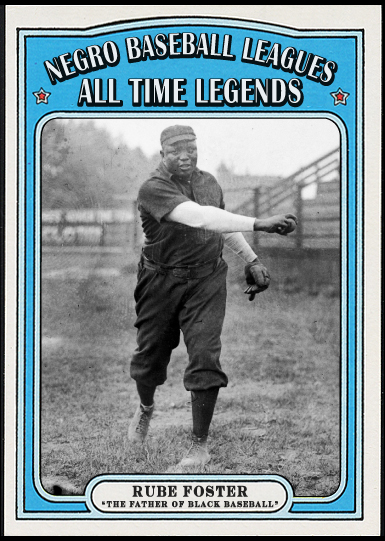
Rube Foster - Pitcher
The Father of Black baseball, Andrew "Rube" Foster was a player, manager, and executive in the Negro leagues. He played and managed the Chicago American Giants, one of the most successful black baseball teams of the pre-integration era. Foster earned the nickname "Rube" by outpitching White star Rube Wadell in a 1902 exhibition game. Most notably, he organized the Negro National League, the first long-lasting professional league for African American ballplayers, which operated from 1920 to 1931. Foster served as president and treasurer while overseeing its development into a first-class enterprise. Foster’s commitment to a Black independent league paved the way for many Black athletes, and his legacy will not be forgotten.
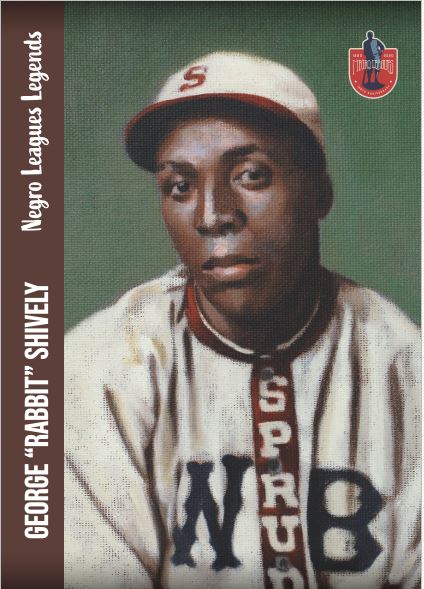
George Rabbit Shively - Left field
In a 14 year career that spanned from 1910 to 1924, he played left field for various teams in the Negro National League, mostly with the Indianapolis ABCs. He was known as "Rabbit" for his speed. He was known for his prowess in the outfield than at the plate. In 1919, George took on a new role. He became the captain of the "Lyon's Black Devils" team in Kokomo, Indiana. After that, he moved to the East Coast. He played for teams like the Atlantic City Bacharach Giants, the Brooklyn Royal Giants, and the Washington Potomacs.
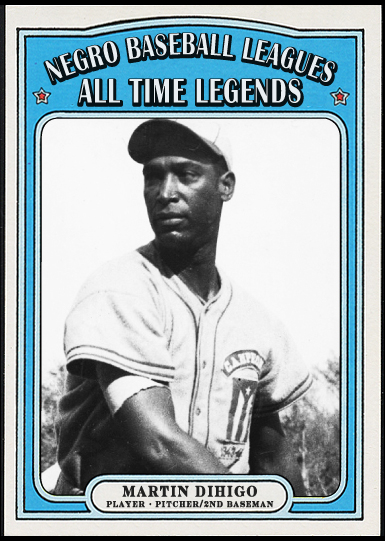
Martin Dihigo - Pitcher - Second Base
The Cuban-born Martín Dihigo debuted with the Cuban Stars of the Eastern Colored League in 1923 as an 18-year-old, light-hitting second baseman. He is considered to be among the most versatile players in baseball history. Martín Dihigo excelled at almost every defensive position on the field as well as offensively. Whether playing the outfield, the infield, or pitching, he was awesome. Pitching, however, became his primary position.
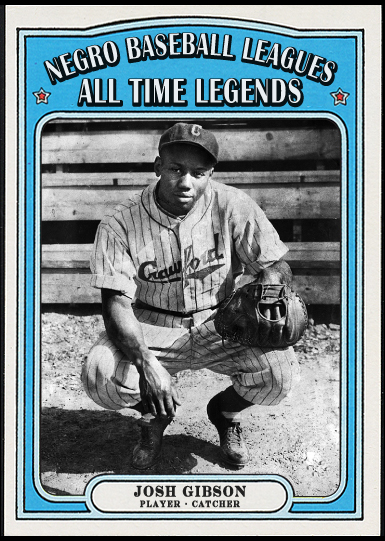
Josh Gibson - Catcher
Josh Gibson was one of the best Negro League baseball players ever. A catcher who hit as many as 800 home runs in his career. He was a 12-time All-Star, and is widely regarded as one of the best catchers and most fearsome sluggers in all of baseball. Gibson played for the Homestead Grays and the Pittsburgh Crawfords. In addition to his slugging prowess, Gibson possessed a rifle arm and, by hard work behind the plate, made himself into one of the best receivers in the league.
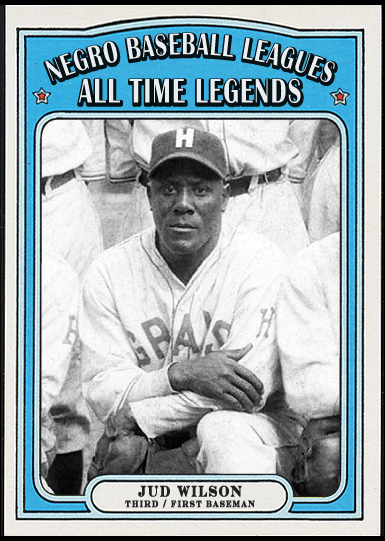
Jud Wilson - Third Base and First Base
Jud Wilson was an intense, no-holds-barred dynamo on the baseball fields, intimidating opposing pitchers and umpires with his potent bat and powerful fists. His nickname, Boojum, derived from the sound of his line drives slamming off the fences. Playing for the Baltimore Black Sox, Wilson was the Eastern Colored League’s batting champ (.408) in 1927. In 1929 he led the league in stolen bases, helping Baltimore win the pennant as a member of their “million-dollar infield.” He led the league in doubles in 1930 while batting .372.
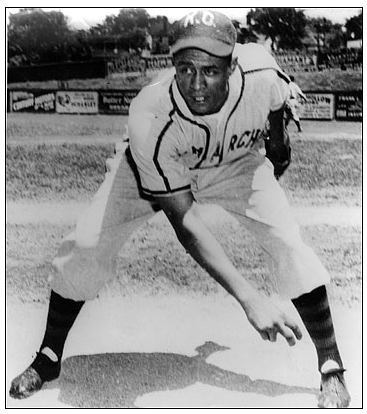
Chet Brewer - Pitcher
Chet Brewer’s baseball career as a professional spanned three decades, from 1923 to 1953. An outstanding finesse pitcher with good control and a retentive memory, he enjoyed his best seasons with the Kansas City Monarchs. Brewer toiled on the mounds of black baseball with an assortment of teams throughout the world, including Japan, the Philippines, Mexico, and Santo Domingo. After retiring from baseball, he was a major-league scout and instructor for the Pittsburgh Pirates for almost thirty years (1957-1974), developing a very close relationship with Roberto Clemente.
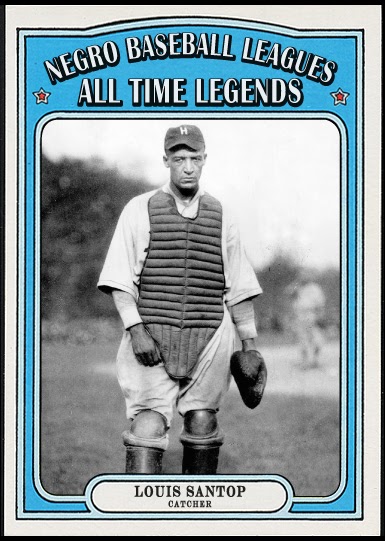
Louis Santop -Catcher
This lefthanded-hitting catcher was one of black baseball’s earliest superstars, a slugger who slammed tape-measure homers during the deadball era, which earned him the nickname "Big Bertha". He reached his prime with the New York Lincoln Giants and Lincoln Stars from 1911 through 1916, catching pitching greats Smokey Joe Williams and Dick Redding. He hit for contact and power and while not quite so revered for his catching skills, had a strong arm. Louis Santop has been called “the first of the great Negro League sluggers,” and “the first Negro League superstar.”
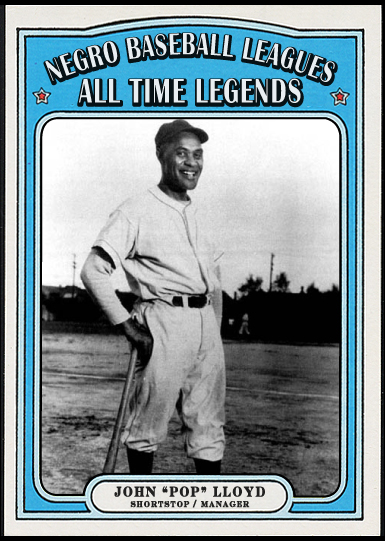
John Henry (Pop) Lloyd - Shortstop
Lloyd is widely considered as the greatest shortstop in Negro League history. He was a complete ballplayer who could hit, run, field, throw, and hit with power, especially in the clutch. During his career, Lloyd played with about a dozen Negro League teams, including the Brooklyn Royal Giants, and the Atlantic City Bacharach Giants in his 27-year career. Lloyd was often compared to Honus Wagner, the shortstop of the Pittsburgh Pirates.
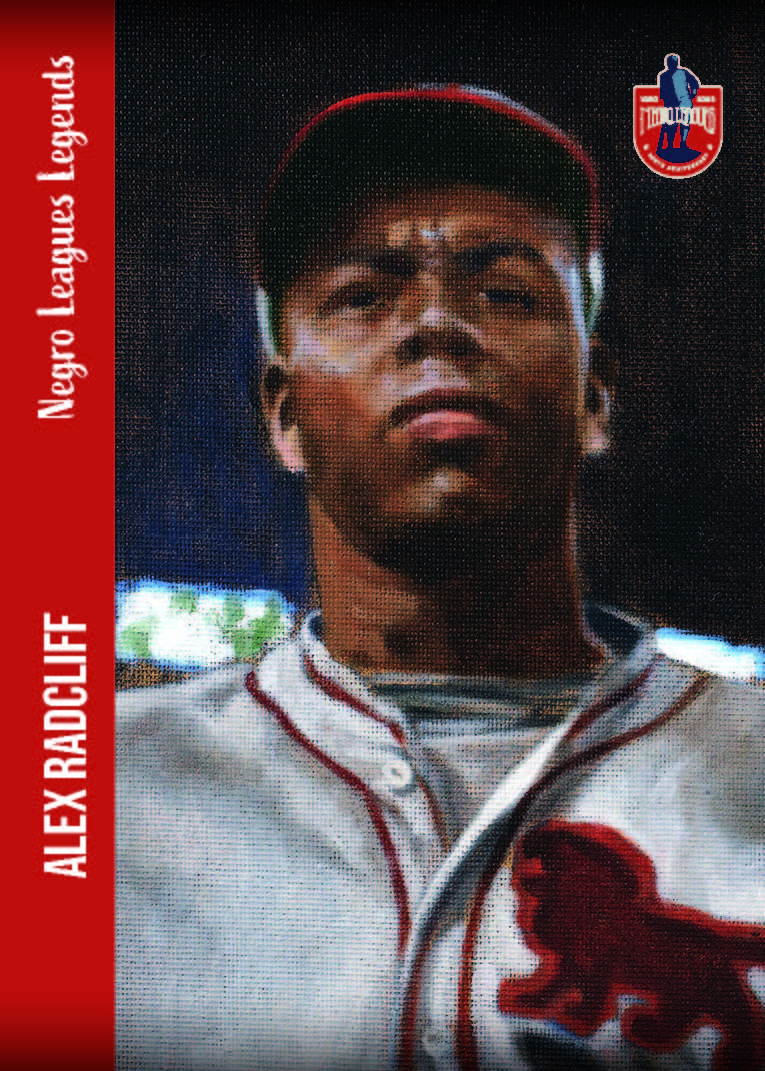
Alex Radcliff -3rd Base, Shortstop, Outfield
A 6' 200-lb righthanded hitter, he was a vital cog in the Chicago American Giants' 1932 Negro Southern League pennant. The hard-hitting third baseman was virtually a perennial All Star, making eleven All Star appearances during his career. Noted as being a good curveball hitter with the ability to execute the hit and run, Radcliffe earned his acclaim with his bat, but he did everything well. From 1932 to 1944, Radcliffe ranked in the top five in his position at third base in games played, putouts, assists and double plays.
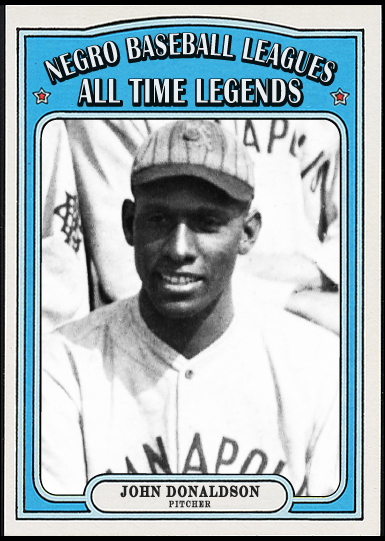
John Donaldson- Pitcher, Outfield
He was one of the biggest stars in the game’s barnstorming era. Donaldson had begun his career in Missouri in 1908 and pitched just about everywhere over the next 35 years. Despite the many stops, Donaldson had a stellar reputation in knowledgeable baseball circles. His beautiful drop and wide assortment of curves, combined with a good fastball and change up, made him one of the best left handers in the history of black baseball.
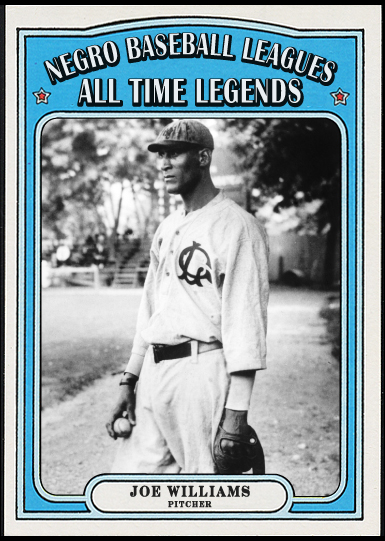
Joe (Smokey) Williams - Pitcher
They called him “Smokey Joe” nd they also called him “Cyclone Joe” and the man did not seem to have a preference between the two nicknames. Both got the point across and the point was this: He threw hard.
Joe Williams career spanned 27 years. He played with 11 teams, although most of his time was split between two clubs: the New York Lincoln Giants and the Homestead Grays. With a blazing fastball and exceptional control, he compiled a lengthy list of no-hitters, shutouts and record busting strikeout performances. Many observers of Negro league baseball consider Williams the best pitcher in all of Black baseball, even superior to the legendary Satchel Paige.
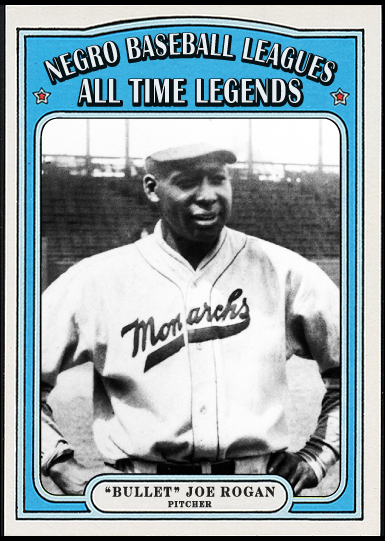
Wilbur Joe (Bullet) Rogan - Pitcher, Outfield
At age thirty-one in 1920, Joe Rogan began a long career as the Monarch's star pitcher from 1920 to 1938. In fifteen years in the Negro Leagues Rogan completed 131 of the 192 games he started, an incredible baseball feat. He was master both on the mound and at the plate. He played in the outfield to keep his big bat in the lineup. In forty-seven games in 1922, a banner year, he belted thirteen home runs. His career batting average of .339 was tenth in the Negro Leagues, and on the mound his .721 winning percentage was never equaled in the league.
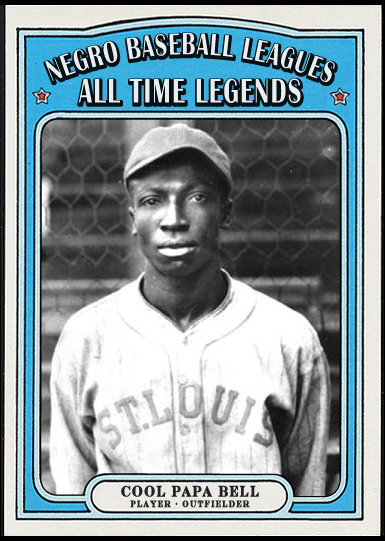
James Cool Papa Bell - Outfield
He was regarded as one of the best centerfielders in Negro League baseball history. Bell played for three of the greatest teams in Negro League history, the St. Louis Stars of 1928-1931, the Pittsburgh Crawfords of 1932-1936, and the Homestead Grays of 1943-1945. The switch hitting Bell had good bat control and hit for a high average. Named Cool Papa for his composure and grace.
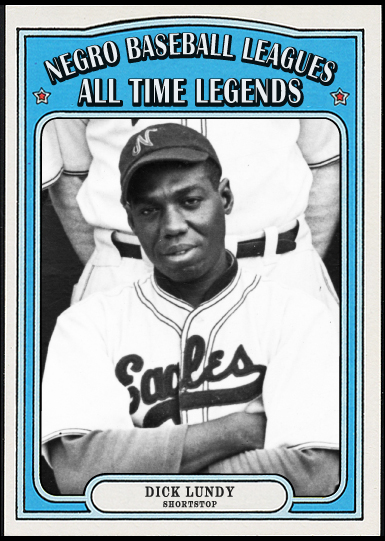
Dick Lundy - Shortstop
He spent 33 years years as a player and manager in the Negro Leagues, once hitting as high as .484 in 1921. Nicknamed “King Richard”, he was both an incredibly gifted fielder with a cannon for an arm as well as a magnificent hitter. As a player-manager of the Atlantic City Bacharach Giants, he led them to a Pennant in both 1926 and 1927 in the Eastern Colored League. Among the players he is credited with mentoring are future Hall of Famers Ray Dandridge and Monte Irvin.
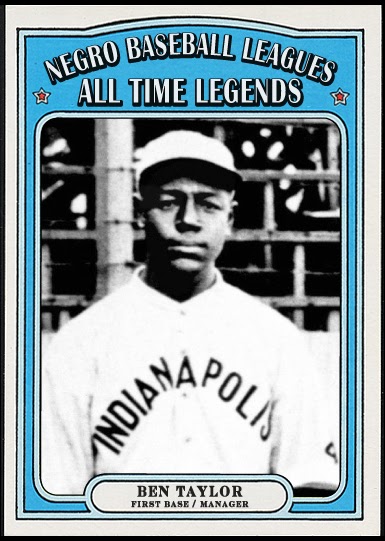
Ben Taylor - First Base
Before the legendary first baseman Buck Leonard, there was Ben Taylor. Throughout his career Taylor was one of the most productive players offensively, ending with a .334 lifetime batting average. Taylor was an outstanding defensive player whose efforts consistently saved his teammates from errors.
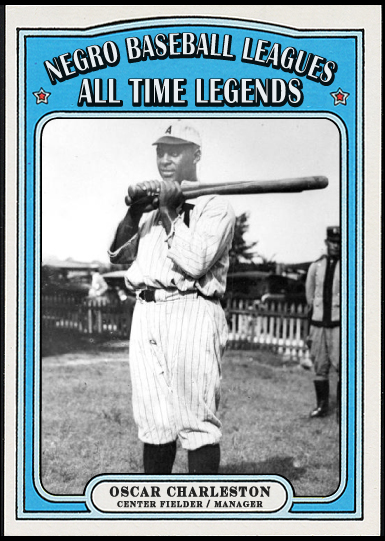
Oscar Charleston - Centerfield, Firstbase
Considered by many to be the best all-around ballplayer in the history of the Negro Baseball League. A left-hander who hit for both power and average, he was best known for his exceptional speed and strong throwing arm. His career started with the Chicago American Giants in 1919, but his fame was with the Homestead Grays of the 1930's.
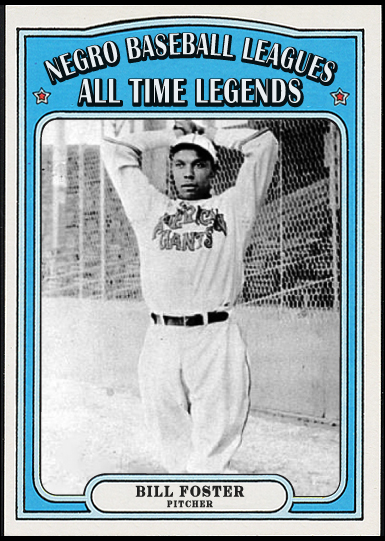
Bill Foster - Pitcher
Willie is considered by some historians to have been the greatest left-handed pitcher in the Black leagues. In 1926, he led the Chicago American Giants to a league pennant with 26 wins. A finesse pitcher, the tireless Foster was known to pitch both games of a double-header.
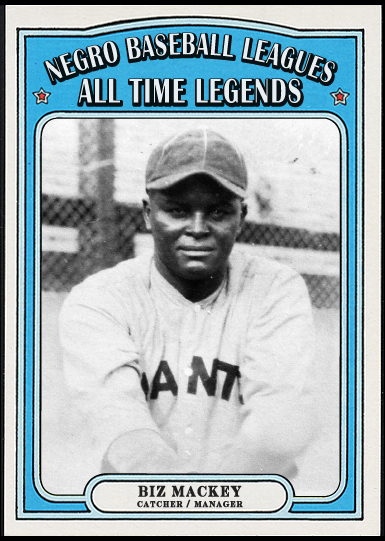
Biz Mackey - Catcher
Biz Mackey was a top catcher for many teams in a career that spanned 25 years, from the late 1920s to the late 1940s. In his prime, the switch hitting Mackey was one of most dangerous hitters in baseball, with power from both sides of the plate. A proven leader behind the plate and later as a manager.
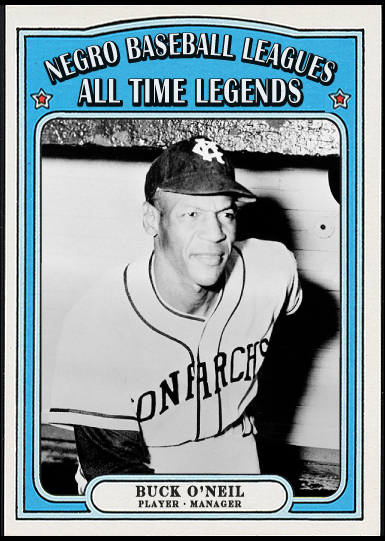
Buck O'Neil -Manager, First Base
O'Neil debuted as a first baseman for the Kansas City Monarchs in 1938. During his tenure with the Monarchs, O’Neil twice led the Negro American League in batting average, batting .345 in 1940 and .350 in 1946. He was the team’s manager from 1948 to 1955, during which time the team won four league titles.
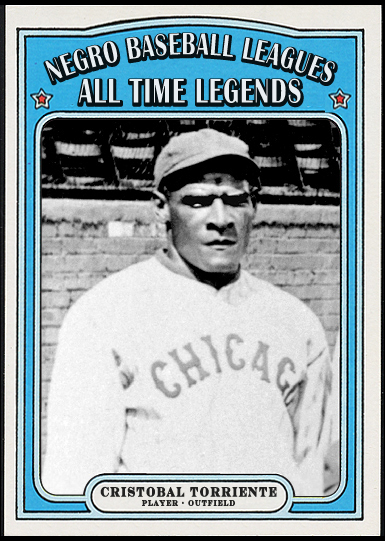
Cristóbal Torriente - Outfield
A hard-hitting center fielder who heralded from Cuba, he was one of the first Cuban baseball stars to play in the United States. Torriente was an outstanding fielder with great range and a strong, accurate arm. Torriente batted cleanup for Rube Foster's Chicago American Giants team.
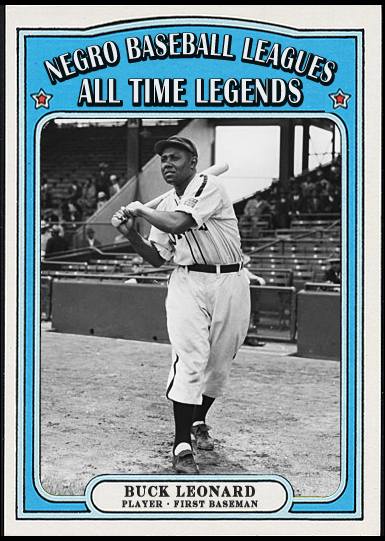
Buck Leonard - First Base
Buck Leonard paired with Josh Gibson to lead the Homestead Grays to nine consecutive Negro National League championships during the years, 1937-1945. A hard hitting first baseman, Leonard batting avg. ranged from the high .300s to as high as .400 at times. Leonard was thought of by many as the finest first baseman that played.
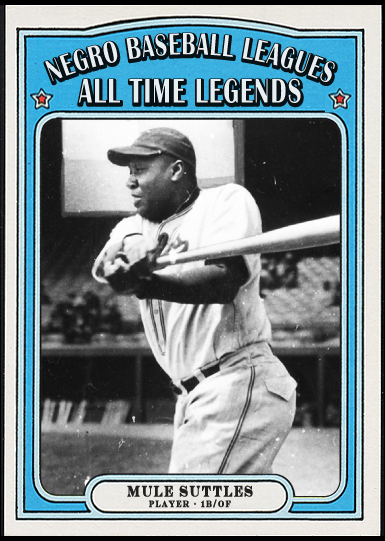
George (Mule) Suttles - First Base, Outfield
A power-hitting first baseman, he was called “Mule” as a term of endearment for being as strong as a mule and his ability to carry a team. Mule Suttles played 21 seasons in the Negro Leagues for nine different teams. He had a career batting average of .321. He was named to the East-West All-Star Game five times, hitting the first home run in the game’s history in 1933.
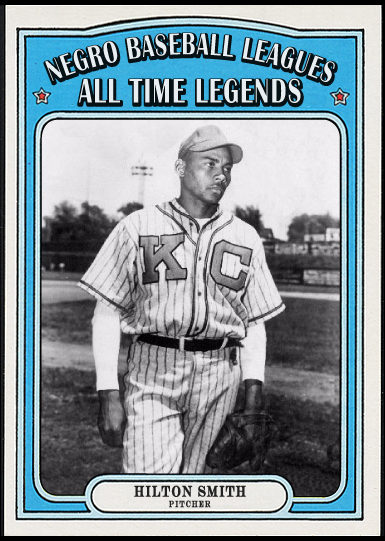
Hilton Smith - Pitcher
A master of the curve ball, many thought that Smith was the best all-around pitcher in the game. Smith pitched for the Kansas City Monarchs along side the flamboyant Satchel Paige. Considered Paige's relief, Smith won twenty games or more games from 1937- 1948.
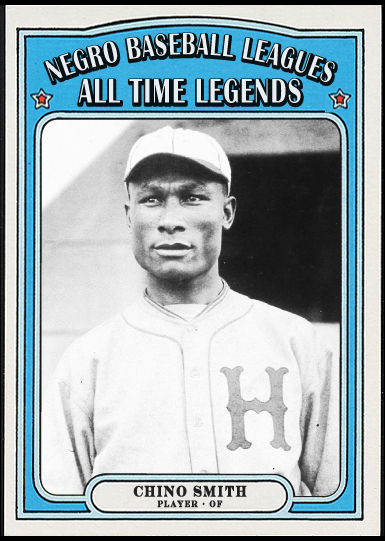
Chino Smith - Outfield
Satchel Paige called him one of the greatest hitters ever in the Negro Leagues. He was also a good defensive outfielder and a fine base runner. However, it was as a hitter that he gained his greatest notoriety. Given the nickname "Chino" because of a slant across his eyes that lent him a bit of an Oriental appearance, he was also a good defensive outfielder and a fine base runner.
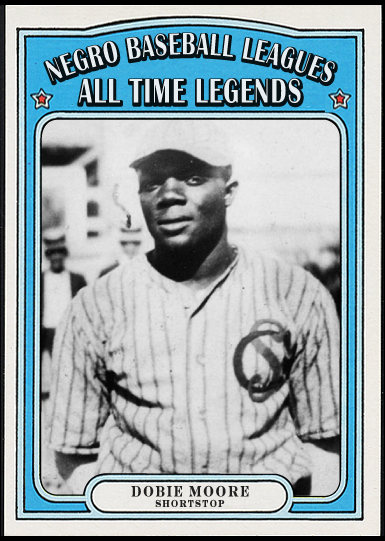
Dobie Moore - shortstop, outfield
Dobie Moore was one of the stars that formed the nucleus of the powerful 1920 Kansas City Monarchs. Nicknamed "The Black Cat", he was a superb fielder with outstanding range and a terrific arm. Possibly the greatest shortstop to play in the Negro Leagues, Dobie Moore was an outstanding all-around player, and was especially renown for running down balls in the hole and throwing out the runner. He also hit a robust .365 career batting average while hitting for power. A tremendous bad-ball hitter in 1924 he led the Negro National League in batting with a .453 batting average.
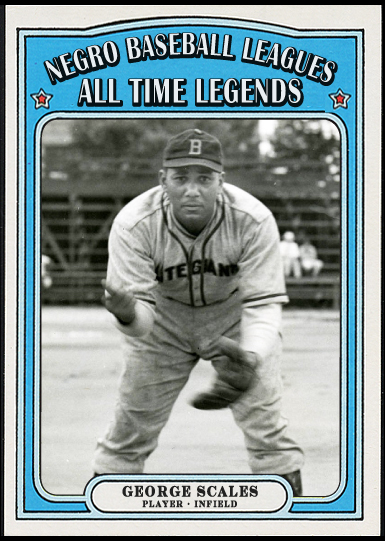
George Tubby Scales - Infield
George Tubby Scales was a versatile fielder who could play third base, first base, shortstop, or the outfield, but who was at his best at second base. He starred in the Negro Leagues in the 1920s and 1930s with several teams, most notably with the New York Lincoln Giants and Baltimore Elite Giants. In the end over a 25-year career in the Negro Leagues Scales had a .313 lifetime batting average.
Scales also distinguished himself as a manager and coach during his 40 years in professional baseball.
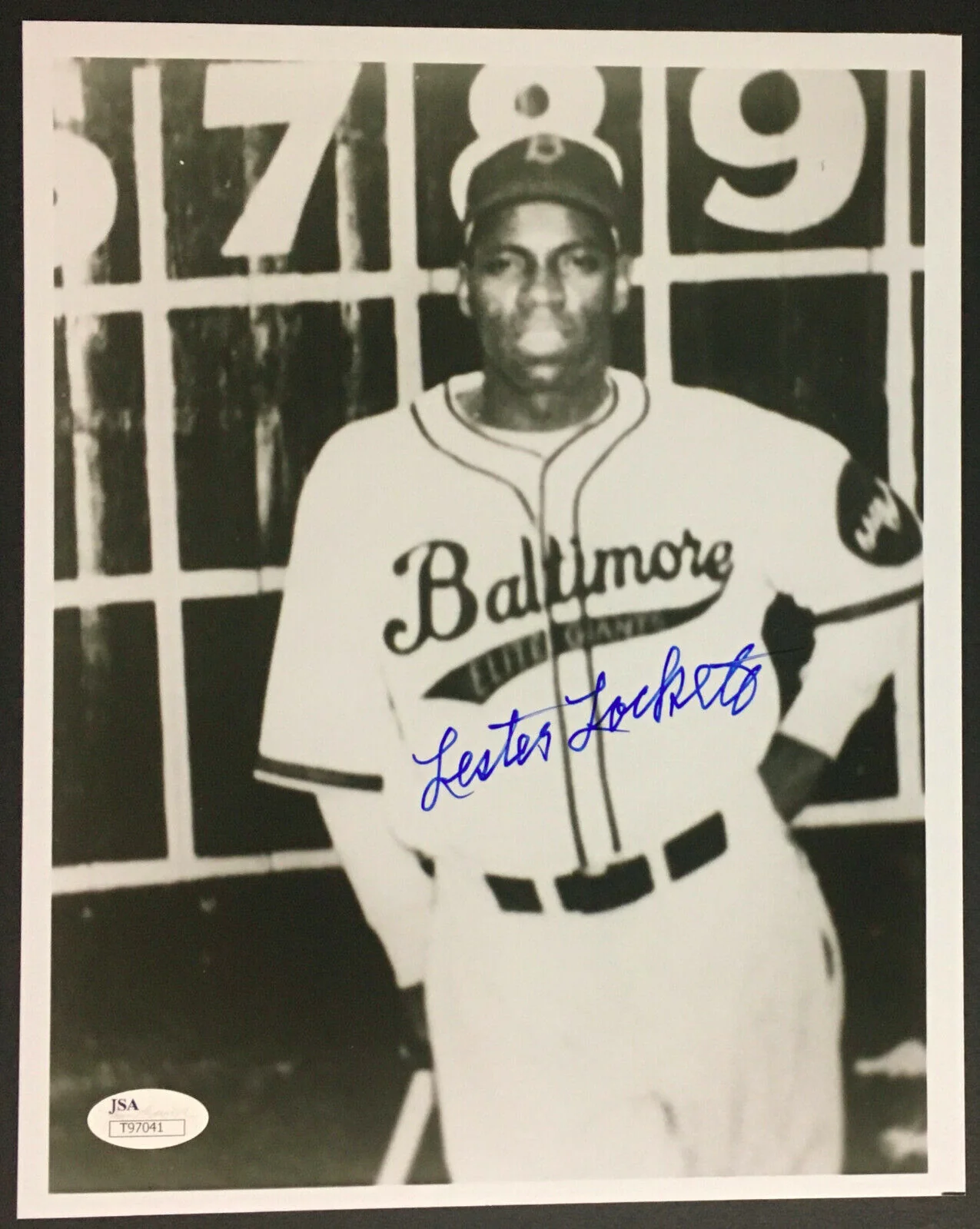
Lester Lockett - 2nd and 3rd Base, Shortstop, Outfield
Lester Lockett played second and third base as well as shortstop and the outfield in a career that lasted from 1938 until 1950. A good-hitting outfielder for the pennant-winning Birmingham Black Barons of 1943-1944 and later for the Baltimore Elite Giants. Depending on the situation Lockett could steal a base or he could hit with power. He also played in Venezuela and Panama. He was a member of three all-star teams and was a member of the 1943 Negro American League Champion Black Barons.
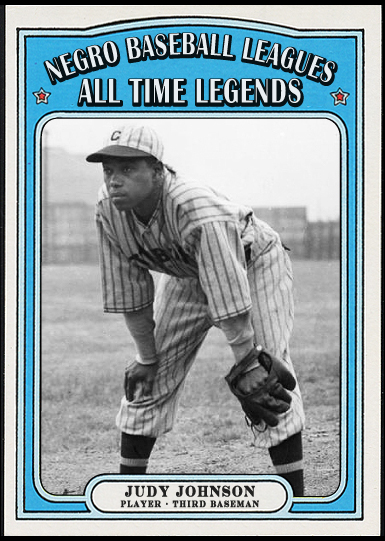
Judy Johnson - Third Base
William Julius “Judy” Johnson was a sure-handed infielder with good range and a strong, accurate arm, he was an all-around great third baseman. Johnson played with the great Hilldale clubs of the 1920s, posting batting averages of .391, .369, and .392 in 1923-25 to help them win pennants in the Eastern Colored League's first three years of existence. Judy was also best known for his play with the Grays and the Crawfords — the Negro League powerhouses of the 1930s, but he made his name with Hilldale in the 1920s. He was given the nickname “Mr. Sunshine” because of his warm attitude and positive outlook.
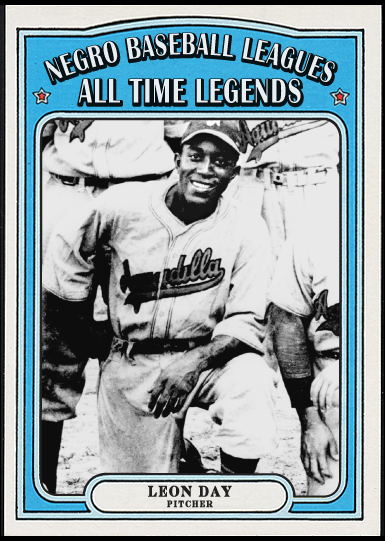
Leon Day - Pitcher
Unassuming and modest, Leon Day was one of the greatest pitchers of his day. The Negro League stalwart made 9 East-West All Star Games. His ten campaigns in the Negro Leagues included a .704 winning percentage. The Newark Eagles' ace right-hander had a good curve and change of pace to complement his speed. A strikeout artist, he holds the strikeout record in the Negro National League, the Puerto Rican League, and the East-West All Star game. With the exception of catcher, the versatile athlete played every position well, and when not on the mound, often started at second base, in center field, or pinch-hit.
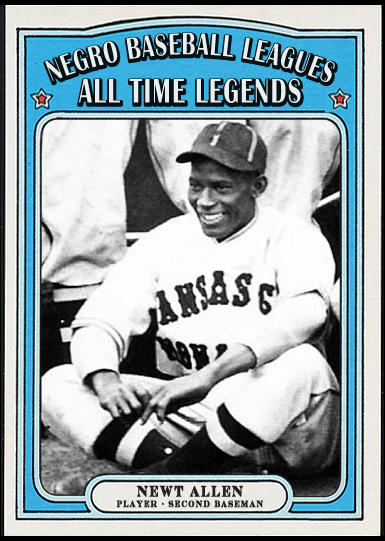
Newt Allen - Second Base, Third Base
For 23 years, Newt Allen was the foundation of the powerhouse Kansas City Monarch teams that won 10 league championships. Considered the premier second baseman during the formative years of the Negro National League, he made fielding his position an art. The switch-hitting Allen was a line-drive hitter and a skilled bunter. He was an ideal player to have hit in the second slot in the lineup. Aggressive on the base paths, he was not afraid to break up a double play.
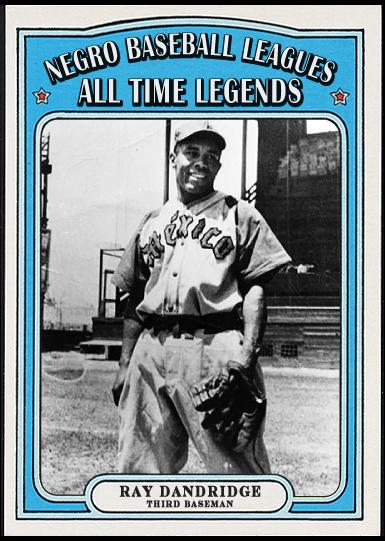
Ray Dandridge - Third Base
A member of the "million dollar infield" of the Newark Eagles during the late 1930s, Ray Dandridge was often called "the best third baseman never to make the major leagues." While playing in the Negro National League, he posted a career .355 average as a line-drive hitter who rarely struck out and was a skilled practitioner of the hit and run play. The Newark Eagles built the team around Dandridge, who joined the team in 1934 at age 20. In 1937, that "Million Dollar Infield" included SS Wells, 2nd baseman Dick Seay and slugging 1st baseman Mule Suttles. They finished in second place behind the Homestead Grays that year.
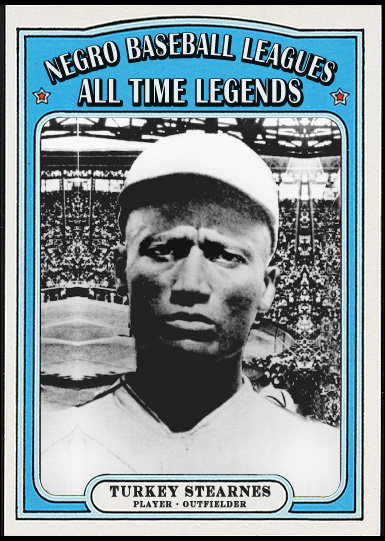
Norman "Turkey" Stearnes - Outfield
Turkey as he was known because of the unusual way he ran, which resembled that of a turkey, with his arms flapping was the games premier centerfielder.
A swift center fielder who excelled on the bases, Stearnes led the Negro National League in batting average twice and is credited with 129 stolen bases. As with many Negro League stars, Stearnes played for a variety of teams during his career, including the Chicago American Giants. It was during his time with the American Giants that Stearnes was selected to play in the first East-West All-Star Game, where he received more votes than any other outfielder.
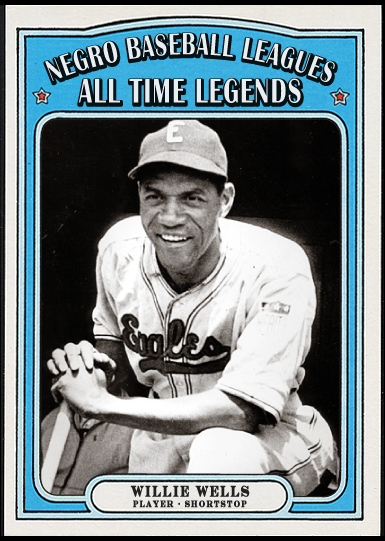
Willie Wells - Shortstop
Willie Wells was one of the greatest shortstops in Negro League baseball history. He was a player who could truly do it all: he could hit for power, hit for average. He fielded his position at shortstop brilliantly with sure hands, and an accurate arm. Over his Negro League career, Wells played for a record eleven Negro Baseball League teams.
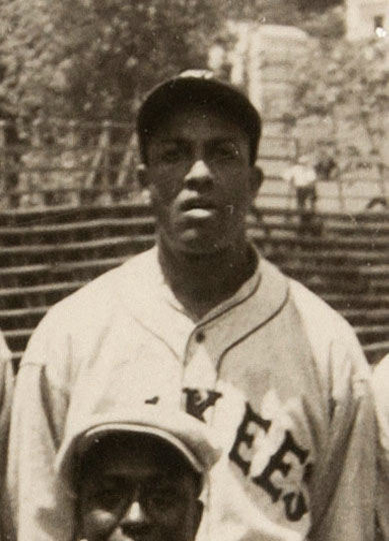
Walter “Rev” Cannady -2nd Base, 3rdBase, ShortStop, 1st Base
The best position for Cannady was second base but he could also play any of the other infield positions as well. He could pinch hit as well and could also pitch if necessary. He was a good fielder but better known for his hitting. Regardless of the team he was on he usually batted in the heart of the batting order because of his hitting prowess.
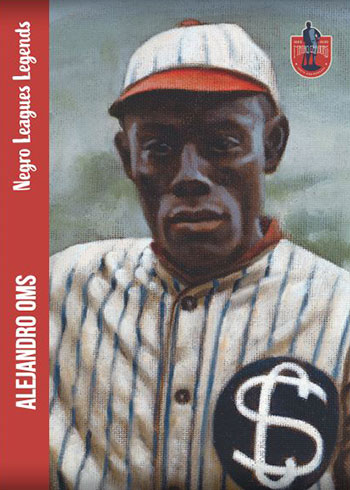
Alejandro Oms - Center Fielder
Alejandro Oms turned out a long career showcasing a variety of skills. He had exceptional range and an accurate but not strong arm. He also was a very fast base runner and a skilled base stealer but was best known for his batting ability. A left-handed batter, he was a great hitter, hit to all fields with power.
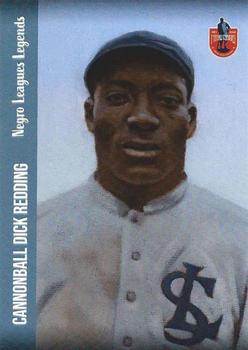
Dick Cannonball Redding - Pitcher, Outfielder, and Manager
Dick Redding's overpowering speed earned the big, tall right-hander the nickname "Cannonball Dick." Redding was durable; he frequently started games on back-to-back days and sometimes started both ends of doubleheaders. Redding usually finished what he started, and it was rare for him not to finish a game. He pitched professionally from 1911 to 1936 and during those years he maintained a position among the top pitchers in black baseball.
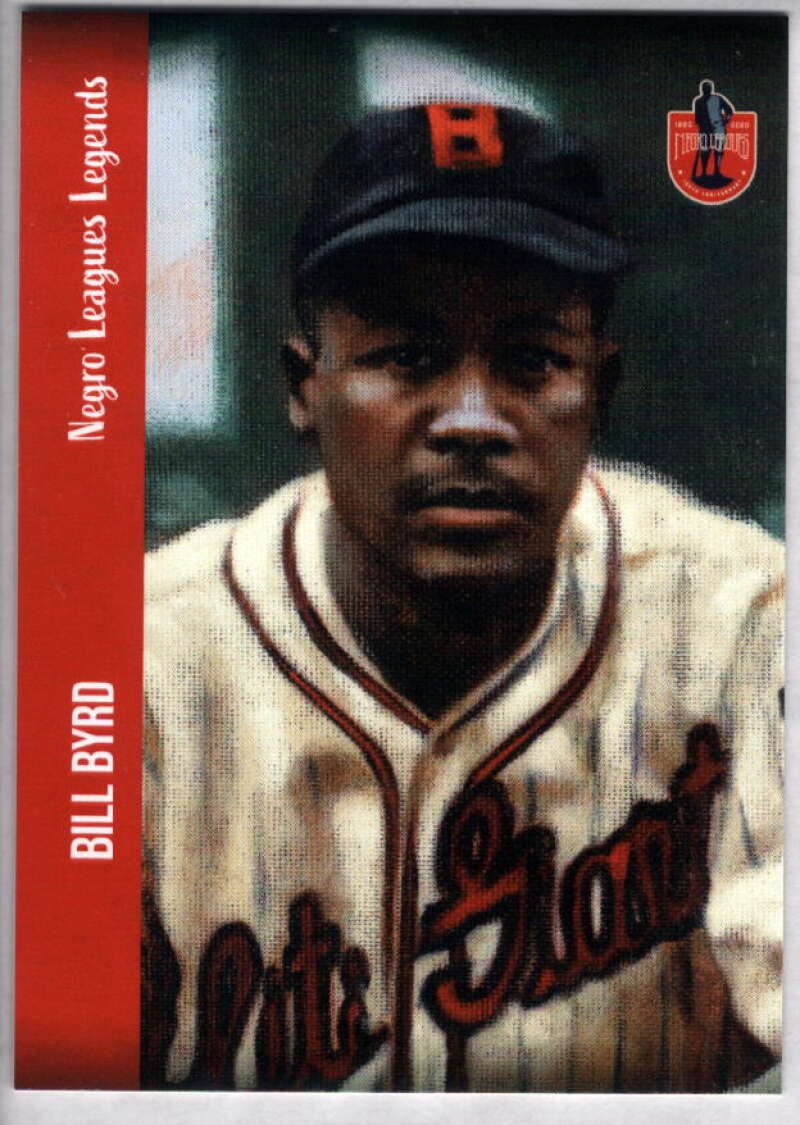
Bill Byrd - Pitcher, Outfield
Bill Byrd was one of the last pitchers to have the privilege of throwing a legal "spitter,". Byrd was a seemingly indestructible master who became the symbol of the Baltimore Elite Giants during a Negro League career that spanned two decades. In addition to his spitball, he had a wide variety of other pitches and had excellent control of them all. His repertory included a slow knuckler, a fast knuckler, a slider, a roundhouse curve, a fastball, and a sinker.
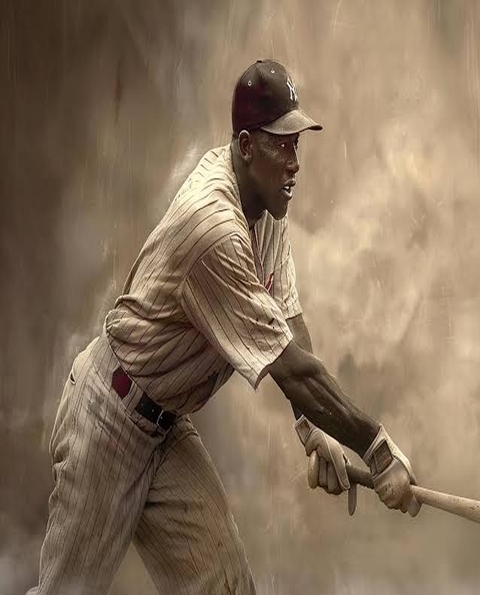
John Beckwith - 3rd Base, Shortstop, 1st Base, Manager
A versatile player who could and did play everywhere during a career in the Negro Leagues that began in 1916 and ended in 1938, Beckwith could hit the ball as far as anyone. He had amazing power and was the type of hitter who tried to pull everything to left field. It led to his share of strikeouts but when he did connect with the ball it was well worth the wait. He began his career as a shortstop-catcher, progressed to a third baseman-shortstop during his prime seasons, and was a third baseman in his waning years. During his career, Beckwith played with no less that 10 teams, mainly with the Chicago American Giants, Baltimore Black Sox and the Homestead Grays.
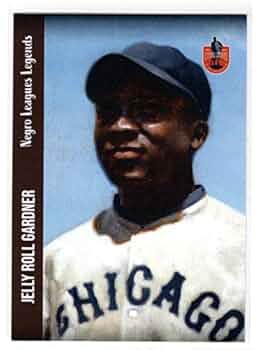
Floyd Jelly Roll Gardner -Outfield, 1st Base
An outstanding defensive outfielder, Jelly Gardner had a good arm and great range. He played as a right fielder for multiple teams, including the Chicago American Giants, the New York Lincoln Giants, and the Homestead Grays. Known for his exceptional speed, sharp batting eye, and strategic base running, Gardner was a key contributor to several championship teams. A left-handed batter, he had some difficulty hitting a left-handed pitcher's curveball. During his eleven years with the American Giants they won four pennants and a World Series. Gardner was known for his scrappy attitude and fierce competitiveness, both on and off the field.
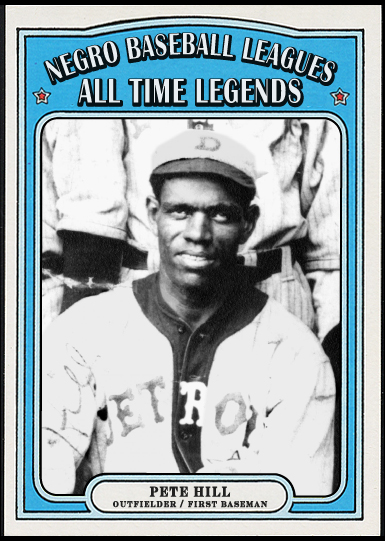
Pete Hill - Outfield, 1st and 2nd Base
John Preston “Pete” Hill played for the Baltimore Blacks Sox after starring on several other teams: the Philadelphia Giants, the Chicago American Giants, and the Milwaukee Bears. His career in Black baseball lasted from 1899 until 1926. At over 6 feet tall, and weighing in at 215 pounds, Pete Hill was a very fast runner, had a powerful throwing arm and could hit a ball like none other. He hit from the left side of the plate, hitting for both power and for average. He was consistent when it came to hitting spraying line drives to all fields.He patrolled center field, covering a lot of ground. Some considered him the first superstar of the Negro League. Hill’s batting average was a whopping .365 during the 1910-1911 season while he played in the Cuban Winter League. Pete Hill, was as a star attraction player and team manager.
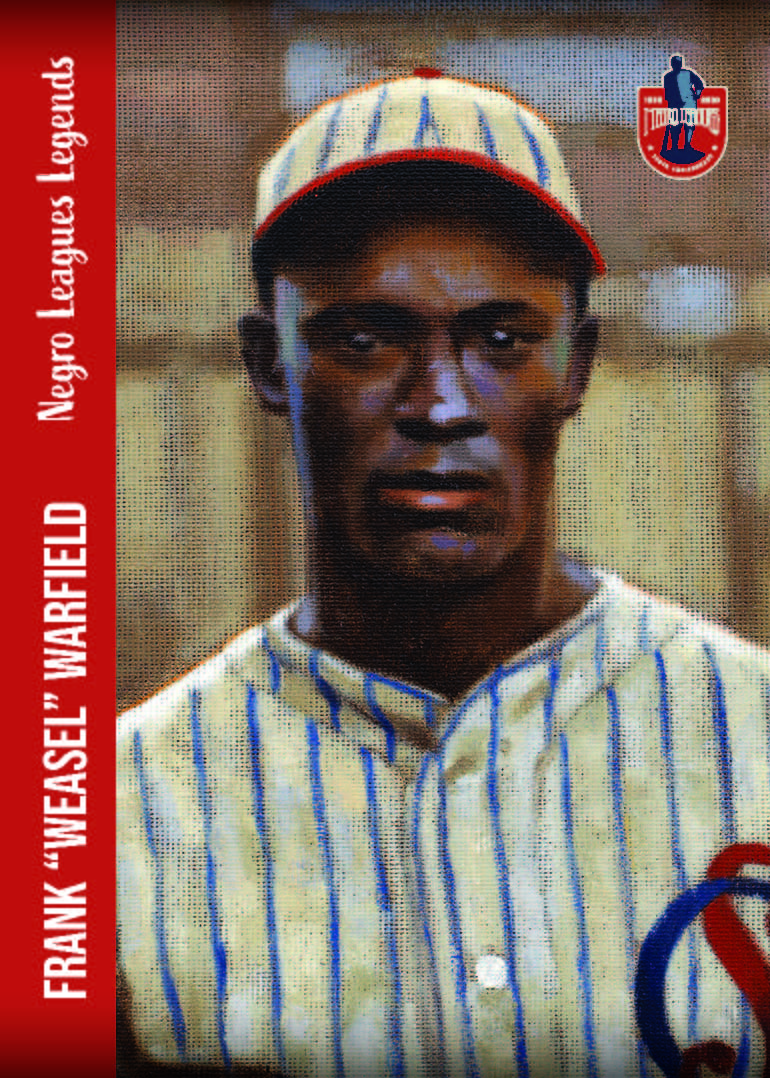
Frank Warfield - 2nd and 3rd Base, Outfield, Manager
When the Negro National League was formed in 1920, the Detroit Stars were one of the charter members. Frank Warfield was the starting 2nd baseman for Detroit. He was primarily known for his defensive skills and base running abilities. Once he got on base he had the ability to read the opposing pitcher and take advantage when an opportuinty presented itself to setal a base. Warfield started his career as an outfielder and shortstop, but transitioned to second base during the 1917 season. Defensively, he was considered the best second baseman in Black baseball early years. Warfield was known as a good contact hitter during his career. During his prime he batted lead off or near the top of the order. Perhaps Warfield's greatest accomplishments in Negro League baseball came as a manager. During his career, he managed championship teams with both Hilldale and Baltimore, from 1924-1929.
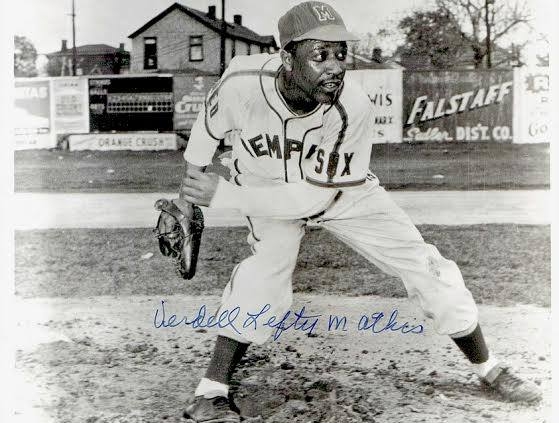
Verdell Mathis - Pitcher, 1st Base, Outfield
This slender hurler with a terrific curve, a good fastball, and a great pick off move was the Negro League's top left handed pitcher of the 1940s, but because he played in the South, mostly for the lowly Memphis Red Rox, he never got the credit he deserved. Verdell Mathis started out as a pretty good outfielder. He hit well, had good speed and had a great arm. His pitching soon overshadowed his hitting, though, and he became a pitcher for good in his first year with the Red Sox. When he didn't pitch, however, Mathis often played outfield or first base and posted batting averages of .310, .261, .200, .276, and .263 for the years 1944-1948. He had a good throwing arm and good speed in the field and on the bases. In 1949 he was earning the highest salary of his career, $700 a month, and he closed out his career in 1950. Mathis spent almost his entire ten-year career in Memphis.
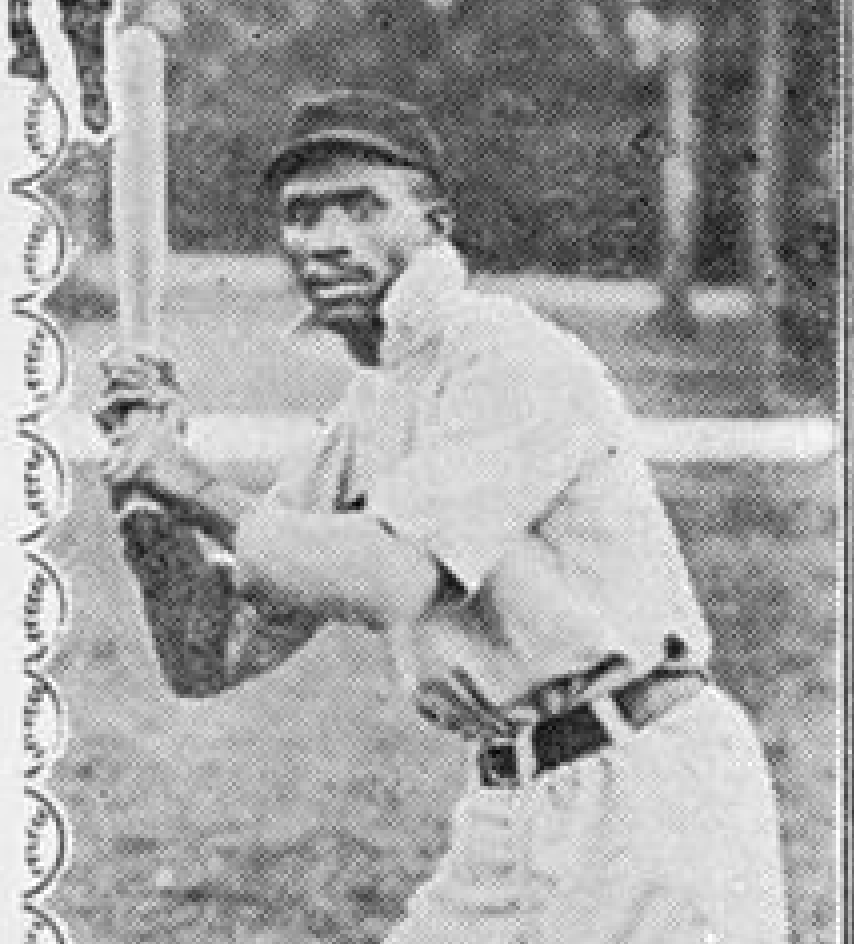
Grant "Home Run" Johnson - Shortstop, 2nd Base, Pitcher, Manager
Grant “Home Run” or ”Dad” Johnson played in Black baseball from 1895 until 1916. Grant Johnson began his professional career when he was signed by the Cuban Giants in April of 1894. In 1895 he joined up with the Page Fence Giants along with John “Bud” Fowler He started his career as a shortstop and during the latter part of his career he also played a lot of second base. Offensively he is considered the best hitter of his era by many people. Johnson was considered to be a natural hitter with a disciplined swing who seldom struck out. He was given the nickname “Home Run” because of his power. Besides having home run power, Grant was an excellent line drive hitter. He could hit all kinds of pitches and was very cool under pressure. He would hit line drives placing an emphasis on contact instead of hitting home runs. He was undoubtedly one of the greatest Black hitters of the Dead Ball era.
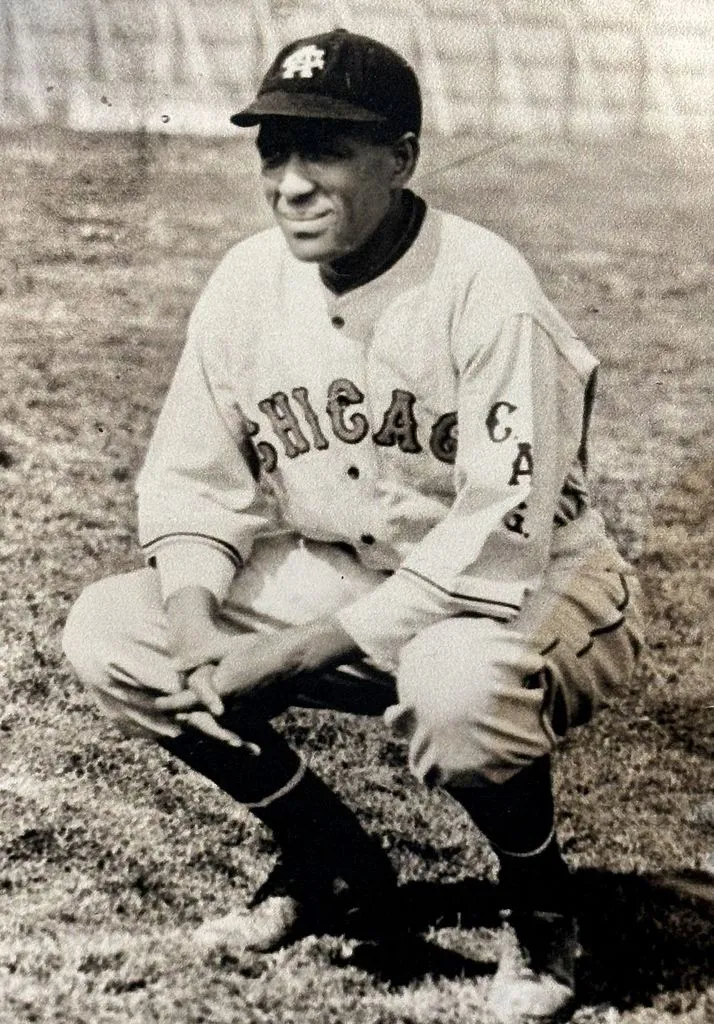
David Julius “Gentleman Dave” Malarcher - 3rd Base, 2nd Base, Shortstop, Pitcher, Manager
He was a smooth fielding third baseman and always seemed to hit well in the clutch. Breaking in as a rookie with the champion Indianapolis ABCs in 1916, he hit .309 and learned baseball under one of the greatest managers in black baseball, C.I. Taylor. 1920 was the first year Malarcher played with the Chicago American Giants and he hit .344 and was hailed as the best third baseman in all of black baseball. The Giants won the Negro National League championship with Malarcher’s steady, intelligent play one of the most important reasons. Halfway during the 1926 season, Rube Foster displayed erratic and unstable behavior and left the team. Malarcher took over as manager. He led the team through the challenges of the season, and to consecutive World Series victories over the Eastern colored League champion Bacharach Giants in 1926 and 1927. In each of these two Series he led the team in stolen bases.
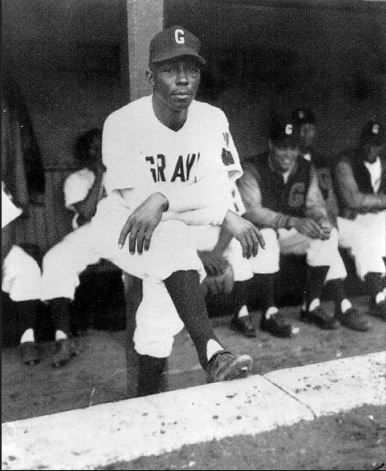
Elander Victor “Vic” Harris - Outfield, Manager
The Homestead Grays were a dominant force in Negro League baseball from 1926 to 1948. They were led by the heart and soul of player-manager Vic Harris, who was known and admired by teammates and opponents alike for his fierce style of play. Vic Harris spent almost his entire career with the Homestead Grays, logging twenty-three years with the organization as player and manager. As a player, the left-handed batter was a consistent spray hitter with good bat control, making him a good hit-and-run man. Although he had only moderate power and a bit of a weakness on high fast balls, he hit for a good average. He became manager of Cumberlan Posey's Homestead Grays in 1935. It was in 1937 that Homestead began its incredible run of nine consecutive pennants with Harris as a valued member of the team. In his final year as a manager of the Grays, (1945) when, featuring a number of young ballplayers, Homestead captured the last Negro National League championship. He coached for the 1949 Baltimore Elite Giants, who won the Negro American League championship, and managed the Birmingham Black Barons in 1950.
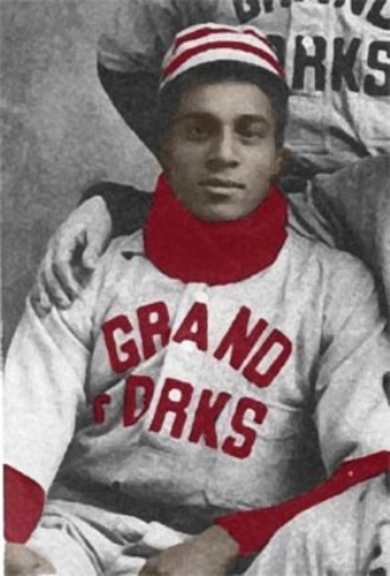
Walter "the Black Diamond" Ball - Pitcher, Outfield
Walter Ball was a pitcher and sometimes outfielder in black baseball and the Negro Leagues in the early years of the game. He was considered one of the best pitchers in black baseball’s formative years along with Rube Foster, Dan McClellan and Harry Buckner. They were were considered "head and shoulders above" other moundsmen. He was a smart pitcher with good control, and made frequent use of the spitball, but was not a power pitcher. Ball pitched for eighteen years (1906-1923), primarily on Chicago-based teams, including the Leland Giants, Chicago Giants, Chicago Union Giants, and Chicago American Giants. He jumped around playing in Cuba and it did not matter where he pitched he was the top or near the top as a pitcher for whatever team he played with.
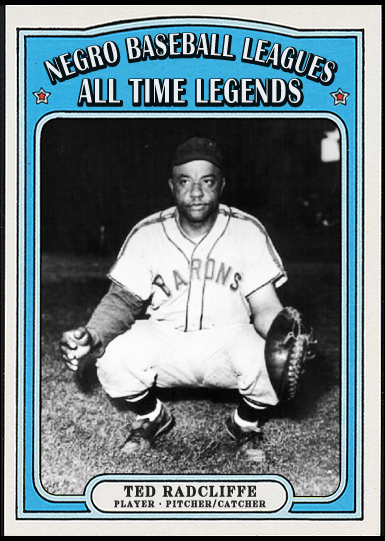
“Ted” Double Duty” Radcliffe - Catcher, Manager, Pitcher
Negro League great Ted Radcliffe earned the nickname “Double Duty” by often pitching in the first game of a doubleheader and catching the next. Radcliffe was one of the most colorful players in black baseball. He had a long career in Black baseball/Negro Leagues beginning in 1928 and ending in 1950. Radcliff would eventually play for 15 teams of the Negro Leagues. In 1929, Radcliffe began pitching because of his endurance and skill. He never got credit for what he did in baseball despite the fact the he played with, contributed to the success of three of the greatest teams in the history of the Negro League. Those teams were the 1930 St Louis Stars, 1931 Homestead Grays and the 1932 Pittsburgh Crawfords. His "double duty" produced impressive numbers for those seasons, including batting averages of .283, .298, and .325 and corresponding pitching records of 10-2, 9-5, and 19-8.
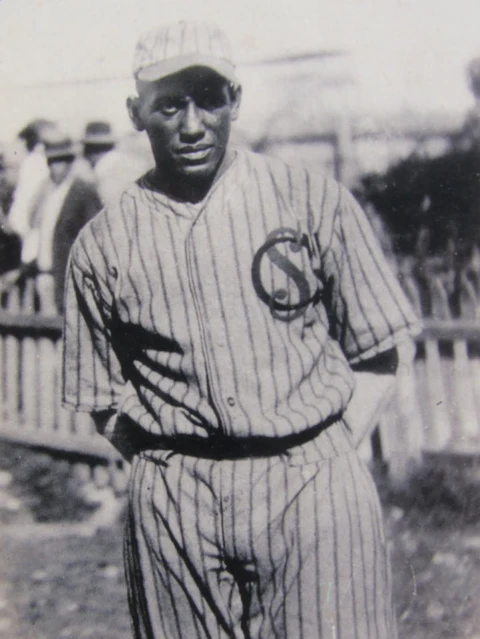
Oliver Marcelle - 3rd Base, Shortstop
Nicknamed “The Ghost of New Orleans,” Oliver Marcelle was one of the great players in Negro League baseball in the 1920s. Marcelle had a Negro League lifetime average of .310 from 1919-30, posted a .305 average in eight seasons in Cuba including a league-high .393 in 1923-24, and hit .333 in exhibitions against all-White major league teams. He could do everything in the field. He was fast, covered a lot of ground and had a great throwing arm. There was no one who was his equal when it came to knocking down a hard hit ground ball and getting the batter at first base. He was idolized by the fans and respected by his peers and the media. He played with the Atlantic City Bacharach Giants, New York Lincoln Giants, Baltimore Black Sox and Miami Giants among other teams.
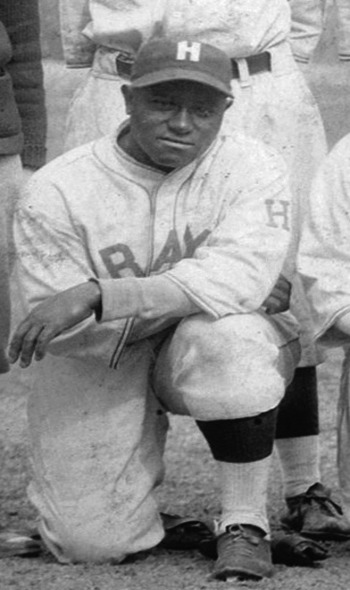
George "Chippy" Britt Pitcher, Catcher, Infield (all positions)
There are a lot of teams that look for that one player who can be put in any position and do well in it. A lot of players in the Negro Leagues/black baseball were versatile like that and George Britt was one of the best. His ability to adapt to any position was a plus in his career. He was the ideal utility man who played well anywhere. With the 1924-1925 Baltimore Black Sox he was a great catcher and above average as a hitter, batting .315 and .345. He was also a member of the 1930-1931 Homestead Grays, one of the greatest teams of all-time. With Josh Gibson behind the plate, Britt was used mostly as a pitcher on these squads. George was given the nickname “Chippy” because that is what he called everyone. During the late 1930s and early 1940s his longest stop at any franchise was his last three seasons, when he played with the Cleveland Buckeyes.
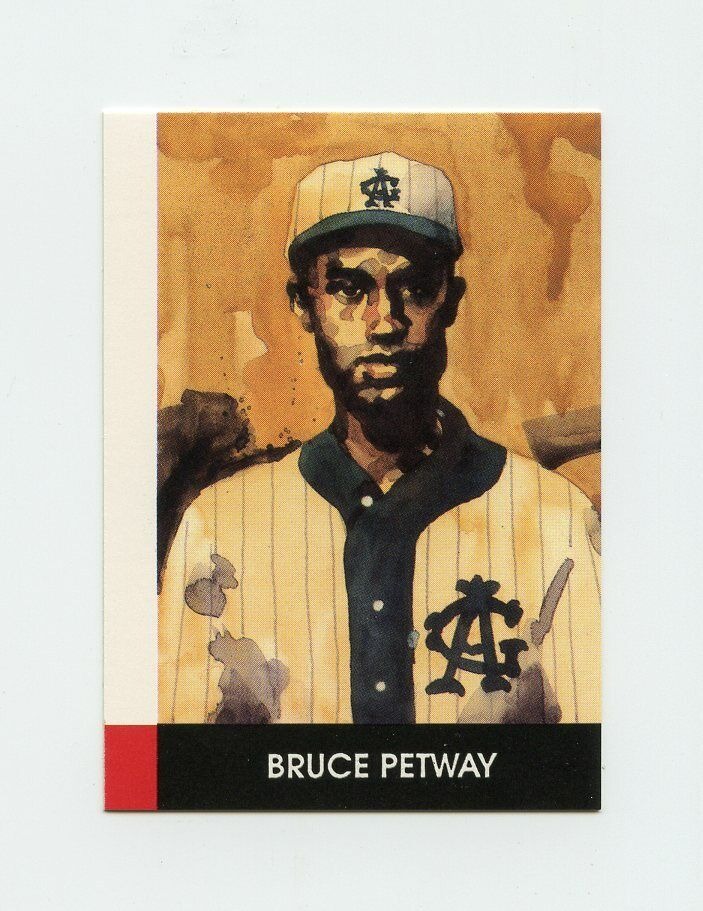
Bruce Petway - Catcher, 1st Base, Outfield
Bruce Petway played first base and the outfield but was perhaps best known as a catcher in black baseball/Negro Leagues from 1906 until 1925. He was a key component of some of the most dominating black nines ever, notably the Leland Giants, the Philadelphia Giants, and the Chicago American Giants. Petway was renowned for his ability to pounce on bunts. He regularly throw down to second base without coming out of his squat, a testament to his powerful arm. Because of his base-running and bunting abilities, he often batted leadoff, a rarity for a catcher. He was a base-stealing threat who once led the Cuban league in stolen bases. Once in an in exhibition games against the Tigers, he threw out the immortal Ty Cobb three times in three attempts. The premier catcher of the day and the first great receiver in Black baseball history, Petway was always in demand by the best teams.
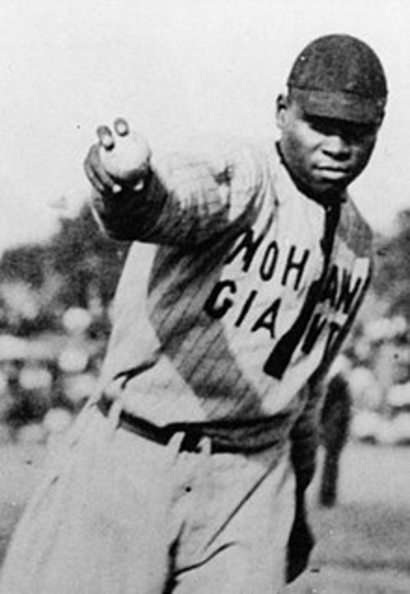
Frank Wickware - Pitcher
Frank Wickware was a formidable pitcher during the second decade of the century. In 1909 he finished with a record of 18 win and one loss in his first year for Rube Foster and the Leland Giants. At age twenty-two, Wickware was already noted for his velocity, mound presence, coolness under pressure, and smooth delivery. He was a big gate attraction and remained so through the first decade of his career. A big winner with the Chicago American Giants, he also pitched two winter seasons in Cuba. Always in demand and without hesitation to jump for more money, during the 1914 season he pitched for four different teams and was credited with no-hitters against both the Indianapolis ABCs and the Cuban Stars. However, he gained his most notoriety when he out-dueled Walter Johnson 2 out of 3 games in 1913 and 1914.
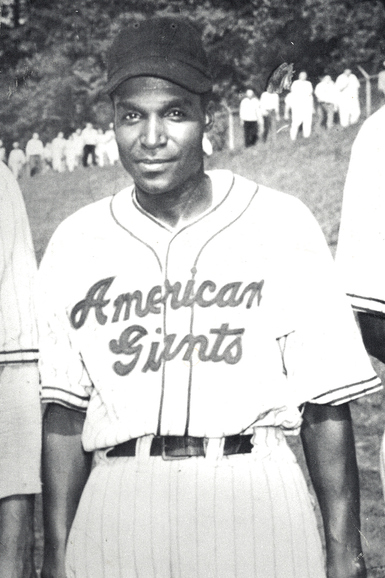
Jimmie Crutchfield Outfield
As a rookie outfielder for the Birmingham Black Barons in 1930, he earned a spot in the everyday lineup with his solid fielding skills and reliable performance. Although he demonstrated little power as a hitter, Crutchfield was an excellent slaphitter who could place the ball in play behind runners on the base path. After a brief stint with the Indianapolis ABCs, Crutchfield jumped to the Pittsburgh Crawford’s, joining Cool Papa Bell and Ted Strong to form the finest outfield in the Negro Baseball League. As the Crawfords dynasty began to crumble in the mid-1930s, Crutchfield moved on, first to the Newark Eagles and then to the Chicago American Giants. Crutchfield never rose to "league-leading" stature in any category as a player, yet demonstrated better-than-average skills in almost every aspect of play. He was, in essence, the epitome of the well-rounded ballplayer — a solid everyday performer and team player.
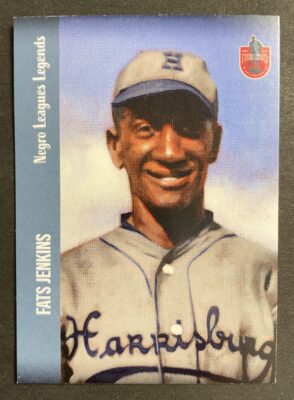
Clarence “Fats” Jenkins - Outfield
Clarence “Fats”Jenkins played in the Negro League and Black baseball from 1920 until 1940. His career began in 1920 with the NY Lincoln Giants and in 1923 he was the leadoff hitter on Oscar Charleston’s Harrisburg Giants team where he hit .317, .315, .298 and .398 for those years. A very smart player, he studied the art of baserunning and was an exceptional base stealer. At the plate he was a slap hitter with only average power but was a good contact hitter. As an outfielder he had wide range and an average throwing arm. He was a hustler and a gifted athlete who in the off season was a member of the great Renaissance basketball team the won an amazing 88 games in a row during the 1934-1935 season. Excelling in both sports, he was an asset to any team that was fortunate enough to acquire his services.
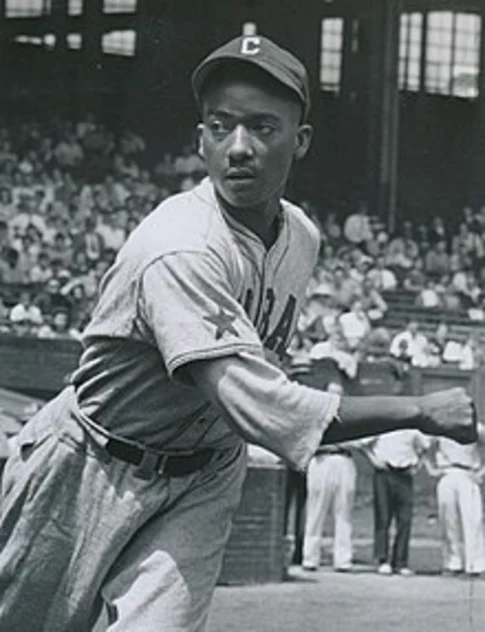
Dave Barnhill - Pitcher
Despite his small stature, pitcher David Barnhill took on opposing batters as if he were larger than life. His best years were 1941-1949 when he was a member of the New York Cubans. A small, fireballing strikeout artist, the New York Cuban ace threw "aspirin tablets". These were pitches that looked like aspirin tablets coming in at the batter. Barnhill used an unorthodox wind-up and pitching style to send frustrated hitters back to the dugout and off of the basepaths. His unique talent and ability earned him the respect of teammates, the fear of batters and the opportunity to play for a professional Major League baseball team when they began recruiting African-American players in the 1940s. Barnhill had a record of 18 wins and three losses in 1941, 26 wins and 10 losses in 1943 and was chosen to start the 1943 All Star game versus Satchel Paige.
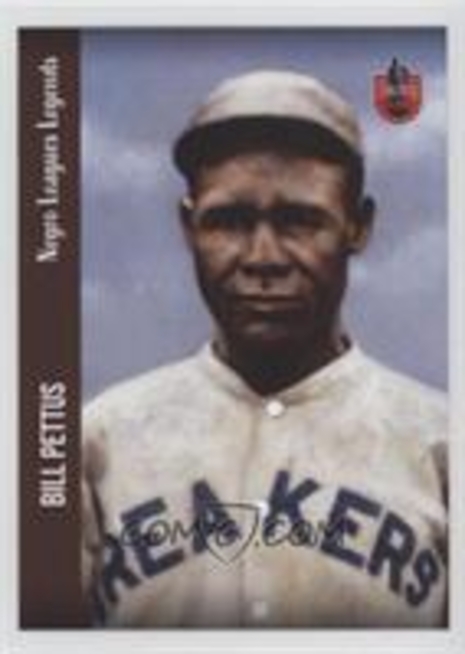
Bill Pettus - Infield (all positions), outfield
This big, left-handed power hitter was one of the best batsmen of the deadball era and is one of the most underrated players from Black baseball. Playing with many of the top teams, he was always hitting in the heart of the batting order, yet he demonstrated an ability to steal bases when the game situation dictated a need. A versatile player afield, he could play any position and was a catcher early in his career. During his days of jumping from team to team, he played with New York Lincoln Giants, Philadelphia Giants, and the Atlantic City Bacharach Giants, among others.
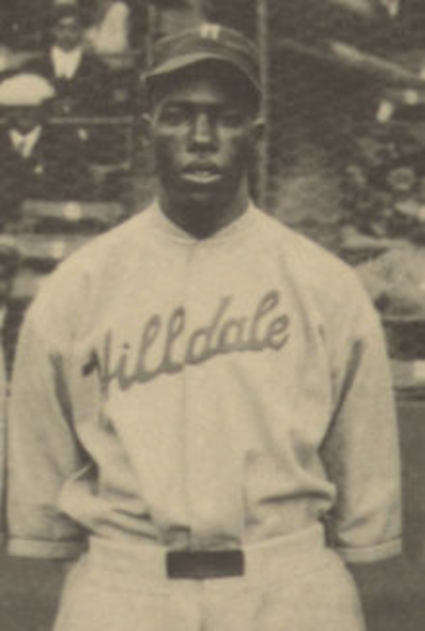
Jesse “Nip” Winters Pitcher, 1st Base
Simply put, Jesse “Nip” Winters was the best pitcher in the Eastern Colored League. He had a great fastball that complimented an outstanding curve ball. However, early on in his career he was a bit on the wild side. Winters’ window of dominance was short-lived. In a five-year period (1923-1927) with the Hilldale Daisies in the ECL, Winters posted an 84-29 slate with an ERA of 3.55. He also recorded 546 strikeouts and 368 walks while leading Hilldale to the first three titles in ECL history and the Negro League World Series title in 1925. Against competition in 1923, he had a record of 32 wins and six losses. Then in league play in 1924 he was 19-5 and in 1925 he finished 21-10. In the 1924 World Series he pitched four complete games including a shutout and recorded three wins along with a 1.16 ERA. He had a record of 15 wins five losses (1926) and 14 wins eight losses in 1927.
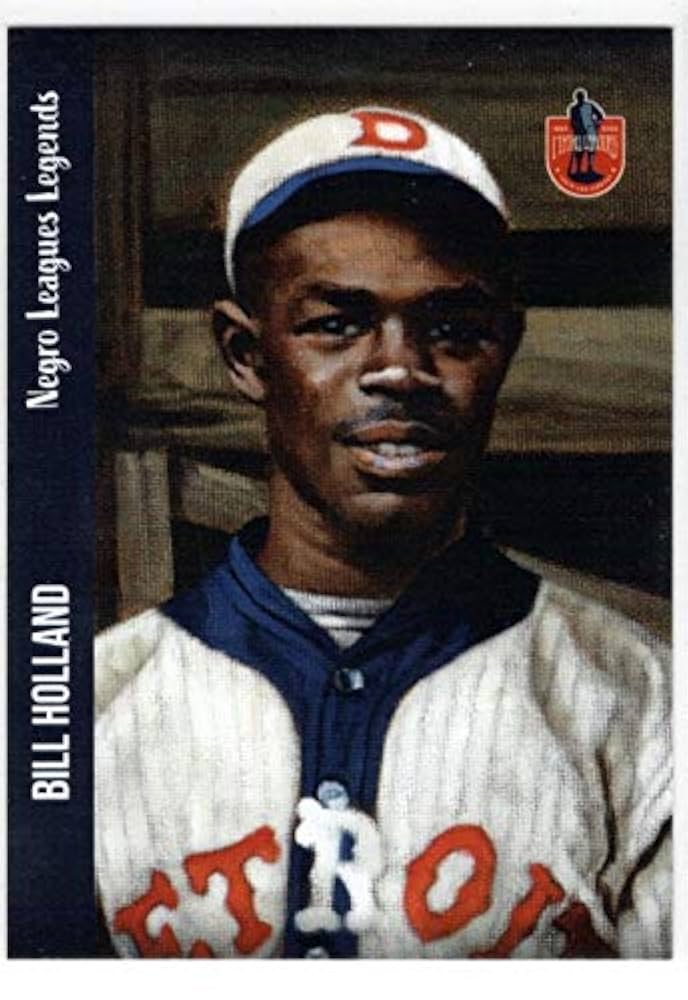
Elvis William “Bill” Holland - Pitcher
A fastball pitcher, this right-hander's repertory also included a curve, drop, change-up, and emery ball. Holland’s career began in 1920 with the founding of the Negro National League. That year he pitched for the Detroit Stars, where he finished the year with a record of 17 wins and only two losses. He had a short stint with Rube Foster’s Chicago American Giants in 1921. Then back with the Stars where he pitched for three seasons. Following the 1922 season, Holland came east and pitched in New York for the remainder of his career. He often pitched in the Latin American winter leagues, including four years in Cuba, where he logged a 27-22 lifetime record. During much of his long association with the New York Black Yankees he was acknowledged to be the ace of the Black Yankees, who often finished in the second division.
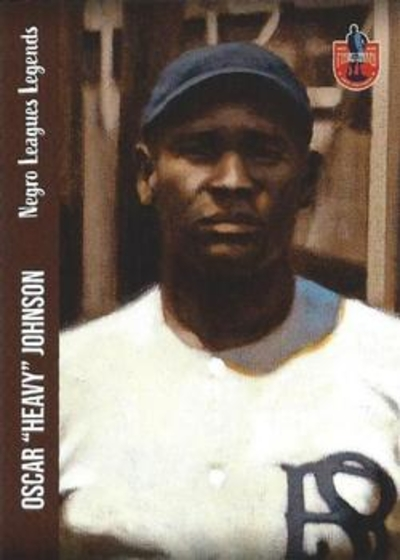
Oscar “Heavy” Johnson
A heavy player with an equally heavy bat, he was one of the league's power hitters during the 1920s. The big slugger was fat, carrying 250 pounds on his six foot frame, which he used to good advantage in generating power at the plate. He was with the 25th Infantry Battalion team while in the service. It was here where the regiment baseball team became known as the “Wreckers”— one of the top professional teams in the country. Johnson would have success with the 25th Infantry squad, thanks to his massive power at the plate. After 10 successful years with the 25th Infantry, Johnson turned professional and joined the Kansas City Monarchs. He was a catcher until the Kansas City Monarchs signed Dobie Moore and Joe Rogan and then Johnson converted to the outfield. Johnson was an unpolished fielder and not noted for performance afield. The burly outfielder's bat was what kept him in the lineup, and he could hit under any circumstances. In 11 seasons in the Negro Leagues, Johnson hit .370 with a .428 on-base percentage and .592 slugging percentage.
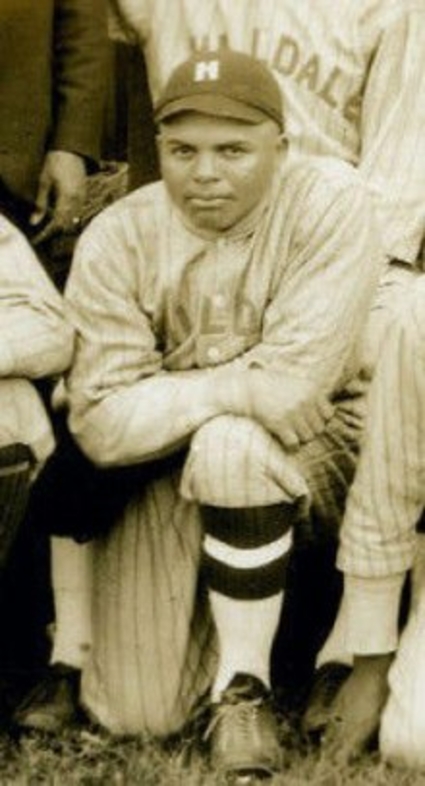
McKinley “Bunny” Downs - Infield, Outfield, Manager
He started his professional baseball career in the Midwest in 1915, before the founding of the first Negro National League. He joined the Indianapolis ABCs in 1916, and traveled East to play with Hilldale Club of Pennsylvania the following season. He was a good bunter and excelled at the hit and run play. Because of his skills he usually batted in the number two spot in the batting order to better utilize his skills. He was a pretty good double play combination when paired with Dick Lundy when the men were teammates on the Bacharach Giants. Downs was an excellent fielder and an average baserunner, but was a valued member of any team he was on because of the skills he possessed. The veteran infielder could play any infield position, and often also played shortstop or third base as well as at the keystone sack.
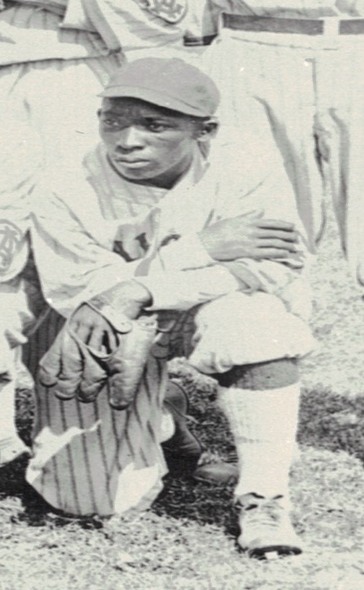
John Edward Reese - Outfield, Manager
John Edward Reese was a fleet-footed outfielder who put together a 12-year career at the highest levels of professional baseball in the Negro Leagues. He began his career with the Hilldale Club of Darby, Pennsylvania. Hilldale scheduled games against other professional Black ballclubs, as well as White semipro, industrial, and military teams since there were no league in which to compete. Although he spent most of his career as a reserve outfielder, he was talented enough to play in the outfield alongside some of the greatest players in history. When his playing days were largely over, he had a brief, but highly successful run as a manager, steering the St. Louis Stars to the last two pennants of the Negro National League in 1930 and 1931.
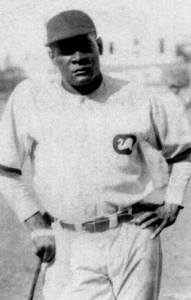
Wabishaw Spencer “Doc” Wiley - Catcher
Wabishaw Spencer “Doc” Wiley baseball career began in 1910 as a catcher with the West Baden Sprudels, under manager C.I. Taylor, but moved to New York the following year and remained there for most of his career. He later played for the Brooklyn Royal Giants in 1910 and 1911 before moving on to the Eastern Champions New York Lincoln Giants. In 1913, Wiley had a batting average of .398. During the 1914 season he hit over .400 and was shifted to the number three spot in the batting order. Behind the plate he caught Smokey Joe Williams. He was a smart catcher and very skilled at handling pitchers. He also was a good clutch hitter, who had power in the heart of the lineup for the Lincoln Giants for almost a decade. Wiley was considered one of the best catchers of his era.
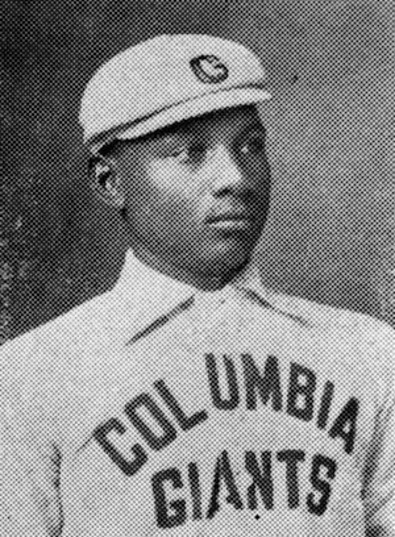
George “Chappie” Johnson - Catcher, 1st Base, Manager
George “Chappie” Johnson’s professional playing career lasted from 1896 until 1919 as a catcher and a first baseman. He was a good handler of pitchers and one of the best catchers in the game for the first two decades of the 20th century. A smooth receiver, he was a member of the well-known Leland Giants' team of 1909 and the Mohawk Giants of 1914. Johnson had the ability to work with young players which in turn led him to become a coach and a leader. During his twenty-three-year career he also played first base and was an outstanding manager in his latter years. An innovative defensive player, he was the only player in the league to wear shin guards during the 1910 season. But he was a light hitter, usually batting in the lower part of the order, and managed only a .186 average for the season. Hitting notwithstanding "Chappie" was known for his defensive skills.
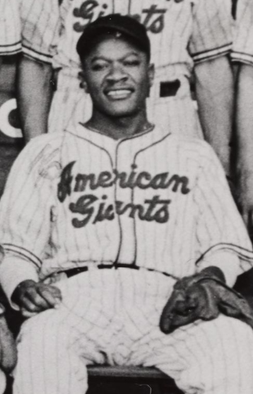
William McKinley “Sug” Cornelius - Pitcher
A crafty right-hander with good control, "Sug" had a superb curveball that he could "throw around a barrel." Other pitches in his arsenal included a good fastball, hard slider, screwball, drop, and change of pace. He had his best season in the Negro Leagues in 1936 when he posted a record of 20 wins and four losses while pitching for the Chicago American Giants. He appeared in three East-West All Star games, starting on the mound for the West squad in 1936 and 1938 and gaining the victory in relief in the 1935 game. In 1937, the only year during this period when he missed making the All Star team, he was credited with 22 victories.
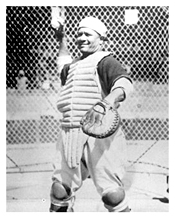
Larry “Iron Man” Brown - Catcher
He was regarded as an outstanding catcher with a quick release and his throwing arm was the envy of every catcher in the league. It did not matter whether he was smothering a ball in the dirt or catching a pop fly, he was one of the best, despite the fact that when catching a pop fly, he kept his catcher’s mask on. A conscientious, hard worker popular with the fans but rough on umpires, he was a durable workman credited with catching 234 games in 1930 for the New York Lincoln Giants, earning the nickname "Iron Man." An expert at his craft, his legacy gets lost in the shadows of fellow catchers Josh Gibson, Biz Mackey, and Louis Santop. His value to a team was immeasurable and he was selected to six All-Star teams and on three championship teams as well. He won his first World Series title in 1927 with the Chicago American Giants, when he put a stop to the Eastern Colored League's Bacharach Giants, running game when he threw out four runners in eight steal attempts.
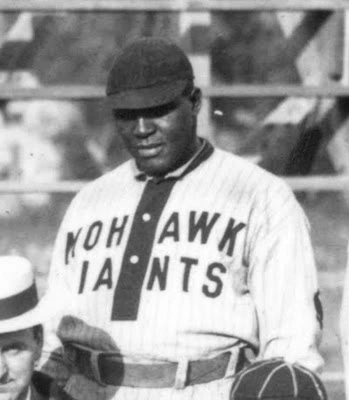
Harry Buckner - Pitcher, Catcher, ShortStop, Outfielder
From 1896 to 1914, the righthander with an underhanded delivery was a staff mainstay for numerous elite Black teams. When not pitching, Buckner played right field for these squads, and slugged from the heart of their batting orders. He was one of only a few Americans who played in Cuba during the first decade of the century, pitching for Almendares in the Cuban winter league of 1907. He was a smart pitcher and was called the "speed marvel" of the Brooklyn Royal Giants in 1910. That season the Royals won the eastern championship for the second consecutive year. Along with Rube Foster, Dan McClellan, and Walter Ball, Buckner was considered to be "head and shoulders above" all other pitchers. During his 23 years in black baseball, he was associated with numerous teams in both the East and the Midwest.
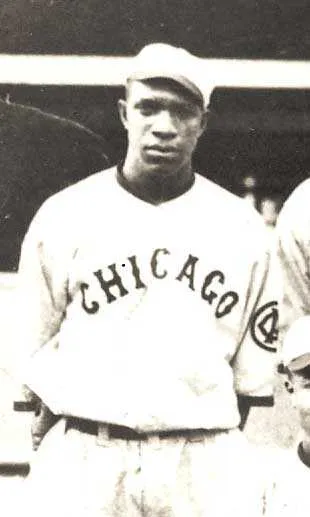
Elwood "Bingo" DeMoss - 2nd Base, Shortstop, Outfield, Pitcher, Manager
Bingo DeMoss is considered by many to be the best second baseman in Negro Leagues history. He was the consummate ballplayer, excelling at all phases of the game. Very fast on the bases and quick in the field, he could make all the plays. His style afield served as a model for those who later played the keystone position. DeMoss had quick hands and teamed with Bobby Williams on the Chicago American Giants to form a superlative double-play combination that could turn two "super quick." In addition to his impeccable defensive skills, the right-handed line-drive hitter was also productive with the bat, and was at his best in the clutch. He was a good contact hitter and could place the ball where he wanted. Bingo established himself as a star player with the Indianapolis ABCs, but enjoyed his best seasons with Rube Foster's Chicago American Giants, where his hustle and team play were perfectly compatible with Foster's managerial style.
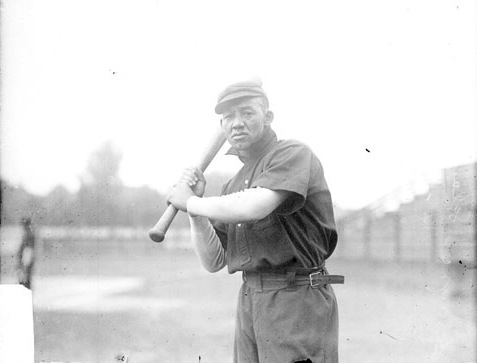
Andrew H “Jap” Payne - Infield, Outfield
Payne played several positions during a career that lasted from 1902 until 1919. At one time or another, he played each outfield position and except for first base all the infield positions. He began his career with the Philadelphia Giants in 1902 and was with them in 1904 when they won their first championship. His base stealing abilities were great, and he was highly recommended as an outfielder with a strong throwing arm. The media reported that there were "few better [at] cutting runners off at the plate. "A complete ballplayer, he was a good, consistent hitter with above-average power, an excellent base stealer, and a proven fielder with a good arm".
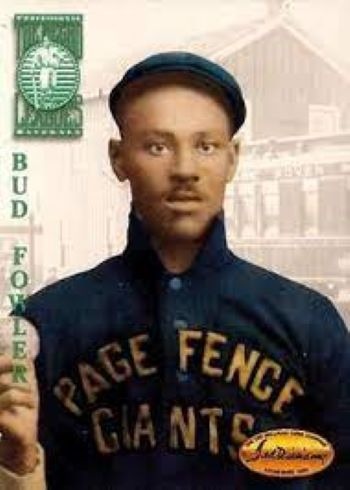
Bud Fowler - Infield, Pitcher, Outfield, Catcher, Manager
John "Bud" Fowler, was one of the true pioneers of Black baseball history. His resume includes a long list of firsts. He was the first professional Black ballplayer, beginning his career in 1878, only one year after the first minor league was organized. He was the first to play on integrated teams, typically the only dark face on the roster. Bud was the first catcher wearing wooden slats to cover his shins. He was also one of the first significant Black promoters, forming the heralded Page Fence Giants sponsored by the Page Woven Wire Fence Company of Adrian, Michigan, and other clubs and leagues. Fowler was a stellar player — in the box, behind the plate, in the field and with the bat. The fact that he bounced from team to team had nothing to do with his skills. He played with numerous clubs over two decades from the late 1870s, playing for more clubs, and in more games than any other Black player before the 1950s.
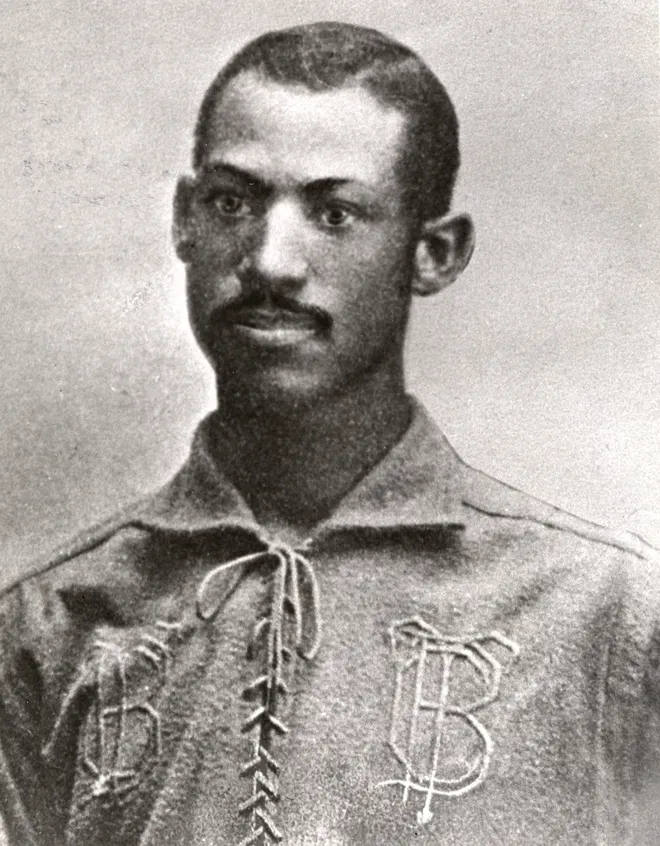
Moses 'Fleet' Walker - Catcher, Outfield, 1st Base
Moses Walker joined professional baseball in 1883, playing for the Toledo (Ohio) Blue Stockings of the Northwestern League. In 1884, the Toledo Blue Stockings moved from the minor to the major league level when they joined the American Association. On 1 May 1884 Walker became the first Black player to play baseball at the major league level. He went on to play in 42 games with Toledo in 1884, batting .263 for the season. A catcher with the ballclub, later in the year he was joined by his brother, Weldy Walker, who joined the team as a replacement outfielder for an injured player. In general Walker was a fan favorite in Toledo, and was well-received by players and spectators. He was released by the team later in the season amid threats of bodily harm from anonymous sources. No other African American player would play in major leagues for 63 years, until Jackie Robinson in 1947.
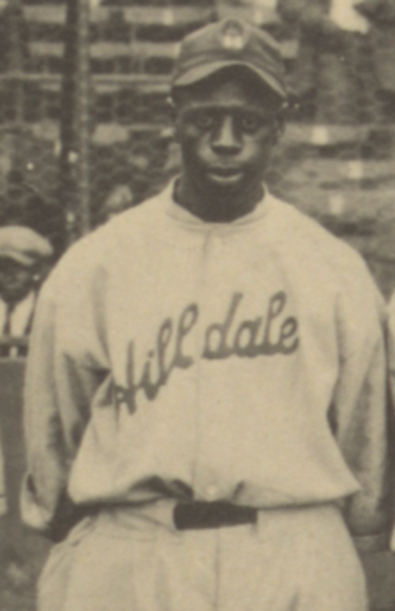
Holsey Scranton Scriptus Lee Pitcher - Outfield, 1st Base, Umpire
“Scrip” Lee was best known as a pitcher in Black baseball and the Negro Leagues between 1920 and 1934. This right-hander pitched for the Eastern Colored League champion Hilldale teams of 1923-1925, registering a 24-8 record in 1923. After losing to the Monarchs in 1924, Hilldale reigned victorious in 1925, and during the 1925 regular season Lee posted a 4-2 league ledger. In 1926, although Hilldale failed to retain their Eastern Colored League title, he posted an 18-5 record against all competition. In 1928 he left Hilldale in a dispute over money and signed with the Baltimore Black Sox. Although best known for his curves, he also had a wide assortment of pitches, including a drop, screwball, knuckler, fastball, and changeup. His underhand delivery made his curve break up and his fastball break down, enhancing his effectiveness. When he retired from playing he umpired in the Negro National League through the 1943 season.
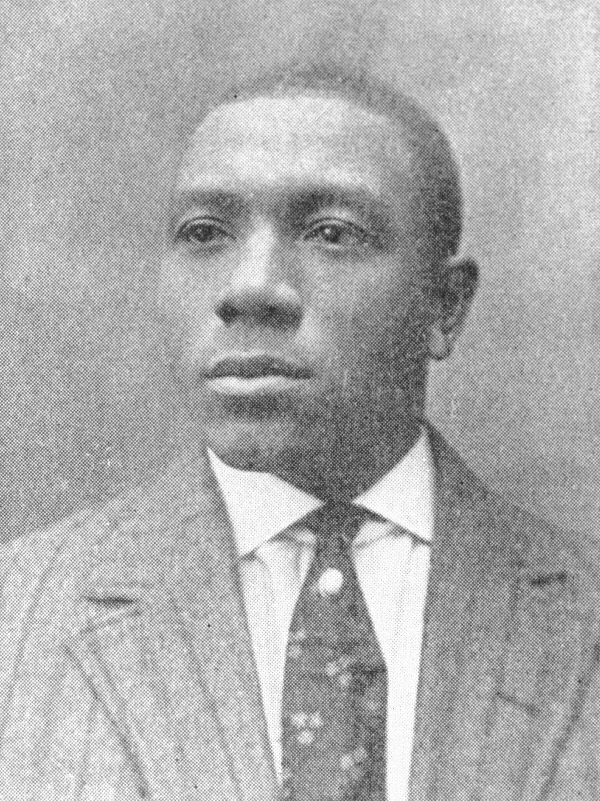
Jonathan Boyce Taylor - Pitcher
Known as “Steel Arm Johnny” for his pitching – was the second of four tremendously talented baseball-playing brothers. John first got his “Steel Arm” nickname in an 1898 newspaper article about his collegiate pitching ability. His career as a player began in 1903 and ended in 1925. The competition he faced reached the highest level in the game. Opponents included the Cincinnati Reds (in a 1912 exhibition game) and most of the finest Black players of the Deadball Era. He played on a number of teams, including the Birmingham Giants, Indianapolis ABCs and Rube Foster's Chicago American Giants in 1913. Taylor could also hit the ball, was a good defensive player, and had the reputation of being a smart, steady pitcher who pitched to the corners. In addition to his lightning fastball, he had a good assortment of curves.
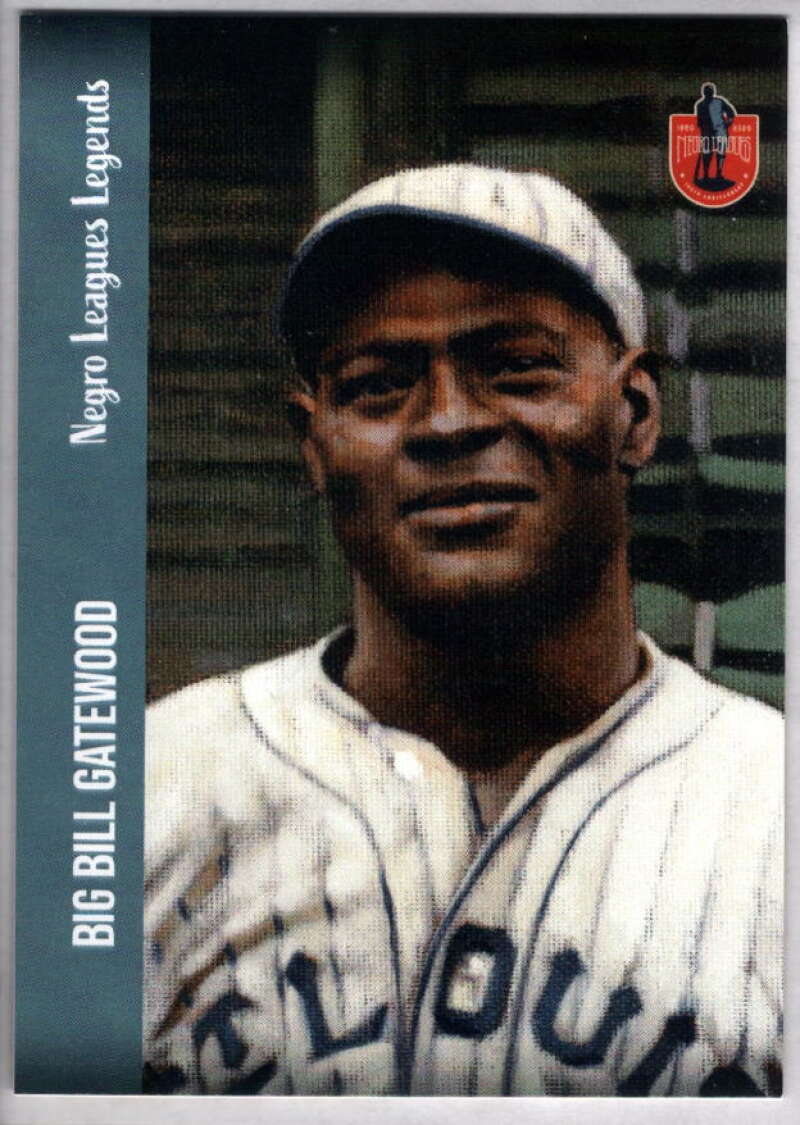
Bill “Big Bill” Gatewood - Pitcher, 1st Base, Shortstop
Bill Gatewood played with fifteen different teams during his twenty-four-year career. He was a pitcher who could handle the bat as well and later went on to success as a manager. The tall right-hander mastered the spitball and emery ball, and was not hesitant to knock a batter down as a matter of instruction directed at the offending hitter. Gatewood was a tremendous pitcher in the early years of Black baseball. In 1926, he was pitching with the Birmingham Black Barons, and while posting only a 1-2 record, he helped to develop a young hard-throwing righthander named Satchel Paige. He taught lanky youngster how to throw a hesitation pitch. He also served as the Black Barons manager during his stint in Birmingham. During his long career he also played with the Chicago Giants, Cuban X-Giants, Philadelphia Giants, Toledo Tigers, Memphis Red Sox, and Milwaukee Bears.
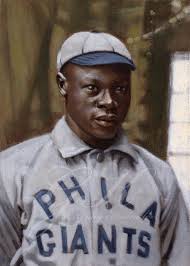
Spottswood Poles - Centerfield
They used to call Spottswood Poles the “Black Ty Cobb.” He was a Negro League contemporary of the Detroit outfielder who excelled at hitting and running. It’s just possible that Poles may indeed have been one of the finest hitters and base runners in Black baseball history. Because of his speed Poles usually batted in the leadoff spot in the batting order. Old timers say Poles speed was comparable to that of the great speedster James “Cool Papa” Bell. Poles was a switch hitter but when he batted left handed he was able to watch the ball hit the bat and then get a hit out of it. He was great bunter with moderate power. Like a lot of other men Poles had his playing time interrupted by World War I and while with the Army Infantry with the 364th Infantry, Poles won five Battle Stars and a Purple Heart as a sergeant.
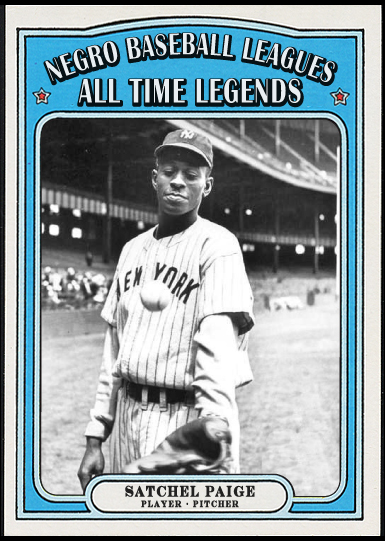
Satchel Paige - Pitcher
Leroy Robert Page, better known as Satchel Paige threw his first pitch in professional baseball in 1926 for the Chattanooga White Sox. On Sept. 25, 1965, he became the oldest to pitch in the major leagues when he threw 3 scoreless innings for the Kansas City Athletics against the Boston Red Sox. In between, the Hall of Famer pitched more baseballs, in more ballparks, for more teams, than any player in history. A mixture of fact and embellishment, Satchel's stories are legion and form a rich array of often-repeated folklore. It also is safe to say that no pitcher ever threw at a higher level, for longer, than the ageless right-hander. His name has become synonymous with the barnstorming exhibitions played between traveling Black teams and their White counterparts. Paige drew crowds thanks to his supreme talent—Joe DiMaggio said after facing him in a 1936 non-league game that Paige was the greatest pitcher he had ever batted against. When Paige debuted with the Cleveland Indians in July 1948, he was at 42, the oldest rookie in the Major Leagues. In 1971, on the proudest day of his life, Satchel was elected to the National Baseball Hall of Fame, becoming the first player elected from the Negro Leagues. Satchel Paige was known not as a great Black pitcher but a great pitcher.
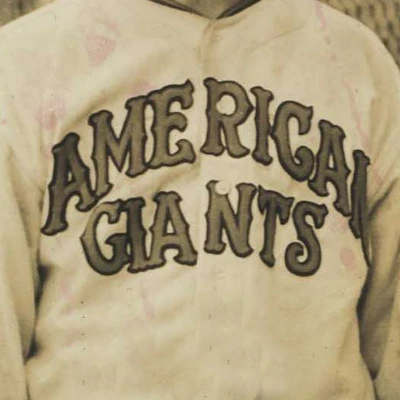
Chicago American Giants
From 1910 until the mid-1930s, the American Giants owned and managed from 1911 to 1926 by player-manager Andrew "Rube" Foster were Black baseball's most dominant team.
The team began in 1910 when Rube Foster and Frank Leland, who were the manager and owner, respectively, of the Leland Giants, separated and formed two different ballclubs. Foster retained the team name of Leland Giants for the first season, but beginning in 1911 the club became known as the American Giants. The American Giants won five pennants in that league. When the Kansas City Monarchs supplanted the American Giants as the dominant team beginning in 1923, Foster tried rebuilding but by 1926 his health (physical and mental) was failing. After Foster's death and the demise of the Negro National League, in 1931, and in 1932 the team won the Negro Southern League pennant as Cole's American Giants. In 1934, the American Giants won the NNL's second-half title, then fell to the Philadelphia Stars in a seven-game playoff for the championship. In 1937, after a year spent playing as an independent club, the American Giants became a charter member of yet another circuit, the Negro American League. Although the franchise encountered many difficulties during the 1940s, the ballclub remained in the league even after it had ceased to be of major-league caliber.
Indianapolis ABCs
Sponsored by the American Brewing Company, the club became a powerhouse in the years leading up to the formation of the Negro National League in 1920.
Under the management of C.I. Taylor, one of Black baseball’s most fabled strategists, the team regularly contended for national supremacy in independent play. With the formation of the Negro National League in 1920 the ABCs entered organized baseball as a charter franchise. After contending for the NNL crown during it’s first three seasons, the club went into rapid decline after Taylor’s death in 1922. After stumbling through a few more seasons with troubles both on the field and in the checkbook, the ABCs disbanded after the 1926 season. In 1931 a new team emerged which bore the “ABCs” name, but the team did not live up to the glory of the original club. In 1933 the team started in Indianapolis but very early in the spring moved to Detroit and played as the Stars. In the last effort to bring an ABCs team back to Indianapolis, the 1938 ABCs franchise shifted operations to the Midwest and played as the St. Louis Stars in 1939 and 1940 season.
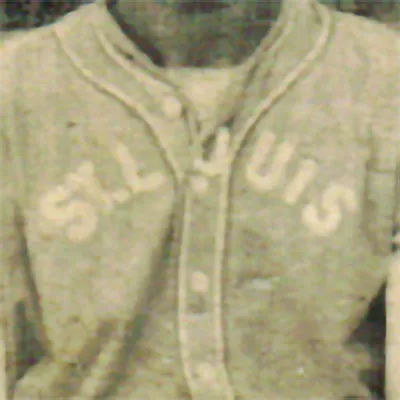
St. Louis Giants-Stars
Originally known as the St. Louis Giants, the team took on a new name in 1922, it’s third season in the original Negro National League.
The club continued to represent St. Louis in the NNL until the collapse of the league at the end of the 1931 season. At various times during it’s tenure in the original NNL the team’s roster featured some of the Negro League’s biggest stars, including James “Cool Papa” Bell and George Scales, and the Stars enjoined considerable success during the last half of the 1930s, capturing the NNL pennant in 1928, 1930, and again during the league’s final season in 1931. Under the economic pressures of the Great Depression which had brought on the collapse of the NNL, the Stars discontinued operations after their championship season in 1931. However, with the formation of the new Negro American League in 1937 the Stars reappeared, although the team was in no real way affiliated with the original club. The following years held mixed fortunes for the Stars as they came close to a league pennant in 1939. Struggling for financial survival, the franchise shifted to a co-hometown status, pairing St. Louis with other cities-New Orleans in 1940-1941 and Harrisburg in 1943. They disbanded for good after the 1943 season.
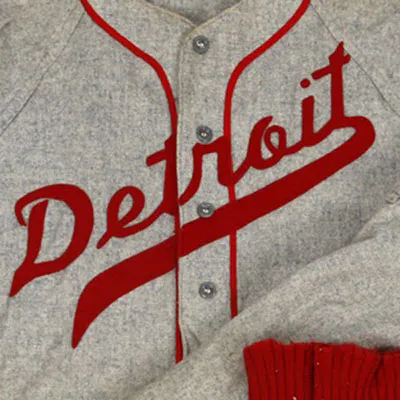
Detroit Stars
The Detroit Stars established themselves as one of the most powerful teams in the West during the late 1910s and became a charter member of the Negro National League in 1920.
The team’s fortunes in the new league were disappointing. In twelve seasons of NNL play the Stars finished no better than second in any year. The Stars’ best chance at a league championship came in 1930 when they won the second-half season title, but the pennant was snatched away from them by the St. Louis Stars in the championship playoffs. After the collapse of the Negro National League at the end of the 1931 the Stars returned to independent play for most of the 1930s. However, in 1933 the team participated in the newly reformed Negro National League and was a charter member in the Negro American League in 1937, but the team disbanded prior to the 1938 season.
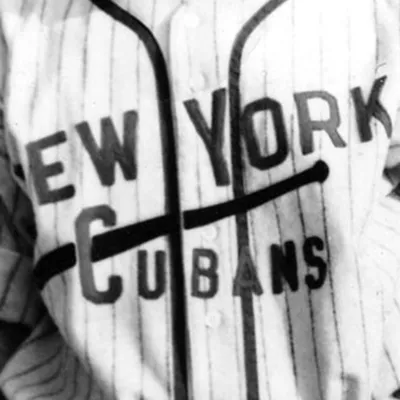
New York Cubans
In 1899, the All Cubans became the first all-Hispanic team to travel to the United States and stage exhibition games, against established Negro league powerhouse teams.
Beginning in 1907, they were replaced by the Cuban Stars, which became accepted as an independent Negro baseball team. In 1916, the team was struck by controversies and competition regarding booking, which led to the creation of a new Cuban Stars carrying the same name. To differentiate between the two teams, the newer of the two was referred to as the Cuban Stars (East), informally known as the New York Cuban Stars. They were an independent team that played in the New York area. The other became known as the Cuban Stars (West) a traveling team that played only road games. About 1930, both Cuban Stars teams folded, but in 1935 owner Alex Pompez was able to re-create a Cuban team under the new name New York Cubans. The Cuban Stars remained independent and played year-round until they joined the Eastern Colored League (ECL) in 1923. The New York Cuban Stars earned second place in their first season in the Eastern Colored League. The ECL disbanded in 1928. The Cuban Stars along with four former ECL teams—the Bacharach Giants of Atlantic City, the Baltimore Black Sox, the Homestead Grays and the Lincoln Giants of New York—organized the American Negro League. It lasted only one season in 1929.
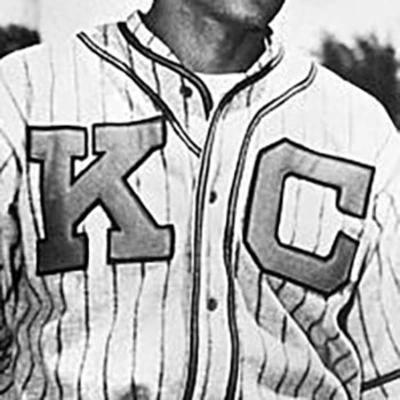
Kansas City Monarchs
The Kansas City Monarchs were one of the best known and most successful Black baseball teams. They were charter members of the Negro National League.
The Kansas City Monarchs were the longest-running franchise in the history of baseball's Negro leagues. The Monarchs captured a total of ten pennants, tying the Homestead Grays for the most flags by any Negro League team, and suffered only one losing season during their entire association with the Negro Leagues. A charter member of the Negro National League, they played through the 1930 season, winning pennants in 1923-1925 and 1929 while never experiencing a losing season. As a charter member of the Negro American League in 1937, they won five pennants, missing only in 1938. In 1942 World Series the Monarchs swept the Homestead Grays, in four straight games. In 1946 the Monarchs lost a tough seven game World Series to the Newark Eagles. In 1948 the Monarchs lost a seven game playoff to the Birmingham Black Barons missing the last Negro World Series. Following that World Series, the Negro National League folded and the Negro American League absorbed some of the franchises and expanded into division play. The team produced more major league players than any other Negro league franchise. It was disbanded in 1965.
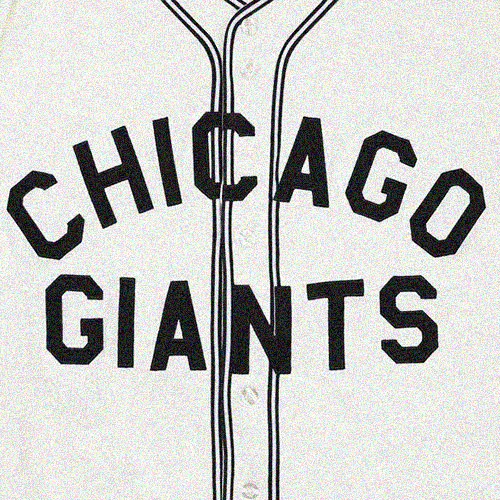
Chicago Giants
The team was founded by Frank Leland after he and his partner, Rube Foster, split up the Leland Giants in 1910.
Frank Leland’s new club was sometimes also known as Leland’s Chicago Giants, until a court injunction forced Frank Leland to stop using the name Leland Giants. Aside from their style of play, the Leland Giants were distinct among other Black semi-professional baseball teams because they regularly played against White teams and easily drew large crowds of white fans. After Leland's death, in 1914, the team came under the control of longtime player Charles "Joe" Green. In 1920, Leland’s new team, the Chicago Giants became a founding member of the Negro National League (NNL) and fielded a league team the first two years (1920-21) of its existence. After dropping out of the Negro National League, the Chicago Giants were no longer a major-league-quality ballclub, although the team continued to function into the later ‘20s. They played as a travelling team, without a home field, and finished in last place in both 1920 and 1921. Their best player was a young catcher/shortstop named John Beckwith, who was purchased by Rube Foster for his Chicago American Giants after the 1921 season.
The Dayton Marcos
The Dayton Marcos history predates the formal organized leagues of Negro league baseball and were a charter member of the Negro National League in 1920.
As an independent team they played Black and White teams all over the country throughout the 1910s. Old newspaper accounts and fading memories are some of the only sources of information on the Marcos. The team was started by Daytonian Moses Moore, a real estate agent. Moore owned the New Marco Hotel and apparently named his team after that enterprise. Local newspapers sometimes referred to the team as "Moses Moore's Marcos." They played in the then newly formed Negro National League, which was formed by Rube Foster. The Marcos finished the 1920 campaign in seventh place with a 16-36 record, 23 games behind the pennant winning Chicago American Giants. They withdrew from the league after the initial season and fielded a league team in only one other year, 1926. The 1926 Marcos were a revolving door of names and faces, with as many as 43 different men wearing a Dayton uniform in league play. After leaving the NNL, the Marcos returned to independent play and participated in the integrated Indiana-Ohio League, winning the championship in 1932.
Homestead Grays
Operating from 1912 to 1950, the Homestead Grays became a dominant dynasty, winning nine consecutive league titles (1937–1945) and three Negro World Series championships.
Cumberland Posey, who would become the owner of the team, had the Grays playing as an independent team, which made a good profit every year from 1912 to 1929. They joined the Negro National League in 1931 and for the next two seasons the Grays fielded its strongest teams since the franchise's inception. But when the Depression hit in the thirties, there were some lean years for the Grays, and Gus Greenlee took advantage of Posey's economic situation to lure some of his best players to the Pittsburgh Crawfords. In 1933 the Negro National league reorganized, and the Grays became full members the following year, fielding a team each year until the league folded after the 1948 season. During this time the Grays dominated the league, winning nine consecutive Negro National League pennants, 1939-1945, and also annexed the last flag in 1948. During this time they also played in five of the seven World Series played between the Negro National League and the Negro American League. After the league broke up the Grays continued to play for two more years as an independent team, playing against lesser opposition, but disbanded after the 1950 season.
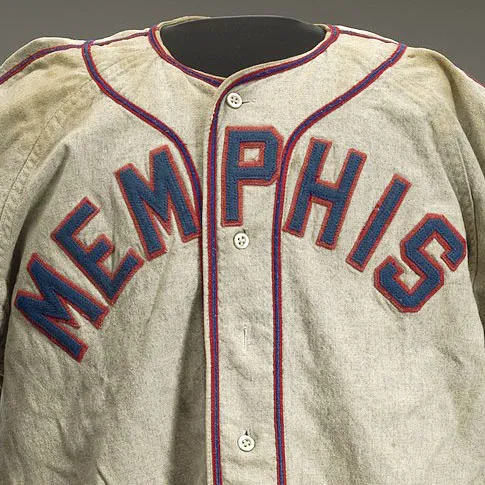
Memphis Red Sox
The Memphis Red Sox were an American Negro league baseball team that was active from 1920 to 1959, initially owned and operated by Arthur P. Martin, a local barber.
The Red Sox played as members, at various times, of the Negro Southern League, Negro National League, and Negro American League. The team was never a titan of the Negro leagues like wealthier teams in northern cities of the United States, but sound management lead to a continuous thirty-nine years of operation, a span that was exceeded by very few other teams. In 1937 Memphis became a charter member in the Negro American League and won the first half championship in 1938 with a 21-4 record. In the playoff with the second half winner, the Atlanta Black Crackers, the Red Sox won the first 2 games but the Series was canceled because of discord between the managements of the two ballclubs. The Red Sox remained in the league through 1950 but never again contended for the title. Following integration the team had five players that would eventually make the rosters of Major League Baseball teams and two players that were inducted into the Baseball Hall of Fame.
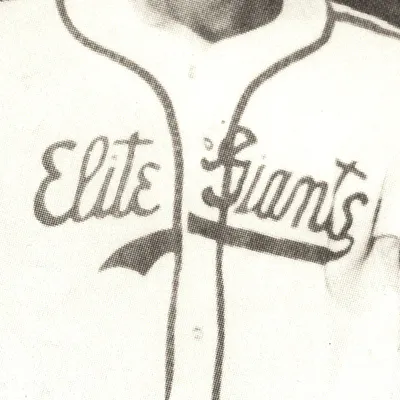
Baltimore Elite Giants
The Nashville Standard Giants were formed as a semi-professional all-Negro team in Nashville, Tennessee, renamed the Nashville Elite Giants in 1921.
That same year, they swept the Montgomery Grey Sox in a four-game championship series to win the right to declare themselves the Southern Colored Champions. They continued to play independently until joining the Negro Southern League in 1926. In 1929, Nashville was granted an associate membership in the Negro National League. The ballclub remained a fixture in the city for the next thirteen years. The team moved again in 1938 to Baltimore, MD and became the Baltimore Elite Giants. In 1939, the Elites won the Negro National Title, defeating the Homestead Grays. In 1948, they won the first half, but lost the championship to second half winners, the Homestead Grays. In 1949, the Negro National League ceased operations, and the Elite Giants joined the Negro American League. In their first season with the new league, Baltimore captured the Eastern and Western Division titles, earning them a second Negro National Title. In thirteen seasons in Baltimore, of the eleven which have available standings, the Elite Giants finished in the top three during nine of those seasons. In dire financial straits, the club played one final season in 1950 before dissolving.

Birmingham Black Barons
The Black Barons were organized in 1920 for the inaugural season of Rube Foster's Negro Southern League, which operated mainly as a minor league.
They played in that league for three years before making the leap to the larger Negro National League, which operated as a major league. They were unable to keep their position due to irregularities with the team finances and returned to the Southern League for three more years. Their return to the National League in 1927 was marked by the emergence of star pitcher Satchel Paige, who led the Black Barons to the second half pennant, in the Negro National League split season, before losing the League Championship Series to the Chicago American Giants. In the early 1940's the team was sold to Abe Saperstein who also owned the Harlem Globetrotters basketball team. In 1943 and 1944 they won back-to-back pennants. Starting in 1945, they became full members of the Negro American League and continued their success, winning a third pennant in 1948 with the help of teenage outfielder Willie Mays. They ended up losing three Negro World Series to the Homestead Grays that decade, forging a notable rivalry. As the Major Leagues started signing talented Black players, the Black Barons tried to form a new Negro Southern League with three other Southern teams.
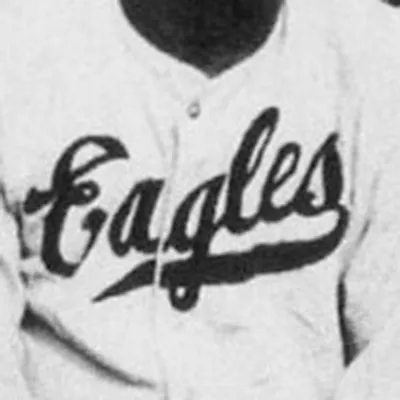
Newark Eagles
Abe and Effa Manley acquired ownership of two floundering teams, the Brooklyn Eagles and the Newark Dodgers, and consolidated the two franchises into the Newark Eagles.
Team management was left to Effa, making the Eagles the second professional baseball team owned and operated by a woman. The first such team was the Indianapolis ABCs who were owned by Olivia Taylor from 1922 to 1926. The Eagles shared Ruppert Stadium with the minor league Newark Bears. The Eagles were to (Black) Newark what the Dodgers were to Brooklyn.The Eagles joined the Negro National League in 1936 and remained a highly competitive team until the league's demise in 1948. The highlight of the franchise's history was in 1946, when they won the Negro National League pennant and defeated the Kansas City Monarchs in a hard-fought 7-game World Series. After the close of the 1948 season, in the aftermath of Jackie Robinson's successful integration of Major League Baseball a year earlier, the Negro National League contracted and merged into the Negro American League. The Eagles were sold and moved to Houston, Texas for the 1949 season, where they became known as the Houston Eagles, part of the NAL's western division. Two years later they again relocated, this time to New Orleans, before folding after the 1951 season.
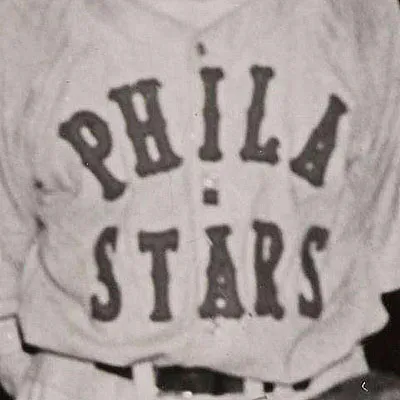
Philadelphia Stars
The Stars were an independent ball club in 1933, a member of the Negro National League from 1934 until the League's collapse following the 1948 season.
The Stars were founded and organized by Ed Bolden. As an independent team the Stars primarily played against local White semi-professional and professional teams. Bolden had owned the Hilldale Club that won the Eastern Colored League pennant in 1923, 1924, and 1925, and which beat the Kansas City Monarchs in the Negro League World Series in 1925. Bolden was also a founder of the ECL. In 1934, led by 20-year-old left-hander Slim Jones, the Stars wont the 1934 Negro National League championship club, their first season in the league. After copping the second half title, the Stars defeated the Chicago American Giants in a bitterly contested 7-game championship series. At their high point in mid-1930s, the team starred such greats as Biz Mackey, Jud Wilson, and Dick Lundy. The nearest they came to another title were strong second half finishes in 1938 and 1944, with their front office claiming they were cheated out of the latter pennant. After the Negro National League folded, the Stars entered the Eastern Division of the Negro American League but without any appreciable success.
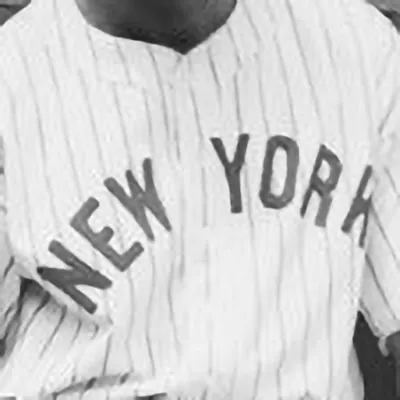
New York Black Yankees
The New York Black Yankees' franchise was basically an extension of the New York Lincoln Giants, founded as the Harlem Black Bombers in 1931.
They filled a void created when the Lincoln Giants folded operations after the 1930 season. In 1931 John Henry Lloyd managed an interim New York team, the Harlem Stars, which served as a bridge between the two longtime franchises. In 1932 the New York Black Yankees began operation, with George Scales installed as manager. In 1936 the Black Yankees entered the Negro National League for the second half, finishing with an 8-7 league ledger, and for the next dozen seasons (1937-1948) the Black Yankees fielded a team in the Negro National League. But rather than dominating their league, as did their White counterparts (the New York Yankees), they were the doormats of the Negro National League, usually finishing in the cellar and never higher than fifth in a six team league.
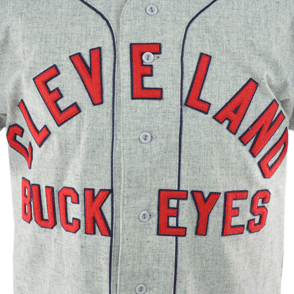
Cleveland Buckeyes
Founded by Ernest Wright and Wilbur Hayes, in 1942, before they were the Cleveland Buckeyes, they were the Cleveland Buckey Baseball Club.
The Buckeyes were initially established in Cincinnati, Ohio. The ballclub moved from Cincinnati in 1943 and remained until 1949, when they moved to Louisville for a season before returning in 1950. The highlight of the franchise's history came in 1945, when catcher manager Quincey Trouppe led the Buckeyes to a Negro American League pennant (winning both halves of the split season and finishing with an overall 53-16 record for a .768 winning percentage and a sweep of the Homestead Grays in the Negro World Series. The Buckeyes, under Trouppe's tutelage, captured another flag in 1947 with a 54-23 record (.701 pct.) but lost the World Series to the New York Cubans in five games.
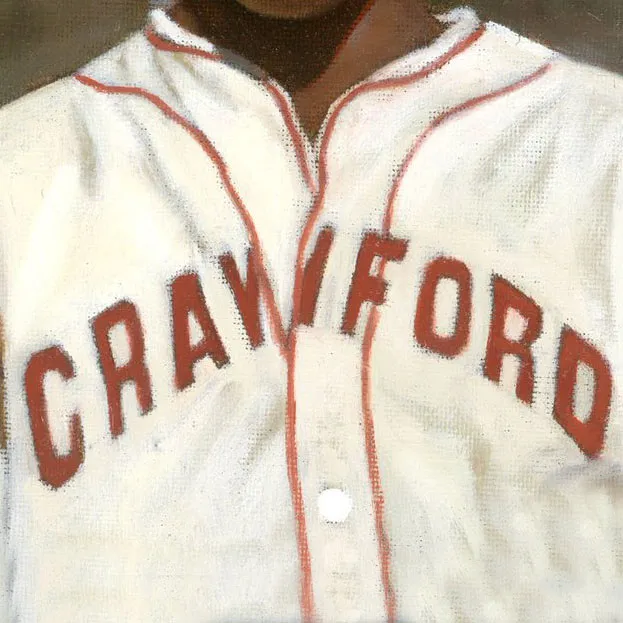
Pittsburgh Crawfords
Formed by Gus Greenlee, the Pittsburg Crawfords played as an independent in 1932, finishing with a 99-36 record. In 1933 they joined the new Negro National League.
The Crawfords became a powerhouse for the following five years (1932-1936). They were a co-claimant to the league's first pennant. In 1934 the Crawfords fielded another outstanding team, finishing with a combined 29-17 record for a .630 winning percentage in league play. However, they failed to win either half of the split season, and missed the playoffs. But in each of the next two seasons, 1935-1936, the Crawfords won Negro National League pennants, and the 1935 club is generally regarded as one the greatest Black baseball team of all time, despite pitcher Satchel Paige skipped most of the NNL season to play for a semipro team in North Dakota. In 1936, after a third-place first-half finish, the Crawfords copped the second-half title with a 20-9 mark and finished with the best overall record. The following spring many of their start departed for Santo Domingo, in the Dominican Republic. The franchise never again reclaimed the glory from the five preceding seasons. After two second division finishes and a business reversal, Greenlee sold the team and eventually disbanded in the mid 1940's.
Indianapolis Clowns
The franchise that began as the Miami Giants and evolved into the Ethiopian Clowns found a home in Indianapolis in 1946-1950 while playing in the Negro American League.
Soon enough the team became an independent barnstorming club, changing its name to the Ethiopian Clowns. Syd Pollock was instrumental in promoting and popularizing the Clowns. In 1943, the team was relocated to Cincinnati, where they became the Cincinnati Clowns. That same year they joined the Negro American League, beginning a 12-year membership in the circuit before withdrawing following the 1954 season. The team operated between Cincinnati and Indianapolis in 1944 and 1945 before officially moving to Indianapolis in 1946, playing as the Indianapolis Clowns for the rest of their existence. As the Negro leagues declined in the late 1940s after the integration of Major League Baseball, the Clowns continued operations on barnstorming tours into the 1960s. By 1966 the Indianapolis Clowns were the last Negro league team still playing. The Clowns continued to play exhibition games into the 1980s, but as a humorous sideshow rather than a competitive sport. After many years of operation as a barnstorming team, the Clowns finally disbanded in 1989.
Hilldale Giants
Established in 1910, the Hilldales were developed by their early manager, then owner Ed Bolden to be one of the powerhouse Negro League baseball teams.
They became a professional-level club in 1916, and flourished for the next decade as one of the preeminent Black teams in the East. In 1923 they became a charter member of the Eastern Colored League, and won the first of three pennants with records of 32-17 and 47-13. The latter two years, they played in the first two Negro World Series between their league and the more established Negro National League. After losing the first Series to the Kansas City Monarchs in 1924, they defeated the Monarchs in a rematch between the same two teams in 1925, to claim the first (and only) World Series victory by an Eastern Colored League team. After the dissolution of the Eastern Colored League early in the 1928 season, the ballclub joined the American Negro League in 1929. The 1929 club was the highest-salaried in Hilldale’s history, featuring future Hall of Famers Oscar Charleston, Martin Dihigo, Biz Mackey, and Judy Johnson. The year 1929 marked the apex of Hilldale’s popularity. With the Great Depression, wreaking financial havoc on Black baseball, the league folded, after only one season, and Hilldale played as an independent team for the next two seasons.
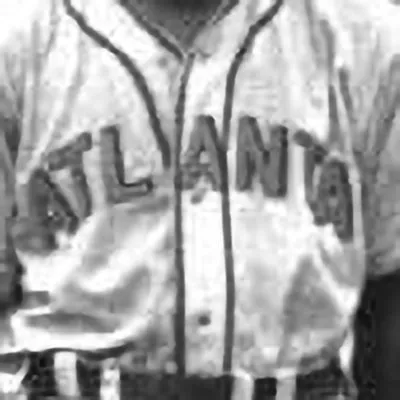
Atlanta Black Crackers
The Atlanta Black Crackers began as the Atlanta Cubs in 1919 and changed their name to the Black Crackers because fans had already begun to call them by that name
Although the team played mostly in the Negro Southern League, during their one year venture (1938) in the Negro American League, they won the second half championship. At the beginning of the spring there were two separate teams vying to represent Atlanta in the Negro American League, but after the two squads finally merged into a single team carrying the name of the Atlanta Black Crackers, they continued to improve until they copped the second half title. In the scheduled playoff against the first half champion Memphis Red Sox, they lost the first two games played, but after conflict due to game cancellations, the league president ruled the unfinished series a "no contest," and a league champion was undetermined. The following season, for financial reasons, the franchise moved to Indianapolis and played in the Negro American League under the name of the Indianapolis ABCs. However, once again financial difficulties led to their dropping from league play and disbanding.
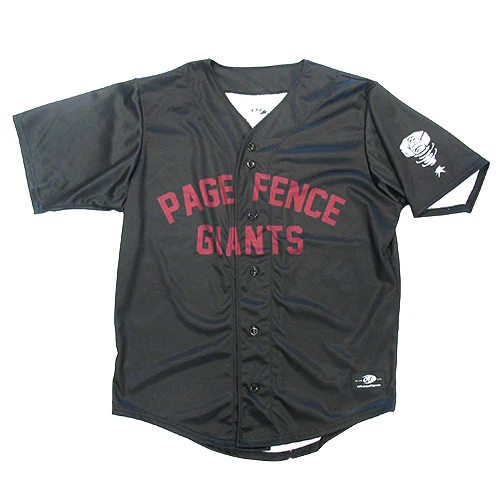
Page Fence Giants
The Page Fence Giants would become one of the great early teams in Black baseball. They were founded by Bud Fowler and Grant "Home Run" Johnson.
Fowler chose players who did not drink and aimed for a group with high moral character. Five of the twelve players were college graduates. Fowler played second base while Johnson manned shortstop. The team played in 112 towns that year against all levels of competition, going 118-36-2 in its first season of 1895. The club lost Fowler and pitcher George Wilson to the White Adrian-based team Adrian Demons. In 1896, Charlie Grant replaced Fowler at second. In 1896, the second year of existence, the Page Fence Giants won the Colored Championship when they defeated the East's top team, the Cuban Giants, to claim top spot in Black baseball. During the next two seasons the team continued its success on the baseball diamond, but suffered financial reverses. Overall they went 80-19 through August 1. In 1897, they went 125-12 with 82 consecutive wins. The 1898 tour was the club's last, as the next year many of the players went to the new Columbia Giants in Chicago.
Baltimore Black Sox
The Baltimore Black Sox were one of the original six teams to make up the Eastern Colored League in 1923, and also charter members of the American Negro League in 1929.
However, after the league folded during the 1928 season, a new league with essentially the same configuration but with a different name, the American Negro League, was organized. The Black Sox won the pennant in 1929, the league's only year of existence, with a composite mark of 49-21 for the year. The Black Sox then returned to independent status until joining the ill fated East-West League in 1932. Baltimore started strong and was in first place, but unfortunately the league did not last through the season. The Black Sox joined the new Negro National League when it was resurrected in 1933. Following a poor performance, they dropped out of the league at the beginning of 1934, but were added for the second half of the season. After another dismal showing both on the field and financially, the franchise folded after the 1933 season.
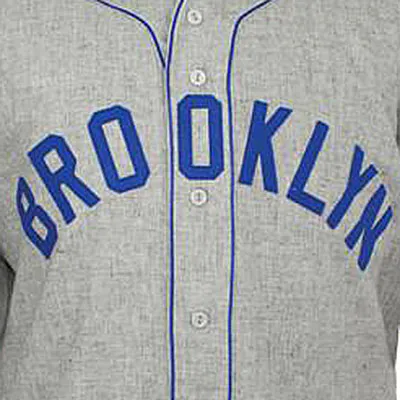
Brooklyn Royal Giants
The Brooklyn Royal Giants were one of the prominent independent teams prior to World War I before organized league play began.
They were organized as a “barnstorming club,” playing in the Independent league. The team initially played against White semi-pro teams. During the first decade of the century, they claimed eastern championships in 1909, 1910, 1914, and 1916 in the Independent league. In 1914 they lost a challenge playoff against the western champion Chicago American Giants. They also joined the National Association of Colored Baseball Clubs of the United States and Cuba in 1907. When the Eastern Colored League was organized in 1923, the Royals became charter members, finishing third with an even .500 winning percentage, their highest finish during their stay in the league. After dropping to the second division in 1924-1925, they dropped to the cellar for the next two seasons, and dropped out of the league after the 1927 season. The Eastern Colored League folded in 1928, and the club returned to playing in the Independent League. In the early years of the team, their roster boasted such players as Grant "Home Run" Johnson, Bill Monroe, Hurly McNair, and pitchers Dizzy Dismukes and Frank Wickware.

Cincinnati Tigers
The Cincinnati Tigers emerged as an independent Negro League team in 1934, founded by Cincinnati native William Hubbard, the first Black man to win an individual Olympic gold medal.
The team's initial roster was assembled through recruitment of talent from the Midwest and Southern states, including standout players from regional semi-professional and amateur circuits. They played as an independent team for three years before joining the Negro American League in 1937 in its inaugural season under manager Ted "Double Duty" Radcliffe. Key rivalries emerged early, particularly with the Kansas City Monarchs, whose star-studded roster tested the Tigers in several high-stakes matchups. The Tigers were highly successful locally and played their home games at Crosley Field, often sharing the stadium and wearing modified hand-me-down uniforms from the Cincinnati Reds. The Cincinnati Tigers played a pivotal role in elevating the visibility of Negro league baseball in the Midwest during the 1930s, serving as one of the first professional Black teams to regularly utilize a major league facility like Crosley Field in Cincinnati. Despite drawing massive crowds of 10,000 to 15,000 fans per game, routinely outdrawing the White Cincinnati Reds at the time. the Tigers folded after the 1937 season.