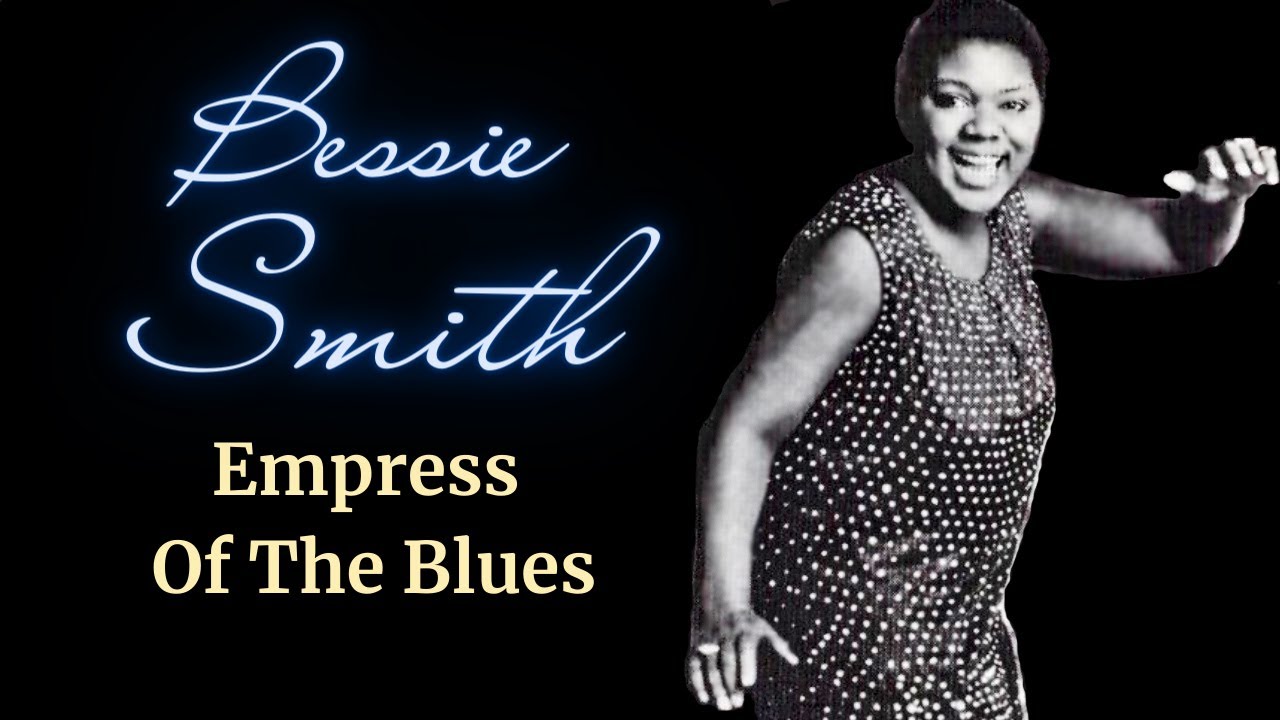
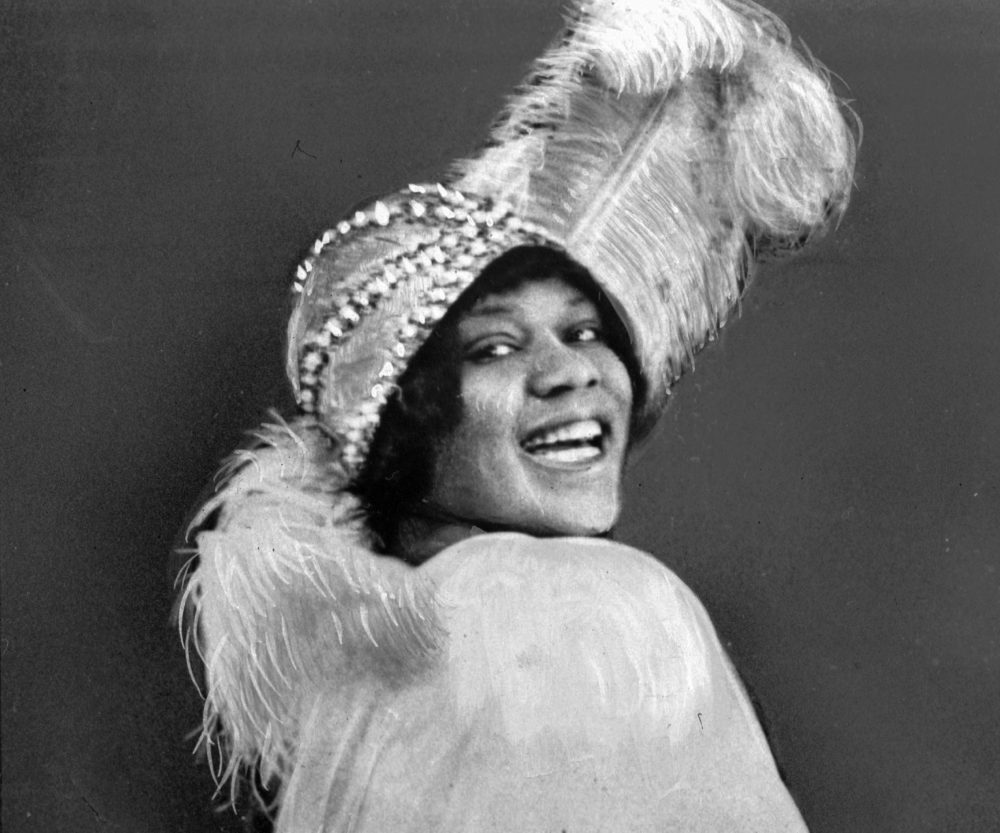
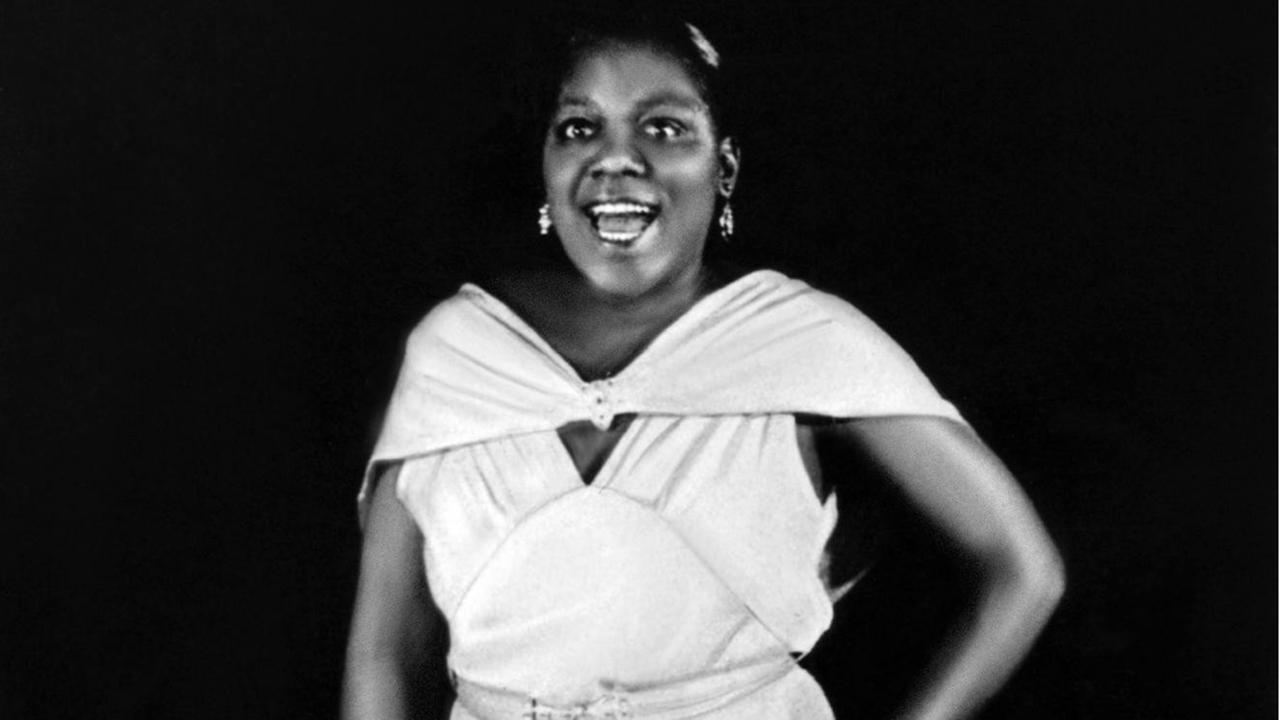
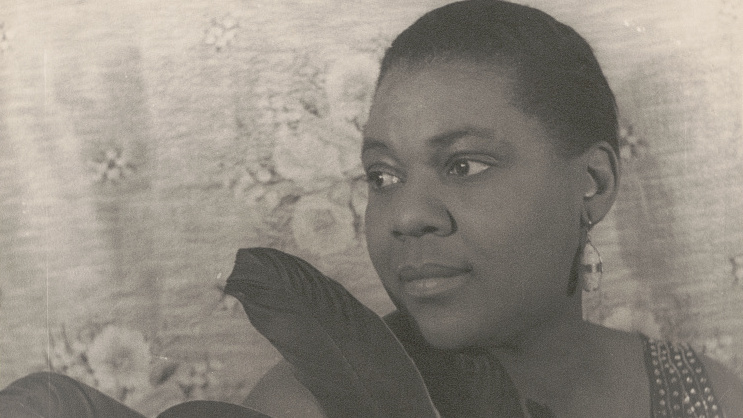
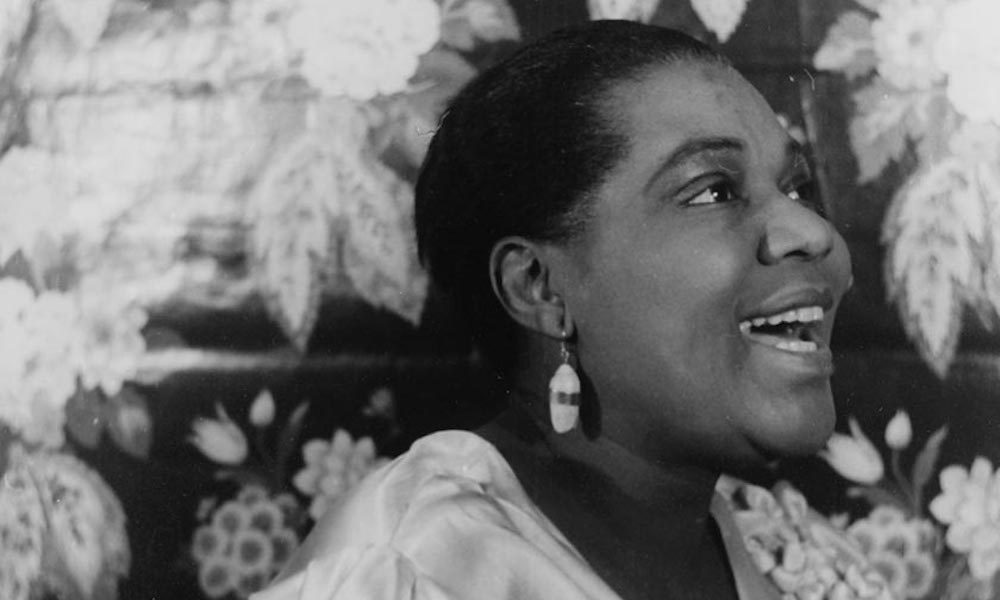
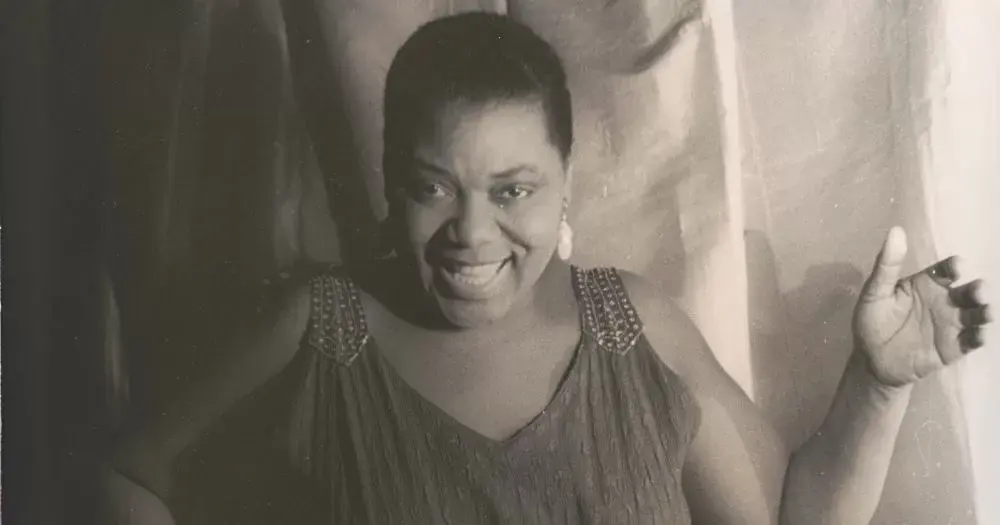
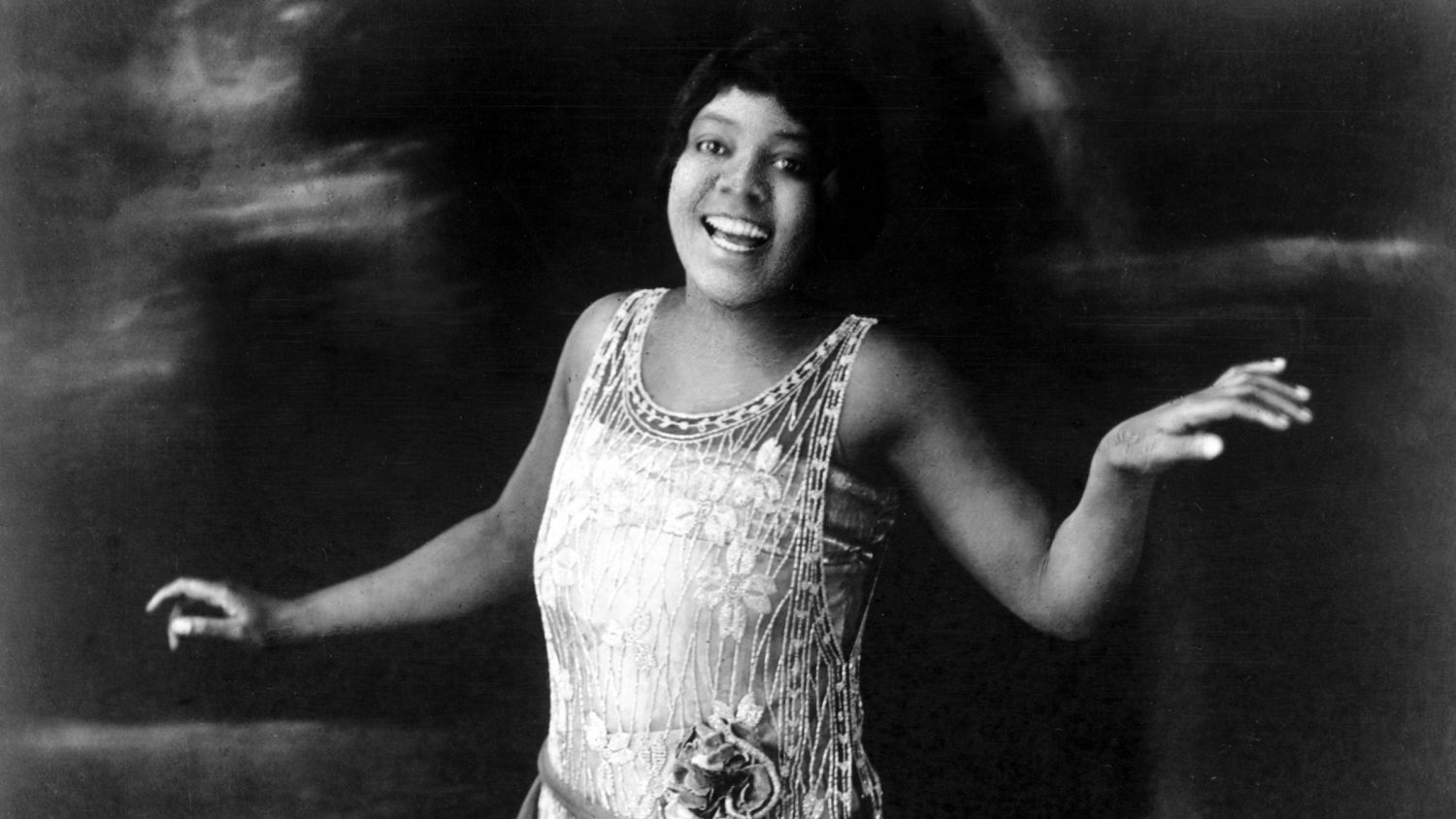
One of the most popular and successful female blues singer during the Harlem Renaissance, Bessie Smith was a pioneer in the vocal side of the blues music genre. With her distinctively potent voice and eye-catching delivery and appearance, she set trends in music entertainment that live on along with her own recordings. She was born Elizabeth Smith on April 15, 1894 or 1895 in Chattanooga, Tennessee. Due to the unreliability of early census figures and sometimes incomplete biographical interviews, the size of Smith's family remains the subject of serious debate. However, most believe her to be one of seven children; her eldest brother, Bud, dying before she was even born. Smith grew up in poverty and obscurity in the segregated south. Her father was a Baptist minister. She lost her father shortly after she was born. Her mother and another of her brothers died by the time Bessie was eight or nine years old.
Since both of her parents were deceased the care of Bessie and her other siblings fell to her older sister Viola. Smith realized at an early age that she had an exceptional voice. Bessie experienced a "wretched childhood." As a way of earning money for their impoverished household, Bessie and her brother Andrew began performing on the streets of Chattanooga as a duo. Bessie sang and Andrew played the guitar. Their preferred location was in front of the White Elephant Saloon at Thirteenth and Elm streets in the heart of the city's Black community. She may have made a first public appearance at the age of eight or nine at the Ivory Theatre in her hometown. Bessie’s older sister did not think performing was a respectable job, and often punished Bessie for singing in public. But Bessie knew she had talent and refused to quit. In 1904, her oldest brother, Clarence, left home by joining a small traveling troupe owned by Moses Stokes.
Her big chance came in 1912, when Bessie’s brother Clarence invited her to join him as a member of the musical troupe. At age eighteen Bessie worked with the Moses Stokes's traveling minstrel show. She later worked with the Rabbit Foot Minstrels under the legendary blues singer Gertrude "Ma" Rainey, one of the first of the great blues singers, from whom she received some training. Ma Rainey taught Bessie how to take care of herself as a young Black woman in the male-dominated entertainment industry. Smith continued to perform at various theaters and on the vaudeville circuit and was eventually offered a chorus girl part in a touring musical. Then she joined a series of vaudeville shows, often with such jazz greats as Louis Armstrong, and Fletcher Henderson. Vaudeville was a popular form of entertainment at the time and it was deeply segregated. Bessie performed with Black troupes for African American audiences.
Each new job kept Bessie traveling up and down the East Coast singing and dancing. Fans and entertainment professionals agreed Bessie was talented. She sang the blues like no other performer. She could hit low notes clearly and without effort. She brought emotional intensity to her performance. Blues songs are all about feelings—and everyone that heard Bessie felt something deep. By 1918, Bessie was starring in her own show, Liberty Belles Revue in Atlanta, Georgia, in which she appeared as a male impersonator. By 1921, she was traveling with her own band. In 1920, Bessie married Earl Love, who died unexpectedly in 1922. She then moved up the East Coast playing shows in Atlantic City before settling in Philadelphia where she work in Horan's Madhouse Club from 1920-1923. It was in 1923 when she appeared in the musical comedy "How Come" staged at the Dunbar Theater in Philadelphia. She performed in clubs throughout the South and East.
Also in 1923, Smith was denied record contracts with both Okeh and Black Swan Records Black Swan for sounding "too rough". Ironically both companies were founded to represent Black artists, with W.E.B Du Bois and John Nail serving on Black Swan's board of directors. Later that year, an agent at Columbia Records heard Bessie sing and invited her to New York City for an audition. Many recording companies in this era produced “race records,” records by Black artists specifically for Black listeners. The audition went well, and Bessie signed a contract. Columbia promised Bessie $1,500 in exchange for twelve recorded songs. Although White performers at the time had better contracts, Bessie felt it was a good deal. Her first record was “Downhearted Blues", and was effectively the number one song in America, although this was in the days before proper hit record charts. It sold over 750,000 copies in the first year.
By December 1923 Bessie had scored with five hit records, including a remake of “Taint Nobody’s Business If I Do”. In that one year she sold more than two million records. Some of her other famous recordings were “Jealous Hearted Blues” and “Jailhouse Blues.” The power of Smith’s singing is impossible to describe in words. Fortunately, her recordings are readily available throughout the United States, Europe, and elsewhere. During 1923 Bessie moved to Philadelphia and married a man named Jack Gee. Bessie met Jack when he worked as a security guard at a nightclub where she performed. She followed that success in 1925 with W.C. Handy's song "St. Louis Blues," which she recorded with Louis Armstrong. It was a hard life, with exhausting schedules, segregated accommodations, humiliating encounters with bigoted White police officers, late hours, casual sex, gambling, fighting, and plenty of drinking.
Smith did not use hard drugs, but she enjoyed smoking marijuana, which was considered fairly innocuous and did not become illegal under federal law until 1937. As a recording artist at Columbia, Bessie recorded songs with some of the most famous musicians of the era, including trumpeter Louis Armstrong, Fletcher "Smack" Henderson, James P. Johnson, and Benny Goodman. Bessie’s primary source of income and fame came through endless traveling. Her recordings were so popular that more theaters and clubs wanted to book her. In addition to her recordings Smith became a headliner on the Black Theater Owners Booking Association (T.O.B.A.) vaudeville theater circuit. Bessie was the highest-paid Black performing artist in the country and began traveling in her own 72-foot-long railroad car. Pretty soon Bessie was being billed as “The Empress of the Blues” and was earning almost $2,000 per week.
In her recording career, Smith worked with many important jazz performers, such as saxophonist Sidney Bechet and pianists Fletcher Henderson and James P. Johnson. With Johnson, she recorded one of her most famous songs, "Backwater Blues". It was her recordings that first brought her to the attention of White listeners in America and Europe. The affluence of this new audience made her rich and famous. She was so successful that she bought a custom Pullman sleeping car for the trains that carried her band and their belongings from town to town. Her shows often sold out, and theaters requested additional nights to accommodate more ticket sales. In the summer, she traveled to more remote areas and performed in tents. Although Bessie was wildly famous, she still maintained some aspects of her life back home. For instance, she preferred homemade liquor and home cooking to fancy speakeasies and restaurants. Bessie would send money back to her siblings to help support them. She hired her brother Clarence as her touring manager.
Smith lavished her money on her husband Jack Gee, an enormous man with a temper matching Smith’s own. Bessie and Jack’s marriage was messy. Bessie liked to drink and often had affairs with other people, and Jack was the same. She was sexually attracted to women as well as men and suffered many beatings from her husband, who was extremely jealous in addition to being concerned about guarding the source of his income. Gee was impressed by the money Smith made during her career, but never adjusted to show business life, or to her bisexuality. He would leave periodically, and Smith would use this as an opportunity to have affairs, including with her musical director Fred Longshaw. When Gee found out about this, he physically assaulted Smith, but she got back up quickly and started beating him. When she found out about one of her husband's affairs, she proceeded to get Gee's gun, and shot at him.
In 1929, when she learned of his affair with another singer, Gertrude Saunders, the two separated, but never divorced. During that same year, she appeared in a Broadway flop called "Pansy", a musical in which top critics said she was the only asset. Also, during 1929, as well as singing Bessie, with her tall, upright, and strikingly beautiful features, was effective at acting, appearing in the 1929 motion picture short "St. Louis Blues", based on W. C. Handy's song of the same name. In the film she played the scorned and beaten lover of a handsome gambler who leaves her for a lighter-skinned woman. The film has drawn much contemporary criticism for its use of racist and sexist stereotypes. 1929 also saw Smith's Broadway debut in Marceo Pickard's Pansy. However, due to limited rehearsal time, an inexperienced producer, and the show's subject matter (it dealt with college activities), the show was a flop. After receiving terrible reviews it closed after only three days and did more harms to Smith's career than good. It was unfortunate that at this time her career fell into a sharp decline.
Smith's career was cut short by a combination of the Great Depression and changing trends in music. The blues was declining in popularity, and record companies were eager to cater to White audiences who preferred jazz. Although Bessie recorded more popular jazz songs, her Southern style was not as attractive anymore. Bessie's long-standing alcoholism played its part as as record producers found her very difficult to work with. Bessie cut back on her touring show to reflect the times. Her costumes were less elaborate and her songs less bluesy. Sometimes she was booked as the second artist in a show and had to work as a cigarette salesgirl in the audience between acts. By the mid-1930s, Bessie tried finding more consistent work in New York City. She performed at the Apollo, the Cotton Club, the Harlem Opera House, and other mainstays of the Harlem Renaissance. She also occasionally toured theaters in the South.
While she continued to find work, it was nothing compared to her popularity in the 1920s. Nonetheless, her singing ability remained as exceptional as always. In 1934 she teamed up with her friendly rival Ida Cox to tour in Hot From Harlem. In 1936, when Billie Holiday became ill, she substituted for Lady Day in the show Stars Over Broadway at Connie’s Inn which gave her a lot of attention from many who had forgotten her. Bessie’s last New York appearance was on a cold February Sunday afternoon in 1936 at the original Famous Door on 52nd Street. At the time much was made of the fact that singer, Mildred Bailey refused to follow Bessie’s performance. Smith also worked at the Apollo Theatre a few times with "The League Of Rhythm" revue.
On September 26, 1937, Bessie was in a terrible car accident in Coahoma County, just north of Clarksdale, Mississippi. Her lover, Richard Morgan, was driving, and misjudged the speed of a slow-moving truck ahead of him. They crashed into it at full speed, and the singer suffered numerous serious injuries, including a nearly severed arm. Some people claim that Smith died from loss of blood because she was refused admittance at a racially segregated hospital. She died at the hospital shortly after. She was 43. For many years the rumor circulated that her life could have been saved, if she had not been refused treatment at a “Whites only” hospital in Clarksdale, 14 miles from the crash site. Much of the “blame” for this erroneous story must be attributed to John Hammond. He wrote an article in Down Beat magazine that claimed Bessie died after being denied admission to a hospital because of her skin color. Hammond has since admitted his article was based on hearsay. Bessie was in fact treated by a White doctor, Dr. Hugh Smith, at the G.T. Thomas Hospital that was for “Blacks only” in Clarksdale.
If Bessie Smith had lived, she would certainly have regained some of her prominence. The tragic nature of Bessie’s death made national news. For more than thirty years she lay in an unmarked grave, until 1970, when Janis Joplin paid to have a headstone created that read "The Greatest Blues Singer In The World Will Never Stop Singing." The songs "Baby Doll". "After You've Gone," and "Nobody Knows You When You're Down And Out", illustrate her capacity for sensitive interpretation of popular songs. Her broad phrasing, fine intonation, blue-note inflections, and wide, expressive range made hers the measure of jazz-blues singing in the 1920s. She made 160 recordings in all, in many of which she was accompanied by some of the great jazz musicians of the time, including Fletcher Henderson, Benny Goodman, and Louis Armstrong. Her most notable songs included “Empty Bed Blues,” and “Gimme a Pigfoot”. Smith was a bold, supremely confident artist who often disdained the use of a microphone and whose art expressed the frustrations and hopes of a whole generation of Black Americans.
Smith is generally considered to have been one of the greatest blues singer and is still referred to as the "Empress of the Blues". Before her time, most blues singers had been men. Smith not only became a great blues singer in her own right but also feminized the musical form so that the way was opened for many women to follow in her footsteps. Some of America’s most famous popular female vocalists owe their success to the model provided by Smith. Among those others are Billie Holiday, Mahalia Jackson, and Joplin, but there were also countless others whose careers were not as brilliant or dramatic. She also influenced the musical styles of such famous jazz musicians as Louis Armstrong, Bix Beiderbecke, and Jack Teagarden, among many others. Smith was the first blues singer to achieve popularity with White audiences, which brought the wonderfully expressive musical form of the blues to the attention of the entire world.