








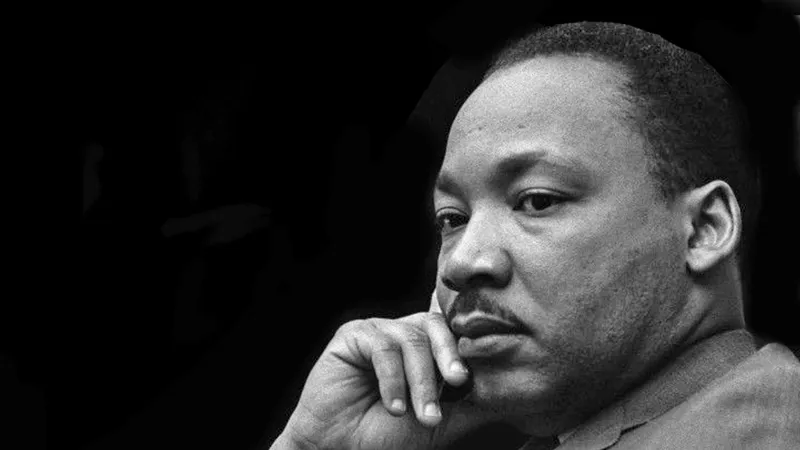
No figure is more closely identified with the mid-20th century struggle for civil rights than Martin Luther King, Jr. King came from a comfortable middle-class family steeped in the tradition of the Southern Black ministry. King was born on Jan. 15, 1929, the second of three children, to the Rev. Michael King and Alberta Williams King in Atlanta, Georgia. His birth name was Michael King Jr. Michael Luther King, Sr., his father and namesake, was the pastor of Ebenezer Baptist Church in Atlanta, a position the elder King had inherited from his wife’s father, Adam Daniel Williams. They were also both leaders in the Atlanta branch of the National Association for the Advancement of Colored People (NAACP). His mother started the church choir and served as the church organist at Ebenezer church. King’s love of music and talent on the piano were nurtured by his mother. The King family had deep roots in the Atlanta Black community.
After Reverend Williams’ death in 1931, his son-in-law became Ebenezer Baptist Church’s new pastor and gradually established himself as a major figure in state and national Baptist groups. Michael King Sr. changed his name and his son's name to Martin Luther in 1934 to honor the 16th-century German religious reformer. Growing up in the Black middle class, King had opportunities in education and social experiences that children in poorer parts of Atlanta didn't get. But King still experienced the realities of segregation in the South, because he was Black. As a child, King was a paper boy and dreamed about being a firefighter. Although his family tradition was intertwined with the church and expectations were high that “M. L.” would follow in the footsteps of his father and grandfather, King first resisted the ministry as a vocation, finding it ill-suited to allow him to address the social problems he had experienced in the South.
As an adolescent, he initially felt resentment against whites due to the "racial humiliation" that he, his family, and his neighbors often had to endure. In 1942, when King was 13, he became the youngest assistant manager of a newspaper delivery station for the Atlanta Journal. In the same year, King skipped the ninth grade and enrolled in Booker T. Washington High School, where he maintained a B-plus average. The high school was the only one in the city for Black students. Martin Luther King was a good student. Martin Jr. became known for his public-speaking ability, with a voice that had grown into an orotund baritone. He finished grade school early and enrolled at Morehouse College in 1944 with thoughts of becoming a lawyer or doctor, at the age of 15.
At Morehouse, King played freshman football. During his time at Morehouse College King started to formulate his future self. He was influenced by several professors at the college and began to understand the intellectual tradition of ministry. He wasn't planning to enter the ministry, but then he met Morehouse president Dr. Benjamin E. Mays, a scholar whose manner and bearing convinced him that a religious career could be intellectually satisfying as well. Dr. Mays influenced King’s spiritual development, encouraging him to view Christianity as a potential force for progressive social change. King came to understand the social and intellectual tradition of the ministry and. Religion professor George Kelsey exposed him to biblical criticism and, according to King’s autobiographical sketch, taught him “that behind the legends and myths of the Book were many profound truths which one could not escape”.
King admired both educators as deeply religious yet also learned men and, by the end of his junior year, such academic role models and the example of his father led King to enter the ministry. He described his decision as a response to an “inner urge” calling him to “serve humanity”. During his senior year King joined the Intercollegiate Council, an interracial student discussion group that met monthly at Atlanta’s Emory University. King graduated from Morehouse with a Bachelor of Arts in sociology in 1948. After leaving Morehouse, King attended Crozer Theological Seminary in Chester, Pa., winning the Plafker Award as the outstanding student of the graduating class, and the J. Lewis Crozer Fellowship as well. King increased his understanding of liberal Christian thought while attending Crozer Theological Seminary in Pennsylvania. During his last year at Crozier, he applied to Yale University, Boston University, and Edinburgh University in Scotland. Yale turned him down, and Edinburgh became less interesting. Thus, in September 1951 he began his doctoral studies at Boston.
In 1951, King began doctoral studies in systematic theology at Boston University’s School of Theology, which was dominated by personalist theologians such as Edgar Brightman and L. Harold DeWolf. While studying there, he learned about Mahatma Gandhi's non-violent methods. Gandhi had used these methods to protest against the British Empire in India. King became convinced that these non-violent ways would be very helpful for the civil rights movement in America. By the time he completed his doctoral studies in 1955, King had refined his exceptional ability to draw upon a wide range of theological and philosophical texts to express his views with force and precision. His capacity to infuse his oratory with borrowed theological insights became evident in his expanding preaching activities in Boston-area churches and at Ebenezer, where he assisted his father during school vacations.
During his stay in Boston, King also met and courted Coretta Scott, an Alabama-born Antioch College graduate who was then a student at the New England Conservatory of Music. The relationship grew to the point that he had her visit Atlanta and meet his mother and father. Things did not go well. When “Daddy King” and his wife visited their son in Boston to urge him to end the relationship, they discovered that King planned to marry Coretta. On June 18th, 1953, the two students were married in Marion, Alabama, on the lawn of her parents' house, in Heiberger, Alabama. The two had two daughters and two sons. Although he considered pursuing an academic career, King returned to the South at the age of 25. On April 14, 1954, King agreed to start that fall in September becoming pastor of the Dexter Avenue Baptist Church in Montgomery, Alabama. On the fifth of that month King delivered his initial sermon.
During that year he finished his dissertation and was awarded the Ph.D. in June 1955. The Dexter Avenue Baptist Church was influential in the Montgomery Black community. King received his PhD on June 5, 1955. As the church's pastor, King became known for his oratorical preaching in Montgomery and surrounding region. In March 1955, Claudette Colvin—a Black schoolgirl in Montgomery—refused to give up her bus seat to a White man in violation of Jim Crow laws. On December 1st, 1955, Rosa Parks was arrested for refusing to give up her seat on a bus to a White rider. After Parks was arrested, three major overlapping organizations, the NAACP, the Women’s Political Council, and the Montgomery Improvement Association, mobilized to launch a bus boycott to protest the blatant racism and segregation inflicted upon Black passengers. When Montgomery Black leaders such as Jo Ann Robinson, E. D. Nixon, and Ralph Abernathy formed the Montgomery Improvement Association (MIA) to protest the arrest of NAACP official Rosa Parks they selected King to head the new group.
In order to activate the protest, Robinson worked all night at her office at the university, mimeographing a leaflet to be circulated through the churches and other council contacts. In addition to her conceiving the boycott, Robinson was a member of King’s church. After speaking to Robinson, Nixon called King and asked for his support as well as requesting that the city’s top Black leaders meet in the basement of his church to organize and plan an extended boycott. Those attending the meeting agreed to the legal challenge and the bus boycott and condensed the leaflet prepared by Robinson, which called for a mass meeting to spread the details about it. The ministers asked him to take the leadership role because his relative newness to the community, made his leadership easier for him to speak out. King was hesitant but decided to do so if no one else wanted it. He was called to the pulpit and gave a stirring address.
King, played a pivotal leadership role in organizing the protest by mobilizing the Black community during a 382-day boycott of the city's bus lines. During the boycott, King was abused and arrested, and his house was bombed, but he remained a stalwart and committed leader. King also became a firm advocate of Mohandas Gandhi’s precepts of nonviolence, which he combined with Christian social gospel ideas. The controversy ended when the United States District Court issued a ruling in Browder v. Gayle that prohibited racial segregation on Montgomery public buses. Next came the Supreme Court decision on November 13, 1956, that upheld and affirmed the lower court decision. But the city had the right to ask the Court for reconsideration, which it did. On December 17 the Court rejected the city appeal, and the final court order to the city arrived on December 20th 1956.
With other Black church leaders in the South, C. K. Steele, Fred Shuttlesworth, and Ralph Abernathy, King founded the Southern Christian Leadership Conference (SCLC) in 1957, and was named president. King's role in the bus boycott transformed him into a national figure and the best-known spokesman of the civil rights movement. The creation of this new organization angered the secretary of the NAACP, Roy Wilkins, for he knew it would attract monies that would otherwise have come to his organization. The group was created to harness the moral authority and organizing power of Black churches to conduct nonviolent protests in the service of civil rights reform. He soon began helping other communities organize their own protests against discrimination. Publication of King’s memoir of the boycott, "Stride Toward Freedom: The Montgomery Story" in 1958, further contributed to his rapid emergence as a national civil rights leader. King skillfully drew upon a wide range of theological and philosophical influences to mobilize Black churches and to appeal for White support.
Even as he expanded his influence, however, King acted cautiously. Rather than immediately seeking to stimulate mass desegregation protests in the South, King stressed the goal of achieving Black voting rights when he addressed an audience at the 1957 Prayer Pilgrimage for Freedom. King’s rise to fame was not without personal consequences. In 1958, King was the victim of his first assassination attempt. Although his house had been bombed several times during the Montgomery bus boycott, it was while signing copies of Stride Toward Freedom that Izola Ware Curry—a mentally ill black woman who thought King was conspiring against her with communists— stabbed him with a letter opener. Surgery to remove it was successful, but King had to recuperate for several months, giving up all protest activity. In 1959, King returned to Atlanta to serve as co-pastor with his father at the Ebenezer Baptist Church.
During 1959, he increased his understanding of Gandhian ideas during a month-long visit to India sponsored by the American Friends Service Committee. With Coretta and MIA historian Lawrence D. Reddick in tow, King met with many Indian leaders, including Prime Minister Jawaharlal Nehru. Writing after his return, King stated: “I left India more convinced than ever before that non-violent resistance is the most potent weapon available to oppressed people in their struggle for freedom”. In a radio address made during his final evening in India, King reflected, "Since being in India, I am more convinced than ever before that the method of nonviolent resistance is the most potent weapon available to oppressed people in their struggle for justice and human dignity".
Meanwhile, the Atlanta Student Movement had been acting to desegregate businesses and public spaces, organizing the Atlanta sit-ins from March 1960 onwards. Although he was reluctant, King was persuaded to participate in the Atlanta sit-in movement. On October 19th, 1960 he and fifty-one other activists were arrested at a sit-in at the restaurant inside Rich's, Atlanta's largest department store. King was sentenced to four months' hard labor at Reidsville State Prison. The arrest and harsh sentence drew nationwide attention. Democratic candidate John F. Kennedy called Coretta King to express his concern. Within only two days, however, he was a free man. His release had been negotiated by Robert Kennedy in a calculated attempt to increase Black votes for his brother. The successful efforts of Kennedy supporters to secure King’s release contributed to Kennedy’s narrow victory over Republican candidate Richard Nixon.
King’s decision to move to Atlanta was partly caused by SCLC’s lack of success during the late 1950s. Student Non-Violent Coordinating Committee (SNCC), associate director Ella Baker had complained that SCLC’s Crusade for Citizenship suffered from lack of attention from King. She regarded King as a charismatic media figure who lost touch with the grassroots of the movement. SCLC leaders hoped that with King now in Atlanta, strategy would be improved. The hiring of Wyatt Tee Walker as executive director in 1960 was also seen as a step toward bringing efficiency to the organization. As the southern protest movement expanded during the early 1960s, King was often torn between the increasingly militant student activists, such as those who participated in the Freedom Rides, organize by the Congress of Racial Equality, and more cautious national civil rights leaders. While King was immediately identifiable as the intellectual and spiritual leader of the civil rights movement, it was others who implemented the tactics of non-violent direct action.
The pioneering protests of the early 1960s therefore raised expectations that King would lead his own campaign of mass civil disobedience. During 1961 and 1962, his tactical differences with SNCC activists surfaced during a sustained protest movement in Albany, Georgia. Albany was the first significant civil rights campaign in which King had participated since Montgomery, and it was to end in ignominious failure. King was arrested twice during demonstrations organized by the Albany Movement, but when he left jail and ultimately left Albany without achieving a victory, some movement activists began to question his militancy. The national media was highly critical of King's role in the defeat, and the SCLC's lack of results contributed to a growing gulf between the organization and the more radical SNCC. After Albany, King sought to choose engagements for the SCLC in which he could control the circumstances.
The SCLC leader was to learn from the lesson of defeat. With the assistance of Fred Shuttlesworth and other local Black leaders, and with little competition from SNCC, King and the SCLC turned their sights on Birmingham, Alabama in 1963, organizing sit-ins in public spaces. The campaign's early volunteers did not succeed in shutting down the city, or in drawing media attention to the police's actions. Under the control of Commissioner of Public Safety Eugene ("Bull") Connor, the police used intimidation and violence to suppress incipient Black protests. Connor, for instance, had failed to protect the Freedom Riders from a brutal assault by the Ku Klux Klan. Nonetheless, it was precisely because of the appalling reputation of Birmingham that it was chosen as the target of an SCLC campaign SCLC strategist James Bevel changed the course of the campaign by recruiting children and young adults to join the demonstrations.
The Birmingham Police Department, used high-pressure water jets and police dogs against protesters, including children. Footage of the police response was broadcast on national television, shocking many White Americans and consolidating Black Americans behind the movement. King was arrested and jailed early in the campaign. In a cell, he drafted his famous "Letter from Birmingham Jail," in response to a call from White sympathizers to address civil rights through legal means rather than protest, which became a manifesto for civil rights and civil disobedience. The letter displayed his distinctive ability to influence public opinion by appropriating ideas from the Bible, the Constitution, and other canonical texts. King’s decision to intentionally allow himself to be arrested for leading a demonstration on 12 April prodded President Kennedy's administration to intervene in the escalating protests. The campaign was a success: Connor lost his job, the "Jim Crow" signs came down, and public places became more open to Blacks. King's reputation improved immensely.
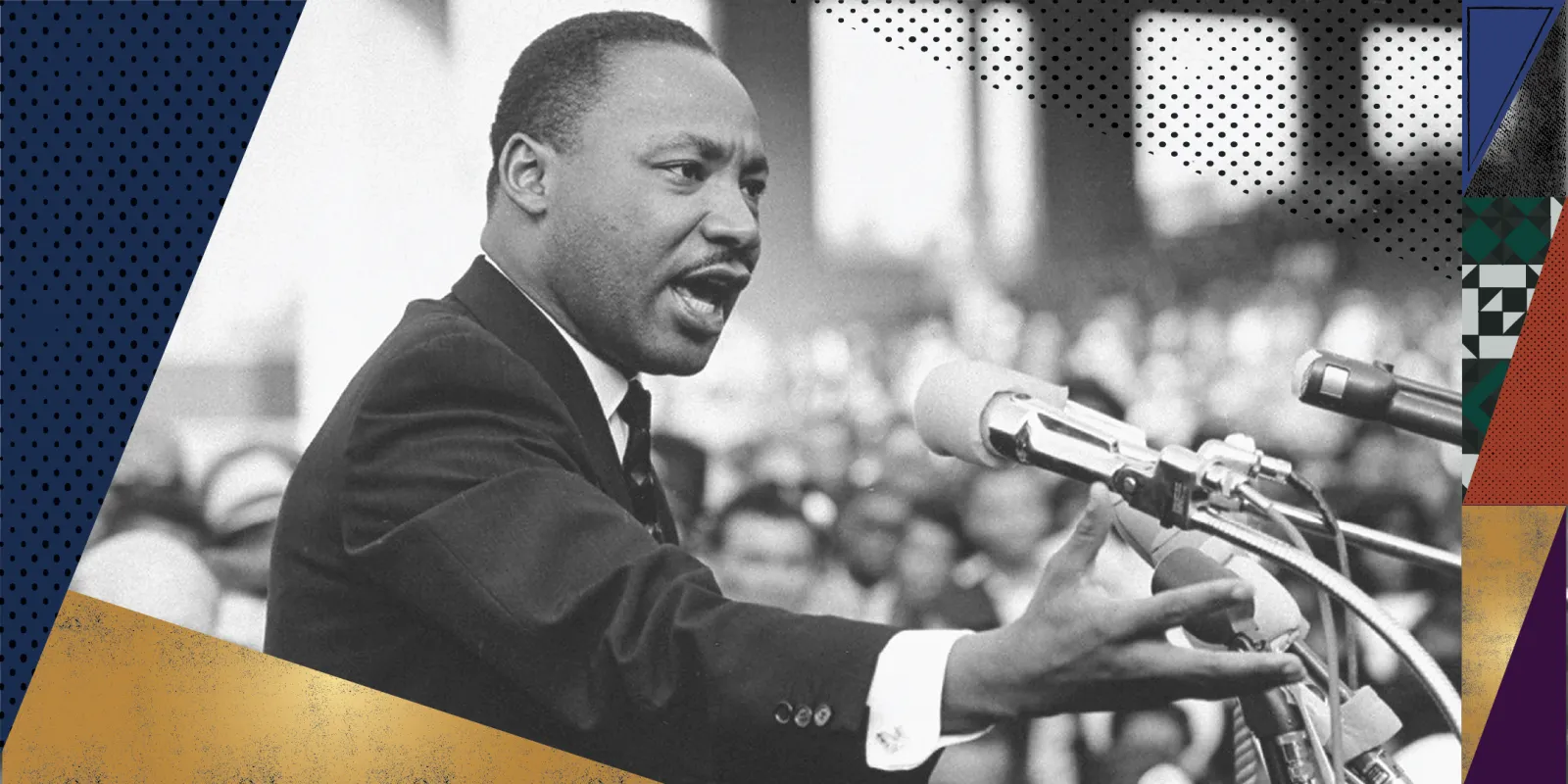
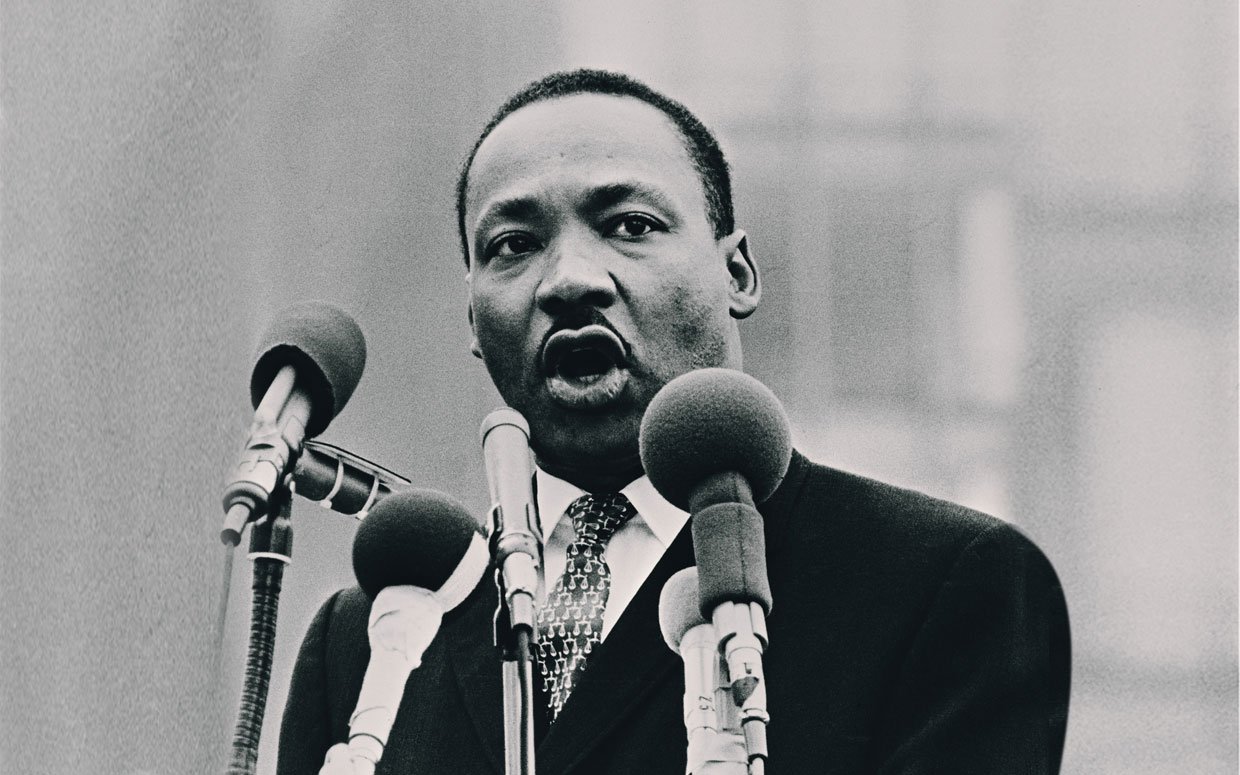
The brutality of Birmingham officials and the refusal of Alabama’s governor George C. Wallace to allow the admission of Black students at the University of Alabama prompted President Kennedy to introduce major civil rights legislation. On June 11th, President Kennedy announced his intention to present Congress with a comprehensive civil rights bill. The bill was intended to ban segregation in all public facilities, to promote Black employment, and to abolish Black disfranchisement. Later that year King was a principal speaker at the historic March on Washington for Jobs and Freedom. At the Lincoln Memorial, King delivered the inspirational and oft-quoted "I Have a Dream" speech. King’s speech attended by more than 250,000 people, was the culmination of a wave of civil rights protest activity that extended even to northern cities. he march made specific demands: an end to racial segregation in public schools; meaningful civil rights legislation, including a law prohibiting racial discrimination in employment; protection of civil rights workers from police brutality.
King’s ability to focus national attention on orchestrated confrontations with racist authorities, combined with his oration at the 1963 March on Washington, made him the most influential Black spokesperson of the first half of the 1960s. Two days after the speech, the FBI wrote a memo detailing their suspicions that King was a communist. FBI Chief J. Edgar Hoover, with the approval of President Kennedy and Attorney General Robert Kennedy, ordered wiretapping to damage King’s reputation. Following the March on Washington, Time magazine Time magazine designated him as its Person of the Year for 1963. The next year, in 1964 at the age of 35, King became the youngest person ever to win the Nobel Peace Prize, recognizing the global significance of his work and life.
Many observers of the southern struggle saw King as controlling events, but he was actually a moderating force within an increasingly diverse Black militancy of the mid-1960s. Although he was not personally involved in Freedom Summer (1964), he was called upon to attempt to persuade the Mississippi Freedom Democratic Party delegates to accept a compromise at the Democratic Party National Convention. Along with other civil rights activists, King participated in the Selma-to-Montgomery march in 1965, which prompt the Voting Rights Bill of 1965. The brutal attacks on activists by the police during the march were televised into the homes of Americans across the country. The march, which finally secured federal court approval, attracted several thousand civil rights sympathizers, Black and White, from all regions of the nation. On March 25th, King addressed the arriving marchers from the steps of the capitol in Montgomery.
After the march in Alabama, King next brought his crusade to Chicago, where he launched programs to rehabilitate the slums and provide housing. With this action, many saw the civil rights movement moving north. Although King also considered other cities such as Cleveland, New York, and Philadelphia problems, he focused on Chicago. As King shifted the focus of his activities to the North, however, he discovered that the tactics used in the South were not as effective elsewhere. King soon discovered that young and angry Blacks cared little for his preaching and even less for his pleas for peaceful protest. He encountered formidable opposition from Mayor Richard Daley and was unable to mobilize Chicago’s economically and ideologically diverse Black community. King was stoned by angry Whites in the Chicago suburb of Cicero when he led a march against racial discrimination in housing.
Despite numerous mass protests, the Chicago Campaign resulted in no significant gains and undermined King’s reputation as an effective civil rights leader. King himself noted that after living in his apartment in the Chicago ghetto, the problems he encountered were greater than what he had prepared for and more than his southern experiences had taught him to expect. The northern movement was over hardly before it had started. When King and his allies returned to the South, they left Jesse Jackson, a seminary student who had previously joined the movement in the South, in charge of their organization. Jackson continued their struggle for civil rights by organizing the Operation Breadbasket movement that targeted chain stores that did not deal fairly with African Americans.
In June 1966, James Meredith was shot while attempting a “March against Fear” in Mississippi. King, Floyd McKissick of the Congress of Racial Equality (CORE), and Stokely Carmichael of SNCC decided to continue his march. During the march, the activists from SNCC decided to test a new slogan that they had been using, Black Power. During the next weeks, the NAACP and President Lyndon Johnson denounced the slogan. King objected to the use of the term, but the media took the opportunity to expose the disagreements among protesters and publicized the term. In his last book, "Where Do We Go from Here: Chaos or Community?" in 1967, King dismissed the claim of Black Power advocates “to be the most revolutionary wing of the social revolution taking place in the United States,” but he acknowledged that they responded to a psychological need among African Americans he had not previously addressed.
King was long opposed to American involvement in the Vietnam War. At first he avoided the topic in speeches to avoid interference with civil rights goals that criticism of President Johnson's policies might have created. Although he was trying to create a new coalition based on equal support for peace and civil rights, it caused an immediate rift. The NAACP saw King's shift of emphasis as "a serious tactical mistake." The National Urban League warned that the "limited resources" of the civil-rights movement would be spread too thin. During an April 1967 appearance at the New York City Riverside Church, King delivered a speech titled "Beyond Vietnam: A Time to Break Silence". King's opposition cost him significant support among White allies including Johnson, Billy Graham, union leaders, and powerful publishers. But from the vantage point of history, King's timing was superb. Students, professors, intellectuals, clergymen and reformers rushed into the movement. Then, King turned his attention to the domestic issue that he felt was directly related to the Vietnam struggle: poverty. He called for a guaranteed family income, he threatened national boycotts, and he spoke of disrupting entire cities by nonviolent "camp-ins."
In December 1967, King announced the formation of the Poor People’s Campaign, designed to prod the federal government to strengthen its antipoverty efforts. He began to plan a massive march of the poor on Washington, D.C., envisioning a demonstration of such intensity and size that Congress would have to recognize and deal with the huge number of desperate and downtrodden Americans. King and the SCLC called on the government to invest in rebuilding America's cities. King interrupted these plans to lend his support to the Memphis sanitation men's strike. He wanted to discourage violence, and he wanted to focus national attention on the plight of the poor, unorganized workers of the city. The men were bargaining for basic union representation and long-overdue raises. On March 28th, as King led thousands of sanitation workers and sympathizers on a march through downtown Memphis, Black youngsters began throwing rocks and looting stores. Two days later, the SCLC executive staff urged King to return to mapping out his Poor People’s Campaign.
King returned to Memphis for the last time in early April. On April 3, King addressed a rally and delivered his "I've Been to the Mountaintop" address at Mason Temple, with King affirming his optimism despite the “difficult days” that lay ahead. The following evening, Thursday, April 4, 1968, the assassination of Martin Luther King, Jr., took place as he stood on a balcony of the Lorraine Motel in Memphis. His death caused a wave of violence in major cities across the country. It also forced the city to enter into an agreement with the union and approve it. His death also triggered the passage of the stalled 1966 civil rights bill, which now became the 1968 bill and contained a fair housing provision. A White segregationist, James Earl Ray, was later convicted of the crime, though the identity of King's murderer was the subject of some controversy. President Johnson declared April 7 a national day of mourning for King. The Poor People’s Campaign continued for a few months after King’s death, under the direction of Ralph Abernathy, the new SCLC president, but it did not achieve its objectives.
King has become an icon in the history of American liberalism and American progressivism. Until his death, King remained steadfast in his commitment to the transformation of American society through nonviolent activism. King's legacy has inspired activists fighting injustice anywhere in the world. The NAACP has carried on King's work on behalf of Black Americans and strives to keep his dream alive for future generations. King's wife Coretta Scott King was active in matters of social justice and civil rights until her death in 2006. The same year that King was assassinated, she established the King Center in Atlanta, Georgia, dedicated to preserving his legacy and the work of championing nonviolent conflict resolution and tolerance worldwide. On November 2, 1983, President Ronald Reagan signed a bill creating a federal holiday to honor King. Observed for the first time on January 20, 1986, it is called Martin Luther King Jr. Day.