Coretta
Scott
King
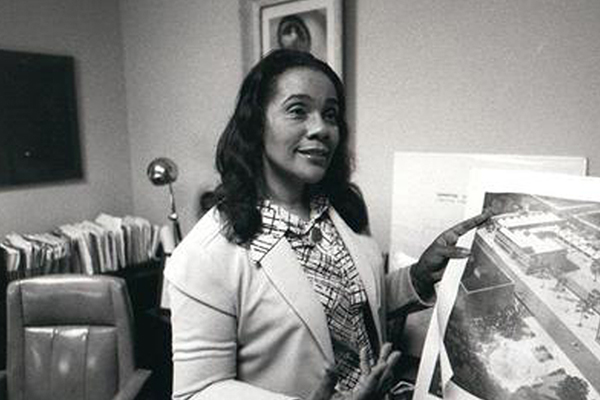
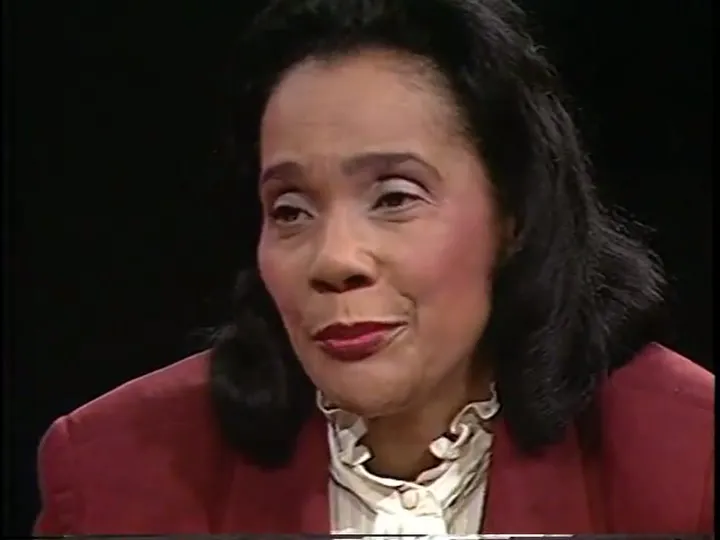
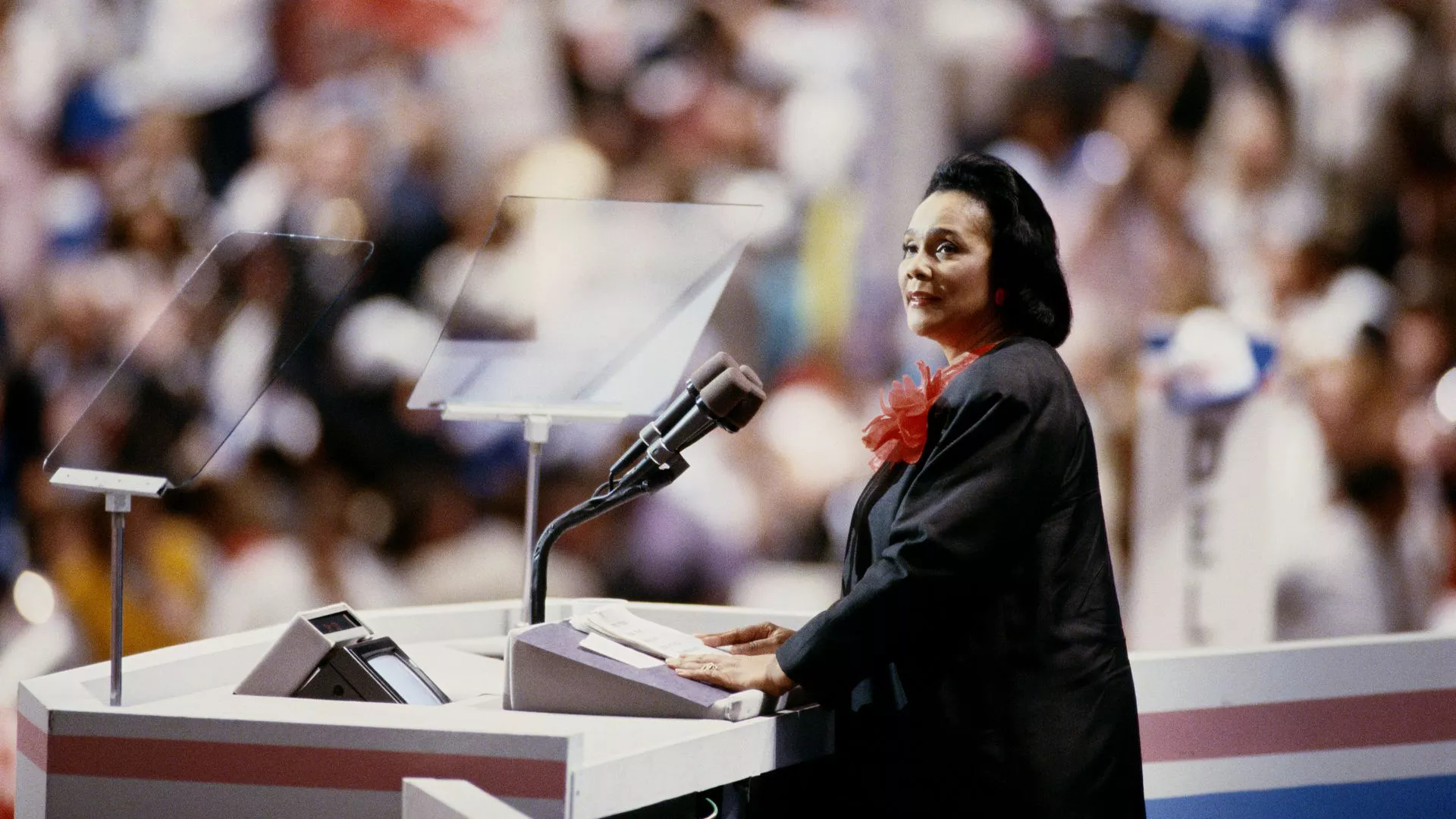
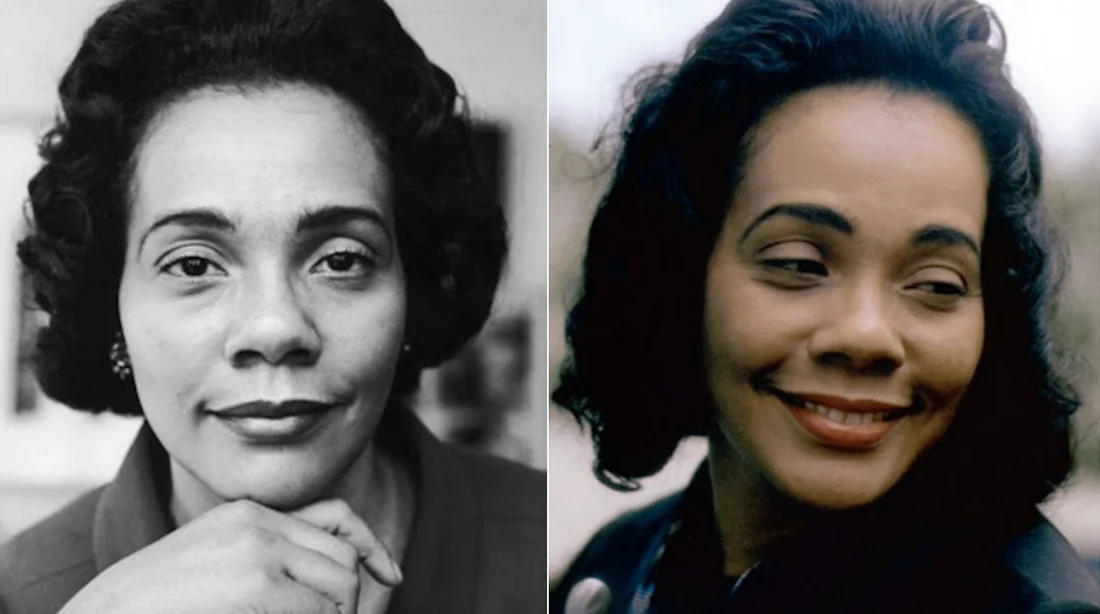
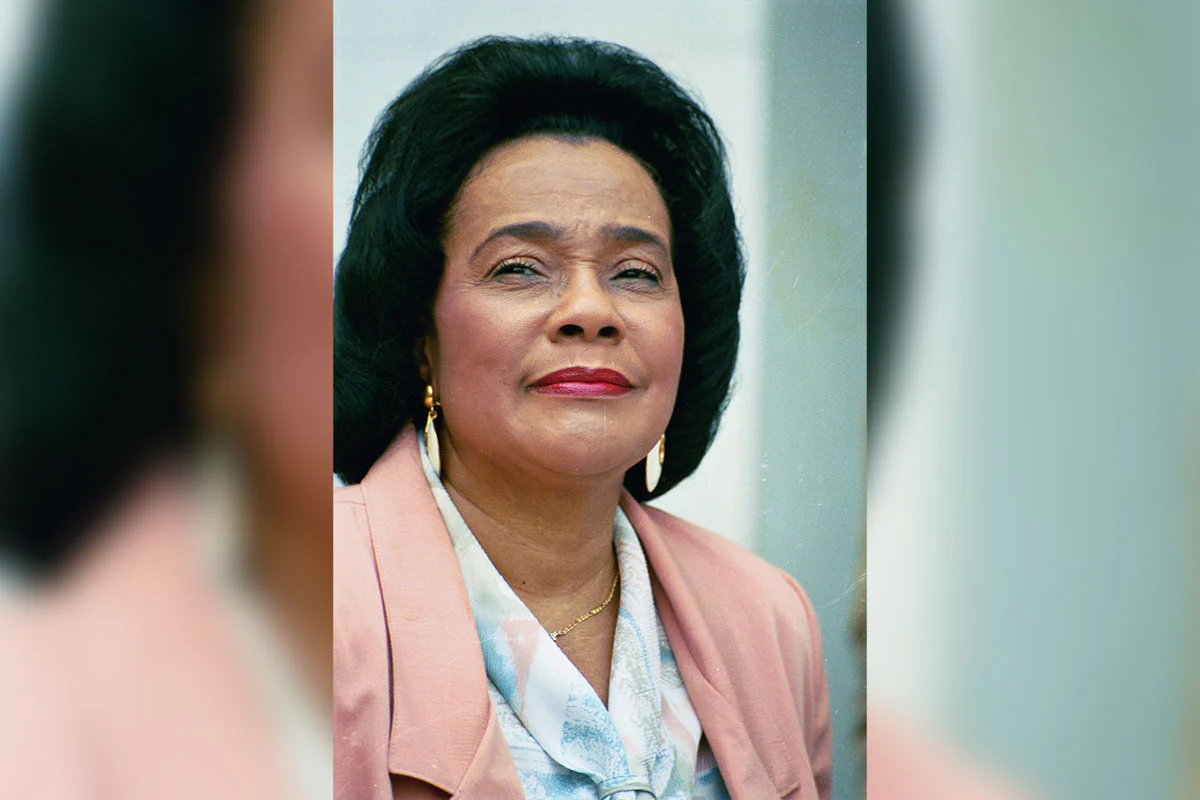
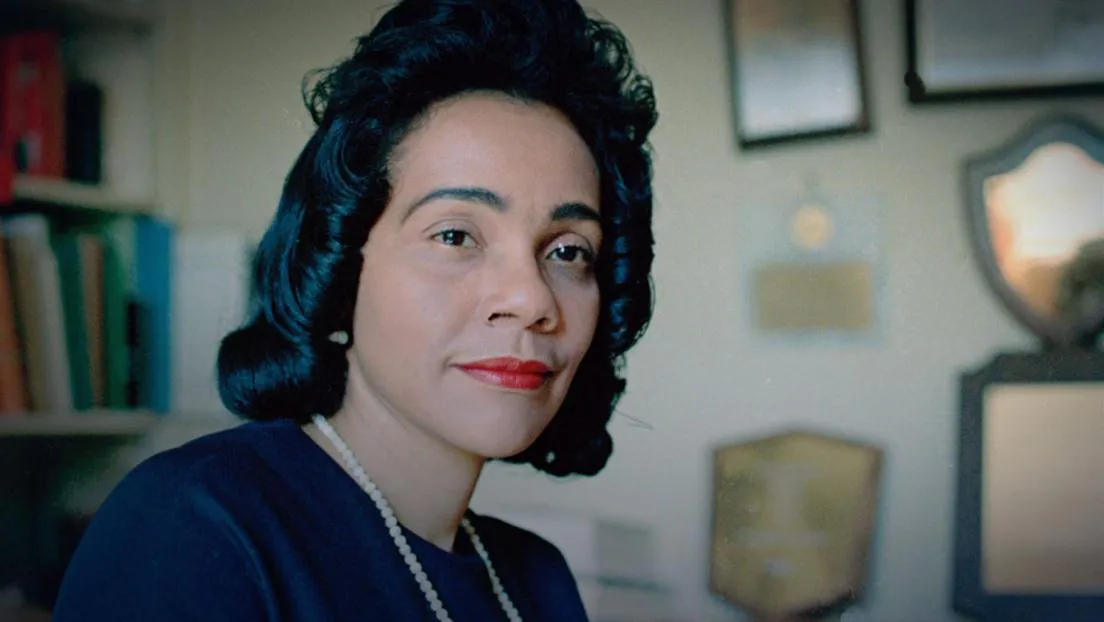
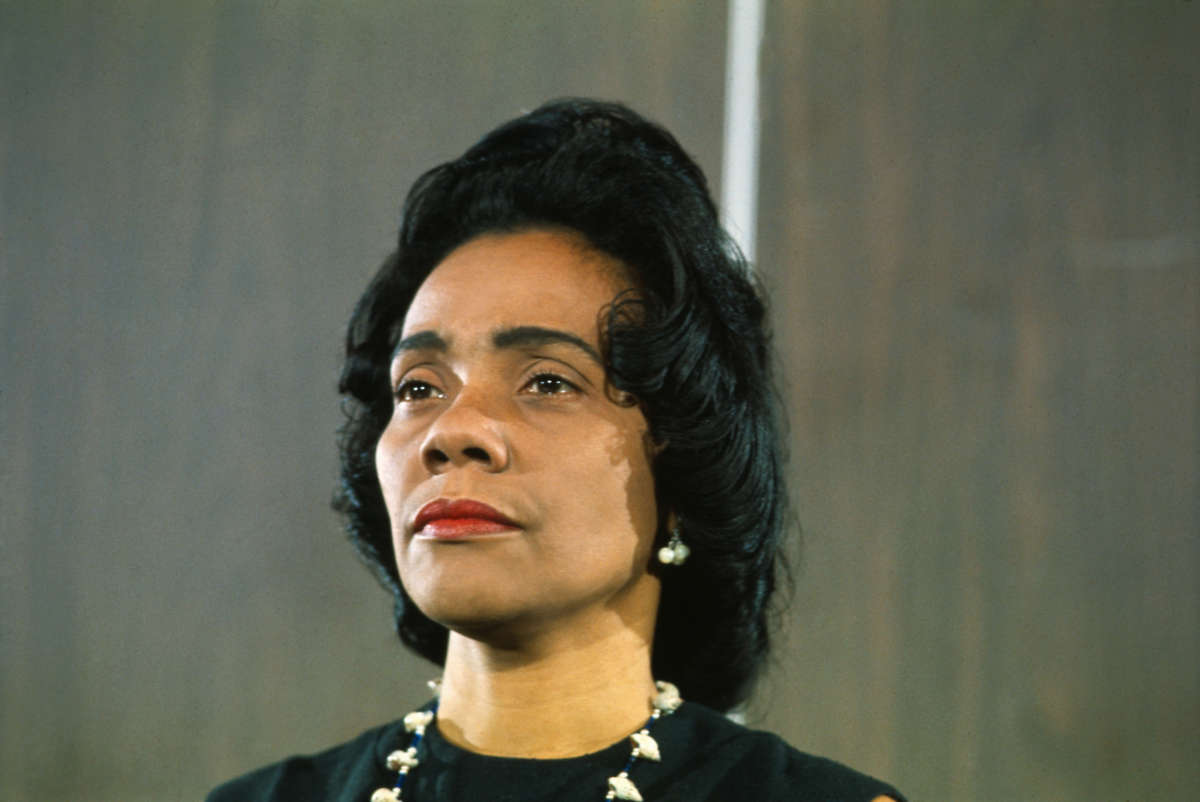
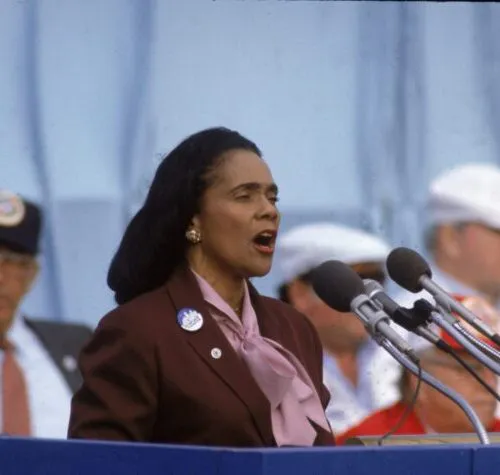
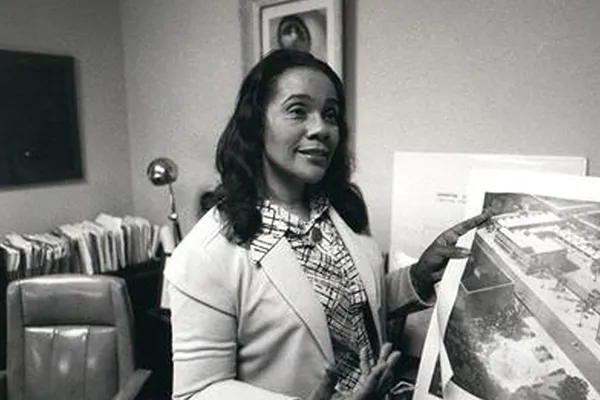
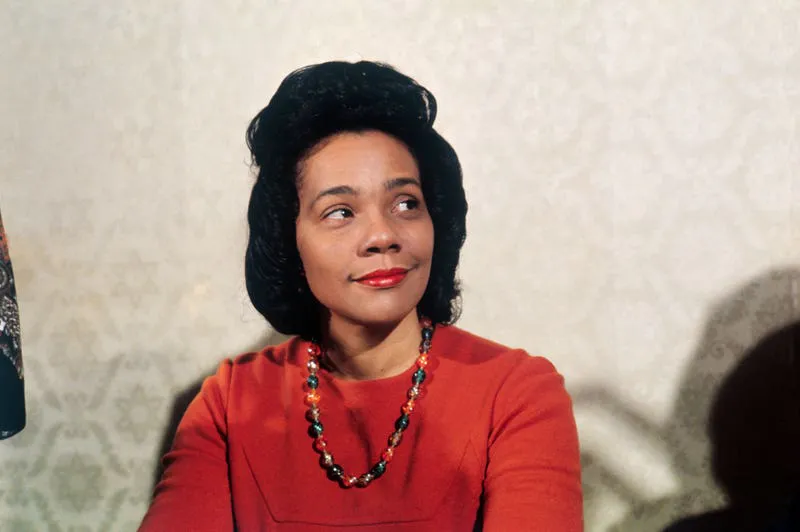
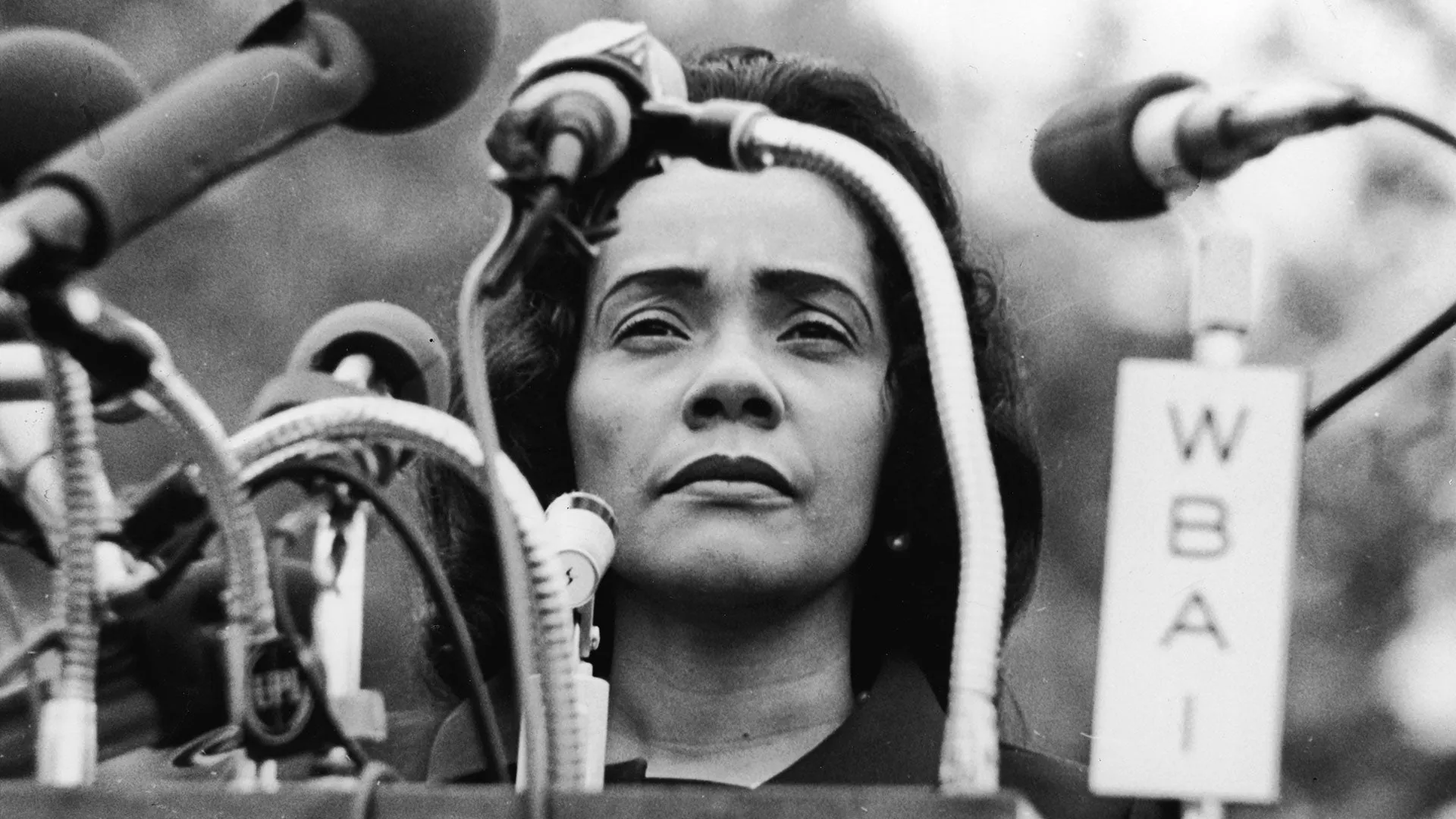
One of the most celebrated champions of human and civil rights, Coretta Scott King, in partnership with her husband, Reverend Dr. Martin Luther King, Jr., ignited democracy movements worldwide. Coretta Scott was born in Marion, Alabama on April 27, 1927, the second of three children. The Scotts raised their children on a farm that had been in their family since the Civil War. Her parents were both entrepreneurs and her mother was musically talented. An unusually sensitive and intelligent child, Coretta learned early on to recognize discrimination. As a child, King expressed interest in music and quickly excelled in grade school as lead in the choir. After graduating from Crossroads elementary at the top of her classes, she went on to Lincoln High School in Marion, a private missionary school. She graduated valedictorian from Lincoln Normal High School in 1945, where she played trumpet and piano, sang in the chorus, and participated in school musicals.
Thanks to her dedication and to some scholarship assistance, the Scotts were able to send all three of their children to college at once. She entered Antioch College in Yellow Springs, Ohio, in the fall of 1945. Coretta was at first anxious about adjusting to the alien environment of the northern school. While at Antioch, Scott studied voice and decided to major in elementary education music education. Coretta studied music with Walter Anderson, the first non-White chair of an academic department in a historically White college. She participated in the college’s challenging cooperative work-study program, in which students alternated a period of work with a period of study. As a work-study student she served the community in various roles, including that of nursery school attendant, camp counselor, and library assistant. Despite her earlier fears, she found most of her many opportunities at Antioch rewarding and challenging.
She added violin to her repertoire of musical instruments and sang in the choir at the Second Baptist Church in Springfield, Ohio. She also became politically active, due largely to her experience of racial discrimination by the local school board. Coretta became a member of the local chapter of the National Association for the Advancement of Colored People (NAACP), as well as the Race Relations and Civil Liberties Committees. She credited Antioch with preparing her for her role in the civil rights movement. Coretta Scott graduated from Antioch College with a B.A. in music and education. The chairman of the music department at Antioch encouraged her to apply to Boston’s New England Conservatory of Music, to study voice. She won the Smith Noyes Foundation for fellowship support.
By the time she graduated in June of 1951, King had been accepted at the conservatory. She decided to give up her plans to become a teacher and to pursue a career on the concert stage. Although her tuition was fully covered by the fellowship, King still had to earn her room and board. She had already arranged to rent a room in the home of a wealthy Massachusetts family, contributors to a special interracial scholarship fund. When she arrived in Boston, she further arranged to clean the fifth floor of the house, which she shared with two other students, and two stairways, in exchange for her bed and breakfast. Without money for dinner, though, she was forced to survive on the foods she could afford, like crackers, peanut butter, and fruit. Later her financial situation began to improve. The Urban League found her a job as a file clerk at a mail-order firm, and after her first year, she began receiving out-of-state aid from her home state of Alabama.
While Coretta was studying at the conservatory, another voice student introduced her to a young minister, Martin Luther King, Jr., from Atlanta who was studying for a doctorate in theology at Boston University. Although she was not initially attracted to him, the two began to date. He overwhelmed the rather reserved young woman by hinting at marriage on that very first date. Nonetheless, they continued to see each other. Coretta was impressed with King's drive and his concern for the underprivileged. His feelings seemed so similar to her own. Moreover, as he continued to press her about marriage, she was forced to wrestle with the thought of giving up her dream of becoming a concert singer. Eventually, their similarities won out over their differences. Both had fathers whose willingness to stand up for justice for Blacks in the South had impressed their children deeply. They were married at the Scott family home in Marion on 18 June 1953. The ceremony was performed by Martin Sr. Coretta had the vow to obey her husband removed from the ceremony, which was unusual for the time.
After the wedding, they returned to Boston to complete their degrees. Coretta Scott King earned her bachelor of music degree in June 1954. After Coretta completed her degree in voice and violin at the New England Conservatory, the newlyweds moved to Montgomery Alabama. Martin Luther King had accepted a position as pastor of the Dexter Avenue Baptist Church. The church became a center for the Civil Rights Movement in Alabama and eventually the country. On December 1, 1955, a Black seamstress named Rosa Parks refused to give up her seat to a White person. A policeman was summoned, and she was arrested for defying segregation laws. Before long, the Kings found themselves in the middle of the Montgomery bus boycott, as Martin was elected leader of the protest movement. A year later, as a result of the phenomenally successful boycott, the Supreme Court declared Alabama's bus segregation laws unconstitutional.
As Dr. King became more and more deeply involved in his nonviolent civil rights crusade, the burden of raising the children as well as a great deal of administrative work for the movement fell to Coretta. She handled the mail and phone calls from his office in their home, including the increasing number of threats on her husband's life. Although Scott King was focused on raising the couple’s four children: Yolanda Denise King, Martin Luther King, III, Dexter Scott King, and Bernice Albertine King, she continued to play a critical role in many of the civil rights campaigns of the 1950s and 1960s. Coretta's grace under pressure did not desert her even when the family's home in Montgomery was bombed on January 30, 1956. She, a friend from church, and Yolanda, then an infant, were the only ones home at the time of the incident, and no one was hurt. Martin returned to their home, and upon finding Coretta and his daughter unharmed, went outside. He was confronted by an angry crowd of his supporters, who had brought guns. He was able to turn them away with an impromptu speech.
With the support of their church, and their faith in the civil rights cause the Kings determined to “Be nice, Be kind, Be nonviolent.” This was not only an expression of their Christian faith but it was Martin Luther King's firm belief that nonviolence was the most effective way to bring about change, particularly in the South. Although civil rights efforts were met with resistance, hatred, and even jail time, Dr. King's nonviolent approach to civil disobedience would prove to be successful. Scott King accompanied her husband around the world, traveling to Ghana in 1957 and India in 1959. She was particularly affected by the women she met in India. “As we traveled through the land, we were greatly impressed by the part women played in the political life of India, far more than in our own country”. It was here that Dr. King learned of Mohandas K. Gandhi's philosophy of non-violence and its use in the civil rights struggle.
Coretta took an active role in advocating for civil rights legislation. On April 25, 1958, Coretta Scott King made her first appearance at a concert that year at Peter High School Auditorium in Birmingham, Alabama. With a performance sponsored by the Omicron Lambda chapter of Alpha Phi Alpha fraternity, King changed a few songs in the first part of the show but still continued with the basic format used two years earlier at the New York gala as she told the story of the Montgomery bus boycott. The concert was important for Coretta as a way to continue her professional career and participate in the movement. The concert gave the audience "an emotional connection to the messages of social, economic, and spiritual transformation. On September 3, 1958, King accompanied her husband and Ralph Abernathy to a courtroom. Martin was arrested outside the courtroom for "loitering" and "failing to obey an officer".
Martin Luther King Jr. was jailed on October 19, 1960, in a department store. After being released three days later, he was sent back to jail on October 22 for driving with an Alabama license while being a resident of Georgia and was sent to jail for four months of hard labor. After his arrest, Mrs. King believed he would not make it out alive and telephoned her friend Harris Wofford and cried while saying "They're going to kill him. I know they are going to kill him." Directly after speaking with her, Wofford contacted Sargent Shriver in Chicago, where presidential candidate John F. Kennedy, was campaigning at the time and told Shriver of King's fears for her husband. After Shriver waited to be with Kennedy alone, he suggested that he telephone King and express sympathy. Sometime afterward, Robert F. Kennedy obtained King's release from prison. Martin Sr. was so grateful for the release that he voted for Kennedy.
Although the demands of raising a family had caused Coretta Scott King to retire from singing, she found another way to put her musical background to the service of the cause. She also conceived and organized a series of Freedom Concerts as fundraising efforts to benefit the Southern Christian Leadership Conference (SCLC). She taught voice in the music department of Morris Brown College in Atlanta, where they had moved in 1960, when Martin assumed the co-pastorate of the Ebenezer Baptist Church alongside his father. In 1962, Coretta Scott King’s interest in disarmament efforts took her to Geneva, Switzerland, where she served as a Women’s Strike for Peace delegate to the 17-nation Disarmament Conference in order to influence atomic test-ban talks.
Coretta went to another Women Strike for Peace rally in New York, in the early days of November 1963. After speaking at the meeting held in the National Baptist Church, King joined the march from Central Park to the United Nations Headquarters. The march was timed to celebrate the group's second anniversary and celebrated the successful completion of the Limited Nuclear Test Ban Treaty. Coretta and Martin learned of John F. Kennedy's assassination when reports initially indicated he had only been seriously wounded. Coretta joined her husband upstairs and watched on television as Walter Cronkite announce the president's death. King sat with her visibly shaken husband following the confirmation. The following year, she accompanied her husband to Oslo for the awarding of the Nobel Peace Prize. She later recalled thinking: “What a blessing, to be a co-worker with a man whose life would have so profound an impact on the world”.
As a leading participant in the Civil Rights Movement, Coretta recognized the importance of women to that movement. She implored, “Women, if the soul of the nation is to be saved, I believe that you must become its soul.” Coretta Scott King became a symbol, in her own right, of her husband's struggle for peace and brotherhood, presiding with a quiet, steady, stoic presence over seminars and conferences on global issues. In 1964, a pinnacle year for civil rights, Mrs. King organized a series of concerts, which combined poetry, narration and music to highlight and to raise funds for the Civil Rights movement. The concerts allowed her to combine her love of music with her life's work of ending discrimination. Most prominently, perhaps, she worked hard to pass the Civil Rights Act of 1964.
When necessary, Coretta acted as a surrogate for Martin and gave speeches when he could not. Mrs. King became a liaison to international peace and justice organizations even before Dr. King took a public stand in 1967 against U.S. intervention in the Vietnam War. On March 26, 1965, in a pivotal moment during the historic Selma to Montgomery march, Martin Luther King, Jr. and Coretta Scott King guide a throng of 25,000 marchers into Montgomery, Alabama. Coretta Scott King criticized the sexism of the Civil Rights Movement in January 1966 in New Lady magazine, saying in part, "Not enough attention has been focused on the roles played by women in the struggle. By and large, men have formed the leadership in the civil rights struggle but ... women have been the backbone of the whole civil rights movement." Martin Luther King Jr. himself limited Coretta's role in the movement, and expected her to be a housewife.
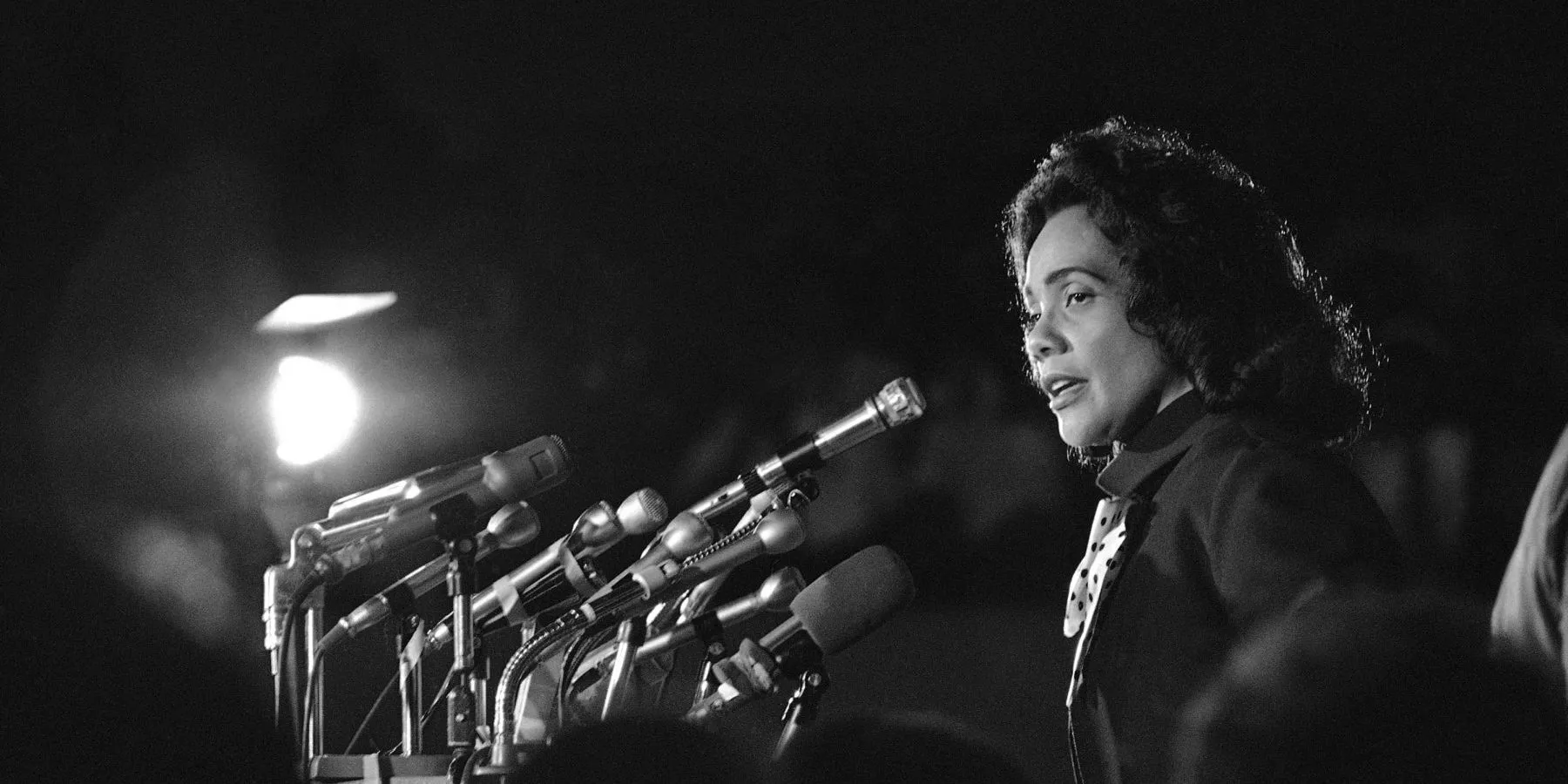
On April 4, 1968, a shot rang out as King stood on the 2nd floor balcony at the Lorraine Motel, in Memphis, Tennessee. Dr. Martin Luther King Jr., was pronounced dead at St. Joseph's Hospital at 7:05 p.m. She learned of the shooting after being called by Jesse Jackson when she returned from shopping with her eldest child Yolanda. After King’s assassination, Coretta Scott King devoted much of her life to spreading her husband’s philosophy of nonviolence. "I'm more determined than ever that my husband's dream will become a reality," She was, however, better prepared for such a loss than most people would be, both because of her strong religious faith and because she had long ago confronted the dangers inherent in her husband’s work. On April 8, 1968, King and her children headed a march with sanitation workers that her husband had planned to carry out before his death. After the marchers reached the staging area at the Civic Center Plaza in front of Memphis City Hall, onlookers proceeded to take pictures of King and her children but stopped when she addressed everyone at a microphone.
On May 1, Coretta Scott King launched the southern caravan of the Poor People’s Campaign from the balcony of the Lorraine Motel in Memphis. Prior to King's funeral, former President Kennedy's widow, Jacqueline Kennedy met with her. Later that month, she stood in for her husband at an anti–Vietnam War rally in New York. Only two months after her husband’s assassination, she spoke during the Poor People’s Campaign at the Lincoln Memorial in June 1968, and announced that it was time for “a solid block of women power to fight the three great evils of racism, poverty and war.” In 1969, she became the Founding President, Chair and Chief Executive Officer of The King Center. With a deep commitment to preserving King’s legacy, almost immediately Coretta Scott King began mobilizing support for the Martin Luther King, Jr., Center for Nonviolent Social Change in Atlanta. The King Center also sponsors programs in voter education and registration, literacy, the performing arts, early childhood education, and internships for college students from around the world who come to learn effective means of nonviolent social protest. Gradually she came to be seen as the worthy successor to Dr. King and a leader and symbol of the civil rights struggle.
In 1974, Mrs. King formed a broad coalition of over 100 religious, labor, business, civil, and womens’ rights organizations dedicated to a national policy of full employment and equal economic opportunity. She also remained active in various women’s organizations, including the National Organization for Women, the Women’s International League for Peace and Freedom, and United Church Women. She calls upon women to take a greater part in the shaping of political priorities so that government will recognize the need for every person to have an income sufficient to support a family. In the 1980s, she took an active role in the anti-apartheid movement and in 1984, along with her daughter Bernice and son Martin III, was arrested outside the South African embassy. After the fall of apartheid, under Mrs. King’s leadership The King Center trained 300,000 new South African voters on the principles of nonviolence in preparation for the country’s first multiracial election. She then stood with president-elect Nelson Mandela in Johannesburg when he became South Africa’s first democratically elected president.
Every year after the assassination of her husband in 1968, Coretta attended a commemorative service at Ebenezer Baptist Church in Atlanta to mark his birthday on January 15. She fought for years to make it a national holiday. As chairperson of the Martin Luther King, Jr., Federal Holiday Commission, she successfully formalized plans for the annual celebration of Martin Luther King, Jr., Day, which began in January 1986. Mrs. King oversaw the first legal holiday in honor of her husband – a holiday which is celebrated in the United States and worldwide in over 100 countries. After she succeeded in getting Martin Luther King Jr. Day made a federal holiday, King said her husband's dream was "for people of all religions, all socio-economic levels, and all cultures to create a world community free from violence, poverty, racism, and war so that they could live together in what he called the beloved community or his world house concept."
While her husband was alive, Scott King had struggled with being marginalized in the Southern Christian Leadership Conference, in part because she was a “strong woman, not one to be pushed aside …” According to biographer Barbara Reynolds, after Martin’s assassination, “Many of the men told her she should step aside, and let them run things” but she refused. “Most thought that women should stay in the shadows,” Scott King explained, “however I felt that as women, we had much to contribute. In fact for the longest time, way before I married Martin, I had believed that women should allow our essence and presence to shine, rather than letting ourselves be buried or shunted to the sidelines.” She was in favor of having a women to head the movement and even asked Josephine Baker to take a strong lead in the movement. Baker considered the proposal for a while before turning it down. Stating: “My children are too young to lose their mother.”
Coretta Scott King was the recipient of various honors and tributes both before and after her death. She received honorary degrees from many institutions, including Princeton University, Duke University, and Bates College. Coretta Scott King died in the late evening of January 30, 2006, at the rehabilitation center in Mexico, in the Oasis Hospital where she was undergoing holistic therapy for her stroke. On January 31, 2006 following a moment of silence in memoriam to the death of King, the United States House of Representatives presented House Resolution 655 in honor of Mrs. King's legacy. For over forty years, Mrs. King traveled throughout the world speaking out on behalf of racial and economic justice, women’s and children’s rights, religious freedom, the needs of the poor and homeless, full employment, and nuclear disarmament. When the grand narrative of American feminism is rewritten, Coretta Scott King will join her fallen Black sisters— Ida B. Wells-Barnett, Mary McLeod Bethune, Sojourner Truth, Mary Church Terrell, and others, as celebrated icons of the herstory of women’s movement.