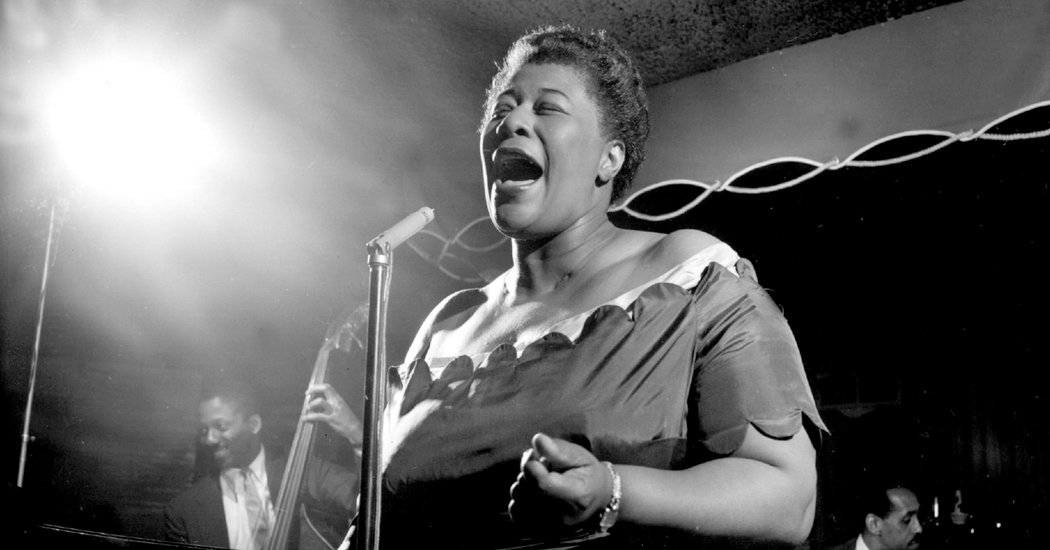
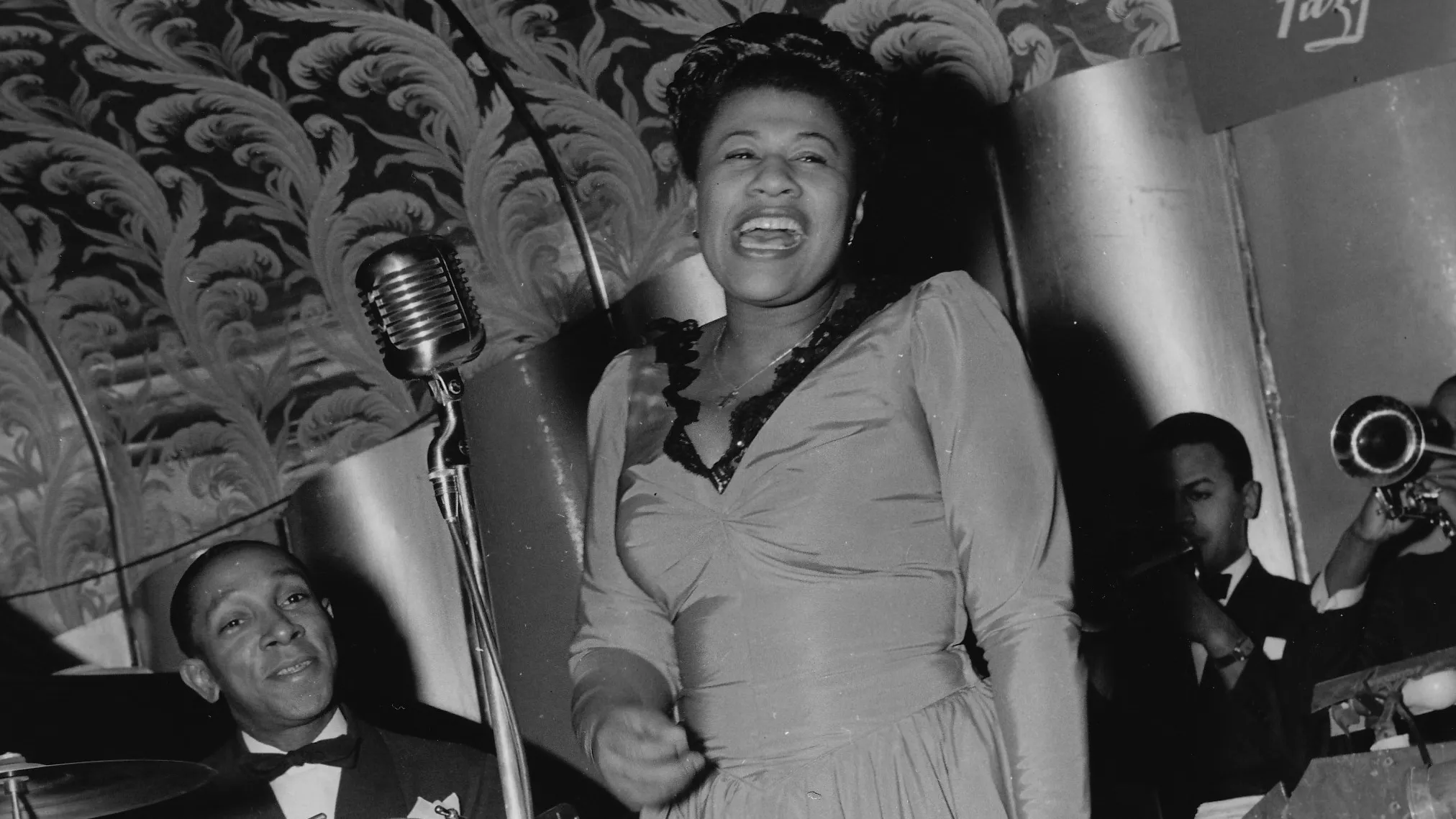
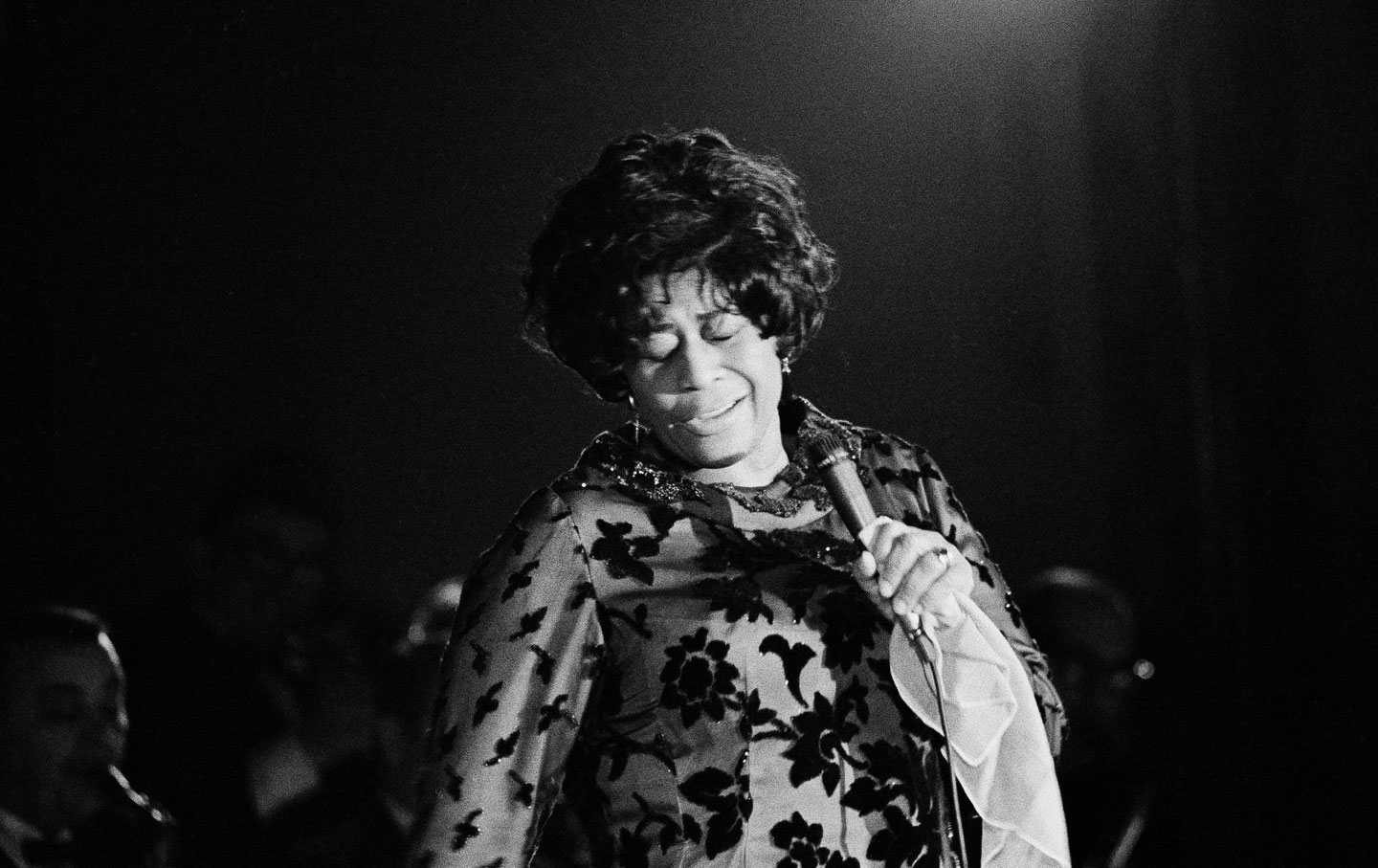
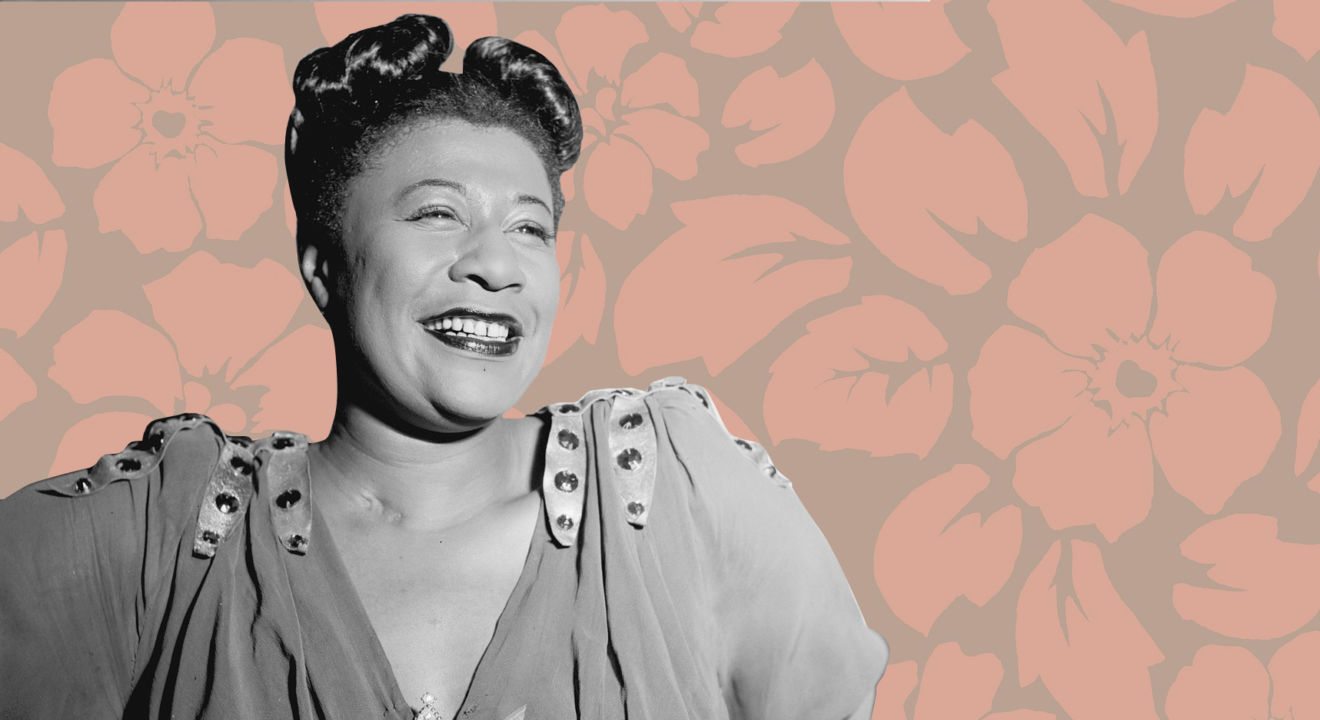
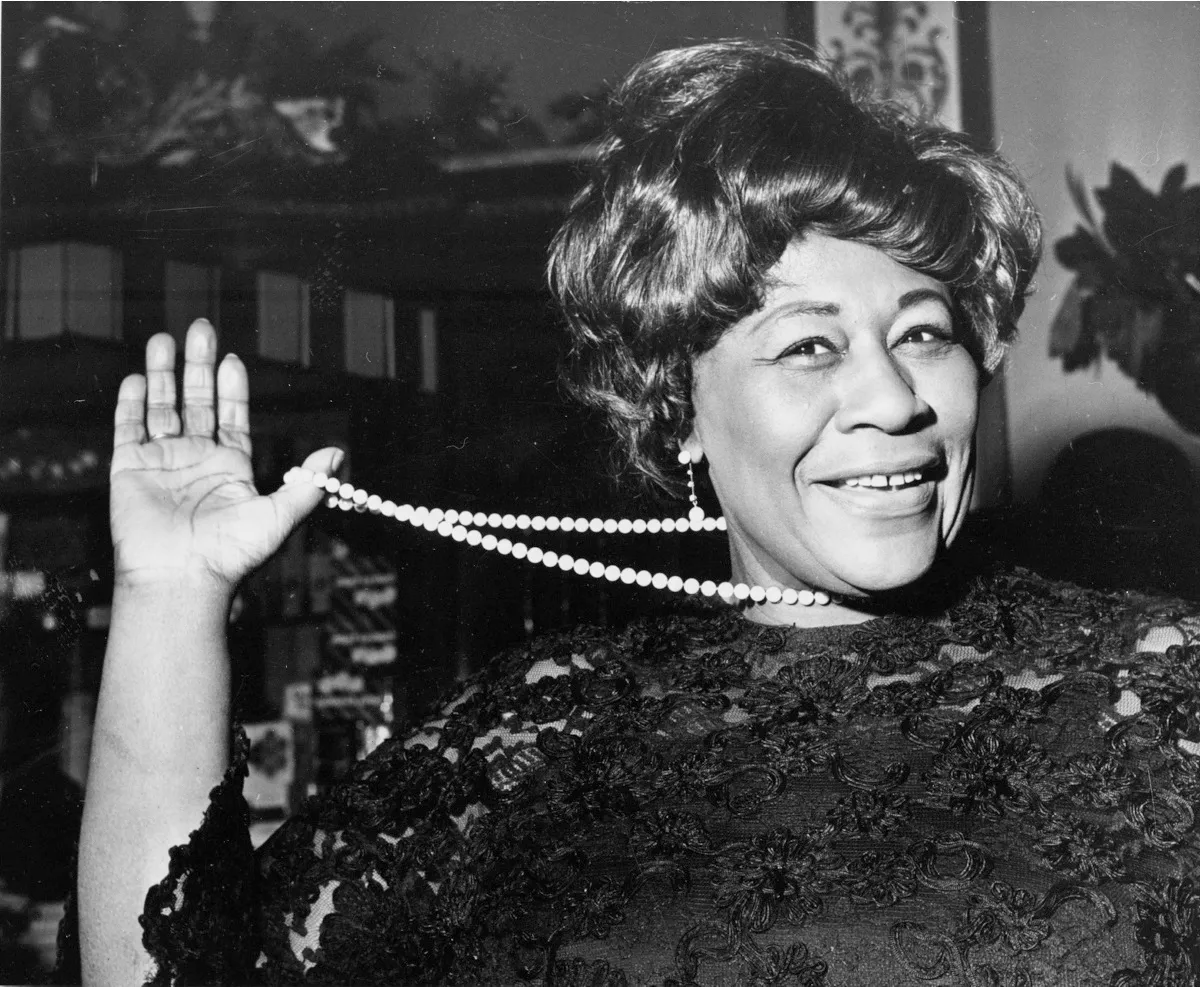
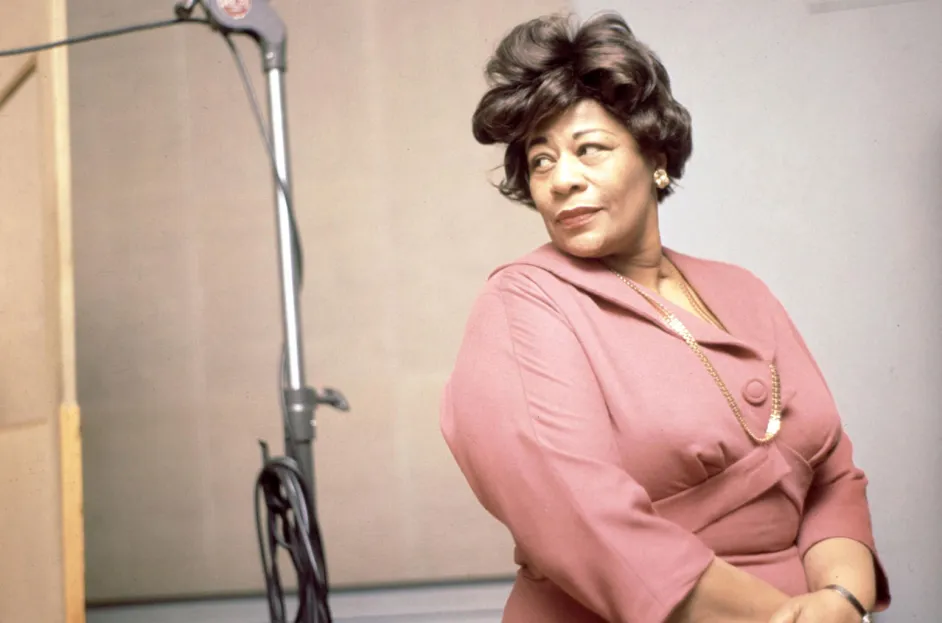
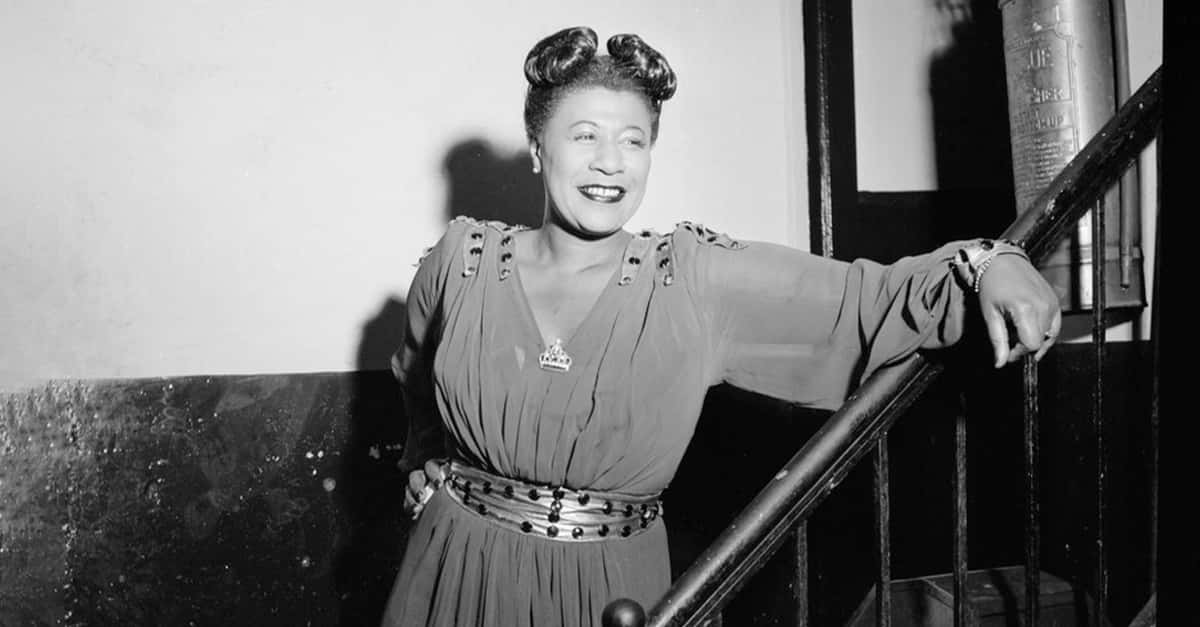
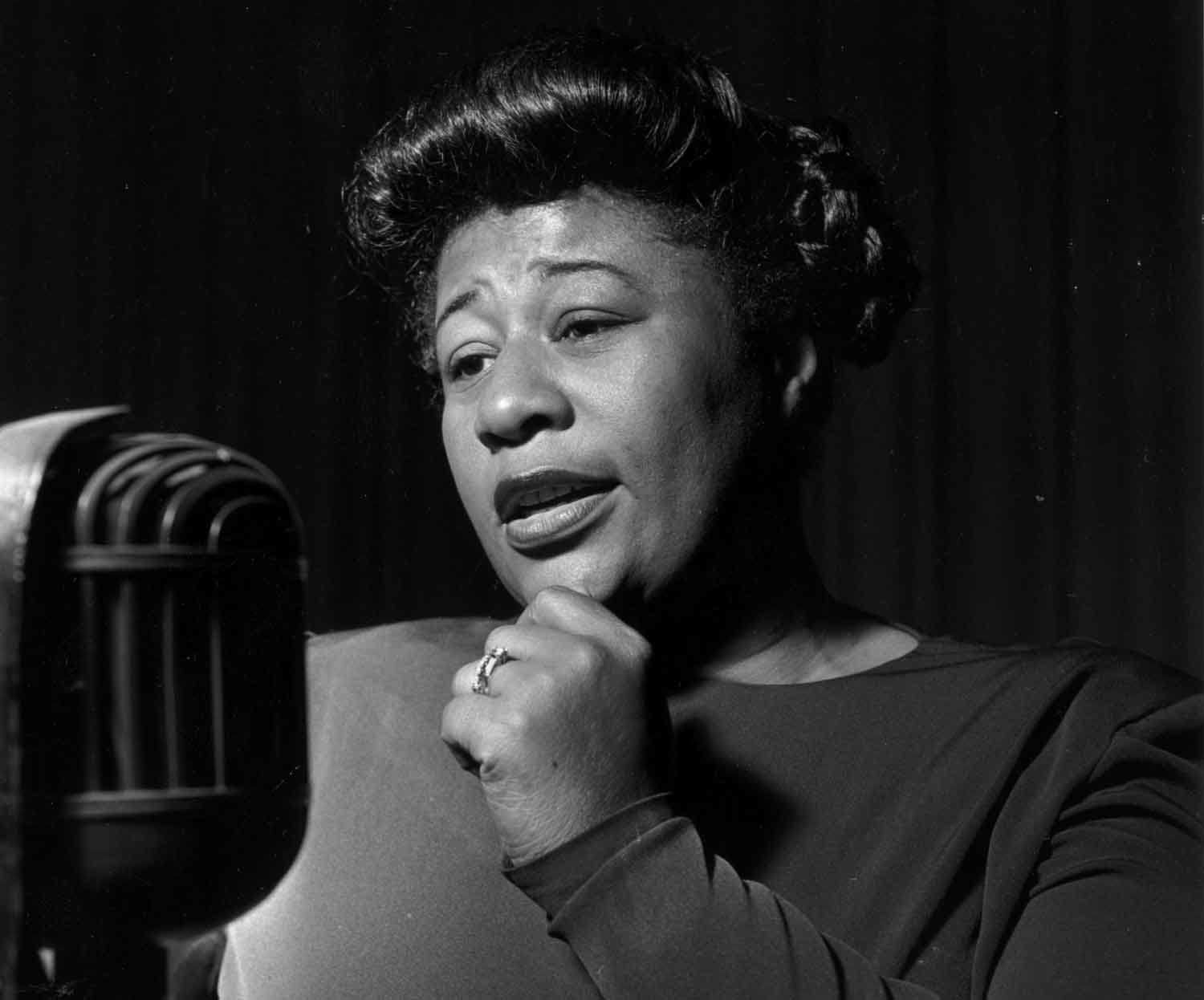
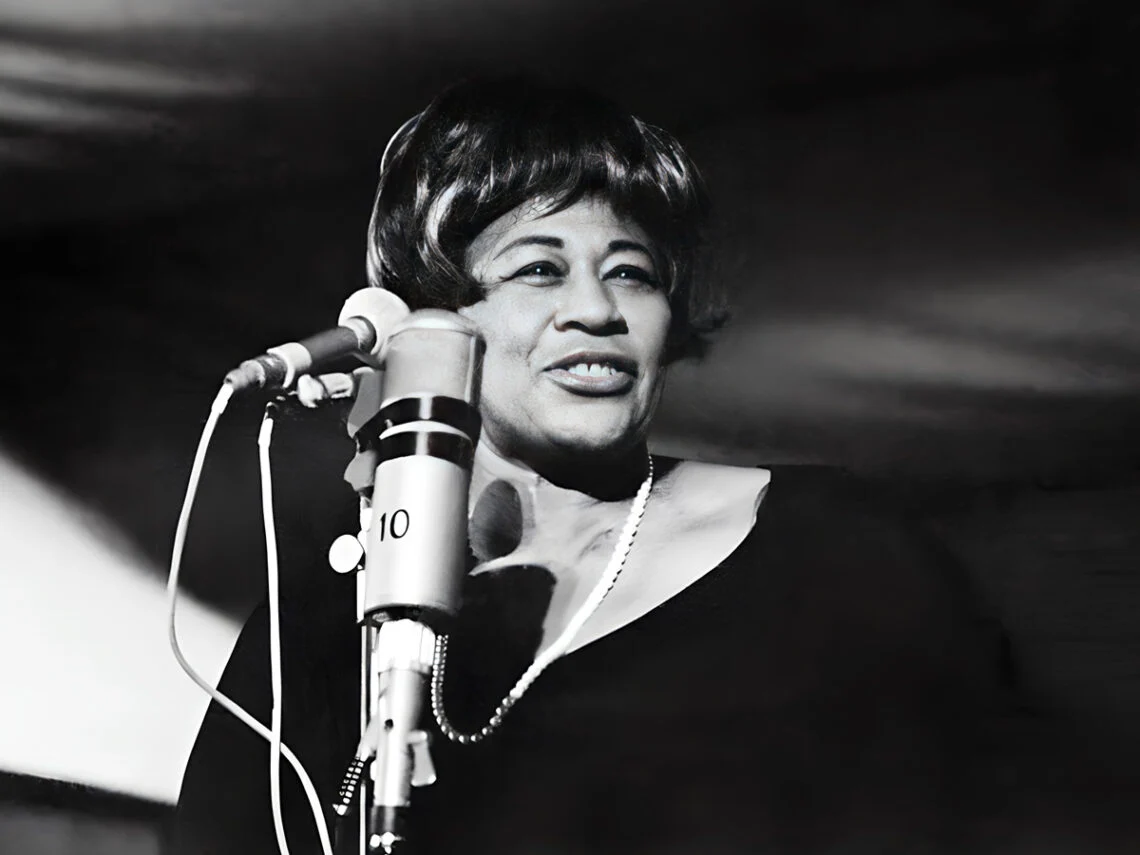
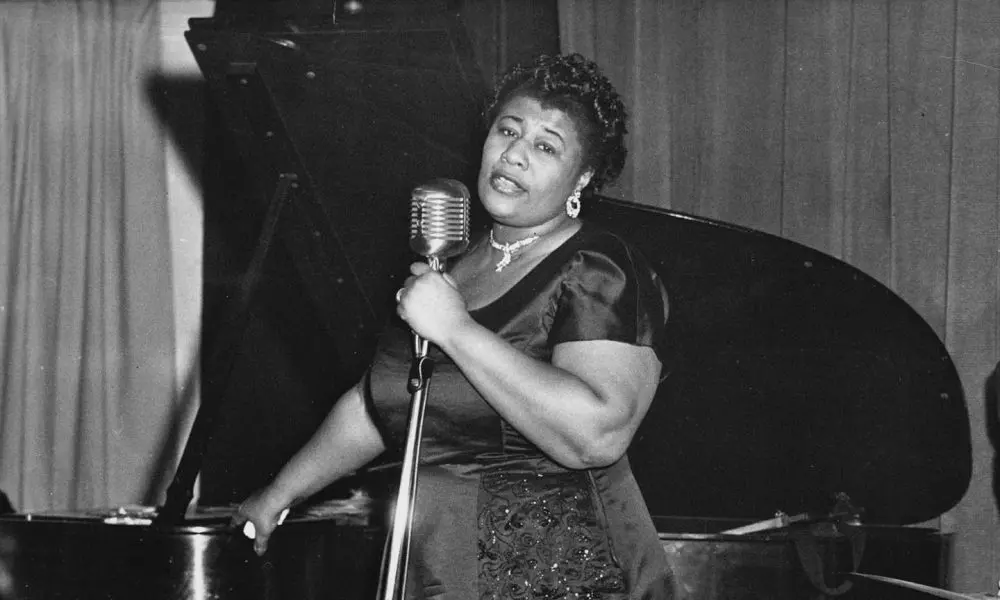
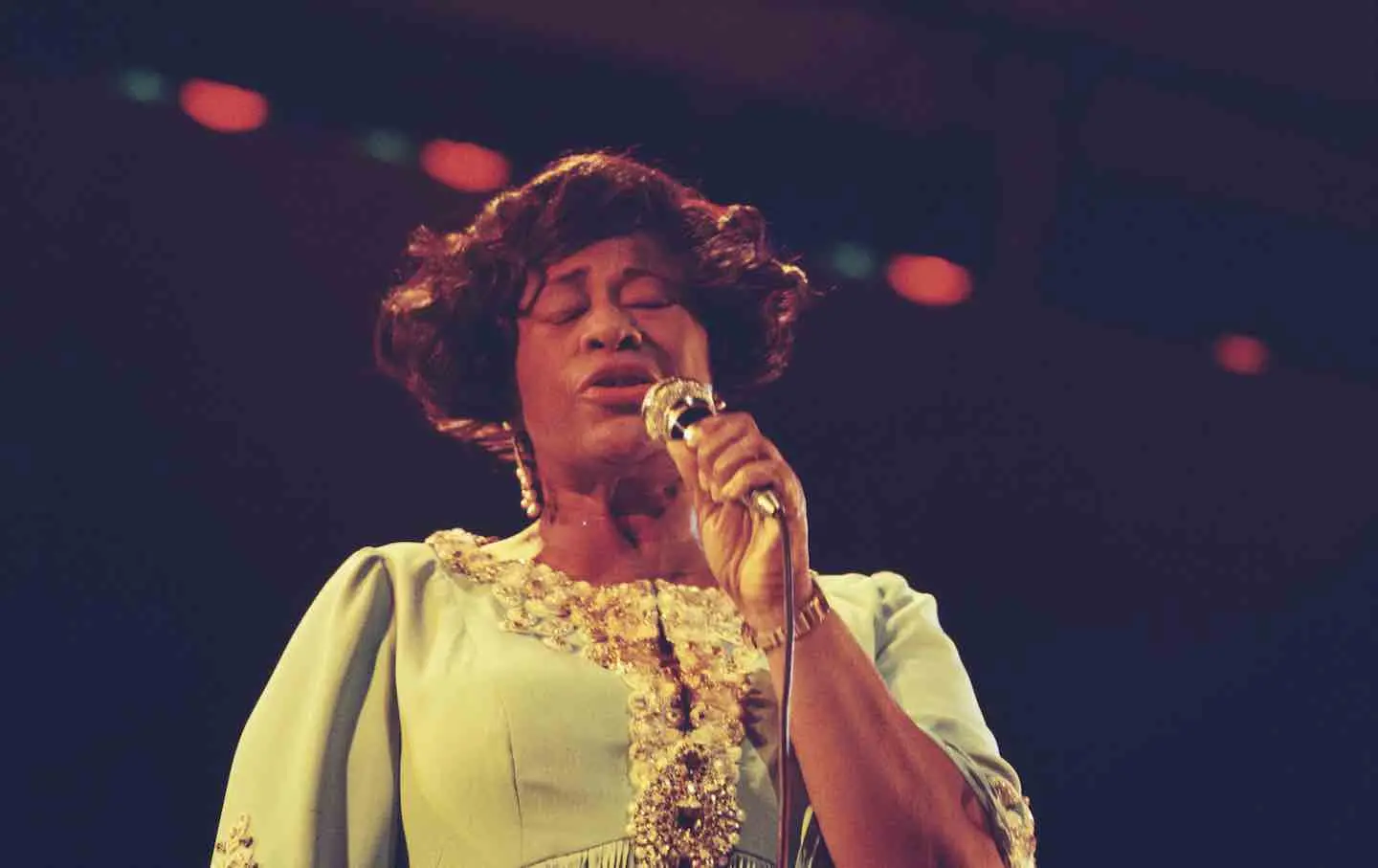
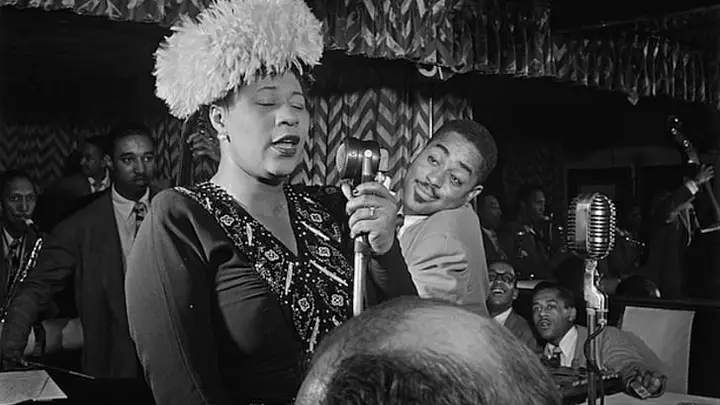
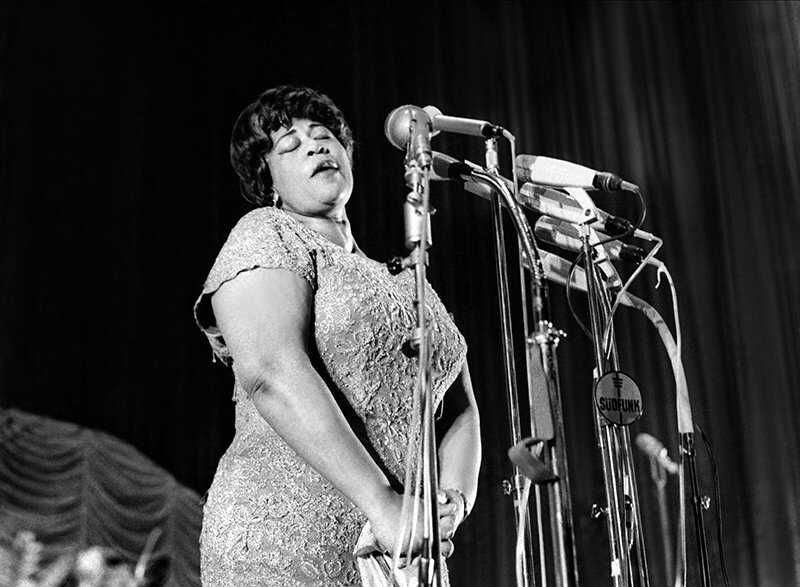
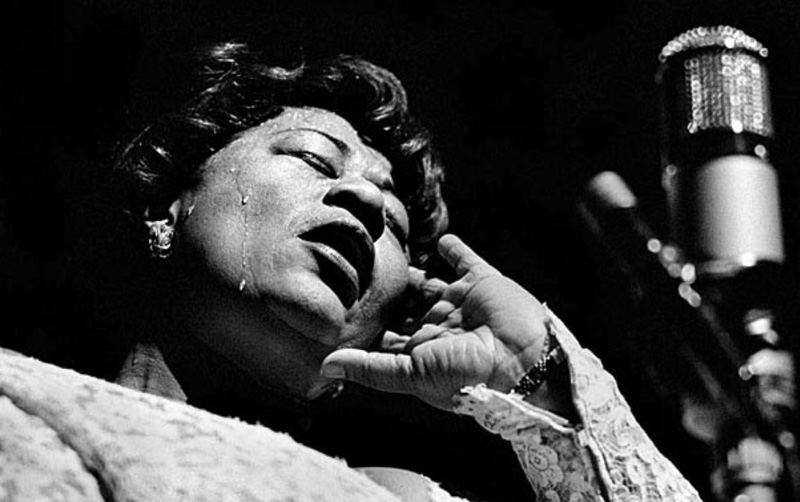
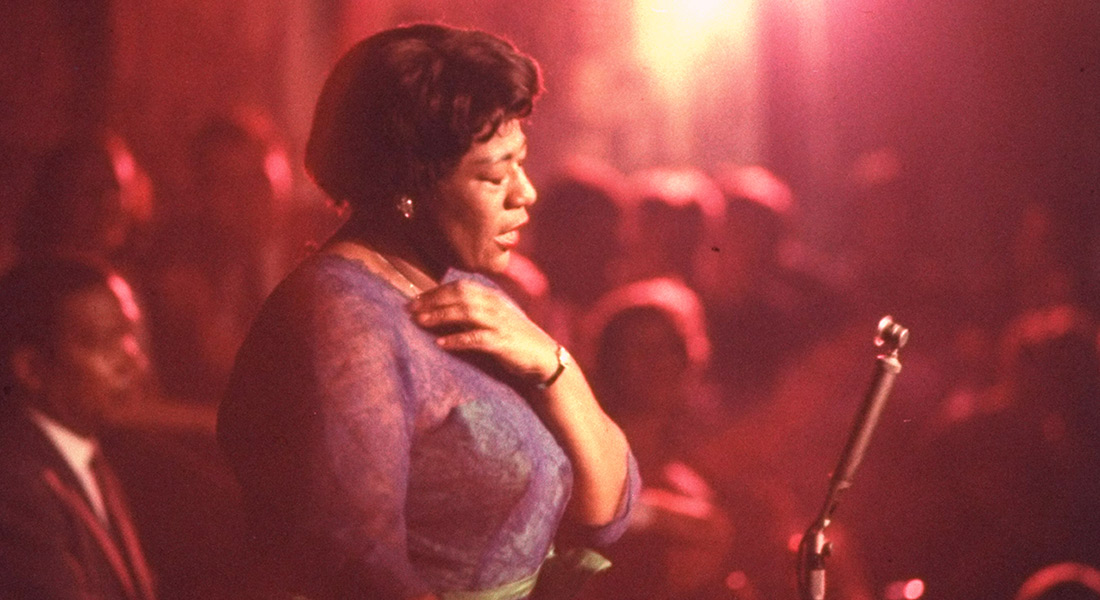
Referred to as the First Lady of Song, Queen of Jazz, and Lady Ella, Ella Fitzgerald was a world-renown jazz singer who became famous for the wide range and rare sweetness of her voice. She became an international legend during a career that spanned some six decades. Ella Jane Fitzgerald was born on April 25, 1917, in Newport News, Virginia. Fitzgerald was the product of a common-law marriage between William Fitzgerald and Temperance "Tempie" Williams Fitzgerald. Fitzgerald experienced a troubled childhood that began with her parents separating shortly after her birth. With her mother, Fitzgerald moved to Yonkers, New York. They lived there with her mother's boyfriend, Joseph Da Silva. The family grew in 1923 with the arrival of Fitzgerald's half-sister Frances. Fitzgerald began her formal education at the age of six and was an outstanding student, moving through a variety of schools.
Starting in third grade, Fitzgerald loved dancing and admired "Earl Snakehips" Tucker. She performed for her peers on the way to school and at lunchtime. Ella started attending Benjamin Franklin Junior High School in 1929. Fitzgerald and her family were Methodists and were active in the Bethany African Methodist Episcopal Church, where she attended worship services, Bible study, and Sunday school. To help with the family's finances, Fitzgerald often worked odd jobs including, at times, running bet money for local gamblers. By her teens, the self-professed tomboy was active in sports and often played in local baseball games. Influenced by her mother, she also enjoyed singing and dancing, and spent many hours singing along to records by Bing Crosby, Connee Boswell, and the Boswell Sisters, especially the lead singer Connee Boswell. She also began taking the train to see shows with friends at Harlem's Apollo Theater.
In 1932, her mother died from injuries sustained in a car accident. After her mother's death, Fitzgerald's stepfather took care of her until April of 1933, when she ended up moving to Harlem to live with her aunt, in order to spare her from the harsh treatment of her father. The fifteen-year-old Ella hated school in Harlem, skipping it as soon as she could to work as a collector for the illegal Mafia-run lottery. Tracked down by the authorities, she was sent to a Catholic school but soon ran away, returning to Harlem where she lived rough on the streets. By 1934, Fitzgerald was trying to make it on her own and living on the streets. Her newfound friends on the streets encouraged her to enter one of the regular talent competitions at the newly opened Apollo Theater. Ella went to the theater that night with the intention of dancing, but when the frenzied Edwards Sisters closed the main show, Ella changed her mind.
Intimidated by the standard of the competition Ella decided she would sing instead. A momentous decision that changed the course of her life. She sang the Hoagy Carmichael tune "Judy" as well as "The Object of My Affection", in the style of her idol, Connee Boswell. Off stage, and away from people she knew well, Ella was shy and reserved. She was self-conscious about her appearance, and for a while even doubted the extent of her abilities. On stage, however, Ella was surprised to find she had no fear. She felt at home in the spotlight. She wowed the audience. Fitzgerald went on to win the contest's $25 first-place prize. In the band that night was saxophonist and arranger Benny Carter. Impressed with her natural talent, he began introducing Ella to people who could help launch her career. Three months later she had her first professional engagement, singing with Tiny Bradshaw’s band at the Harlem Opera House.
It was there that Ella first met influential drummer and bandleader Chick Webb. Although her voice impressed him, Chick had already hired male singer Charlie Linton for the band. Webb agreed to try her out with his orchestra at a one-nighter at Yale University, where she went down well with the White crowd. She appeared with the Webb band at one of Harlem's hottest clubs, the Savoy Ballroom, often referred to as “The World’s Most Famous Ballroom.” By the end of March, Ella did her first radio broadcast with the band. On June 12th, 1935 she recorded her first song, ‘I’ll Chase The Blues Away’ and ‘Love And Kisses’, with Webb, for Decca Records. Both are standard mid-1930s band arrangements, with Ella sounding young and enthusiastic. Though her voice and singing technique were not as well-developed as they would be later on, she already exhibited a clear tone, careful articulation, and a supple, buoyant feel for rhythm.
In 1936, Ella had her first hit with ‘Sing Me A Swing Song (And Let Me Dance)’, a much better song than her first two efforts. She sounded a lot more confident, having spent a whole year as a singer with a big band. That November she sat in with Benny Goodman and His Orchestra on a recording of “Goodnight, My Love” for RCA Victor, subbing for Goodman’s usual singer, Helen Ward; the record hit number one in February 1937. “(If You Can’t Sing It) You’ll Have to Swing It” (also known as “Mr. Paganini”), which became one of her signature songs, was on the charts in December 1936. Fitzgerald scored a two-sided chart entry in April 1937 with “Dedicated to You”/“Big Boy Blue,” on which she was accompanied by the Mills Brothers. “If You Ever Should Leave” and “All over Nothing at All,” both on the charts during the summer of 1937, were issued under her own name, accompanied by members of the Webb orchestra.
After three years of steady work later, in June of 1938, at the age of 21, Ella recorded a playful version of the nursery rhyme, “A-Tisket, A-Tasket.” The album sold 1 million copies, hit number one, and stayed on the pop charts for ten weeks. Suddenly, Ella Fitzgerald was famous. Later that year, Fitzgerald recorded her second hit, "I Found My Yellow Basket". As the singer's career was on the rise, Webb's health had begun to decline. Though only in his thirties, the drummer, who had struggled with congenital spinal tuberculosis throughout his life, would purportedly collapse from exhaustion after playing a set. Nonetheless, he forged onwards, hoping to keep his band working through the Depression. The following year Webb died, aged just 34, and for a while, Ella continued to front his orchestra taking on the role of nominal bandleader, as well as recording solo. In his absence the band was renamed “Ella Fitzgerald and Her Famous Band".
However, it was a struggle to keep it going; the band members were very demanding and Ella, barely in her twenties, found their demands difficult to rebut. The band did have a manager but the issues of what to play and in which direction to take the band fell to Ella. In January 1941 they scored a top-ten hit with “Five O’Clock Whistle.” Around this time, Fitzgerald was briefly married to Ben Kornegay, a convicted drug dealer and hustler. They wed in 1941, but arrangement did not last long and the marriage was annulled. Fitzgerald recorded nearly 150 songs with Webb's orchestra between 1935 and 1942. Early 1942 saw the final demise of the old Chick Webb band. With increasing dissent and money concerns in the band, Fitzgerald started to work as lead singer with The Three Keys. Fitzgerald also made her film debut as Ruby in 1942's comedy western "Ride 'Em Cowboy" with Bud Abbott and Lou Costello.
She had her own side project, too, known as "Ella Fitzgerald and Her Savoy Eight". With recordings precluded and travel difficult due to World War II, she returned to radio in August 1942, hosting a twice-a-week show with the Keys through November and then a once-a-week slot on her own through June 1943. Decca Records settled with the musicians union in the fall of 1943, allowing Fitzgerald to record again. In 1943 Ella Fitzgerald became the youngest member of the American Society of Composers, Authors, and Publishers. Professionally Ella formed a successful short-term partnership with the Ink Spots and at her first session she cut “Cow-Cow Boogie”. They had two No. 1 records in 1944, producing the two-sided hit “Into Each Life Some Rain Must Fair”/“Tm Making Believe”, which topped both the pop and R&B charts and sold a million copies. But her career was far from flourishing.
Sticking with Decca, Fitzgerald was teamed with Louis Jordan, and the Delta Rhythm Boys for several best-sellers. With the demise of the swing era and the decline of the great touring big bands, a major change in jazz music occurred. The advent of bebop led to new developments in Fitzgerald's vocal style, influenced by her work with Dizzy Gillespie's big band. It was in this period that Fitzgerald started including scat singing as a major part of her performance repertoire. Ella played with the new style, often using her voice to take on the role of another horn in the band. Her style was not as emotional as rival Billie Holiday’s, but she infused a vibrance and excitement into her music. Though often regarded as a pop vocalist during her time with Webb, Fitzgerald started changing her singing style, incorporating scat singing during her performances. Throughout her career, Ella would master scat singing, turning it into a form of art. While singing with Gillespie, Fitzgerald recalled, "I just tried to do [with my voice] what I heard the horns in the band doing."
Around this time, Fitzgerald went on tour with Dizzy Gillespie and his band. While on tour with Dizzy Gillespie’s band in 1946, Ella fell in love with bassist Ray Brown, to whom she was married from 1947 to 1953. While Dizzy and Ella’s tour did good business at the box office, their work together was never going to sell a million records. Nevertheless, they sold out a show at New York City’s Carnegie Hall, appeared at the Downbeat Club in Manhattan and had a very affectionate, though not romantic, relationship. Under Norman’s management, Ella joined the Philharmonic tour, worked with Louis Armstrong on several albums. Her career really began to take off in 1946 when she started working with Norman Granz, the future founder of Verve Records. Granz had specifically launched Verve with the sole purpose of better showcasing her voice. She began an enduring relationship with producer Norman Granz, becoming part of his Jazz at the Philharmonic concert tours. Granz also ran various record labels and had strong ideas about Fitzgerald’s recording career.
Norman saw that Ella had what it took to be an international star, and he convinced Ella to sign with him. It was the beginning of a lifelong business relationship and friendship. Her 1947 recording of ‘I Love You For Sentimental Reasons’ with the Delta Rhythm Boys became a hit, while ‘My Happiness’ with the Song Spinners became her biggest hit for many years. er bebop recording of "Oh, Lady Be Good!" (1947) was similarly popular and increased her reputation as one of the leading jazz vocalists. As the 1950s rolled around, Ella’s appearances on the Billboard charts were infrequent, but this was by no means a reflection on the quality of her recordings. Songs like ‘I’ve Got A Crush On You’, and other brilliant recordings, from her popular selling album, "Pure Ella", were stunning, pointing to the direction in which Ella was heading. The public liked them too, meaning that by 1954 she had sold over 20 million records, which put her up there with the most popular singers, Black or White – she was in any event way more popular than all the other Black singers.
In July 1954, Fitzgerald made her first tour of Australia for the Australian-based American promoter Lee Gordon. This was the first of Gordon's famous "Big Show" promotions and the "package" tour also included Buddy Rich, Artie Shaw and comedian Jerry Colonna. Although the tour was a big hit with audiences and set a new box office record for Australia, it was marred by an incident of racial discrimination that caused Fitzgerald to miss the first two concerts in Sydney, and Gordon had to arrange two later free concerts to compensate ticket holders. Meanwhile, she made her second film appearance in Pete Kelly’s Blues (1955), and her album of songs from the soundtrack, also featuring her co-star, Peggy Lee, became a top-ten hit.
One of Granz's ideas was to have her record a series of two-disc albums backed by an orchestra, each devoted to the work of a great song writer. She began producing her infamous songbook series, a total of eight. The first of these efforts was "IU", recorded and released in 1956, which became a critical and popular success. Among her hits at the height of her popularity were “Lady Be Good,” “How High the Moon,” “Flying Home,” “Undecided,” and a collection of “Songbooks” with compositions from Duke Ellington, George and Ira Gershwin, Johnny Mercer, Irving Berlin, and Rodgers and Hart. Their songs in Ella’s hands became masterpieces. Ira Gershwin thought the same about his and his brother’s compositions. “I never knew how good our songs were until I heard Ella Fitzgerald sing them,” Ira Gershwin once remarked. The Songbooks helped to create what we have come to think of as the modern album.
Both Ellington and Billy Strayhorn, the Duke’s long-time collaborator, appeared on the Songbook of the bandleader’s songs. The Songbooks have even been lauded as a major contribution to American culture. The series was wildly popular, both with Ella’s fans and the artists she covered. The songbook albums were not Fitzgerald’s only recordings for Verve in this period. This affiliation led to her recording with numerous greats, including Louis Armstrong, Duke Ellington, Count Basie, and Oscar Peterson. These albums represent the pinnacle of Ella’s art and an achievement that is matched by a mere handful of singers. In many ways, Ella’s work on the eight Songbook albums has become the basis for her continuing popularity. For many years the star attraction of Granz’s Jazz at the Philharmonic concert tours, Ella was also one of the best-selling jazz vocal recording artists in history.
Ella also began appearing on television variety shows. She quickly became a favorite and frequent guest on numerous programs, including “The Bing Crosby Show,” “The Dinah Shore Show,” “The Tonight Show”, “The Ed Sullivan Show,” “The Andy Williams Show”, and “The Dean Martin Show". At the same time she was performing in the country’s top nightclubs and, increasingly, in larger venues, such as Carnegie Hall in New York City and the Hollywood Bowl in California. She also made another film, St. Louis Blues (1958), a biography of the musician and composer W. C. Handy, and had guest-star appearances on television. She began to work more frequently overseas, and one of her European shows provided her next record hit. The 1950s and 1960s proved to be a time of great critical and commercial success for Fitzgerald, and she earned the moniker "First Lady of Song" for her mainstream popularity and unparalleled vocal talents.
Her unique ability to mimic instrumental sounds helped popularize the vocal improvisation of scatting, which became her signature technique. Ella Fitzgerald became the first Black woman to win a Grammy at the Recording Academy’s inaugural awards show on May 4, 1959. Fitzgerald took home two of 28 awards for best jazz and female vocal performances. “Ella Fitzgerald Sings the Irving Berlin Song Book” won the Grammy for Best Female Vocal Performance. In contrast “Ella Fitzgerald Sings the Duke Ellington Song Book” won for Best Individual Jazz Performance. By bringing together songs that had been scattered among long-forgotten Broadway shows, the albums also had the effect of renewing and consolidating the reputations of the songwriters, who benefited from some of the best interpretations of their work ever done. Fitzgerald continued to earn Grammys and have healthy record sales during the early 1960s.
Ella’s last U.S. chart success of any note was ‘Mack The Knife’, which managed to make #27 in 1960. This fact was probably of little consequence to the singer. While recording the Song Books and the occasional studio album, Fitzgerald toured 40 to 45 weeks per year in the United States and internationally, under the tutelage of Norman Granz. Granz helped solidify her position as one of the leading live jazz performers. In 1961, Fitzgerald bought a house in the Klampenborg district of Copenhagen, Denmark, after she began a relationship with a Danish man. Though the relationship ended after a year, Fitzgerald regularly returned to Denmark over the next three years and even considered buying a jazz club there. Although Fitzgerald still performed successfully in the mid-1960s, her recording career fell into decline. Granz had sold Verve Records to Metro-Goldwyn-Mayer (MGM) at the start of the 1960s but continued to oversee her career at first. At the same time the revolution in the recording industry brought about by Beatlemania threw all non-rock music into the shade.
Fitzgerald left Verve in 1966, signing with Capitol Records, where she recorded the religious album "Brighten the Comer", which reached the charts in 1967. In 1969 she switched to Reprise Records, where she charted with Ella, an album of contemporary pop songs. Such recordings dismayed her jazz fans, but in 1972 Granz returned to the record business with his Pablo label. Fitzgerald immediately signed with the company and went back to making jazz records, which she did for the rest of her life. The bulk of Fitzgerald’s time was spent touring the world, often playing at the increasing number of jazz festivals. Ella Fitzgerald performed at top venues all over the world, and packed them to the hilt. Her audiences were as diverse as her vocal range. They were rich and poor, made up of all races, all religions and all nationalities. She was able to work only intermittently in the early 1970s due to recurring eye trouble, but in 1973 she expanded her schedule to include appearances with symphony orchestras. Despite advancing age, she continued to tour extensively in her sixties and seventies.
More albums followed throughout the '70s and '80s, many pairing the singer with artists like Oscar Peterson, and Joe Pass, among others. Ella continued to work as hard as she had early on in her career, despite the ill effects on her health. She toured all over the world, sometimes performing two shows a day in cities hundreds of miles apart. In 1974, Ella spent a legendary two weeks performing in New York with Frank Sinatra and Count Basie. In 1979, she was honored with a Kennedy Center for the Performing Arts Medal of Honor Award. By the 1980s, Fitzgerald experienced serious health problems. In 1986, suffering from congestive heart failure, she underwent open-heart surgery. When she recovered, she went back on the road. The next year, President Ronald Reagan awarded Ella the National Medal of Arts. It was one of her most prized moments. She made her last recording in 1989 and her last public performance in 1991 at New York's Carnegie Hall. She was finally forced to retire due to ill health in 1992. Fitzgerald died on June 15, 1996, at her home in Beverly Hills.
Fitzgerald was a civil rights activist. She was awarded the National Association for the Advancement of Colored People (NAACP) Equal Justice Award and the American Black Achievement Award. In 1993, Fitzgerald established the Ella Fitzgerald Charitable Foundation focusing on charitable grants for four major categories: academic opportunities for children, music education, basic care needs for the less fortunate, medical research revolving around diabetes, heart disease, and vision impairment. Her goals were to give back and provide opportunities for those "at risk" and less fortunate. In addition, she supported several nonprofit organizations like the American Heart Association, City of Hope, and the Retina Foundation. Fitzgerald’s clear tone and wide vocal range were complemented by her mastery of rhythm, harmony, intonation, and diction. She was an excellent ballad singer, conveying a winsome, ingenuous quality.
Ella Fitzgerald was the most popular female jazz singer in the United States for more than half a century. In her lifetime, she won 13 Grammy awards and sold over 40 million albums. Her voice was flexible, wide-ranging, accurate and ageless. She could sing sultry ballads, sweet jazz and imitate every instrument in an orchestra. Mel Torme described her as "the High Priestess of Song" and Pearl Bailey called her "the greatest singer of them all," according to Fitzgerald's official website. And Bing Crosby once said, "Man, woman or child, Ella is the greatest of them all." She had started out a swing singer, moved to be-bop, she sang perfect scat, was an extraordinary jazz vocalist and had no fear of modern material as the 1960s and ’70s came along. From the blues to bossa nova and calypsos to carols she imbued all with her unique voice, sounding forever young. She was blessed with a range of three-octaves, beautiful diction and enunciation that was as good as it gets. Her voice was flexible, wide-ranging, accurate, ageless and could imitate every instrument in an orchestra.