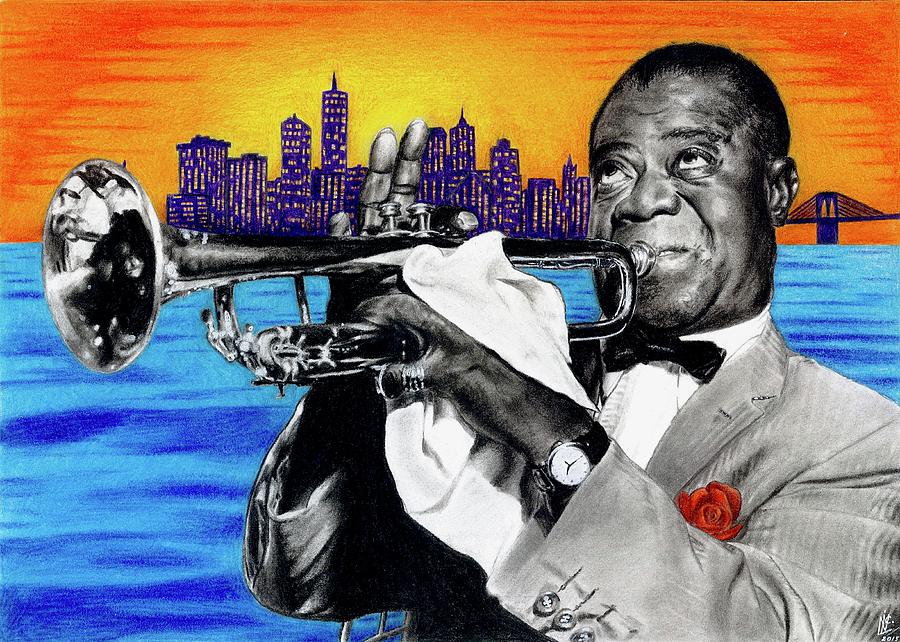
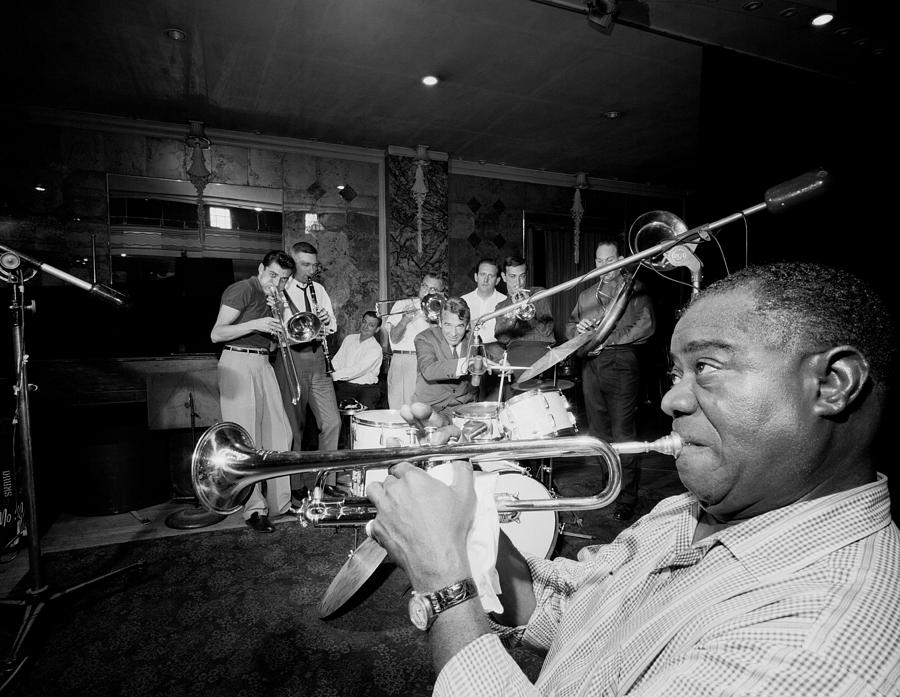
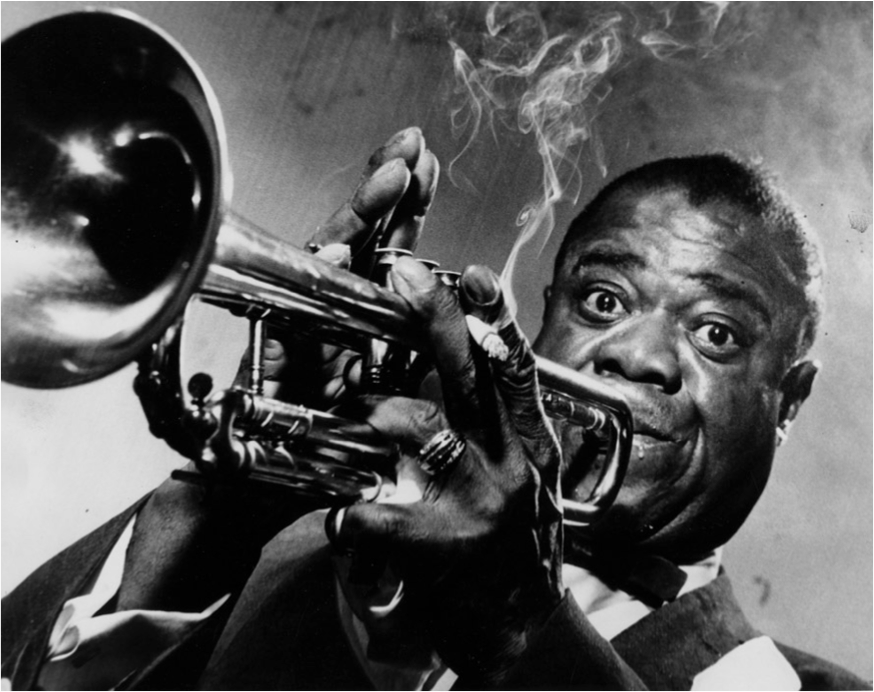
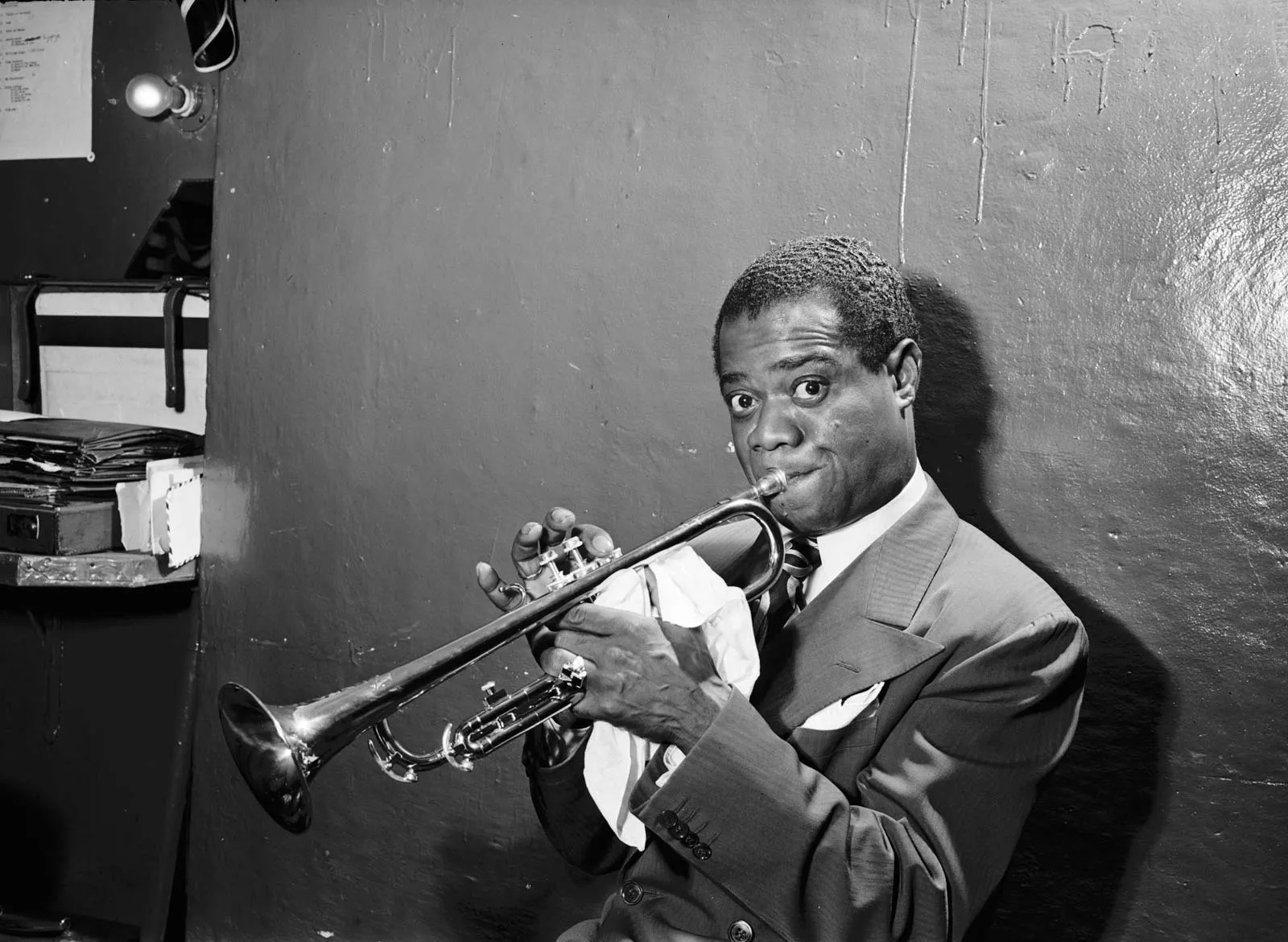
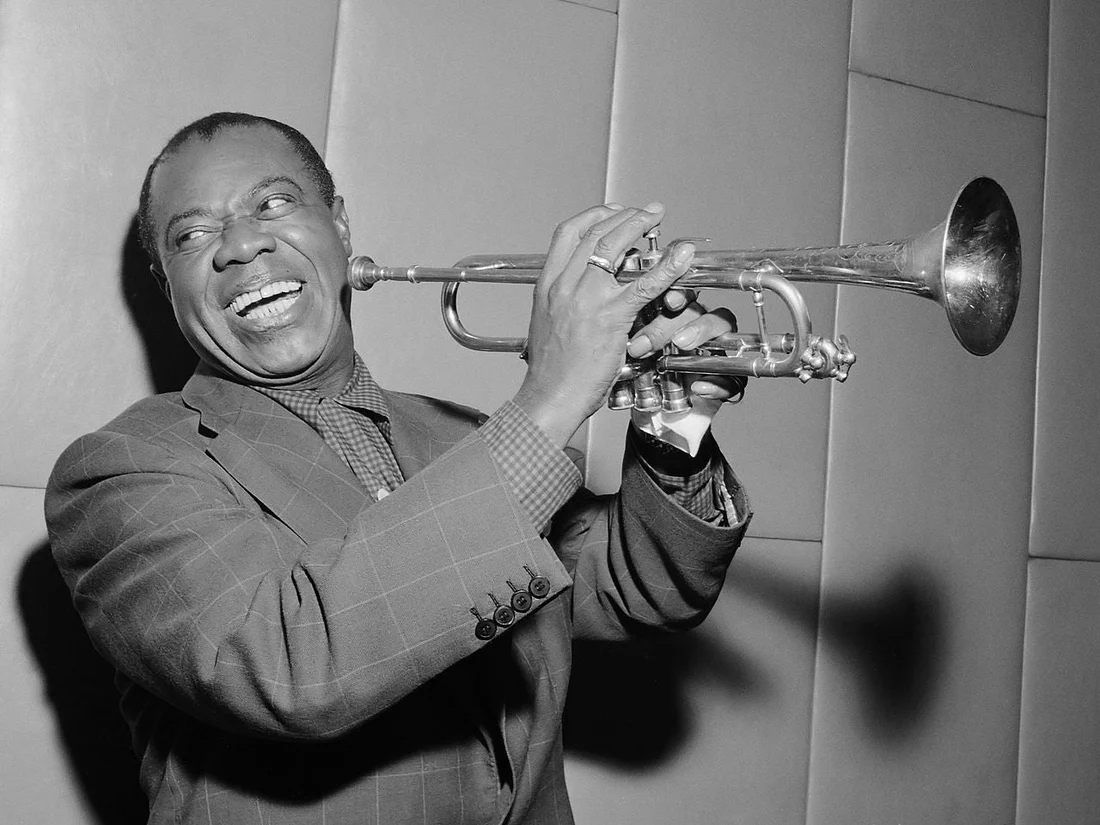
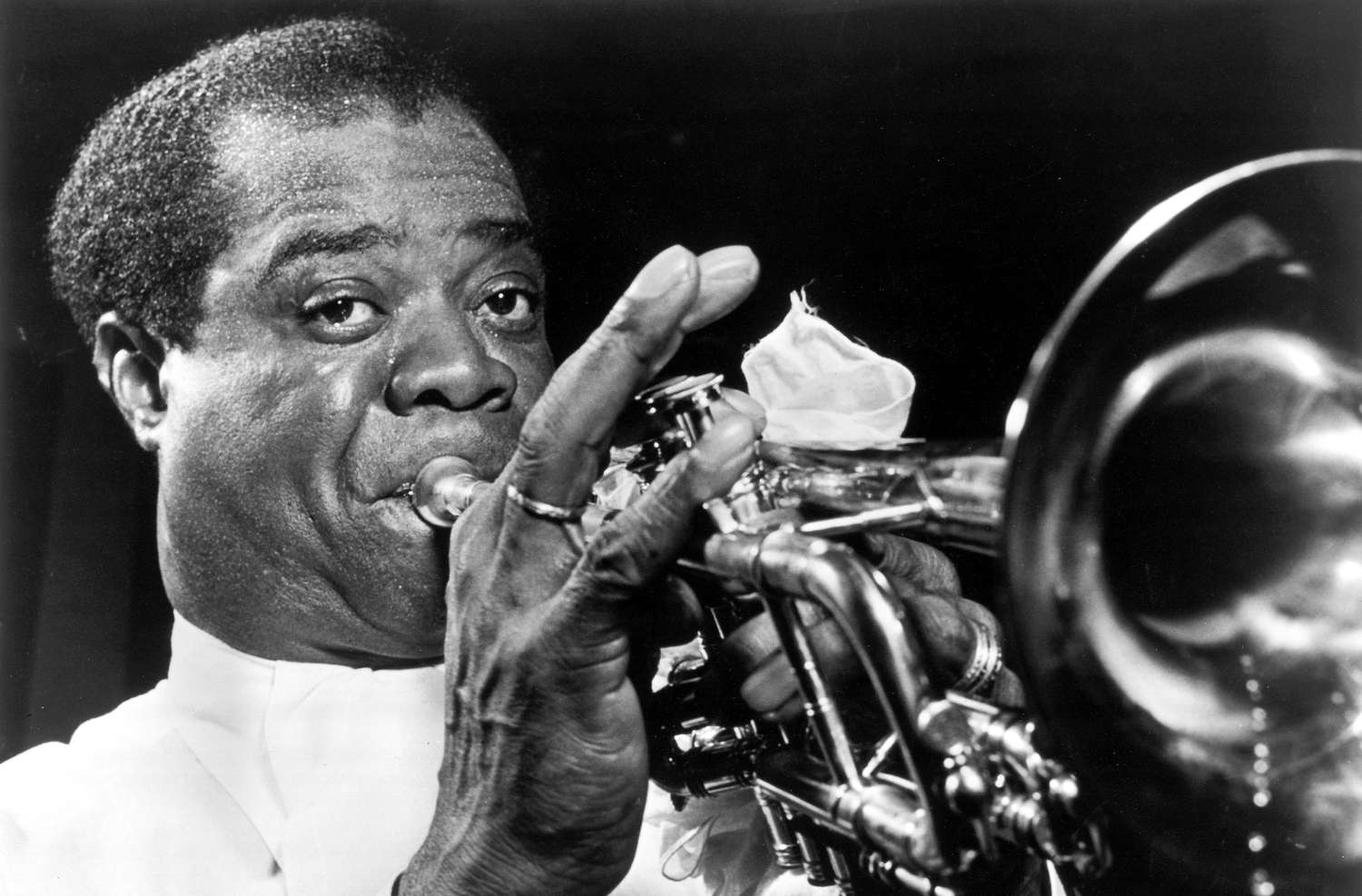
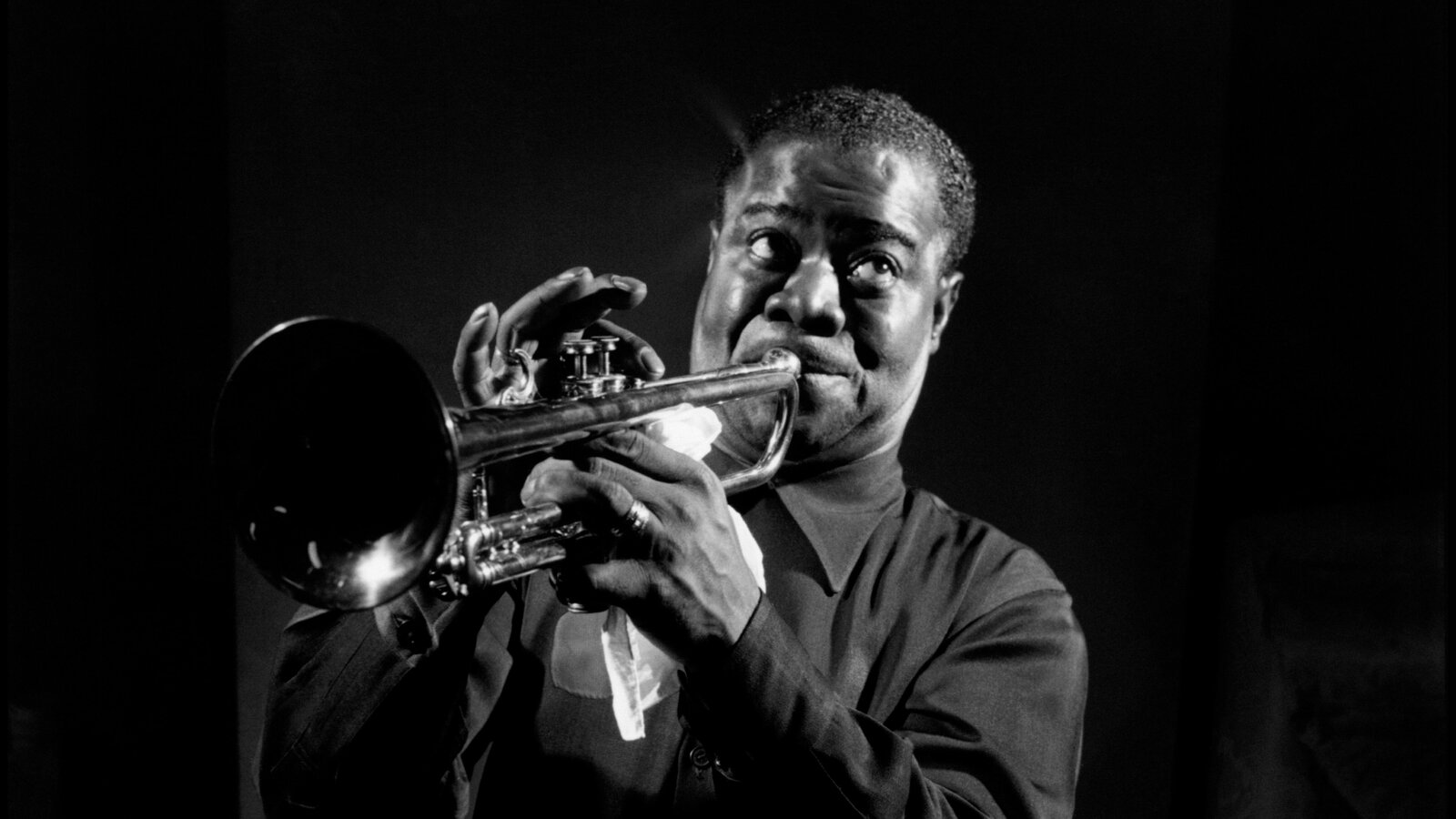
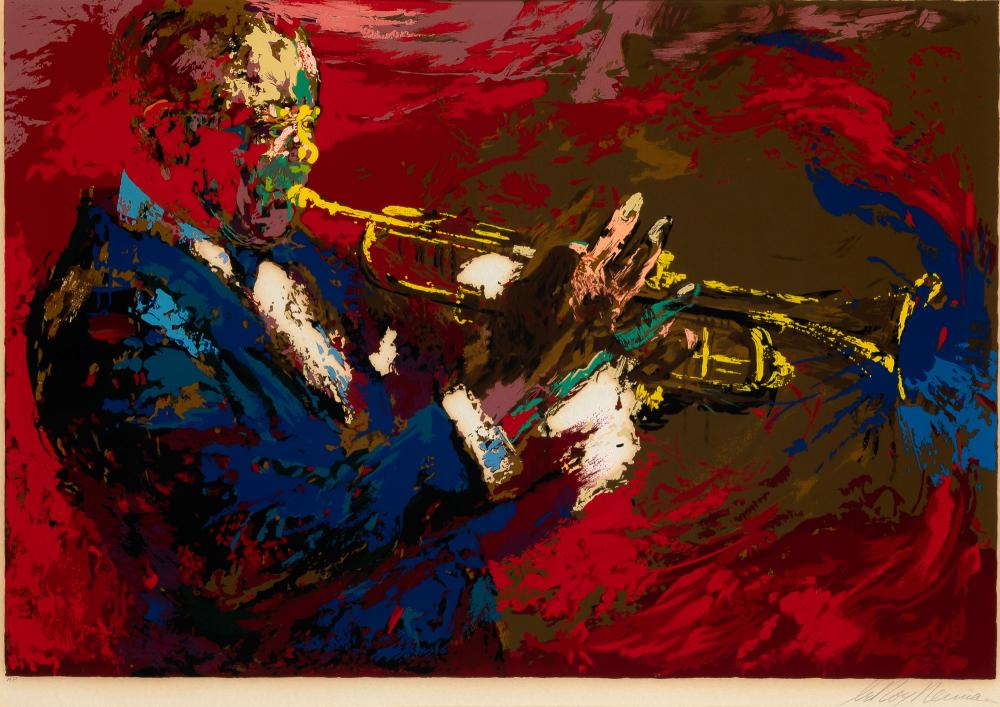
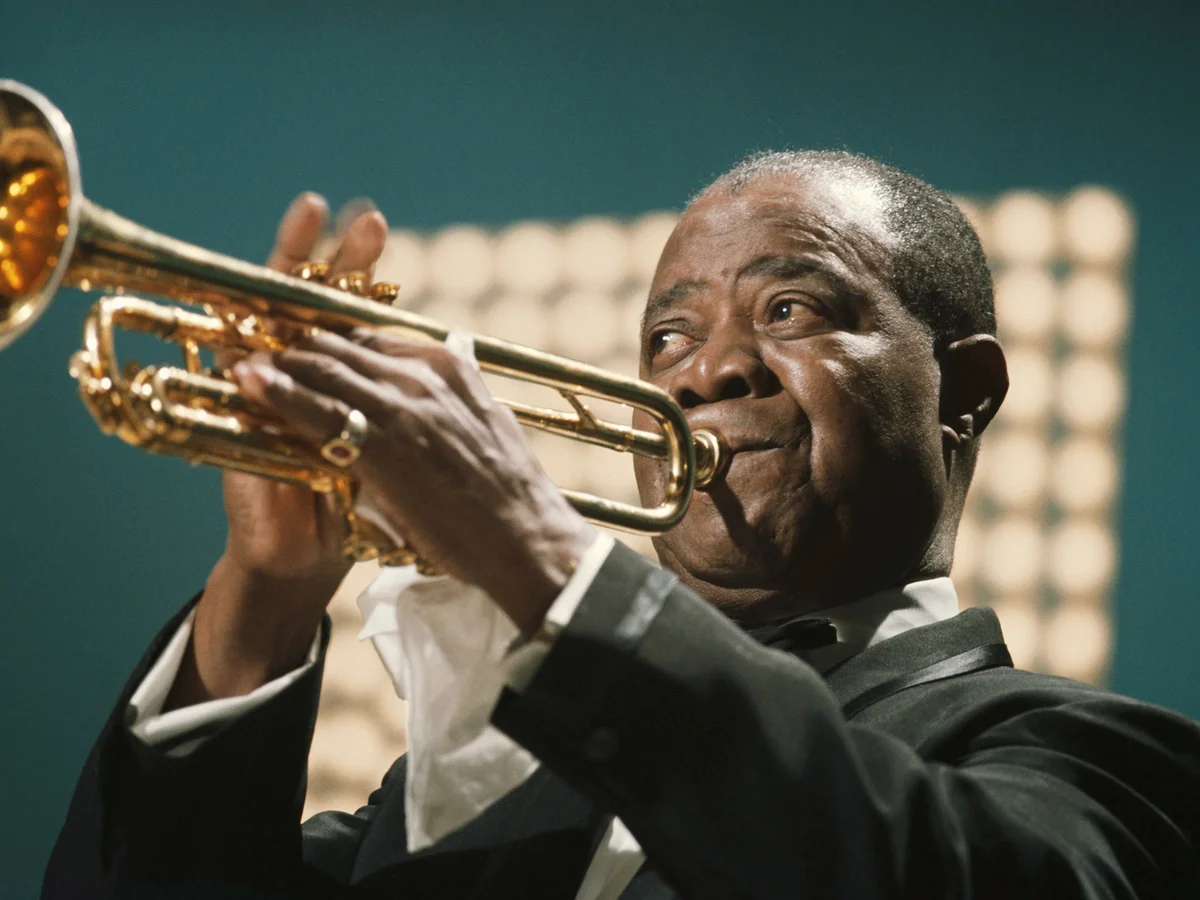
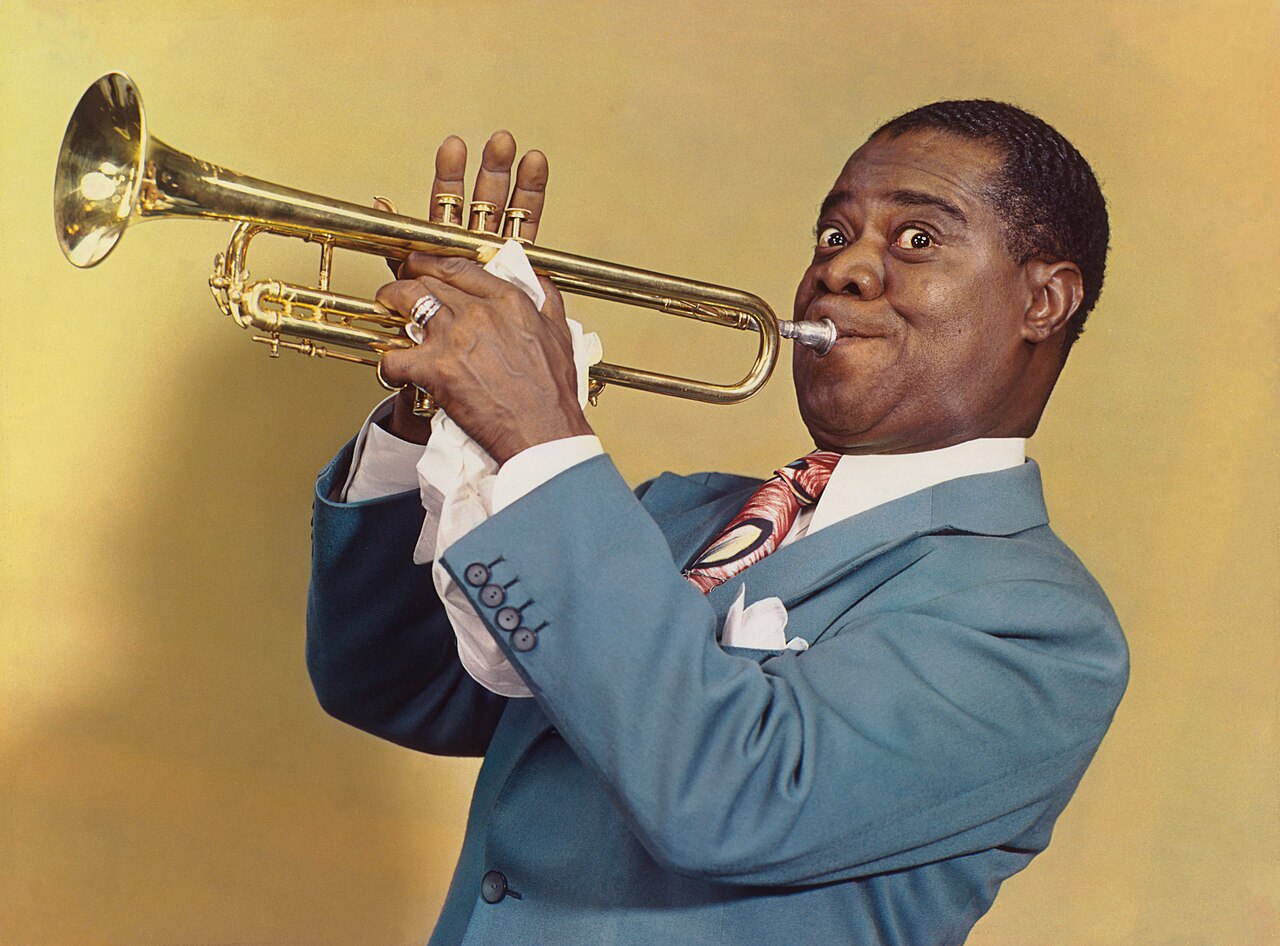
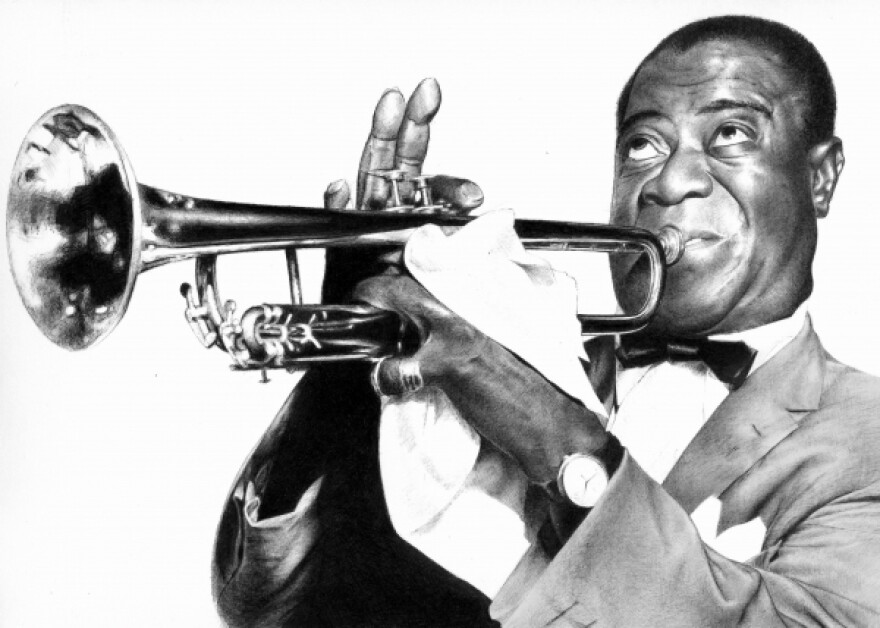
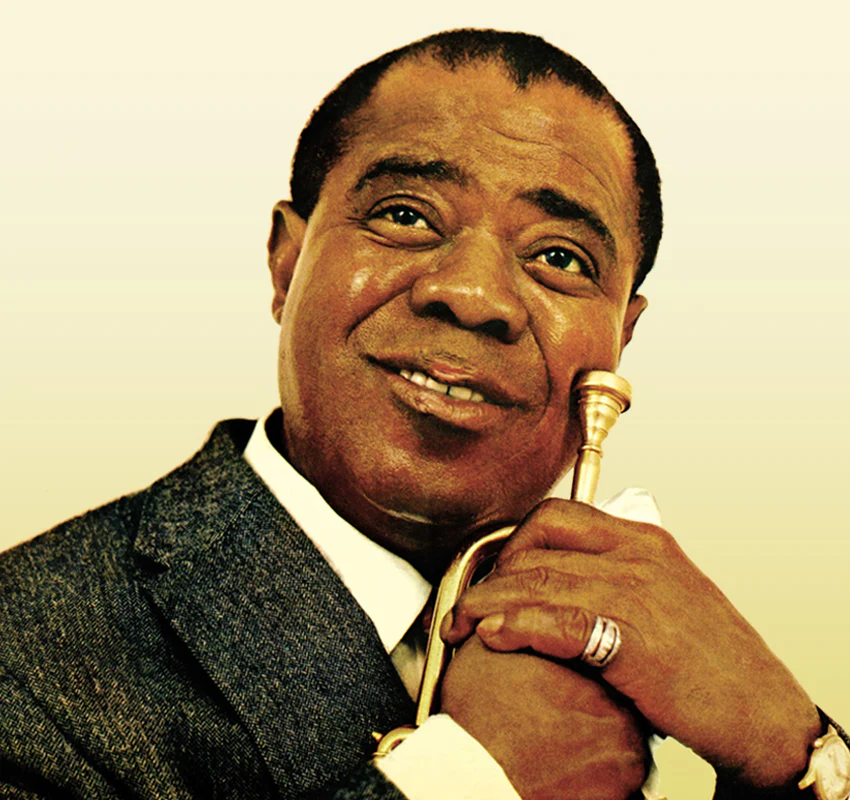
One of the pioneers and the most well-known Black musicians during the Harlem Renaissance was Louis Armstrong. He and his music inspired and influenced other Black artists of the Harlem Renaissance. He was born Louis Daniel Armstrong on August 4, 1901, though he claimed July 4 as his birthday, into a poverty-ridden section of New Orleans, LA. to a couple suffering from poverty. He spent his youth in a rough neighborhood known as "The Battlefield", in the southern section of town. His family did not last long because his father left the family for another woman when he was an infant and his mother did not take care of him. Later, Armstrong’s mother also left to become a prostitute, putting him and his younger sister in the care of his grandmother when he was five years old. Prostitution, shootings, knifings, drunkenness, and gambling were common in the area where Armstrong spent the first years of his life.
Armstrong’s first introduction to music was at the Fisk School for Boys at the age of six, a school that accepted black children in the racially segregated school system of New Orleans. As a child he worked at odd jobs and sang in a boys’ quartet. He had to quit school in 5th grade in order to support himself. Armstrong joined a quartet of boys who sang in the streets for money. Cornetist Bunk Johnson said he taught the eleven-year-old to play by ear at Dago Tony's honky tonk. In 1912, he was sent to the Colored Waif’s Home for Boys because he got arrested by a police officer for firing his stepfather’s gun in the air during a New Year’s Eve celebration. Life at the home was spartan. Mattresses were absent, and meals were often little more than bread and molasses. But this proved to be a pivotal time in his life. Life looked bleak for the youngster but music turned out to be his salvation. While staying there, he studied music there and played cornet and bugle in the school band, eventually becoming its leader. With this band, the 13-year-old Armstrong attracted the attention of Kid Ory.
He was released on June 16, 1914, and did manual labor while trying to establish himself as a musician. The disciplined atmosphere and the Waif’s Home inspired young Armstrong to work hard on mastering the cornet. After being released from that place in 1914, he sought to begin his career as a musician as he worked to support himself. One of the greatest cornet players in town, Joe “King” Oliver, began acting as a mentor to young Armstrong, showing him pointers on the horn and occasionally using him as a sub. When Oliver moved up North in 1918, he recommended that the youngster get his spot with trombonist Kid Ory's pacesetting band. By then, Louis Armstrong had a beautiful tone, wide range and exciting style on the cornet. Beginning in 1919, Armstrong spent his summers playing on riverboats with a band led by Fate Marable. It was on the riverboat that Armstrong honed his music reading skills and eventually had his first encounters with other jazz legends, including Bix Beiderbecke and Jack Teagarden.
Fame beckoned in 1922 when, King Oliver, then leading a band in Chicago, sent for Armstrong to join the King Oliver Creole Jazz Band, led by his mentor and father-figure, Joe Oliver. The Creole Jazz Band was playing at the popular Lincoln Gardens Cafe, which catered to a prospering and growing African-American population. In 1922, Louis Armstrong moved to Chicago to play in a Creole Jazz Band led by his mentor and father-figure, Joe Oliver. The Creole Jazz Band was playing at the popular Lincoln Gardens Cafe, which catered to a prospering and growing Black population. During this time, Louis' musicianship increased as did his reputation as a highly talented cornetist. He was first recorded in 1923 by Gennett Records while playing with the Creole Jazz Band. Because Oliver was the lead cornetist and took care of the melody, Armstrong was mostly featured playing harmonies in ensembles, adding to the power of the group.
However it was soon apparent to the other musicians, including pianist Lillian Harden, that he would not be the second cornetist to anyone for long. Lil Hardin was one of the most sought-after jazz pianists on the South Side of Chicago in the early 20s. She was playing piano in King Oliver's Creole Orchestra when Oliver sent for Louis to move up from New Orleans and play second cornet in his ground-breaking jazz band. Louis Armstrong was smitten with Lil. Their personal relationship grew as their musical careers blossomed. Louis and Lil Armstrong married on February 5, 1924, after dating for about two years. Lil Hardin Armstrong, was very influential in his career. She wanted him to be as famous and wealthy as possible, well at least as famous as his boss. At her suggestion, Armstrong began playing classical music in church concerts to broaden his skills and dressing more stylishly to offset his girth. She made it clear she felt Oliver was holding Armstrong back and urged Armstrong to seek more prominent billing and develop his style apart from the influence of Oliver.
Lillian Armstrong persuaded her new husband to accept an offer to go to New York and join the Fletcher Henderson Orchestra in 1924. Armstrong and Oliver parted amicably. Henderson had the top Black band of the era although his orchestra, while possessing fine musicians and excellent sight-readers, had not yet learned how to swing. This is where Armstrong began to change the direction of jazz. At Armstrong’s first rehearsal with Henderson, the other musicians initially looked down on the newcomer because of his out-of-date clothes and rural manners. But their opinions changed as soon as Armstrong played his first notes. He made every note count, used space dramatically, built up his solos to a climax and “told a story” in his playing. He switched to the trumpet to blend in better with the other musicians in his section. He switched to the trumpet to blend in better with the other musicians in his section.
In forming his distinctive playing style, Armstrong built on the influences of his earlier jazz trumpeters and also looked for more unorthodox sources of inspiration. His improvisations drew on the styles of earlier New Orleans cornet and trumpet players like Bunk Johnson, Freddie Keppard, and especially Joe “King” Oliver. It was largely due to Armstrong's powerful playing that jazz changed into a music that put the focus on brilliant and adventurous soloists. During his year with Henderson, Armstrong became a major influence not only on other brass players but on musicians of all instruments. Armstrong's influence on Henderson's tenor sax soloist, Coleman Hawkins, can be judged by listening to the records made by the band during this period. His swinging solos were emulated by others and, by the time he moved back to Chicago in late-1925, jazz had moved a decade ahead of where it was in 1923.
Armstrong made a huge impact during the "Roaring Twenties" within the jazz world. His music touched many, including a well-known writer during that time named Langston Hughes. Hughes admired Armstrong and acknowledged him as one of the most recognized musicians during the era. Hughes created many books that upheld the central idea of jazz and gave recognition to Armstrong. Hughes felt that Armstrong was one of the most important persons to be part of the Harlem Renaissance's newfound love of Black culture. The sound of jazz, along with many other musicians such as Armstrong, helped shape Hughes as a writer. Being known as "The World's Greatest Trumpet Player" during this time, Armstrong continued his legacy and continued a focus on his own vocal career.
It was during this time that his sound revolutionized jazz, containing some of his most brilliant trumpet playing. Those timeless sessions also introduced Armstrong as a singer. His vocal improvisations and the powerful feeling of swing that he brought to everything he sang loosened up the more formal style of his contemporaries. Where many singers would stick closely to a pop song’s original melody in performance, Armstrong felt free to introduce swinging riffs and melodic variations. In the process, he turned every song that he sang into a reflection of his own fun-loving personality. His popularity was phenomenal, and throughout the 1920s he was one of the most sought-after musicians in both New York and Chicago. While in New York, Armstrong cut dozens of records as a sideman, creating inspirational jazz with other greats, such as Sidney Bechet, and backing numerous blues singers, including Bessie Smith.
Louis Armstrong’s improvisations permanently altered the landscape of jazz by making the improvising soloist the focal point of the performance. From the beginning of his career as a bandleader, Armstrong created ensembles to showcase his spectacular trumpet playing. While his small group recordings of 1925-28 made Armstrong a sensation among instrumentalists and singers, altering the course of jazz, it was in a third area that Armstrong became world famous. In 1929 he began recording regularly with a big band and was usually heard in that setting up until 1947. Rather than mostly performing jazz originals and New Orleans standards as earlier, Armstrong explored popular songs from the Great American Songbook, changing the compositions of Gershwin, Porter, Berlin, Rodgers and others into jazz through his interpretations. The popularity he gained brought together many Black and White audiences to watch him perform.
As with his trumpet playing, Armstrong's vocal innovations served as a foundation stone for the art of jazz vocal interpretation. The uniquely gravelly coloration of his voice became a musical archetype that was much imitated and endlessly impersonated. His scat singing style was enriched by his matchless experience as a trumpet soloist. He stayed in New York almost a year before he returned to Chicago. Back in Chicago, Lil set up a recording session with Okeh for him as well as a gig at the Dreamland Cafe, this time with a new group, "The Hot Five and Seven". He gathered three musicians he had played with in New Orleans: Kid Ory, Johnny Dodds and Johnny St. Cyr. Lil Hardin-Armstrong, his wife, was on the piano and usually no drummer. Among the Hot Five and Seven records were "Cornet Chop Suey", "Struttin' With Some Barbecue", "Hotter Than That", and "Potato Head Blues", all featuring highly creative solos by Armstrong.
Armstrong voyaged back to New York where he played in the pit orchestra for the musical Hot Chocolates, an all-Black revue written by Andy Razaf and pianist Fats Waller, making a cameo appearance as a vocalist. Armstrong’s popularity continued to grow in Chicago throughout the 1920s, as he began playing other venues, including the Sunset Café and the Savoy Ballroom. Then in 1928, Armstrong turned to a more modern small band, collaborating with Earl Hines and Zutty Singleton. Trumpet, piano, and drums dominated, there being no further pretense of New Orleans equality. Hines and Armstrong became fast friends and successful collaborators. They formed a potent team and made some of the greatest recordings in jazz history in 1928, including their virtuoso duet, “Weather Bird,” and “West End Blues.” The latter performance is one of Armstrong’s best known works, opening with a stunning cadenza that features equal helpings of opera and the blues. With its release, “West End Blues” proved to the world that the genre of fun, danceable jazz music was also capable of producing high art.
During the 1930’s, Armstrong toured and recorded with large groups, both in the United States and in Europe. He worked off and on with such bandleaders and musical directors as Luis Russell, Chick Webb, and Les Hite. While he was beloved by musicians, he was too wild for most critics, who gave him some of the most racist and harsh reviews of his career. It was at the Sunset Café that Armstrong accompanied singer Adelaide Hall. During Hall's tenure at the venue, she experimented, developed, and expanded her scat singing with Armstrong's guidance and encouragement. Armstrong had hopes of performing on Broadway. However, his Broadway dreams were not realized. In fact the depression had so affected the New York music scene, he was struggling just to find a gig each night. In 1930 he left New York and traveled to California looking for work. He played at the New Cotton Club in Los Angeles with Lionel Hampton on drums.
The band drew the Hollywood crowd, which could still afford a lavish nightlife, while radio broadcasts from the club connected with younger audiences at home. Bing Crosby and many other celebrities were regulars at the club. Greeted by receptive audiences and popularity he stayed until 1931 and returned to Chicago. Before he went back to Chicago, Armstrong appeared in his first movie, Ex-Flame. He was also convicted of marijuana possession but received a suspended sentence. Armstrong was a heavy marijuana smoker for much of his life and described marijuana as "a thousand times better than whiskey. He played in bands more in the Guy Lombardo vein, and he recorded more standards. From Chicago he began to tour overseas, a major milestone for any performer, especially a young Black musician. It was in England that he won the nickname “Satchmo,” a distortion of “satchelmouth,” which described the extent to which his cheeks puffed out when he played the trumpet, although his fellow musicians favored the sobriquet "Pops".
After returning to the United States, Armstrong undertook several exhausting tours. His wife Lillian was also suing Armstrong following the couple’s split the previous year. Armstrong hired Joe Glaser as his new manager, a tough mob-connected wheeler-dealer who began straightening out his legal mess, mob troubles, and debts. Glaser had mob ties of his own, having been close with Al Capone. But he had loved Armstrong from the time he met him at the Sunset Café, which Glaser had owned and managed. Armstrong put his career in Glaser’s hands and asked him to make his troubles disappear. Glaser did just that. Within a few months, Armstrong had a new big band and was recording for Decca Records. Armstrong also began to experience problems with his fingers and lips, aggravated by his unorthodox playing style. As a result, Armstrong branched out, developing his vocal style and making his first theatrical appearances.
Armstrong appeared in movies again, including Crosby's 1936 hit "Pennies from Heaven". In 1937, Armstrong substituted for Rudy Vallee on the CBS radio network and became the first African American to host a sponsored national broadcast. After spending many years on the road, Armstrong settled permanently in Queens, New York, in 1943 with his fourth wife, Lucille Wilson, the woman who was to be his wife for the rest of his life. Although subject to the vicissitudes of Tin Pan Alley and the gangster-ridden music business, as well as anti-Black prejudice, Armstrong continued to develop his playing. Bookings for big bands tapered off during the 1940s due to changes in public tastes. Ballrooms closed, and competition from other types of music, especially pop vocals, became more popular than big band music. Under such circumstances, it became impossible to finance a 16-piece touring band.
A widespread revival of interest in the 1940s in the traditional jazz of the 1920s made it possible for Armstrong to consider a return to the small-group musical style of his youth. With the decline of swing music in the post-World War II years, Armstrong broke up his big band in 1947. He formed a sextet called The Louis Armstrong All-Stars that made it possible economically for him to become a world traveler. They made their debut in Los Angeles on August 13, 1947. He started embarking on a constant touring schedule of swing standards and Dixieland. Although jazz styles changed into the 1940s, Armstrong stuck with what he knew best, singing in his low, warm, gravelly voice, superior trumpet playing, and an endearing ability to appeal to diverse audiences with his personality and smile. Louis Armstrong was the first jazz musician to appear on the cover of Time magazine on February 21, 1949.
By the 1950s, Armstrong was a widely beloved American icon and cultural ambassador who commanded an international fanbase even being nicknamed "Ambassador Satch." He was especially well-received in the newly independent nations of Africa, marked by such events as a 1956 concert celebrating Ghana's independence, attended by more than 100,000 Louis Armstrong fans. However, a growing generation gap became apparent between him and the young jazz musicians who emerged in the postwar era, such as Charlie Parker, Miles Davis, and Sonny Rollins. The postwar generation regarded their music as abstract art and considered Armstrong's vaudevillian style, half-musician and half-stage entertainer. They saw Armstrong’s stage persona and music as an old-fashioned out-of date performer and criticized him in the press. Armstrong called bebop "Chinese music". While touring Australia in 1954, he was asked if he could play bebop. "'Bebop?' he husked. 'I just play music. Guys who invent terms like that are walking the streets with their instruments under their arms.'"
Armstrong’s previous silence on racial issues changed in 1957, when the musician saw the Little Rock Central High School integration crisis on television. Arkansas Governor Orval Faubus sent in the National Guard to prevent the Little Rock Nine, a group of nine Black students, from entering the public school. When Armstrong saw this, as well as White protesters hurling invective at the students, he blew his top to the press, telling a reporter that President Dwight D. Eisenhower had “no guts” for letting Faubus run the country. “The way they are treating my people in the South, the government can go to hell,” Armstrong said. His words made front-page news around the world. Although he had finally spoken out after years of remaining publicly silent, he received criticism at the time from both Black and White public figures. Not a single jazz musician who had previously criticized him took his side.
Armstrong continued a grueling touring schedule into the late ’50s, and it caught up with him in 1959 when he had a heart attack while traveling in Spoleto, Italy. The musician didn’t let the incident stop him, however. After taking a few weeks off to recover, he was back on the road, performing 300 nights a year into the 1960s. Armstrong was still a popular attraction around the world in 1963 but hadn’t made a record in two years. That December, he was called into the studio to record the title number for a Broadway show that hadn’t opened yet, "Hello, Dolly!" The record “Hello Dolly!" was released in 1964 and quickly climbed to the top of the Billboard Hot 100, hitting the No. 1 slot in May 1964. The chart-topper even dethroned The Beatles at the height of Beatlemania. It also earned Armstrong his only Grammy Award for Best Male Vocal Performance. This newfound popularity introduced Armstrong to a new, younger audience. By 1968, Armstrong’s grueling lifestyle had finally caught up with him. Heart and kidney problems forced him to stop performing in 1969.
Armstrong died in his sleep on July 6, 1971, at his home in the Queens borough of New York City. He was a month shy of his 70th birthday. His importance to jazz, whether through his solos, singing or ability to win over listeners, cannot be measured. The history of jazz, American music and music in general would be much different if there had not been Armstrong. He expanded the range of his instrument and all its brass cousins in ways that have affected composers and players in all forms of music. In his progression from simple beginnings to international celebrity, he became arguably both the most beloved and the most influential American musician of the twentieth century. Louis Armstrong directly influenced the Harlem Renaissance with his new style of jazz music, his performances, and the legacy he left on the world. Louis Armstrong remains an icon of American history and 20th century popular culture.