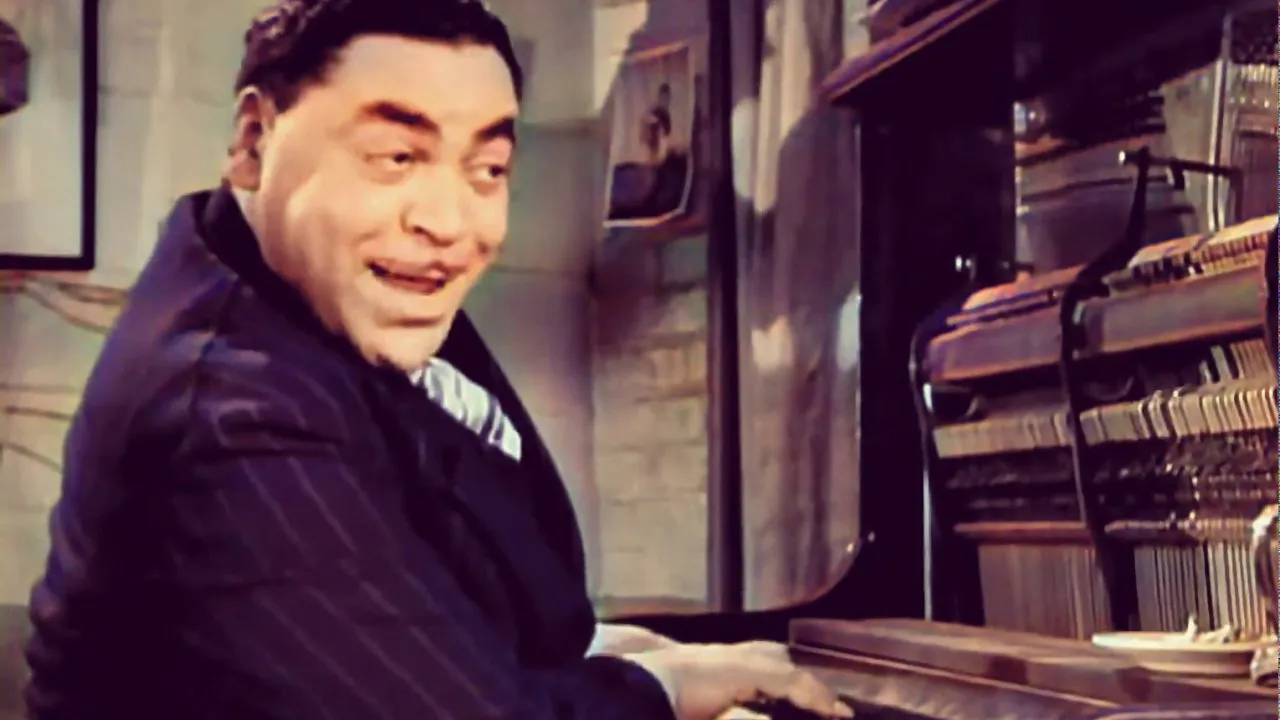
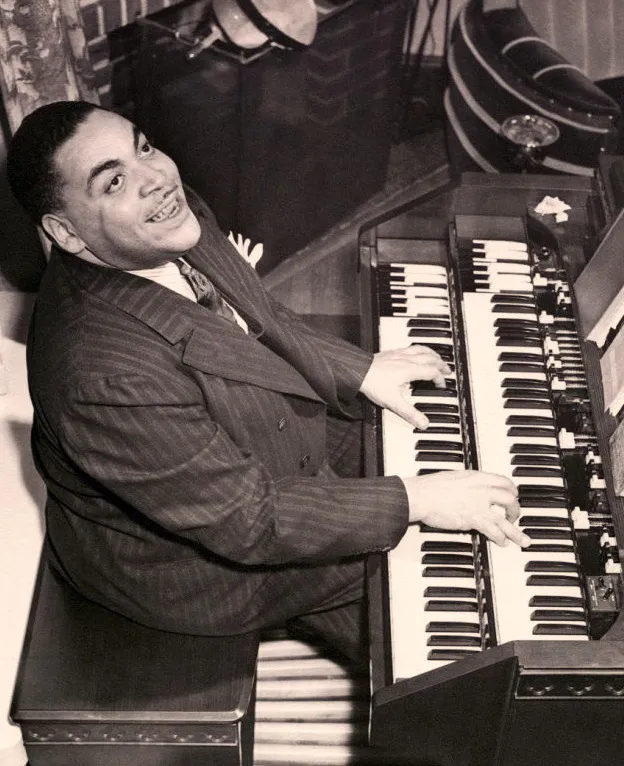
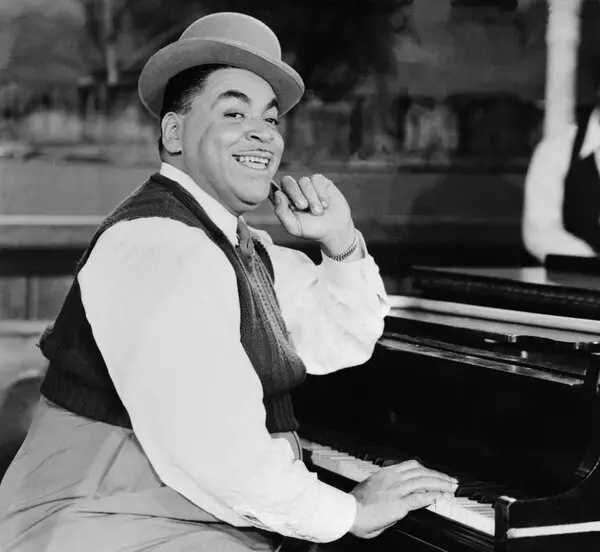
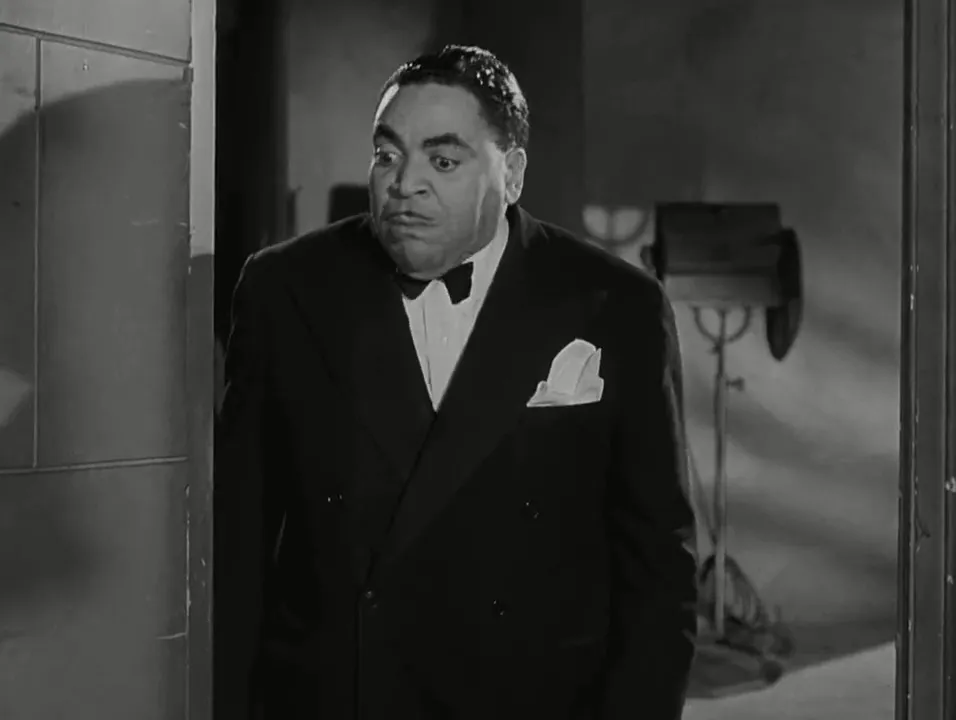
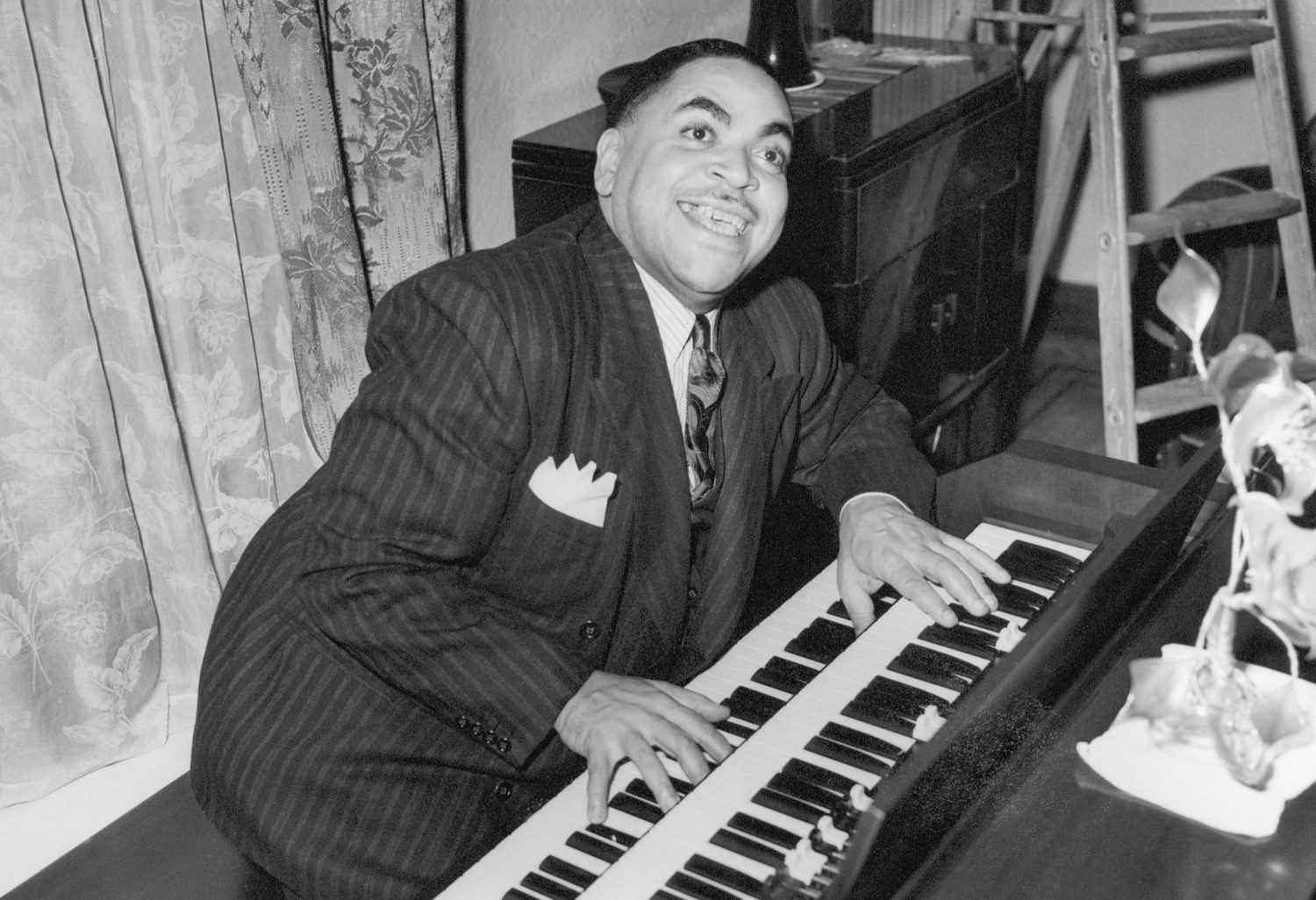
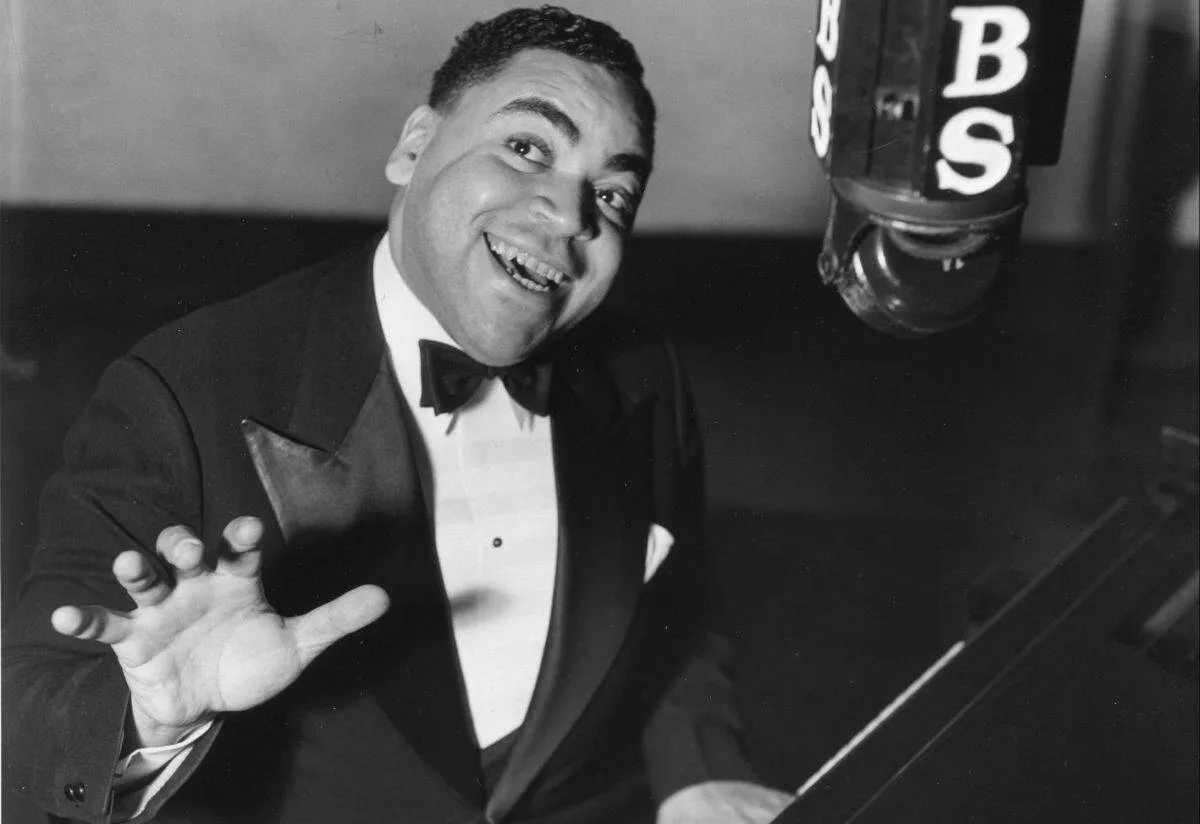
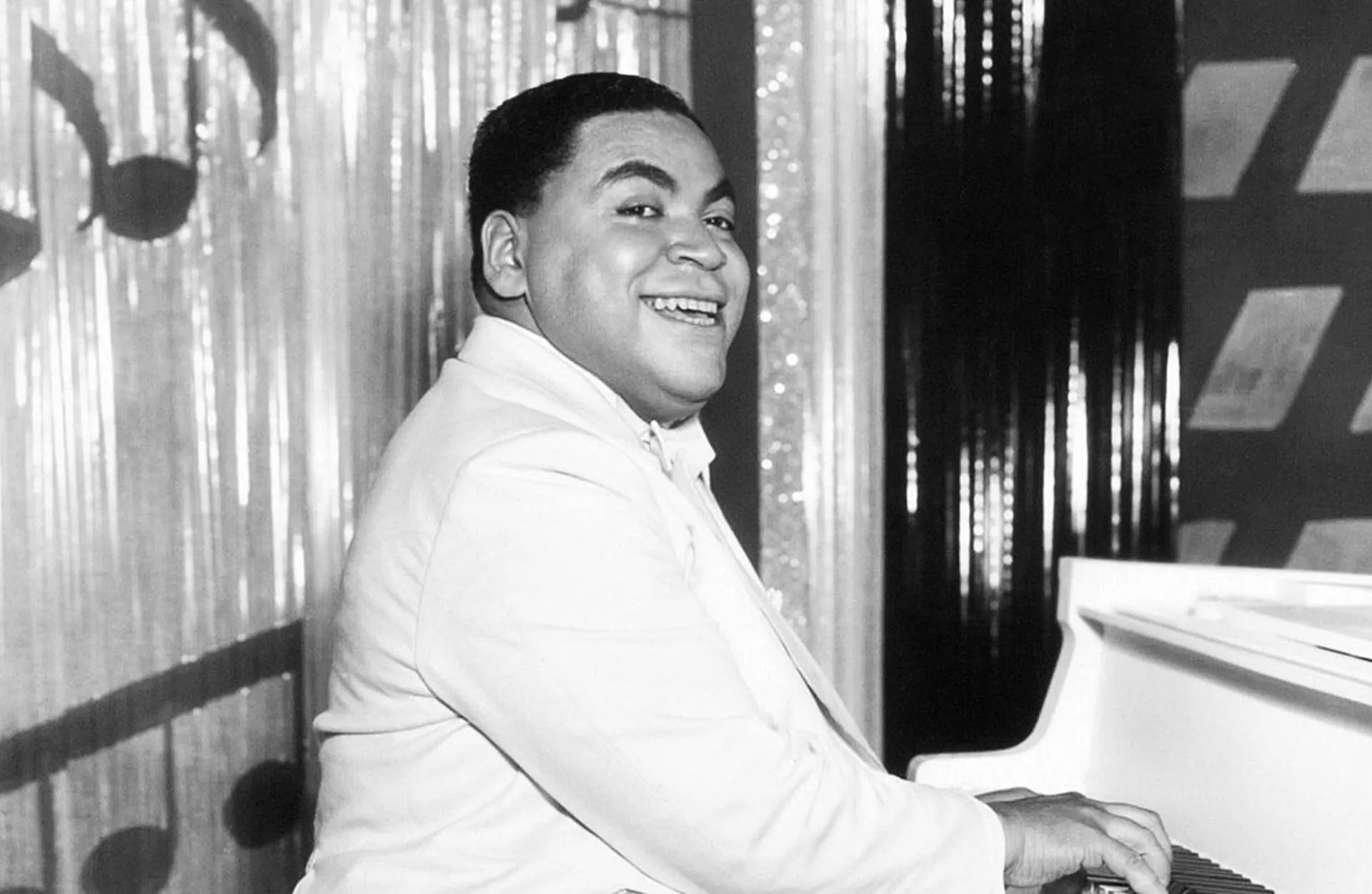
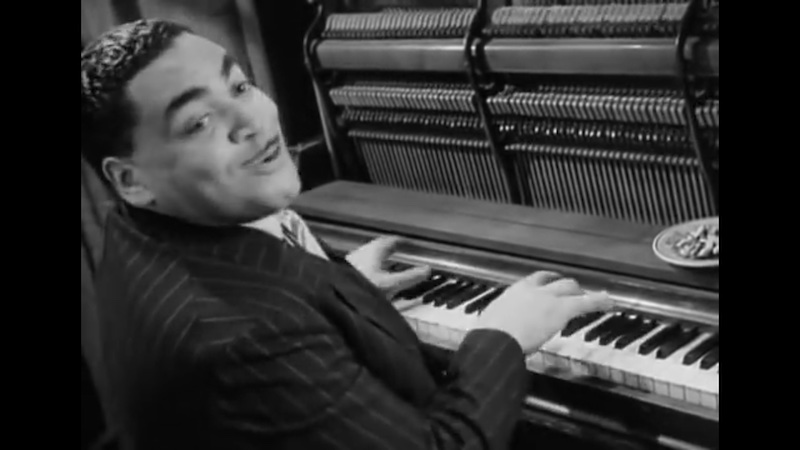
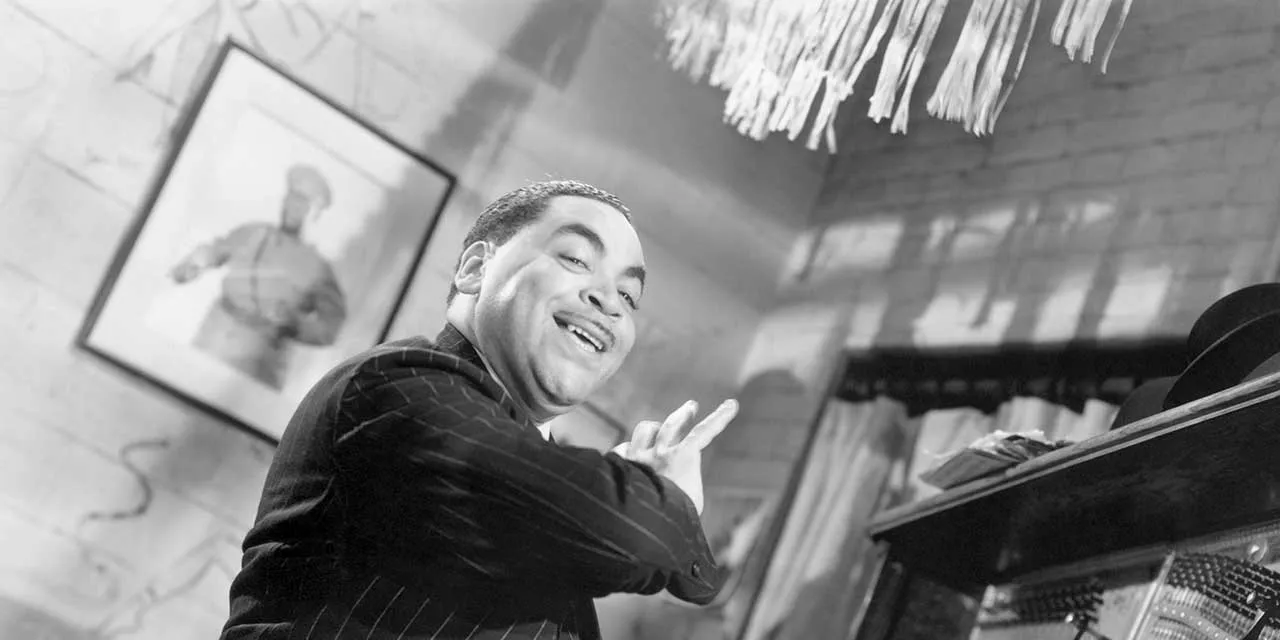
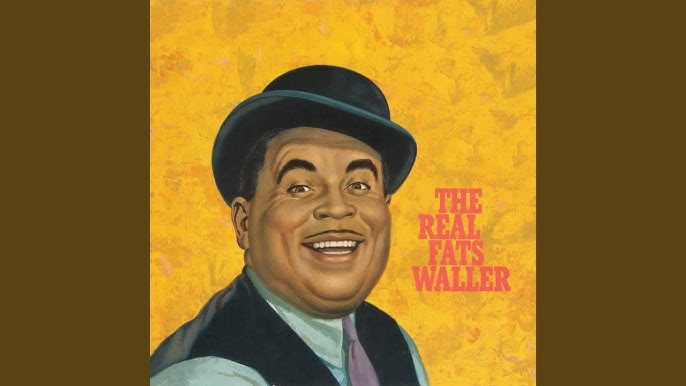
Jazz music's first organist and one of the giants of piano jazz Thomas Wright Waller, aka Fats Waller was born in New York City on May 21, 1904. Waller took up the piano at age six, playing in a school orchestra led by Edgar Sampson (of Chick Webb fame). The legendary pianist and conductor learned the organ at Abyssinian Baptist Church in New York City where his father was minister who was quite strict. He was taught to play by his mother and the church musical director. When he was a young boy his mother hired a piano tutor and he learned how to read and write music. In addition, his grandfather, Adolph Waller, was a well-known Virginia violinist. His father hoped that he would follow a religious calling rather than a career in jazz, characterizing the art form as "music from the Devil's workshop", but his love of jazz proved too great. He’d go on to learn a number of other instruments, including the violin, reed organ, and string bass.
Waller also took to playing piano for his school band. He was so focused on music that he even worked in a grocery store after school to pay for lessons. By the time he entered DeWitt Clinton High School, it was clear that jazz was his destiny. After his mother died when he was 14, Waller quit school and moved into the home of pianist Russell Brooks, where he met and studied with James P. Johnson, the founder of the stride school of jazz piano. Later, Waller also received classical lessons from Carl Bohm and the famous pianist Leopold Godowsky. Waller began his career as a singer and pianist in night clubs and accompanied in various theatres as an organist. In 1919, when he was still just 15, Waller became a professional pianist, working in cabarets and playing for silent movies in a stomping style that must have delighted (or confused) the audience. He found time to give a young Count Basie organ lessons during the shows.
As the 1920s began, Waller’s life was already quite busy. That year, he married his first wife, Edith Hatch. The couple welcomed son Thomas Waller Jr. the following year. In 1921 he was hired to play musical accompaniment on the organ at another silent movie theatre at a weekly salary of $50. A year later, Waller made his recording debut as a soloist for the Okeh label with "Birmingham Blues"/"'Muscle Shoals Blues". As his professional life took off, his personal life experienced a setback when his wife divorced him in 1923. In 1926 Waller married his second wife, Anita Rutherford. Also during that year he recorded a number of piano rolls for the QRS Company. During this time, he backed various blues singers and worked as house pianist and organist at rent parties and in movie theaters and clubs. He also accompanied singer Bessie Smith. He began to attract attention as a composer during the early- and mid-'20s.
In 1926 his career took off when he signed with the RCA Victor Label. A fixture on the New York jazz scene throughout the 1920s, Waller accompanied many blues and pop singers on records during 1923-29 including Gene Austin, Rosa Henderson, Alberta Hunter, Sara Martin, and Clarence Williams. Among his admirers was Al Capone, who allegedly had Waller kidnapped at gunpoint in Chicago in the mid-1920s, just to get him to play at the gangster's birthday party. Waller’s other accomplishments include vaudeville appearances with the famous blues singer Bessie Smith. Waller formed a most fruitful alliance with lyricist Andy Razaf that resulted in three Broadway shows in the late 1920s, "Keep Shufflin", "Load of Coal", and "Hot Chocolates."
His most significant early records for that label were a series of brilliant 1929 solo piano sides of his own compositions like "Handful of Keys" "Alligator Crawl" and "Smashing Thirds". Waller's astonishing keyboard facility and compositional fluency resulted in a steady succession of fine works for solo piano characterized by a combination of dazzling virtuosity and harmonic ingenuity. The most of popular was "Hot Chocolates," with the song "Ain't Ain’t Misbehavin'," (a huge hit for Louis Armstrong) opened in 1929 off Broadway but shortly afterwards was transferred to Broadway. This brought him both critical and commercial success. He became very popular despite the notion that jazz was not a “serious” form of music. As the leader of Fats Waller and His Buddies, he recorded the tracks "The Minor Drag" and "Harlem Fuss," and as a solo artist, he recorded "Handful of Keys" and "Valentine Stomp."
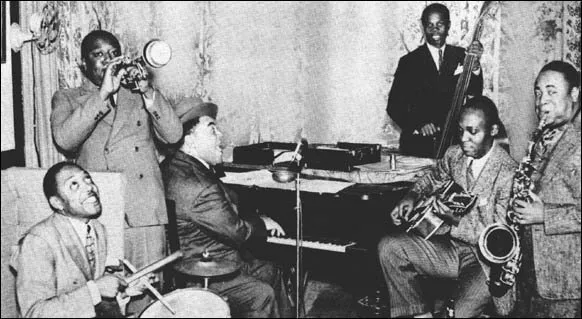
In the 1930s, Fats Waller ranked at the top among Black entertainers along with Louis Armstrong, Duke Ellington, Cab Calloway, and Bill “Bojangles” Robinson. Still, as 1930 began, few in the general public were familiar with Fats Waller, but that would soon change as he began to sing and display his abilities as a humorous personality. He had only recorded a solitary vocal in the 1920s (briefly on “Red Hot Dan”) but in 1931 Waller sang on solo piano-vocal versions of “I’m Crazy ‘Bout My Baby” and “Draggin’ My Heart Around,” and on sessions led by Jack Teagarden and Ted Lewis. In 1931 he toured Paris and upon his return to New York he formed his small combo "Fats Waller and His Rhythm Sextet", which went on to record hundreds of tracks, combining jazz with slapstick comedy.
Waller recorded for RCA hundreds of sides and also performed on radio broadcasts and starred in movies like "Hooray for Love", in which Waller had appeared earlier that year, and the success of this publicity activity led to him featuring in "King of Burlesque" in 1935. He was still continuing regular appearances on radio that dated back to 1923. After finally signing an exclusive Victor contract in 1934, he began the long-running, prolific series of records with "His Rhythm sextet", which won him great fame and produced several hits, including "Your Feet's Too Big," "The Joint Is Jumpin'" and "I'm Gonna Sit Right Down and Write Myself a Letter." As a composer and improviser, his melodic invention rarely flagged, and he contributed fistfuls of joyous yet paradoxically winsome songs like "Honeysuckle Rose," "Keepin' Out of Mischief Now," and the extraordinary "Jitterbug Waltz" to the jazz repertoire.
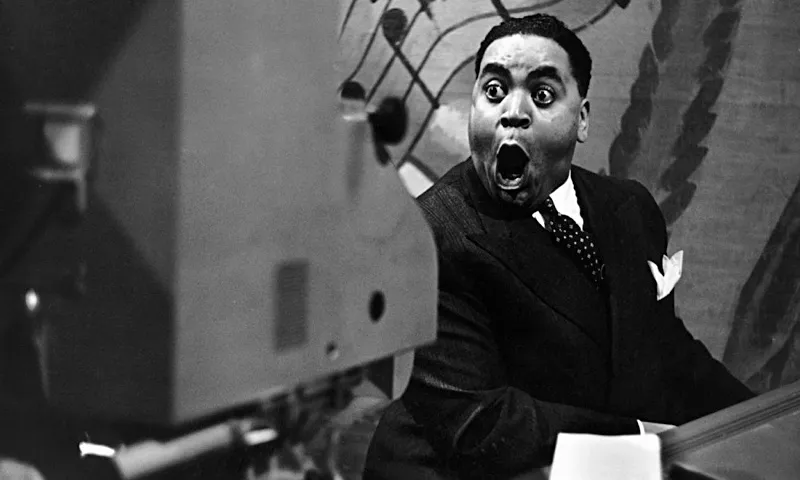
In radio and film, alike, he used slapstick comedy for laughs, but he grew tired of being typecast. He was serious about his craft and wanted his fans to view him in the same way. He toured Europe in 1938, where he was taken a little more seriously as an artist than the U.S. In addition to hotter numbers, he had opportunities to record spirituals on organ and he wrote and recorded the six-part “London Suite,” the most extensive work of his life and appeared on one of the first television broadcasts. The outbreak of war forced him to return to the home in 1939. He performed one more time at the Carnegie Hall and for the remainder of his life he toured the US especially the west coast. By the early 1940s Waller was earning a comfortable living as an entertainer.
In 1943, he took a role in the film "Stormy Weather" where he led an all-star band that included Benny Carter, Slam Stewart, Lena Horne, Bill Robinson, and the Nicholas Brothers. He also appeared regularly on radio. Waller's touring schedule of the United States escalated. During 1943, he wrote the first non-Black musical for Broadway by an African American, "Early to Bed", which featured a mostly White cast. Rarely, if ever, had an African American been hired to compose a White musical. Waller had maintained a heavy travel schedule, making cross-country trips from the East to the West Coast for live performances and acting roles. While traveling cross-country following performances on the West Coast, he had to cut his engagement short in order to return home.
Years of excessive drinking, overwork and his obesity took a toll on his health. He had already contracted severe influenza which led to complications. Finally, after becoming ill while playing a series of events at the Zanzibar Room in Hollywood, CA in December, 1943, Waller boarded the Santa Fe Chief train for the long trip back to New York. He had disregarded a doctor's recommendation to go to hospital and stop drinking. Fats Waller died of pneumonia in December, 1943, aboard the train during a stop at Union Station in Kansas City. He was 39 years old. The politician, civil rights activist, and pastor Adam Clayton Powell Jr. eulogized Waller before an audience of more than 4,200 people in Harlem’s Abyssinian Baptist Church. Well after his death, the music of Fats Waller continues to live on, with two of his recordings—"Ain't Misbehavin'" and "Honeysuckle Rose"—inducted into the Grammy Hall of Fame in 1984 and 1999, respectively.
Waller has won a number of posthumous honors as well, including inductions into the Songwriters Hall of Fame in 1970, the Big Band and Jazz Hall of Fame in 1989, and a Grammy Lifetime Achievement Award in 1993. Moreover, the 1978 Broadway Musical “Ain't Misbehavin'” featured a number of Waller’s hits and opened again on Broadway a decade later after its original run of more than 1,600 performances. His innovations in the Harlem stride style laid much of the basis for modern jazz piano. A widely popular star in the jazz and swing eras, he toured internationally, achieving critical and commercial success in the United States and Europe. Besides, given the fact that Waller influenced a long line of pianists of and after his time, including Count Basie (who studied with Fats), Teddy Wilson, Art Tatum, Thelonious Monk, Dave Brubeck and countless others, his impact has been truly profound. His innovations in the Harlem stride style laid the groundwork for modern jazz piano. He left a lasting importance as one of the greatest of all jazz pianists and as a gifted songwriter.