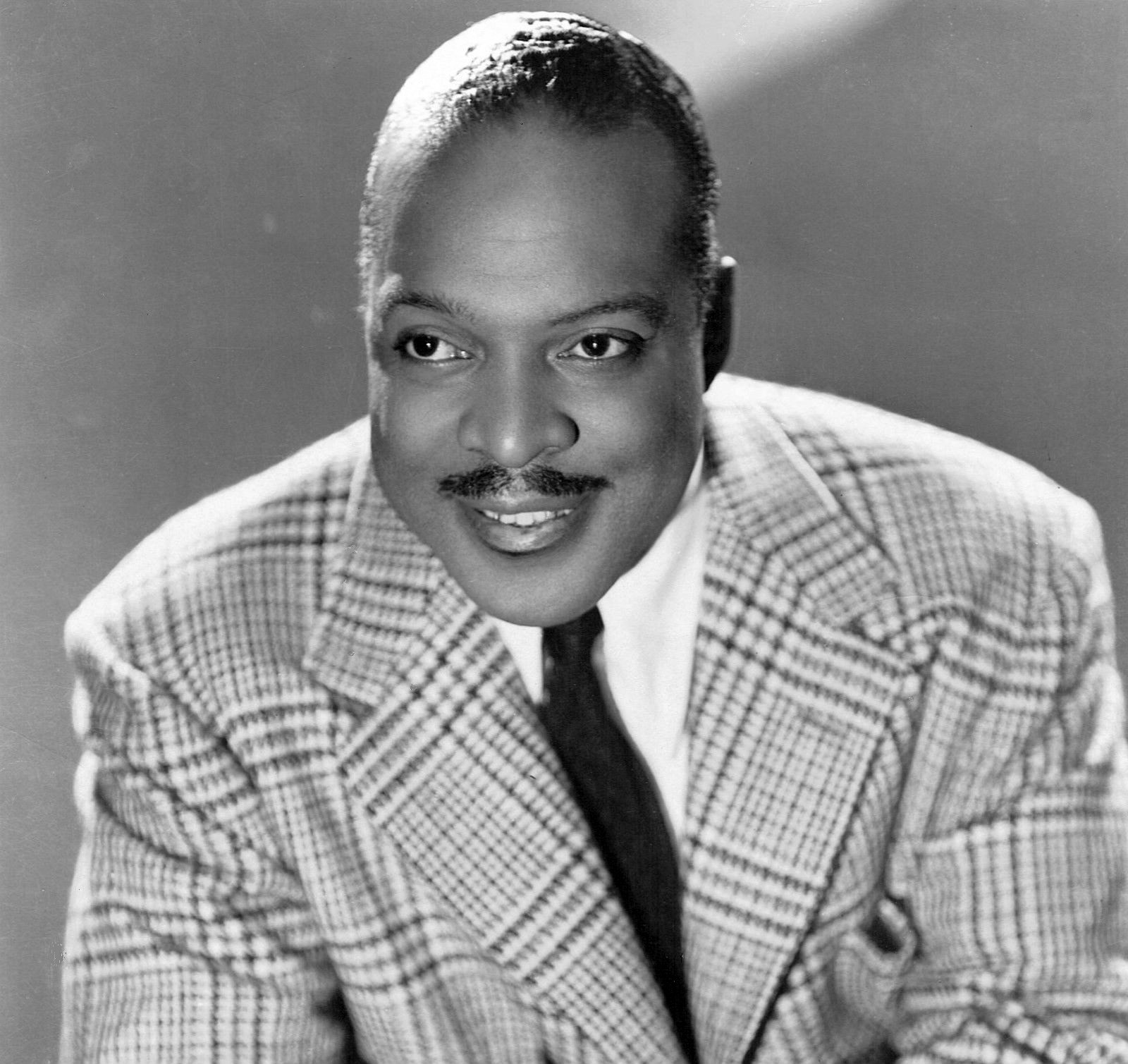
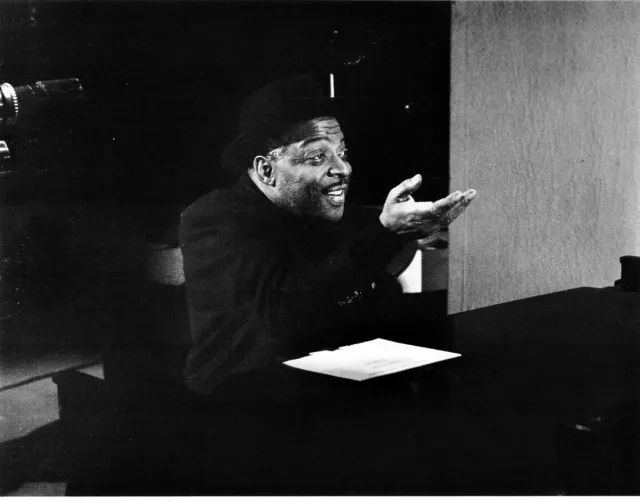
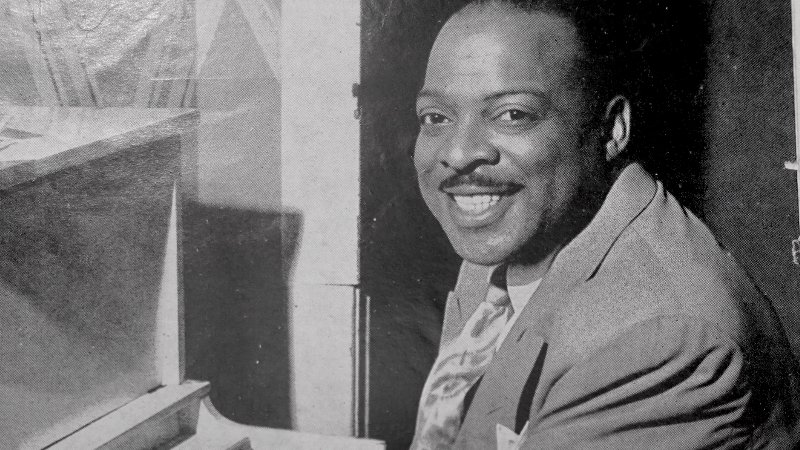
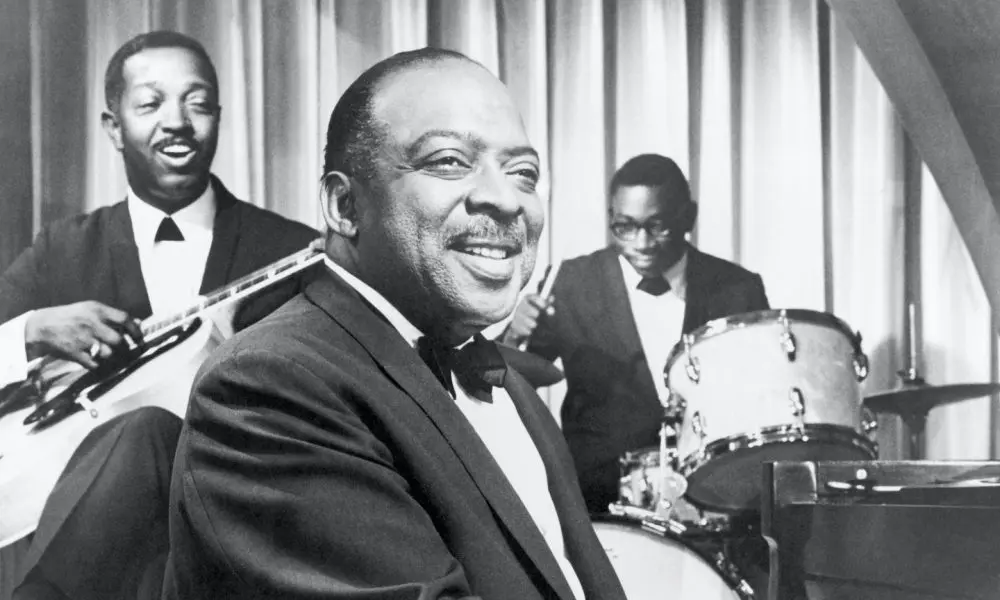
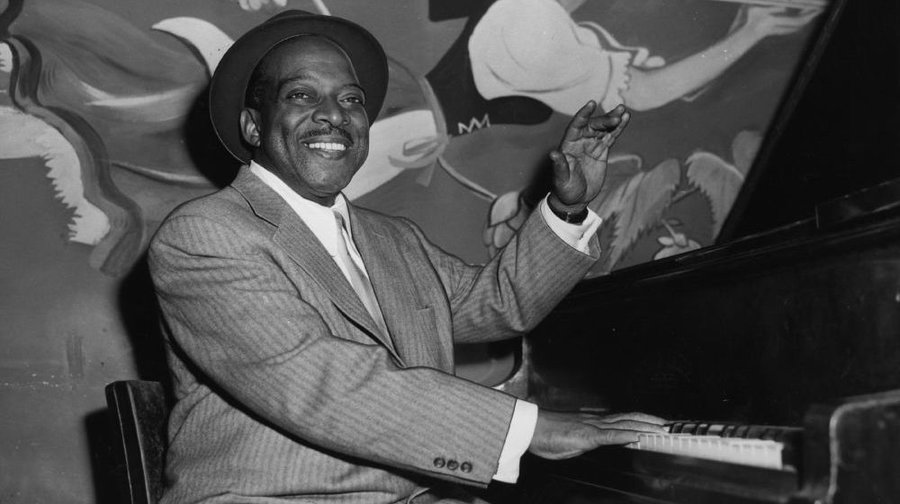
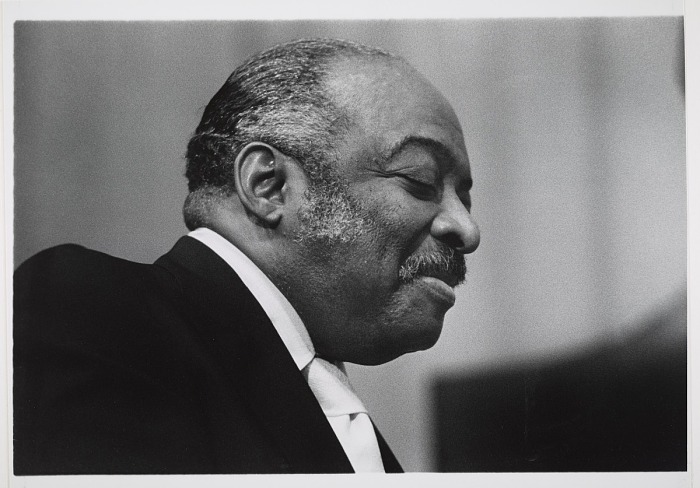
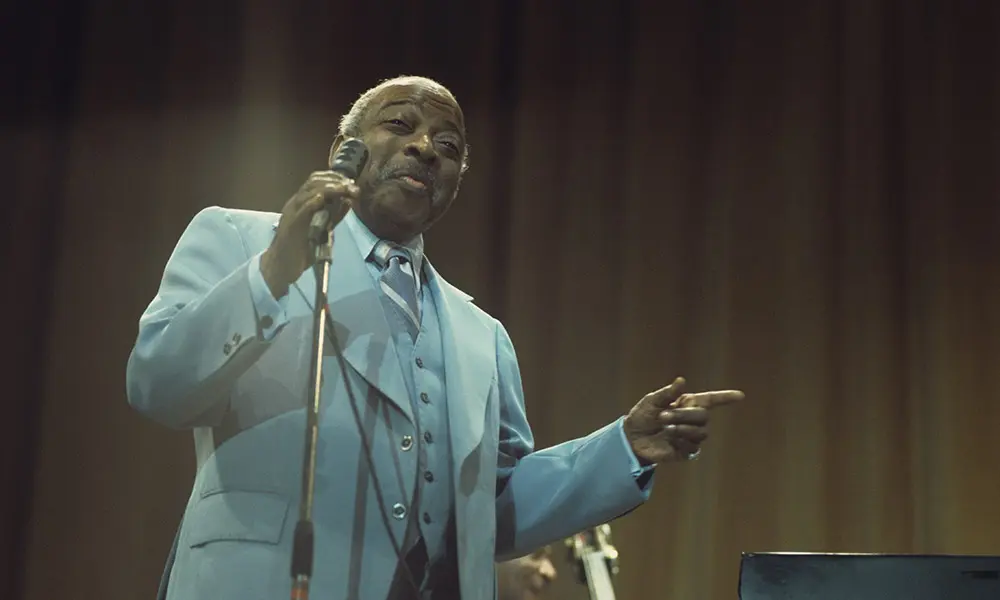
Count Basie was among the most important bandleaders of the swing era. William James “Count” Basie" was born on August 21, 1904, in Red Bank, New Jersey. During his youth, Basie’s mother taught him to play the piano. She later paid 25 cents for him to take lessons. His father worked as a coachman, caretaker, and later a handyman for wealthy families. As a young boy, Basie hated to see his parents working so hard, and vowed to help them get ahead. When he was in his teens, he began performing at various events. William James completed junior high school in Red Bank, but did not pursue further formal education, instead spending much of his time operating lights for vaudeville and to improvise piano accompaniment for silent films at the local movie theater. A projectionist taught him to rewind the reels, switch between projectors, and operate the spotlight for the vaudeville shows.
Although William was skilled with the piano he preferred the drums and he even dreamed of becoming a drummer. In a school band, William played the drums, but was discouraged when another boy, Sonny Greer, played better than him, so he decided to try his hand at the piano. Discouraged by the obvious talents of Greer, who also lived in Red Bank and became Duke Ellington's drummer in 1919, Basie at age 15 went back to the piano. The musicians played together in venues until Greer set out on his professional career. By now, Basie made a name for himself playing the piano at local venues and parties around town until he moved to New York City in search of greater opportunities. Around 1924 Basie moved to Harlem, a hotbed for jazz and the center of the Harlem Renaissance, where his career started to quickly take off. It was here that he befriended by two of the greatest stride piano players of the day, James P. Johnson, and Fats Waller and with Waller teaching Basie organ-playing techniques. Basie was touring as a pianist and accompanist on the major vaudeville circuits.
Basie himself became a fine stride pianist, as well as a proficient organist, learning that instrument while observing Waller's performances at the Lincoln Theater in Harlem. Shortly after he got there, he got a gig replacing Fats Waller with a touring vaudeville act. When he came back to Harlem, Willie “the Lion” Smith took him under his wing. He went out on tour with on the vaudeville circuits and work as a touring musician for bands led by June Clark and Elmer Snowden, and as accompanist to variety acts such as those led by Kate Crippen and Gonzelle White. White's group broke up in Kansas City in 1927, leaving him stuck in Kansas City. It was here that he was introduced to the big-band sound when he joined Walter Page’s Blue Devils in 1928, which he would see as a pivotal moment in his career, being introduced to the big-band sound for the first time. Basie now called Kansas City home.
Basie left the Blue Devils early in 1929 to play with other bands in the area, and the next year he heard Bennie Moten's band in Kansas City and joined them. But Moten was an expert piano player himself, and William fashioned a job for himself as the band’s staff arranger. He couldn’t write music at the time, but his ear was perfect. Eventually, Moten generously let Basie sit in on piano. After Moten’s death in 1935, Basie worked as a soloist before leading a band initially called the "Barons of Rhythm", a nine-piece band consisted of many former members of the Moten band – Walter Page (bass), Freddie Green (guitar), Jo Jones (drums), Lester Young (tenor saxophone) and Jimmy Rushing (vocals). The Barons of Rhythm were regulars at the Reno Club in Kansas City. Local radio broadcasts from the club drew the attention of record producer John H. Hammond and led to an eventual record deal.
During a radio broadcast of the band’s performance, the announcer wanted to give Basie’s name some pizazz and style. So he called the pianist “Count,” with Basie not realizing just how much the name would catch on as a form of recognition and respect in the music world. Little did Basie know this touch of royalty would give him proper status and position him with the likes of Duke Ellington and Earl Hines. Famed record producer and journalist, John Hammond, heard the band’s broadcast from the Reno Club, and began writing about the band to gain their attention and introduce the band to even bigger audiences. He even called Benny Goodman to tell him to give the band a listen. Hammond then traveled from New York to Kansas City just to hear the band and to meet Count Basie. The locals soon started calling Basie the "Jump King" because of the band's restless, driving rhythm. During this time the Basie band became one of the country's best-known swing bands. The Barons of Rhythm, soon expanded to fourteen members and became known as the "Count Basie Orchestra".
Hammond and Basie shared a lifelong friendship, with Hammond later featuring Basie during the famous “Spirituals to Swing” concerts at Carnegie Hall. Hammond soon started booking the band and shopping them to agents and record companies – forging their big break. In 1937 Basie took his group, Count Basie and His Barons of Rhythm, to New York to record their first album with Decca Records under their new name, "The Count Basie Orchestra". In December of 1938, the band debuted on Broadway, sending crowds jitterbugging up and down theater aisles. The Count Basie Orchestra had a slew of hits that helped to define the big band sound of the 1930s and ’40s and become one of the world’s leading big bands. Some of their notable chart toppers included "Jumpin’ at the Woodside", "Swinging the Blues", "Every Tub", "Taxi War Dance", and Basie’s own composition, "One O’Clock Jump", which became the orchestra’s signature piece. In 1941 the Basie band recorded King Joe, a tribute to boxer Joe Louis, which had lyrics by Richard Wright and vocals by Paul Robeson.
Hammond introduced Basie to Billie Holiday, whom he invited to sing with the band. (Holiday did not record with Basie, as she had her own record contract and preferred working with small combos). The band's first appearance at the Apollo Theater followed, with the vocalists Holiday and Jimmy Rushing getting the most attention. Next, Basie played at the Savoy, which was noted more for lindy-hopping, while the Roseland was a place for fox-trots and congas. In early 1938, the Savoy was the meeting ground for a "battle of the bands" with Chick Webb's group. Basie had Holiday, and Webb countered with the young singer Ella Fitzgerald. The publicity over the big band battle, before and after, gave the Basie band a boost and wider recognition. The fame of the Count Basie Orchestra grew further after a series of concerts at the Famous Door in New York City from July to November of 1938 were broadcast nationally on CBS radio stations.
After a decade long courtship, Basie married dancer Catherine Morgan, his second wife, on his birthday in 1942. On the West Coast, in 1942 the band did a spot in Reveille With Beverly, a musical film starring Ann Miller, and a “Command Performance” for Armed Forces Radio, with Hollywood stars Clark Gable, Bette Davis, Carmen Miranda, Jerry Colonna, and the singer Dinah Shore. Basie and his Orchestra appeared in five films, all released within a matter of months in 1943: "Hit Parade", "Reveille with Beverly", "Stage Door Canteen", "Top Man", and "Crazy House". He also scored a series of Top Ten hits on the pop and R&B charts. The war years caused a lot of members turn over, and the band worked many play dates with lower pay. Dance hall bookings were down sharply as swing began to fade, the effects of the musicians’ strikes of 1942–44 and 1948 began to be felt, and the public’s taste grew for singers. Count Basie Orchestra had continued success throughout the war years, but, like all big bands, it had declined in popularity by the end of the 1940s.
The big band era appeared to have ended after the war, and Basie disbanded the group, opting to lead smaller units for the next couple of years. However, in 1952, he resurrected the Count Basie Orchestra and led small bands between six and nine pieces. This new band was in high demand and embarked on a tour around the world (this became known as the New Testament Band, while the first Orchestra was the Old Testament Band). They played command performances for kings, queens and presidents, and issued a large number of recordings both under Basie’s name and as the backing band for various singers, most notably Frank Sinatra. Another milestone came with the 1956 album April in Paris, whose title track contained psyche-you-out endings that became a new band signature. In 1957, the Count Basie Orchestra became the first African American band to play the Waldorf-Astoria in New York City.
In 1961, Basie solidified his iconic status by performing at the inauguration of President John F. Kennedy. During the 1950’s and 1960’s, in addition to numerous recording sessions and domestic tours, the group toured Europe for the first time in 1954 and Japan in 1963. During the 1960s and '70s, Basie recorded with luminaries like Ella Fitzgerald, Frank Sinatra, Sammy Davis Jr., Jackie Wilson, Dizzy Gillespie and Oscar Peterson. Some argue Basie made some of his best work during this time. The first Grammy Awards were held in 1959, and the first African American Grammy winners were Ella Fitzgerald and Count Basie — with Fitzgerald being the very first. At the same 1959 ceremony, Count Basie became the first African American man to win a Grammy. Fitzgerald won for Best Female Pop Vocal Performance and Best Jazz Performance as a soloist, while Basie won for Best Jazz Performance by a Group and Best Performance by a Dance Band. A few of his songs were inducted into the Grammy Hall of Fame as well, including, "One O'Clock Jump", and "Lester Leaps In".
The Grammy ceremony took place in a year when Jim Crow segregation was still law across the South, when Black performers were routinely barred from hotels, television programs, and when the recording industry itself remained overwhelmingly White in its gatekeeping. Against that backdrop, the Grammys’ decision to honor Fitzgerald and Basie in major, non-segregated categories—not “race records,” not special citations, but the same competitive awards given to White artists—signaled a rare institutional acknowledgment of Black artistic excellence at the highest level of American culture. Their wins also challenged the industry’s own biases. In a year when the country was still fighting over school integration and basic civil rights, the Grammys’ first ceremony inadvertently placed two Black artists at the center of its definition of musical greatness, setting a precedent that the institution would spend decades struggling to live up to.
Basie was a true innovator leading the band for almost 50 years and recording on over 480 albums. He is credited for creating the use of the two “split” tenor saxophone, emphasizing the rhythm section, riffing with a big band, using arrangers to broaden their sound, and beautifully layering masterful vocalists. In 1983, Basie made his last performance at the Carlton Theatre / Monmouth Arts Center, just nine days removed from the death of his second wife, Catherine, to whom he had been married 43 years. In 1976, he suffered a heart attack, but returned to the bandstand half a year later. Basie’s health gradually deteriorated during the last eight years of his life. William James "Count" Basie died April 26, 1984 in Hollywood, FL. Basie was often recognized for his understated yet captivating style of piano playing and his precise, impeccable musical leadership. He as won a slew of awards and honors not only for his music, but for his humanitarianism and philanthropy around the world. Count Basie introduced several generations of listeners to the Big Band sound and is remembered by many who worked for him as being considerate of musicians and their opinions, modest, relaxed, fun-loving, dryly witty, and always enthusiastic about his music.