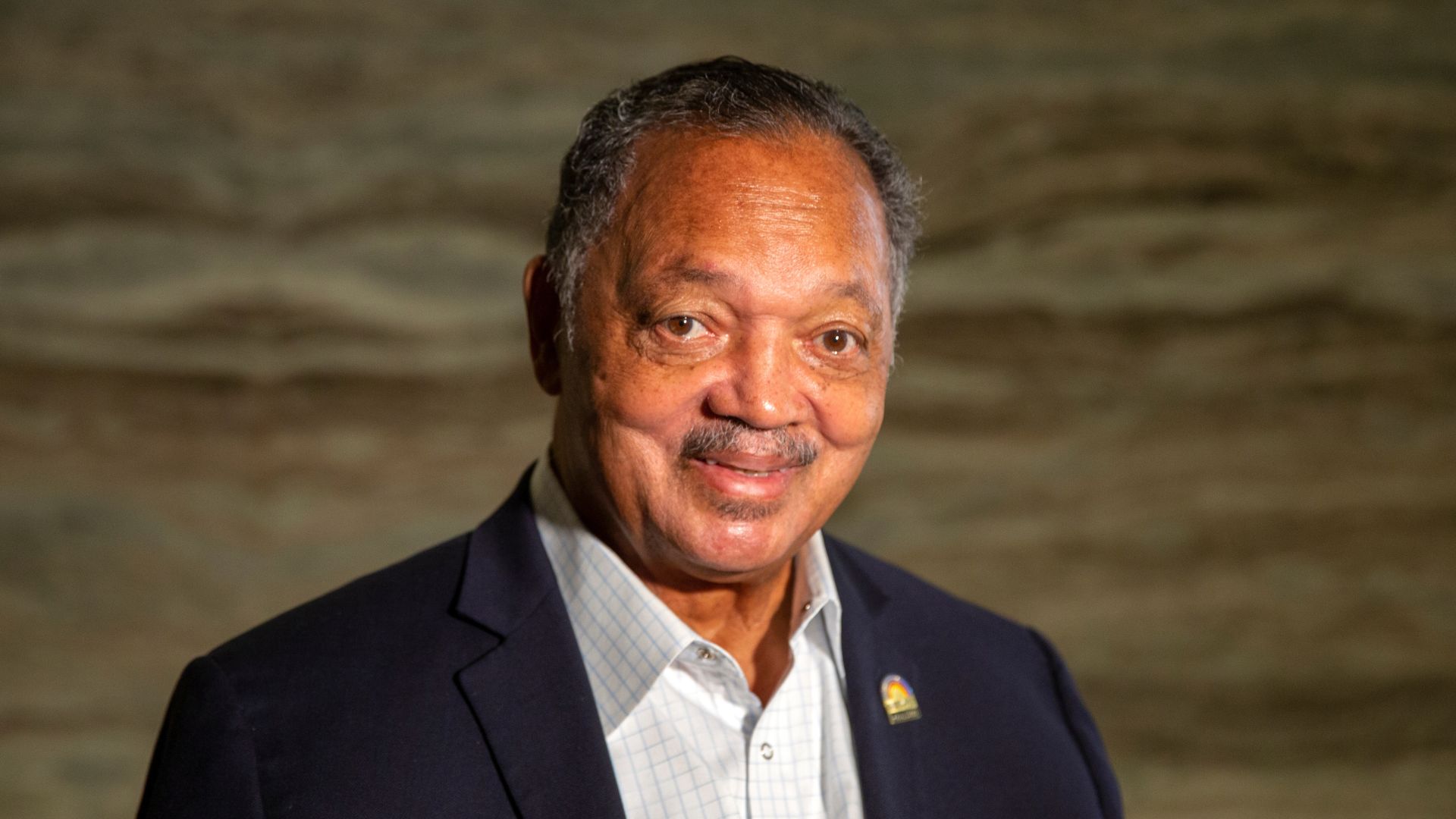
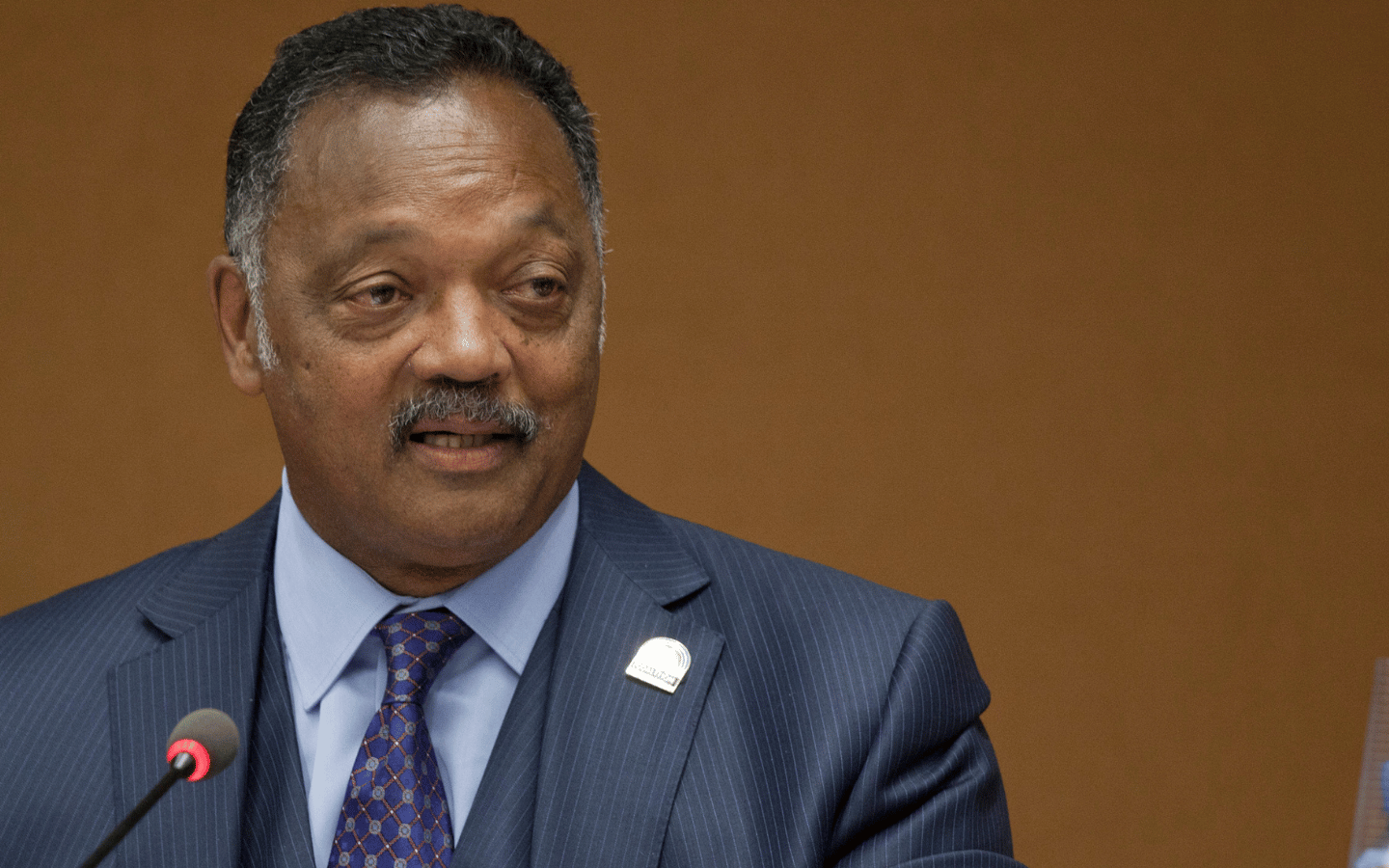
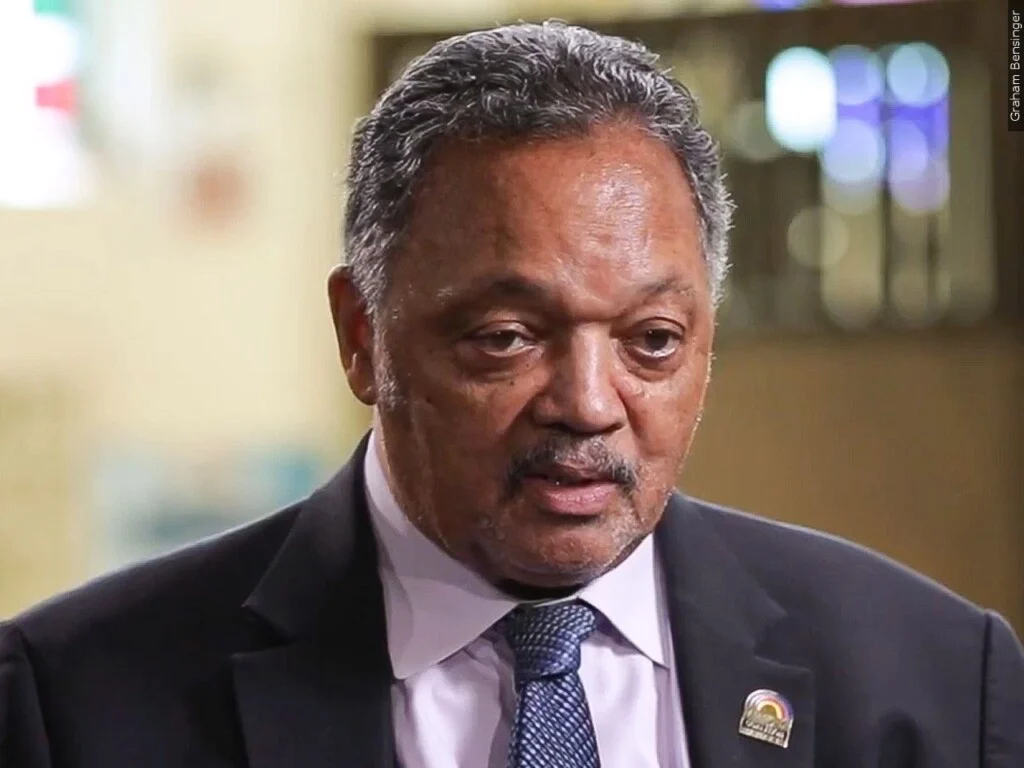
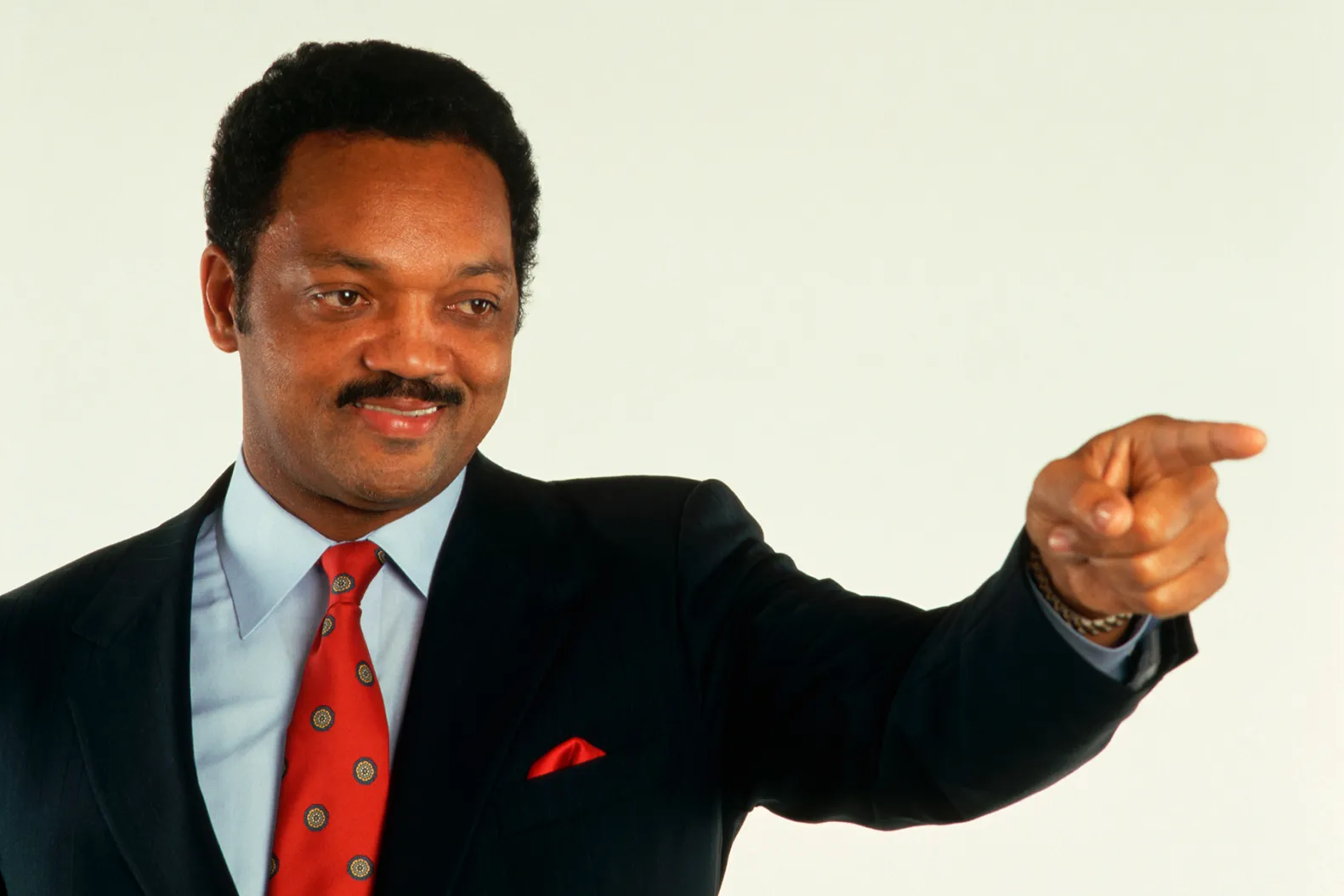
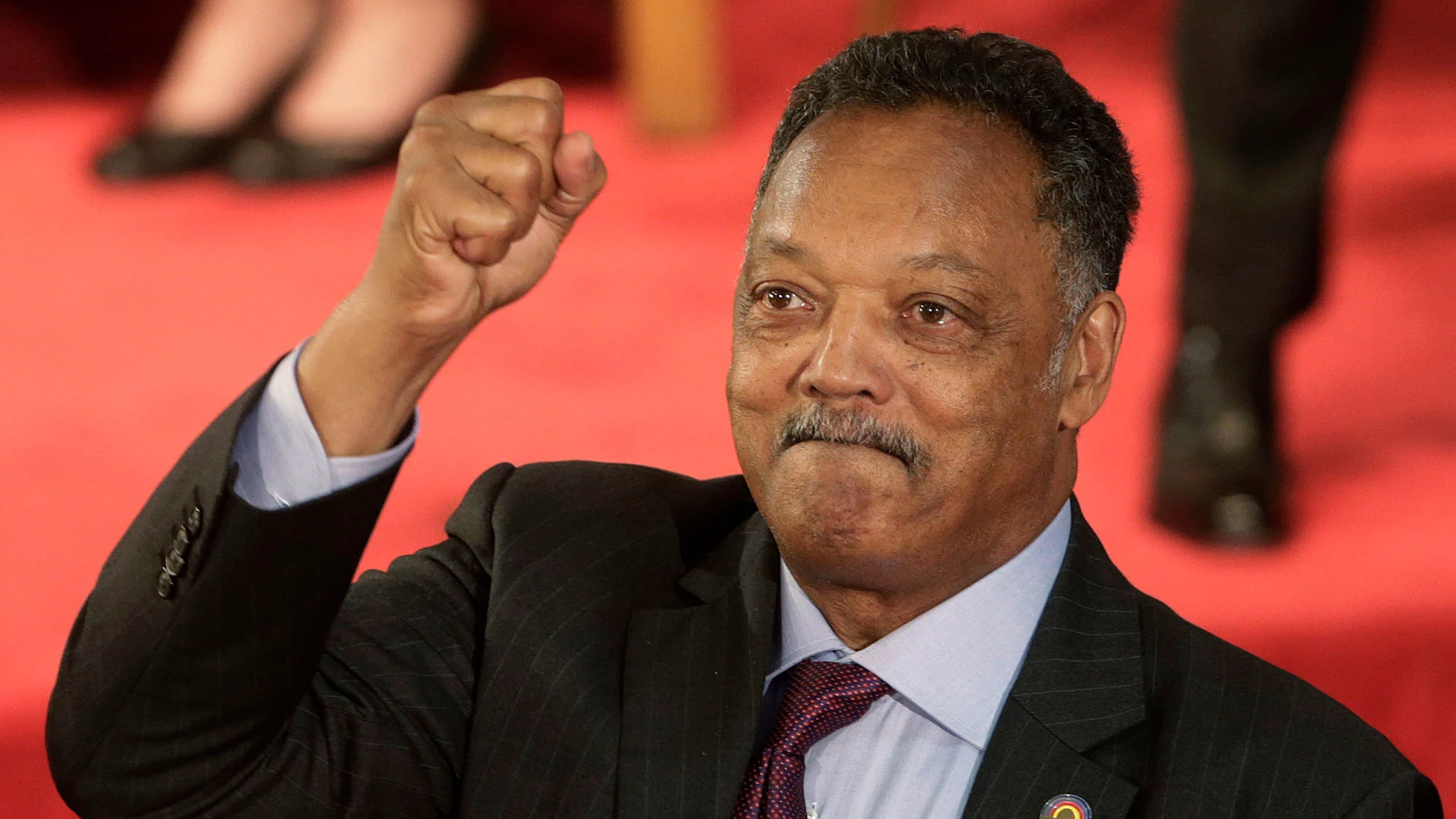
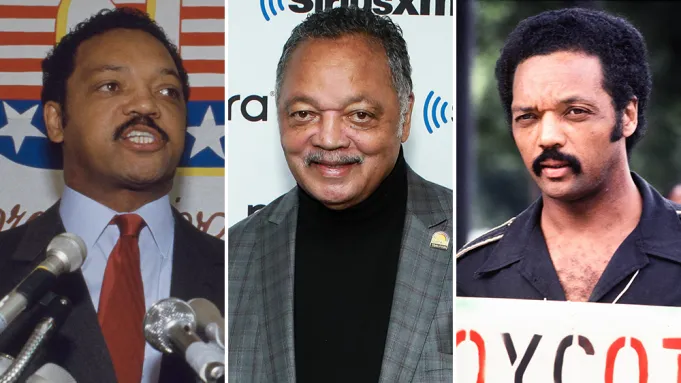
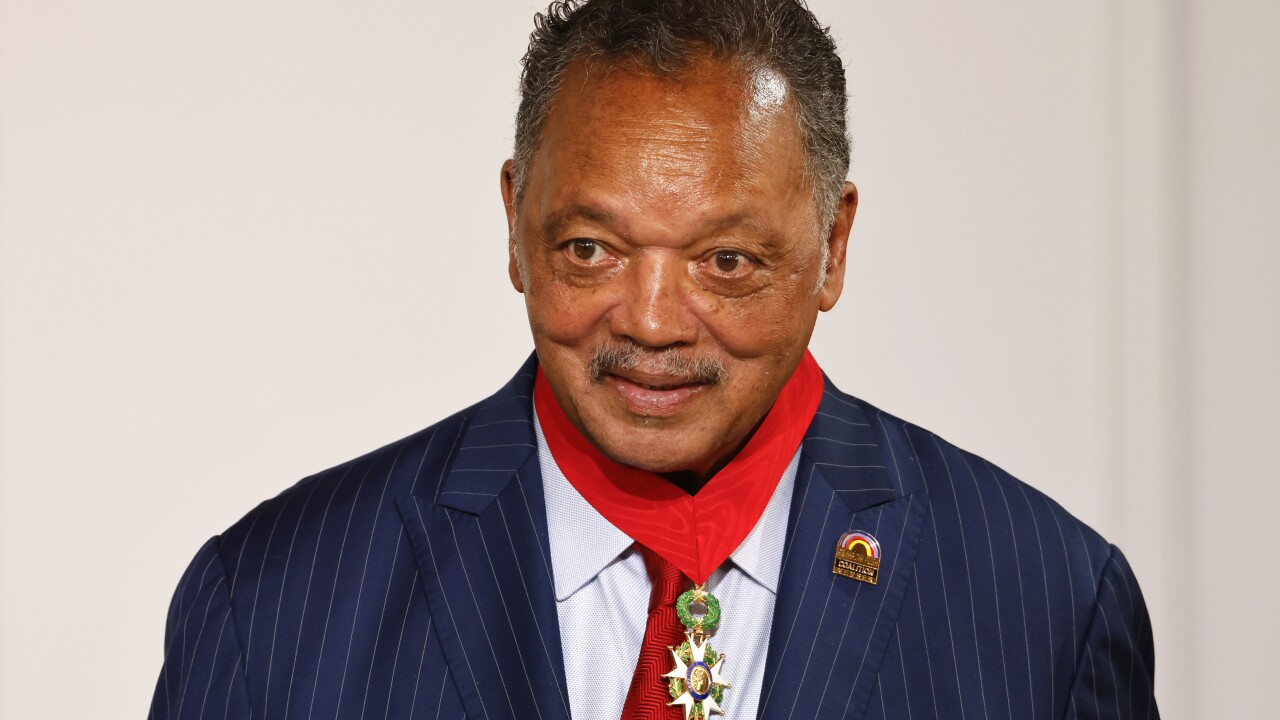
Jesse Jackson
Minister, politician, and civil rights activist Jesse Louis Jackson was born Jesse Burns on October 18, 1941 in Greenville, South Carolina. His mother, Helen Burns, was only 16 and unwed at his birth. Jesse’s biological father, Noah Robinson, was a married man who lived next door with his wife and stepchildren. Robinson, a former boxer and a well known figure in Greenville’s Black community, acknowledged his paternity, however he had little contact with Jesse. A year after Jesse's birth, his mother married Charles Henry Jackson, a post office maintenance worker who later adopted Jesse when he was about 15. As a child, Jesse Jackson was taunted by other children about his out-of-wedlock birth and has said these experiences helped motivate him to succeed.
Living under Jim Crow segregation laws, Jackson was taught to go to the back of the bus and use separate water fountains—practices he accepted until the Montgomery bus boycott of 1955. He attended the racially segregated Sterling High School in Greenville, where he was elected student class president, finished tenth in his class. Jackson was a star high school athlete at his Sterling High School in Greenville. After graduation from high school, he chose a football scholarship to the University of Illinois over a professional baseball contract. Jackson traced his first integration protest to his attempt to take books out of the Greenville library over winter break. He left Illinois after one year and transferred to North Carolina Agricultural and Technical College in Greensboro.
At his new school, Jackson became student body president and met Jacqueline (Jackie) Lavinia Brown, who became his wife. During his years in Greensboro, Jackson became active in the civil rights movement and organized sit-ins at segregated local facilities. Jackson actively encouraged his fellow students to protest against racial injustice by staging repeated demonstrations and boycotts (protests in which, for example, organizers refuse to shop at a certain store in an attempt to get the store to change an unjust policy or position). He was an honor student and president of his student body. After his graduation in 1964, Jackson entered the Chicago Theological Seminary, where he studied for two years, where he planned to train for the ministry.
After two and a half years at the school, Jackson left the seminary (a place for religious education) in 1966 before completing his divinity degree (a degree in the study of religion). Jackson joined the Southern Christian Leadership Conference (SCLC), in 1965 when he traveled to Selma, Alabama to join in the campaign for voting rights and met the Reverend Dr. Martin Luther King Jr. Through King’s influence, Jackson quickly established himself prominently within the Southern Christian Leadership Conference. In 1966 King and James Bevel selected Jackson to lead the Chicago branch of Operation Breadbasket established by King, in 1962. Operation Breadbasket had been started as a job placement agency for Blacks. Under Jackson's leadership, a key goal was to use boycotts as a means to pressure White businesses to hire Blacks and purchase goods and services from Black contractors.
Jackson traveled with King to Memphis, where King was assassinated on April 4, 1968, while standing on the balcony of his hotel room. Jackson, who was in a room one floor below King's, later told reporters he was the last to talk to Dr. King, who passed away, he claimed, in his arms. The events, as Jackson described them, immediately set off a wave of anger among others who were at the scene and claimed Jackson had overstated his presence at King's shooting for his own gain. After Dr. King's assassination in April of 1968 Jackson was ordained as a Baptist minister in the National Baptist Convention. In the wake of King's death, Jackson worked on SCLC's Poor People's Crusade in Washington, D.C., and was credited with managing its 15-acre tent city.
Jesse Jackson increasingly clashed with Ralph Abernathy, King's successor as chairman of SCLC. In 1969 The New York Times reported that several Black leaders viewed Jackson as King's successor and that Jackson was one of the few Black activists who was preaching racial reconciliation. In the spring of 1971 Abernathy ordered Jackson to move the national office of Operation Breadbasket from Chicago to Atlanta and sought to place another person in charge of local Chicago activities, but Jackson refused to move. He organized the October 1971 Black Expo in Chicago, a trade and business fair to promote Black capitalism and grass roots political power. The five-day event was attended by Black businessmen from 40 states, as well as politicians such as Cleveland Mayor Carl Stokes, and Chicago Mayor Richard J. Daley. Daley's presence was seen as a testament to the growing political and economic power of African Americans.
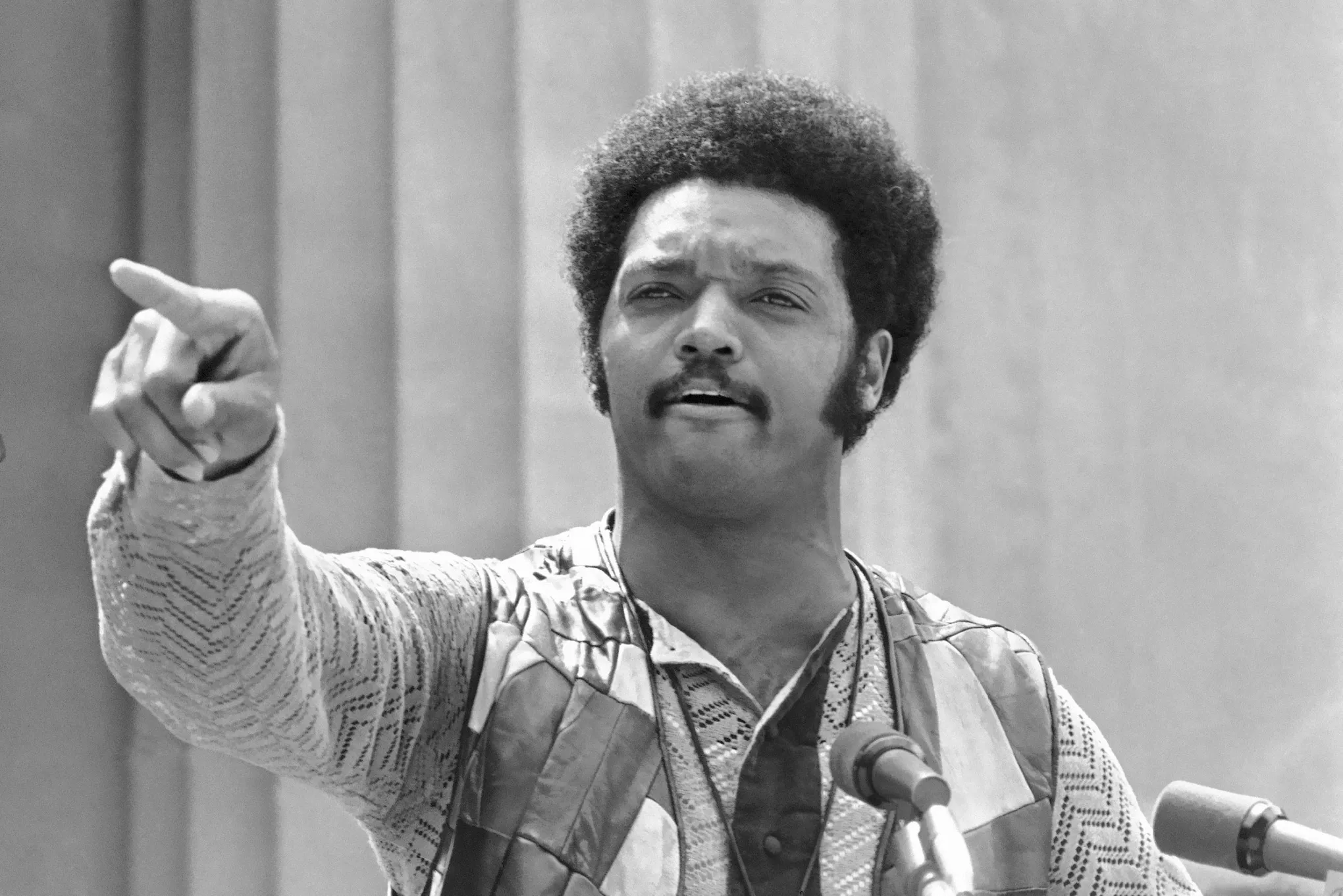
In December, 1971, they had a complete falling out. Ralph Abernathy suspended Jackson for “administrative improprieties and repeated acts of violation of organizational policy.” Al Sharpton, then youth group leader of the SCLC, left the organization to protest Jackson's treatment and formed the National Youth Movement. Jackson, his entire Breadbasket staff, and 30 of the 35 board members resigned from the SCLC and began planning a new organization. Time magazine quoted Jackson as saying at that time that the traditional civil rights movement had lost its "offensive thrust". On December 25, 1971, Operation Breadbasket was renamed Operation PUSH - People United to Serve Humanity, where he continued his campaign of economic empowerment. Standing in front of a picture of Dr. King, Jackson promised to begin "a rainbow coalition of Blacks and Whites gathered together to push for a greater share of economic and political power for all poor people in America." Jackson spoke out against racial prejudice and discrimination, military action, and class divisions in America.
Jackson also began to travel abroad, developing a vision that incorporated all the world’s oppressed poor. In 1972, he initiated such travel with a trip to Liberia. In 1976 Jackson created PUSH-Excel, a program aimed at encouraging children and teens to succeed. A fiery orator, Jackson traveled from city to city delivering his message of personal responsibility and self-worth to students: "You're not a man because you can kill somebody. You are not a man because you can make a baby.… You're a man only if you can raise a baby, protect a baby and provide for a baby". Jackson was an outspoken advocate for the end of South Africa's racial apartheid regime, that prevented the Black majority of the population from enjoying the rights and privileges of the White minority.
In 1978, Jackson called for a closer relationship between blacks and the Republican Party, telling the Party's National Committee that "Black people need the Republican Party to compete for us so we can have real alternatives... The Republican Party needs Black people if it is ever to compete for national office. During 1979, Jesse Jackson traveled to the Middle East and compared the conditions of the Palestinians to African Americans’ plight in the United States. A picture of him hugging PLO leader Yasser Arafat caused a major controversy and became for many American Jews a lingering source of distrust of Jackson. During that visit the Israeli government refused to see him, but he made several return trips in which he met with both governments and attempted to spread the Civil Rights movement’s concepts of nonviolent resistance and radical love as a political weapon to the Palestinian-Israeli conflict.
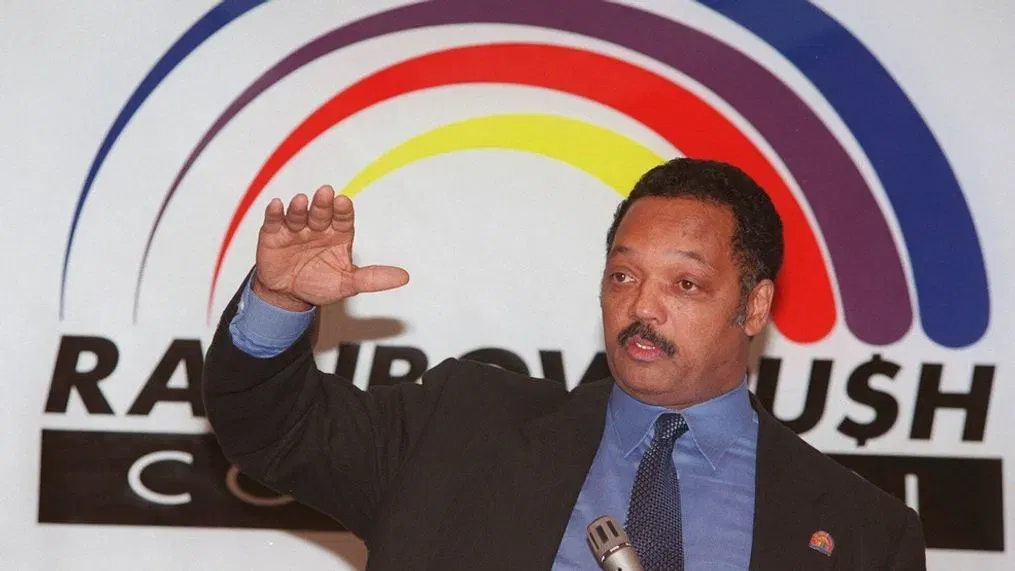
In 1984, Jackson organized the Rainbow Coalition, which later merged, in 1996, with Operation PUSH. The newly formed Rainbow PUSH organization brought his role as an important and effective organizer to the mainstream. As the 1980s began, Jackson was no longer a young man with long hair and gold chains but was instead a more mature figure seeking ways to change the Democratic Party from within. He continued to promote his "rainbow coalition" as a way for all Americans to improve the country. Jackson's support in the African American community also allowed him to influence both local and national elections. Possibly the most important campaign in which he was involved was the election victory of Harold Washington, the first African American mayor of Chicago, Illinois, in 1983. Jackson's ability to convince over one hundred thousand African Americans, many of them youths, to register to vote played a large part in Washington's victory. Also in 1983, Jackson negotiated the release of war prisoner, U.S. pilot Robert Goodman, in Syria.
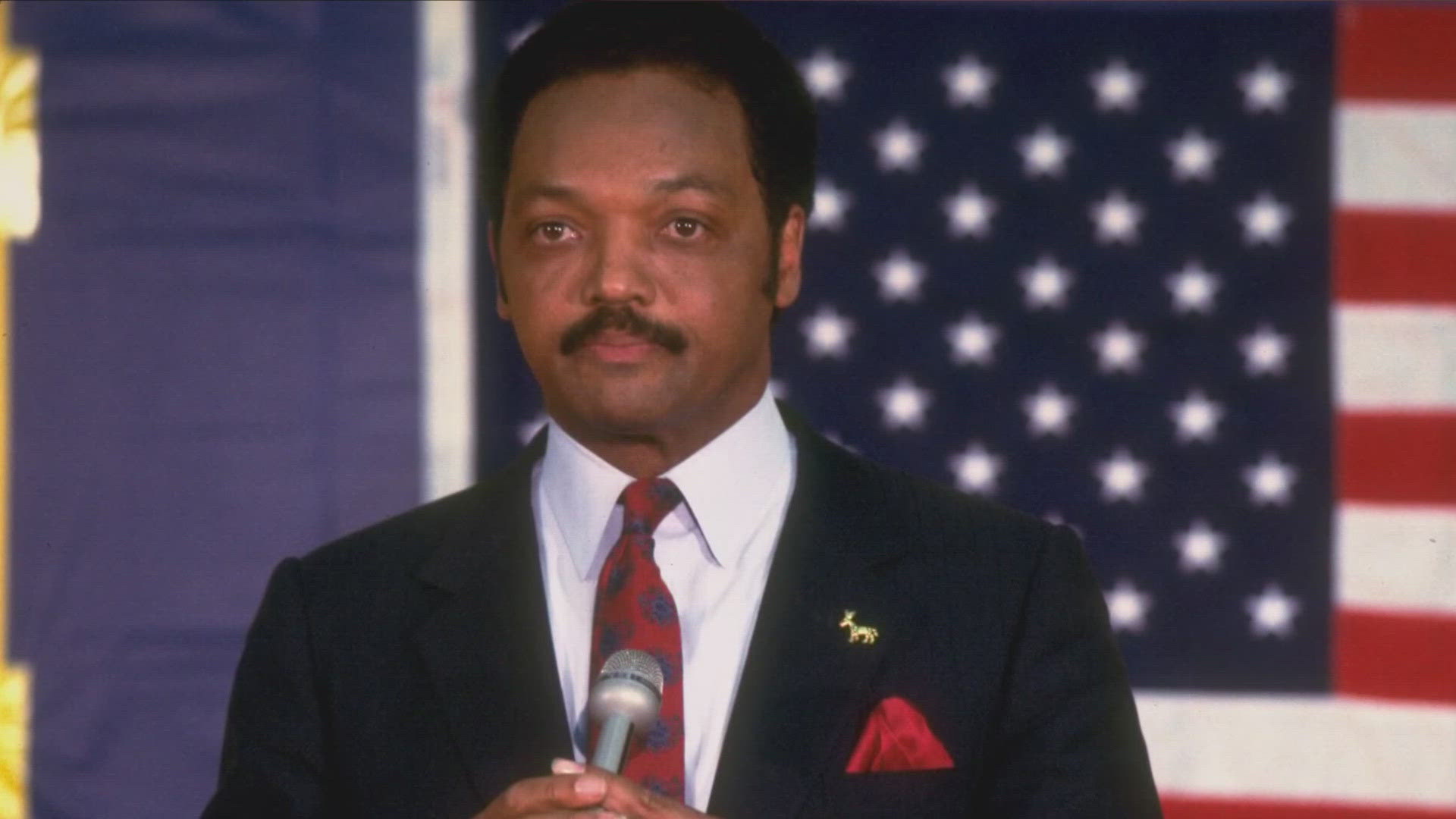
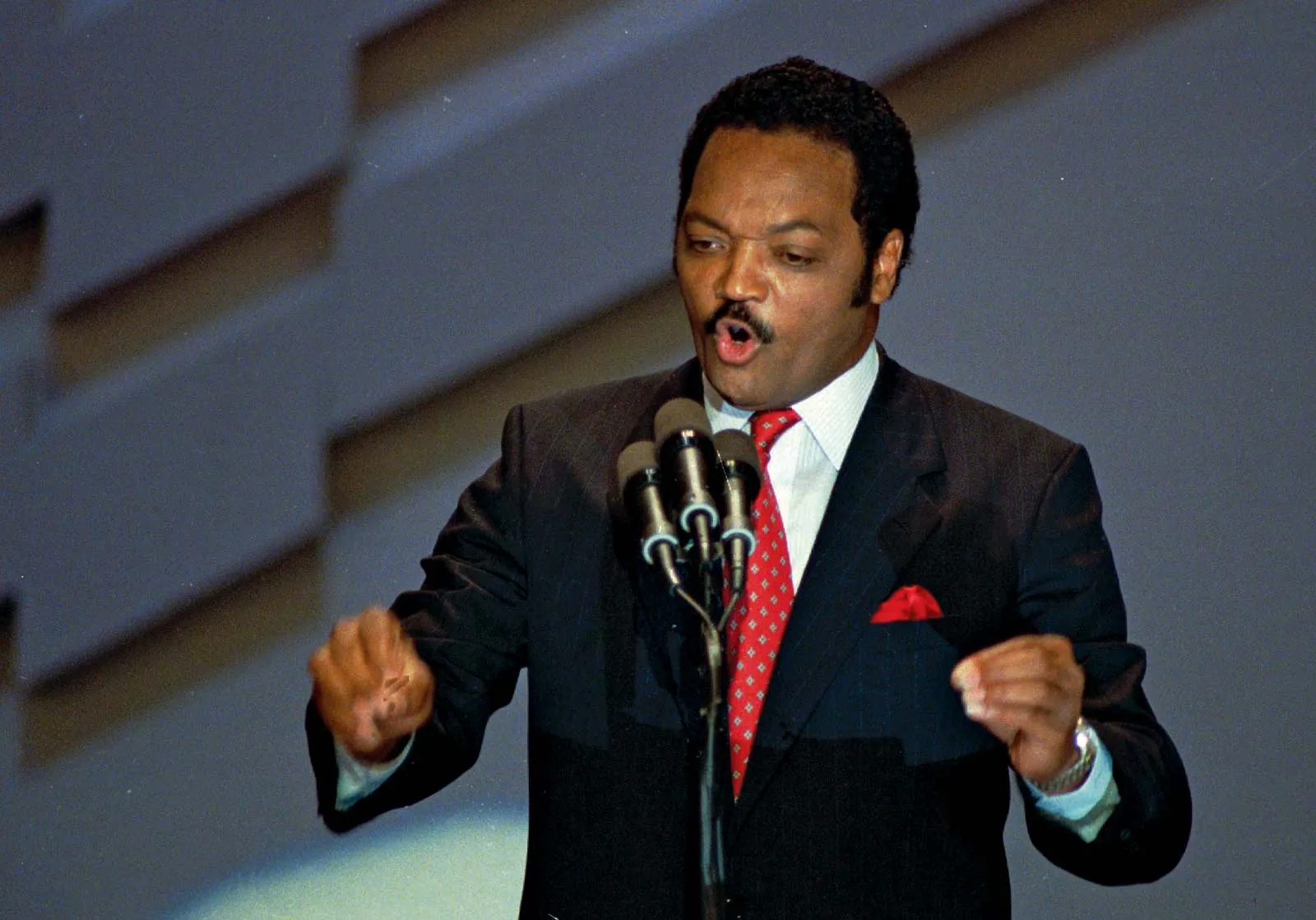
On October 30th, 1983 Jackson announced his candidacy for the Democratic nomination for the presidency of the United States. In 1984, Jackson became the second African American, after Shirley Chisholm, to mount a nationwide campaign for President of the United States, running as a Democrat. Jackson's candidacy divided support among Black politicians and even prominent African Americans such as Coretta Scott King, who supported his right to run. She refrained from endorsing him as others did, due to her belief he would not win the nomination. Among African American office-holders, Jackson received the support of former Mayor of Atlanta Maynard Jackson, and Mayor of Newark Kenneth A. Gibson. As a Democratic candidate, he garnered massive support and exceeded expectations for the number of delegates received. Jackson’s electoral run also helped to register two million new voters.
Jackson garnered 3,282,431 primary votes, or 18.2 percent of the total, in 1984, and won five primaries and caucuses, including Louisiana, the District of Columbia, South Carolina, Virginia, and one of two separate contests in Mississippi. Jackson received the most black support of any candidate in the Georgia, Alabama and Florida primaries, where massive registration drives targeted at Black voters led to a 69 percent increase in voter turnout from 1980 in Georgia and Alabama. Walter Mondale won the democratic nomination but lost in a landslide in the general election to Ronald Reagan. During the year Jackson traveled to Havana to meet with Cuban President Fidel Castro to negotiate the release of 22 Americans being held by Castro’s government.
In 1988 Jesse Jackson made his second attempt at the U.S presidency. When 800 townspeople in Greenfield, Iowa, forewent the Super Bowl to hear Jackson speak, he made Greenfield his Iowa headquarters and soon was running second only to Richard Gephardt in the 97 percent White state. Jesse Jackson did better than expected on Super Tuesday, ending the day with more of the popular vote than any other Democrat. He followed that performance by claiming 55 percent of the vote in Michigan and briefly looked like the frontrunner. Jackson eventually lost the nomination to Michael Dukakis, but along the way, he finished second with almost 7 million primary votes. Jackson was disappointed not to be offered the vice presidential slot. He felt he deserved Dukakis's consideration as a running mate. Dukakis agreed, but added that Jackson was of no "special or greater consideration" simply because he finished second in the primaries.
During the 1990s Jackson actively campaigned for jobs and equal rights for African-Americans. In 1991, Jackson gained international acclaim again when he negotiated for the release of hundreds of foreign nationals in Kuwait under the regime of Saddam Hussein. On August 29, 1993, Jackson joined gatherers at the Lincoln Memorial to commemorate the 30th anniversary of the March on Washington for Jobs and Freedom. In 1997 Jackson launched the Wall Street Project which encouraged African Americans to become stockholders to use their leverage to force changes in corporate culture and behavior. In May of 1999, Jackson traveled to war-torn Sierra Leone, where he negotiated a cease-fire agreement between Tejan Kabbah, the country's president, and rebel Foday Sankoh. One year later, he returned to Sierra Leone to assist once more in the country's peace process.
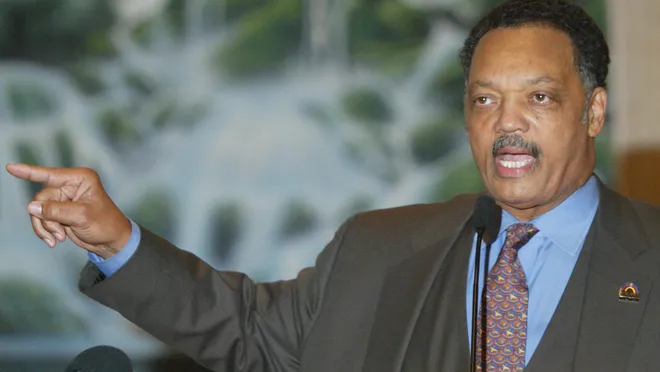
Both his supporters and critics describe Jackson as bold, defiant, and controversial. His international efforts continued into the 2000s. In August of 2000, he received the Presidential Medal of Freedom from President Bill Clinton. Jackson disappointed many of his followers when it became known in 2001 that he had fathered a daughter—who was twenty months old at the time of his announcement—with a woman other than his wife. "I fully accept responsibility, and I am truly sorry for my actions," he said in a written statement. Despite this setback in his personal life, Jackson has always been a successful advocate for human rights and social change. On February 15, 2003, Jackson spoke in front of over an estimated one million people in Hyde Park, London at the culmination of the anti-war demonstration against the imminent invasion of Iraq by the U.S. and the United Kingdom. He has been awarded over forty honorary degrees, received the National Association for the Advancement of Colored People (NAACP) Springarn Award, and been listed as one of the top ten most respected Americans.