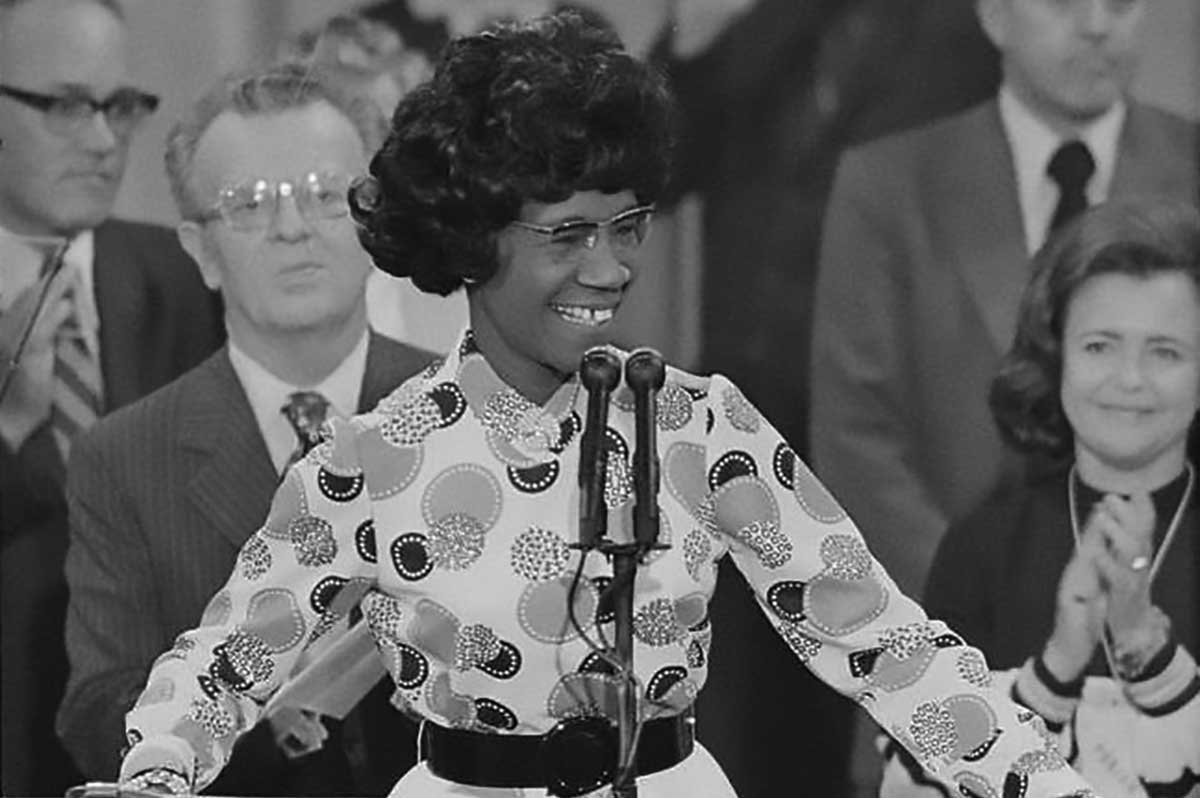
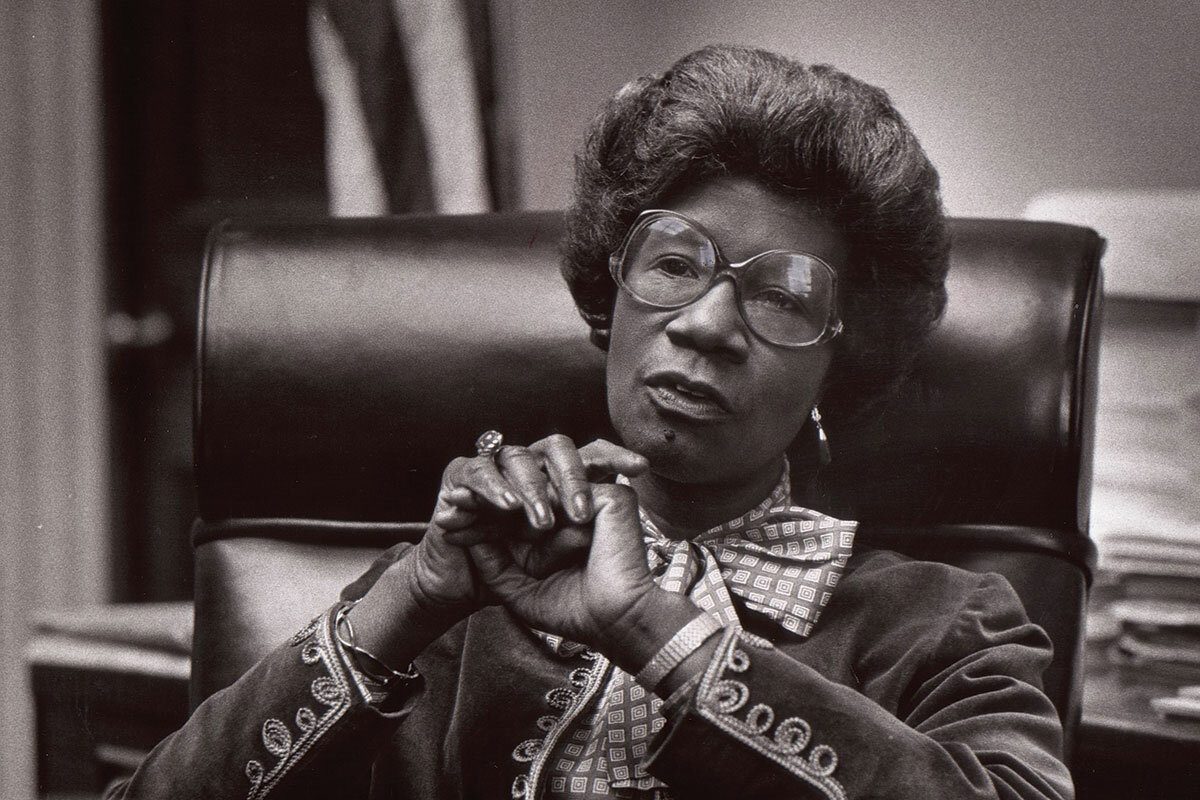

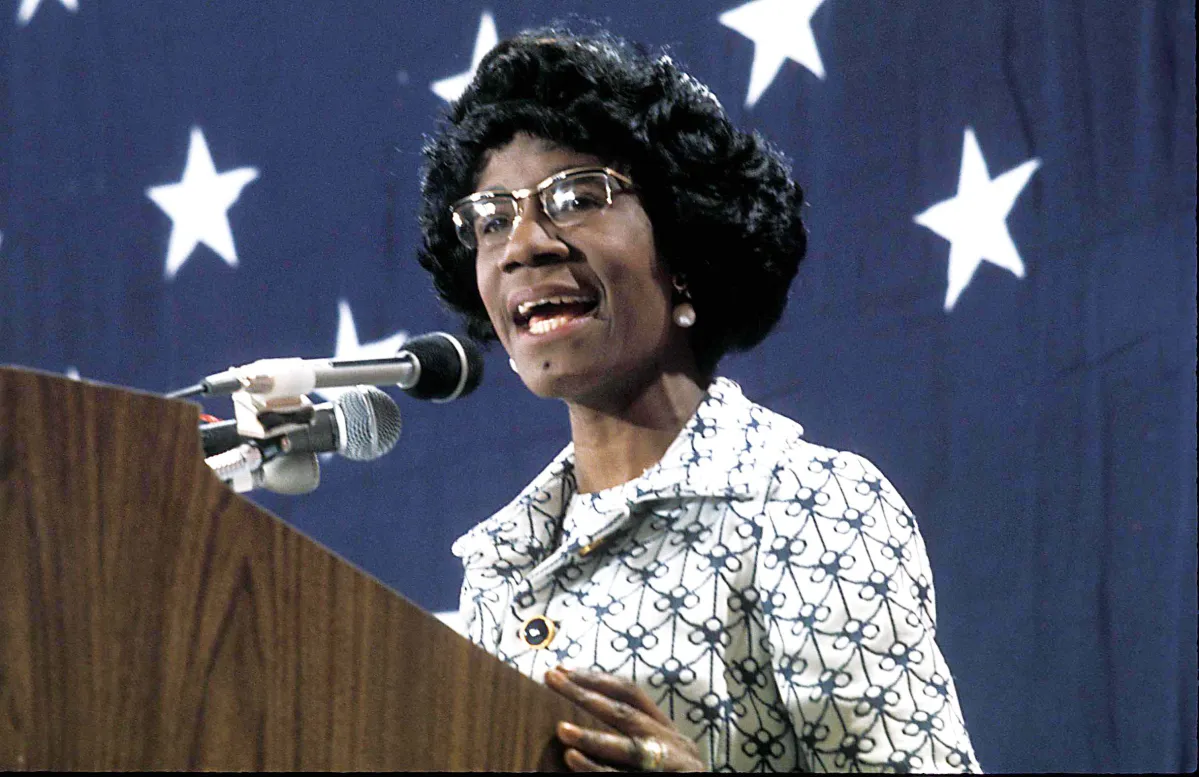
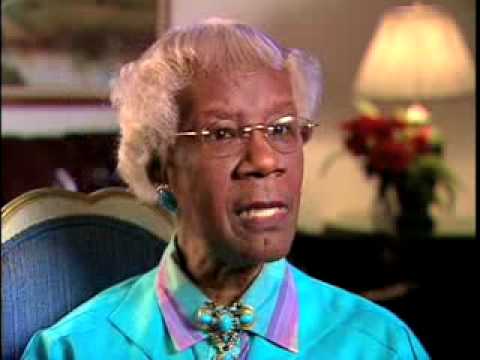
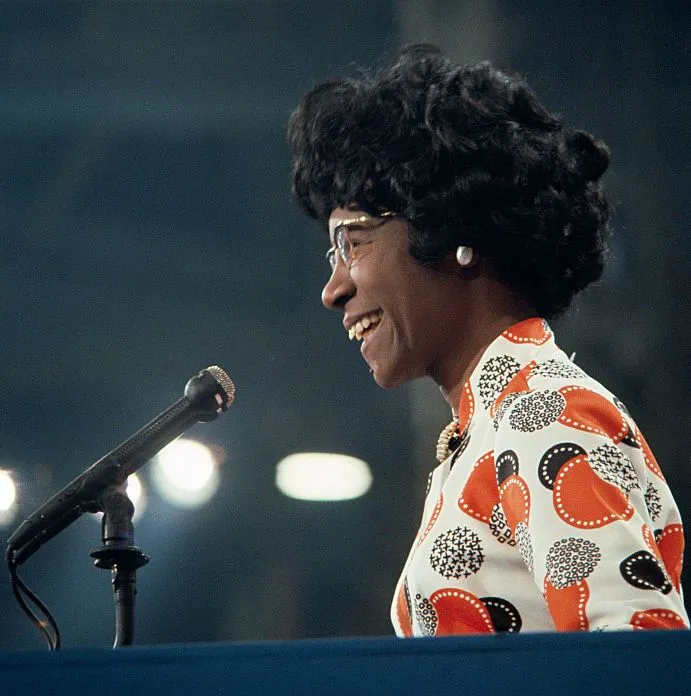
Shirley Chisholm of New York was the First Black woman elected to Congress and the first Black American to seek a major party's nomination for president. She was born Shirley Anita St. Hill on November 30, 1924 in the Bedford-Stuyvesant neighborhood of Brooklyn, N.Y. Her parents were West Indian emigrants. At age 5, Shirley and her two sisters were sent to live on a farm with their maternal grandmother in Barbados, in the West Indies. The next few years under the stern, disciplined eye of her grandmother shaped Shirley’s compassion and concern for the well-being of others. It further strengthened her understanding that commitment to one’s principles, while rewarding, could be a lonely existence. A gifted student, Chisholm later credited her eloquence and writing skills to the traditional, British-style Barbadian schools. Chisholm returned to Brooklyn at the age of 11 and graduated from Girls High School in Bedford-Stuyvesant in 1942. As a result of her time on the island, and despite her U.S. birth, she always would consider herself a Barbadian American.
The family moved from the predominantly Jewish neighborhood of Brownsville to the more ethnically diverse community of Bedford-Stuyvesant in Brooklyn. This neighborhood, which was 50 percent black, would help sharpen Shirley’s developing political awareness, especially as the economic conditions of the neighborhood worsened. Shirley’s fertile teenage mind was challenged by the daily lectures and discussions with her father, who was largely self-educated. Charles St. Hill was a voracious reader who devoured several publications a day. Like many working-class blacks, he was an avid follower of the charismatic Pan-Africanist leader Marcus Garvey. Garvey’s Universal Negro Improvement Association (UNIA), which promoted racial pride and encouraged self-sufficiency, was one of the most important Black political and cultural movements during the early part of the twentieth century in the United States.
Upon returning to the New York school system, she was held back in a lower grade because of her lack of knowledge about U.S. civic history. After receiving lessons, she was promoted to her appropriate grade level and quickly surpassed the efforts of many of her classmates. Shirley would always retain one trait from her years in the Caribbean, her West Indian accent. A petite young woman, Chisholm soon learned that her size tended to disguise her surprisingly forceful, straightforward manner. Upon graduation from high school in 1942, Shirley received offers to attend college at Vassar and Oberlin. Because of her family’s limited economic resources and her own desire to remain close to home, however, she accepted a scholarship to study sociology at Brooklyn College.
She involved herself in several campus organizations, notably a social club that she started after an existing club denied her membership because she was Black. These activities caught the attention of one Brooklyn College professor, who encouraged her to pursue a political career. In the end, Shirley chose to become a teacher, a more realistic career choice for African American women of her day. In 1946, Shirley graduated cum laude from Brooklyn College with a degree in social work. She immediately began work on a master’s degree in elementary education at Columbia University’s night school. During the day, she was employed at a local nursery school. She also worked as a nursery school teacher and an educational consultant. At about this time, she met a recent Jamaican transplant, Conrad Chisholm, who was working as a waiter. They were married on October 8, 1950 and settled in Brooklyn. Conrad returned to school and then became a private investigator for the New York City Department of Hospital Services specializing in negligence-based lawsuits.
For the next several years, Chisholm worked for a number of schools, including Friends Day Nursery in Brownsville and the Mount Calvary Child Care Center in Harlem. From 1953 to 1959, she served as director of the Hamilton-Madison Child Care Center in Lower Manhattan. She further distinguished herself as a bilingual educator because of her ability to communicate fluently in Spanish. She became known as an authority on early education and child welfare issues. Gradually, her reputation as a leading early-childhood specialist spread, resulting in increased demands for her services as a consultant. She served as the director of day-care centers in Brownsville and lower Manhattan, and then became a consultant for the Division of Day Care in the New York Office of Children and Family Services. At the latter, there were 130 children between the ages of three and seven, and twenty-four employees reported to her.
It was this interest in the welfare of young people, combined with the political consciousness sparked in her by her father, that pushed her into the world of public service. Chisholm’s growing interest in politics stepped up her involvement in several organization. She spent years painstakingly climbing up the lowest (and most thankless) levels of politics in organizations like the Seventeenth Assembly District Democratic Club. She was a leader in League of Women Voters, National Association for the Advancement for Colored People (NAACP), Urban League and Democratic Party Club in Brooklyn. She became active in the district’s party politics after meeting an old college associate, Wesley "Mac" Holder. Holder had carved out a reputation for getting Black candidates elected while still remaining loyal to the White-dominated Democratic Party agenda. Chisholm’s distaste for such blind allegiance to the party machine, however, soon found her at odds with Holder and outside the club’s inner circle. Chisholm eventually left the group around 1958 after clashing with Holder over Chisholm's push to give female members of the group more input in decision-making. This situation rendered Chisholm politically inactive for a number of years.
Chisholm reentered politics in 1960 when she helped form the Unity Democratic Club with the goal of destroying the grip the party held over her district. The UDC's membership was mostly middle class, racially integrated, and included women in leadership positions. The club specialized in mobilizing African American and Latino voters. At the same time, Shirley was tired of being confronted with the routine marginalization of women in the political process. She was incensed by the idea of White politicians dictating the policies that would impact the lives of majority-Black neighborhoods. So Shirley sought political power in her own right. She was ready to fight racial and gender inequality in the United States and became a community activist through several organizations. In 1964, Chisholm ran for a seat in the New York state assembly. Chisholm faced resistance based on her sex, with the UDC hesitant to support a female candidate.
Chisholm won the Democratic primary in June 1964 and then won the seat in December over Republican and Liberal Party candidates. She became the second Black American in the New York State Legislature for the Fifty-fifth District, and the first Black woman from Brooklyn to serve in the state legislature. During her four years in Albany, New York, she was the only woman and one of only eight Black representatives in the state assembly. She also pioneered the SEEK (Search for Education, Elevation and Knowledge) program. This program would provide disadvantaged students the opportunity to enter college while receiving intensive remedial education. After a court-ordered redistricting, Shirley Chisholm beat James L. Farmer, Jr., former leader of the Congress of Racial Equality (CORE), in the 1968 race for the newly created 12th Congressional seat (Farmer was running as a Republican candidate.) Chisholm used a sound truck and the slogan “Unbought and Unbossed”. This new congressional district included Chisholm’s old Bedford-Stuyvesant neighborhood, a community comprising 70 percent Black and Puerto Rican residents by the late 1960’s. Her victory made her the first Black woman to win a seat to the United States Congress.
Hiring an all-woman staff, Chisholm immediately saw it as her task to be a champion for the underdog. She proclaimed, “Women in the country must become revolutionaries. We must refuse to accept the old, the traditional roles and stereotypes.” At the same time she was pragmatic. She made it clear, for instance, that she would always align herself with the most able candidate. Accordingly, in 1969 she crossed party lines when she supported Republican candidate John Lindsay in his successful New York City mayoral bid. In Congress she quickly became known as a strong liberal who opposed weapons development and the war in Vietnam and favored full-employment proposals. At a tumultuous moment shaped by war, social movements, Chisholm sought to rally a diverse coalition of young people, people of color, women, and other marginalized groups. Chisholm served as a voice for many who could not speak for themselves. In 1971, Chisholm served as a founding member of both the Congressional Black Caucus and the National Women's Political Caucus.
During her fourteen years on Capitol Hill, Chisholm served on a number of congressional committees. After initially being assigned to the House Forestry Committee, she shocked many by demanding reassignment. She was placed on the Veterans’ Affairs Committee, eventually graduating to the Education and Labor Committee. While on the education and labor committee, Chisholm worked diligently to fought for unemployment benefits for domestic workers in the House of Representatives, sponsoring a bill to ensure minimum wage to domestic workers. In May 1971, Chisholm and fellow New York Congresswoman Bella Abzug introduced a bill to provide $10 billion in federal funds for child-care services by 1975. A less expensive version introduced by Senator Walter Mondale was vetoed in December 1971 by President Richard Nixon. Other noteworthy but unsuccessful legislation introduced by Chisholm called for increasing the level of federal reimbursement of state welfare programs to 70 percent and the establishment of a Department of Consumer Affairs as a cabinet-level position.
Always active in the women’s movement, Chisholm was involved in the early years of the National Organization for Women. She was a founding member of the National Women’s Political Caucus, and was a spokeswoman for the National Abortion Rights Action League. Shirley fought for the Equal Rights Amendment, enlisting women into public service, publicly funded daycare, parental leave, civil rights for Black people, voting rights for all, and women's reproductive freedom. Also, she was deeply concerned with issues of hunger in the United States and throughout the world, lending her influence to the expansion of food stamps. While she began as an icon for the feminist movement in the United States she increasingly became a voice on global women's issues, paying particular attention to human rights issues that impacted Black women around the globe. She also focused on land rights for Native Americans.
With little money but a dedicated cadre of supporters, Chisholm sought the 1972 Democratic nomination for President. Returning to her old campaign slogan, "Unbought and Unbossed", Chisholm waged an uphill battle against the reigning power oligarchy and many old prejudices. She also struggled to be regarded as a serious candidate instead of as a symbolic political figure. Despite her lack of strong financial backing, Chisholm succeeded in mounting a groundbreaking campaign, assembling a coalition of African Americans, feminists, and other ethnic minorities. Nevertheless, she failed to gain the largely symbolic yet influential support of the members of the Congressional Black Caucus. Moreover, never flinching at controversy, she ignored the stir that she caused when in May she visited fellow candidate George Wallace at the hospital soon after he was shot, during the presidential primary campaign. Chisholm accepted the endorsement of the Black Panthers despite party disapproval. Losing support of even many liberal Democrats, she faced many kinds of resistance.
Despite being on the ballot in only 14 states, Chisholm had more than 150 delegates at the Democratic National Convention that year, eventually conceding the nomination to George McGovern. In that campaign, she asserted herself as the FIRST African American candidate to run for a major party nomination, and the first woman to run for the Democratic nomination. Although Chisholm never expected to win, the campaign, more than any other venture, left a bitter taste, as she came to grips with the unexpected opposition she encountered from two previously supportive sectors: women’s groups and African American civil rights organizations. Nevertheless, Chisholm remained convinced that her nascent journey had opened the door for future generations of women as full-fledged candidates, not simply as symbols of causes. She later said that she ran for president to inspire others to question the status quo: “I ran because somebody had to do it first. In this country everybody is supposed to be able to run for president, but that has never really been true".
During her presidential campaign, and especially in the latter half of her Congressional career, Chisholm expanded the focus of her advocacy to international issues. Chisholm treasured her Caribbean heritage. For over 34 years she joined the West Indian American Day Carnival Association President Carlos Lezama in Brooklyn’s annual Labor Day Parade. The year 1977 was a momentous time in Chisholm’s life, highlighted by her appointment to the powerful House Rules Committee. This political success was nearly overshadowed by the dissolution of her marriage to Conrad Chisholm. After her divorce became final in 1978, she married Arthur Hardwick, Jr., a Black businessman and an old acquaintance from her days in the New York state assembly. She indicated that while her legal name was now Hardwick, she would continue to use Chisholm in politics. During the Jimmy Carter administration, she championed the rights of Haitian refugees and protesting racist practices and double-standards in U.S. immigration policies. She retired from the House of Representatives in 1983, surrendering her seat to fellow Democrat Major Owens. Chisholm served seven eventfull terms in Congress, from 1969 to 1983, before retiring.
She campaigned for Jesse Jackson during his 1984 and 1988 presidential campaigns. By the end of her time in public service, Chisholm had become an expert on a wide range of issues and policies. These impacted women, children, migrants, nonwhites and the poor throughout the world. After serving seven terms in the House, Chisholm retired from office to become a teacher and public speaker. She taught at Mount Holyoke College and co-founded the National Political Congress of Black Women. People often call her "Fighting Shirley Chisholm" because she works hard to make changes for women, Blacks, the poor and powerless. She continued her career as an educator, this time as a professor at Mt. Holyoke College. There she taught courses in sociology and political science. She visited colleges and universities throughout the country, seeking to protect the Civil Rights legacy from conservative ascendancy of the 1980s.
She was popular on the lecture circuit as an advocate for women’s rights, educating women in politics and international women's issues, and empower minority youth to participate in the political process. Her husband died from cancer in 1986. Although her outspoken nature created a stormy relationship with the Democratic Party during the 1990’s, she was nominated to serve as U.S. ambassador to Jamaica by President Bill Clinton in 1993. Ill health forced her to resign soon after taking the position. Chisholm moved to Ormond Beach, Florida, in 1991. It was there that she died on January 1, 2005, after a series of strokes. Nearly 11 years later, in November 2015, she was posthumously awarded the distinguished Presidential Medal of Freedom. As an outspoken and charismatic maverick, Chisholm enjoyed a lengthy political career that witnessed many firsts. Chisholm served as a voice for many who could not speak for themselves. In addition to her work in politics, she wrote two memoirs, "Unbought and Unbossed" (1970) and The Good Fight (1973), and remained a popular commentator on topics relating to equality and social justice. She received several honorary doctorates and in 1993 was inducted into the National Women’s Hall of Fame.