
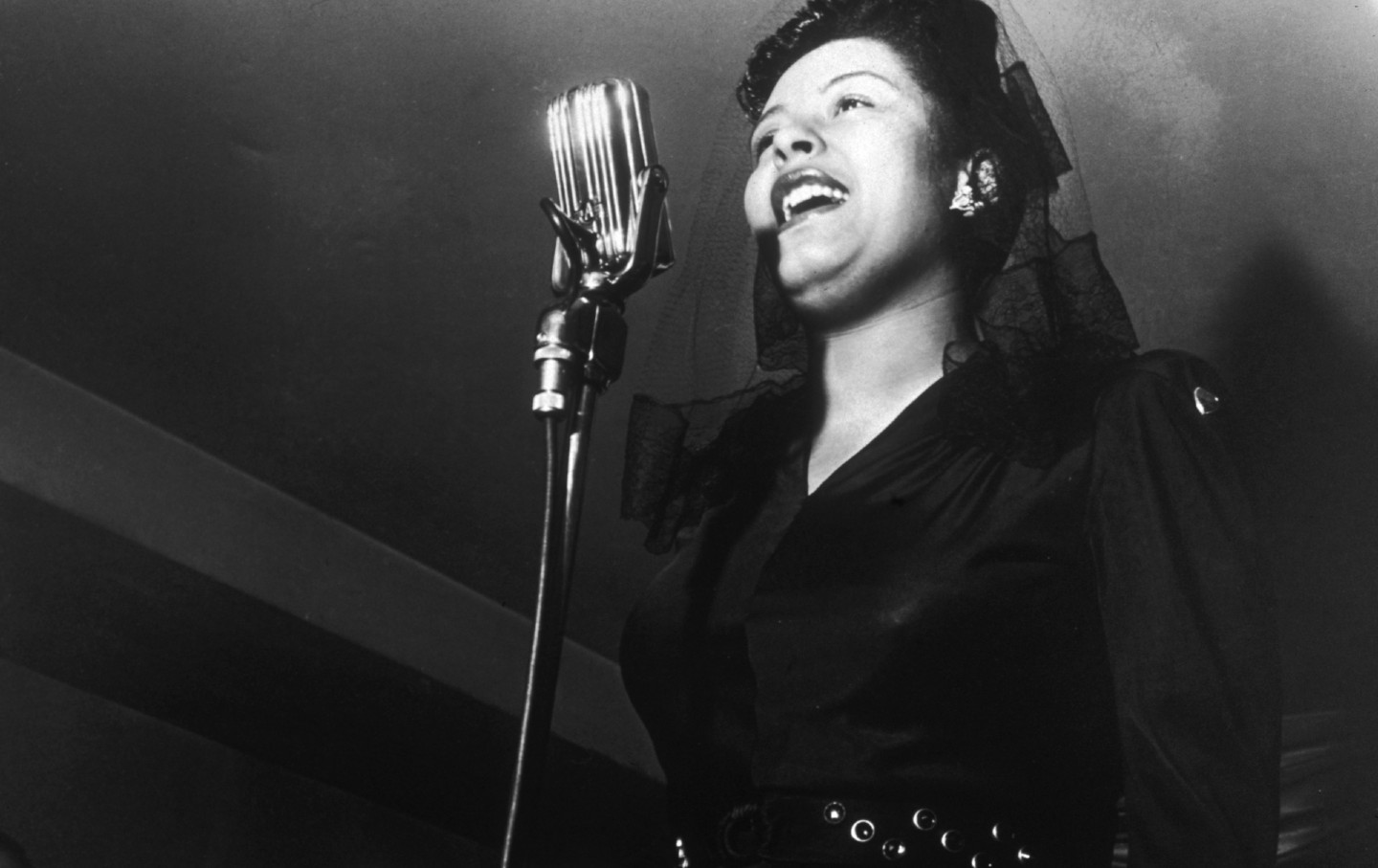
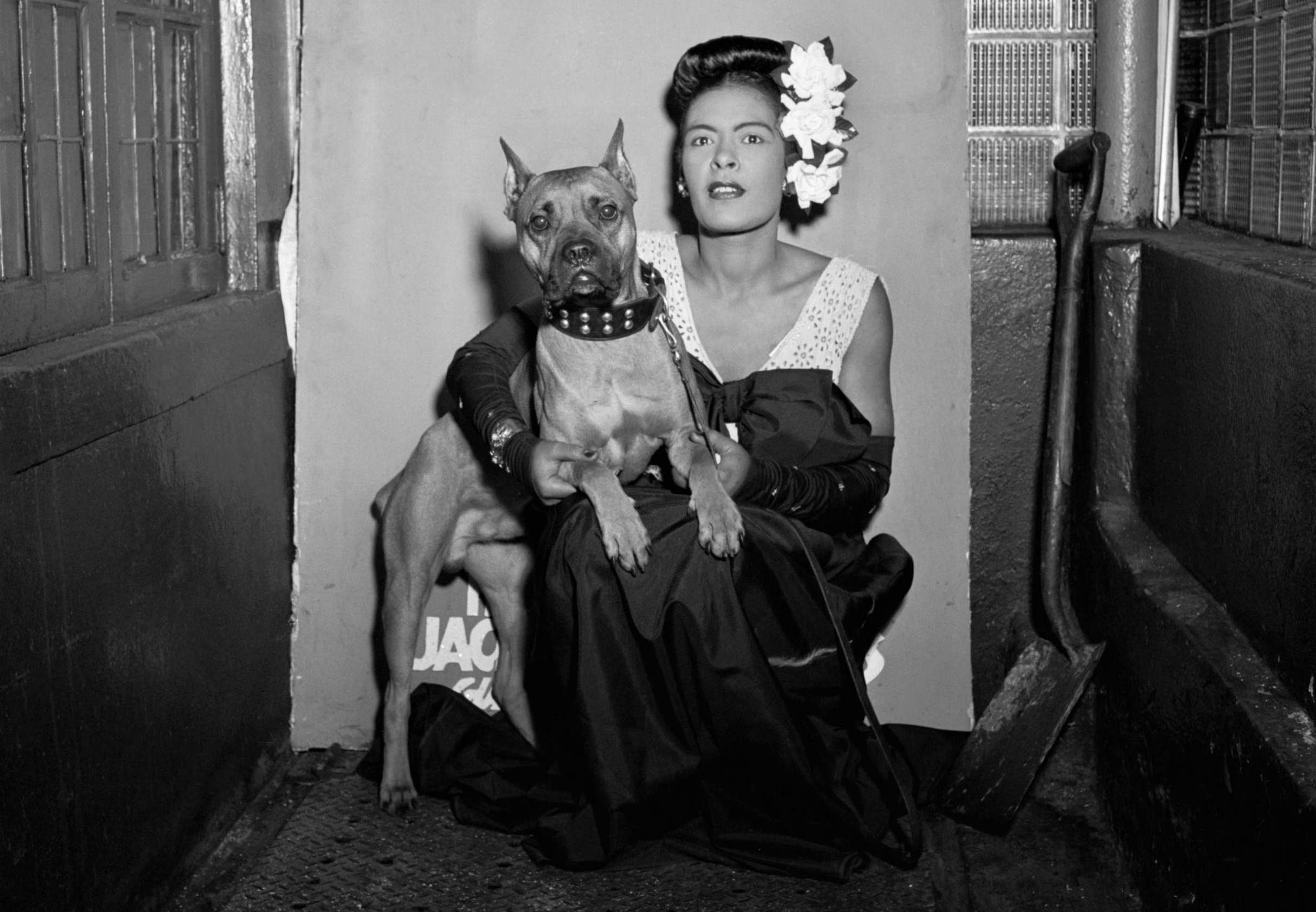
Considered by many to be one of the great jazz vocalists of all time, Billie Holiday triumphed over adversity to forever change the genres of jazz and pop music with her unique styling and interpretation. Eleanora Fagan aka Billie Holiday, was born on April 7, 1915, in Philadelphia PA. Her mother moved to Philadelphia at age 19, after being evicted from her parents' home in Baltimore, Maryland, for becoming pregnant. With no support from her parents, her mother , Sadie Fagan, made arrangements with her older, married half-sister, Eva Miller, for Eleanora to stay with her in Baltimore. Not long after Eleanora’s birth, her father, Clarence Halliday abandoned his family to pursue a career as a jazz banjo and guitar player. Although work papers filled out by Sadie when she applied for a job in Philadelphia indicate that Billie may actually have been born in that city earlier and lists her father as "Frank DeViese".
Whatever the truth, Billie always considered Baltimore her hometown. In Baltimore, Holiday’s mother worked as a maid to support the two of them. Her mother often took what were then known as "transportation jobs", serving on passenger railroads. Eleanora had a very difficult childhood. Holiday's life was a study in hardship. She never forgot the poverty and squalor of the African American ghetto called "Pigtown", down by the harbor, near which she and Sadie lived. A few years after her birth, Clarence returned to legalize his union with Sadie. At the age of nine, Holiday attended school at Saint Frances Academy in Baltimore, frequently skipping classes, which resulted in her being brought before the juvenile court at age nine. She was sent to the House of the Good Shepherd, a Catholic reform school for girls, where the nuns locked her in a room with a dead girl overnight as punishment for misbehavior.
By the age of eleven, and living in extreme poverty, Holiday had dropped out of school. Receiving little schooling as a child, Holiday scrubbed floors and ran errands for a nearby brothel so she could listen to idols Louis Armstrong and Bessie Smith on the Victrola in its parlor. She would claim throughout her career that Smith and Armstrong had been the chief influences on her style. "I always wanted Bessie's sound and Pop's feeling," she said. One day in 1926, her mother, Sadie came home to discover a 40-year old neighbor attempting to rape Holiday. She successfully fought back, and he was arrested. She was put in jail to ensure her testimony and then was sent back to the House of the Good Shepherd under protective custody. Her mother, unable to help young Holiday, again went North seeking better wages, but Eleanora wanted to be with her mother. Holiday was released in February 1927, when she was nearly twelve.
In 1927, Billie went to join her mother in New York, working for a time alongside her for the White family in whose Long Island home they lived. From that time, Holiday and her mother remained close throughout her lifetime. But after several disputes with the matriarch of the family, who accused Billie of stealing, Sadie sent her daughter to board in a Harlem apartment owned by Florence Williams, a well-known madam. From her experiences back in Baltimore, Billie knew from the moment she saw the place that it was a well-run, profitable brothel. Barely 14, she became a $20 call girl to earn money. When she refused the demands of a particularly important, client, she found herself arrested on disorderly conduct charges and sent to a filthy, women's prison on Welfare Island in New York's East River. She spent nearly nine months behind bars, although during the last part of her sentence she was allowed to cook for the prison warden's family.
Holiday returned to prostitution after her release, and both mother and daughter could afford to move to an apartment in Harlem on 139th Street in 1929. It was not long before the effects of the Great Depression touched the Holiday women. Eleanor trudged up and down Harlem's Seventh Avenue looking for work and began showing up at jazz clubs to audition. She made debuts in obscure Harlem nightclubs, and found herself at the popular Pod and Jerry’s Log Cabin. Since she was no dancer, she asked to sing. Jerry Preston, the owner, was so impressed with her presentation that he offered her the job. At that time, she borrowed “Billie” from the silent‑film actress Billie Dove, which became her professional name. She took her last name from her father, Clarence Holiday. At the outset of her career, she spelled her last name "Halliday", her father's birth surname, but eventually changed it to "Holiday". Although she never received technical training and never learned how to read music, Holiday quickly became an active participant as the Harlem Renaissance transitioned into the Swing Era.
Starting at the Jerry Preston's Log Cabin, Holiday went from one club to another, building a following along the way at places like the Yeah Man, the Hotcha, and the Alhambra Grill. Among the growing number of fans was John Henry Hammond, the wealthy White scion of an old New York family and a passionate lover of jazz and the blues. Hammond first heard Holiday perform at Monette’s, a jazz club on 133rd Street. He was fascinated with Billie Holiday from the first time he heard her sing. He noticed her exquisite phrasing and manipulation of lyrics, which led him to give her a rave review in the magazine Melody Maker. He brought influential musicians and managers to hear her sing, and he soon organized her first recording session, at age 18, in November 1933, with Benny Goodman, himself still an unknown. With Goodman, she sang vocals for several tracks, including her first commercial release "Your Mother's Son-In-Law", and "Riffin' the Scotch", the latter being her first hit. That same year, Prohibition was repealed and the thousands speakeasies now became legitimate jazz clubs.
Hammond compared Holiday favorably to Armstrong and said she had a good sense of lyric content at a young age. A few days after her twentieth birthday, Billie Holiday appeared for her first performance at the Apollo Theater. Hammond teamed Billie with a pianist he had long admired, Teddy Wilson, and got them a contract for Columbia Records' Brunswick label. As time went on, Wilson added better musicians to back Holiday up, since it was obvious to everyone that a major new talent was in the making. They were allowed to improvise on the material. Holiday's improvisation of melody to fit the emotion was highly skillful. Hammond said the Wilson–Holiday records from 1935 to 1938 were a great asset to Brunswick. According to Hammond, Brunswick was broke and unable to record many jazz tunes. Intended largely for a black jukebox audience, the Wilson discs were quickly and cheaply made. But Holiday and company transformed them into jazz treasures, immediately appreciated by musicians, critics, and jazz afficianados, if not the public at large.
Two years later a series of recordings with Teddy Wilson and members of Count Basie’s band brought her wider recognition. Her bluesy vocal style brought a slow and rough quality to the jazz standards that were often upbeat and light. This combination made for poignant and distinctive renditions of songs that were already standards. By slowing the tone with emotive vocals that reset the timing and rhythm, she added a new dimension to jazz singing. While the Brunswick sessions were in full swing, Billie sang for the first time at Harlem's Apollo Theater, appearing with a small jazz combo. She also played a small role in a short film for Paramount, 1935's "Symphony In Black", in which she played a prostitute, which featured Duke Ellington's band. She refused to accept tips unless they were handed to her, a practice that led the other women to call her “a lady.” Billie would save the money she earned to buy a restaurant for her mother.
It was at one of the Brunswick sessions that Billie first met Lester Young, who played sax for Count Basie's band and who became, in an odd way, the most important man in Billie's life. The two seemed to thoroughly understand each other, musically and emotionally, from the moment they met. Over the years, Holiday and Lester Young would join forces on some of the most treasured jazz performances ever recorded. She toured with Count Basie and with Artie Shaw in 1937 and 1938 and in the latter year opened at the plush Café Society in New York City. Holiday found herself in direct competition with the popular singer Ella Fitzgerald. The two later became friends. Fitzgerald was the vocalist for the Chick Webb Band, which was in competition with the Basie band. On January 16, 1938, the same day that Benny Goodman performed his legendary Carnegie Hall jazz concert, the Basie and Webb bands had a battle at the Savoy Ballroom. Webb and Fitzgerald were declared winners by Metronome magazine, while DownBeat magazine pronounced Holiday and Basie the winners.
By February 1938, Holiday was no longer singing for Basie. Various reasons have been given for why she was fired. Holiday was hired by Artie Shaw a month after being fired from the Count Basie Band. This association placed her among the first Black women to work with a White orchestra, an unusual arrangement at that time. This was also the first time a Black female singer employed full-time toured the segregated U.S. South with a White bandleader. He was forced to hire a second singer, Helen Forrest , after being told by theater owners that Billie couldn't appear unless there was also a White singer. When Holiday faced racism, Shaw would often stick up for his vocalist. Life on the road proved bitter for the singer. Racial segregation made simple things like eating, sleeping, and going to the bathroom logistically difficult. When touring the South, Holiday would sometimes be heckled by members of the audience. In Kentucky, a man called her a "nigger wench" and requested she sing another song. Holiday lost her temper and had to be escorted off the stage. Fed up when she could not enter one hotel through the front door with the rest of the Shaw orchestra, Holiday abandoned touring, returning to New York clubs and cabarets as a solo artist.
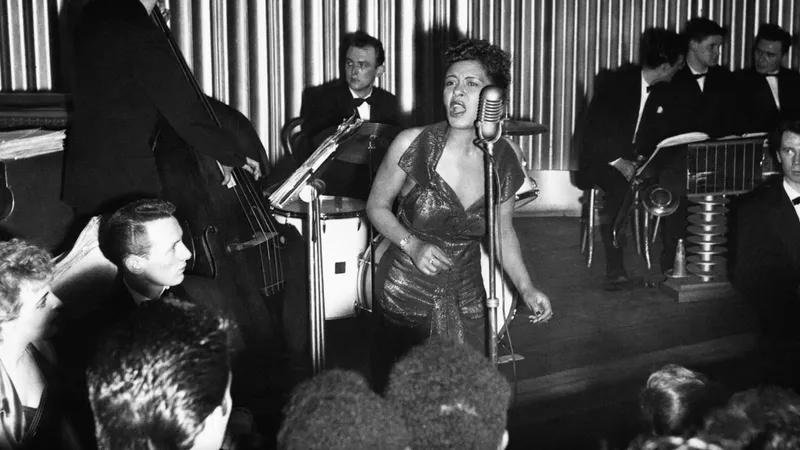
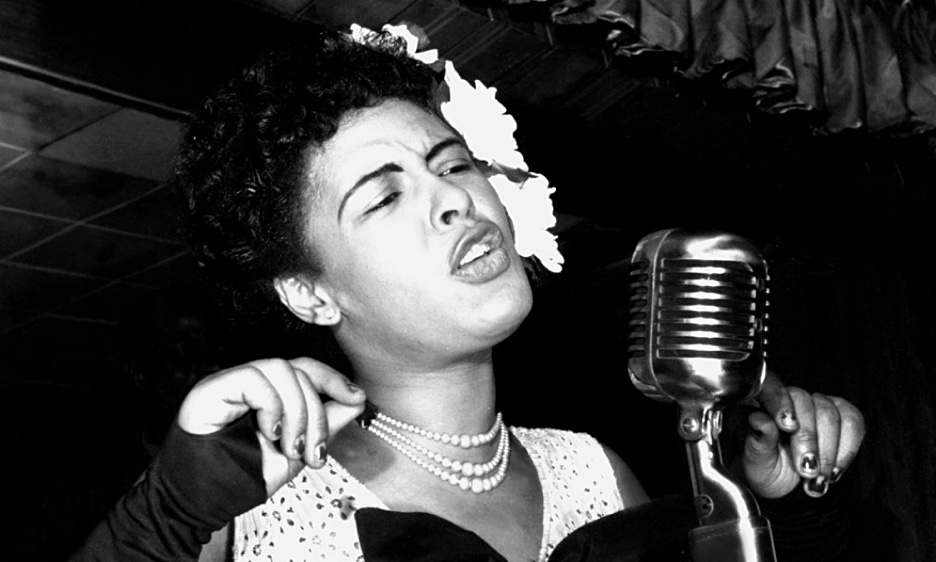
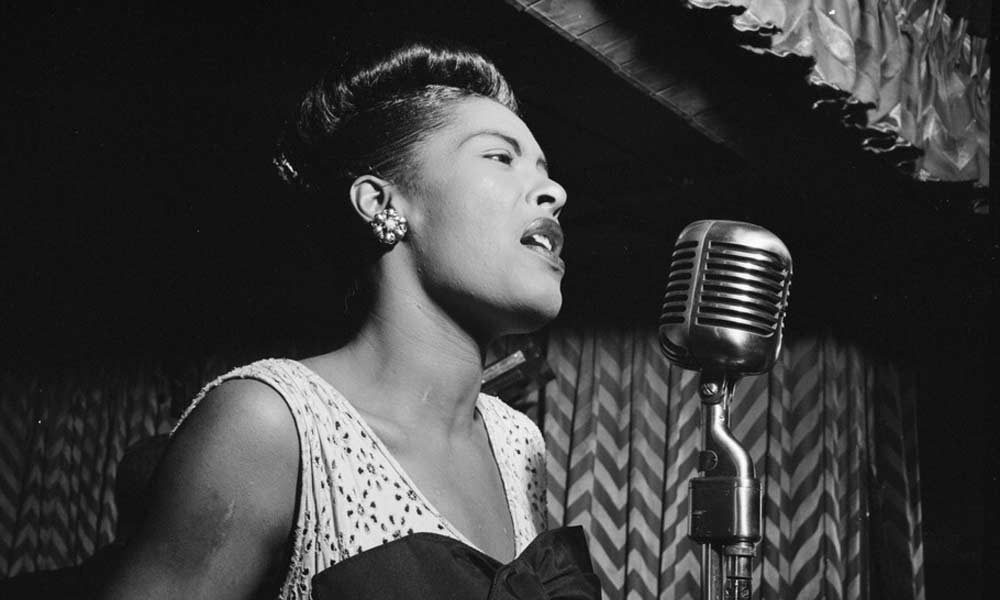
Striking out on her own, Holiday performed at New York's Café Society an integrated nightclub in Greenwich Village. She developed some of her trademark stage persona there — wearing gardenias in her hair and singing with her head tilted back. About 1940 she began to perform exclusively in cabarets and in concert. Her recordings between 1936 and 1942 marked her peak years. During that period she was often associated with saxophonist Lester Young. He called Billie Lady Day, a title that remained with her, and her mother Duchess, the mother of a lady. In turn, they called him the President, or Pres, because he was the commander in chief of the saxophone players. Together, the two performers produced some of the finest music of Holiday’s career. The two seemed to thoroughly understand each other, musically and emotionally, from the moment they met. Sympathetic to Holiday’s unique style, Young helped her create music that would best highlight her unconventional talents. With songs like “This Year’s Kisses” and “Mean To Me,” the two composed a perfect collaboration.
Among the songs identified with her were “Fine and Mellow,” “The Man I Love,” “Billie’s Blues,” “God Bless the Child,” and “I Wished on the Moon.” God Bless the Child became Holiday's most popular and most covered record. Holiday recorded "Strange Fruit," a controversial song about southern lynchings, for the Commodore label in 1939. It became a favorite at the Cafe Society. A deeply powerful song about lynching, “Strange Fruit” was a revelation in its disturbing and emotional condemnation of racism. The owner of the Café Society, Barney Josephson, introduced it to Holiday. His club was among the first with integrated audiences, and he delighted in advertising Café Society as "The Wrong Place for the Right People." For her performance of "Strange Fruit" at the Café Society, she had waiters silence the crowd when the song began. During the song's long introduction, the lights dimmed and all movement had to cease. As Holiday began singing, only a small spotlight illuminated her face. On the final note, all lights went out, and when they came back on, Holiday was gone.
Even more profound was the reaction at the Apollo, where Holiday sang "Strange Fruit" before a mostly Black audience a few nights later. Once released, "Strange Fruit" was banned by many radio outlets, though the growing jukebox industry (and the inclusion of the excellent "Fine and Mellow" on the flip) made it a rather large, though controversial, hit. "Strange Fruit" remained in her repertoire for 20 years. She recorded it again for Verve. Holiday's popularity increased after "Strange Fruit". She received a mention in Time magazine, for the poignant way she sang it. Holiday returned to Commodore in 1944, recording songs she made with Teddy Wilson in the 1930s, including "I Cover the Waterfront", "I'll Get By", and "He's Funny That Way". She also recorded new songs that were popular at the time, including, "My Old Flame", "How Am I to Know?", "I'm Yours", and "I'll Be Seeing You", a number one hit for Bing Crosby.
The 1940s saw Billie's career become firmly established, while a degree of security arrived in her personal life with her first marriage, on August 25, 1941, to jazz trumpeter Jimmy Monroe, for whom she had had a long-standing fascination. The two embarked on a tour that took them to Chicago, where Billie sang with Lionel Hampton's band, and then on to Los Angeles, Holiday's first visit to the West Coast. She had accepted an engagement of several weeks at a replica of Barney Josephson's club, called The Café Society, where she was paid $175 a week and was thrilled to meet the film stars who flocked to hear her. At this time Billie started to use heroin. Monroe smoked opium, and he soon shared his habit with Holiday. Within a year, their marriage disintegrated, although still married, Holiday began a relationship with a heroin addict, Joe Guy, a trumpeter whom she became involved with, who was also her drug dealer.
When her mother died in 1945, Holiday felt alone. Her mother's absence hit Billie particularly hard, leading her to seek comfort even more in drugs. There were repeated arrests and court dates on possession charges, most of which were settled with hefty fines; and several contracts for tours and club dates had to be canceled when Billie either never showed up or arrived late and in no condition to sing. But it was because of her singing that most people knew Billie, especially after she appeared with her idol, Louis Armstrong, in United Artists' 1946 feature film New Orleans. It was during this time that Holiday was at her commercial peak, having made $250,000 in the three previous years. She was ranked second in the DownBeat poll for 1946 and 1947, her highest ranking in that poll. Though one of the highest paid performers of the time, much of her income went to pay for her serious drug addictions. The addiction sapped her strength, made her late to performances, and created an unending need for more money. That year she divorced Monroe and also split with Guy.
On May 16, 1947, Holiday was arrested for possession of narcotics in her New York apartment. She checked herself into a Manhattan clinic to rid herself of the addiction, but three weeks after her release, she was arrested in Philadelphia on drug possession charges. This time, fines weren't enough for the court; Billie was sentenced to a year's term at the Federal Women's Reformatory in Alderston, West Virginia. The drug possession conviction caused her to lose her New York City Cabaret Card, thenceforth she was barred by New York City police licensing laws from working in any place that served liquor. After serving nine-and-a-half months of her sentence, she was released on parole, returning to New York for a triumphant concert at Carnegie Hall which included six encores. The loss of her cabaret card reduced Holiday's earnings. Within a few months, Billie was once again using heroin. Holiday was arrested again on January 22, 1949, in her room at the Hotel Mark Twain in San Francisco. By the end of the 1940s Billie had been arrested many times for narcotics violations
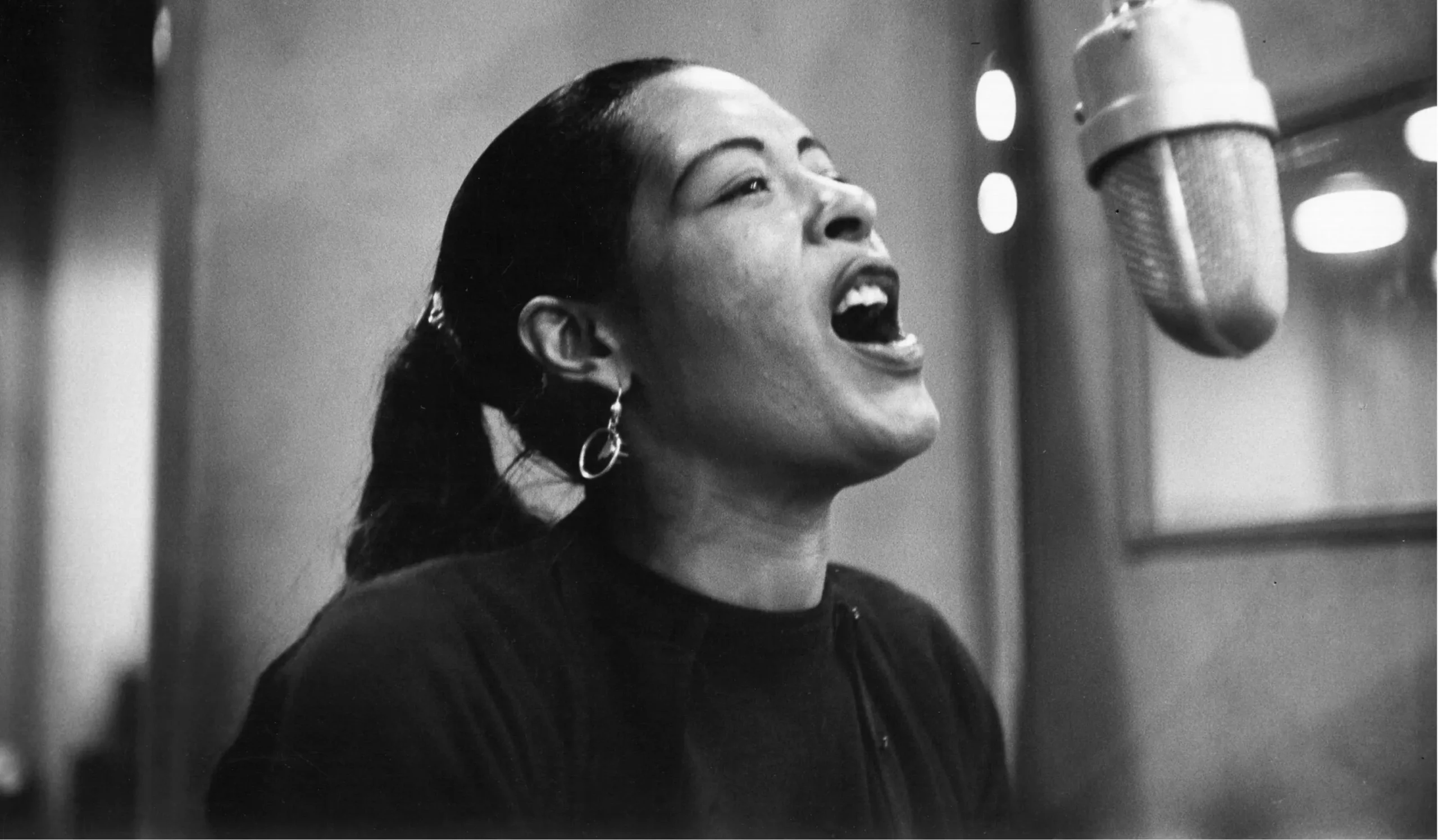
While her hard living was taking a toll on her voice, Holiday continued to tour and record in the 1950s. Holiday experienced both setbacks and successes during the 1950s. Her contract with Decca records lapsed in 1950. In 1951, producer Norman Granz, added her to the impressive list of artists for his Verve label. In 1954, she received a special award from Down Beat as “one of the all-time great vocalists in jazz". Her desire and range dwindling, her voice scratchy and tired, Holiday still retained her unique timing and phrasing and—when she wanted—her ability to move listeners. Holiday first toured Europe in 1954 as part of a Leonard Feather package. She played starting in Stockholm, in January 1954, and then Germany, the Netherlands, Paris, and Switzerland and gave her famous Royal Albert Hall performance. On that night in 1954, she was astonished at the awed silence that greeted her stage entrance, as if her title "Lady Day" had been bestowed at Buckingham Palace. A recording of a live set in Germany was released as Lady Love – Billie Holiday.
In 1956, Holiday published the frank autobiography she had written with journalist friend William Dufty, "Lady Sings the Blues". To accompany her autobiography, Holiday released the LP Lady Sings the Blues in June 1956. The album featured four new tracks, "Lady Sings the Blues", "Too Marvelous for Words", "Willow Weep for Me", and "I Thought About You", and eight new recordings. The re-recordings included "Trav'lin' Light", "Strange Fruit", and "God Bless the Child". She seemed content, even though her second marriage to Louis McKay in 1951 was in trouble, and the two had separated. Despite all of the trouble she had been experiencing with her voice, she managed to give an impressive performance on the television broadcast "The Sound of Jazz" with Ben Webster, Coleman Hawkins and Lester Young, now ill and frail from years of his own alcohol and drug abuse. Close friends were now beginning to notice a marked deterioration in Holiday's voice and talked of the recording sessions for which she was always late. She began to forget lyrics and would stand onstage, silent and staring, for minutes at a time. In March of 1959, Lester Young died, and Holiday said at his funeral that she thought she'd be the next to go.
Billie made her final public appearance in a concert at the Phoenix Theater in Greenwich Village, in New York, on May 25, 1959. By early 1959, Holiday was diagnosed with cirrhosis. Although she had initially stopped drinking on her doctor's orders, it was not long before Holiday relapsed. Holiday's manager Joe Glaser, jazz critic Leonard Feather, and the singer's own friends all tried in vain to persuade her to go to a hospital. While in the hospital, special agents of the Federal Bureau of Narcotics (FBN) came to her hospital room and placed her under house arrest, handcuffing her to the bed, for narcotics possession. She died in Metropolitan Hospital, New York City, on July 17, 1959, she was forty-four. Holiday’s dramatic intensity rendered the most banal lyric profound. The vintage years of Holiday’s professional and private liaison with Lester Young were marked by some of the best recordings of the interplay between a vocal line and an instrument. During her lifetime she had fought racism and sexism, and in the face of great personal difficulties triumphed through a deep artistic spirit. It is a tragedy that only after her death could a society, who had so often held her down, realize that in her voice could be heard the true voice of the times.
Billie Holiday is considered a musical legend because of her ability to improvise and make every word her own. Her voice is emotionally connected to each song as if it was hers alone. Holiday was essentially a jazz singer who put the blues feeling into every word she sang. During her entire career, however, she included only one dozen blues songs in her repertoire, preferring instead to use popular songs as the vehicles of her art. She learned her art from blues queen Bessie Smith. One of her best-known songs, “Billie’s Blues,” was a distinctive, original blues number that demonstrated her total control of her music, a control she never had in her life. Holiday strung her songs together in ways characteristic of African speech, and she invested her music with a blues feeling that contained not only sadness but also honesty and directness of expression. Like the best blues artists, she created music that transcended trouble and pain. Her career brought jazz from Harlem into café society, breaking down racial barriers. Holiday expressed the dynamic tradition of Black independence in a unique and powerful voice. In her art, she found the power and control that eluded her in other areas of her life.