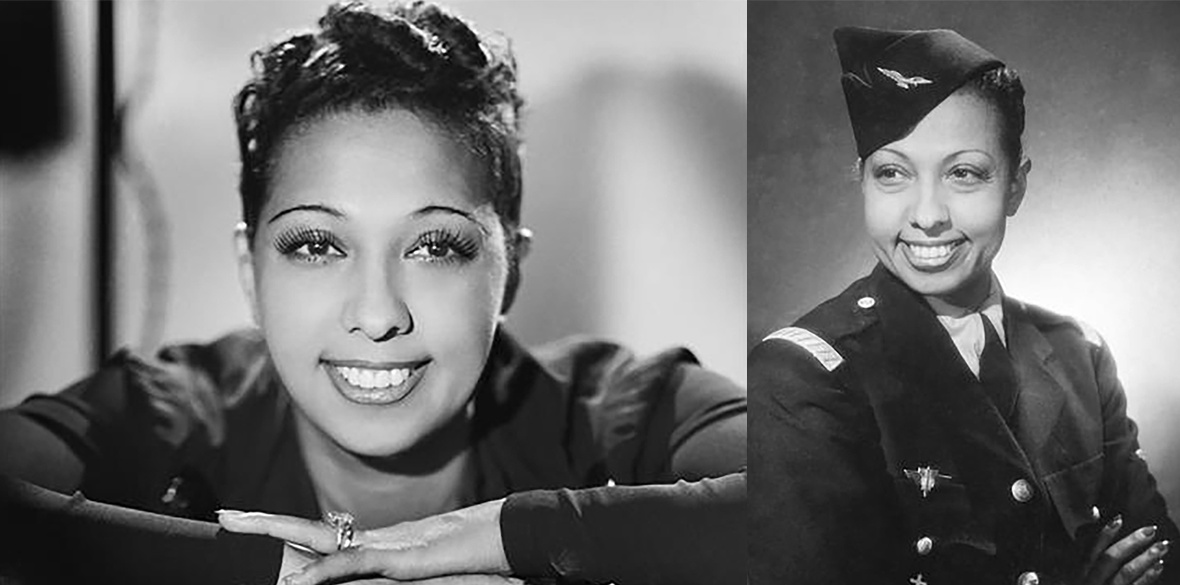
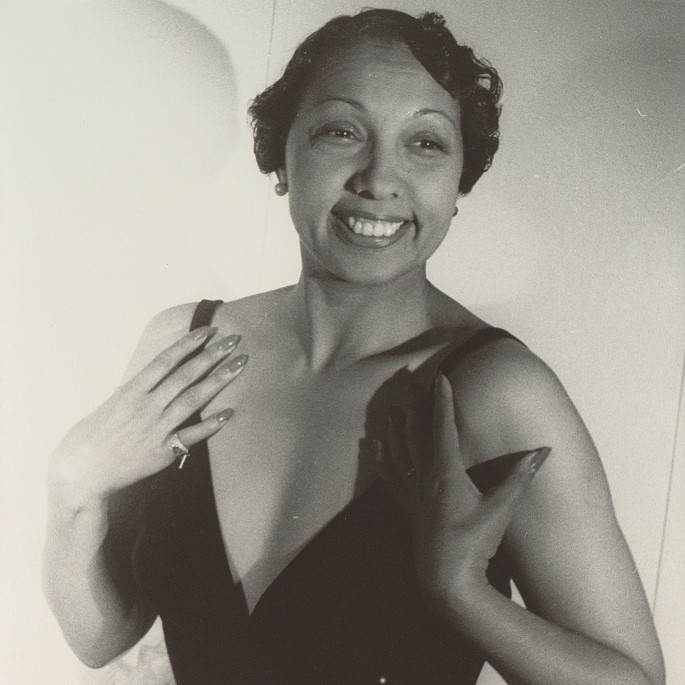
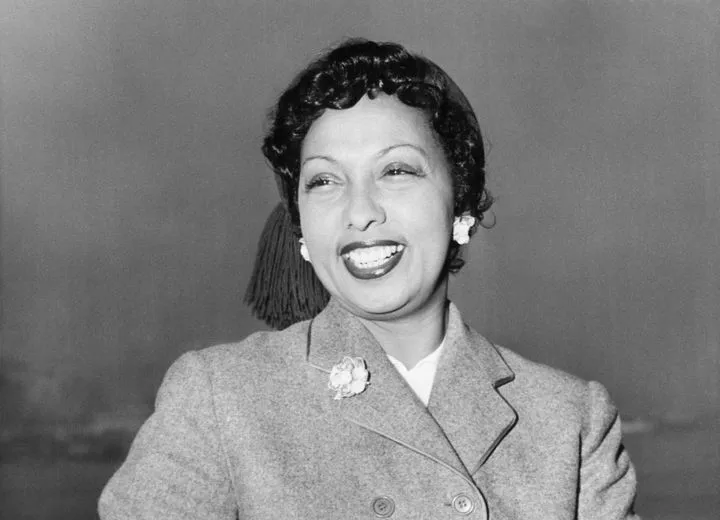
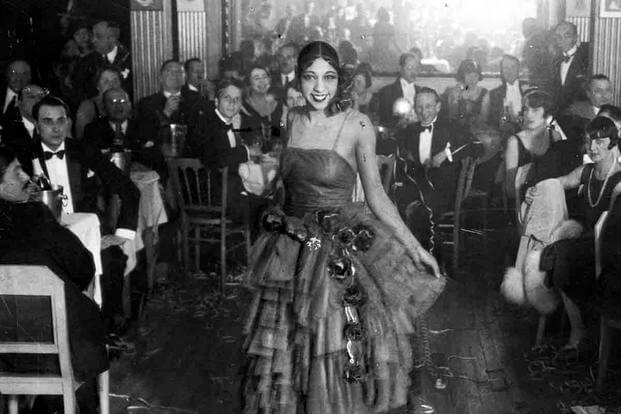
Josephine Baker is a true rags-to-riches story. She was born Freda Josephine McDonald in St. Louis Missouri on June 3, 1906, spending her early years in poverty, often going hungry in the slums of East St. Louis. The family were poor, cold and hungry, and Baker took up several jobs to help out. From the age of eight, she worked as a live-in domestic for wealthy White households, where she was warned against “kissing the children”. The East St. Louis race riots broke out in 1917, and after a successful audition at a local vaudeville theater, she left home at the age of 13. At least 39 Black people were lynched and thousands more were left homeless. The brutal killings would leave a profound mark on Josephine, aged 11 at the time. So did the hardship and discrimination she experienced as a child. To help support her family Josephine did waitressing most of the time but she also worked on the stage whenever she could.
Her first, brief marriage occurred while she was only 13 years old. The marriage lasted briefly, before word got back to Josephine’s mother who removed her from the relationship only weeks later. Music and dance were a beloved part of Josephine Baker’s world since her youth in St. Louis, Missouri. Whenever she could spare the cost for tickets, Baker would visit the Booker T. Washington Theater, a Black vaudeville house, to immerse herself in the captivating performances of regulars Ma Rainey and Bessie Smith. On Saturdays, young Baker would entertain and perform with the children in her community as she moved her arms and legs alongside the rhythm of the music played by her friends and neighboring musicians. In 1919, Baker joined a trio of instrumentalists called the Jones Family Band while working as a waitress at the Old Chauffeur's Club where the best jazz musicians in St. Louis played to well-dressed crowds.
Josephine's goals were set—to be on stage, to be glamorous. The band invited Baker into their group after seeing a song and dance routine she would often perform for customers during her breaks. Two years later her second marriage in 1921 to William Howard Baker at the age of 15 was also short-lived. Josephine kept his last name that she would used on stage. After a series of performances at cafes and restaurants across St. Louis, the Jones Family Band booked a short-term gig at the Booker T. Washington Theater and Baker made the audience laugh uproariously on opening night with her natural comedic talents. Following the performance, Baker toured with the Dixie Steppers, a vaudeville troupe, as a comic performer across the southern United States. Sometime in 1921, around the age of 15, Josephine left her home and husband and moved to New York City, where she performed in various clubs. Josephine had a talent for being noticed.
Performing during the height of the Harlem Renaissance, Baker soon became an established part of the chorus line of a touring production of the groundbreaking Shuffle Along (1921), often drawing attention to herself by performing improvised, comedic bits on stage. This was a significant turning point in her life, as it allowed her to pursue her dream of becoming a professional dancer and entertainer. New York City in the Roaring Twenties was home to many influential and revolutionary artists, several of whom Baker would come to study and learn from in her determination to perfect her artistic craft. After Shuffle Along closed in 1924, Josephine appeared briefly in a few clubs around town. A frenetic dancer and relentless on-stage clown, she quickly attracted notice and was tapped for a bigger part in another Sissle/Blake production, 1924's Chocolate Dandies, along with Ethel Waters. The show made her a star in New York, and she became big in Harlem as well with performances at The Cotton Club and The Plantation Club, among others, where again she quickly became a crowd favorite.
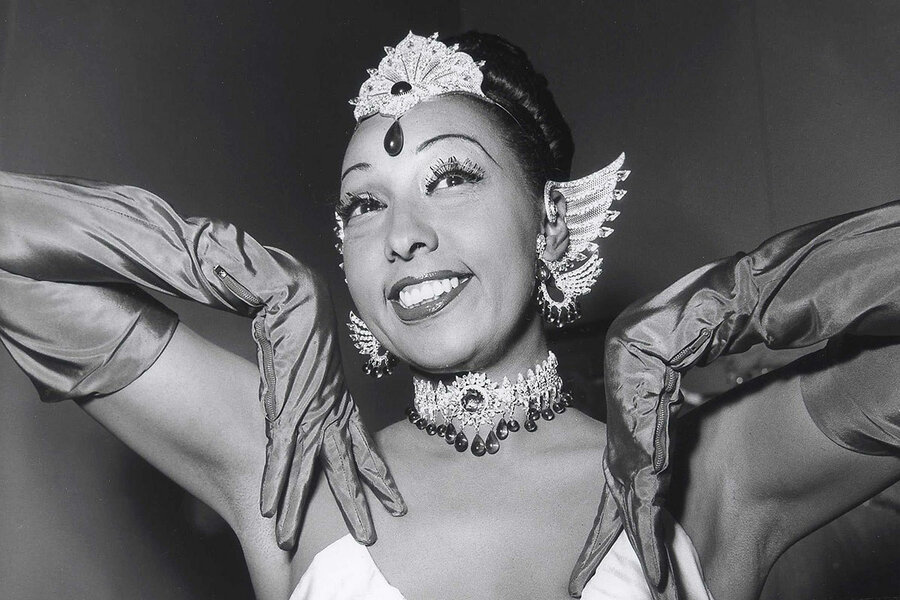
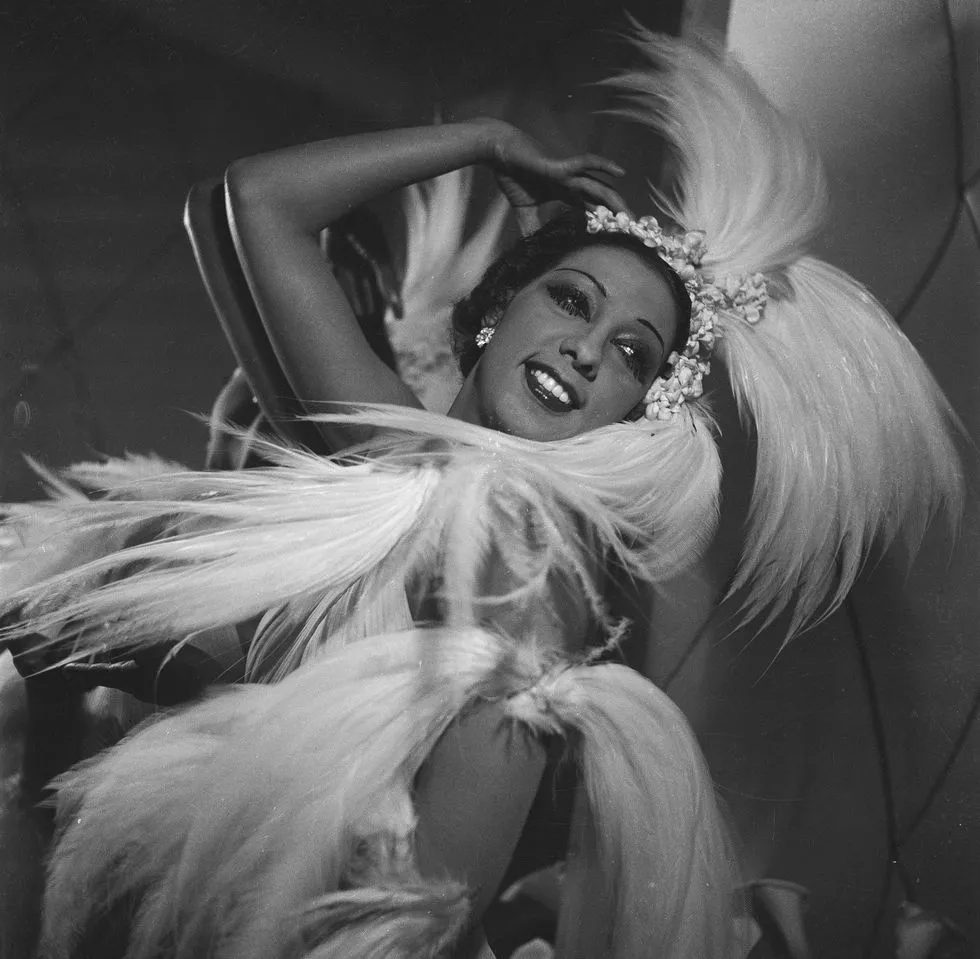
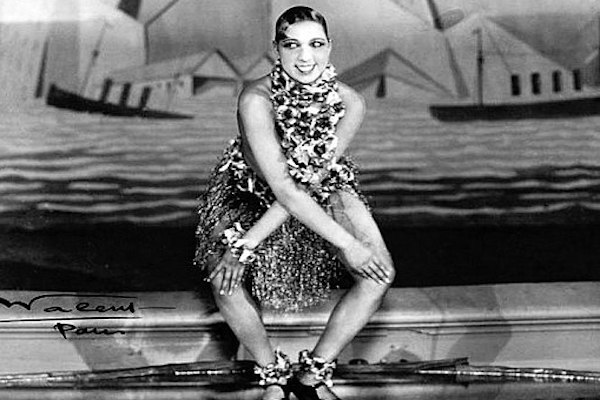
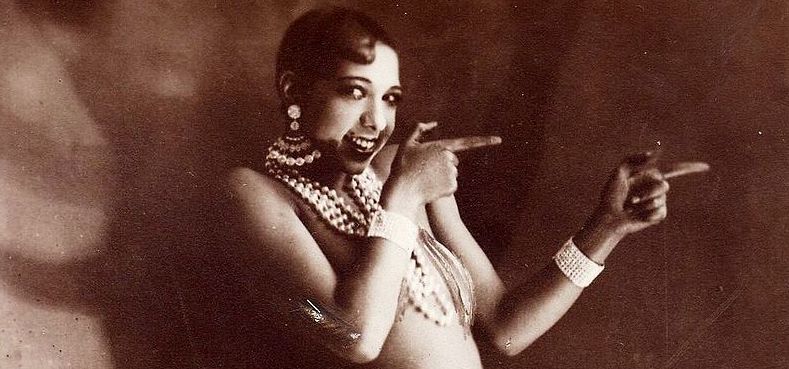
Baker made the journey to Paris in 1925, opening with the American production "La Revue Nègre" at Théâtre des Champs-Élysées and became an instant hit for her unique style of dancing. She made an immediate impression on French audiences when, with dance partner Joe Alex, she performed the Danse Sauvage, in which she wore only a feather skirt. Once the Revue closed, Baker was given her own show and from there her career skyrocketed. A symbol of the Jazz Age and the Harlem Renaissance which she brought to Europe, Josephine was an iconic figure of the Roaring Twenties that enflamed imaginations. At a time when the French were fascinated with Black art and culture. Unlike the United States, France did not racially segregate public places on a large scale.
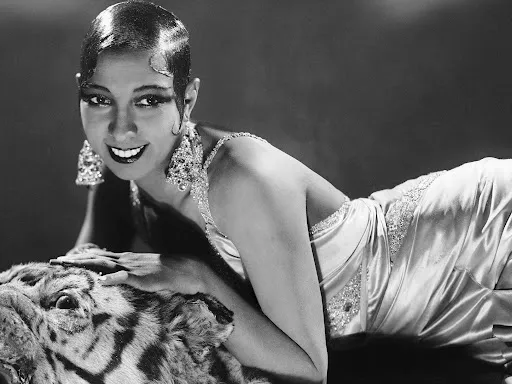
Baker capitalized on freedoms not available in the highly segregated United States to an Black woman. She went on to become one of the most popular music-hall entertainers in France and achieved star billing at the Folies-Bergère, where she created a sensation by dancing seminude in a G-string ornamented with bananas. Swinging her hips and using her entire body in ways Parisian audiences had never seen before, her cultural influence quickly spread throughout the country, and in turn, the world. Josephine Baker’s meteoric rise to fame quickly established her as a household name. Her characteristic rhythmic style was unmatched across the theatres of Paris. Her exotic and provocative dancing style, along with her captivating charisma, set her apart from other entertainers. Baker's work helped Black entertainers come to be recognized as artists. Baker was also an avid animal lover and, in the early 1930s, was gifted with a pet cheetah named Chiquita.
Josephine's show-stopping finale, in which she danced the Charleston wearing nothing but a girdle of feathers, made her an overnight sensation. Baker was soon among the most popular and highest-paid performers in Europe, having the admiration of cultural figures like Pablo Picasso, Ernest Hemingway and E. E. Cummings and earning herself nicknames like “Black Venus” and “Black Pearl.” She also received more than 1,000 marriage proposals. Soon, she'd opened her own club (Chez Josephine) and starred in her first movie, the naturally exotic 1927 film "La Sirene des Tropiques". She sang professionally for the first time in 1930, made her screen debut as a singer four years later in hit picture "Zouzou", and "Princess Tam-Tam", before returning to America in 1936. There she starred in Ziegfeld's Follies that featured talents like Eve Arden, Bob Hope, Judy Canova and Fanny Brice. Unfortunately the conservative audience and the critics refused to welcome a Black woman, despite of her being a major celebrity in Europe. She received discriminatory and dismissive reviews from the New York Times.
Time magazine referred to her as a "Negro wench ... whose dancing and singing might be topped anywhere outside of Paris", while other critics said her voice was "too thin" and "dwarf-like" to fill the Winter Garden Theatre. It was her first negative review in 20 years and she returned to France heartbroken. Baker’s experiences performing in the United States compelled her to actively confront racial discrimination thereon. When Brice fell ill, temporarily halting the revue, Baker broke her contract and fled to Paris. This contributed to Baker's becoming a legal citizen of France and giving up her American citizenship. She became a naturalized French citizen after marrying sugar magnate Jean Lion in 1937, though his status as a French Jew exposed the couple to additional discrimination when the Nazis invaded two years later. The couple moved to the Château des Milandes, a Renaissance castle in southwest France.
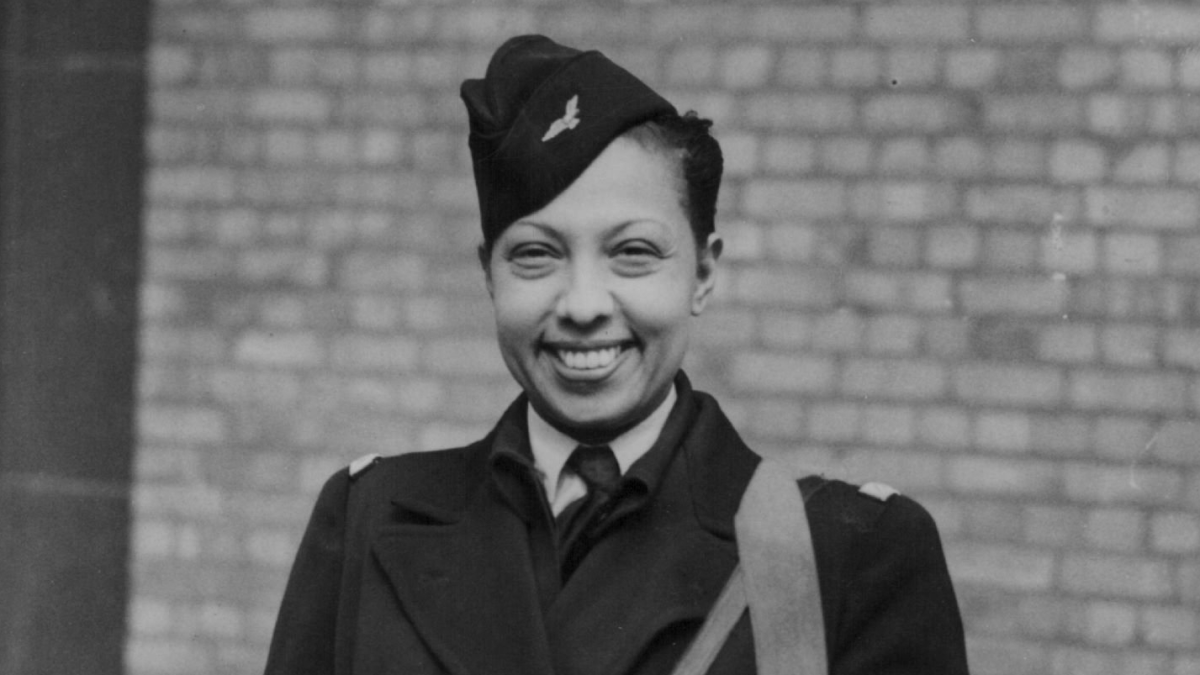
When Adolf Hitler and the German Army invaded France during World War II, Baker took a stance. Josephine came to represent much of what Adolph Hitler and the Nazis despised. The days of basking in entertainment and dance were replaced by joining the fight against the Nazi regime which changed the landscape of France. Baker joined the French Resistance at an early date and worked throughout World War II to help the Allies. Despite her fame and riches, Baker identified a new passion during World War II and became a highly decorated, uniformed member of the French Resistance movement as a spy. Using her celebrity status, Baker aided French military officers by passing secrets she heard while performing in front of the Nazis, often transporting confidential information by writing in invisible ink on music sheets. Baker volunteered for the Red Cross to assist Belgian refugees streaming into France, and undoubtedly boosted troop morale by performing across Northern Africa. Baker worked with the British Secret Intelligence Service and the United States Office of Strategic Services.
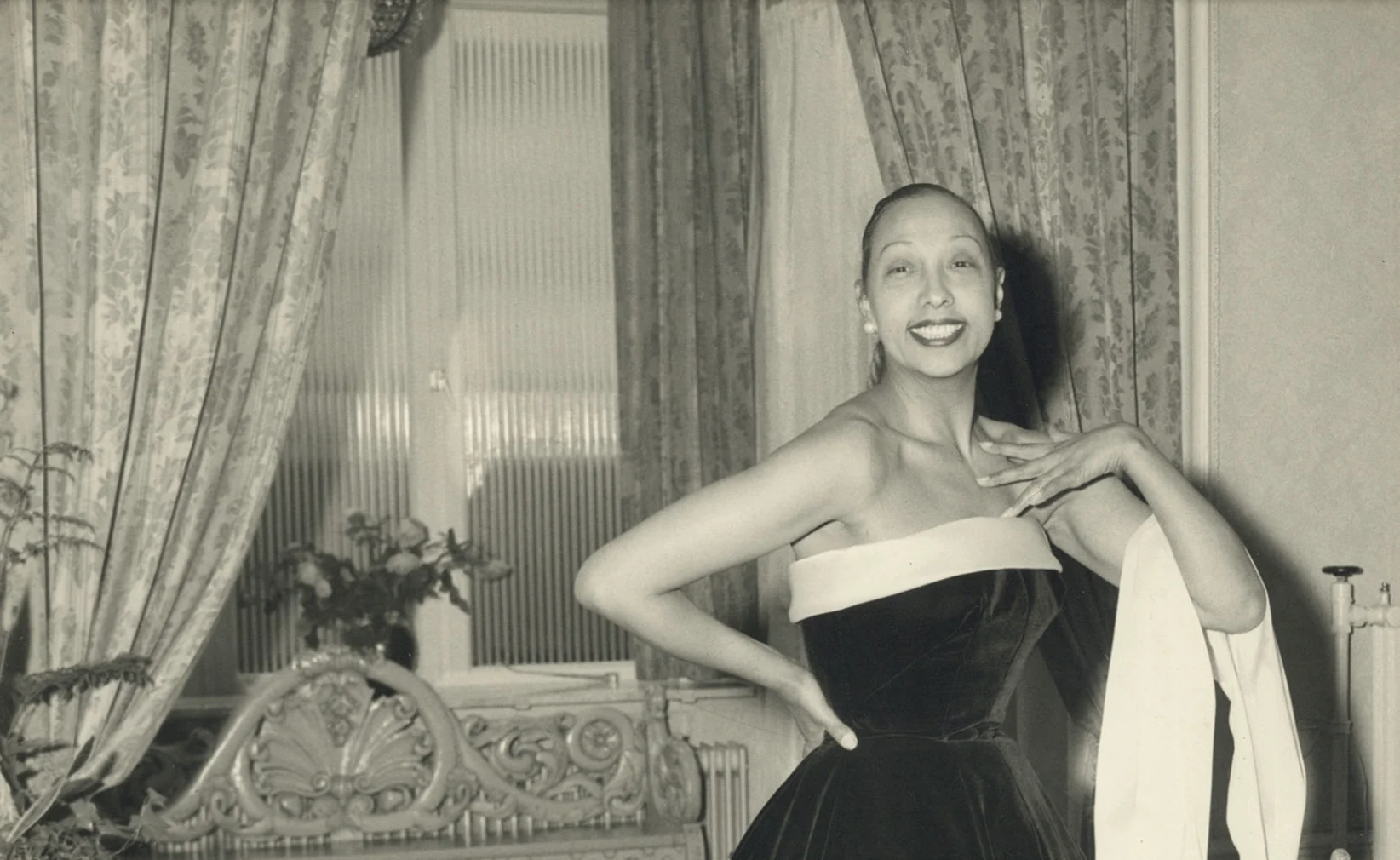
Josephine moved to Morocco and began touring North Africa and the Middle East to perform for integrated audiences of French and American troops. She joined the Air Force as second lieutenant and landed in Marseille, following France’s liberation, in October 1944. She was awarded the Legion of Honor and the Médaille de la Résistance, in addition the Croix de Guerre, France’s highest civilian and military distinctions, upon the Liberation. After the war, Baker was in her 40’s and no longer a sex symbol, though she continued to perform. In 1947, Baker reinvented herself and married French orchestra leader, Jo Bouillon. They purchased a Renaissance castle with more than 30 rooms and 1,000 acres of land. Childless and in her forties, she embraced child advocacy and her desire to combat racism.
In 1950 in the cause of what she defined as “an experiment in brotherhood” and her “Rainbow Tribe", she adopted babies of all nationalities. With her fourth husband Jo Bouillon, she adopted a total of 12 children. She often invited people to the estate to see these children, to demonstrate that people of different races could in fact live together harmoniously. Her estate featured hotels, a farm, rides, and the children singing and dancing for the audience. Baker, who saw herself as a “universal mother”, opened the château’s park to neighboring children. She charged an admission fee to visitors who entered and partook in the activities, which included watching the children play. Baker created dramatic backstories for them, picking them with clear intent in mind. She also raised them in different religions in order to further her model for the world, taking two children from Algeria and raising one child as a Muslim and raising the other child as a Catholic.
During the year of 1951, Baker, decided to tour the United States for benefits and to support the Civil Rights Movement. However, she faced blatant racism and discrimination in her own country. Josephine Baker belongs to all countries and all communities, but Miami should be particularly proud as it is the place where she succeeded for the first time in her native country to perform for a non-segregated audience. Baker had long since used her professional status to speak out on her position against segregation and openly refused to perform for segregated audiences. In 1951, the Copa City Club booked her for a major appearance after a tour in Latin America. Yet, Josephine refused to sign contracts with venues that were segregated. She even turned down a 10-thousand-dollars-a-week deal. After fighting for what she wanted amidst long and difficult negotiations, and thanks to her strength of character, she convinced the then jewel of Miami Beach’s nightlife to open its premises to all. Baker’s shows in Miami were a great success and the start of a new social life for the communities of the city.
Also, during the year, when the New York Stork Club refused her service, Baker criticized the club's unwritten policy of discouraging Black patrons. She then engaged in a head-on media battle with pro-segregation columnist Walter Winchell, an old ally, for not rising to her defense. Baker then organized a protest against the Stork Club’s discriminatory practices with the backing of the National Association for the Advancement of Colored People (NAACP). Winchell responded swiftly with a series of harsh public rebukes, including accusations of Communist sympathies (a serious charge at the time). The ensuing publicity resulted in the termination of Baker's work visa, forcing her to cancel all her engagements and return to France. It was almost a decade before U.S. officials allowed her back into the country. In 1951, for her refusal to play to segregated audiences, so the NAACP, named her its "Most Outstanding Woman of the Year".
In 1952 she came to the Last Frontier Hotel located in Las Vegas, Nevada. Baker was well aware of Las Vegas racism, as noted by the “clause” in her contract that stipulated certain liberties not often given to Black Americans in the city. The entertainment industry in Las Vegas was just starting to grow with the city, yet Black celebrities faced discrimination within the same venues that they performed. Baker challenged these segregationist policies by demanding tables for her guests, be they White or Black, and by staying in a cottage on the premises of the hotel casino, a practice that was taboo within the city’s tradition. After this incident, she began receiving threatening phone calls from people claiming to be from the Ku Klux Klan but said publicly that she was not afraid of them.
In early 1954, she gave a speech in Copenhagen where she described her intent to create a family of children of all skin colors to be raised in brotherhood and universalism. During this time she set aside time on fighting segregation and racism in the United States. She frequently returned to the U.S. to support the Civil Rights Movement. She started traveling more to the south, she gave a talk at Fisk University, on "Equality and discrimination”. In early 1954, she gave a speech in Copenhagen where she described her intent to create a family of children of all skin colors to be raised in brotherhood and universalism. During this time she set aside time on fighting segregation and racism in the United States. She frequently returned to the U.S. to support the Civil Rights Movement. Taking a stand against racism can attract supports and detractors. Having views of equality and fighting for the end of segregation, Baker was seen as a threat in the minds of the FBI. Baker became much the center of tension from both White and Black Americans. She was criticized for standing up to make sure that African American entertainers were treated fairly and on equal terms as White entertainers. Her detractors were from both shades of the community.
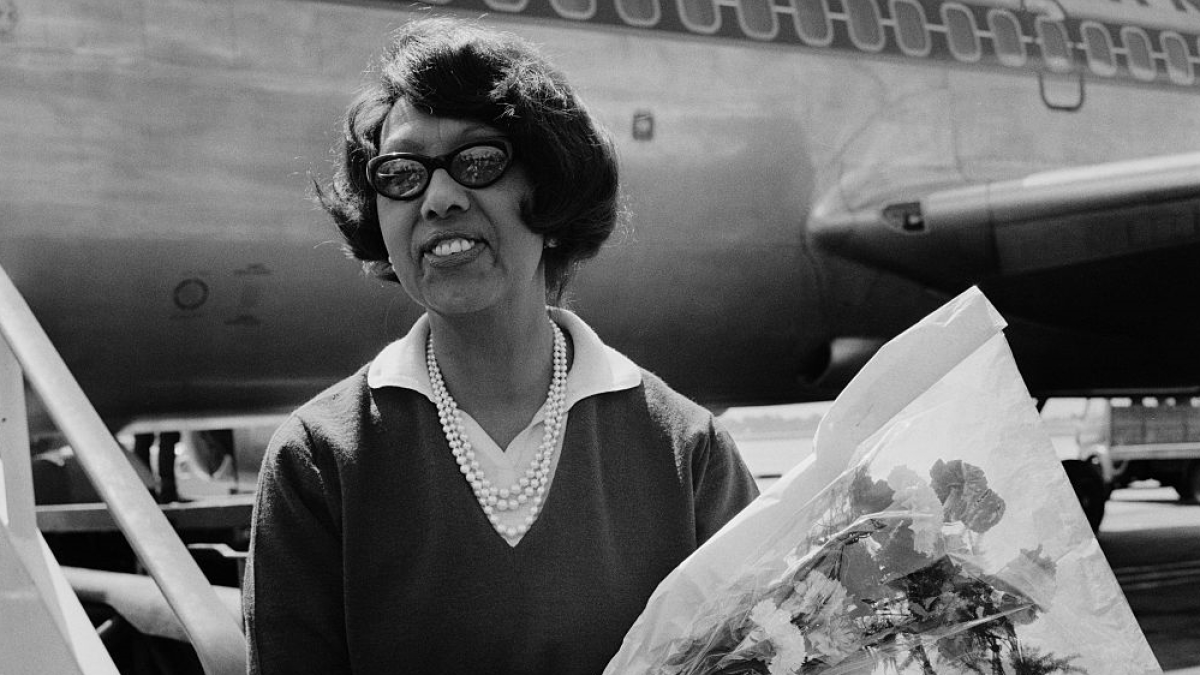
Attending and performing in the United States, an African American wrote that it appeared to him that Baker’s chief ambition in life was to make fabulous salaries, wear priceless gowns, marry European counts. Whites and Blacks wanted her to keep her place and, in the view of an African American writer, to copy other entertainers, such as Lena Horne, Duke Ellington, and others to stay within their lane in the United States. In 1963, at the age of 57, Baker flew in from France, her adopted homeland, to appear before the largest audience in her career, the 250,000 gathered at the March on Washington for Jobs and Freedom to deliver a speech (see below). Her speech detailed her life as a Black woman in the United States and abroad. She spoke just before Dr. Martin Luther King gave his “I Have a Dream” oration. She was one of two female speakers that day in August of 1963, (the other being Daisy Bates) where she honored women civil rights activists.
She gave a benefit concert at Carnegie Hall for the NAACP, the SNCC, and CORE in 1963. Josephine was one of the highest profile public figures involved in the Civil Rights Movement. For her efforts as a civil rights activist, she was made a lifetime member of the NAACP, which declared May 20 “Josephine Baker Day”. By 1964 her lavish lifestyle had brought her to the brink of bankruptcy and eviction. With creditors eyeing her château, the icon of the Jazz Age made a desperate plea for help. A moved Brigitte Bardot, then at the height of her fame, rushed to her side and appealed on television to the French people to chip in too. The respite was brief and four years later the lavish estate was auctioned off for good – though Baker had to be forced out of the building in March 1969 after she barricaded herself inside. Her close friend Princess Grace of Monaco offered her financial assistance and a seaside residence in Roquebrune, on the French Riviera.
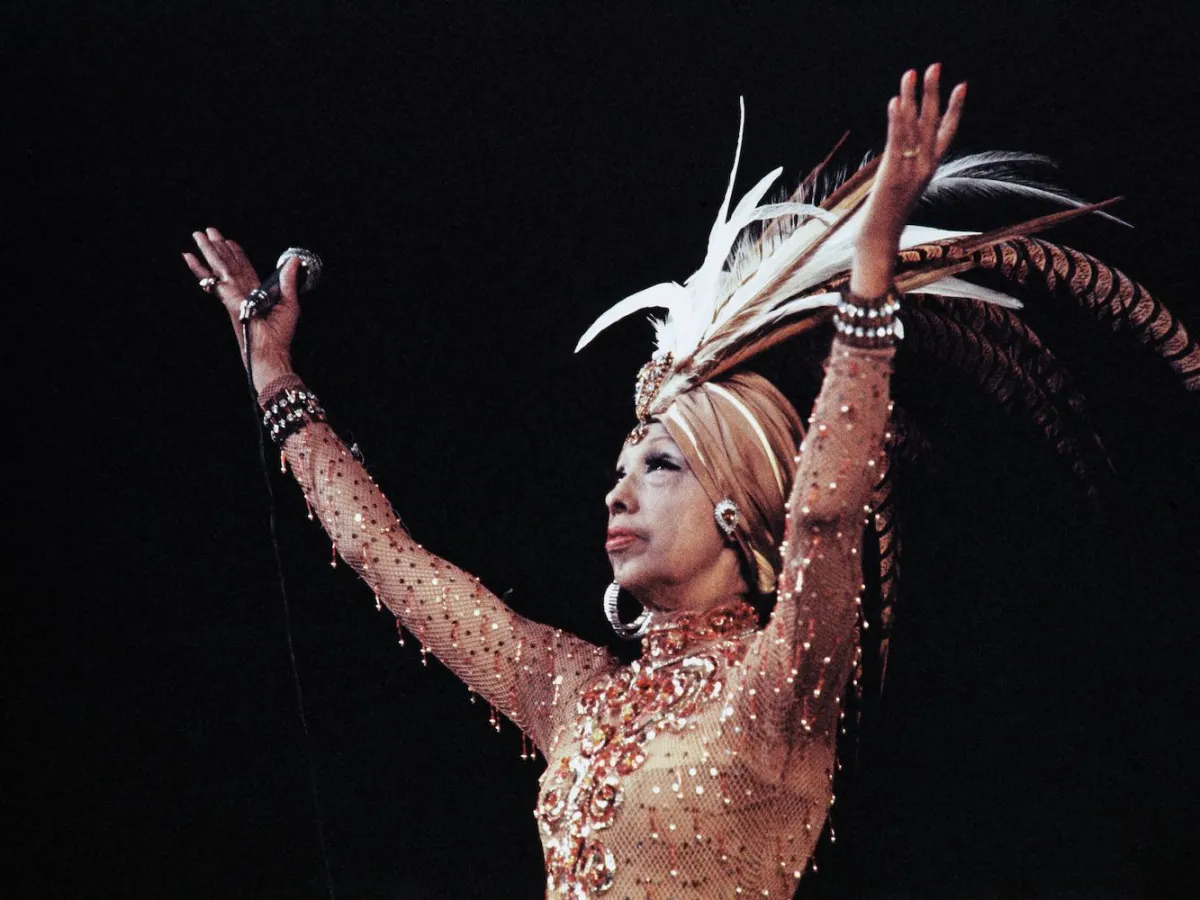
Now in her 60s, the music hall diva was soon back on stage, performing at L’Olympia in Paris, as well as in Belgrade, Copenhagen, London and New York’s Carnegie Hall. She was married for a fifth and final time in 1973, to the American art collector Robert Brady, though the couple split after a year. In the spring of 1975, Baker starred in a new show at the Bobino in Paris, marking 50 years since her sensational arrival in the French capital. The flamboyant spectacle recounted every chapter of her extraordinary life; the humble Missourian beginnings, the early triumphs, the wartime resistance and the battle for equal rights. It was feted with rapturous applause by an audience that included the likes of Diana Ross, Sophia Loren and Mick Jagger. But exhaustion and advancing age had taken their toll on the “Black Venus”. She continued to perform on stage and fight racial injustice well into the 1970s until she was found unconscious on April 10, 1975.
Days later, more than 20,000 mourners lined the streets of Paris for her funeral at the Église de la Madeleine, which was broadcast live on French television. The government ordered a 21-gun salute as Baker became the first American-born woman to receive full French military honors at her funeral. Baker’s boundary-breaking reputation continues to hold great significance around the world and it is her singularity that will be remembered for generations to come. Baker's experience of relative racial equality in Europe had made her even more aware of and engaged with the fight for equal rights. In both her professional and personal life, Josephine Baker made it her mission to prove that people could live in relative peace and harmony no matter the color of their skin. Her impact extended far beyond the stage, inspiring generations of artists, activists, and individuals to fight for equality and embrace diversity. Baker was a big part of the Civil Rights movement. She demonstrated by boycotting segregated clubs, concert venues and organizing protests. Baker was so integral that following Dr. Martin Luther King Jr’s death, his wife, Coretta Scott King, approached Josephine Baker and encouraged her, to consider taking on a more prominent leadership role. Josephine Baker strongly considered the proposal for a while before turning it down. Stating: “My children are too young to lose their mother.”
Friends and family…you know I have lived a long time and I have come a long way. And you must know now that what I did, I did originally for myself. Then later, as these things began happening to me, I wondered if they were happening to you, and then I knew they must be. And I knew that you had no way to defend yourselves, as I had. And as I continued to do the things I did, and to say the things I said, they began to beat me. Not beat me, mind you, with a club—but you know, I have seen that done too—but they beat me with their pens, with their writings. And friends, that is much worse.
When I was a child and they burned me out of my home, I was frightened and I ran away. Eventually I ran far away. It was to a place called France. Many of you have been there, and many have not. But I must tell you, ladies and gentlemen, in that country I never feared. It was like a fairyland place.
And I need not tell you that wonderful things happened to me there. Now I know that all you children don’t know who Josephine Baker is, but you ask Grandma and Grandpa and they will tell you. You know what they will say. “Why, she was a devil.” And you know something…why, they are right. I was too. I was a devil in other countries, and I was a little devil in America too.
But I must tell you, when I was young in Paris, strange things happened to me. And these things had never happened to me before. When I left St. Louis a long time ago, the conductor directed me to the last car. And you all know what that means.
But when I ran away, yes, when I ran away to another country, I didn’t have to do that. I could go into any restaurant I wanted to, and I could drink water anyplace I wanted to, and I didn’t have to go to a colored toilet either, and I have to tell you it was nice, and I got used to it, and I liked it, and I wasn’t afraid anymore that someone would shout at me and say, “Nigger, go to the end of the line.” But you know, I rarely ever used that word. You also know that it has been shouted at me many times. So over there, far away, I was happy, and because I was happy I had some success, and you know that too.
Then after a long time, I came to America to be in a great show for Mr. Ziegfeld, and you know Josephine was happy. You know that. Because I wanted to tell everyone in my country about myself. I wanted to let everyone know that I made good, and you know too that that is only natural. But on that great big beautiful ship, I had a bad experience. A very important star was to sit with me for dinner, and at the last moment I discovered she didn’t want to eat with a colored woman. I can tell you it was some blow. And I won’t bother to mention her name, because it is not important, and anyway, now she is dead.
And when I got to New York way back then, I had other blows—when they would not let me check into the good hotels because I was colored, or eat in certain restaurants. And then I went to Atlanta, and it was a horror to me. And I said to myself, My God, I am Josephine, and if they do this to me, what do they do to the other people in America? You know, friends, that I do not lie to you when I tell you I have walked into the palaces of kings and queens and into the houses of presidents. And much more. But I cold not walk into a hotel in America and get a cup of coffee, and that made me mad. And when I get mad, you know that I open my big mouth. And then look out, ‘cause when Josephine opens her mouth, they hear it all over the world.
So I did open my mouth, and you know I did scream, and when I demanded what I was supposed to have and what I was entitled to, they still would not give it to me. So then they thought they could smear me, and the best way to do that was to call me a communist. And you know, too, what that meant. Those were dreaded words in those days, and I want to tell you also that I was hounded by the government agencies in America, and there was never one ounce of proof that I was a communist. But they were mad. They were mad because I told the truth. And the truth was that all I wanted was a cup of coffee. But I wanted that cup of coffee where I wanted to drink it, and I had the money to pay for it, so why shouldn’t I have it where I wanted it?
Friends and brothers and sisters, that is how it went. And when I screamed loud enough, they started to open that door just a little bit, and we all started to be able to squeeze through it. Not just the colored people, but the others as well, the other minorities too, the Orientals, and the Mexicans, and the Indians, both those here in the United States and those from India. Now I am not going to stand in front of all of you today and take credit for what is happening now. I cannot do that. But I want to take credit for telling you how to do the same thing, and when you scream, friends, I know you will be heard. And you will be heard now.
But you young people must do one thing, and I know you have heard this story a thousand times from your mothers and fathers, like I did from my mama. I didn’t take her advice. But I accomplished the same in another fashion. You must get an education. You must go to school, and you must learn to protect yourself. And you must learn to protect yourself with the pen, and not the gun. Then you can answer them, and I can tell you—and I don’t want to sound corny—but friends, the pen really is mightier than the sword.
I am not a young woman now, friends. My life is behind me. There is not too much fire burning inside me. And before it goes out, I want you to use what is left to light that fire in you. So that you can carry on, and so that you can do those things that I have done. Then, when my fires have burned out, and I go where we all go someday, I can be happy.
You know I have always taken the rocky path. I never took the easy one, but as I get older, and as I knew I had the power and the strength, I took that rocky path, and I tried to smooth it out a little. I wanted to make it easier for you. I want you to have a chance at what I had. But I do not want you to have to run away to get it. And mothers and fathers, if it is too late for you, think of your children. Make it safe here so they do mot have to run away, for I want for you and your children what I had. Ladies and gentlemen, my friends and family, I have just been handed a little note, as you probably say. It is an invitation to visit the President of the United States in his home, the White House.
I am greatly honored. But I must tell you that a colored woman—or, as you say it here in America, a Black woman—is not going there. It is a woman. It is Josephine Baker. This is a great honor for me. Someday I want you children out there to have that great honor too. And we know that that time is not someday. We know that that time is now. I thank you, and may god bless you. And may He continue to bless you long after I am gone.