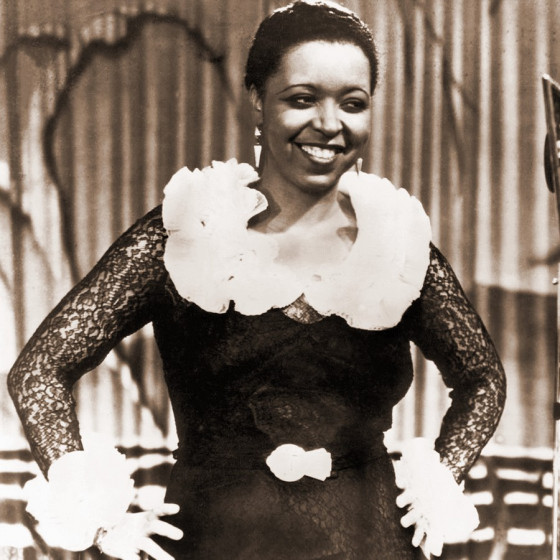
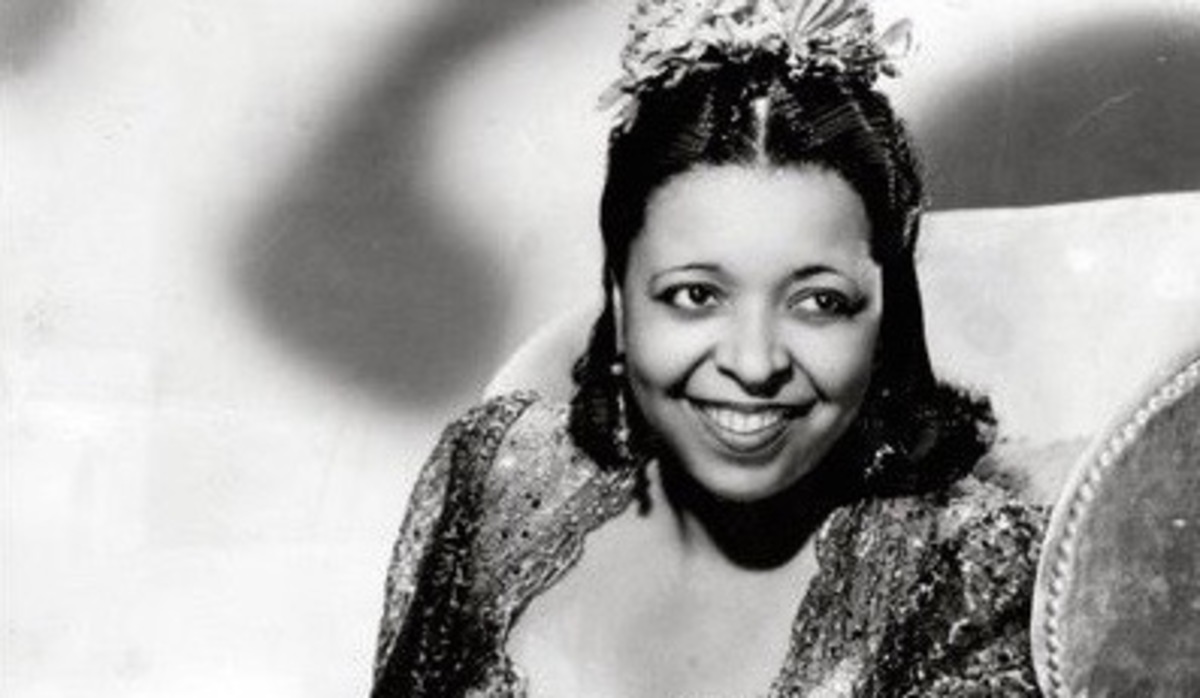
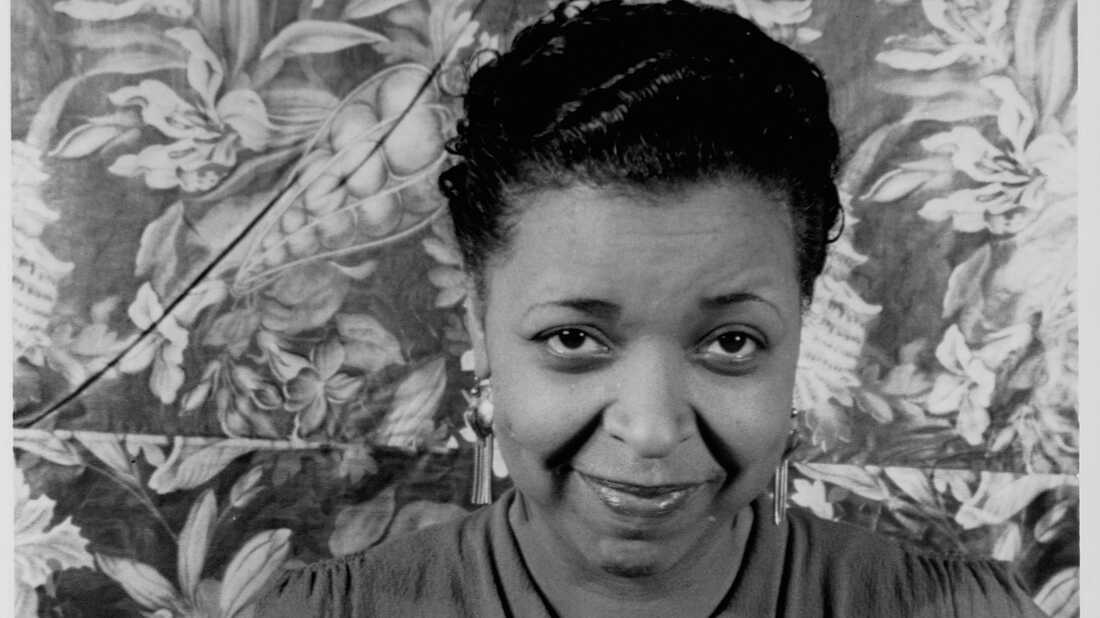
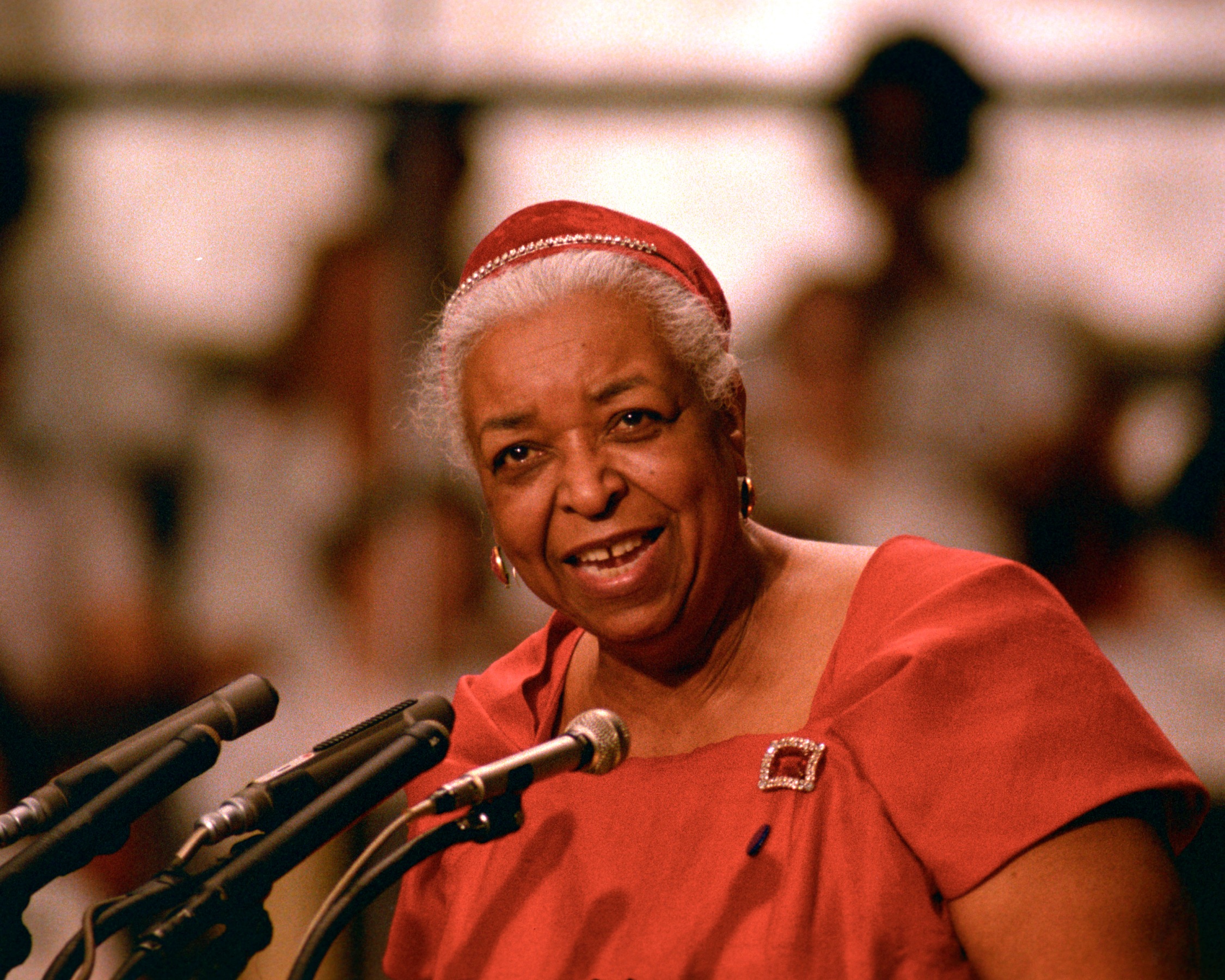
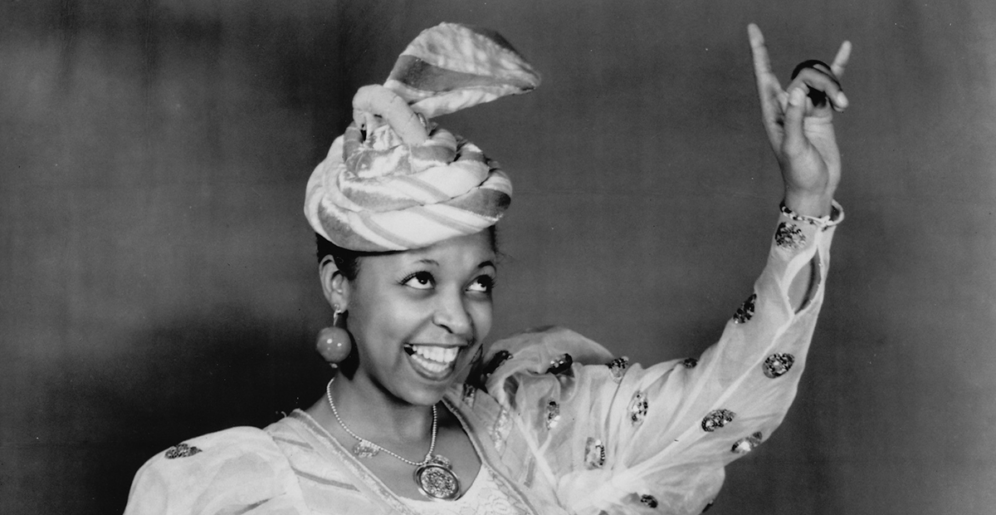
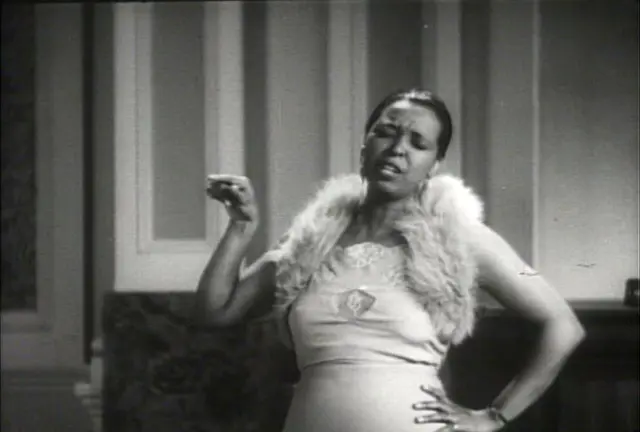
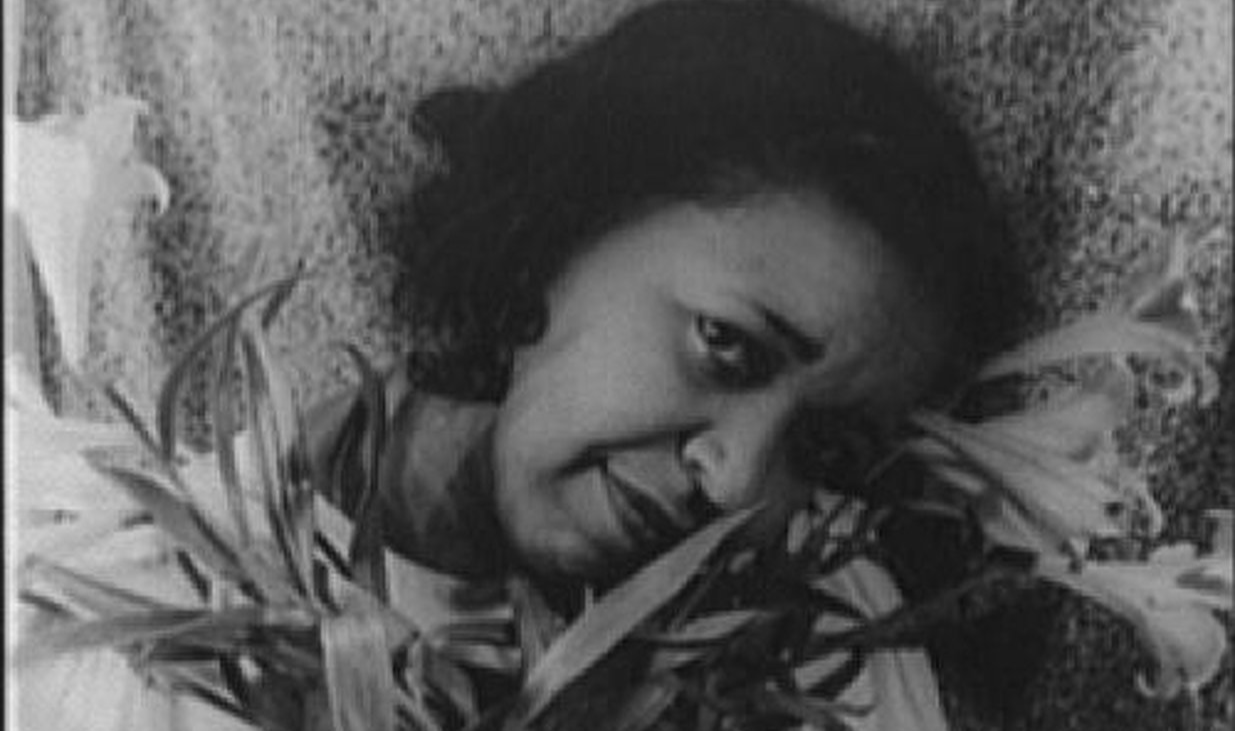
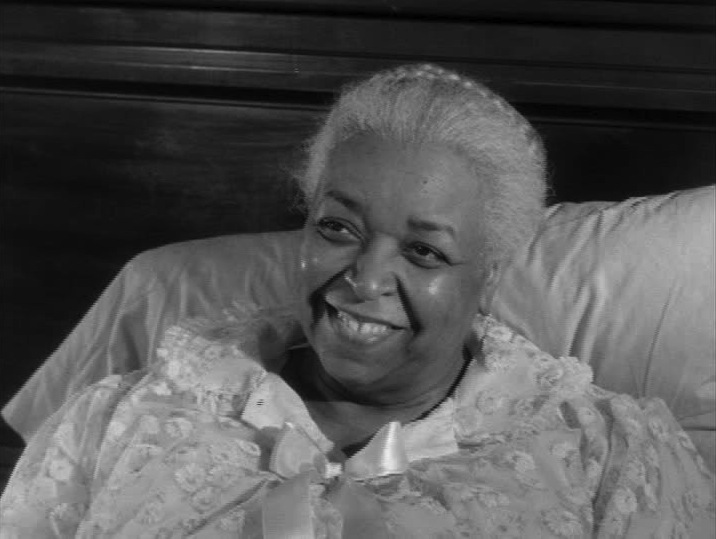
Blues, and jazz singer and dramatic actress Ethel Waters was born on October 31, 1896 in Chester, Pennsylvania. Her mother, Louise Anderson believed to have been 13 years old at the time, was raped by a much older John Waters, a pianist and family acquaintance from a middle-class African-American background.. He played no role in raising Ethel. Ethel Waters spent her childhood malnourished - both physically and mentally - in the racially mixed town of Chester, Pennsylvania. She was raised in poverty by her grandmother, Sally Anderson, as well as two aunts and an uncle and never lived in the same place for more than 15 months. Waters' aunts usually ignored her, but what attention they paid her was most often physically abusive. Soon after Waters was born, her mother married Norman Howard, a railroad worker, with whom she had a daughter, Juanita Howard, Ethel's half-sister.
Ethel’s birth mother was very religious, and religious devotion was important to Ethel as well. Because of her chaotic family life, she did not have a specific church to attend, but that did not diminish the strength of her prayers. At one point, Ethel’s grandmother was able to enroll her in a Quaker school. At age 13 Waters had divorced her first husband, Merritt Purnsley, and began a short-lived career as a chambermaid in a Philadelphia hotel. That same year she sang in public for the first time in a local nightclub. Growing up in and around Philadelphia area, she became more strong under the influence of White vaudeville singers such as Nora Bayes and Fanny Brice that her southern contemporaries. She became an outstanding example of the group of African American singers known as “cake-walking babies” to distinguish them from southern classic blues singers such as Ma Rainey and Bessie Smith.
While singing for a talent show, she was discovered by producers and managers but never signed to a label. In addition to her singing, Ethel Waters was known for her shimmy-dancing. In her twenties, she was 5 ‘10 inches tall and rail thin. The promoter began introducing her as “Sweet Mama Stringbean". On her 17th birthday, while at a costume party at a nightclub on Juniper Street in Philadelphia, Waters was persuaded to perform two songs and ultimately impressed her guests. This performance landed her a professional gig at Lincoln Theater in Baltimore. The job singing and dancing in Baltimore netted her $9 a week, with two of her friends weekly skimming $16 for getting her the job. Billing herself as “Sweet Mama Stringbean,” Waters was singing professionally in Baltimore, Maryland. It was there that she became the first woman to sing the W.C. Handy classic “St. Louis Blues” on the stage. Audiences loved it, and they loved her.
She later recalled that she earned the rich sum of ten dollars a week, but her managers cheated her out of the tips her admirers threw on the stage. Following the end of her tour in Baltimore, Waters began to travel the rest of the country with a vaudeville group including Bessie Smith, performing ballads and starring in blackface skits for predominantly White audiences. Even with her success, she fell on hard times and joined a carnival of freight cars going to Chicago. She enjoyed her time with the carnival, but she did not last long with them and soon after, she headed to Atlanta, GA. where she worked in the same club as Bessie Smith. Smith demanded that Waters not compete with blues songs, and Waters agreed to sing ballads and popular songs. Waters’s singing style was softer. To her, the important part of the song was interpreting the feeling. She was very good at it, and as her career built, her dramatic skill grew.
Her professional rise was rapid, and Waters moved to Harlem and became a performer in the Harlem Renaissance of the 1920s. When she arrived in Harlem, female blues singers were becoming more and more powerful. Black performers Bessie Smith and Ma Rainey were popular at that time. They made their mark with songs that were delivered with great power and volume. Ethel Waters found plenty of work in New York and performed in nightclubs and speakeasies across Harlem, most notably Edmond’s Cellar, a club that specialized in popular ballads.. While there were ones that offered steady, good employment, there were also big ones like the Cotton Club that added greater visibility. Soon after, she started working with Pearl Wright, and together they toured in the South. She began recording in 1921 for the Black Swan label, continuing with that company through 1924. At Black Swan, she was accompanied by Fletcher Henderson.
Although she was considered a blues singer during the pre-1925 period, Waters belonged to the vaudeville style of Mamie Smith, Viola McCoy, and Lucille Hegamin. Over the next two years, Waters became the highest paid Black recording artist at the time. She started working with Pearl Wright, and they toured in the South. When she introduced "Dinah" at the famous Plantation Club (Broadway and 50th Street) in New York City in 1925, she met with such success that she was signed by Columbia Records. It became her greatest hit and received a Grammy Hall of Fame award. She joined with Earl Dancer in what was colloquially called “White time,” the Keith Vaudeville Circuit. Performing for White audiences in Chicago, they earned an unheard of $1,250.
During the 1920s, Waters performed and was recorded with the ensembles of Will Marion Cook and Lovie Austin. As her career continued, she evolved toward being a blues and Broadway singer, performing with artists such as Duke Ellington. Later, in 1926, Waters recorded “I’m Coming Virginia” which was a hit partially due to her performing it on Broadway. Her appearance in the 1927 Broadway musical “Africana” caused her to be scouted by composer and songwriter Irving Berlin. Although the White entertainment industry expressed difficulties in casting a Black actress and singer for fear of offending their White audience, Berlin emphasized that Waters’ success was solely based upon her talent and will. In 1929, Waters and Pearl Wright arranged “Am I Blue?” which became a hit and later her signature song. She also made a few short feature films for Vitaphone studios in New York, all the while continuing to perform in stage and club shows throughout the country and to make records. Waters quickly earned fame in NYC for her ability to fuse the jazz and blues sound.
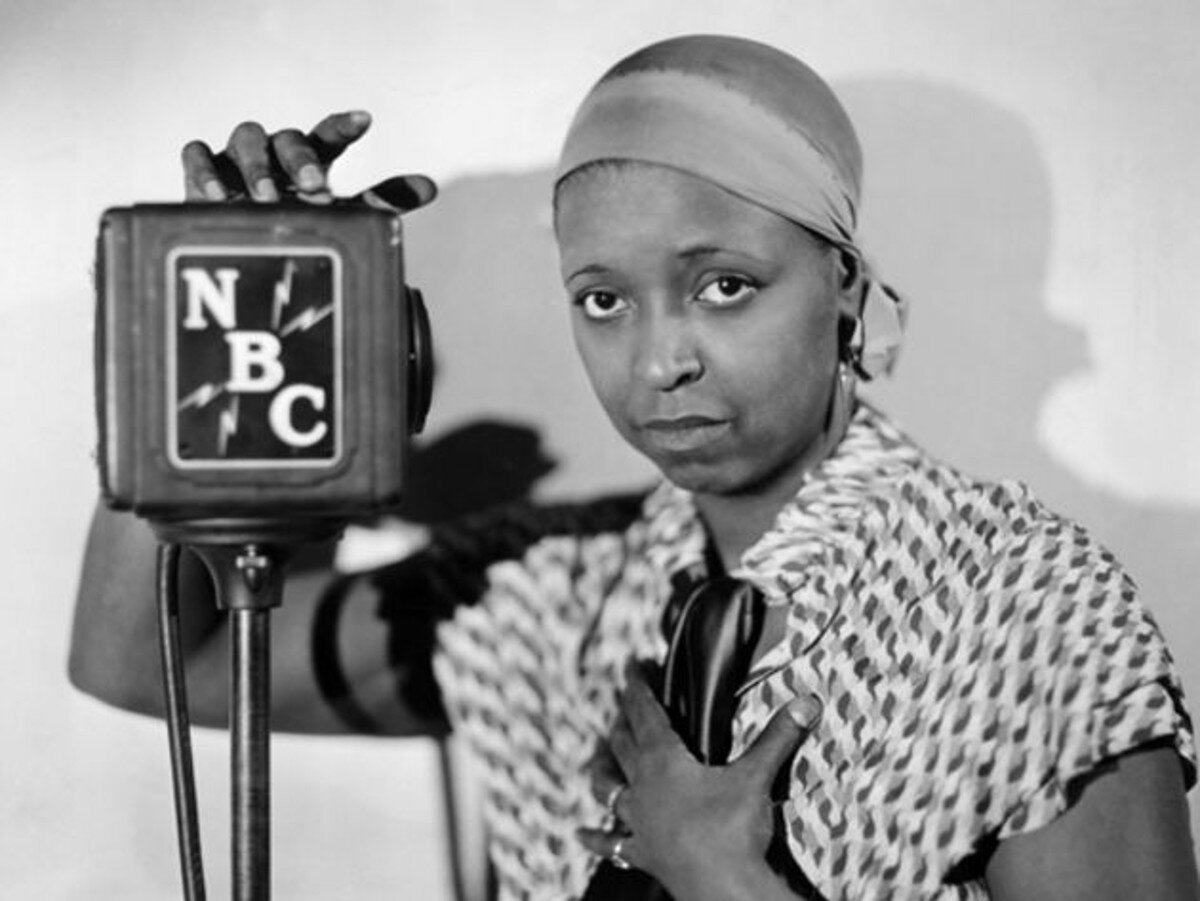
In 1932, Ethel Waters was booked for The Cotton Club for several weeks. During that time, Berlin was told he needed to get to Harlem to hear Ethel Waters' interpretation of his song, “Stormy Weather.” When he heard her, Irving Berlin realized Waters was a rare talent. At that time, Berlin was staging a Broadway review, “As Thousands Cheer,” that would introduce his new song, “Easter Parade”. She was the first Black woman in an otherwise White show. Waters held three jobs: in “As Thousands Cheer”, as a singer for Jack Denny & His Orchestra on a national radio program, and in nightclubs. Due to these three jobs, she became the highest-paid performer on Broadway. Waters’ singing style was distinct compared to the styles of her jazz contemporaries. For two years Waters traveled all around the United States with "As Thousands Cheer", with Clifton Webb, and Helen Broderick, during which time she separated from her husband.
Berlin also had three other songs that he knew Waters could fully deliver. “Harlem on my Mind,” and "Heat Wave” were two of them. The third was “Supper Time," an anti-lynching song for Waters that prefigured the success of Billie Holiday's "Strange Fruit" several years later. In 1933, Waters appeared in a satirical all-Black film, “Rufus Jones for President”, featuring child star Sammy Davis Jr. She prioritized clear enunciation and used her soft, yet full-bodied voice to change the presentation of jazz music in the 1920s and 30s. She also appeared in a Broadway revue called "At Home Abroad" in 1935 and 1936, then toured the South with trumpet player Eddie Mallory. In 1938, she gave a recital at Carnegie Hall and then began to appear in dramatic roles. In 1939 Waters became the FIRST African American to star in her own television show, The Ethel Waters Show, a 15-minute variety special, that appeared on NBC's New York station.
She began to work with Fletcher Henderson again in the late 1940s. In 1942 Waters moved to Los Angeles where she starred in the movie version of her Broadway hit "Cabin In The Sky", the next year, where she made her acclaimed acting debut as Petunia Jackson, the loving wife. Her rendition of “Heat Wave” in that show linked the song permanently to her. She followed that film with more than ten others. Waters often played the motherly figure or nurturing spouse, mammy stereotype often reserved for Black women in film. In “Pinky,” released in 1949, Waters takes on the role as old laundress, Granny Dicey, grandmother of Pinky Johnson, a light-skinned girl who had spent her life passing for White. In the film, often recognized as a groundbreaking classic examining race, Pinky was destined for controversy from the get-go. Ethel Waters was the second Black woman nominated for an Academy Award (Hattie McDaniel was the first).
In 1950, she won the New York Drama Critics Circle Award for her performance opposite Julie Harris in the play "The Member of the Wedding". Waters and Harris repeated their roles in the 1952 film version of Member of the Wedding. That same year, Waters starred in the television series "Beulah", where she played a maid who solved her White employers’ problems in each episode. The show aired on ABC from 1950 through 1952. It was the first nationally broadcast weekly television series starring an African-American actress in the leading role in a television series. However, she quit after complaining that the scripts' portrayal of Blacks was "degrading". Despite these successes, her brilliant career was fading. She lost tens of thousands in jewelry and cash in a robbery, and had difficulties with the IRS. Her health suffered, (her weight had ballooned up to an alarming level), and she worked only sporadically in following years.
In 1950-51 she wrote her very candid autobiography, "His Eye Is On The Sparrow" with Charles Samuels, in which she wrote candidly about her life. As her film career faded she continued touring and appeared regularly on television. She appeared in her one-woman show, "At Home with Ethel Waters", in 1953. She later guest starred in 1957 and 1959 on NBC's The Ford Show, Starring Tennessee Ernie Ford. In the 1957 episode, she sang "Cabin in the Sky". Declining health and troubles with the IRS were to plague her in the later years. To pay her bills, she appeared on a game show called "Break the $250,000 Bank". In the late 1950s, Ethel Waters was introduced to Billy Graham’s evangelical church, and singing in his television revival meetings. His religion and his evangelical style filled a hole in Ethel’s life. She warmly embraced his church and the lifestyle of the crusaders. It became a very important and satisfying part of her life.
In 1962 she became the first Black person to be nominated for an Emmy with her nomination for Outstanding Single Performance by an Actress in a Leading Role for her work in episode “Goodnight, Sweet Blues” in the CBS adventure series Route 66. But her primary activity during the last two decades of her life was performing as part of the religious crusades of evangelist Billy Graham. Waters performed at the White House in 1971, returning the following year as a guest at the wedding of presidential daughter Tricia Nixon. She was also honored by Graham at a 1972 testimonial dinner attended by a galaxy of Hollywood stars. Her final appearance came at a Billy Graham Crusade event held in San Diego in August of 1976. Waters died in September of 1977, at age 80. As a singer Waters introduced over 50 songs that became hits, including standards of the magnitude of "St. Louis Blues" and "Stormy Weather." Her jazzy yet controlled vocal style influenced a generation of vocalists, Black and White, and her career, flowered several times in comebacks after tumbling to low points. Waters was active in Negro Actors Guild, and she was on the executive council of Actors Equity. Though born into poverty and adverse circumstances, Waters worked her way to the top of the entertainment industry and used her public image to reclaim, redefine and add complexity to Hollywood stereotypes reserved for Black women.