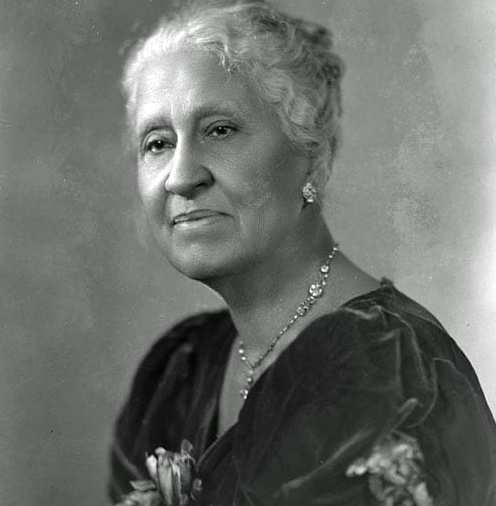
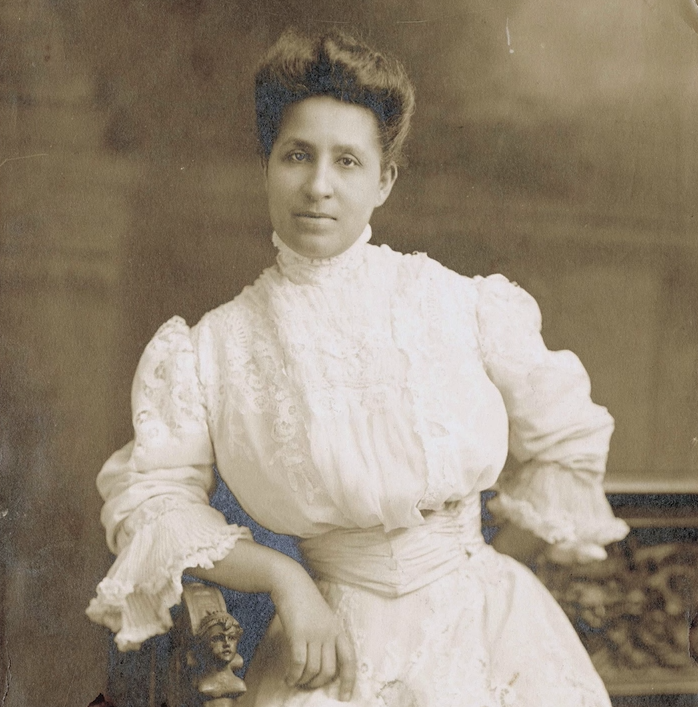
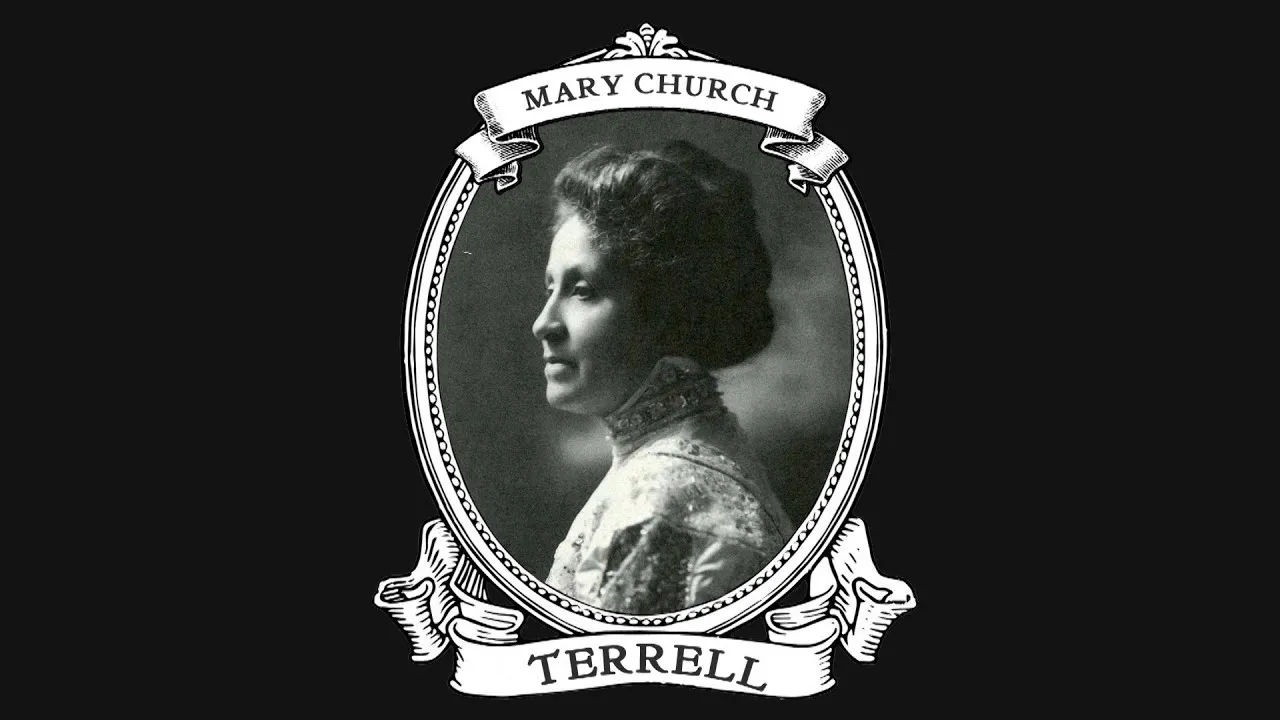
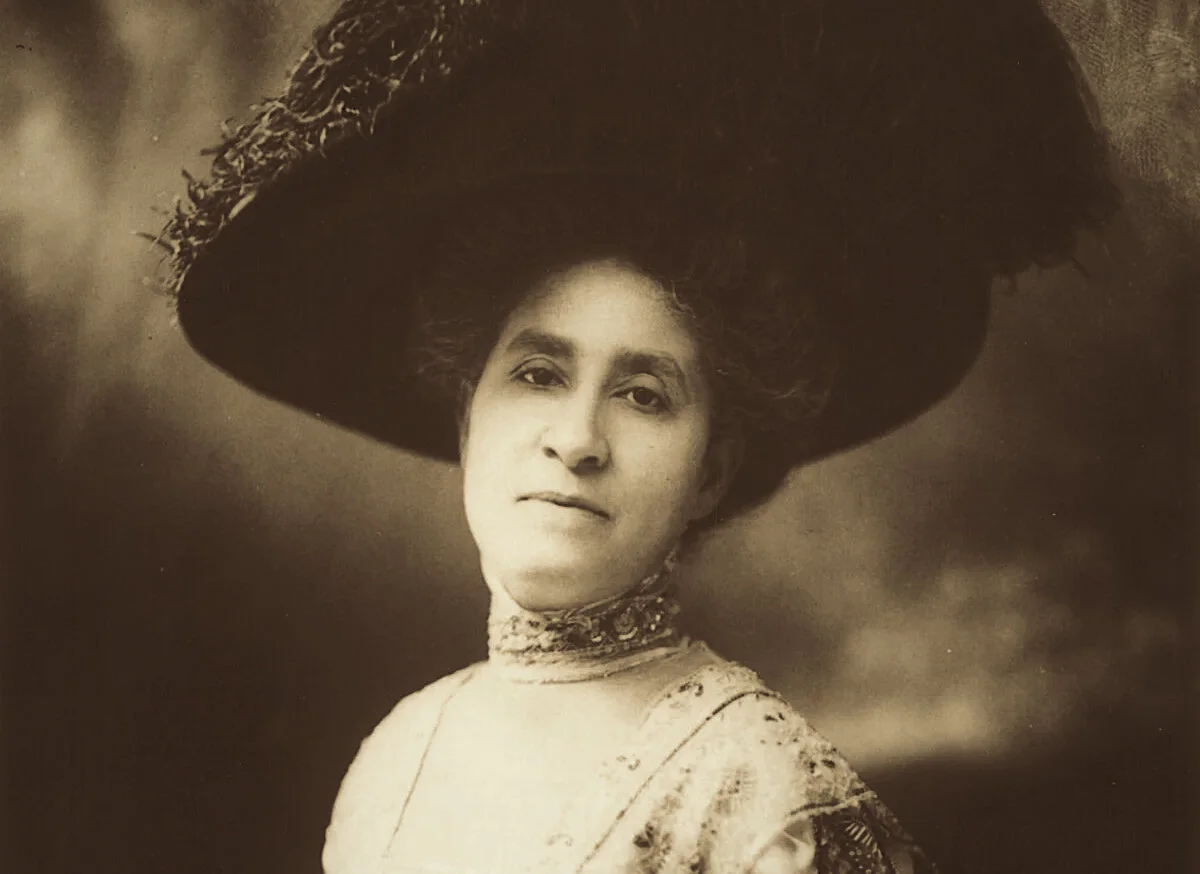
A champion of women’s rights long before feminism was popular, Mary Church Terrell, born on September 23, 1863, in Memphis, Tennessee to formerly enslaved parents. She was the oldest child of Robert Reed Church and Louisa Ayers. Mary’s parents insisted that she and her younger brother receive the best possible education. They sent Mary to the Antioch College Model School in Ohio when she was eight years old because they felt the schools in Memphis were not good enough. As one of the few Black students at the school, Mary frequently faced racism, particularly from older students. She channeled her anger and humiliation into a world view that would shape her entire life. Mary thrived as a young student and eventually earned admittance to Oberlin College in Ohio.
She enrolled in the four-year "gentleman's course" instead of the expected two-year ladies' course, despite being warned that the course was difficult and that being overeducated would make it hard to find a husband. In the gentleman's course, she learned Latin and Greek. At Oberlin, Church was elected freshman class poet, edited the college newspaper, and participated in the Aelioian women's club. In her four years in the Classical Studies “gentleman’s course,” Terrell found she was often “the only woman…black or white", enrolled in fields of study considered exclusively for men. Through family connections and social networking, Terrell met many influential Black activists of her day, including Booker T. Washington, director of the influential Tuskegee Institute in Alabama. At the age of 17, when she was enrolled at Oberlin, her father introduced her to activist Frederick Douglass at President James Garfield's inaugural gala.
Terrell received her Bachelor’s degree in 1884, graduating alongside Anna Julia Cooper and Ida Gibbs, the three activists would become lifelong colleagues. Four years later, Mary earned her Master’s degree. She was one of only two Black women in her class. After earning an undergraduate and a graduate degree, Mary taught French, writing, reading, and geology for two years at Wilberforce University, in Wilberforce, Ohio. She then, moved to Washington, D.C in 1888 and taught at the M Street School, later known as Paul Laurence Dunbar High School. While there, she married fellow teacher Robert Herberton Terrell in 1891, who became the first Black municipal court judge in Washington, D.C. As was expected at the time, Mary left her employment upon marriage to Robert Terrell.
Mary Church Terrell and Ida B. Wells-Barnett moved in the same national Black reform networks from the 1890s onward. Terrell joined Wells’s anti-lynching campaigns in the early 1890s, after the lynching of her friend Thomas Moss in Memphis — the same event that propelled Wells into international anti-lynching activism. In 1893, Mary Church Terrell formally introduced Ida B. Wells-Barnett when Wells delivered an address on lynching — a clear sign of professional respect and collaboration. Terrell and Wells both lobbied Congress and worked through Black women’s clubs to push for federal anti-lynching laws. Terrell worked with Wells on campaigns to convince Congress to pass the Dyer anti-lynching legislation. The bill passed the House in 1922 with strong NAACP support, but It was blocked in the Senate by a filibuster from Southern Democrats, who argued it violated “states’ rights.” Terrell often worked within elite Black women’s club networks and used a more diplomatic approach, than Wells-Barnett. Their differences were strategic, not personal, and did not prevent collaboration.
Since her college years, Terrell was an active suffragist and was a member of the National American Woman Suffrage Association (NAWSA). Due to the NAWSA’s objection to including African-American women in its agenda, in 1892, and from full participation in planning with other women for activities at the 1893 World's Fair, Terrell, alongside six other women, established the Colored Women’s League in Washington, D.C. Around the same time, another group of progressive African-American women were gathering in Boston, Massachusetts under the direction of suffragist and intellectual Josephine St. Pierre Ruffin under the name Federation of Afro-American Women. As the president of the CWL, she decided to combine efforts of the Federation of Afro-American Women along with similar other organizations across the United States to reach a wider focus of Black women workers, students and activists. Originally, the group only focused on various education programs for African American women and children, such as educational programs and day care centers for children.
In 1896, out of this union, she became the first president of the newly formed National Association of Colored Women, an organization which under her leadership worked to achieve educational and social reform and an end to discriminatory practices. As a national federation of local Black women’s clubs, NACW created unity across the Black reform movement and promoted respect for all Black women. The NACW's motto is "Lifting as we climb". In addition to serving as president of the NACW, Terrell, spoke to diverse audiences on topics such as Black empowerment and and women’s suffrage. The League provided night classes for women, childcare for working mothers, and kindergarten classes for Black children. The NACW members dedicated their time and resources “to uplifting women, children, families…and the community through service, community education…and the promotion of racial harmony among all people.”
Appointed to the District of Columbia Board of Education in 1895, Terrell was the first Black woman to hold such a position. In that role, which she held for eleven years, she visited schools, raised funds, and encouraged schools to celebrate Frederick Douglass Day, a precursor to today’s Black History Month. She conceived of "Douglass Day" after the passing of Douglass in February of 1895, to highlight the global achievements of Black Americans. For Terrell, the work of disseminating Black history served to instill Black pride within students and to challenge racist depictions of Black people. Douglass inspired Terrell, and she saw him as someone who could also influence generations of Black youth. Before he passed away in 1895, they advocated for federal anti-lynching policies together. Terrell saw herself as Douglass’s protégé and intellectual compatriot, someone who would carry his legacy into the next generation.
Terrell later wrote that teaching Black youth about great figures of their own race was essential to counter racist ideas of Black inferiority. This created a pre-existing tradition of Black historical celebration. Indeed, she was well-regarded as a Black history buff. Terrell regularly received invitations to lecture on “the history, progress and future of the Negros of the Unites States.” Terrell’s passion for educating Black students and honoring the contributions of Black leaders fueled her desire. Terrell later lauded her creation of Douglass Day: "I was convinced then as I am today that it is our duty to teach our youth that men and women of our racial group have distinguished themselves in various ways just as those of other races have done. For many years Douglass Day was faithfully observed in our public schools. If I had done nothing else during the 11 years I served as a member of the Board of Education than to make it possible or our boys and girls in Washington to learn what a great man Frederick Douglass was I should consider that my service in that capacity was well worthwhile."
The first three children Mary bore died shortly after birth. Her daughter, Phyllis, was born in 1898, and the couple adopted their daughter Mary a few years later. An early advocate of women's rights, Terrell worked alongside the organization’s founder, Susan B. Anthony. She in particular addressed the concerns of Black women. She strongly believed that real change would only be achieved once women had the vote. Mary spoke out frequently to inform suffrage leaders that not all suffragists were White and that Black women needed to be included in the effort. On February 18, 1898, Mary spoke at the NAWSA convention and gave an address titled "The Progress of Colored Women" at the National American Woman Suffrage Association biennial session in Washington, D.C. This speech was a call of action for NAWSA to fight for the lives of Black women. Terrell spoke directly about the injustices and issues within the Black community.
She publicly denounced the racism within the suffrage movement. She showed those in attendance the importance of solidarity among women activists of all races. It was also during this session that Terrell addressed the "double burden" African American women were facing. Terrell believed that, when compared to Euro-American women, Black women had to overcome not only their sex, but race as well. The speech received great reception from the Association and African-American news outlets, ultimately leading Terrell to be invited back as an unofficial African-American ambassador for the Association. Although they were involved in the fight for American women's right to vote, the NAWSA did not allow Black women to create their own chapter within the organization.
Mary was an effective leader who brought activists together and fostered collective advocacy around issues she cared deeply about. She was also dedicated to racial uplift. Terrell believed that African Americans would be accepted by White society if they received education and job training. She hoped that if Black men and women were seen as successful, they would not be discriminated against. She dedicated herself to educating and helping other African Americans. An eloquent spokeswoman, adept political organizer, and prolific writer, Terrell addressed a wide range of social issues in her long career, including the Jim Crow laws, lynching, and the convict lease system. Mary did fit the function W.E.B Du Bois' "Talented Tenth", even if not always labeled as such. African American women, such as Terrell, Mary McLeod Bethune and Anna Julia Cooper were not just part of the Talented Tenth—they were essential to making it work.
Terrell was invited to deliver two speeches on the challenges faced by women, and particularly women of color in America, at the International Congress of Women in Berlin in 1904. She was the only woman of Black woman invited to speak at the conference. She delivered her speeches in German, French, and English, receiving a standing ovation from the audience. Mary knew that she faced hurdles because of her race and her gender, and worked hard to disprove people’s expectations. As a leader in the civil rights movement, Mary was one of sixty prominent leaders to endorse the National Association for the Advancement of Colored People (NAACP) at its founding in 1909 and helped found the Washington, D.C. branch. Mary advocated for racial and gender equality. She was a frequent contributor to the NAACP’s magazine The Crisis. In 1915, a special edition of The Crisis was published, titled “Votes for Women.”
During the early years of the President Woodrow Wilson's administration, segregation in the U.S capital and nationwide disrupted the Terrell family's personal and professional lives. Raising children as members of the Talented Tenth was a major challenge in the era of Jim Crow. Mary Church Terrell accompanied her children, Mary and Phyllis, to Oberlin for the fall semester of 1913, where they faced adversity and segregation. She had hoped Mary and Phyllis would be treated equally. Instead, she discovered Jim Crow had overrun a school created by abolitionists, which had welcomed Black and female students before the Civil War, acted as an Underground Railroad stop, and battled the Fugitive Slave Act. This was deeply disheartening for Mary Church because she had always wanted to send her children to Oberlin and she began standing up for the rights of African American students at schools such as Oberlin.
During World War I, like many Americans, Mary searched for a way to serve the nation. She took the civil service exam. A few days after taking the exam, she received a notice to appear at Room 305 of the Aetna Building in Washington, DC. Impressed by her ability to speak French and German, the commanding officer offered her a chance to perform a job where her language ability would be invaluable. Terrell also was involved with the War Camp Community Service, which supported recreation for servicemen. Later it aided in issues related to the demobilization of Black servicemen. At the end of the First World War, Mary left the federal service and her position with the War Camp Community Service and entered the political realm. After passage of the 19th Amendment, she worked with the Republican National Committee on behalf of women and Black Americans for Warren G. Harding's 1920 presidential campaign during the first election in which women won the right to vote. She campaigned on behalf of Ruth Hanna McCormick, a U.S. Senate candidate from Illinois (1929–1931).
Initially turned down, Mary instead accepted a position as a Census Bureau clerk. Although she only worked at the Census Bureau for a short amount of time, Mary made a lasting impact when she desegregated the closest bathroom to her workstation. Terrell was a delegate to the International Peace Conference after the end of the war. Although the conference included women from around the world, Terrell was the only woman of color in attendance. She felt that she represented not only the United States, but all the non-white countries of the world. In her speech she emphasized the importance of justice and fairness for people of color, stressing that a lasting peace will never come to pass while inequality exists among the races. While in England, she stayed with H. G. Wells (author of "The Invisible Man" series) and his wife at their invitation. Widowed when her husband died in 1925, Mary Church Terrell continued her work as an activist, wife, and mother to her daughters Phyllis and Mary, lecturing, doing volunteer work, and activism, briefly considering a second marriage. Through her family life and public activism, Terrell modeled the ideals of professional and domestic achievement that she emphasized for Black women nationwide.
In 1926, Woodson officially established the first Negro History Week. Pointing to Terrell’s influence, Woodson established the week in February to encompass Douglass Day (February 14th) and Abraham Lincoln’s Birthday (February 12th). Terrell later suggested that she influenced the establishment of Negro History Week, remarking years later that “Perhaps Douglass Day inspired Dr. Carter Woodson to establish Negro History Week many years after.” Indeed, Terrell worked directly with Woodson to promote Black history and Negro History Week across the country. She helped Woodson plan conferences for the Association for the Study of Negro Life and History (ASNLH), which Woodson cofounded in 1915. As a leader in the NACW she helped spread historical programs, lectures, and commemorations across the country through women's clubs, and the practice of teaching Black history before Woodson institutionalized it nationally.
In 1940, she wrote her autobiography, A Colored Woman In A White World." The book describes Terell's childhood, education, and her years of travel and advocacy on behalf of African American rights. Terrell described the prejudice she encountered in restaurants, hotels, theaters, education, employment, while buying a home—virtually every aspect of her life. While Terrell intended the book to be a forthright account of the prejudice she had experienced, the autobiography described events in polite terms and was less critical of American society than she perhaps intended. In her late years, Terrell’s commitment to taking on Jim Crow laws and pioneering new ground didn’t wane. In 1949, at age 86, she became the first Black person admitted to the Washington chapter of the American Association of University Women, which opened the door to allow other African Americans to become members.
And it was Terrell who helped bring down segregated restaurants in her adopted home of Washington, D.C. Washington after WWII was becoming even more segregated than earlier in the century. Multiple instances of persons of color being refused restaurant service, entrance to museums, jobs, home purchases and etc. After being refused service by a Whites-only restaurant in 1950, Terrell and several other activists sued the establishment. This laid the groundwork for the eventual court order that ruled, on June 8th, 1953, that all segregated restaurants in the city were unconstitutional. She lived to see the May 17th, Supreme Court’s decision in Brown v. Board of Education, holding unconstitutional the racial segregation of public schools. Her 90th birthday was marked by a party for 700 people and included a White House reception. She died two months later at the age of 90, on July 24, 1954, a fitting "bookend" to her life which began just after the signing of the Emancipation Proclamation and which focused on education as a key means of advancing the civil rights she spent her life fighting for.
"While most girls run away from home to marry, I ran away to teach."
"Seeing their children touched and seared and wounded by race prejudice is one of the heaviest crosses which colored women have to bear."
"And so, lifting as we climb, onward and upward we go, struggling and striving, and hoping that the buds and blossoms of our desires will burst into glorious fruition ere long."
"It is only through the home that a people can become really good and truly great."
A White woman has only one handicap to overcome - that of sex. I have two - both sex and race. ... Colored men have only one - that of race. Colored women are the only group in this country who have two heavy handicaps to overcome, that of race as well as that of sex."
"Through the children of today we believe we can build the foundation of the next generation upon such a rock of morality, intelligence, and strength, that the floods of proscription, prejudice, and persecution may descend upon it in torrents and yet it will not be move."