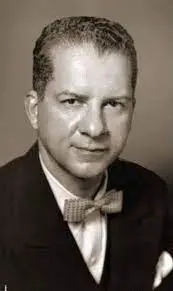
William Warrick Cardozo
A pioneer investigator of sickle cell anemia and a leader in medical research of problems affecting the African American race. He served for 24 years as a medical inspector for the District of Columbia boar of health. William Warrick Cardozo wrote a ground breaking paper titled “Immunologic Studies of Sickle Cell Anemia“, that appeared in the archives of Internal Medicine in October of 1937.
William Warrick Cardozo was the first Black scientist to have made a breakthrough in research into the sickle cell anemia condition. He was born April 6, 1905, in Washington, DC, the third generation in his family to attain prominence. He grew up in a family of well-enlightened personalities. His dad was a high school principal and his grandfather, Francis Cardozo, was a well-noted D.C. area politician and educator. William attended Washington public schools, then graduated high school from the Hampton Institute in Virginia. Then he attended the Carnegie Institute of Technology prior to becoming a student at Ohio State University.
As a college senior he was ranked 7th in his class of 90 students and was awarded an internship at the City Hospital in Cleveland, Ohio. He was only the fourth Black person to hold such a position. He graduated from Ohio State University with a B.A. in 1929 and received an M.D. from Ohio State University in 1933. In 1935 Cardozo was awarded a two-year pediatrics fellowship at two hospitals in Chicago, the Provident Hospital and the Children’s Memorial Hospital. During this time, he began his research on sickle cell anemia with financial support from the Alpha Phi Alpha Fraternity.
This culminated in his most influential publication, “Immunologic Studies in Sickle Cell Anemia“. Specifically, he determined that the disease almost exclusively affected people of African descent. Not all people with sickle cells were anemic, not all patients died of sickle cell disease, and no successful treatment was identified. Cardozo’s work is what opened the understanding that sickle cell anemia was to a large extent inherited and connected to one’s genes. In addition, he established that one can have a sickle cell but would not be anemic, and the disease was NOT a death sentence.
After the completion of the two-year fellowship in 1937, Cardozo joined the staff at the Howard University Department of Pediatrics. He would later be promoted to clinical assistant professor and clinical associate professor of pediatrics. Cardozo also worked at Freedmen’s Hospital of Howard University, where he was especially active in the gastroenterology clinic. His research opened the floodgates for the study of sickle cell and the improvement of treatment for the condition. In addition to this, Cardozo worked as a school medical inspector for the District of Columbia Department of Health for 24 years.
He also volunteered at the Ionia R. Whipper Home for Unwed Mothers, the only facility that tended to African-American women in D.C. During this time, Cardozo published works on Hodgkin’s disease, the gastrointestinal health of children, and the growth and development of Black children. Cardozo did not spend all his time focused on research, he was also engaged in philanthropic work. He directed part of his work at enhancing knowledge of disorders that affected children, particularly, Black children. Cardozo was very active both in the medical community and as a volunteer in Washington, D.C. He was a member of the American Academy of Pediatrics, and the Medical Society of the District of Columbia.