Boxing
It wasn't until the 20th century that nations with large immigrant populations, like Australia and the United States, held sports competitions that pitted members of one "race" against another. When Black American Jack Johnson took the heavyweight title from the Irish boxer Tommy Burns, the race issue in sports reached a new level. Some people did not believe that Black Americans had what it took to become heavyweight champions in the "manly art" of boxing. Throughout boxing history, many Black fighters have proudly stood as symbols of aspiration, success, power and resolve. Some overcame the systemic odds to become champions, while many illustrious names were denied deserved opportunities.
Whether due to his enormous talent in the ring or his ostentatious personality, Jack Johnson frightened many White Americans. To them, he not only represented the awful possibility of Black superiority, but he refused to "keep his place." He was not intimidated by White people, and he openly consorted with White women. Historian Jeffrey Sammons says, "Jack Johnson had to be the bravest man in America. I'm amazed at what he did publicly that many would not dare to do privately. In fact even looking at a White woman could be a death sentence at the time." The fear of a powerful, uncontrollable Black man remained on the minds of many when Joe Louis emerged as the next potential Black champion. Neither boxer was expressly political.
Johnson pushed the envelope of expectations, while Louis, although no champion of the status quo, looked moderate in comparison. But there is no doubt that these first Black heavyweight champions broke through the color lines in American sports. Louis had to win over White America through how he carried himself and how he performed. His managers set down rules for their young fighter, which they shared freely with reporters. Louis' public face would be the opposite of what Johnson's had been. Historian Jeffrey Sammons lists a few of Louis' "good Negro" rules:
"He could not gloat over opponents. Louis could not be seen in public with White women. He had to be seen as a Bible-reading, mother-loving, God-fearing individual, and not to be 'too Black.'"
Despite Louis' public image campaign, millions of Whites rooted against him, and awaited the "Great White Hope" who would claim boxing honors for their own race. Ultimately, though, what won Louis White America's acceptance was not his mild personality and good behavior, but his dramatic matchups with German champion Max Schmeling who, to many, represented the Nazi Party. Louis would become the symbol of American freedom over Nazi totalitarianism. Many Whites still wished to see Louis defeated by a White boxer, but in 1938, when Louis knocked out the German, the celebration wasn't confined to Black America alone. For the first time, Blacks and Whites, even in the deep South, had rooted with all their hearts for the same guy.
Throughout much of the 1940s, eight Black boxers named Charles Burley, Eddie Booker, Jack Chase, Cocoa Kid, Bert Lytell, Lloyd Marshall, Aaron Wade, and Holman Williams were heavily avoided by many other prominent boxers of the era, including Sugar Ray Robinson (who avoided Burley). Six of them never received title shots because of corrupt management and oftentimes their skin color. Instead, they had to fight each other, at times, to stay active. Lloyd Marshall, Cocoa Kid, Eddie Booker, and Charles Burley were eventually inducted into the International Boxing Hall of Fame (IBHOF). Presented here is a boxing timeline, a few highlights of some boxing biggest and famous bouts down through the years.
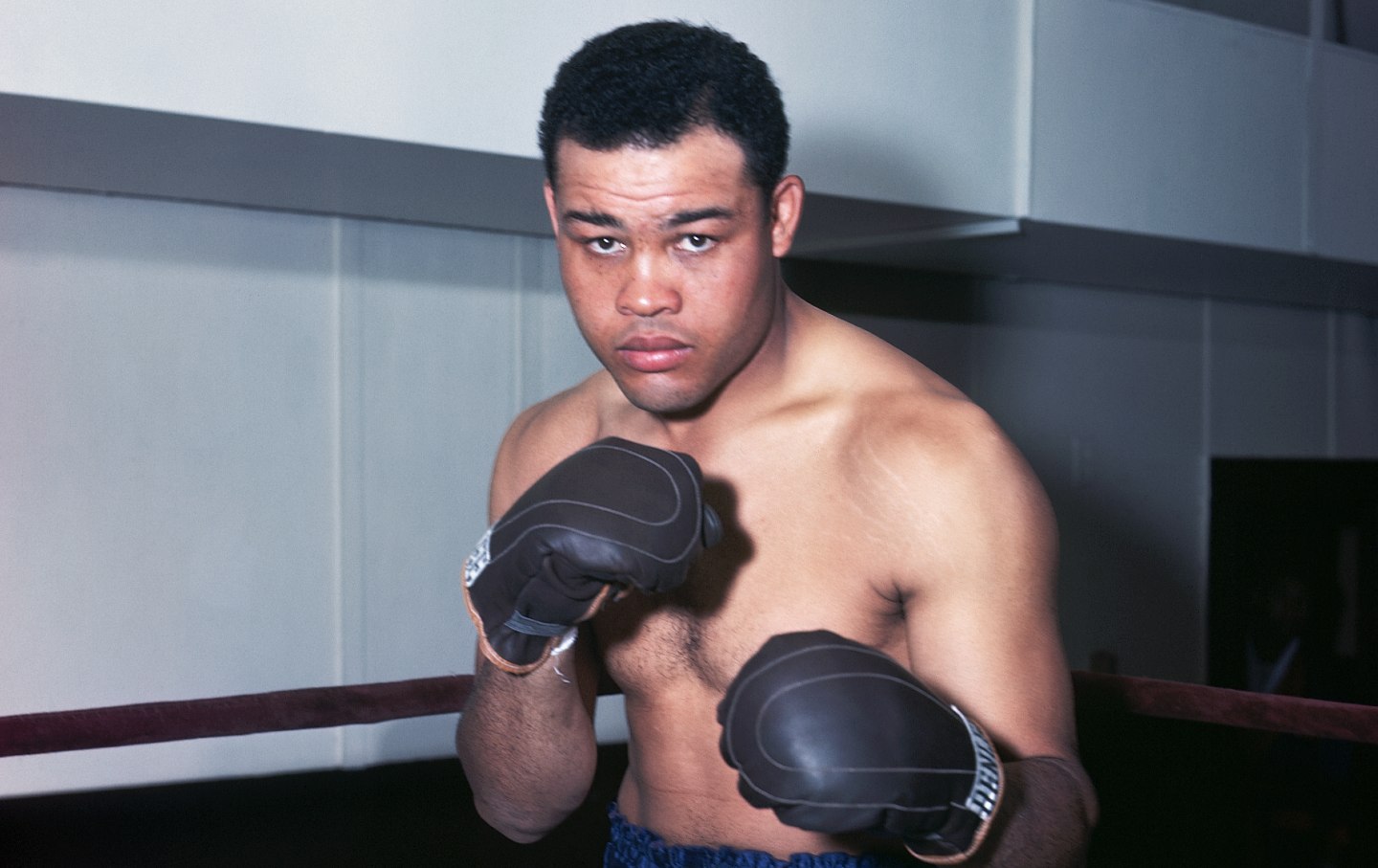
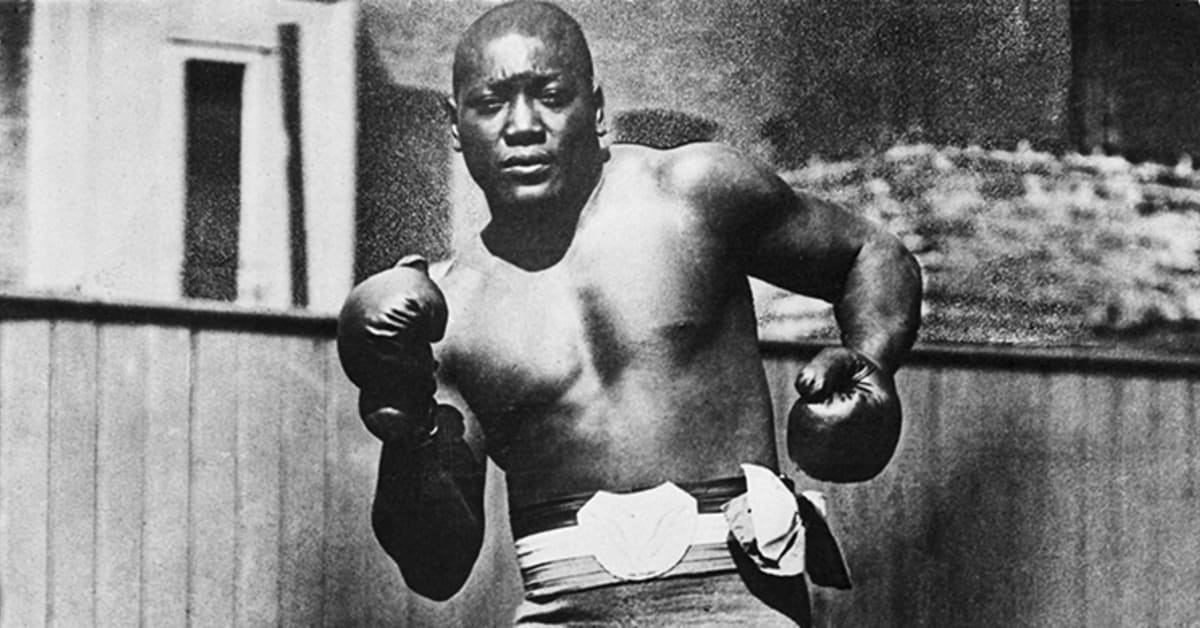
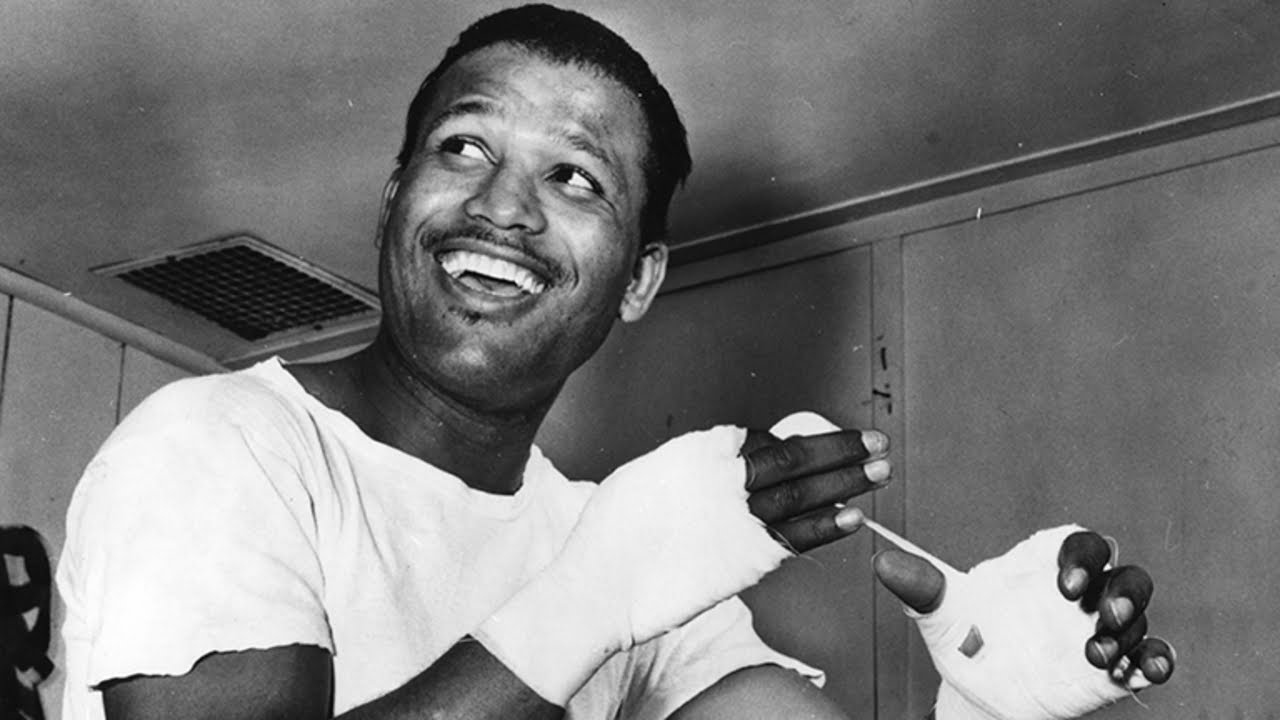
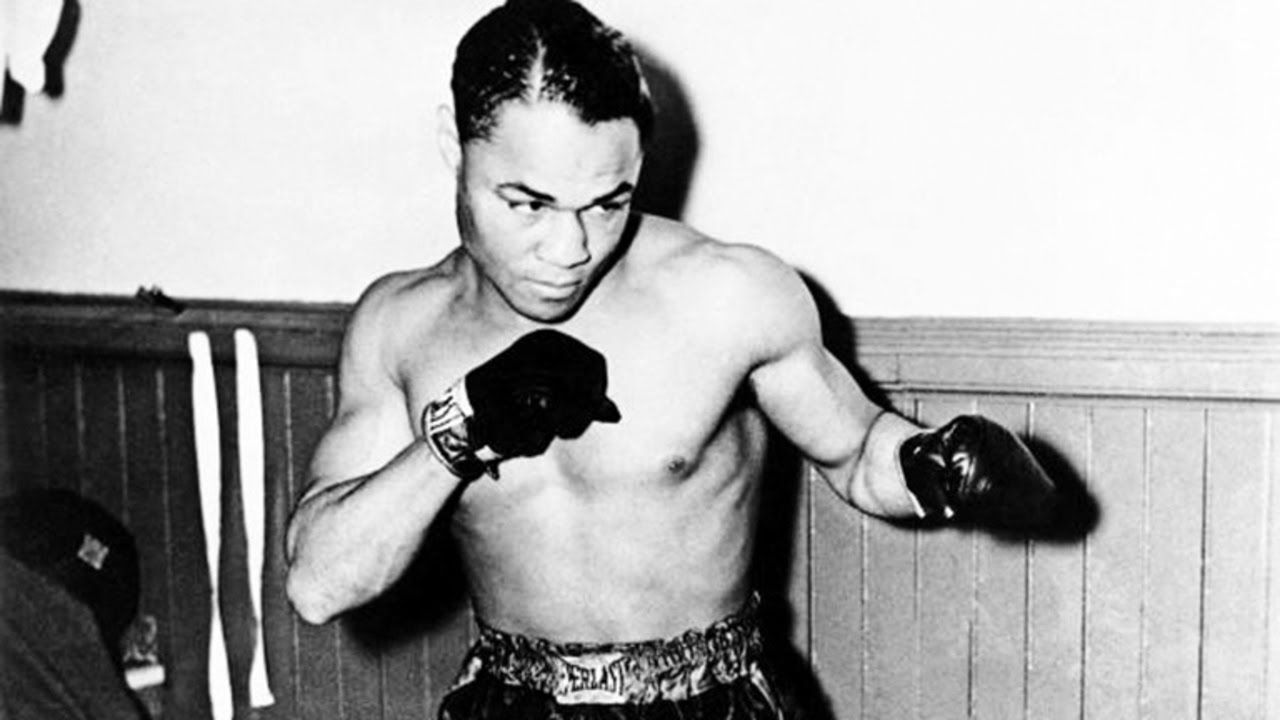
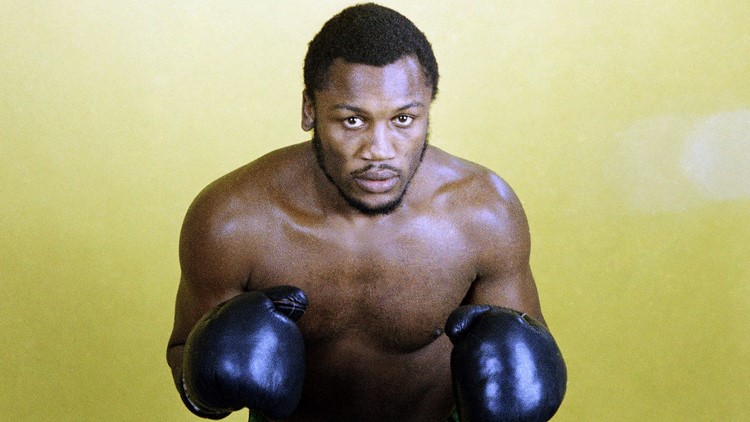
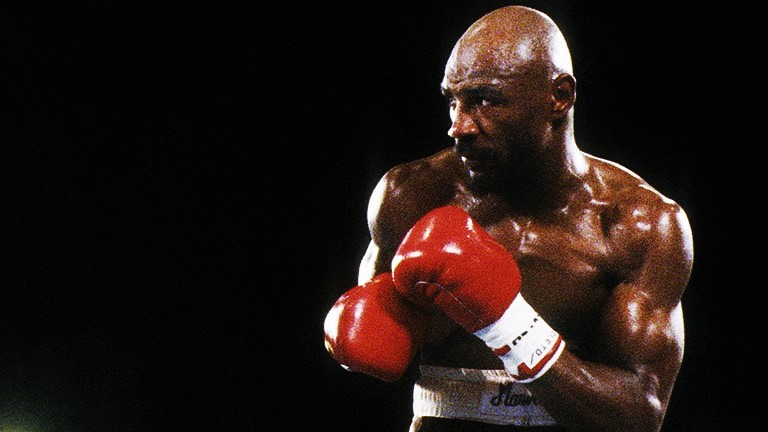
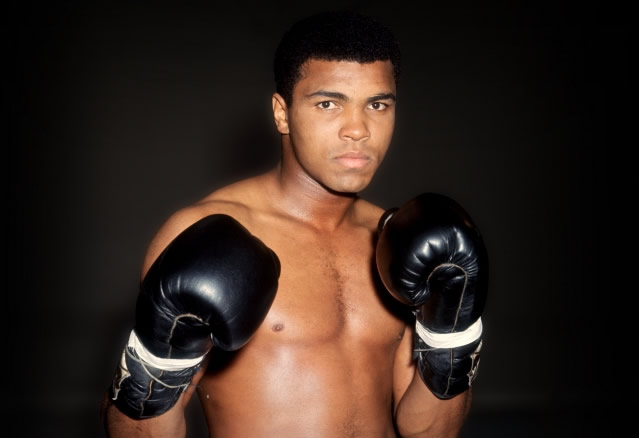
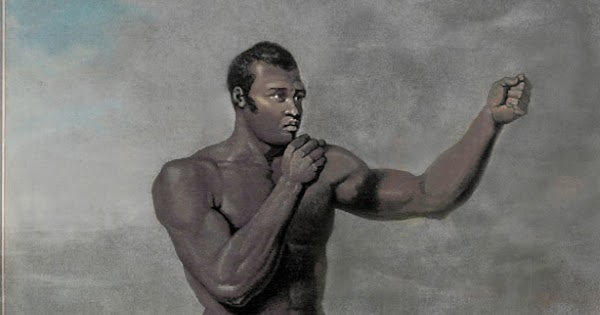
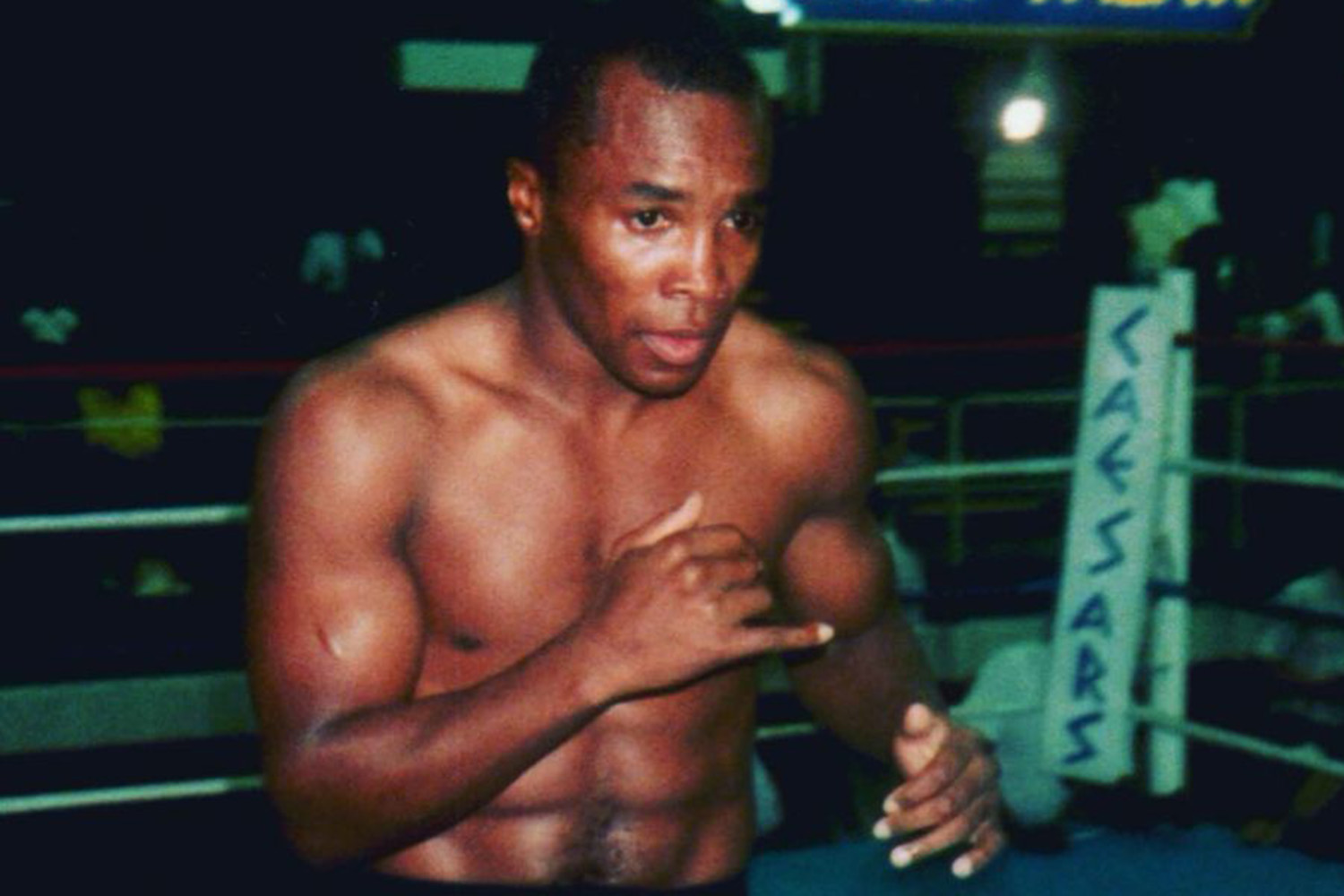
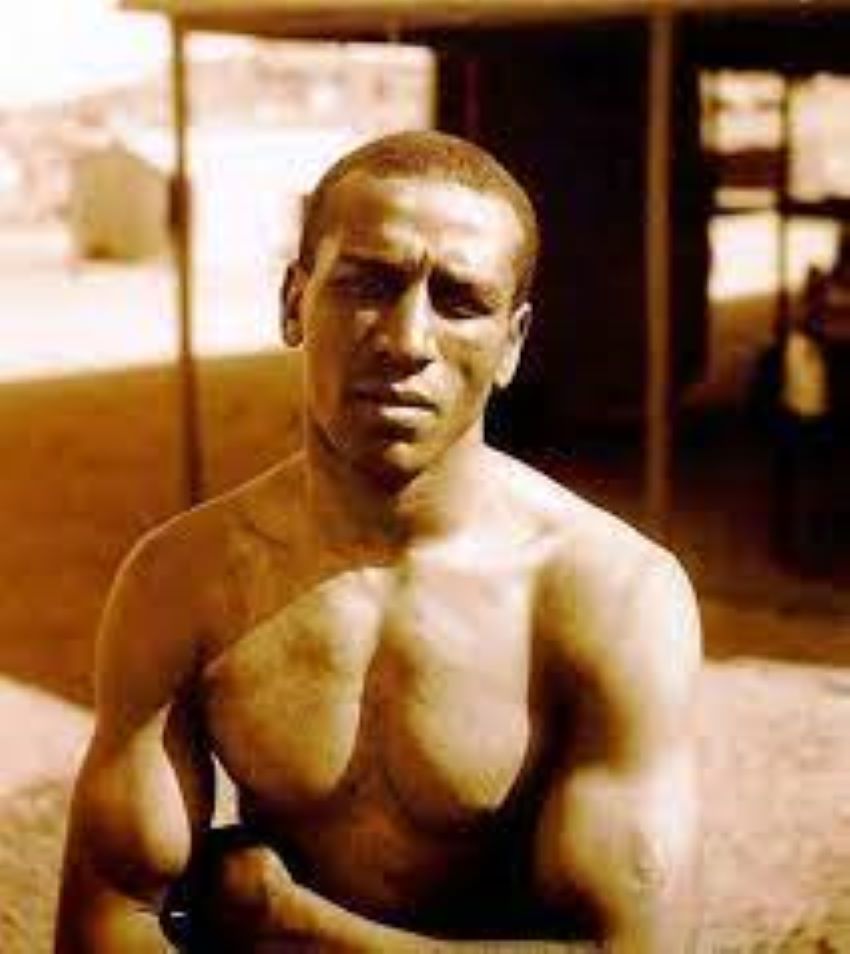
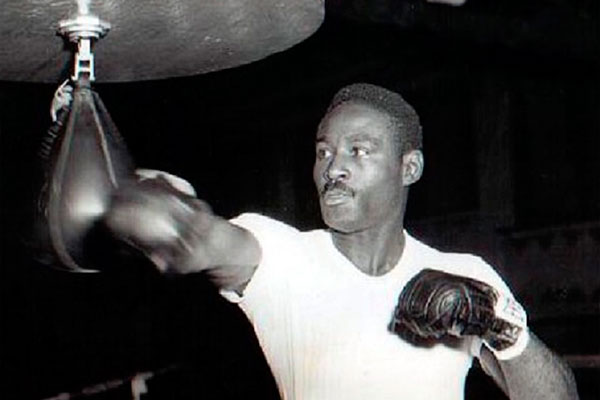
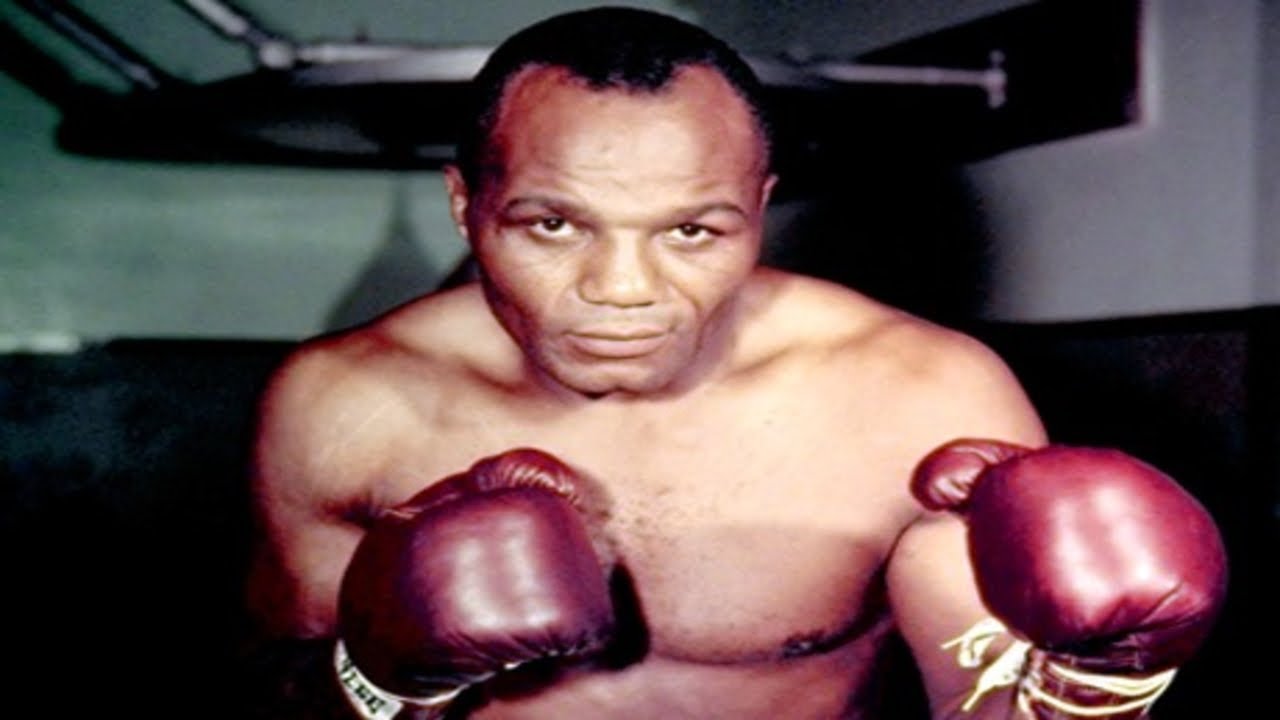
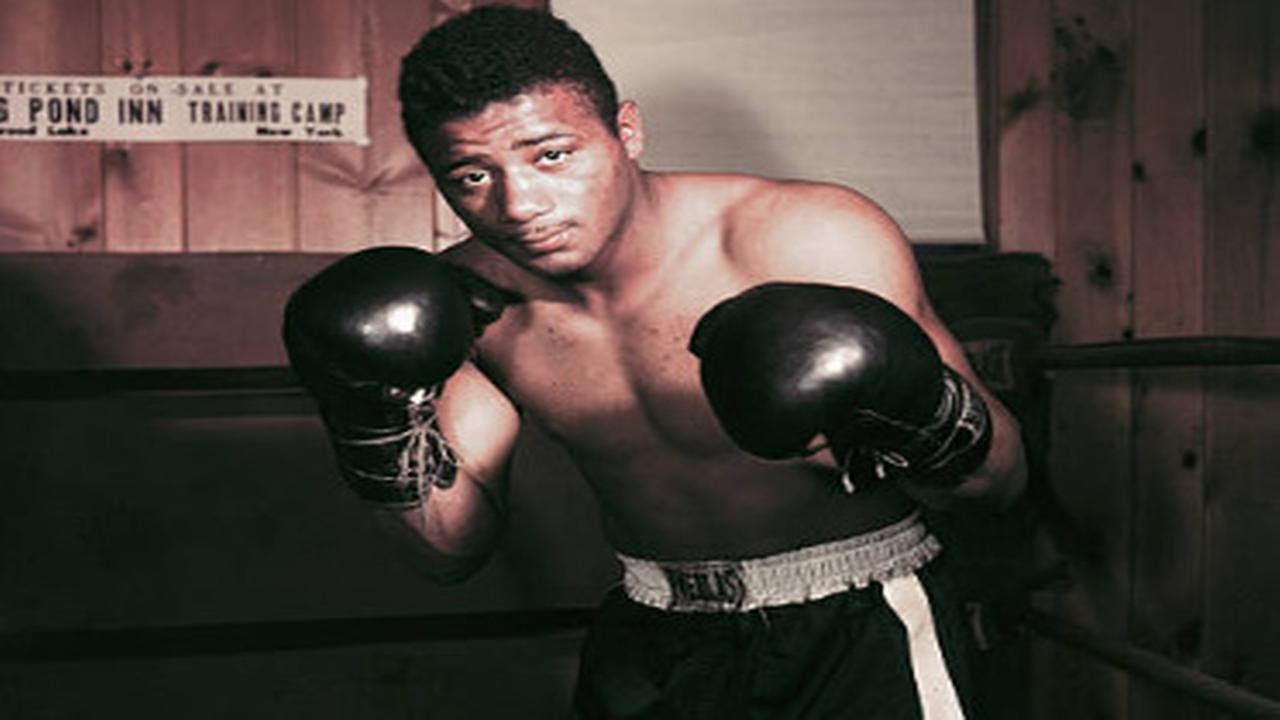
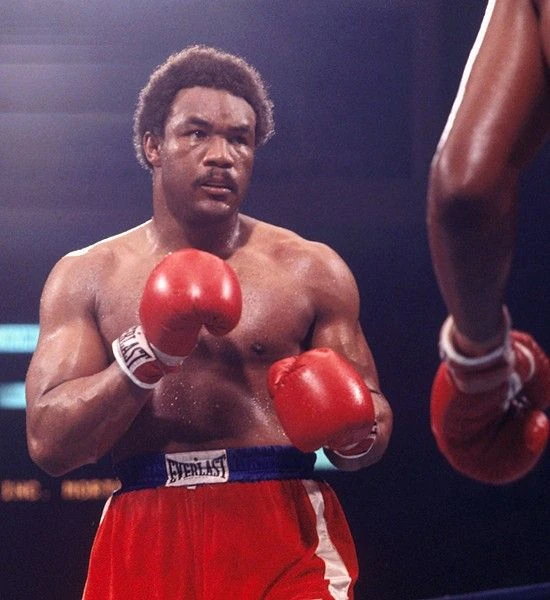
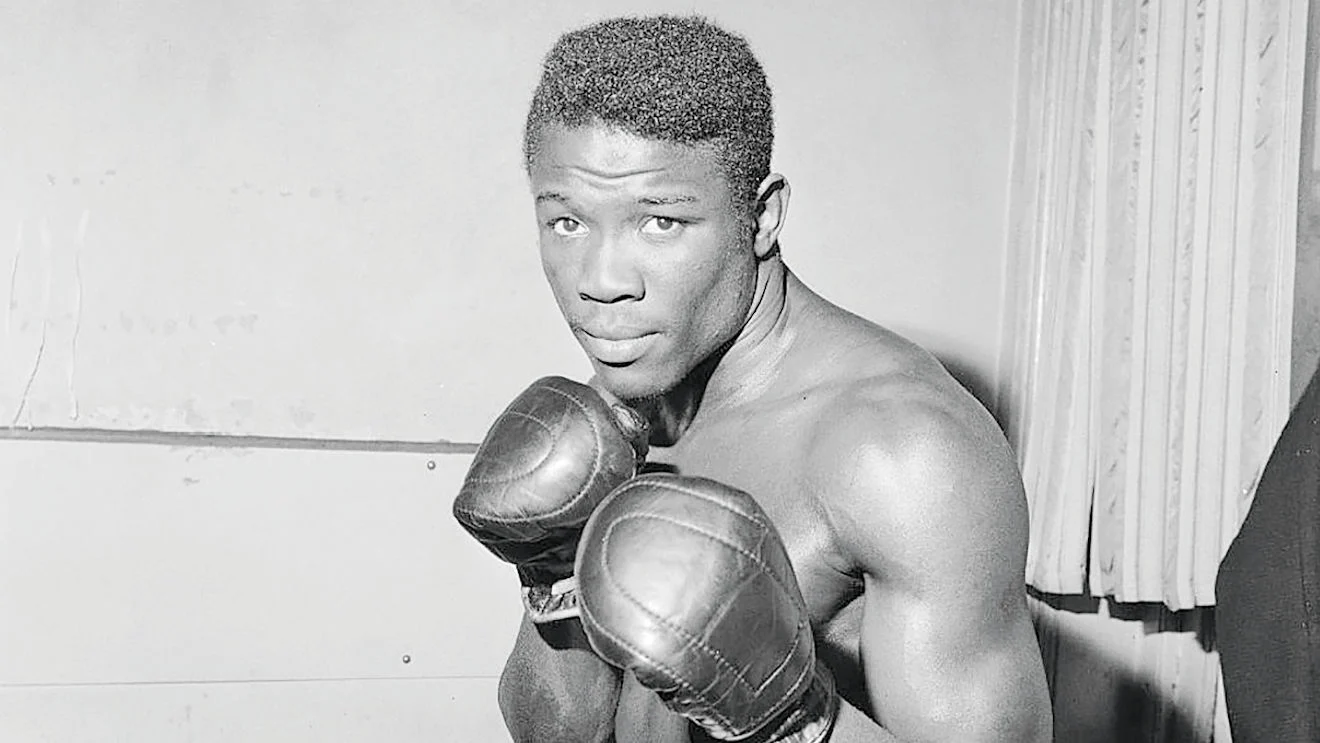
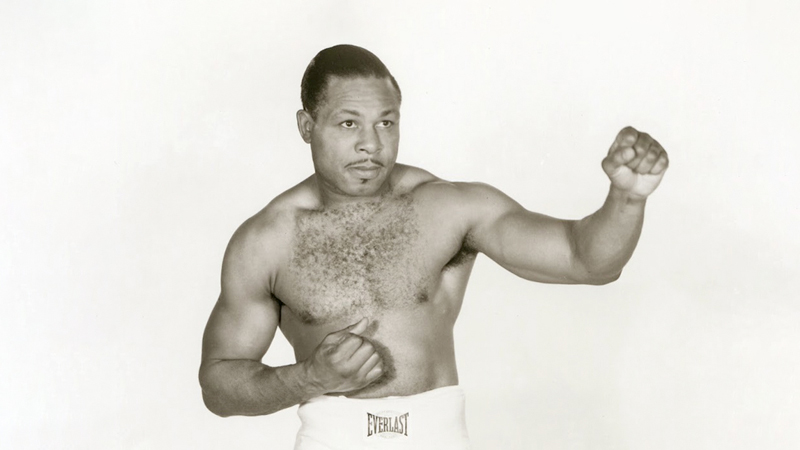
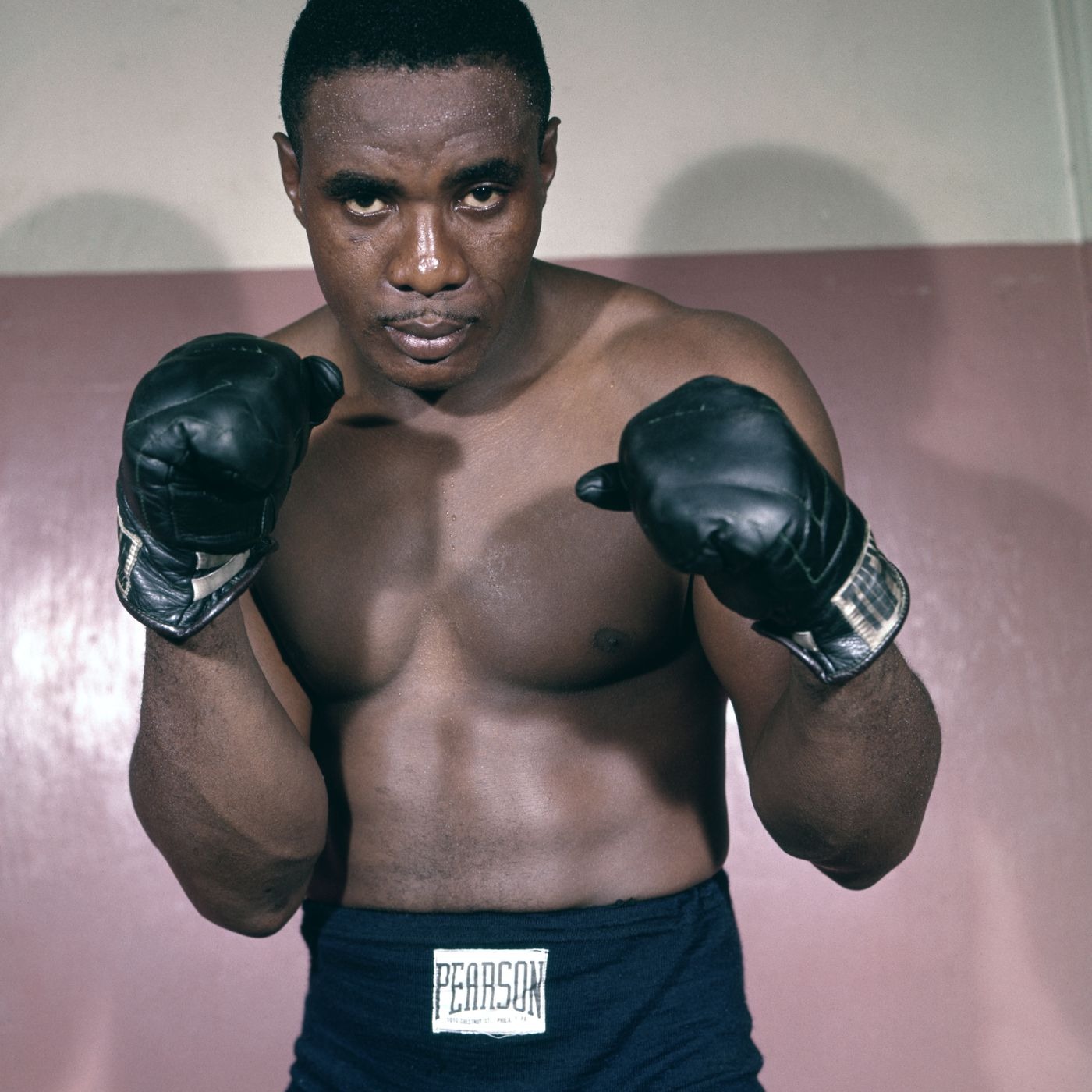
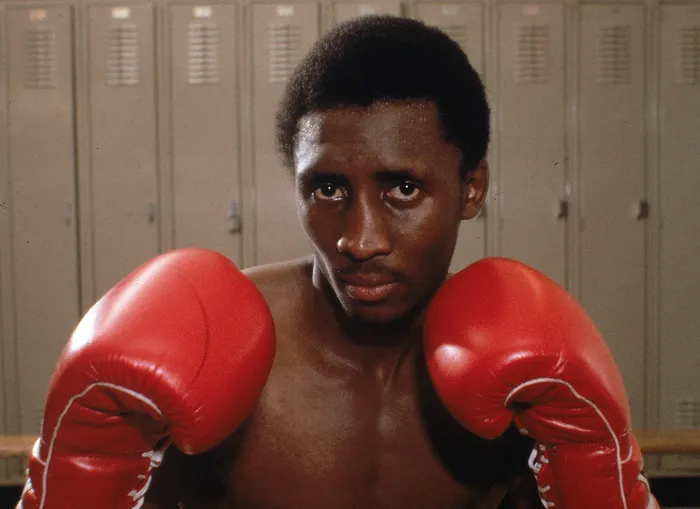
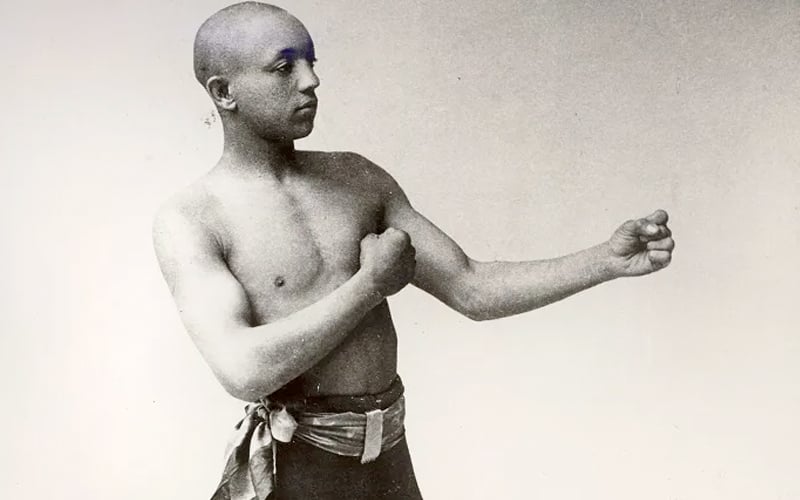
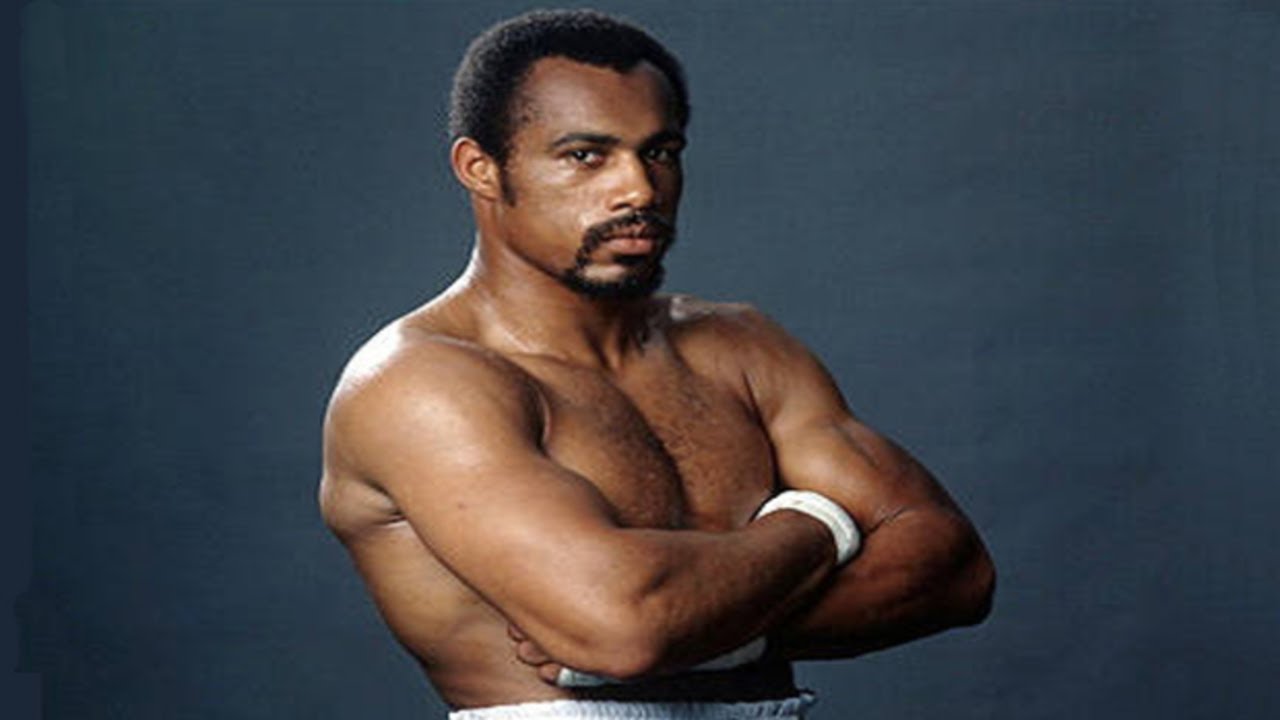
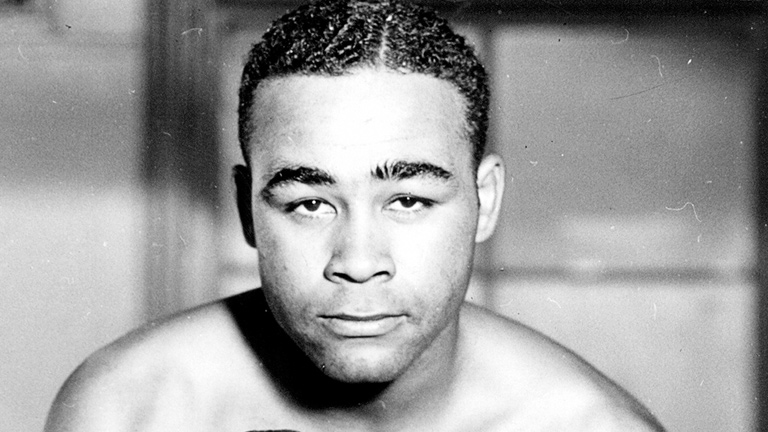
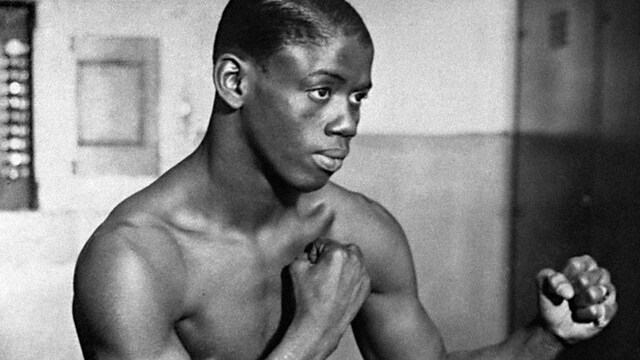
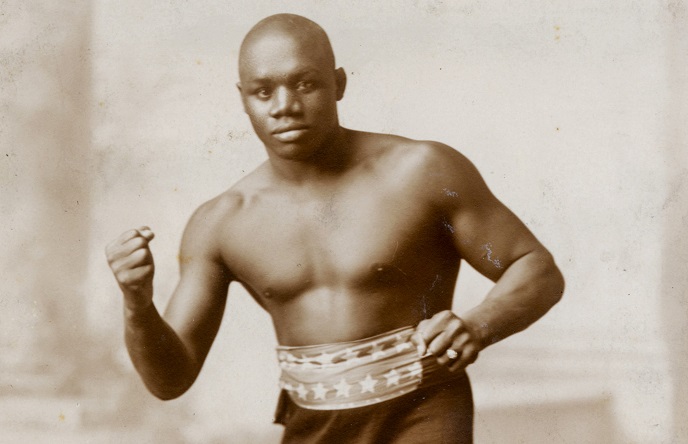
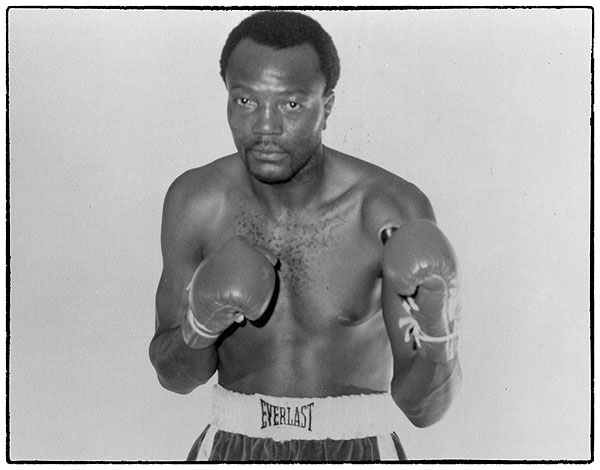
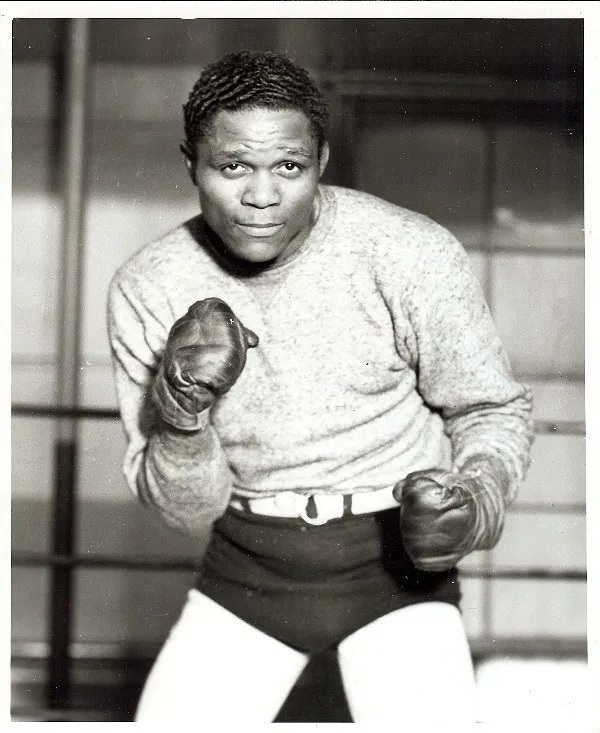
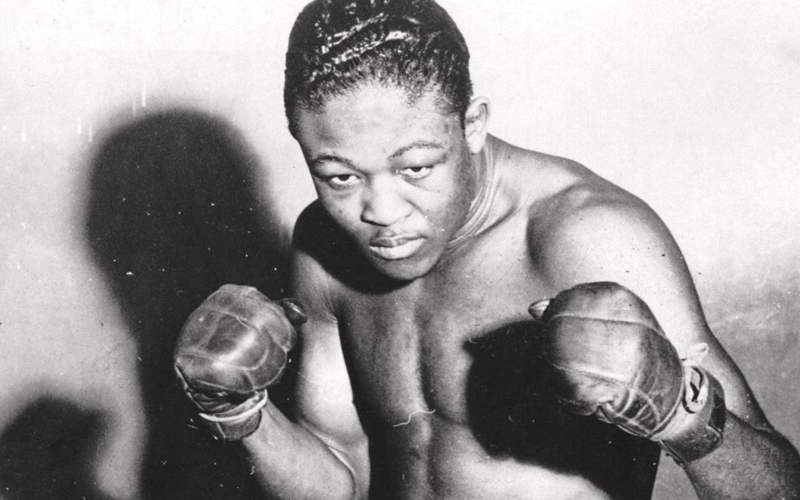
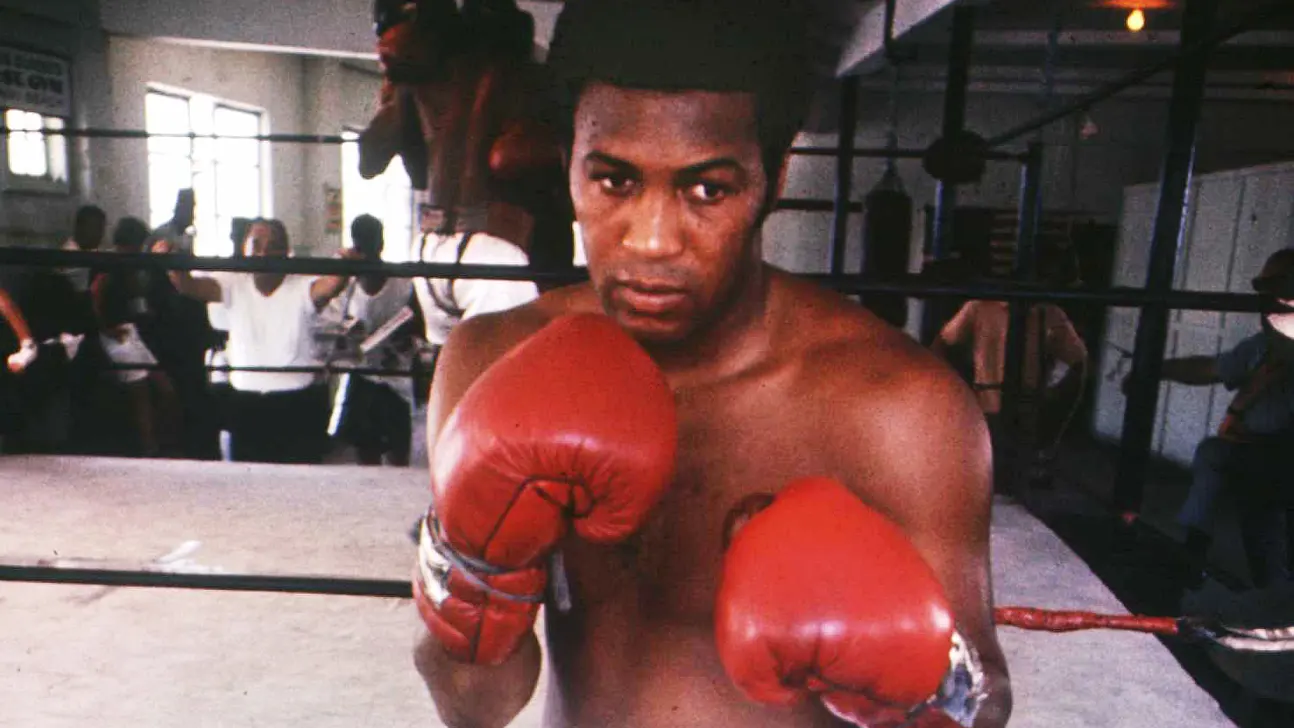
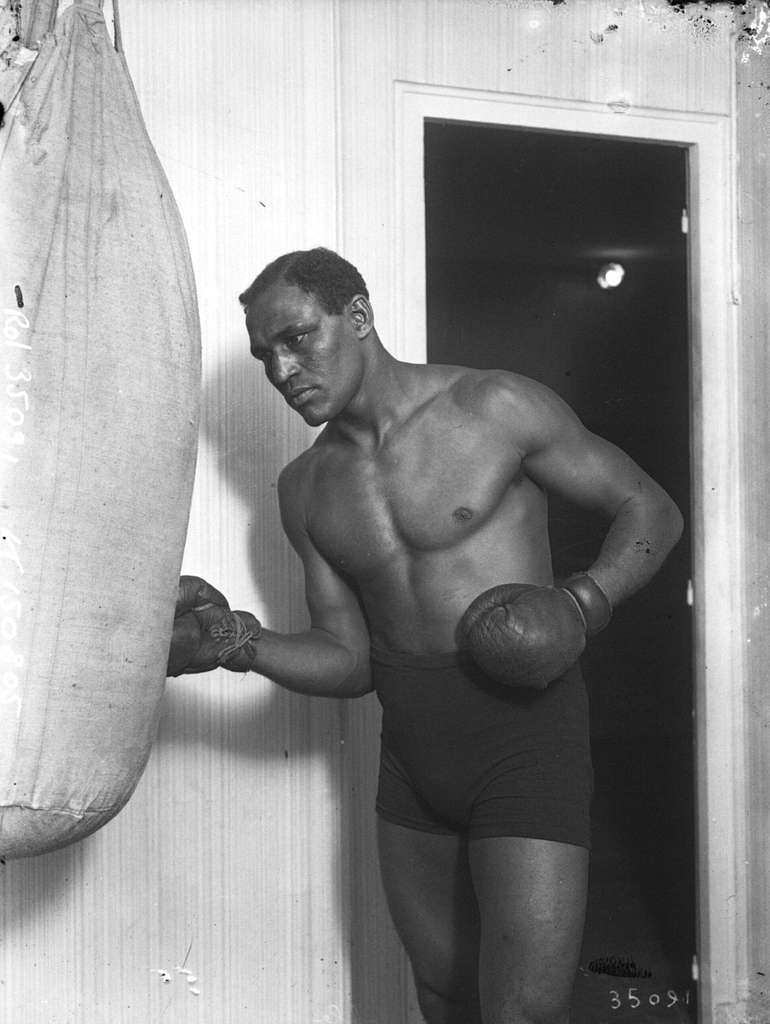
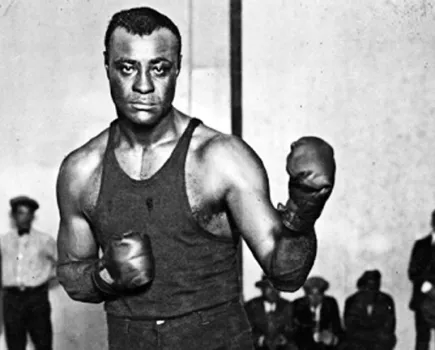
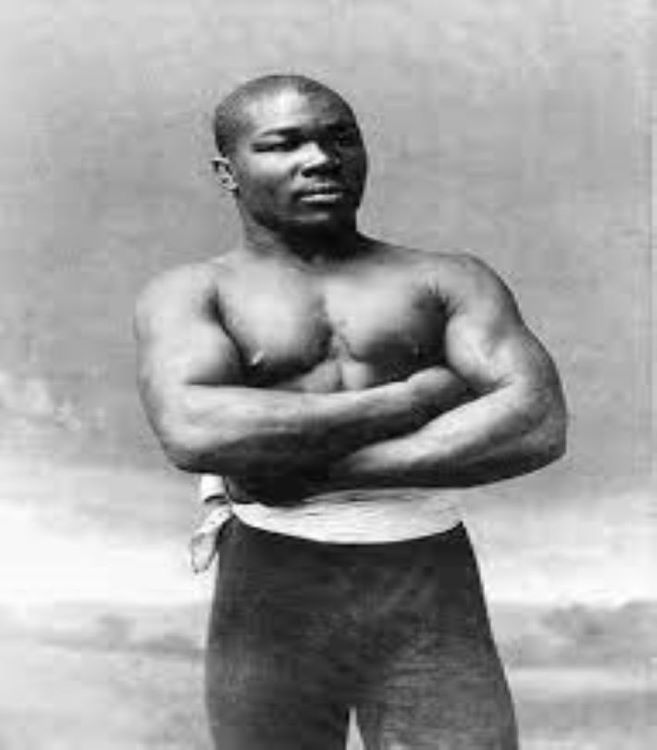
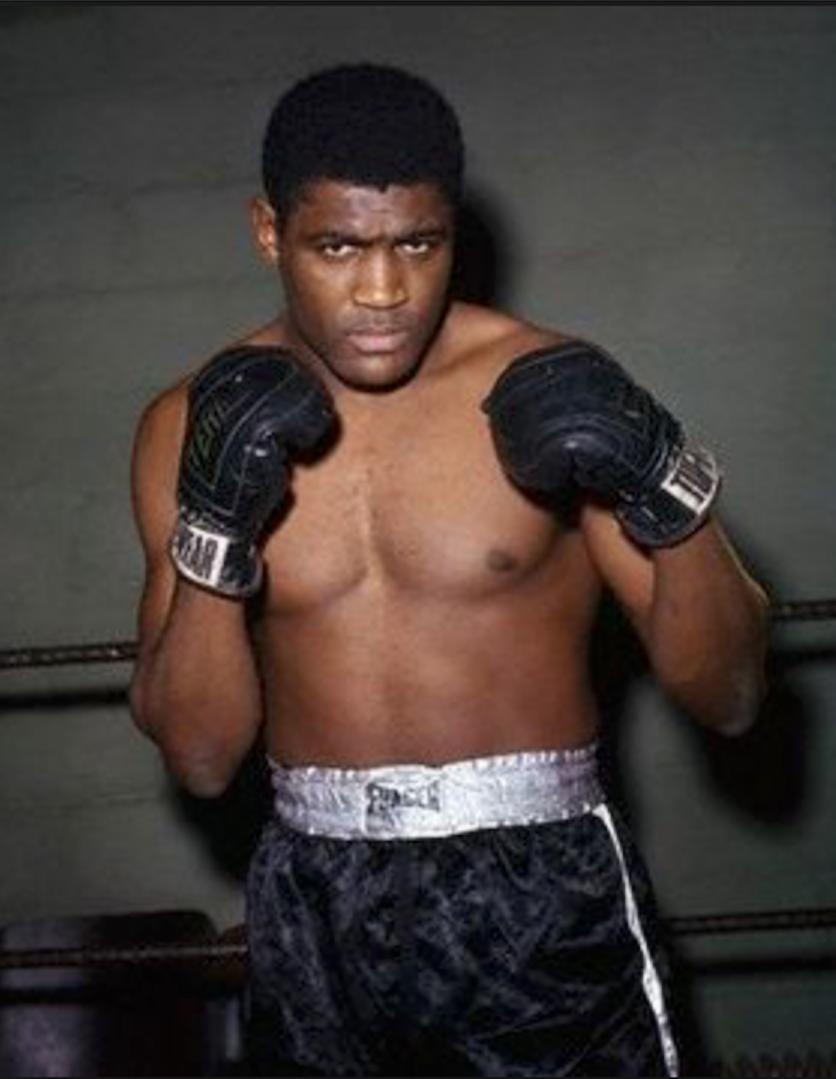
Joe Louis
Born into a poor family on May 13, 1914 in LaFayette Alabama, Joe Louis was the seventh of eight children. Looking for a better life, his mother followed the path of many southern Black families, and moved their new family up to Detroit in 1926, where factory work was plentiful. A friend took him to Brewster's East Side Gymnasium and introduced him to boxing. He fell in love with the sport.
As a teenager, Joe was the best boxer of his group. His first amateur fight was at light-heavyweight in 1932 at the age of seventeen. He lost on points after three rounds in which he got knocked down three times. But this lost did not deterred Joe Louis. At nineteen he won the National Light Heavyweight Amateur Crown of the Golden Gloves in 1933. Jack Blackburn, a very knowledgeable boxing man, was Louis's trainer. He taught Louis how to punch and worked with him to develop his body coordination.
His early career was a period of hard work and determination, and was one without glamour or fame. Louis kayoed Jack Kracken in his first professional fight on July 4, 1934. Ten years after his arrival in Detroit, Louis won the Golden Gloves as a light heavyweight. Following this win, Louis turned professional. His first professional fight took place on July 4, 1934, and he won twelve contests within the first year. His boxing prowess, as well as his reputation, was growing at an incredible rate.
In June of 1935, he fought Primo Carnera the former heavyweight champion. He beat the former world heavyweight champion with a sixth-round knockout. Later that year, Louis followed this fight with a pairing against Max Baer, who he defeated by knockout in the fourth round. Former heavyweight champion Max Schmeling was on the same path to reclaim his title. The Schmeling and Louis camps agreed to a bout in 1936. Louis sustained his first professional loss in 1936 at the hands of Max Schmeling, by a knockout in the 12th round.
In 1937, after the downfall to Schmeling, Louis returned to training with a renewed purpose -- to defeat Schmeling. Schmeling and Braddock had arranged a title match, but as Adolf Hitler made headlines and threatened war, anti-Nazi groups and unions promised a boycott, scaring off the promoter. Braddock's management found they could make more money with less controversy by setting up a match with Louis. Louis fought Jim Braddock for his chance to become heavyweight champion of the world.
He knocked out James J. Braddock in eight rounds in Chicago. With his win, he became only the second Black boxer to hold the title. In the early twentieth century, the color line was often drawn in boxing, especially in the heavyweight division. However, while the first, Jack Johnson was hated by White America, Louis would win the hearts of the whole country and be seen as a national hero. Then, in 1938, Louis met Schmeling in a rematch. The American media portrayed the fight as a battle between Nazism and democracy.
Louis’s dramatic knockout victory in the first round made him a national hero. He was perhaps the first Black American to be widely admired by White America. Louis was at his peak in the period 1939–42. From December 1940 through June 1941 he defended the championship seven times. After enlisting in the U.S. Army in 1942, he served in a segregated unit with baseball great Jackie Robinson. It was on December 5, 1947, where Louis met Jersey Joe Walcott, a 33-year-old veteran with a 44-11-2 record. Walcott entered the fight as a 10-to-1 underdog.
Nevertheless, Walcott knocked down Louis twice in the first four rounds. Most observers in Madison Square Garden felt Walcott dominated the 15-round fight. Yet, Louis was declared the winner in a split decision. Louis was under no delusion about the state of his boxing skills, yet he was too embarrassed to quit after the Walcott fight. After the war, the champion defended his title four more times, the last two coming against the future heavyweight champion Jersey Joe Walcott.
On March 1, 1949, he retired as the undefeated champion long enough to allow Ezzard Charles to earn recognition as his successor. In his heyday he earned $5 million, but it was mostly gone by the end of the 1940s, when the IRS hit him with a demand for $1.2 million in back taxes and penalties. As he would later put it, "When I was boxing I made five million and wound up broke, owing the government a million. If I was boxing today I'd make ten million and wind up broke, owing the government two million."
He was forced to return to the ring to pay off his debts. He fought Charles for the championship on September 27, 1950, but lost a 15-round decision. Not ready to accept defeat, he again tried his hand in 1951 against Rocky Marciano. During this unsuccessful return to the ring, he would face the up-and-coming boxer Rocky Marciano in his last-ever professional fight. A total mismatch, Marciano won with ease knocking, "The Brown Bomber" through the ropes in the 8th round in October 1951.
This marked the end of one of the most celebrated careers in boxing history. That was Joe Louis’ final time in the ring. Joe Louis was world heavyweight champion from June 22, 1937, until March 1, 1949. During his reign, the longest in the history of any weight division, he successfully defended his title 25 times, more than any other champion, scoring 21 knockouts. He knocked out five world champions and will remain a powerful part of boxing history for many decades to come. Louis was inducted into the Ring Magazine Boxing Hall of Fame in 1954 and the International Boxing Hall of Fame in 1990.
He was posthumously awarded the Congressional Gold Medal in 1982. Joe Louis legacy is even greater, outside the ring. He did more for race relations in America than most in the pre-civil rights era. Louis is widely seen as the first Black man to be elevated to the status of national hero in the USA. He was able to get White America to support him in the ring, an achievement that opened the door for many other Black boxers. Joe Louis was a role model and proved that good sportsmanship can exist even in a sport as violent as boxing.
Jack Johnson
He was the first Black man to win the Heavyweight championship of the world. Jack Johnson was born on March 31, 1878 in Galveston, Texas. As a teenager, Johnson worked the docks. When Johnson was 16, he moved to New York City and lived with Barbados Joe Walcott, a welterweight fighter. He began boxing in 1897 and quickly became an accomplished and feared fighter. He began participating in local fights, eventually moving to Chicago where he linked up with his first promoter. Jack Johnson turned pro in 1897.
In 1899, he lost his first fight in a knockout defeat against Klondike Haynes. The following year, he beat Haynes, earning his first $1,000 as a boxer. As a Black fighter, he was predominately restricted to facing only Black opponents. Johnson captured the “Colored Heavyweight Championship of the World” on February 3, 1903 in Los Angeles, California. He had several notable bouts on his way to the “Colored Heavyweight Championship of the World” with Joe Jeanette, Sam Langford and other well-known Black boxers from that time.
Jack Johnson was relentless in his quest to fight for the heavyweight title. Burns initially wanted “to give the White boys a chance” first – but Johnson finally got his shot. For two years Johnson traveled around the world publicly taunting the reigning champion Tommy Burns. Finally, Johnson was given a chance for the Heavyweight Championship. He won the title by knocking out champion Tommy Burns in Sydney on December 26, 1908. The fight lasted fourteen rounds before being stopped by the police in front of over 20,000 spectators.
The title was awarded to Johnson on a referee's decision as a T.K.O, but he had clearly beaten the champion. During his title defense during this period, Johnson had a punch that was nothing short of legendary. During an exhibition match with famed boxer Stanley Ketchel, Ketchel threw a dirty punch and knocked Johnson down. Johnson got up, threw an upper-cut and knocked Ketchel out. Johnson's success in the ring made him an international celebrity and he was celebrated with ceremonies and parades in some Black communities.
Outspoken, independent, and conspicuous with his wealth, Johnson intentionally provoked racist whites as well as some African American intellectuals. When he became champion, a hue and cry for a “Great White Hope” produced numerous opponents. Author Jack London spearheaded the movement for the “Great White Hope,” a White opponent who could challenge Johnson for his title. At the height of his career, the outspoken Johnson was harshly scold by the press for his flashy lifestyle.
Most upsetting to the press and public opinion was the boxer's open challenge to society's disapproval of interracial dating and marriage to White women, which was illegal in many states. Racist boxer James J. Jeffries, who previously refused to fight him, came out of retirement to fight Johnson. He hadn’t fought for five years. Upon accepting the fight, he claimed: “I am going into this fight for the sole purpose of proving that a White man is better than a Negro.”
It was was billed as the "Fight of the Century" on July 4, 1910. It was a fight that did not turn out like many White Americans had hoped. The fight took place on July 4, 1910 in front of 20,000 people, at a ring built just for the occasion in downtown Reno, Nevada. Johnson proved stronger and more nimble than Jeffries. In the 15th round, after Jeffries had been knocked down twice for the first time in his career, his people called it quits to prevent Johnson from knocking him out. The fight caused race riots across the country, and caused widespread White humiliation.
Nearly 20 people were killed in the riots, with several more injured. The "Fight of the Century" earned Johnson $65,000 and silenced the critics, who had belittled Johnson's previous victory over Tommy Burns as "empty". Many proud Blacks cheered the fact that Jack Johnson had silenced all the hecklers and proved African Americans could be champions in even the heavyweight class. In 1912, he faced arrest for violating the Mann Act, a law aimed at combating sex trafficking.
The charge was dubious. Authorities disapproved of a Black man holding the heavyweight title, a symbol that represented masculinity at the time. Furthermore, his athletic prowess, refusal to abide by Jim Crow etiquette, and relationships with White women all caught up with him. Nevertheless, Johnson stood before an all-White jury who found him guilty and sentenced him to one year and one day in prison. After the verdict, Johnson fled to Europe. Meanwhile, he defended the championship three times in Paris before agreeing to fight Jess Willard in Cuba.
Johnson lost the heavyweight title from a knockout by Willard in 26 rounds in Havana, Cuba on April 5, 1915. In 1920, he eventually returned to the United States. Johnson surrendered to U.S. marshals, then served his sentence, fighting in several bouts within the federal prison at Leavenworth, Kansas. After his release he fought occasionally and performed in vaudeville and carnival acts, appearing finally with a trained flea act. Although, he would never fight for the heavyweight crown again, Johnson stayed active in boxing long after losing the title.
Known for his tremendous power and fighting tenacity in the ring, he was an important figure in boxing and in American culture. Admired for quick footwork and defensive acumen, the man known as the "Galveston Giant" retained the heavyweight title from 1908 to 1915. Johnson's success in the ring made him an international celebrity in his day. His legacy extends far beyond his achievements in the boxing ring. He boldly challenged the prevailing notions of White supremacy through his exceptional boxing skills and unconventional lifestyle.
By defying federal law and fleeing the country, he demonstrated his unwillingness to submit to unjust treatment. No matter the challenges, Johnson maintained an impressive career, continuing a 33-year career that included an official 54-11-9 record with more than 100 off-the-record fights and 80 wins. Even after officially leaving the ring, he continued to perform in exhibition style fights up until a year before his death at the age of 68. Jack Johnson was seen as a pivotal boxer, although controversial and well ahead of his time.
Sugar Ray Robinson
Walker Smith Jr., better known as Sugar Ray Robinson was born on May 3rd 1921. There is some confusion about his birth place. While he claims to have been born in Detroit, Michigan, his birth certificate states that Robinson was born in Alley Georgia. At an early age his father moved the family to Detroit to find work in construction. His mother made the move to New York City, after her separation, when Walker was twelve. There he would visit Times Square and dance for strangers in order to earn money to help his mother save for an apartment.
While she worked as a laundress, he also shined shoes, sold driftwood, and ran errands for a grocery store. Originally, Walker aspired to be a doctor but after three years of high school he dropped out of DeWitt Clinton High School. Walker switched his attention to boxing. He would watched boxers train at local gyms. Through a gymnasium he met George Gainford, who became his trainer and manager. Attempting to enter his first boxing tournament, Walker found out he needed to be sixteen to be granted an AAU card.
Not letting the fact he was two years too young stop him, Walker borrowed an AAU card from a friend named Ray Robinson. Sources differ as to how he got the nickname "Sugar". Some claim that future manager George Gainford watched Walker fight, he proclaimed he was "sweet as sugar". Others say that a sportswriter described him as "sweet as sugar." And there is even one source that says when a lady in the audience at a fight in Watertown, New York, saw him, she said he was "sweet as sugar."
Regardless of the source, the nickname stuck. This completed Walker Smith's transition into "Sugar" Ray Robinson." He won all his 89 amateur fights and, in 1939, the Golden Gloves featherweight title. Sugar Ray Robinson idolized certain boxers of his time, such as Henry Armstrong. However, it was Joe Louis who most captivated Robinson. Louis grew up in the same neighborhood as him when he was just 11 years old. Additionally, Sugar Ray Robinson admitted to being devastated by Joe Louis’ defeat in his fight against Schmeling in 1936, a match that left a lasting impact on him.
After winning the New York Golden Gloves championship, 19-year old Sugar Ray turned pro in October 1940 with a fight in Madison Square Garden, New York City. He went on to win his first 40 pro fights! Sugar Ray's first loss came in Detroit on February 5, 1943, at the hands of Jake LaMotta in their second of six meetings, (Robinson would win 5 of the 6). LaMotta, had a 16 pound weight advantage over Robinson. After being controlled by Robinson in the early portions of the fight, LaMotta came back to take control in the later rounds and won the ten round fight by decision.
After that defeat, Robinson wouldn't lose for another eight years. In 1942, he won a decision against former champion Zivic and future champion Marty Servo. Robinson also had a very pure boxing style and could, at any moment in a fight, become a dangerous puncher and deliver a knockout. He had the soul of a fighter, and this was evident in his style, as he possessed the technical superiority to finish a match in the early rounds.
Robinson fought many of the greatest boxers of his day, men who were at the top of their game, such as Fritzie Zivic, Kid Gavilan, Gene Fullmer, Henry Armstrong, and Rocky Graziano. By 1946, Robinson had fought 75 fights to a 73–1–1 record, and beaten every top contender in the welterweight division. On December 20, 1946, Tommy Bell and Sugar Ray Robinson fought for the welterweight title vacated by Marty Servo. The fight was called a "war," but Robinson was able to pull out a close 15 round decision.
He won the vacant welterweight title, finally becoming the world welterweight champion. Robinson was the World Welterweight Champion from 1946 to 1951. Robinson then moved on to acquiring the world middleweight title, which he held five times between 1951-1960. On February 14, 1951, Sugar Ray Robinson and Jake LaMotta met for the sixth time, this time for the middleweight title. The fight would become known as The St. Valentine's Day Massacre. Robinson won the undisputed world middleweight title with a 13th round technical knockout.
In 1952, Sugar Ray defeated former champion Rocky Graziano by a third-round knockout. During that year Robinson, challenged world light heavyweight champion Joey Maxim. At the end of round 13, he collapsed and failed to answer the bell for the next round, suffering the only knockout of his career. A few months later he retired, after 12 years of pro boxing with a record of 131-3-1. After his retirement Sugar Ray Robinson began a career in show business, singing and tap dancing, and attempting to become part of Count Basie's band.
Robinson, who lived in larger-than-life style, with a pink Cadillac convertible, fur coat, and flashy diamond jewelry, was the owner of a Harlem nightclub where jazz legends like Charlie Parker and Miles Davis played. Wherever he went, he brought a large entourage of trainers, women and family members. He was an entrepreneur when that was an unheard-of thing for African Americans to do and at a time when many African Americans were not even allowed to vote. Robinson was a shrewd businessman and hard bargainer.
Robinson returned to the ring in 1954, recaptured the middleweight title from Carl (Bobo) Olson in 1955. He lost it to and regained it from Gene Fullmer in 1957. Then he yielded it to Carmen Basilio later that year, and for the last time won the 160-pound championship by defeating Basilio in a savage fight in 1958, for a record fifth time. He lost and regained the middleweight title four times in the 1950s. A dominant force in the boxing ring for two decades, Sugar Ray was 38 when he won his last middleweight title.
Sugar Ray Robinson, more than any other Black public figure between World War II and the 1960s, epitomized Black masculinity and the cool. He was unquestionably the most admired Black male among other Black males in the 1950s. Only stopped once in over 200 bouts, Robinson's record was 175-19-6, at various weight levels. Sugar Ray Robinson was a six-time world champion, winning the Welterweight Title and then the Middleweight Title five times. He was elected to the Boxing Hall of Fame in 1967.
Henry Armstrong
After reading in a St. Louis newspaper that Kid Chocolate (Eligio Sardiñas) had beaten Al Singer, Henry Armstrong decided to become a boxer. Henry Armstrong was born Henry Jackson Jr., on December 12th, 1912, in Columbus, Mississippi. As a child, Henry Jr. moved with his family to St. Louis, Missouri. It was during the early period of the Great Migration of African Americans from the rural South to industrial cities of the Midwest and North. It was on the streets of St. Louis that young Henry first displayed a natural affinity for fighting.
He graduated as an honor student from Vashon High School in St. Louis. Armstrong worked on his athletic abilities, often running the eight miles to school. After school, he worked as a pinboy at a bowling alley. Here he gained his first boxing experience, winning a competition among the pinboys. Working at the "colored" Young Men's Christian Association, Henry Jackson Jr. met Harry Armstrong, a former boxer, who became his friend, mentor, and trainer. He later he took the surname Armstrong as his fighting name.
Early in his career, he boxed under the name Melody Jackson. Armstrong fought as an amateur from 1929 to 1932. He won his first amateur fight at the St. Louis Coliseum in 1929, by a knockout in the second round. After several more amateur fights, Armstrong moved to Pittsburgh to pursue a professional career. Armstrong engaged in 62 amateur bouts, 58 of which he won before turning pro. He began his professional career on July 28, 1931, in a fight with Al Iovino, in which Armstrong was knocked out in three rounds.
His first win came later that year, beating Sammy Burns by a decision in six. However, he decided to return to St. Louis. After winning his second pro fight by decision, he moved to Los Angeles with Harry Armstrong. Once in Los Angeles, he decided to return to the amateur ranks. However, since he already had two professional fights under the name Jackson, he told people that he was Harry's little brother, Henry Armstrong. Henry met fight manager Tom Cox at a local gym and secured a contract with Cox for three dollars.
With Cox, he had almost 100 amateur fights, in which he won more than half by knockout and lost none. Standing five feet five and one half inches tall, Armstrong fought in the featherweight class. In 1936, Armstrong split his time among Los Angeles, Mexico City and St. Louis. A few notable opponents of that year include Ritchie Fontaine, Baby Arizmendi, former world champion Juan Zurita, and Mike Belloise. Armstrong knocked out Petey Sarron in six rounds in 1937 to win the World Featherweight Championship.
In 1938, Armstrong defeated Barney Ross by a fifteen-round unanimous decision to win the World Welterweight Championship. Then he defeated Lou Ambers by a fifteen-round split decision to win the World Lightweight Championship. Armstrong was the only boxer to hold world titles in three different weight divisions simultaneously, and all three titles were undisputed championships. He became known for his whirlwind combination of constant movement and knockout punches, earning him numerous new nicknames, including Homicide Hank, Perpetual Motion, and Hurricane Henry.
Armstrong’s feat of holding three titles simultaneously can never be equaled since holding multiple boxing titles was barred in the 1940s. In 1938, Armstrong started with seven knockouts in a row, including one over future world champion Chalky Wright. Armstrong never defended his featherweight crown and forfeited it later in 1938. Ambers beat him in a 15-round return bout for the lightweight championship on Aug. 22, 1939. Still, he had the welterweight crown. And there was money to make by taking it on the road and defending it.
Returning to the welterweight division, Armstrong successfully defended the title five more times, until Fritzie Zivic beat him to take the world title in a 15-round decision. This ended Armstrong's reign as Welterweight Champion. Armstrong's eighteen successful title defenses were the most in history in the Welterweight division. When a rematch three months later saw Armstrong halted in 12, it was clear his world title days were over.
On March 1, 1940, he fought for an unprecedented fourth title in the middleweight division, but lost to Ceferina Garcia in a controversial decision. Most folk thought Armstrong won that fight. Overall, Henry Armstrong faced 17 champions during his career and defeated 15 of them. He holds the record for Welterweight title defenses – making an incredible 19-defenses within a two year span! In 1945, Armstrong retired from boxing. Armstrong’s career span lasted 14 years (1931-1945).
His official record was 152 wins, 21 losses and 9 draws, with 101 knockout wins. He was posthumously inducted into the International Boxing Hall of Fame in the inaugural class of 1990. Armstrong, who was 5-foot-6, varied in fighting weight from 124 to 146 pounds. In 1949 Armstrong experienced a religious conversion and turned his life around. Two years later he was ordained as a Baptist minister at Morning Star Baptist Church. His preaching drew significant crowds to revivals and other meetings.
● Armstrong first won the FEATHERWEIGHT (126-pound) title by knocking out Petey Sarron in six rounds on October 29, 1937.
● On May 31, 1938, he took the WELTERWEIGHT (147-pound) championship from Barney Ross by decision
● On August 17 of that year, he defeated Lou Ambers by a decision to win the LIGHTWEIGHT (135-pound) title.
Joe Frazier
Golden Gloves champion, 1964 Olympic Gold Medalist and undisputed World Heavyweight Champion Joe Frazier was born on January 12, 1944 in Beaufort, South Carolina. He dropped out of school when he was 13 years old and went to work. At 15, he boarded a Greyhound bus and went to New York to live with his brother. Joe soon moved to Philadelphia and got a job in a slaughterhouse, where he practiced his punches on sides of meat. He went to a gym to work himself into shape. Shortly after, he began fighting competitively, and began to pursue his boxing dreams.
Joe's boxing potential was noticed by Yancey 'Yank' Durham at the Police Athletic League in Philadelphia. Joe won the novice heavyweight title at the Philadelphia Golden Gloves tournament. He also won the Middle Atlantic Golden Gloves heavyweight championship for three consecutive years. In 1964, hoping to make the 1964 U.S. Olympic team, he lost to Buster Mathis in the finals of the Olympic Trials. But Joe got a break. He was subsequently named the heavyweight representative when Mathis injured his hand.
Joe defeated German Hans Huber, eight years his senior with a 3–2 decision. At 20 years old, Joe won the USA an Olympic gold at the Olympics in Tokyo, Japan with a broken left thumb. He was the first American to win gold in the heavyweight division. After the Olympics, Joe Frazier made his professional debut on August 16, 1965 against Woody Goss and won with a first-round knockout. A year before Frazier’s pro debut, Cassius Clay (Muhammad Ali) won the heavyweight championship in a huge upset of Sonny Liston.
In 1966, as Frazier's career was taking off, Durham contacted Los Angeles trainer Eddie Futch. Futch had a reputation as one of the most respected trainers in boxing. Under Futch's tutelage, Frazier adopted the bob-and-weave defensive style by making him more difficult for taller opponents to punch and giving Frazier more power with his own punches.
During Frazier’s amateur career he was one of the best heavyweights in the United States. He won his first 11 bouts by knockouts, before a tough night came in the form of the unmovable Oscar Bonavena. In September 1966 and somewhat green, Frazier won a close decision over rugged contender, despite Bonavena flooring him twice in the second round. A third knockdown in that round would have ended the fight under the three knockdown rule. Frazier rallied and won a decision after 12 rounds.
After Bonavena, Frazier knocked out contenders Doug Jones (KO 5), George Chuvalo (TKO 4) and closed out the '67 campaign with a 19-0 career record. By February 1967, Joe had scored 14 wins and his star was beginning to rise. This culminated with his first appearance on the cover of Ring Magazine. After Muhammad Ali was stripped of his heavyweight title in 1967, the heavyweight championship became muddled. To fill the vacancy, the New York State Athletic Commission held a bout between Frazier and Buster Mathis.
After going undefeated in his first 20 bouts, Frazier finally got a shot for the New York heavyweight title on March 4, 1968. The winner to be recognized as "World Champion" by New York State. A relentless Frazier wore down the bigger, heavier man, and stopped Mathis in the 11th round. He closed 1968 by again beating Oscar Bonavena via a 15-round decision in a hard-fought rematch. By winter 1968, his record was 21-0.
By 1970 Smokin Joe had been boxing for 5 years. He was Nicknamed “Smokin’ Joe” by his manager Durham (“Come on, make that bag smoke,” Yank would yell at his charge as he went to work on the heavy bag). On February 16, 1970, Frazier faced WBA Champion Jimmy Ellis at Madison Square Garden for the heavyweight championship. Frazier won by a technical knockout, when he knocked out Jimmy Ellis in five rounds and became the heavyweight champion.
In his first title defense, Frazier traveled to Detroit to fight World Light Heavyweight Champion Bob Foster. In fall of 1970, Ali knocked out top contenders Jerry Quarry and Bonavena, setting the stage for the most anticipated heavyweight title fight since the Louis-Conn rematch of 1946. On March 8, 1971, at Madison Square Garden, Frazier and Muhammad Ali met in the first of their three bouts which was called the "Fight of the Century. Ali had been stripped of the heavyweight title in the spring of 1967 for refusing to enter the U.S. Army.
Frazier won a 15-round unanimous decision 9–6, 11–4, 8–6–1 and claimed the lineal title. Two years later, Frazier lost his title to George Foreman on January 22, 1973, in Kingston, Jamaica. Foreman knocked him down six times before the fight was stopped in the 2nd round. Ali subsequently upset Foreman to recapture the heavyweight title. He and Frazier were matched to fight in Madison Square Garden for a second time on January 28, 1974. In contrast to their previous meeting, the bout was a non-title fight, with Ali winning a 12-round unanimous decision.
Ali and Frazier met for the third and final time in the "Thrilla in Manila", on October 1, 1975. After 14 grueling rounds, Ali returned to his corner demanding they cut his gloves and end the bout. However, Ali's trainer, Angelo Dundee ignored Ali. This proved fortuitous, as across the ring, Fraizer's trainer, Eddie Futch stopped the fight out of concern for his fighter. Frazier had a closed left eye, an almost-closed right eye, and a cut. Ali later said that it was the "closest thing to dying that I know of."
In 1976, Frazier (32–3) fought George Foreman for a second time. After a second knockdown, the fight was stopped in the fifth round. Shortly after the fight, Frazier announced his retirement. He retired again after a draw over 10 rounds with hulking Floyd "Jumbo" Cummings in 1981. Joe Frazier hung up his boxing gloves and retired from boxing with a 32-4-1 record with 27 knockouts. In 1990, Frazier was inducted into the International Boxing Hall of Fame. No other heavyweight is as respected and is as admired as a hard worker than Joe Frazier. He is considered one of the best heavyweights of all-time, a true champion. His enduring legacy is ensured.
Marvelous Marvin Hagler
One of the most formidable boxers of his era, Marvelous Marvin Hagler defended his title 12 times before losing to Sugar Ray Leonard in a 1987 split decision. Marvin Nathaniel Hagler was born in Newark, New Jersey, one of six children. After the Newark riots of the late 1960s, his family moved to Brockton, MA., the hometown of the heavyweight champion Rocky Marciano. Lacking money for a boxing gym growing up, a teenaged Hagler often shadowboxed on apartment rooftops. would pretend he was Floyd Patterson or Emile Griffith.
He was discovered as an amateur by the Petronelli brothers, Goody and Pat, who ran a gym in Brockton and would go on to train Hagler for his entire pro career. Hagler began his boxing career, winning 57 amateur fights and the 1973 Amateur Athletic Union middleweight title before turning professional. He struggled to find high-profile opponents willing to face him in his early years. After losing two matches in 1976 to middleweights Bobby Watts and Willie Monroe, Hagler remained unbeaten for another decade.
Hagler maintained he had been robbed and went on to win a rematch and then knock Monroe out in a third meeting. Hagler said Frazier had told him: “You have three strikes against you: you’re black, you’re southpaw and you’re good.” The rugged middleweight fought the toughest middleweights in the world for years before he was given the opportunity to fight for a world title. Hagler was finally given a title shot by champion Vito Antuofermo in 1979 but the two combatants fought to a draw.
As the champion, Antuofermo retained his crown. Vito Antuofermo later lost his title to British boxer Alan Minter. His next chance came the following year against Britain’s Alan Minter at Wembley. A hostile atmosphere had been stoked by Minter, by then the champion, saying he would "never lose his title to a Black man." Hagler took the world middleweight title from Alan Minter with a third-round knockout on September 27, 1980.
But after gaining the title Hagler got his revenge, defeating Antuofermo on a fifth-round technical knockout in 1981. Hagler acquired the nickname "Marvelous" when he fought as an amateur in Massachusetts and preened in the ring, emulating Muhammad Ali. He got annoyed when network announcers did not refer to him as such. So he legally change from Marvin Nathaniel Hagler to Marvelous Marvin Hagler in 1982.
A fight against Roberto Durán followed on November 10, 1983. Durán was the WBA light middleweight champion and went up in weight to challenge for Hagler's middleweight crown. Hagler, with his left eye swollen and cut, came on strong in the last two rounds to win the fight. Hagler won a unanimous 15-round decision. Durán was the first challenger to last the distance with Hagler in a world-championship bout.
In April 1985, in one of Hagler’s finest bouts, he pummeled Thomas Hearns, dispatching him in three rounds. They traded punches for three minutes in an opening round many consider the best in boxing history. Though brief, the Hagler-Hearns fight is regarded by boxing historians as one of the most ferocious and compelling bouts in the sport’s history. The entire fight lasted eight minutes. It will be remembered for an eternity. Hagler wanted to retire after beating Hearns.
Hagler was unmistakable in the ring, fighting out of a southpaw stance with his bald head glistening in the lights. He was relentless and he was vicious, stopping opponent after opponent. Hagler fought on boxing’s biggest stages against its biggest names. A member of the famed "Four Kings" of the 1980s, a celebrated group of Hall of Fame middleweights that included Hearns, Leonard and Roberto Duran. All four men etched their primes battling at welterweight and middleweight during the late 70s and 80s boxing glory years.
Bob Arum, Hagler’s longtime promoter, convinced Hagler to defend his title again. Hagler would fight only two more times, after the Hearns fight. The first one was stopping John Mugabi a year later. Sugar Ray Leonard, who had been retired for two years, watched the fight from ringside. Leonard wanted to fight Hagler. Years earlier, after losing to Hagler, Duran told Leonard he had the skills to outbox him. Marvelous Marvin wanted nothing to do with him. The bitterness Hagler felt for Leonard ran deep.
When Sugar Ray Leonard emerged from a brief retirement in 1987, their were demands for a superfight with Hagler. Hagler defended his title against Sugar Ray Leonard who was coming off a three-year layoff from a detached retina, in his final fight in 1987. Hagler entered the match as the heavy favorite, having not lost a bout in more than a decade. But Leonard won in a controversial 12-round split decision. Unable to accept the defeat, Hagler retired from boxing at age 32 with 62 career wins (52 KOs) against just 3 losses.
Leonard was willing to do it again. “He deserved a rematch,” Leonard said. Hagler wanted no part of it. By then, Hagler had settled down into a new life as an actor in Italy and was now uninterested in his past boxing life. Hagler never once seriously considered a rematch. He reigned as the undisputed champion of the middleweight division from 1980 to 1987, making twelve successful title defenses, all but one by knockout. Quiet with a brooding public persona, Marvelous Marvin Hagler competed in boxing from 1973 to 1987.
He moved to Italy and became immersed in the Italian film scene, appearing in several action movies. Deservedly inducted into the International Boxing Hall of Fame in 1993 as arguably the best defensive-minded southpaw ever, he left an enduring legacy still revered by historians and fans alike. At his crushing best, outsmarting dangerous punchers, Hagler embodied the consummate middleweight champion conquering every challenge the golden middleweight era posed.
Muhammad Ali
Cassius Marcellus Clay Jr., aka Muhammad Ali the first fighter to win the world heavyweight championship on three separate occasions, was born January 17th 1942 in Louisville, Kentucky. At Central High, Cassius’s marks were so bad in the tenth grade that he had to withdraw and then come back and repeat the year. A career in professional football or basketball seemed to require college, and that, he felt, wasn’t going to happen. Boxing was the path. He daydreamed in class, shadowboxed in the hallways.
He trained at first in the gym of a local police officer named Joe Martin. In his first amateur bout in 1954, he won the fight by split decision. Clay went on to win the 1956 Golden Gloves tournament for novices in the light heavyweight class. Three years later, he won the National Golden Gloves Tournament of Champions, as well as the Amateur Athletic Union’s national title for the light heavyweight division. As Cassius Clay, Ali travelled to the 1960 Rome Games to compete in the light heavyweight division.
Despite being only 18, he won all four of his fights easily. Clay won the gold medal with a victory over a lumbering opponent from Poland. After his Olympic victory, Clay was heralded as an American hero. As his profile rose, Ali acted out against American racism. After he was refused services at a soda fountain counter, he said, he threw his Olympic gold medal into a river.
He soon turned professional with the backing of the Louisville Sponsoring Group and continued overwhelming all opponents in the ring. Next, he began a professional career under the guidance of the Louisville Sponsoring Group. Clay won his professional boxing debut on October 29, 1960, in a six-round decision.
From the start of his pro career, the 6-foot-3-inch heavyweight overwhelmed his opponents with a combination of quick, powerful jabs and foot speed. His constant braggadocio and self-promotion earned him the nickname “Louisville Lip.” After winning his first 19 fights, including 15 knockouts, Clay received his first title shot on February 25, 1964, against reigning heavyweight champion Sonny Liston. Although he arrived in Miami Beach, Florida, a 7-1 underdog, the 22-year-old Clay relentlessly taunted Liston before the fight.
Clay promised to “float like a butterfly, sting like a bee” and predicting a knockout. When Liston failed to answer the bell at the start of the seventh round, Clay was indeed crowned heavyweight champion of the world. “I’m King of the World!” he shouted to the reporters at ringside. The next morning at his press conference Ali converted to the religion of Islam. He first changed his name from Cassius Clay to Cassius X, but later changed it to Muhammad Ali- bestowed by Nation of Islam founder Elijah Muhammad. Ali solidified his hold on the heavyweight championship by knocking out Liston in the first round of their rematch on May 25, 1965 in Lewiston, Maine. He successfully defended his title eight more times.
On April 28, 1967, Ali made his refusal to join the armed forces formal, claiming conscientious objector status. That same day, the New York State Athletic Commission withdrew his boxing license and stripped him of his title. Boxing commissions across the country refused to allow him to fight in their jurisdictions, effectively banishing Ali from the sport. Convicted of draft evasion, Ali was sentenced to the maximum of five years in prison and a $10,000 fine, but he remained free while the conviction was appealed.
Because he refused to join the army, the boxing association didn't allow him to fight for three years starting in 1967. He continued training, formed amateur boxing leagues, and fought whomever he could in local gyms. In 1970 the New York State Supreme Court ordered his boxing license reinstated. Ali returned to the ring on October 26, 1970, and knocked out Jerry Quarry in the third round at Atlanta’s City Auditorium. The following year the U.S. Supreme Court overturned his conviction in a unanimous decision.
On March 8, 1971, Ali got his chance to regain his heavyweight crown against reigning champ Joe Frazier in what was billed as the “Fight of the Century.” The undefeated Frazier floored Ali with a hard left hook in the final round and won an unanimous decision. It was Ali's first defeat as a pro. After suffering a loss to Ken Norton, Ali beat Frazier in a rematch on January 28, 1974. After the unanimous decision over Frazier in that non-title rematch Ali was granted a title shot against 25-year-old champion George Foreman.
The October 30, 1974, fight in Kinshasa, Zaire, was dubbed the “Rumble in the Jungle.” Ali won in an eighth-round knockout to regain the title stripped from him seven years prior. Ali successfully defended his title in 10 fights, including the memorable “Thrilla in Manila” on October 1, 1975. His bitter rival Frazier, his eyes swollen shut, was unable to answer the bell for the final round. Ali later said that it was the "closest thing to dying that I know of."
Ali announced his retirement in 1981 after two unsuccessful bids for a fourth world title, against Larry Holmes and Trevor Berbick. He was always a colorful and controversial character, in and out of the ring. His habit of nominating the round in which he intended to beat his opponent added to the appeal of this innate showman. During his retirement, Ali devoted much of his time to philanthropy and humanitarian affairs. In 1996, Ali was chosen to light the flame during the Opening Ceremony of the Atlanta Olympic Games.
In 1998 Ali was honored with the United Nations Messenger of Peace award. His brazen outspokenness and unsurpassed boxing skills made him a heroic symbol of black masculinity to Black Americans across the country, yet at times he seemed to take pride in humiliating his Black opponents. At the peak of his ability, he bravely sacrificed his career by refusing to go to war in Vietnam – and though he was condemned for it, Muhammad Ali would later be celebrated as a principled pacifist.
Tom Molineaux
Regarded as America’s first great prizefighter, very little is known about Molineaux’s early life. Bare-kunckle boxer Tom Molineaux, was born in 1784 to parents enslaved by a wealthy Virginian plantation owner named Molineaux. He boxed with other slaves to entertain plantation owners. Molineaux earned his owner a large sum of money in winnings on bets, and was granted his freedom. Around 1804, he traveled to New York City, where he was said to have been involved in “several battles”.
He soon earned the title of “Champion of America.” After a few successfull fights, Molineaux left for England and began boxing there. He spent much of his career in Great Britain and Ireland, where he had some notable successes, and was able to earn money as a professional boxer. Molineaux was trained by Bill Richmond, another freed American slave who became a notable prize fighter in England. Richmond had been in England since 1777. The duo was a perfect fit. With Richmond’s help, Molineaux began to vanquish his opponents fight after fight after fight.
Molineaux’s first fight in England was on 24 July 1810, beating Jack Burrows in 65 minutes. Molineaux’s second fight in England was against Tom Blake whose nickname was “Tom Tough”. Molineaux was victorious after 8 rounds when Blake was knocked out by Molineaux. The ease with which he won quickly lined him up for a title shot against British heavyweight champion Tom Cribb.
In December of 1810, Molineaux challenged Tom Cribb, widely viewed as the Champion of England, in a classic encounter. Tom Cribb was a legend in the annals of bare-knuckle boxing. He routinely drew tens of thousands of spectators to his matches. He was also incredibly tough. Cribb was champ from 1809 thru 1822 and retired with only one loss, that in his first year as a professional fighter.
Molineaux fought Tom Cribb at Shenington Hollow in Oxfordshire for the English title. Long before the first punch was thrown, the pro-Cribb crowd began hurling racist invectives at the Black American fighter. Molineaux seemed undeterred. Round after round, he knocked the English champion down. After the 34 rounds Molineaux said he could not continue but his corner persuaded him to return to the ring. After some 39 rounds of give and take, Molineaux finally collapsed from exhaustion.
The rematch, on September 28, 1811, was equally as exciting and was watched by 15,000 people. Cribb broke his jaw and finally knocked him out in the 11th round. The two Crib fights had made Molineaux a celebrity in England. History had already been made. The first match had secured Molineaux a hallowed place as one of the sport’s top athletes. Molineaux fought 4 subsequent bouts, winning three and losing one. Molineaux’s prizefighting career ended in 1815. However he continued to show his talents in sparring exhibitions. After his visit to Scotland, he toured Ireland and boxed in exhibitions.
“Sugar Ray” Leonard
“Sugar Ray” Leonard is a boxing icon, Olympic gold medalist and world title holder in five weight divisions. Leonard was born Wilmington, Washington, D.C., and Palmer, Md., a racially mixed lower-middle class suburb of Baltimore, on May 17, 1956 as Ray Charles Leonard. The family first moved to Washington and then to Palmer when Ray was ten. Ray was ‘goaded’ into boxing by his brother Roger, who started boxing as a teenager. At the age of thirteen, Ray started training with Dave Jacobs and Ollie Dunlap at the Palmer Park Recreation Center.
By the age of fifteen, Ray started competing in amateur matches, eventually winning the 1973 National Golden Gloves Lightweight Championship. The following year, he won the Golden Gloves title again, along with the National AAU Lightweight Championship. Sugar Ray ended his amateur career with a fabulous 145-5 record. In 1976, Ray represented the United States Olympic Boxing team. Leonard won the Olympic Boxing Gold Medal after defeating Andrés Aldama, in a 5-0 decision, in the light welterweight category.
At the time, he says, he had no intention of going professional. "This is my last fight," Leonard said. "My decision is final. My journey is ended, my dream fulfilled." But Leonard soon changed his mind when his family needed money. Ray hired attorney Mike Trainer as his business manager. Trainer got him proper training and management with Angelo Dundee, who trained Muhammad Ali. Leonard won his first professional fight with a six-round unanimous decision over journeyman Luis Vega in February 1977.
Leonard continued to move through the ranks by impressively beating the likes of perennial contenders. By his thirteenth professional fight, Ray fought his first world ranked opponent Floyd Mayweather. In 1979, he defeated Mayweather for the NABF Welterweight Championship. He also won the WBC welterweight title in 1979 after stopping Puerto Rican phenom Wilfred Benitez in November 1979. This was a violent chess match that pitted two of the game's master technicians.
Leonard held the title for less than seven months. In 1980, Leonard faced legendary lightweight champion Roberto Duran in what may be the most anticipated non-heavyweight fight in history. In a fast-paced battle, Duran dethroned Leonard with a unanimous 15-round decision. It was his first professional defeat, but it again emphasized that he had incredible substance behind his considerable skill set.
The direct rematch was further testament, as Leonard completely rethought his approach. On Nov. 25, 1980, in New Orleans, Leonard boxed Duran, who had a 72-1 record, into submission. Leonard regained the title when Duran quit in the eighth-round of their rematch. Even though the fight was close, Leonard annoyed Duran who said “No Mas” or “No More” in Spanish and called it a night.
On June 25, 1981, Leonard won his second title when he knocked out WBA junior middleweight champ Ayub Kalule in the ninth round. He then returned to the welterweight division for a unification showdown with WBA champ Thomas Hearns. In their 1981 Fight of the Year, Ray inflicted the first career defeat on Thomas ‘Hitman’ Hearns. Leonard and Hearns waged a memorable war. The WBC welterweight champ, "Hit Man" took over in the middle rounds and practically closed Leonard's left eye.
But Leonard, behind on all three scorecards, registered a knockdown in the 13th round and ended the brutal war in the 14th, winning on a TKO. After he defeated Hearns, Leonard had one more fight. He took out Bruce Finch in three rounds and was due to face Roger Stafford, but his plans were derailed by a partially detached retina in his left eye. In May 1982, Leonard underwent an operation for a detached retina and six months later announced his retirement.
After a 27-month absence he returned to the ring in 1984 and knocked out Kevin Howard only to retire again. After nearly three years of inactivity, Leonard returned again and pulled off the Upset of the Decade when he outpointed Marvin Hagler, the long-reigning middleweight king in April 1987, to win the middleweight title in 1987. It was the first time Hagler had lost in 11 years. In November 1988, he came out of retirement to fight again. At 167 pounds, he registered a ninth-round TKO over Don Lalonde to gain the WBC super-middleweight and lightweight titles.
In 1989 Leonard fought a controversial draw in a rematch against Hearns, in which "Hit Man" scored two knockdowns. Leoanrd won a unanimous decision in a third fight against Durán. Leonard was part of the “Four Kings”, a group of boxers who all fought each other throughout the 1980s, consisting of Leonard, Roberto Durán, Thomas Hearns, and Marvin Hagler. At age 34, he challenged WBC super welterweight champion Terry Norris in 1991. He was dropped twice and lost by unanimous decision at Madison Square Garden.
Leonard announced his retirement in the ring immediately after the Norris fight. But in March 1997, he launched another unsuccessful comeback. At 40 he returned to the ring. Hector "Macho" Camacho embarrassed him and registered a fifth-round TKO. It was the first time Leonard had ever been stopped. He ended his professional career with 36 wins, 3 losses, and 1 draw; 2 of his losses came after his first retirement. Ray Leonard legacy as one of the sport's greatest exponents means that his place in boxing history is forever secure.
Sugar Ray Leonard was known for his agility and finesse. He would become the first boxer in the annals of the sport to amass $100 million in purses due to his considerable marketability. At his peak Leonard was a very talented fighter with fast hands, great balance and movement. His strong jab made openings for the overhand right and left hook. Despite his ability he was never afraid to mix it up with tough guys either.
Joe Gans
Born Joseph Gaines in Baltimore in 1874, Joe Gans worked at the city’s waterfront, shucking oysters to help support his family. He did some fighting in Baltimore and that propelled him into a career in the ring. His earliest boxing experience was in a “battle royal” where several boxers were thrown into the ring together and the last one standing got the money. Weighing less than 137 pounds, Gans started boxing professionally in early 1891 in his home town. Joe Gans was the first African American to become a world boxing champion.
As a Black champion reigning during the Jim Crow era, he endured physical assaults, a stolen title, bankruptcy, and numerous attempts to destroy his reputation. Gans stepped into the boxing ring for the first time on October 23, 1893, and fought against Buck Myers, which ended in a no-decision. The Maryland born boxer had incredible speed and athleticism in his fighting style, which helped him to find his feet quickly and deliver accurate punches. He was able to use his unbeatable defense to protect himself from blows and then launch deadly counter-attacks to defeat his adversaries.
Gaining many fans within the boxing world, both White and Black alike, Gans created a “scientific” approach to fighting. His strategy was to learn his opponent’s strengths and weaknesses in order to compete with a game plan. He became known as a true student of the sport, earning him the nickname “Old Master.” His most significant accomplishment was his lightweight championship. By the time he was 26 he had earned a world lightweight title chance against Frank Erne in New York. He knocked out Erne to capture the world lightweight title on May 12th 1902.
That victory made Joe Gans the first Black man to hold any boxing championship. This did not sit well with many, and racism would in fact define both the rest of Gans’ career and his life. After winning the world lightweight title Gans remained champion for six years. One of Gans’ most notable bouts happened in September 1900, against Eddie Connolly, where he won after 10 rounds by KO. From the beginning, what set Joe apart was his intelligence and the sophistication of his ring technique.
Gans developed a style which capitalized on his exceptional athleticism and quickness. Because he was Black, he was compelled by boxing promoters to permit less-talented White fighters to last the scheduled number of rounds with him and occasionally to defeat him. On many occasions, even when he was the victor, he often watched his White opponents walk away with the lion’s share of the cash.
His last professional fight was against Jabez White on March 12, 1909, at the age of 34, Gans won it after 10 rounds in a non-title bout. Joe Gans final record, including newspaper decisions, stands at an astonishing 159-12-20, with many, if not most, of the draws and losses being bouts he actually won or intentionally forfeited. During his storied career, Gans was one of the first to fight with gloves marking the transition from the era of bare-knuckle fights to the modern era. For eighteen years Gans fought in three divisions: featherweight, lightweight, and welterweight.
Ezzard Charles
Known as the "Cincinnati Cobra," Ezzard Charles had a career that spanned from 1940 to 1959. Ezzard Charles was born in Lawerenceville, Ga., but grew up in Cincinnati, Ohio. Ezzard moved to Cincinnati at the age of nine to live with his grandmother. It was a chance encounter with Cuban featherweight sensation Kid Chocolate (Eligio Sardiñas), that first made Charles want to be a fighter. The young Ezzard was so impressed with the beautifully tailored suit worn by the famous champion that he decided then and there he wanted to be a prizefighter.
Charles started his career as a featherweight in the amateurs, where he had a record of 42–0. In 1938, he won the Diamond Belt Middleweight Championship. He followed this up in 1939 by winning the Chicago Golden Gloves tournament of champions. He won the national AAU Middleweight Championship in 1939. At the age of 18, Charles turned professional in 1940. Charles put together an impressive string winning all of his first 17 fights before being defeated by veteran Ken Overlin. Nevertheless, Charles had started to solidify himself as a top contender in the middleweight division.
Charles however came back, defeating notable fighters including Teddy Yarosz, Joey Maxim, and Anton Christonfroridis. Ezzard Charles was considered the third leading middleweight in the country, when he was to face the esteemed Charley Burley, in May of 1942. Burley was a prodigious fighter whose dexterous jab and catlike reflexes led opponents into counters all night long.
Burley was famously claimed to be so talented that even world champions were refusing to fight him. Burley was placed in the “”Murderer's Row”, a select group of talented African American fighters whom weren’t given their rightful shots at championships. They found themselves fighting one another or lesser matched opposition than anything else. To the surprise of many, then 20 year-old Charles won a thriller with Burley. A month later, he bested him again.
Before being enlisted into the military before World War II, Charles was beating the likes of future light heavyweight champions such as Joey Maxim ( famously known for his win over Sugar Ray Robinson in summer heat). While serving in the U.S. Army during World War II Charles was unable to fight professionally in 1945. Ezzard wanted to fight again after the war, so he kept himself in shape during the war, by running as much as he could and shadow boxing.
Charles returned to boxing after the war as a light heavyweight. His early bouts were against the top middleweights and light heavyweights in the world. He defeated Archie Moore, Lloyd Marshall, and Jimmy Bivins to earn a number two ranking in the light heavyweight class. He fought a total of five light heavyweight champions, defeating four of them, but never received an opportunity to fight for the division’s title. From 1946 to 1951, Ezzard Charles went on a warpath, carving out a winning streak that saw his legacy as the uncrowned king of light heavyweights set in stone.
Tragedy struck Ezzard Charles when he on February 20, 1948, hefought a young contender named Sam Baroudi. He knocked Baroudi out in Round 10. But the next day, Baroudi died of the injuries he sustained in this bout. Charles was so devastated he almost gave up fighting. A need to provide for his family along with encouragement from Baroudi's family convinced him to continue. Charles was unable to secure a title shot at light heavyweight and moved up to heavyweight. After knocking out Joe Baksi and Johnny Haynes, Ezzard Charles got his chance. After Joe Louis retired from the ring the first time.
Charles fought for the vacant National Boxing Association heavyweight title on June 22, 1949 against “Jersey” Joe Walcott and earned a 15-round decision victory. The next year Louis came out of retirement and Charles defeated him on September 27, 1950, gaining recognition as the undisputed world heavyweight champion. He successfully defended the title three times before losing it to Walcott, by knockout in the seventh round, on July 18, 1951. Charles knocked out Bob Satterfield in an eliminator bout for the right to challenge Heavyweight Champion Rocky Marciano.
His two stirring battles with Marciano are regarded as ring classics. In the first bout, held in Yankee Stadium on June 17, 1954, he valiantly took Marciano the distance, going down on points in a vintage heavyweight bout. Charles is the only man ever to last the full 15-round distance against Marciano, the “Brockton Blockbuster.” In their September rematch, Charles landed a severe blow that actually split Marciano's nose in half. Marciano's cornermen were unable to stop the bleeding and the referee almost halted the contest until Marciano rallied with an eighth-round knockout.
Never had Rocky’s crown been so perilously close to being taken. Marciano, however, stated without hesitation that Charles was the toughest opponent he ever faced during his 49-0 ring career. Ezzard Charles was not as widely celebrated as some other heavyweight champions, partly because he followed in the wake of the immensely popular Joe Louis. However, he earned respect for his durability and technical mastery, qualities that enabled him to beat a range of top fighters in various weight classes, including Archie Moore.
Age and damage sustained during his career caused Charles to begin a sharp decline following his title fights. Overall Charles lost 13 of his final 23 fights. In 1959, Charles retired with a record of 93-25-1 (52 KOs). A clever boxer, over the course of his professional career he defeated many of boxing’s greatest fighters including Charley Burley, Joey Maxim, Archie Moore (three times), “Jersey” Joe Walcott, Gus Lesnevich, and Joe Louis. Ezzard Charles never weighed more than 200 pounds, but he was an outstanding heavyweight champion.
He could seamlessly blend between defence and offense and adapt on the fly. He was subsequently elected to the International Boxing Hall of Fame in 1990. While Charles' career had its share of losses, his numerous victories and remarkable performances in the ring showed why he was one of the best boxers ever. Ezzard Charles was one of the greatest ring technicians that ever laced on a pair of gloves.
Jersey Joe Walcott
The story of perseverance in the face of seemingly insurmountable odds for Joe Walcott is inspiring. Born Arnold Cream in Merchantville, New Jersey, Joe Walcott quit school and worked in a soup factory to support his mother and 11 younger brothers and sisters after his father had passed away. Arnold Cream also began training as a boxer at age fourteen. He became a good boxer, but not good enough to give up his day job at a soup factory. Arnold took the name of his boxing idol, "Barbados" Joe Walcott, a welterweight champion from Barbados. He also took the name "Jersey" to distinguish himself and show where he was from.
Walcott debuted as a professional middleweight boxer on September 9, 1930, fighting Cowboy Wallace and winning by a knockout in round one. After five straight knockout wins, in 1933, he lost for the first time, beaten on points by Henry Wilson in Philadelphia. Walcott lost early bouts against world-class competition. He lost a pair of fights to Tiger Jack Fox and was knocked out by contender Abe Simon. Abe Simon was the only ranked fighter he fought.
Walcott retired for 4 years after the 1940 Simon KO defeat. Jersey Joe Walcott was not well-know for almost 15 years. But that would change in 1945. From 1944-47 the 30 year old Walcott made a comeback and evolved into a contender for the heavyweight championship. A chance meeting with a fight promoter who recognized the potential in his iron chin and hard punch turned Walcott’s fortunes around, launching one of the greatest comebacks in boxing history.
From 1944-47 the 30 year old Walcott made a comeback and evolved into a contender for the heavyweight championship. Walcott began fighting and beating top heavyweights such as Curtis Sheppard, Joe Baksi and Jimmy Bivins in 1945. In 1946 Walcott narrowly defeated Jimmy Bivins by split decision. He closed out 1946 with a pair of losses to former light heavyweight champ Joey Maxim and heavyweight contender Elmer Ray, but promptly avenged those defeats in 1947. Walcott had built a record of 45 wins, 11 losses and 1 draw before challenging for the world title for the first time.
In the first 17 years of his career Walcott had not established himself as anything more than a longshot fringe contender. The Joe Louis fight however would have one bit of historical significance. In the 55 year history of boxing's gloved era, this fight would be only the second heavyweight championship ever contested between two Black men. This fight would essentially break the color barrier in heavyweight championship boxing. Walcott, considered an excellent boxer and slick defensive fighter, challenged Joe Louis for the title in December of 1947 at Madison Square Garden.
Boxing smoothly, and counter-punching effectively, Walcott befuddled Louis while dropping him twice and building a lead in the scoring. He dropped the champion twice but lost a controversial 15-round split decision to "The Brown Bomber". The best Walcott could hope for was a rematch and on June 25, 1948. Louis defeated him again, knocking Walcott out in 11 rounds. Louis would announce his retirement after this fight. When Louis retired, Jersey Joe was matched with Ezzard Charles to decide the Brown Bomber’s successor.
On June 22, 1949, Walcott was matched with Ezzard Charles for the vacant heavyweight championship. Charles had been a top rated middleweight and light-heavyweight contender before joining the heavyweight ranks. However, Charles prevailed, when he scored a comfortable 15 round unanimous decision win over Walcott. Charles weighed only 6 pounds above the light-heavyweight limit. Walcott beat future Hall of Famer Harold Johnson in 1950 and would win four of his five bouts.
In 1950, Walcott won 5 straight fights against unranked opponents before losing a unanimous decision to contender Rex Lane. Surprisingly, Walcott was granted another title fight with Ezzard Charles. On March 7, 1951 Charles won a lopsided 15 round unanimous decision while dropping Walcott for a 9 count in the 9th round. But in the rematch, Walcott caught lightning in a bottle with a one punch left hook 7th round KO of Charles. After 21 years as a professional fighter, Jersey Joe Walcott was heavyweight champion of the world. At 37 years of age, had become the oldest man to ever win the heavyweight title.
Jersey Joe would meet arch-nemesis Charles, a fourth time, earning a decision in his first title defense. On September 23, 1952, he goes against unbeaten contender Rocky Marciano. This was his second defense and he lost the title when the "Brockton Blockbuster" halted him in Round 13. Marciano landed first and flush on Walcott's jaw with a devastating right hook and a powerful left followup. Walcott collapsed with his left arm hanging over the ropes, slowly sinking to the canvas, where he was counted out. It took several minutes to revive Walcott. The title changed hands in an instant.
Walcott's brief 1 year reign as heavyweight champion was over. There was a rematch on May 15, 1953, in Chicago. The second time around, Marciano retained the belt by a knockout in the first round, when Walcott attempted to become the first man in history to regain the world heavyweight crown. Jersey Joe Walcott had fought his last fight and announced his retirement shortly thereafter. He remained retired for the rest of his life. In his overall career, Walcott had a 51-18-2 record with 32 KO's and was KO'd 5 times.
After retiring, as Arnold Cream, he served as Camden County sheriff in the early 1970s and then spent a decade as the chairman of the New Jersey State Athletic Commission, which oversees boxing in the state. Walcott did not go away from the celebrity scene after boxing. In 1956, he co-starred with Humphrey Bogart and Max Baer in the boxing drama "The Harder They Fall." He was inducted into the International Boxing Hall of Fame in 1990.
Floyd Patterson
He was a light heavyweight-cruiserweight who was good enough to compete with the big boys and actually win the Heavyweight Championship of the World. Floyd Patterson was born in Waco, North Carolina, and was later raised in Bedford-Stuyvesant, Brooklyn. He was one of eleven children and always into mischief, skipping school and getting caught stealing on several occasions. At age 14 Patterson began working out in a Manhattan, New York gym operated by the noted trainer Gus D’Amato.
In 1950 he began boxing as an amateur he won the National Amateur Middleweight Championship. One year later he captured the New York Golden Gloves middleweight championship. In 1952 he won the Middleweight Championship capturing the gold medal at the Helsinki Olympics. His gold medal was easily won with a first round knockout over Romanian, Vasile Tita. Less than a month after the Olympics, Patterson fought his first professional fight against Eddie Godbold and knocked him out in four rounds.
Patterson's amateur record over 44 fights was 40-4, with 37 knockouts. Patterson grew out of the middleweight class, and was light for a heavyweight at 185 pounds. As an early pro, he fought as a light heavyweight. The first career loss was a controversial decision to former 175-pound champ Joey Maxim. By the time the reigning heavyweight champion Rocky Marciano retired Patterson was a leading heavyweight contender. He was matched to fight Archie Moore for the vacant title on November 30th 1956.
He defeated light-heavyweight champion, Archie Moore, for the vacant heavyweight title. Patterson made history that night, becoming the youngest heavyweight champion in history at that time at 21 years of age. He was also the first Olympic gold medalist to win a heavyweight title. Patterson was an active champion, defending his title four times in succession. Patterson defended the heavyweight title for four years.
In 1959 he lost his title to European champion, Ingemar Johansson. Johansson, was the highest ranked contender. He would become Floyd’s fifth challenger. Johansson was undefeated in 21 fights and had knocked out 13 previous opponents. In a fight that took place at Yankee Stadium on June 26, 1959, Johansson knocked Patterson out in three rounds. The big Swede had knocked Patterson down seven times. Johansson became that country's first world heavyweight champion and the first European to defeat an American for the title since 1933.
The next year on the 20th of June 1960, Floyd Patterson became the first man to regain the heavyweight title when he KO'ed Johansson in the fifth round. A third fight between them was held in 1961, and while Johansson put Patterson on the floor, Patterson retained his title by a knockout in six to win the rubber match. The quality of some of Patterson's opponents as champion was questionable, including 1960 Olympic Champion Pete Rademacher, fighting in his first professional match.
It lead to charges that Patterson was ducking the powerful contender and former convict, Sonny Liston. Patterson, eventually stung by the criticism, agreed to fight Liston while attending an event with President John F. Kennedy at the White House. He lost the title a second time when he was knocked out in the first round of a September 1962 fight against Sonny Liston. Patterson was attempting to become the first boxer ever to win the world's Heavyweight title three times.
Floyd went through a depression after that, often using sunglasses and hats to go out in public and go unnoticed, but he recovered and began winning fights again. He became the number one heavyweight challenger. His attempt to recapture the title from Liston resulted in another first round knockout defeat. This could have been the end, but Patterson, who genuinely loved fighting, with the ring being the place where he expressed himself best, boxed on for almost ten years.
Patterson received two more opportunities to regain the title. He defeated George Chuvalo in a great action fight in February of 1965. In a later comeback attempt, he fought Muhammad Ali, in Las Vegas on November 22 1965, whom newspapers still persisted to call Cassius Clay. In a pre-fight interview, Patterson said, "This fight is a crusade to reclaim the title from the Black Muslims. As a Catholic I am fighting Clay as a patriotic duty. I am going to return the crown to America." Ali toyed with Patterson for nine rounds before winning in a crushing 12th-round defeat.
He then lost a controversial 15-round decision to Jimmy Ellis for the WBA heavyweight title in 1968. Patterson still continued to fight, defeating Oscar Bonavena in ten rounds in 1972. However, a final and decisive defeat to Muhammad Ali in a rematch for the North American Heavyweight title on September 20, 1972 convinced Patterson to retire at the age of 37. Floyd Patterson retired from boxing in 1972 at age 37 with a professional career record of 55 wins, 8 losses, and one draw, with 40 wins by knockout.
He remained active in the sport in retirement, first as a trainer, and eventually as chairman of the New York State Athletic Commission. In retirement, he and Johansson became good friends who flew across the Atlantic to visit each other every year. He also became a member of the International Boxing Hall Of Fame. Although Patterson has often been called one of the least able men to ever hold a boxing title, it should be noted he was a fine gentleman outside of the ring.
George Foreman
Two-time world heavyweight champion and Olympic gold medalist George Foreman, was born on January 10, 1949, in Houston TX. He eventually dropped out of high school. Football was Foreman’s main sports interest at that point in his life, and a public service television announcement with Jim Brown and Johnny Unitas caught his attention. The two National Football League greats were touting the Job Corps, a new Department of Labor program for so-called troubled youths that Congress had created with passage of the Economic Development Act in 1964.
In August 1965, the Job Corps assigned sixteen-year-old Foreman to the Fort Vannoy Training Center, which operated for about three years near Grants Pass. The starting point for his career as a boxer, Foreman later said, was at Fort Vannoy. One night in November 1965, he listened to a radio broadcast of the bout between Muhammed Ali and Floyd Patterson. One of his job corpsmen asked him about becoming a boxer. Foreman learned to box from Charles “Doc” Broadus, at the Parks Center run by Litton Industries in Pleasanton, California.
He left Fort Vannoy for the Parks Center in February 1966. His amateur fighting record was so good, that he trained and was selected for the 1968 Olympics. At the 1968 Olympic Games in Mexico City, George Foreman won the gold medal in the heavyweight boxing competition. Foreman fought just 20 times as an amateur before traveling to the Mexico City 1968 Olympic Games. He was raw, but strong. “The left jab was my No. 1 punch – I still think it was the best punch in boxing,” Foreman said years later.
In four Olympic bouts, Foreman went the distance just once. He stopped Jonas Cepulis of the Soviet Union in the second round of the gold medal bout, prompting Foreman to dance around the ring carrying a small American flag. Foreman had an amateur record of 22–4, losing twice to Clay Hodges. He also defeated by Max Briggs in his first ever fight. In 1969, Foreman turned professional with a three-round knockout of Donald Walheim in New York. He had a total of 13 fights that year, winning all of them (11 by knockout).
In 1970, Foreman continued his march toward the undisputed heavyweight title, winning all 12 of his bouts. In 1971, Foreman won seven more fights, winning all of them by knockout. After amassing a record of 32–0 (29 KO), Foreman was ranked as the number one challenger by the WBA and WBC. By 1972, Foreman had a perfect 37-0 record which included 35 knockouts. Foreman got his shot at the world heavyweight championship when he fought Joe Frazier on January 22, 1973, in Kingston, Jamaica.
Frazier was the favorite going into the bout. Frazier had won the title from Jimmy Ellis and defended his title four times since, including a 15-round unanimous decision over the previously unbeaten Ali in 1971. Frazier was knocked down six times by Foreman within two rounds, with the three knockdowns rule being waived for this bout. Frazier managed to get to his feet for all six knockdowns, but referee Arthur Mercante eventually called an end to the one-sided bout.
It was the first professional loss for Frazier, the heavyweight gold medalist in the Tokyo 1964 Olympic Games. After becoming the champion, Foreman successfully defended his title twice. He beat Puerto Rican heavyweight champion Jose Roman in only 50 seconds. Foreman also beat Ken Norton, who had just beaten Muhammad Ali, in a mere two rounds. Winning those two fights then set up one of the most famous fights in history: "The Rumble in the Jungle" between Foreman and Muhammad Ali, on October 30, 1974, in Kinshasa, Zaire. Ali knocked out Foreman to regain the heavyweight championship of the world.
Following his first loss to Muhammad Ali and a subsequent year-long hiatus, Foreman announced an exhibition match in 1975, billed as Foreman vs Five, where he would fight five contenders in one night. After the initial victories, Foreman, now completely enraged and exhausted, was unable to beat his last two opponents, who were met with cheers and applause for lasting against the former champion. The event was initially meant to bolster support for Foreman's comeback, though the public was now even more unsure of his abilities.
Foreman retired after a loss to Jimmy Young in 1977. Following what he referred to as a religious epiphany, Foreman became an ordained Christian minister. In 1987, after 10 years away from the ring, Foreman surprised the boxing world by announcing a comeback at the age of 38. His stated ambition was to fight Mike Tyson. For his first fight, he went to Sacramento, California, where he beat journeyman Steve Zouski by a knockout in four rounds. Foreman weighed 267 lbs for the fight and looked badly out of shape.
He won four more bouts that year, gradually slimming down and improving his fitness. In 1988, he won nine times. In 1990, Foreman met former title challenger Gerry Cooney in Atlantic City. On April 19, 1991, in Atlantic City, Foreman was given the opportunity to challenge Undisputed Heavyweight Champion Evander Holyfield. Foreman surprised many by lasting the full 12 rounds, but lost the his challenge on points. At age 45 in 1994, Foreman won the unified WBA, IBF, and lineal heavyweight championship titles by knocking out 26-year-old Michael Moorer.
He dropped the WBA belt rather than face his mandatory title defense soon after, and following a single successful title defense against Axel Schulz. On November 22, 1997, Foreman lost a controversial decision to Shannon Briggs in what turned out to be his final fight. He retired permanently in 1997 at the age of 48 with an overall record of 76 victories (68 by knockout) and 5 defeats. George Foreman was inducted into the International Boxing Hall of Fame in 1993.
Emile Griffith
He fought professionally for 20 years, but he was most remembered for a fatal barrage of punches in a championship bout at Madison Square Garden. Emile Alphnose Griffith was born February 3, 1938 on the island of St. Thomas, in the United States Virgin Islands. He moved to New York before he became a teenager. In 1958, after winning the New York Daily News and Intercity Golden Gloves amateur welterweight (147-pound) titles, he began his professional career. In his first 24 bouts as a professional, Griffith lost only twice, at which point he was given his first chance at a title bout.
Griffith’s fights with Benny “The Kid” Paret were his most famous of all. He won the Welterweight from Paret by knocking him out in the 13th round of their fight in April 1961. The win made Griffith the first world champion boxer for the U.S. Virgin Islands. Six months later, Griffith lost the title to Paret in a narrow split decision. On March, 24, 1962, Griffith won the welterweight title from Benny Paret, beating Paret via 12th round TKO.
This last fight resulted in tragedy when in the 12th round Griffith backed Paret into a corner and continued to punch him as he slumped against the ropes until the referee finally stepped in to stop the fight. Griffith won the bout by knockout. Paret never recovered consciousness and died in the hospital 10 days later. In the aftermath, investigations were held and boxing disappeared from ABC-TV for several years. Six-ounce gloves were outlawed and boxing rings were provided with better padding and with four ropes instead of three.
Guilt over Paret’s death plagued Griffith for the rest of his life. He described a series of nightmares in which he would see Paret walking towards him on the street, but when he held out his hand to touch Paret, he would awake in a cold sweat. Despite this, Griffith successfully defended his world welterweight title twice in 1962 before surrendering it to Luis Rodríguez, on March 21, 1963. Griffith moved up to the middleweight division and lost to Rubin “Hurricane” Carter by a first-round knockout in Pittsburgh on December 20, 1963.
In a memorable series of fights with Nino Benvenuti in 1967-68, Griffith lost, won, and lost the middleweight champion title again. Benvenuti thought so highly of Griffith that he later flew him to Italy to be godfather to his son and later helped him with financial trouble. Griffith’s final professional fight was a non-title bout against British boxer Alan Minter at 39 years of age, on July 30, 1977. Griffith lost the fight via a 10 round points decision.
Nonetheless, his contributions to the boxing industry were invaluable, and he left a lasting legacy that will never be forgotten. He fought some of the greatest fighters of his time and came out on top, securing numerous records and accolades along the way. His technical skills, perseverance, and love of the sport earned him numerous fans and worldwide recognition. Griffith’s achievements will undoubtedly continue to inspire generations to come, and his incredible legacy will never be forgotten.
Sonny Liston
Few champions have ever inspired as much public ambivalence, mistrust, and scorn as Charles “Sonny” Liston. Liston grew up in a sharecropping family in Sand Slough, Arkansas. There is no official record of his date of birth but a writer claimed that he was born on July 22, 1930. However, Liston settled on May 8, 1932, as his official birth date. Sonny was the second youngest child of 12 children. Liston had a rough childhood. His father inflicted whippings so severe on Sonny that the scars were still visible decades later.
His mother left his father and moved to St. Louis in 1946 with some of the children, leaving Liston behind with his abusive father. Though his mother left him with his father, he managed to travel to St. Louis to reunite with her and his siblings. He began his education at a local school but quickly left afterwards for being criticized about his illiteracy. Liston turned to crime and led a gang of thugs who committed muggings and armed robberies.
Because of the shirt he wore during robberies, the St. Louis police called Liston the "Yellow Shirt Bandit." For his crimes, Liston was arrested more than 20 times by the police. As a teenager he participated in an armed robbery of a gas station. Liston was sentenced to ‘Missouri State Penitentiary’ for five years. Sonny never complained about prison, saying he was guaranteed three meals every day. There he was encouraged by the prison’s chaplain to try boxing.
His boxing along with an endorsement from the priest, aided Liston in getting an early parole. Uncommonly powerful, with huge hands and a brutally effective jab, Liston easily won the jail’s heavyweight championship. He discovered a means by which he could direct his aggression and earn a living. After Liston was released from prison on October 31, 1952. A year later he had his first match as well as his win against the ‘1952 Olympic Heavyweight Champion,’ Ed Sanders.
He won several Golden Gloves championships in 1953. He then outpointed Julius Griffin, winner of the New York Golden Gloves Tournament of Champions, to capture the Intercity Golden Gloves Championship on March 26th 1953. In June of that year, he defeated West German Herman Schreibauer to become the Golden Gloves world heavyweight champion. In five months, Sonny Liston had gone from unknown ex-con to amateur champion. Clearly, it was time to turn pro.
Liston turned professional in September 1953, earning his first paycheck in St. Louis with a first-round knockout of Don Smith. On September 7, 1954, Liston suffered defeat for the first time in his eighth professional fight, losing to Marty Marshall, in an eight-round split decision. His boxing career was interrupted in 1957 when he returned to jail for nine months after beating up a St. Louis police officer. Liston claimed that the officer passed racist comments on him.
He was paroled after serving six months of a the nine-month sentence. After repeated overnight detention by the St. Louis police and a thinly veiled threat to his life, Liston left for Philadelphia. A year later, two main mafia figures, purchased majority shares into his fight contract. Sonny fought 12 contests while under their control. Liston had an impressive string of victories over top contenders Cleveland Williams, Nino Valdes, Roy Harris, Zora Folley, and Eddie Machen, during 1959–60.
After demolishing these top-ranked fighters in the heavyweight division, Liston was regarded as the top-contender champion-in-waiting. Liston had become the No.1 contender for ‘World Heavyweight Championship,’ which was then held by Floyd Patterson. By the end of 1961, with thirty-four wins in thirty-five fights, twenty-three of them by knockouts, Sonny Liston had established an unassailable reputation in the ring. Crowds were clamoring to give him a shot at taking the World Heavyweight Title.
After a lot of media pressure by Sonny’s management, Patterson finally agreed to face him on September 25, 1962 for the Heavyweight Championship. The title fight was in Chicago, Illinois, with a wide public pulling for the champ. But the champ went down in a hurry, 2:06 in the first round. Patterson wanted a chance to redeem himself, so they met again on July 22, 1963, in Las Vegas. Patterson, a 4-1 betting underdog, was knocked down three times and counted out at 2:10 of the first round.
That fight lasted four seconds longer than the first one. Liston's victory was loudly booed. "The public is not with me. I know it", Liston said afterward, "But they'll have to swing along until somebody comes to beat me." Liston's time at the summit was brief. Liston remained the ‘World Heavyweight Champion’ for 17 months. Liston made his second title defense, on February 25, 1964, in Miami Beach, Florida. A heavily favored Liston lost his title to the upstart Cassius Clay.
Liston failed to answer the bell for the seventh round, and Clay was declared the winner by technical knockout. At that point, the fight was scored as even on the official scorecards. He was granted a rematch with the new champion on May 25, 1965 in Lewiston, Maine. Liston suffered a first round knockout, in one of the shortest heavyweight title bouts in history. Liston went down at 1:44, got up at 1:56, and referee Jersey Joe Walcott stopped the fight at 2:12. The two losses to Ali forever tarnished Sonny’s reputation.
Liston fought for another six and a half years. He made a comeback with four consecutive wins in Sweden. In 1968, he won a total of 14 bouts, including one against the fifth-ranked Henry Clark. Liston won his final fight, a tough but one-sided match against future world title challenger Chuck Wepner in June 1970. He finished with a career mark of 50 wins (39 by knockout), and four losses. Even as champion, Liston was never able to escape his prison beginnings and mafia ties. He got little good press, even from sports columnists, and was routinely subjected to overtly racist slurs in print.
Archie Moore
Born in Benoit, Mississippi, Archibald Lee Wright, best known as Archie Moore was raised in St Louis, Missouri. He attended segregated all-Black schools in St. Louis, including Lincoln High School, although he never graduated. After he was arrested for attempting to steal change from a motorman's box on a streetcar, he was sentenced to a three-year term at a reform school in Booneville, Missouri. He was released early from the school for good behavior after serving twenty-two months.
The future world light heavyweight boxing champion, got his first shot at boxing after joining the Civilian Conservation Corps around 1933. He made his professional debut at welterweight at the age of 18, on September 3, 1935, with a knockout, which from then on would be his trademark, against a certain Billy Simms. He went on to win 8 more, mostly by knockout with a couple of draws until he lost to Billy Adams in September 1937, which put an end to his 15-fight win streak.
Despite his impressive record, Moore didn't always have an easy road to success. As a man of color, he had been a victim of racism for much of his career, and despite his talent, he was denied a shot at the world title for ten years. He spent many of those years fighting on the road. He struggled to find opponents and often had to fight multiple times in the same night to make ends meet. These early struggles helped shape him into the fighter he would become, as he learned to stay focused and persevere through adversity.
By 1946, Moore had moved to the light heavyweight division and he went 5–2–1 that year, beating contender Curtis Sheppard. During that year he lost to future World Heavyweight Champion and Hall of Famer Ezzard Charles by a decision in ten rounds. By then, Moore began complaining publicly that, according to him, none of boxing's world champions would risk their titles fighting him. The year 1947 was essentially a year of rematches for Moore. He went 7–1 that year, his one loss being to Ezzard Charles.
He fought a solid 14 fights in 1948, losing again to Charles by a knockout in nine, and losing to Henry Hall by a decision in ten. 1952 was one of the most important years in Moore's life. After beating, heavyweight contenders Jimmy Slade, Bob Dunlap, and Clarence Henry and light heavyweight Clinton Bacon, Moore was finally given the opportunity. At age 36 he was to fight for the title of World Light Heavyweight Champion against Joey Maxim.
Maxim had just defeated the great Sugar Ray Robinson by a technical knockout in 14 rounds, forcing Robinson to quit in his corner due to heat exhaustion. Moore won in a 15-round decision. Nicknamed "The Mongoose", Moore won all of his bouts in 1954. One of the hallmark traits of Moore's fighting style was his tremendous punching power. He had a legendary right hand that could end fights in an instant, and he wasn't afraid to use it. But even more impressive than his power was his technical prowess in the ring.
Moore was a master at using angles and footwork to create openings for his punches, and he had a near-perfect sense of timing that allowed him to land devastating blows. In September 1955, just four months shy of his 42nd birthday, Moore attempted to win the heavyweight title from Rocky Marciano. Moore knock Marciano down for just the second (and last) time in his career. But Marciano recovered from the knockout and scored his 43rd knockout of his 46 fights against the 39-year-old Moore in the 9th round. After the victory Marciano hung up his gloves.
In 1956, Moore fought mostly as a heavyweight but did retain his Light Heavyweight title with a ten-round knockout over Yolande Pompey in London. He won 11 bouts in a row before challenging again for the World Heavyweight Championship. The title was left vacant by Marciano, but Moore lost to Floyd Patterson by a knockout in five rounds. In 1958, Moore had 10 fights, going 9–0–1 during that span. Moore would retain his light-heavyweight built through the 1950s and into the early 1960s.
He was stripped of his world light-heavyweight title in February of 1962 for failing to defend the title within the required period of time. He had held the title for eleven years. Moore never lost his crown in the ring. Just weeks shy of his 49th birthday, in his last fight of note, Moore faced a young heavyweight out of Louisville named Cassius Clay (Muhammad Ali). Clay defeated Moore in four rounds. Moore is the only man to have faced both Rocky Marciano and Muhammad Ali.
After one more fight in 1963, a third-round knockout win over Mike DiBiase in Phoenix, Moore announced his retirement from boxing, for good. Archie Moore became a well-known figure in American popular culture after winning the light heavyweight title in 1952 at the age of 39, when most boxers are past their prime. He then successfully defended the title nine times, holding it longer than any other champion in that division.
During the 1960s he founded an organization called Any Boy Can, which taught boxing to underprivileged youth in the San Diego area. Moore stated that the mission of ABC is to help the youth to "step off in life with their best foot forward." The students were taught good sportsmanship, respect, and confidence. They were instructed to look a person in the eye and give them a firm handshake. He was also very active with working with youth, frequently lecturing them against the use of drugs.
Moore was inducted into the International Boxing Hall of Fame in 1966. In retirement, Archie remained active in boxing as a trainer, working with a young Ali, and later with heavyweight champion George Foreman among others, while traveling the world as an ambassador for the sport. In 1974 he helped train heavyweight boxer George Foreman for his famous "Rumble in the Jungle" title bout in Zaire against Muhammad Ali. He campaigned against most of the toughest men in the business during his long career. Throughout the course of his 28-year career in boxing, “Moore fought a total of 234 times, compiling a record of 199 victories, including 132 knockouts, 26 defeats, 8 draws and 1 no contest.
Thomas Hearns
Affectionaly known as "The Hit Man", Thomas Hearns was born in Memphis, Tennesse but moved to Detroit, Michigan with his family when he was young. He took up boxing at age 10 and began training with the infamous Kronk Gym as a teenager. Thomas Hearns would win the 1977 National Amateur Athletic Union Light Welterweight Championship, and the 1977 National Golden Gloves Light Welterweight Championship. He compilied an amateur record of 155-8. His career as a professional boxer began in 1977 Detroit, Michigan, under the tutelage of Emanuel Steward.
Steward had changed Hearns from a light hitting amateur boxer to one of the most devastating punchers in boxing history. His reach helped to compensate for his thin build, but his most notable asset was his powerful right hand, which helped Hearns knock out each of his first 13 professional opponents in no more than three rounds. Despite winning 17 matches in a row by knockouts, Hearns’ efforts were not recognized by the public. He quickly ascended the boxing ranks and had his first major world title bout in 1980.
He carried a 28-0 record into a world title match against Mexico’s José (“Pipino”) Cuevas’s. Cueva had a four-year reign as the World Boxing Association (WBA) welterweight champion. Hearns beat him with a technical knockout in the second round for the welterweight title of World Boxing Association. In 1981 Hearns faced Sugar Ray Leonard, the World Boxing Council (WBC) welterweight champion, in a widely publicized unification match in a bout dubbed "The Showdown."
Thomas Hearns lost his title to Sugar Ray Leonard, when Leonard stopped him in the fourteenth round. it was his first professional defeat. The following year, Leonard retired due to a detached retina caused by Hearns' jab and there would be no rematch until 1989. Following his first defeat to Leonard, Hearns moved up to super welterweight (154 lb). He took the WBC Super Welterweight title (his 2nd title) from boxing legend and three-time world champion Wilfred Benítez (44-1-1) in New Orleans in December 1982.
He then had to defend his title against legendary Panama opponent Roberto Duran, in a fight billed as 'Malice in the Palace'. Hearns dominated the first round and continued his offence in the second. He dropped Duran with a brutal right hand and the fight was waved off. It was the first time Duran had been knocked out in his career. Hearns used his height and reach advantage to effectively keep Duran at bay. Becoming the first fighter to KO Duran has become one of his most memorable achievements.
On December 3, 1982, Hearns moved up in weight and and won the WBC Super Welterweight defeating three-time world champion Wilfred Benitez. While remaining super-welterweight, Hearns ventured into the middleweight division to challenge undisputed middleweight champion Marvin Hagler. In 1985, Hearns lost his three year old World Boxing Council junior middle weight title to Marvin Hagler. The fight elevated both fighters to superstar status. Despite the loss, Hearns garnered a tremendous amount of respect from fans and boxing aficionados alike.
Despite being stopped in round three, Hearns contributed to an unbelievable action-packed three rounds, which has gone down in boxing folklore. In March 1987, Hearns scored six knockdowns of Dennis Andries to win the WBC light-heavyweight title (his 3rd title). Hearns bounced back from that loss, however, to garner two titles in 1987, first claiming the WBC light heavyweight championship with a victory over Dennis Andries. Next he added the WBC middleweight title with a fourth-round knockout of Juan Domingo Roldán.
Hearns became the first fighter to win world titles in four different weight classes. In a huge upset, Hearns lost his WBC middleweight title to Iran Barkley via a third-round TKO in June 1988. In November that year, Hearns returned to win another world title, defeating James Kinchen (44–3) via a majority decision to win the inaugural WBO super-middleweight title. Hearns became the first boxer to win a world title in five weight divisions.
A 1989 rematch for Leonard’s WBC super-middleweight title and Hearns’s WBO title resulted in a draw despite widespread public belief that Hearns had won the bout. Hearns had one last great performance in 1991, as he challenged the undefeated WBA light-heavyweight champion Virgil Hill. In Hill's eleventh defense of the title, Hearns returned to his amateur roots and outboxed the champion to win a convincing decision. This would add a sixth world title to his illustrious career.
From 1980 to 1989 the charismatic foursome of Hearns, Sugar Ray Leonard, Roberto Duran and Marvin Hagler waged nine classic battles among themselves. Hearns flattened Duran in two rounds in '84 and fought to a draw with Leonard in '89, but his most memorable moment came in his 1985 collision with middleweight champ Hagler. Though Hearns lost that night, on a third-round KO, he and Hagler produced what are widely considered the most ferocious eight minutes in boxing history.
Hearns fought for more than a decade after the second Leonard bout, finally calling it quits following a loss to journeyman Uriah Grant in April 2000. He was the first in history to win five world titles in five different divisions. He hung up his gloves with a record of 65-5-1 (48 KOs). Hearns, always the aggressor, was a crowd favorite—his matches were never dull. Even in defeat, he was intimidating.
Thomas Hearns
Affectionaly known as "The Hit Man", Thomas Hearns was born in Memphis, Tennesse but moved to Detroit, Michigan with his family when he was young. He took up boxing at age 10 and began training with the infamous Kronk Gym as a teenager. Thomas Hearns would win the 1977 National Amateur Athletic Union Light Welterweight Championship, and the 1977 National Golden Gloves Light Welterweight Championship. He compilied an amateur record of 155-8. His career as a professional boxer began in 1977 Detroit, Michigan, under the tutelage of Emanuel Steward.
Steward had changed Hearns from a light hitting amateur boxer to one of the most devastating punchers in boxing history. His reach helped to compensate for his thin build, but his most notable asset was his powerful right hand, which helped Hearns knock out each of his first 13 professional opponents in no more than three rounds. Despite winning 17 matches in a row by knockouts, Hearns’ efforts were not recognized by the public. He quickly ascended the boxing ranks and had his first major world title bout in 1980.
He carried a 28-0 record into a world title match against Mexico’s José (“Pipino”) Cuevas’s. Cueva had a four-year reign as the World Boxing Association (WBA) welterweight champion. Hearns beat him with a technical knockout in the second round for the welterweight title of World Boxing Association. In 1981 Hearns faced Sugar Ray Leonard, the World Boxing Council (WBC) welterweight champion, in a widely publicized unification match in a bout dubbed "The Showdown."
Thomas Hearns lost his title to Sugar Ray Leonard, when Leonard stopped him in the fourteenth round. it was his first professional defeat. The following year, Leonard retired due to a detached retina caused by Hearns' jab and there would be no rematch until 1989. Following his first defeat to Leonard, Hearns moved up to super welterweight (154 lb). He took the WBC Super Welterweight title (his 2nd title) from boxing legend and three-time world champion Wilfred Benítez (44-1-1) in New Orleans in December 1982.
He then had to defend his title against legendary Panama opponent Roberto Duran, in a fight billed as 'Malice in the Palace'. Hearns dominated the first round and continued his offence in the second. He dropped Duran with a brutal right hand and the fight was waved off. It was the first time Duran had been knocked out in his career. Hearns used his height and reach advantage to effectively keep Duran at bay. Becoming the first fighter to KO Duran has become one of his most memorable achievements.
On December 3, 1982, Hearns moved up in weight and and won the WBC Super Welterweight defeating three-time world champion Wilfred Benitez. While remaining super-welterweight, Hearns ventured into the middleweight division to challenge undisputed middleweight champion Marvin Hagler. In 1985, Hearns lost his three year old World Boxing Council junior middle weight title to Marvin Hagler. The fight elevated both fighters to superstar status. Despite the loss, Hearns garnered a tremendous amount of respect from fans and boxing aficionados alike.
Despite being stopped in round three, Hearns contributed to an unbelievable action-packed three rounds, which has gone down in boxing folklore. In March 1987, Hearns scored six knockdowns of Dennis Andries to win the WBC light-heavyweight title (his 3rd title). Hearns bounced back from that loss, however, to garner two titles in 1987, first claiming the WBC light heavyweight championship with a victory over Dennis Andries. Next he added the WBC middleweight title with a fourth-round knockout of Juan Domingo Roldán.
Hearns became the first fighter to win world titles in four different weight classes. In a huge upset, Hearns lost his WBC middleweight title to Iran Barkley via a third-round TKO in June 1988. In November that year, Hearns returned to win another world title, defeating James Kinchen (44–3) via a majority decision to win the inaugural WBO super-middleweight title. Hearns became the first boxer to win a world title in five weight divisions.
A 1989 rematch for Leonard’s WBC super-middleweight title and Hearns’s WBO title resulted in a draw despite widespread public belief that Hearns had won the bout. Hearns had one last great performance in 1991, as he challenged the undefeated WBA light-heavyweight champion Virgil Hill. In Hill's eleventh defense of the title, Hearns returned to his amateur roots and outboxed the champion to win a convincing decision. This would add a sixth world title to his illustrious career.
From 1980 to 1989 the charismatic foursome of Hearns, Sugar Ray Leonard, Roberto Duran and Marvin Hagler waged nine classic battles among themselves. Hearns flattened Duran in two rounds in '84 and fought to a draw with Leonard in '89, but his most memorable moment came in his 1985 collision with middleweight champ Hagler. Though Hearns lost that night, on a third-round KO, he and Hagler produced what are widely considered the most ferocious eight minutes in boxing history.
Hearns fought for more than a decade after the second Leonard bout, finally calling it quits following a loss to journeyman Uriah Grant in April 2000. He was the first in history to win five world titles in five different divisions. He hung up his gloves with a record of 65-5-1 (48 KOs). Hearns, always the aggressor, was a crowd favorite—his matches were never dull. Even in defeat, he was intimidating.
Ken Norton
He shocked the boxing world by defeating Muhammad Ali in a 12-round split decision, breaking Ali’s jaw in the process. That first encounter took place on March 31st, 1973 and thrust Ken Norton onto the boxing scene. They had a rematch on September 10, 1973, which Ali won by a split decision, and they faced each other for the third time on September 28, 1976, with Ali winning again by a unanimous decision. He fought for over 13 years between 1967 and 1981. Throughout his career, he fought in a total of 50 fights, winning 42, losing 7, and drawing 1.
Norton’s fights were characterized by his aggressive fighting style, with his signature move being a left hook to the head. Born in 1943, in Jacksonville, Illinois, Ken Norton started his boxing journey when he was in the Marines, and his professional career started in 1967 when his four-year Army career ended. After a short 24-2 amateur career, Norton advanced his professional resume to 16-0 until Jose Luis Garcia dropped him four times on his way to an upset 8th-round stoppage win.
Norton regrouped, beating 13 guys in a row, a couple of them reasonably big names before the 29 year old Norton was given a fight with Muhammad Ali on March 31, 1973. Norton defeated Ali on a 12-round split decision to capture the North American Boxing Federation heavyweight title. The upset Norton scored over the former heavyweight king was huge. “I was on cloud ten after that win,” Norton later said of the March 1973 win. Norton was now a household name. He had also given Ali quite a beating, busting his jaw.
But the second bout in their trilogy came six months later, when Ali rallied to win a narrow split decision. In their final bout on September 28, 1976 Ali retained his World Boxing Council and World Boxing Association titles. He defeated Norton on a decision that was unanimous. Norton’s style gave Ali more trouble than anyone else in history over three fights. Next, Norton fought the undefeated George Foreman for the W.B.C. and W.B.A. heavyweight championships in 1974 and was knocked out in the second round. He stopped Jerry Quarry in five rounds in 1975 to regain the N.A.B.F. crown.
In his next fight, Norton avenged his 1970 loss to Jose Luis Garcia with a fifth-round knockout. In 1977, Norton knocked out the previously unbeaten Duane Bobick and defeated Jimmy Young in a W.B.C. title elimination series. He became the mandatory challenger for the winner of the coming fight between Ali and Leon Spinks. Spinks defeated Ali for the championship but shunned Norton for his first defense in favor of a rematch with Ali. The W.B.C. stripped Spinks of the title and awarded it to Norton.
In his first defense, Norton lost the title a thrilling 15-round fight split decision by 1 point to Larry Holmes. After retiring for a time, Norton returned in 1980 and defeated the previously unbeaten Tex Cobb on a decision. The next year, Gerry Cooney, ranked No. 1 by the W.B.A. and the W.B.C., knocked Norton out in the first round in what became his final fight. Ken Norton’s contributions to the sport of boxing and his memorable fights with Muhammad Ali have cemented his place in boxing history.
Charley Burley
He may have been the best fighter that never held a championship belt. Charley Burley was born on September 6, 1917, in Pittsburgh, Pennsylvania. His father was a Black coal miner from Virginia and his mother was a White Irish woman. When Burley's father died in 1925, the Burley family moved to Pittsburgh and in 1929, he took up boxing. Boxing became a passion even over baseball, another sport that he excelled. Burley had an excellent amateur career and even had a chance to compete in the 1936 Olympics but declined due to Germany racist policies. Burley had also excelled at baseball. He reportedly was offered a contract by the Homestead Grays, the local Negro Leagues franchise.
On September 29th, 1936, Burley appeared on the under card of a lightweight fight between Lee Sheppard and the great Sammy Angott in Pittsburgh, Pennsylvania. Burley made his professional debut against George Liggins on September 29, 1936, at the age of 19. He won the fight via 4th-round KO. A number of Charley’s early fights took place under the auspices of the ‘Pittsburgh Fight Club’ of which Charley was one of the most talented members. While he was kept reasonably busy, the purses were only $20 per fight.
After the debut, Burley went on to win 11 more consecutive fights, including 7 wins via stoppage. Burley was a feared fighter, and he quickly gained a reputation as one of the best welterweights and middleweights of his time. In 1938, he split two fights against with Fritzie Zivic, who was a veteran of 70 fights as opposed to Burley's seventeen fights. That same year, Burley won the 'Colored' Welterweight Championship against veteran Louis 'Cocoa' Kid.
Burley dominated the fight as he knocked down the 'Cocoa' Kid in the second round and almost finished the job in the fifteenth found but Cocoa kid managed to survive the Burley onslaught. Henry Armstrong won the real welterweight and the Colored championship was never contested again as an African-American held the real title. Burley established himself as contender early in his career when he defeated Billy Soose, a future middleweight champion. He also split two fights with Fritzie Zivic, a future welterweight champion to show that his victory over Soose was no fluke.
But instead of fighting for the title, Zivic was rewarded with a title shot and Burley was relegated to the sideline. Zivic won the welterweight championship from Henry Armstrong. Burley's new promoter Tommy O'Loughlin attempted to gain Burley a championship bout. In 1942, after coming to California, Burley beat almost everyone in front of him including heavyweight J.D. Turner. Turner outweighed Burley by 70 pounds but was busted up within six rounds by the lighter fighter. Burley lost two decisions to the future heavyweight champion Ezzard Charles in a five-week period but he managed to squeeze in a knockout victory over Holman Williams.
Burley wanted Sugar Ray Robinson but the great Sugar Ray wanted no part of him. Robinson avoided Burley and Burley always believed that he was the better fighter. His fight against Archie Moore is often considered the sole highlight of his career. The fight took place on April 21, 1944, and Burley put on the first remarkable performance of his career. Burley outpointed future light-heavyweight champion Archie Moore over ten rounds in Los Angeles. Moore was knocked down four times.
Sugar Ray Robinson won the welterweight title in 1946, still he avoided Burley, one time doubling his price demand, knowing that in doing so he was making the fight an impossible business proposition. By 1946, Burley had 60 fights, mostly with heavier fighters but he could not get the big money fights against many of the top rate White fighters. Throughout the 1940s, Burley fought among a group of feared Black boxers known collectively as Murderer’s Row.
Due to the difficulty that these boxers had finding willing opponents, the members of Murderer’s Row fought one another regularly. For instance, Burley fought the middleweight Holman Williams seven times in six years. Beyond the ranks of Murderer’s Row, Burley’s most well-known opponents include Archie Moore and Ezzard Charles, two of the most celebrated light heavyweights to ever set foot in the ring. By 1946, Burley had 60 fights, mostly with heavier fighters but he could not get the big money fights against many of the top rate White fighters.
By 1950 he was appearing in a small ballroom in Pittsburgh in front of hundreds, instead of thousands of fans. He had his last ring outing in, the Peruvian capital of Lima in July 1950. Burley walked away from the sport that for the previous decade ignored him. He was inconsistent, temperamental, but in nearly 100 fights, nobody ever knocked him out. Charley Burley was a dominant boxer during his time, and he had an impressive record of 83 wins, 12 losses, 2 draws, and 1 no-contest.
He won 49 of his fights via knockout, and he had notable victories over five Hall-of-Famers. Despite not having any title wins, he was still considered one of the best welterweights and middleweights of his time, and he was inducted into the International Boxing Hall of Fame in 1992. Burley fought in a golden period of the welterweight and middleweight divisions when fighters like Tony Zale, Rocky Graziano, Jake LaMotta and Sugar Ray Robinson strode atop of these divisions.
Burley was excellent fighter who could easily be mention in the same breath as these other great fighters but like many great Black fighters, he is now lost in history black hole. With no championship belt, Burley might as well not exist. At any time in the 1940s he could have justified a shot at the middleweight title, but the war years and then the trilogy between Tony Zale and Rocky Graziano kept the championship in limbo as far as anybody else was concerned. Charley Burley himself was never stopped in 98 bouts. He compiled a record of 83 wins (50 by knockout) against 12 losses and two draws with 1 "no contest".
Kid Chocolate
One of the most popular fighters in New York from the late 1920s to the late 1930s, Kid Chocolate dazzled fans with his speed and two-handed punching ability. Chocolate, a Cuban whose birth name was Eligio Sardinias-Montalbo, was born October 28th 1910 in Havana, Cuba. He came from a poor family so rarely attended school, and, having lost his father, had to earn a living as a shoe-shine and sell newspapers to support his family. He first started fighting as a newspaper boy in Havana, defending his sales turf.
After he won an amateur boxing tournament sponsored by the newspaper La Noche, Chocolate came under the guidance of the newspaper’s sports editor, Luis Gutierrez. Neither Gutierrez nor Chocolate knew a lot about boxing at that point and part of Chocolate’s training was to watch films of famous fights. Learning from boxing footage shown at local movie theaters and practicing in amateur competitions, Sardinas honed his talent. As an amateur featherweight, Sardinas recorded 28 knockouts in 100 fights in the Cuban League.
Chocolate won his first 22 fights. After boxing in Cuba in his initial nine fights, Chocolate went to New York and at age 17 he turned pro. New York was where he would box almost exclusively, until the very end, when he returned to his homeland to fight. Chocolate lost in his first attempt at winning the world featherweight title, this when Battling Battalino won a 15 round decision against him in December of 1930, the fight taking place at Madison Square Garden. Before that fight, Chocolate lost a decision to Fidel LaBarba.
In July of 1935, when sporting a 61-3-1 record, Chocolate beat Benny Bass by a seventh round KO to become world super featherweight champion. The win took place in Philadelphia. Chocolate, still only 21, would make one retention before losing a 15 round split decision in a fight with the awesome Tony Canzoneri, in a bid for the lightweight crown, this in November of the following year. Dropping back down to 126 pounds, Chocolate earned big wins over excellent fighters such as: Lew Feldman, and Seaman Tommy Watson.
Chocolate lost his featherweight title to Frankie Klick, who stopped him in 7 rounds in December of 1933, and by now Chocolate was a quite astonishing 94-7-1. After that fight, it was revealed that he was suffering from syphilis. By the age of 24, Chocolate was nothing like the great fighter he had once been. He retired shortly thereafter, but came back in 1934. He won 47 of his next 50 bouts. He never received another world title attempt and felt abandoned by boxing’s elite.
He retired shortly thereafter, but came back in 1934. He won 47 of his next 50 bouts. He never received another world title attempt and felt abandoned by boxing’s elite. He retired again in 1938. His fortune long gone (Chocolate loved expensive suits, fine dining, women and song), Kid wound up living a quiet life in Cuba’s 1950s. He fought in 161 bouts, winning 145 — 64 by knockout — with 6 draws. He was elected to the Boxing Hall of Fame in 1959.
Sam Langford
Sam Langford, often referred to as "The Boston Tar Baby" and "The Uncrowned Champion," was born March 4, 1883 in Weymouth Falls, a small community in Nova Scotia, Canada. Known as the Boston Tar Baby, Boston Terror and Boston Bonecrusher, he was a Black Canadian boxing standout of the early part of the 20th century. Langford left home as a youth to escape an abusive father. He made his way to Boston where he eventually found work as a janitor in a boxing gymnasium at the Lenox Athletic Club.
He quickly immersed himself in the local boxing scene. Not long after he started working he was sparring and improving his own boxing skills. He won the amateur featherweight championship of Boston at age 15. Langford made his professional debut on April 11, 1902, with a win over Jack McVicker. Langford's talent was evident from the start, and he rapidly rose through the ranks. He was 10-0-7 before he lost his first bout Danny Duane in June of 1903. In December of 1903, he fought to a draw with Jack Blackburn, 22-1-5, over 12 rounds.
The following month he drew another draw over 6 rounds with him. Langford initially competed in the lightweight and welterweight divisions, where he demonstrated his exceptional boxing skills and knockout power. Langford rapidly ascended the ranks to earn a crack at the world lightweight king Joe Gans in 1903. Gans was the first ever African American to win a world title. Langford was only 17 years old when Gans was 29. In a non-title bout, Langford outscored “The Old Master” over 15 rounds. Gans had won 158 of his 196 fights.
The following year, he battled former world welterweight boss “Barbados” Joe Walcott to a hard-fought draw. The 15 round “draw” was the only title shot Sam would ever get. The decision displeased many of those in attendance. After just three years as a pro, Langford and his manager felt he was ready for the heavyweight big leagues. In 1906, Langford was only a 20-year-old light heavyweight when he took on Galveston's Jack Johnson, the Colored Heavyweight Champion, and future heavyweight champ, for the Colored Heavyweight crown.
It took Johnson, 15 rounds to defeat Langford. Despite the height advantage and giving at least 20lbs to the Galveston, Texas man, Langford fought bravely and made it to the final bell. Langford gave a good account of himself in defeat. The crowd was clearly for Langford. Most fighters would have snuck back down a division after such a los, but Sam was still eager to mix it up with the big boys. Johnson never gave Langford a rematch for fear that he might lose his title.
Johnson was even more determined to keep his title, and stayed away from Langford. America at the time had no desire to see another Black champion. Between 1902 and 1923, Langford fought nearly 300 recorded bouts in every division from lightweight to heavyweight. As Langford grew older and stronger, he moved up to the middleweight and eventually the heavyweight division. His ability to fight effectively across multiple weight classes set him apart from many of his contemporaries.
Langford's most significant victories include wins over former world champions and top contenders such as Stanley Ketchel, Philadelphia Jack O'Brien, and Joe Jeannette. He was rarely defeated, but never got the title match he deserved. From 1910 and throughout the teens, Langford's rare power accounted for nearly every top heavyweight of the period. During this decade Langford kayo’d heavyweights Klondike Haynes, Jeff Clark, Fireman Jim Flynn, Battling Jim Johnson, Kid Norfolk and John Lester Johnson.
Langford fought numerous bouts against the other highly avoided Black heavyweights of this time. He fought Joe Jeanette 13 times, Sam McVey 13 times, and Harry Wills 18 times. Langford's rivalry with fellow heavyweight Sam McVey is a notable highlight of his career. Their bouts were marked by intense competition and mutual respect, further solidifying Langford's reputation as a dominant force in the heavyweight division. Sam's reason for fighting heavyweights was because the fighters in his own weight class weren't so eager to taste the tremendous power he possessed.
After a couple of impressive knockout wins against Jim Flynn, Langford faced off against the world middleweight ruler Stanley Ketchel in a non-title Newspaper Decision clash. Langford was at his peak at middleweight when Stanley Ketchel was the world middleweight champion. Ketchel had an impeccable record of 46 knockouts out of his 49 wins. He is most remembered for the time he dropped heavyweight champion Jack Johnson. The reigning champion secured a close verdict, and a rematch was expected. However, less than six months after their bout, Ketchel was murdered.
By 1910 Sam Langford main aspiration was to win the the heavyweight championship. It was currently held by Jack Johnson. Johnson had a disdain for Langford. Sam Langford chase Johnson around the world for a shot at the title. When Sam finally cornered Johnson, Johnson answer to Langford was "Sam, nobody wants to watch two Black men fight for the Heavyweight Championship." Once he became the world heavyweight champion, Jack Johnson did not fight a Black opponent for the first five years of his reign.
Finding American opponents to face him was a serious problem for Sam. So he traveled the world and became a celebrity pugilist. Langford went on to compete all over the world with many fighters refusing to in the ring with him because he was Black. International fans praised him for his exceptional power and fitness. Langford made a fortune overseas and was told he'd be welcomed back with open arms should he ever return. By the end of the 1910's Langford had outlived his best fighting days.
Sam had permanently lost is vision in his left eye after a fight with big Fred Fulton. His last fight was in 1926. With his failing eyesight he was topped by a mediocre fighter and finally forced him to retire. Langford was 43 years old and completely blind. Langford is considered by many pundits to be one of the greatest boxers in American history. He fought many of the top fighters of his era from lightweights to heavyweights winning far more than he lost, despite this he was never given a fair chance at becoming the world champion.
Bob Foster
Former light-heavyweight champion, Bobby Wayne Foster was born in Borger, TX. His family moved to Albuquerque, NM. when he was a child. He began boxing in the Golden Gloves at 13, played football in high school, and then joined the Air Force and fought in service bouts. He turned pro in 1961 at the age of 18, against Duke Williams, in Washington, D.C., winning by knockout in two rounds. He made his first of multiple forays into the heavyweight division, and suffered his first loss, at the hands of Doug Jones.
The first 12 bouts of his career were spent campaigning in the United States' Eastern coast and in Canada. In his tenth bout, his first major Light Heavyweight bout, was a lost to South American champion Mauro Mina by a decision in ten rounds at Lima, Peru. Three more fights back in the States resulted in quick knockout wins for him. In 1964, he made his second attempt at entering the heavyweight rankings, being knocked out in the seventh by future world Heavyweight champion Ernie Terrell.
In 1965, he had five fights, winning four and losing one. He beat Hank again, by decision in 12, and lost to Zora Folley, by a decision in ten, in another attempt at joining the Heavyweight top ten. By 1967, Foster, although his attempts to become a top heavyweight were being frustrated, he was a ranked light heavyweight. He decided to stick to the Light Heavyweight division for the time being, and he won all seven of his fights, six by knockout.
After defeating Sonny Moore, Foster was the world's number one ranked light heavyweight challenger. Foster finally got his first shot at a world title. At Madison Square Garden in New York, on the night of May 24, Foster won the World Boxing Council and World Boxing Association light heavyweight titles in May 1968. He won with a fourth-round knockout of Dick Tiger of Nigeria, who had previously been the middleweight champion as well. Bob Foster's incredible talent and punching power allowed him to enjoy a long reign as a light-heavyweight champion.
He successfully defended his titles against some of the biggest names in boxing during his time, including Hal Carroll, Brian Kelly, and Roger Rouse. He was recognized for his exceptional footwork and ring generalship, which helped him stay in control of the fight. It was due to these specific traits that Foster was able to dominate in the ring and terminate fights with one powerful punch. In 1970, Foster made two more trips to the heavyweights. In the first, he beat fringe contender Cookie Wallace in six rounds by knockout.
Later that year, Joe Frazier took Foster apart in two rounds in their 1970 heavyweight title fight, on the night of November 18 in Detroit. After defeating Hal Carroll by a knockout in four rounds to defend his crown, the WBA stripped him of the title, but he was still recognized by the WBC as a champion. Foster became enraged at the WBA, which proceeded to have Vicente Rondon of Venezuela and Jimmy Dupree fight for the world title. Rondon won. Foster went on defending his WBC title.
As for the WBA title, Foster won his second world title on April 7, 1972, after defeating Vicente Rondón in a 2nd round KO. This win allowed him to become the undisputed light-heavyweight champion. His reign as the light-heavyweight champion continued, and he successfully defended his title against the likes of Mike Quarry, Andy Kendall, and Frank DePaula. A devastating puncher who was one of boxing's most dominant light heavyweight champions. He was known as "The Deputy Sheriff".
Bob Foster was greatly admired and respected by his fans for his exceptional ring performances which earned him the reputation of one of the best fighters to ever grace the light-heavyweight division. Foster then went up in weight and faced former and future world heavyweight champion Muhammad Ali, on November 21, 1972, in what was legendary referee Mills Lane's first bout of note as a referee. Foster lost to Ali by a knockout in the eighth, after being knocked down seven times.
Fighting in a division with an upper limit of 175 pounds, he was unusually tall, at 6 feet 3 1/2 inches, though slender, and he had long arms. He could not make a successful leap to the heavyweight division, which offered the biggest purses. His last defense as world light-heavyweight champion came in 1974, when he was dropped by Argentinian Jorge Ahumada, but managed to keep the title with a draw. After that, he announced his retirement, leaving the world's light-heavyweight championship vacant.
Foster returned to boxing in 1975, before retiring from the sport in 1978 at the age of 36. His final fight on June 2, 1978, against Bob Hazelton. Unfortunately, Foster lost the non-title rematch via a 2nd round TKO. He was inducted into the International Boxing Hall of Fame in 1990. He defended his title a staggering 14 times until 1974. There’s no doubt, that Bob Foster made a strong case for being one of the most impressive light heavyweight champions in boxing history. Bob Foster's legacy lives on as one of the greatest light-heavyweight champions in boxing history.
His career ended with him 56–8–1, and retiring with the title. Nearly half his fights, 25 of 65, were at heavyweight. Foster was 20–5 as a heavyweight, with all 5 of his losses at heavyweight against top heavyweights, Ali, Frazier, Ernie Terrell, Zora Folley, and Doug Jones - 3 world champions, and two top heavyweight contenders. He had incredible power for a light heavyweight, but it just wasn’t enough for top heavyweights. After he decided to retire from boxing at the age of 40, Foster found work in law enforcement. He joined the Bernalillo County Sheriffs department and later became a detective.
Lloyd Marshall
Lloyd Marshall was born June 4, 1914 in Madison County, GA. Raised by a single mother, Lloyd Marshall’s early years were spent on a farm. They lived a nomadic existence, working on various farms through the south, before his mother decided to settle down in a city, and chose Cleveland, Ohio. Marshall began amateur boxing as a teenager, at age 17 and won two Cleveland Golden Gloves titles (1934, 1935). He passed up a chance at the 1936 Olympics in order to turn professional and help his family.
He relocated to Sacramento, CA and turned pro in 1937. He faced top notch fighters such as Ken Overlin, Ceferino Garcia, Babe Risko, Teddy Yarosz, and Charley Burley before returning to Cleveland. He was first ranked as a contender in 1939, where he entered the top 10 as a middleweight at #6. Despite fighting only as a middleweight till 1943, he was ranked in 1940 (#10), 1941 (#10), and 1943 (#1) as a light heavyweight. Despite being ranked #1 as a light heavyweight in 1943-44, Marshall never got a title shot.
Lloyd Marshall, #1 light heavyweight contender those two years fought 7 fights during that period at light heavyweight – and 12 at middleweight. 1945 wasn’t an unreasonable year for him with his only two losses coming in hard-fought contests against light heavyweight Archie Moore, but by the end of the decade he was wavering dangerously close to becoming just an opponent, a tragedy. Even more tragic was that Marshall never won the light-heavyweight title, despite the fact that he thrashed two champions in one sided contests.
Anton Christoforidis was less than two years removed from his short title reign and had lost, in that intervening time, to only two fighters, Ezzard Charles and Jimmy Bivins. Bivins beat Christoforidis narrowly but Marshall hammered him, letting only two rounds of the ten round fight slip. The other championship victim that Marshall buried was Freddie Mills. Marshall crushed Mills, who was a year removed from the title, stopping him in just five, half the time it took the brutal Gus Lesnevich.
One of Marshall’s “light heavyweight” bouts was against future Hall of Famer and undisputed light heavyweight champion Joey Maxim. Despite being 21 pounds lighter, Marshall defeated Maxim. Marshall only had 35 of his total 99 fights at the light heavyweight limit, though frequently men would show up way above the light heavyweight limit. Marshall was ranked in the top ten 9 years out of his 16 year career, and at #1 twice, both at light heavyweight – even though in both years he was fighting as a middleweight.
Marshall is one of the most fascinating fighters in history. A unique and bizarre style comprised of feints, leaps, sudden unexpected attacks made him one of the most deadly boxers of the shadowed “Murderer’s Row”. That group of Black fighters that were often avoided by contemporary champions. They were forced to fight each other numerous times. In terms of legacy, Marshall has not profited. Charley Burley has been the poster-boy for that group of marginalised Black fighters.
Marshall was almost certainly just as good, a fact underlined by his defeat of the lauded Burley. The injustices inflicted upon both of these men were many, but it is arguably Marshall who suffered more. When Lloyd retired, he was ranked 5th in the top ten in the World Boxing ratings. Marshall’s best win is over Ezzard Charles. Marshall is the only light-heavyweight ever to stop Charles. He dropped him between seven and nine times, stopping him in eight rounds. The fight was not competitive.
The fight was another one-sided thrashing. When Lloyd retired, he was ranked 5th in the top ten in the World Boxing ratings. Due to the fact that he fought at his peak during World War II, Marshall never fought for an officially recognized world title. He retired in 1951 after KO losses to Bobo Olson and then Harry Matthews. He fought 4 fights against other Black murder's row fighters: all within the 2 year period of September 1942- September 1944.
The injustices inflicted upon both of these men were many, but it is arguably Marshall who suffered more. A crack amateur, financial circumstance demanded he turn professional before the Olympic trials; sleeping under the bleachers at a baseball stadium he fell ill and couldn’t find work. When, finally, his career took off, Marshall found himself cornered by harsh reality and perhaps a certain moral weakness is rumored to have become what was politely known in the lexicon of the time as a “business” fighter – a fighter paid to take an opponent the distance, or even to lose. He was posthumously inducted into the International Boxing Hall of Fame.
Kid Gavilan
Kid Gavilan was born Gerardo Gonzalez on January 6 1926 in impoverished Camaguey, Cuba. At 12 years old he joined the local amateur boxing club. By 1943 he was the veteran of around 60 amateur fights and ready to go professional. That meant moving to Havana and acquiring a manager. Yamil Chade, a legendary boxing manager in Cuba agreed to managed Kid Gavilan. He started as a professional boxer on the evening of June 5, 1943, at the age of 16 when he beat Antonio Diaz by a decision in four rounds in Havana.
His first 10 bouts were in Havana, and then he had one in Cienfuegos, but soon he returned to Havana for three more wins. After 14 bouts, he left Cuba for his first fight abroad, and he beat Julio César Jimenez by a decision in 10 rounds in his first of three consecutive fights in Mexico City. It was there that he suffered his first defeat, at the hands of Carlos Macalara by a decision. They had an immediate rematch, this time in Havana, and Gavilan avenged that loss, winning by decision too.
After fighting for three years in Cuba, Mexico and Puerto Rico he launched his career in America. By the time Gavilan had his first fight in the U.S. his record was an impressive 25 wins, two losses and one draw, and he increased that record to 26 wins by knocking out Johnny Ryan in the fifth round in New York City. He would split his time between the Eastern coast of the United States and Havana in 1947, a year in which he went 11-1-1 with 3 knockouts. But by 1948 he had decided to stay in the United States indefinitely.
That year Gavilan fought some of the best welterweight boxers in the sport, beating fighters like former world champ Ike Williams, Tommy Bell and Tony Pellone. He lost to Ike Williams by decision in ten rounds. He would lose to Sugar Ray Robinson, who beat him by decision in ten. But two revenge wins over Williams got him a title chance against the imperious Robinson with Robinson's world Welterweight title on the line. In front of a huge crowd at the Municipal Stadium in Philadelphia, he gave Ray a very tough time over the first seven rounds before Robinson took charge and dominated the second half of the bout.
Robinson won comfortably on points in fifteen rounds. Gavilan kept campaigning at the highest level, beating good men like Rocky Castellani, and Laurent Dauthuille. In 1950, he went 10-4-1, beating Billy Graham, Sonny Horne, Robert Villemain, Eugene Hairston, and Tony Janiro among others. A sequence of eight wins got him another title shot in 1951. By this time Sugar Ray had moved up to middleweight leaving the welterweight crown vacant. In May 1951 Gavilan defeated Chicago welterweight “Honey Boy” Johnny Bratton by a wide unanimous points decision in Madison Square Garden.
In his first defense he took on his most dangerous rival, New York's favorite Billy Graham. It took place on 29th August 1951 and Gavilan took a razor thin split decision. A year later Gavilan trounced Graham in a title defense in his native Cuba. He then promptly made four non-title bouts before the end of the year, including a win over Tony Janiro and a draw in ten with Bratton. In 1952 he defended the title with success against Bobby Dykes, Gil Turner, and with Graham in a third encounter between the two. All those fights were won by decision in 15.
He also had five non-title bouts, including three that were a part of an Argentinian tour. His third fight with Graham was his first world title defense in Havana and his fight with Bobby Dykes marked the first time that a Black man and a White man had a boxing fight in then-segregated Miami, Florida. Dykes even received death threats from fanatics accusing him of “dishonoring the White race” by agreeing to fight a Black man, but he stepped into the ring, fought courageously, and lost by a narrow margin.
In 1953, he fought off several challengers, including such tough fighters as Chuck Davey, Carmen Basilio and by a decision in 15 against Bratton. His revenge against Bratton, on the other hand, was overwhelming. : Gavilan toyed with him like a cat with a mouse for half the fight before launching a devastating bombardment that repeatedly had the poor challenger on the verge of a knockout. Bratton’s immense pride kept him on his feet until the final bell, but Gavilan walked away with a lopsided decision victory.
He had seven non-title bouts, losing to Danny Womber, but beating Ralph Tiger Jones. In 1954 he went up to the Middleweight category, and fought a title bout with Bobo Olson, but lost a decision in 15. Then, he went down in weight, and lost his world Welterweight championship, by a decision in 15 to Johnny Saxton. His career after that was a series of rises and falls. He lost to Dykes, Jones, Eduardo Lausse, former world champion Tony DeMarco, Vince Martinez and Gaspar Ortega, but he also beat Ortega, Jones and Chico Vejar, among others.
After losing to Yama Bahama by decision in ten on June 18, 1958, he never fought again, announcing his retirement on September 11 of that year. Gavilan was never knocked out in his professional career. In every other aspect, the “Cuban Hawk” had it all: as fast as a feline, as solid as a rock, technically mesmerizing, and mentally unbreakable. Had he also possessed knockout power, he might have challenged Sugar Ray Robinson for the title of the greatest boxer in history. Instead, out of 143 professional fights, he won only 28 by knockout, far more often relying on the judges—sometimes to his detriment.
Gavilan was a showman, often doing a little dance during his fights -- the Ali Shuffle before Muhammad Ali. Gavilan's bolo punch started like the sweeping action of a softball pitcher's windup and ended in an uppercut. He was a member of the inaugural class of the Hall of Fame in 1990, inducted with Robinson and Jack Dempsey.
Jimmy Ellis
Former heavyweight champion, Jimmy Ellis was born on February 24, 1940 in Louisville, Kentucky, USA. Ellis got into boxing as a teenager after watching a friend box fellow Louisville native Muhammad Ali, then known as Cassius Clay. After watching his friend lose, Jimmy Ellis thought he had what it took to be a fighter. He followed his friend to Louisville’s Columbia Boxing Gym where he started his amateur career under the coaching of a police officer called Joe Martin. Ellis won 59 of 66 amateur bouts and was a Golden Gloves champion. He boxed Ali twice as an amateur, with Ali winning the first bout and Ellis winning the second.
Ellis turned pro as a middleweight in what some consider the greatest boxing era of all time. He was trained by Bud Bruner and notched up a record of 15-5 (6KOs). His first defeat as a professional came from top middleweight contender Holly Mims in his sixth professional bout. The infamous Rubin “The Hurricane” Carter was responsible for one of those losses after defeating Ellis in a 10 round unanimous decision at Madison Square Garden. Ellis bounced back from that win to KO Joe Spencer in one round. But suffered back to back losses to Don Fullmer and the great George Benton.
In 1964 Ellis had lost 3 out 4 fights and decided to move on from Bruner and asked legendary trainer Angelo Dundee to train and manage his career. With eight straight wins to his credit Ellis was looking unstoppable as a heavyweight. When Ali was infamously stripped of his world title the WBA held an eight man elimination tournament to see who would be the next World Heavyweight Champion. Ellis ranked eight in the world at the time got an invitation to the tournament. After 12 rounds Jimmy Ellis won the tournament by defeating Jerry Quarry and was announced as the new WBA World Heavyweight Champion.
Joe Frazier who at the time was ranked 2nd, declined the invitation and went on to win the New York Athletic Commission World Heavyweight Title. Two years later, Ellis was set to face the hard-hitting Joe Frazier, with the vacant WBC heavyweight title also on the line. Frazier’s power proved too much for Ellis as he sent him down to the canvas not once but twice in the 4th round. Angelo Dundee stopped the fight at the beginning of the 5th round and Ellis suffered his first ever defeat by KO. Ellis would go on to win three low key fights, winning two by KO.
After three wins in a row, Ellis climbed through the ropes at the astrodome in Houston, Texas, to fight his good friend and sparring partner Muhammad Ali. The 12th round saw Ellis against the ropes and as the damage took its toll. After the 12th round the referee to stop the bout. After that fight, Ellis continued unabated, winning his next eight fights by KO against relative journeymen. The next proper fight Ellis would have would be against devastating puncher Earnie Shavers. Shavers sent Ellis down to the mat with an uppercut and Ellis suffered a 1st round KO.
By 1975, Ellis had seen much better days. Ellis’ skills were in decline, he won his next fight against a low key opponent, but lost four and drew one of his next five fights. One of those fights was a rematch with Joe Frazier. This time, no titles were on the line. What was on the table was a potential fight with Muhammad Ali for the winner. Frazier stopped Ellis in a 9th round stoppage after Angelo Dundee threw in the towel. Two months later he scored his first win in nearly two years against a virtual unknown by the name of Carl Baker. That was on the 6th of May 1975, and it would be his last ever professional contest. Jimmy Ellis was inducted into the World Boxing Hall Of Fame in 2004. He will never be remembered as one of the greatest heavyweights ever.
Joe Jeanette
Colored heavyweight champion, Joe Jeanette was born, in the Homestead section of North Bergen, New Jersey on 26 August 1879. He fought as a heavyweight from 1904 to 1922, and was considered one of the best heavyweights in his era, but because he was a Black man, he was never given a crack at the world heavyweight championship. He was a well-built athlete and did win the World Colored heavyweight title, but was unfortunate to be around at the same time when Sam Langford and Jack Johnson were at their prime.
Joe Jeanette worked hard for a living, hauling coal, driving trucks, whatever it took. It was a hard time, people did physical labor 12 hours a day, so to defend yourself with your hands was far more important in those days. In 1904, at the age of 25, Jeannette began his boxing career on a dare, fighting a boxer named Arthur Dickinson. Jeanette made $3 in less than 15 minutes, more than he could in 3 days. Although Jeanette lost, he showed some natural ability and decided to make boxing his career.
It was a time where Black Americans lived under the violent and oppressive regime of White America. For Joe Jeanette, the best fights were found on the streets. The only door opened to an athletic Black youth was boxing. Jeanette had his first professional bout in September 1904 against Arthur Dixon and won on a knockout. Within two years, Jeanette was considered one of the best Black heavyweights in the United States. Among the other great fighters around at the time were Harry Wills, Sam McVey, welterweight 'Barbados' Joe Walcott, and lightweight Joe Gans.
The fighters would take on anyone, but mostly they fought among each other, because they were too good for most other fighters out there. Jeanette was considered one of the best Black heavyweights in the United States. Within two years of turning pro, Jeannette had fought Jack Johnson seven times, with one win, one loss, one draw, and four no-decisions. In each fight, Jeanette gave the future champ all he could handle. Black fighters were obliged to fight each other most of the time because of the so-called color bar.
Because most of the White heavyweights of the day refused to face many of the Black fighters, Black heavyweights and fighters in other divisions were repeatedly matched against each other. Jeannette fought Sam Langford fifteen times, resulting in a record of 3-6-2 with four no-decisions. He fought Sam McVey five times, with a record of 1-1-2 with one no-decision. Jeannette also fought multiple battles with Morris Harris (4), Black Bill (10), "Battling" Jim Johnson (9), and Hall of Famer Harry Wills (3).
Jeanette mimicked the style of Sam Langford, whom he fought 15 times. Jeanette fought the future heavyweight champion Jack Johnson seven times in his first two years as a pro, and a total of ten times. In his first fight with Jack Johnson on 9 May 1905 he lost on a three-round newspaper decision after he was dropped three times in the first round. Jack Johnson shocked the world, with his defiant victory over Tommy Burns and became the first African-American Heavyweight Champion of the World on December 26, 1908.
This was sweet vindication for Joe Jeanette and the other top Black fighters. They had long had been barred from fair fights by White officials. The other Black boxers looked at Johnson, as now that he's champion, maybe we're going to get our shot at the title. But, Johnson never again fought Jeanette, despite numerous challenges. Johnson's refusal to fight Jeanette and other top Black fighters offended the Black community. Jeanette criticized Johnson, saying, "Jack forgot about his old friends after he became champion and drew the color line against his own people."
In one of his few bouts against a top-quality White opponent, Jeannette decisioned Hall of Famer Georges Carpentier in 1914 when the young European champ was only twenty. On April 17, 1909, Joe fought the longest boxing match in 20th-century history, a three-and-a-half hour, 49-round bout against another Black fighter Sam McVey in Paris, France. Joe Jeanette was a technician, and McVey was puncher. McVey was confident, for he had beaten Joe in Paris, once before.
Joe was knocked down 27 times and was almost knocked out in the 16th round. On and on it went, round after round, knockdown after knockdown, neither man back down or giving in. Though greatly weakened, Joe took control after the 19th round by knocking McVey down 19 times. At the 49th round, McVey could not get up from the stool in his corner, and Joe won with a technical knockout, receiving the "Colored Heavyweight Chamionship." This wasn't just a victory, but a claim to a championship, that was denied to a great figther.
Jeanette was never allowed to fight for the heavyweight championship during his 15-year career, despite having a stellar record against opponents of all races. Jeannette continued to fight until his retirement in 1919 at the age of 40. While existing records credit him with slightly over 150 fights, with 106 wins—68 by knockout—and 20 losses. Jeannette believed that he had actually fought about 400 times. After leaving the ring, he worked as a referee, operated a gym, and ran a limousine rental company. He was inducted into the International Boxing Hall of Fame in 1977.
Harry Willis
Harry “The Black Panther” (or “The Brown Panther”) Wills, born in New Orleans, Louisiana, on May 15, 1889 was a heavyweight boxer who three times held the World Colored Heavyweight Championship. Harry Wills was a top heavyweight contender in the early 1920s but was denied a title shot because of his race. Wills started boxing professionally in 1911. His career started with a bang as he would go to a seven-match winning streak between 1907 and 1911–mostly in 1911. This would be a trademark of his career where he had explosive runs or go the distance for the most part.
Willis was a quiet man who grew up in poverty in New Orleans. An intimidating presence, Wills stood 6' 4" and weighed 220 pounds Wills started his professionall boxing career on January 2nd 1911 in Chicago, Illinois. He would rack up 6 straight victories before suffering his first career lost against Jack Johnson, the first Black heavyweight champion of the world, by a knockout in the third round. Willis had already fought seven times in just over a year, as a pro setting himself up for value via experience.
Willis would continue his winning ways for another year or so before his first major test as a pro on June 13th 1913 in New Orleans, against Jeff Clark. Clark entered the contest as a veteran of 104 fights. Wills at 10-1 paled in comparison from both an experience and competetion level. The two men fought to a 10-round draw. In his next fight, a month later on July 1st, Wills would take on one of the greatest and often underrated heavyweights, Joe Jeanette, the former Colored World Heavyweight Champion.
Jeanette was a very skilled fighter who gave many fighers of his day problems. On this day Wills and Jeanette would fight to a draw. Willis would step back into the right against George "Kid" Cotton on Octorber 3rd `1913 and January 8th 1914, knocking Cotton out in the 3rd round in both fights. Later that year in May 1914 he was matched with the veteran, multi-time "Colored World Heavyweight Champion", Sam Langford. Langford came into the contest with a staggering 101 victories, 10 losses and 26 draws.
The fight ended up being a 10 round draw. A month later Willis fought Joe Jeanette again, with another 10-round round. On August 2nd, Willis traveled to Mexico to knock out the Mexican Pete Everett in two rounds. His next fight was against Willie Meehan, where he would win a four-round decision. Meehan had beaten Dempsey twice and drew with him twice. In November 1914 was their second encounter with Langford taking the title. He manages to put Wills down in the fourteenth round to start his third reign and had Willis his second official loss.
On December 20th 1914, Wills would go against multi-time Colored World Heaveyweight Champion, Sam McVey. The match went 20 rounds, with McVey defeating Willis on points. Wills would also lose a 10-round decision to Sam McVey in their return bout on May 19th. In September 1915, McVea would lose to Harry Wills in a 12-round decision, their third meeting. At the time McVey had a claim to the colored world heavyweight title. Wills would get an opportunity to solidify himself as the best Black heavyweight in the world.
On December 3rd 1915, Harry Wills and Sam Langford met again. In defeating Langford in a point decision, he sealed his shot at the World Colored title in January. The January 3rd 1916 match went the distance in 20 rounds but Wills won the points game. Langford’s fourth reign started the following month following a KO in a grueling 19-round contest. In April of 1916, Wills and Langford would fight for the seventh time. Wills would drop Lanford in the second round in route to an 8-round points victory. From this point forward Wills would go on to an impressive run of victories.
Wills had a string of eight consecutive wins until his TKO lost to Jim Johnson on Feburary 7th 1917. Harry Wills would go unbeaten for the next five years starting with a points victory over Jack Thompson in 10 rounds on April 17th. On November 12, Wills and Sam Langford would fight to a 12-round draw. Harry Wills rolled ahead with a nine-match winning streak against varying competition. He faced Langford once again for the belt in 1918. Langford was heading into the match in his fifth reign having held the belt close to a year once more. Wills defeated Langford in six rounds via knockout to begin his third reign.
His third run as champion saw him defeat Langford five more times. Each of these matches went the distance and all except for one–which went 15 rounds on points–were newspaper decisions. He would fight the great Sam Langford a further seven times between 1918 and 1922, for a total of 22 times. His record against Langford was 6 wins, 2 losses and 14 No Decisions, although the two losses were by knockout. He beat Langford three times for the colored heavyweight title, with Langford winning it back twice.
Wills won a 1922 national poll to be selected as Jack Dempsey’s next opponent. From 1924 through 1926, he was ranked as high as number one and no lower than number six. There were two signings for the match but things fell through. Prior to the first signing Dempsey was on record stating he wouldn’t face Black boxers but would pull for the fight later on. In June the bout was signed but fell through because of commission issues and ticket prices. The promoter of the bout shopped the match around the U.S but couldn’t find a place for the match.
Wills spent six years (1920–1926) trying to land a title fight with Jack Dempsey. While heavyweight champion Jack Dempsey welcomed a fight against Wills, and they both signed contracts to face each other. Many believed that the fight, however, never took place because Dempsey did not receive a $100,000 guarantee from the promoter, after Wills received a $50,000 check, from George Barton’s “My Lifetime in Sports”. The International Boxing Hall of Fame’s reason why the two men did not box was that the Govorner of the State of New York canceled the contest fearing that race riots would follow the fight.
In 1926, Wills was disqualified in the 13th round for excessive holding in a bout with Jack Sharkey. The next year, Wills was knocked out by heavyweight contender Paolino Uzcudun in a bout that signalled the end of his career as a title threat. Wills retired from boxing in 1932, and ran a successful real estate business in Harlem, New York. Wills admitted that his biggest regret in life was never getting the opportunity to fight Dempsey for the title. Wills was confident that he would have won such a match.
Throughout his career, Wills faced many challenges due to racial discrimination. He was often denied the opportunity to fight for the heavyweight title because of his race, and he was not given the same recognition as White boxers. However, Wills continued to fight and inspire others, and he remains a significant figure in boxing history. His record was 130 fights, 65 wins with 47 KOs, he lost eight matches in his career. He was inducted into the International Boxing Hall of Fame in 1992.
‘Barbados’ Joe Walcott
Barbados Joe was born in 1873 in Demerara, British Guyana, which was the name of the British colony on the northern coast of South America. As a young man Walcott wanted to see the world, so he obtained a job as a cabin boy on a ship sailing to Boston. Walcott grew up in his family's adopted home of Massachusetts. He made residence there and worked as a piano mover, porter, and he held other odd jobs before working at a boxing gym. Although not a street brawler, Walcott excelled in both boxing and wrestling.
While working as an elevator operator in a Boston hotel, Walcott began his professional career under the direction of promoter Tom O'Rourke. He won his first fight with a second-round knockout of Tom Powers. Not quite 5'2", Walcott was nevertheless powerfully built and had a long reach that allowed him to compete with much larger men. He had great stamina and withstood beatings that would have finished most fighters. He turned professional in 1890, at the age of just 17, and within five years had established himself as one of the most feared and powerful fighters in the U.S.
The National Police Gazette marveled at Walcott’s power, stating that one clean punch from Joe was equal to five from his opponent. Like other Black fighters of the era, such as George Dixon, Joe Gans or Sam Langford, Walcott found it difficult to secure a world title shot, or to get a fair shake. After tallying 36 victories in 49 fights, including 21 wins by knockout, Walcott faced Kid Lavigne in San Francisco in 1897 for the world lightweight title. A natural welterweight, Walcott was weakened by the necessity of making the lower weight limit.
Lavigne retained the title with a twelve-round decision. Walcott scrapped with Mysterious Billy Smith for the welterweight title in 1898. Smith and Walcott always put on a good show and they fought for 20 anything-goes rounds with the win going to Smith. The 5’1” tall Walcott was very short in stature, but “The Barbados Demon” defeated many fighters who outweighed him by a considerable amount. He has been credited for coining the phrase, “the bigger they are the harder they fall.”
Walcott was given another shot at the welterweight title in 1901 when the fought Jim ("Rube") Ferns. Walcott won easily with a fifth-round knockout. He retained his title until 1904, when he lost on a foul in the twentieth round to the Dixie Kid in the first world title match between two Blacks. When the Dixie Kid outgrew the welterweight class later that year, Walcott was unofficially considered to have reclaimed the title. In 1906, Honey Mellody won a fifteen-round decision over Walcott to become the new welterweight champ.
Walcott held his own against much larger fighters, such as Sam Langford and Philadelphia Jack O'Brien. But as any boxing historian knows, championship belts really had very little to do with true boxing greatness during the Walcott era. For example, Langford received only one shot at a world title in his incredibly long career, which was a 15-round war with Walcott that ended in a draw, but Sam is rightfully regarded as one of the greatest fighters of all time. Instead, it is Walcott's many fights against much larger opponents that distinguish the "Demon of Barbados" as a genuine immortal of the ring.
Frustrated by the difficulties in securing bouts against the top welterweights of his day, Walcott issued public demands to face the best big men. When given the opportunity, he usually surprised by outboxing his much taller and heavier opponents. Fittingly, it is Walcott who is credited with the timeless maxim, "The bigger they are, the harder they fall." To illustrate, Walcott's manager, Tom O'Rourke, also managed Sailor Tom Sharkey, one of the top heavyweight contenders of the era who twice went the distance with heavyweight champion James J. Jeffries.
O'Rourke stated that he had to stop Walcott from fighting Sharkey because Joe kept knocking Sailor Tom down. Another example: The Boston Herald of August 28, 1895, reported that Walcott weighed only 138 lbs to Dick O'Brien's 155 lbs, but O'Rourke was so confident in his pupil that he waived the weight. Walcott knocked out O'Brien in the first round. Walcott also beat several top middleweights, including Jack Bonner, Tommy West, Kid Carter, George Cole, and Joe Grim. In perhaps the best example of Walcott's uncanny ability to defeat much larger men is his victory over Joe Choynski.
On January 12th 1900, Walcott knocked out Joe Choynski, a formidable and powerful heavyweight who had competed with such rivals as Sharkey and Jeffries, as well as James J. Corbett, Bob Fitzsimmons and who went on to vanquish Jack Johnson the next year. Choynski outweighed Walcott by some thirty pounds and was a five-to-one favorite, but Walcott demonstrated his astonishing skill and power as he dropped Choynski several times en route to winning by seventh-round stoppage. Sam Langford himself paid Walcott the high tribute of ranking him as one of the greatest fighters he has ever seen.
In addition to his recorded bouts, Walcott is reputed to have fought many other times. In 1904, Walcott accidentally shot himself, injuring his right hand, and did not compete for two years. He retired in 1911 at the age of 38. In retirement, he worked as a fireman, a porter on a freighter, and as a handyman at Madison Square Garden. Jimmy Walker, then Mayor of New York, is said to have interceded with Garden officials to obtain this job for the down-and-out fighter who had once been a star. Walcott died in 1935 when struck by a car in Massillon, Ohio.
Ernie Terrell
Heavyweight boxer and entertainer Ernest Terrell was born in Inverness, Mississippi, and grew up in nearby Belzoni. His father, a sharecropper, moved the family to Chicago and worked in a factory. By the time he graduated from Farragut academy, Terrell had won the Chicago Golden Gloves as a light-heavyweight, and begun his professional career as a heavyweight in 1957. Simultaneously, he launched a popular singing group in Chicago with his sister, Jean Terrell, who later replaced Diana Ross with the Supremes.
Terrell had an exceptionally long reach, but he lacked a knockout punch and, some said, a killer instinct. During his first year of boxing, he won all five of his fights, knocking out three of his opponents. He continued to excel, winning fight after fight over the next several years. His record stood at 24-3, all three losses by split decisions, when in 1962 he lost to the hard-punching Cleveland Williams. Terrell also continued to perform with his musical group, Ernie Terrell and the Heavyweights.
His style changed after the loss to Cleveland Williams. Rather than purely jabbing, he began extending his left arm to keep opponents away from his body, then moving in to clinch and do damage. He won his next 12 fights, including a rematch with Williams, and wins over the title contenders Zora Folley and the light-heavyweight Bob Foster. After the World Boxing Association stripped Muhammad Ali of his title as heavyweight champion in 1965, Terrell finally got a chance for the label.
In March 1965, he defeated Eddie Machen for the vacant World Boxing Association title. He defended the title against George Chuvalo and Doug Jone and he retained it until February 6, 1967. That day, he fought in his most famous match against Muhammad Ali in Houston, Texas and lost after 15 grueling rounds. The then-Cassius Clay had won the WBA heavyweight title from Sonny Liston in February 1964. But he had been stripped of the belt for agreeing to an automatic rematch with Sonny Liston, which was against the WBA’s rules.
Maybe Ernie was not considered the real champion but he did establish himself as the most formidable challenger to Ali. The World Boxing Council and New York State Athletic Commission continued to recognize Ali as world heavyweight champion, as did the Ring magazine, following the unwritten rule that the belt could change hands only in the ring. The unification fight was held in February 1967 in the Houston Astrodome, where 37,000 spectators made it the biggest indoor boxing crowd ever.
In his pre-match poem, Ali talked of knocking Terrell out of the stadium in the first round: “The ref is frantic/Terrell’s over the Atlantic/Who would’ve thought, when they came to the fight/They’d see the launch of a colored satellite!” Ernie. Ali, who had changed his name from Cassius Clay after converting to Islam, took offense to Terrell using his "slave name". Ernie’s bold refusal to acknowledge Ali’s Muslim name and refer to him as Cassius Clay vowed to punish him. He repeatedly shouted, "What's my name?" throughout the match.
Punish he did as Ali worked Terrell over throughout the fifteen rounder. Round after round Ali would lash out at Terrell with punishing jabs and flurries while screaming, "what’s my name?". Ali taunted Terrell as he inflicted as much damage as he could. By the 12th round Terrell was simply covering his face. To Ernie’s credit he gamely absorbed the punishment with a very swollen eye. In reality, after 15 grueling rounds, Terrell was suffering from double vision in his left eye, and was never the same fighter again. There was no doubt who the King of the heavyweights was.
Only two months after the fight, Ali was again stripped of his title, by all sanctioning bodies, for refusing induction into the US Army. An eight-man elimination tourney was set up to determine Ali’s successor. Ernie was one of the eight contestants and an early favorite to win the tournament. Terrell was eliminated in the first leg of the tourney being upset by Thad Spencer. Terrell looked to be finished when he next lost to Mexican Manuel Ramos in Mexico City, and retired from boxing. He would not fight again until 1970 and his comeback drew little interest until he scored a major upset in 1972 by halting highly rated Jose Luis Garcia.
The singing group, the "Heavyweights" found some success, but in 1970 Jean Terrell joined the Supremes when Diana Ross left. Terrell then came out of retirement as a boxer. However, he returned to the ring two years later, beating Sonny Moore on December 15 in 10 rounds. Terrell continued to win his matches, seven fights in a row against lightly regarded opponents. On June 23, 1973, he earned another shot at becoming a heavyweight champion. However, Chuck Wepner defeated him in 12 rounds in an extremely controversial decision.
Fights broke out at the ringside as one of Terrell’s handlers watched the promoter alter the referee’s scorecard and give Wepner a decision contrary to the scorecards of the Ring and all the other press at ringside. Terrell boxed in his last fight on September 23 of that year, after being knocked out in the first round of his next fight by Jeff “Candy Slim” Merritt. Later he would train and manage fighters including James “Quick” Tillis, Alfonso Ratliff, and Renaldo Snipes, all of whom won titles. He tried politics, losing an election for alderman in Chicago’s 24th ward.
Ernie Terrell started a cleaning and maintenance services company that, with contracts for city offices, was very successful. After retiring permanently from boxing, Terrell became a music producer in Chicago. He resumed singing with his siblings, and began producing records, making more money, he said, than he ever had in boxing. Terrell also had a brief stint in politics when he lost the 1987 election for alderman of Chicago's 34th ward. In October of 2004, he was inducted into the Boxing Hall of Fame. In all Terrell fought 54 times winning 45 of them. He stopped 21 foes. Ernie suffered nine losses but was only stopped twice. Today Ernie is remembered as a footnote to Ali’s pre-exile days.