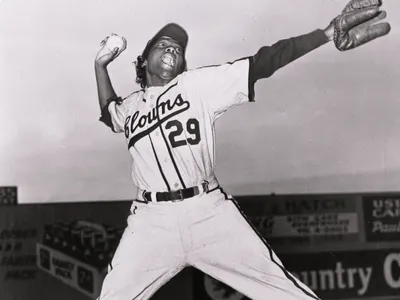
Toni Stone
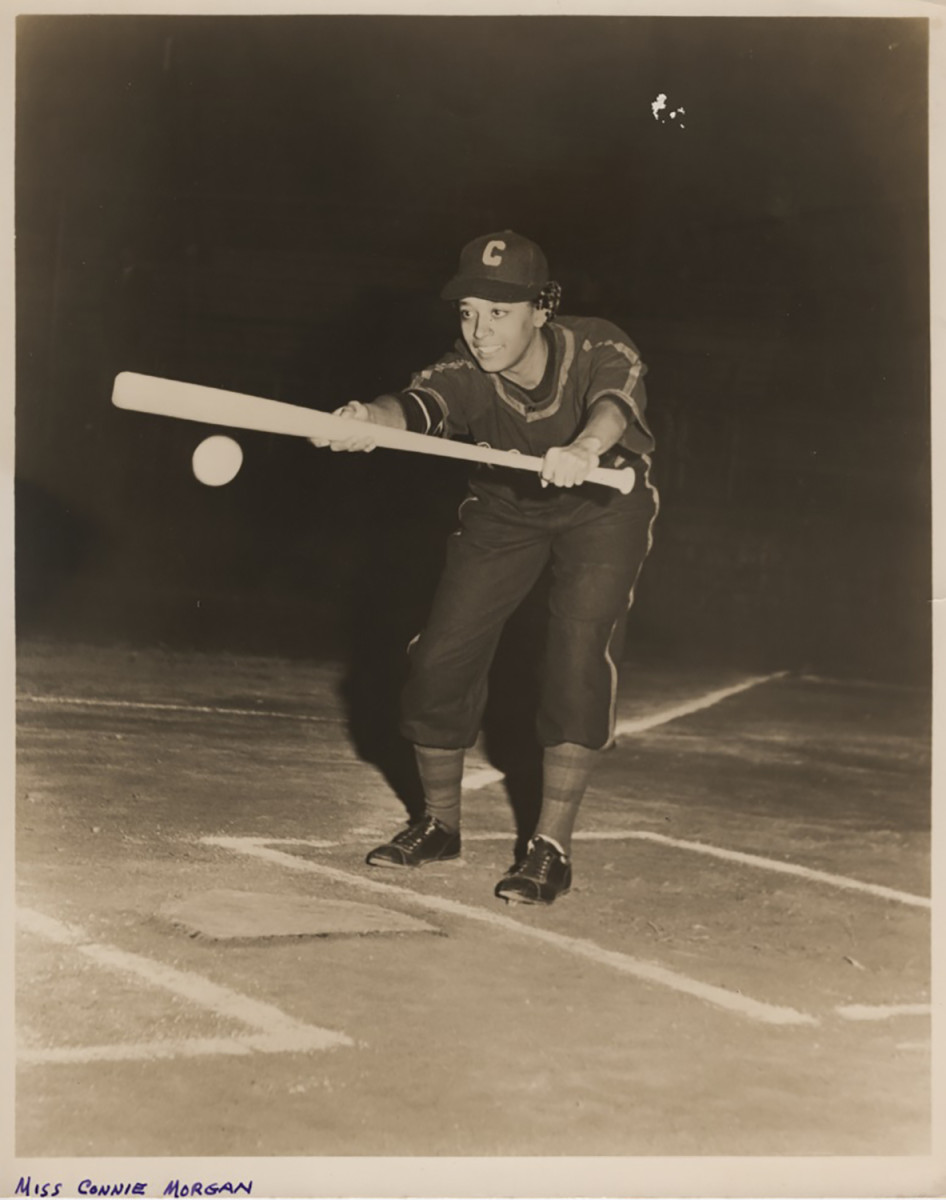
Connie Morgan
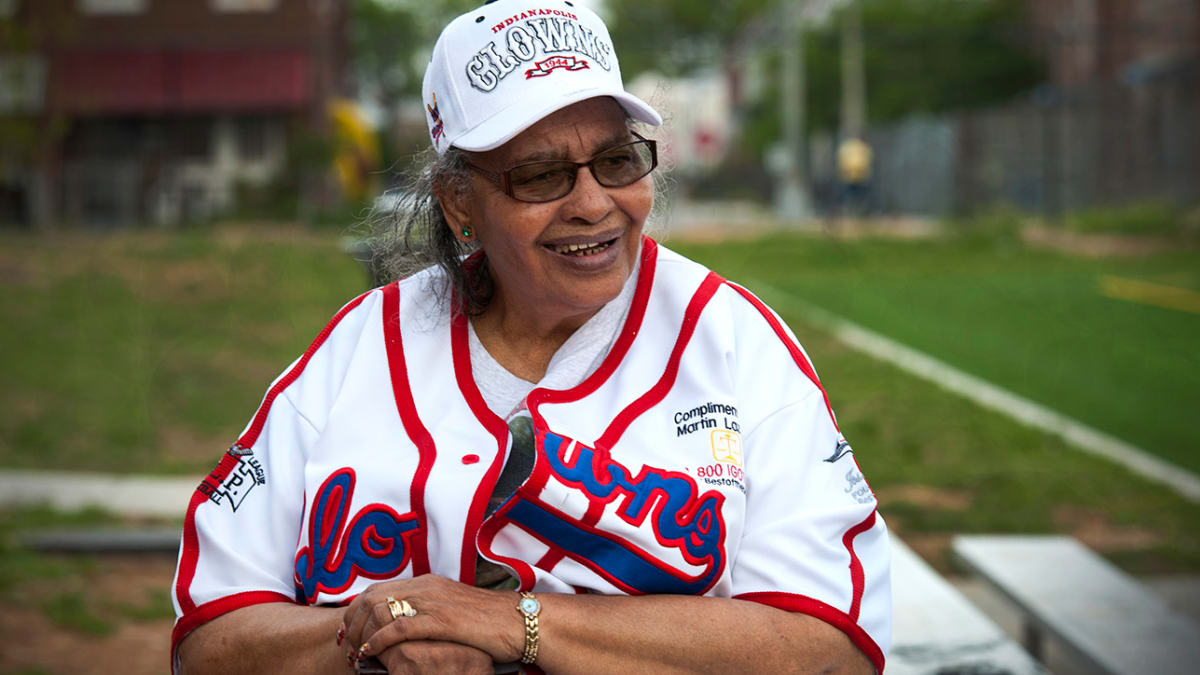
Mamie "Peanut" Johnson
Negro League Women Players
Three Negro League Women players broke gender and racial barriers and left a lasting legacy. The impact of the Negro Leagues would be incomplete without the stories of these talented Black women. These ladies all played multiple sports, but baseball, softball and basketball seemed to be the main attractions. Black baseball players migrated to the Negro Leagues, and they were joined by a few Black women who were also shunned by White-only leagues.
The All-American Girls Professional Baseball League, like Major League Baseball, did not allow Black players. During this unprecedented period for women in baseball, African American women had two strikes against them: they were women and they were Black. Even with the success of the AAGPBL, female players of color were largely invisible. The official Rules of Conduct of the AAGPBL strictly enforced standards of femininity and beauty for the players.
While “No Blacks Allowed” was an unofficial rule, it was no less strictly enforced. Unlike Major League Baseball, the AAGPBL never integrated. The league promoted a middle class American ideal of beauty and femininity that excluded Black women. There were no all-female baseball leagues for Black women, so Toni Stone, Mamie “Peanut” Johnson, and Connie Morgan, wanted to find a league where they could play ball. And that league was with their own people.
Toni Stone
When future Hall of Famer Henry "Hank" Aaron signed with the Boston Braves in 1953, it left a hole in the infield of the Indianapolis Clowns of the the Negro League. By 1953 the Clowns were one of only four teams left in the Negro American League. Syd Pollack, owner of the Indianapolis Clowns, was desperate to resuscitate interest in his team. Pollack signed three women who had the talent to be more than simply gate attractions. The first was Toni Stone, whom Pollack signed in 1953, who seemed be the player for the job. The team signed her, making Stone the first Black woman to play in the Negro Leagues.
Marcenia “Toni” Stone grew up in St. Paul, Minn. As a kid she was shooed away from many tryouts, leagues, and teams due to her sex. Her persistence eventually paid off when, at age 15 she played with a local boys baseball team. She was called "Tomboy" often as a child, which over the years became "Toni." After World War II, Stone's family moved to San Francisco, where at the age of 16, she played semipro barnstorming baseball for an American Legion team, the San Francisco Sea Lions. In her first at-bat with the San Francisco Sea Lions, she drove in two runs. Stone batted around .280 with the Sea Lions.
From '48-'52, Stone played for the New Orleans Creole and each season they played several games against the Indianapolis Clowns. Stone was impressive enough in those games that the Clowns' business manager recommended her to team owner Syd Pollock who signed her the next season. She was advertised as being 10 years younger than she actually was, and as having graduated from college. Stone admitted years later that she never attended college at all, and never even finished high school.
Stone joined the Clowns in 1952, a year after Hank Aaron was their star shortstop. She played the first three innings of each game at second base while superstar second baseman, Ray Neil, begrudgingly played left field. Stone was not welcomed with open arms by the men in the Negro Leagues, who felt that a woman should not be allowed to play with them. Much as Jackie Robinson’s white teammates in Brooklyn weren’t all ready to have a different colored teammate, not all of Stone’s Indianapolis teammates accepted her as an equal. She took it as an honor, when she showed off scars on her wrist when male players tried to spike her while sliding into second base. “They didn’t mean any harm and in their way they liked me,” Stone is quoted as saying. “Just that I wasn’t supposed to be there. They’d tell me to go home and fix my husband some biscuits or any damn thing. Just get the hell away from here.”
Stone was not allowed in the locker room, and usually dressed in the umpire’s locker room. Dealing with not only rampant racism, but swirling sexism of the ’50s, Stone would triumph in the face of seemingly insurmountable odds. She was asked to wear a skirt while playing, but she refused to do it. Even with the struggles that Stone faced, she still held her own, batting .243 during the 1954 season, and one of the hits was off of the legendary Satchel Paige. “He was so good,” Stone remembered. “That he’d ask batters where they wanted it, just so they’d have a chance. He’d ask, ‘You want it high? You want it low? You want it right in the middle? Just say.’ People still couldn’t get a hit against him."
So, I get up there and he says, ‘Hey, T, how do you like it?’ And I said, ‘It doesn’t matter just don’t hurt me.’ "When he wound up, he had these big old feet, all you could see was his shoe. I stood there shaking, but I got a hit. Right out over second base. Happiest moment in my life.” Stone did not play as often as she would have liked, appearing in only about 50 of the 175 games the Clowns played in 1953. After the season, her contract was sold to the Kansas City Monarchs, whom Stone played with in 1954 before retiring. During her two years in the National American League, she had a career batting average estimated to be .243, but at one point in the 1953 season she was batting .364, fourth in the league, right behind Ernie Banks. In 1985, Stone was inducted into the Women’s Sports Foundation’s International Women’s Sports Hall of Fame, and she is showcased in two exhibits at the Baseball Hall of Fame.
Mamie “Peanut” Johnson
Mamie “Peanut” Johnson was the first female pitcher in the Negro Leagues, when she was also signed by the Indianapolis Clowns in 1953. She recorded a 33-8 win-loss record and batted .273 over her career. Johnson played baseball everyday growing up in Ridgeway, S.C. At age 11 Mamie moved to Washington D.C. and continued to play both baseball and softball there. Johnson learned baseball from her uncle. She played with a police-league team. After graduating high school, Mamie played with the St. Cyprian recreational team in D.C. She continued to play while attending New York University. While practicing baseball with the “boys,” Mamie “Peanut” Johnson never imagined that one day she would become a female baseball legend.
When she was 17 years old, Johnson was rejected as a team member by the White Female Baseball League. After seeing an advertisement for women baseball players in the newspaper, the teenage Johnson and her friend Rita traveled to Alexandria, Virginia, for the tryout with All-American Girls Professional Baseball League. Johnson described standing there with her baseball glove. She and Rita were the only people of color. Johnson was a skilled player with lots of experience. Johnson said they looked at her and Rita but said nothing. “They wouldn’t give us the opportunity to try out.” “If I had played with White girls, I would have been just another player, but now I am somebody who has done something that no other woman has done,” Johnson is quoted as saying.
Johnson found a men’s semipro team that did want her, which is where a scout for the Indianapolis Clowns saw her and recommended her to team owner, Syd Pollack. The men were skeptical at first about this pint-sized pitcher, but she earned their respect with her talent. After being spotted practicing on a baseball field in Washington, D.C., Johnson was given a tryout with the Clowns. Johnson pitched against Toni Stone, Gordon Hopkins and other players. After one tryout, Mamie Johnson made the team. Along with Connie Morgan, she was signed by the Indianapolis Clowns in 1953.
She received pointers on pitching the curveball from Satchel Paige. During Johnson’s first game, an opposing batter yelled out to her: “What makes you think you can strike a batter out? Why, you aren’t any larger than a peanut!” Johnson struck the batter out in three pitches, without saying a word to him. 1 – 2 – 3 – OUT! From that day, the 100 pound baseball player had the nickname Peanut. In order to help sell tickets, Mamie and Connie Morgan were played at least once a game as they were popular with the crowd.
Mamie ‘Peanut,’ Johnson played professional baseball for three seasons, from 1953 to 1955, with the Indianapolis Clowns. During her tenure, she won 33 games and lost 8 games. Her batting average ranged from .262 to .284. Of this opportunity, she exclaimed, “Just to know that you were among some of the best male ball players that ever picked up the bat, made all of my baseball moments great moments.” After her baseball career ended, Ms. Johnson began a three-decade career as a nurse, and then went on to run a Negro League memorabilia shop in Maryland.
Connie Morgan
Determined to draw fans in support of his team, Indianapolis Clowns owner and manager Syd Pollack signed 19-year-old Connie Morgan to replace Toni Stone at second base in 1954 as Stone went to the Kansas City Monarchs. Like Stone, Morgan was a big draw for girls and women but men still treated her as a novelty. The athletic Morgan had already played five seasons with the women’s North Philadelphia Honey Drippers from her hometown. She played several positions, with a final batting average of .338. She also played basketball for the Rockettes. Morgan was called lightning fast when she had an opportunity to run the bases. Philadelphia had for decades been the mecca of Black baseball and had even lent itself to Black women’s baseball on occasion.
When she read an article in the newspaper about Stone playing for the Clowns, Morgan wrote Pollack to request a tryout. An all-around athlete, she played basketball in the off-season. Prior to signing with the Clowns, she attended John Bartrum High School and William Penn Business School in her hometown. Brooklyn Dodgers star Jackie Robinson had noticed Morgan when she was working out with a few players to the side of the field during exhibition game in the fall of 1952. With the great Robinson himself watching and providing batting tips, Morgan, displayed her strong arm and accuracy, along with a smooth swing.
Morgan was invited for a tryout with the Clowns after she wrote Stone a letter that was passed on to field manager Bunny Downs. The team initially placed her at third base, but decided the pace there was too rapid for her, they moved her to second. Oscar Charleston, the Clowns’ manager and a Hall of Fame center fielder, had scouted Morgan and called her “one of the most sensational” female players he had ever seen. Upon his recommendation, Pollack granted Morgan’s request when the Clowns played an exhibition in Baltimore against the Orioles. Impressed, Pollack signed Morgan, who had been primarily a catcher for the Honey Drippers, at the same time as female pitcher Mamie "Peanut" Johnson, to play second base.
Eager to build on Stone’s success, Clowns manager Charleston talked up Johnson and Morgan profusely to the newspapers. Described as standing 5 feet 4 inches tall and weighing 140 pounds she was slated to get the regular female assignment in the starting lineup. He later talked up Morgan even more, stating, “good athletes, girls especially, aren’t born every day…and Miss Morgan is no exception. In her quiet way, she’s made buddies among her teammates while gaining their admiration with her remarkable play around second base.”
Though Stone had to brunt many of the mistreatments that come along with being the “first Black anything” in the ’50s, Morgan also experienced the predictable sexism of the times, even from her own people. Ebony had published photos of Stone, one in her uniform, the other in a dress: “Dressed in street clothes, Toni Stone is an attractive young lady who could be someone’s secretary, but once in uniform she is all ball player.” A highlight of Morgan’s career was returning to Philadelphia for her first game in the city as a player for the Indianapolis Clowns at Connie Mack Stadium (formerly Shibe Park). The Clowns swept the doubleheader against the Philadelphia Monarchs.
Morgan played just two seasons with the Clowns in the National American League, splitting time at second base with Ray Neiland, batting third and posting about a .300 average. She then five seasons with the North Philadelphia Honey Drippers, an all-women baseball team, where she batted .368. Like Stone, Morgan was a big draw for girls and women but men still treated her as a novelty. Even when Morgan retired from the league to return to William Penn Business School, graduating in late 1955, Pollock released a press release saying “her decision to ‘pursue a secretary position in a business office’ was her ‘true calling.’”