The famous sculptor, Mary Edmonia Lewis, also known as "Wildfire" was of mixed Black-American and Native American (Mississauga Ojibwe) heritage. She was born free around 1844 near Albany, New York. Lewis was orphaned by 1850. By the time Mary reached the age of nine, both of her parents, Samuel and Catherine Lewis, had died. From time to time, she visited her mother's Ojibway (Chippewa) relations who lived near Niagara Falls. Her two maternal aunts adopted her and her older half-brother Samuel. Lewis and her aunts sold Ojibwe baskets and other items, such as moccasins and embroidered blouses, to tourists visiting Niagara Falls, Toronto, and Buffalo. During this time, Lewis went by her Native American name, Wildfire, while her brother was called Sunshine.
In 1852, Samuel left for San Francisco, California, leaving Lewis in the care of a Captain S. R. Mills. With the support and encouragement Samuel, in 1856 Mary attended Oberlin College in Ohio. Oberlin College was not only the first university to admit women, but the first to admit women of ethnic minorities. Lewis attended the Young Ladies’ Preparatory Department and then the Young Ladies’ Department from 1859 to 1863. The Ladies' Department was designed "to give young ladies facilities for the thorough mental discipline, and the special training which will qualify them for teaching and other duties of their sphere." She changed her name to Mary Edmonia Lewis and began to study art.
She stayed with the family of the White abolitionist James Keep, who kept a kind of guest house for female students. Reverend Keep was a member of the board of trustees, an avid abolitionist, and a spokesperson for coeducation. The abolitionist movement was active on the Oberlin campus and would greatly influence her later work. An incident took place on the campus, that changed Lewis’s life. In January of 1862, three years into her studies, Lewis’ life was disrupted by a horrifying series of events. Two White girls at Oberlin accused her of attempting to poison them after Lewis had served them wine, even though she herself had drunk the wine without harm. The two girls were okay, but authorities took no action. Lewis was charged with poisoning her classmates.
News of the controversial incident spread rapidly throughout Ohio and was universally known in the town of Oberlin, where the general population was not as progressive as that of the college. Prominent Black lawyer, John Mercer Langston, himself an Oberlin alumnus, defended her successfully. Langston was apparently brought in by James Keep to defend Lewis. Lewis was acquitted of the charges because Langston could point to the fact that there was no proof of the poisoning. For the time being she remained at Oberlin. The remainder of Lewis' time at Oberlin was marked by isolation and prejudice. A year later, in February of 1863, she was accused of stealing art material from a classroom, and although she was (again) cleared, she was subjected to verbal attacks.
Even though Lewis was not convicted in the incident, Oberlin's administration refused to allow her to enroll the next year to complete her graduation requirements. Her White accusers apparently did not return to Oberlin. In 1863, she moved to Boston, perhaps she had simply had enough of Oberlin, to begin her career as a sculptor, relying on the art community and abolitionists to help get her get started. With letters from her Oberlin friends and supporters she got an introduction to the well-known White militant abolitionist William Lloyd Garrison and his larger circle. She began studying with the well-respected local sculptor Edward Bracket, who received her, knowing she had little experience in with this type of artwork.
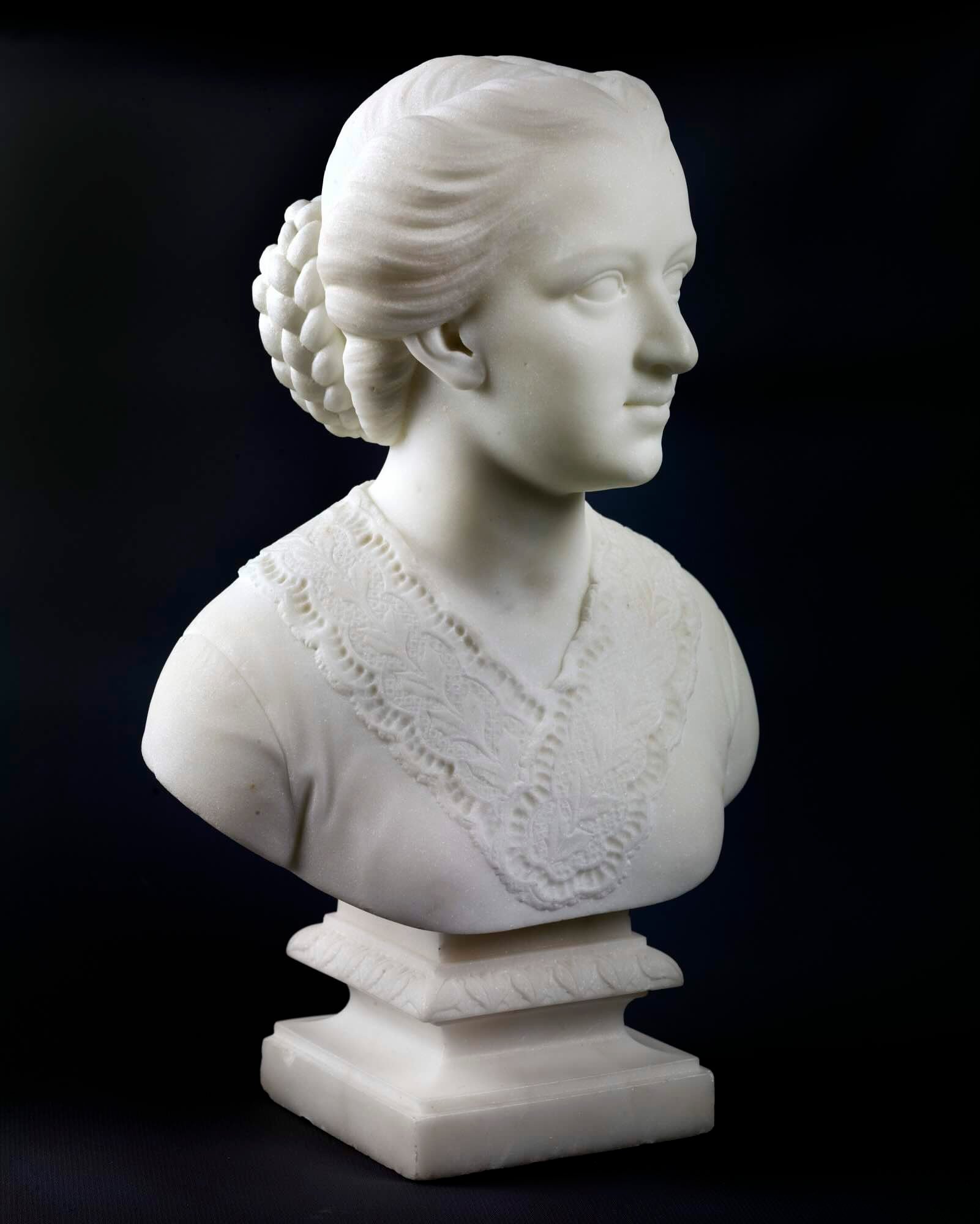
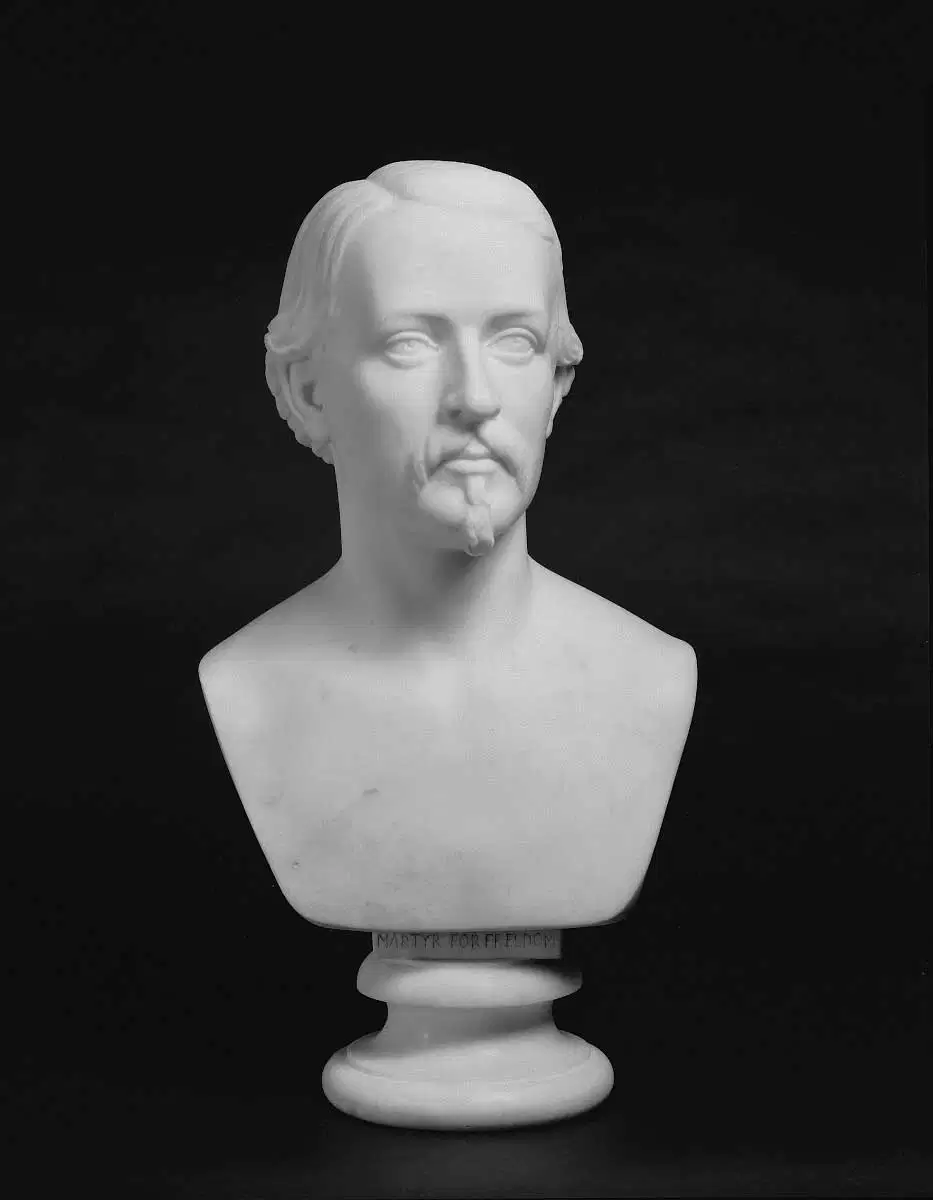
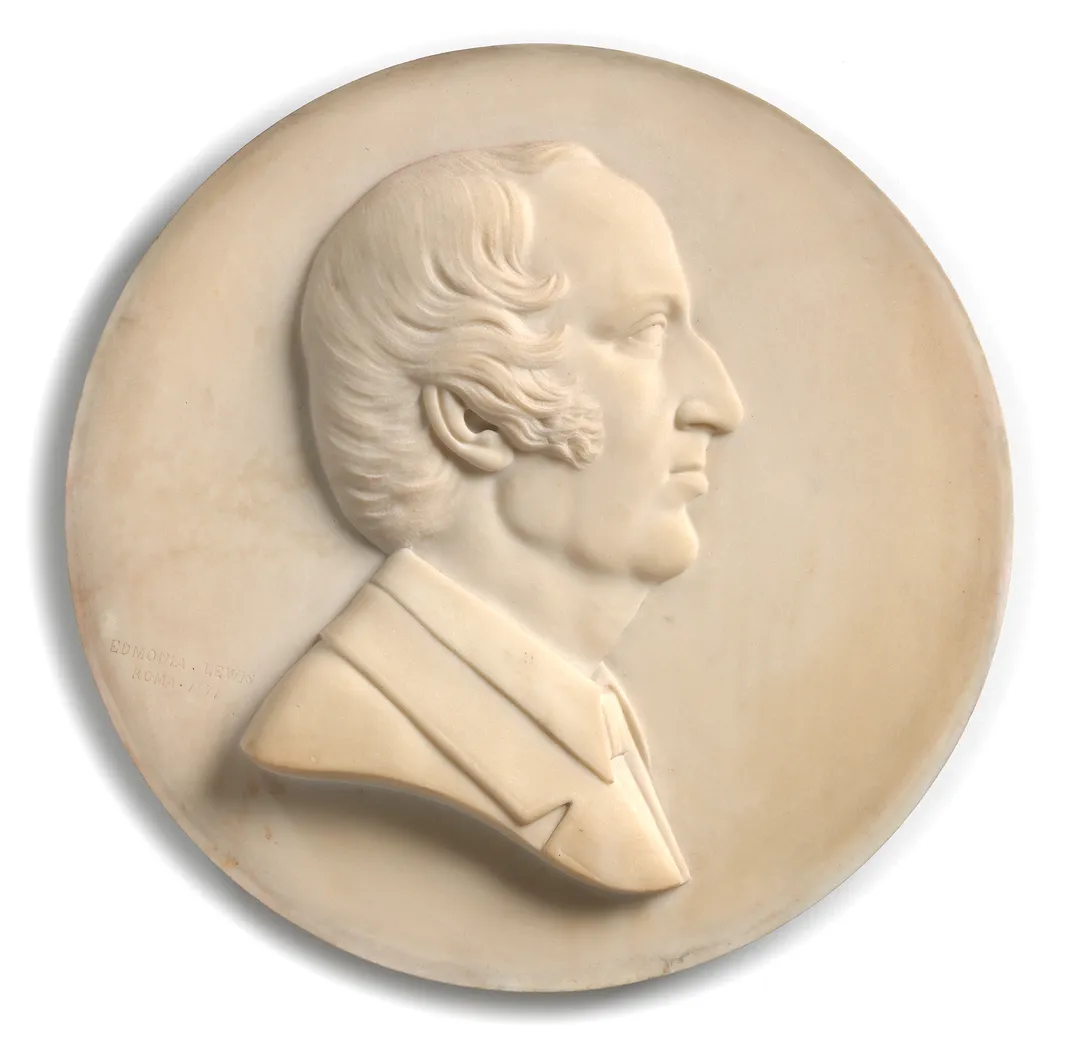
Lewis found an enthusiastic reception among abolitionists, who actively promoted her work and filled the anti-slavery press with a steady stream of favorable publicity. She studied with local sculptors and created carvings of Union Civil War heroes. Lewis’s first work seen publicly was a medallion, advertised for sale early in 1864, that featured the head of William Lloyd Garrison, John Brown, and also of Charles Sumner, and Wendell Phillips. Later in the year her bust of Col. Robert Gould Shaw, who had been killed leading his Black troops in the attack on Fort Wagner, as part of the assault on Charleston, S.C. was widely praised. It impressed the Shaw family, which purchased it. That bust of Shaw became her most famous work to date.
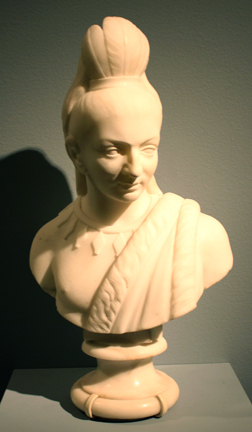
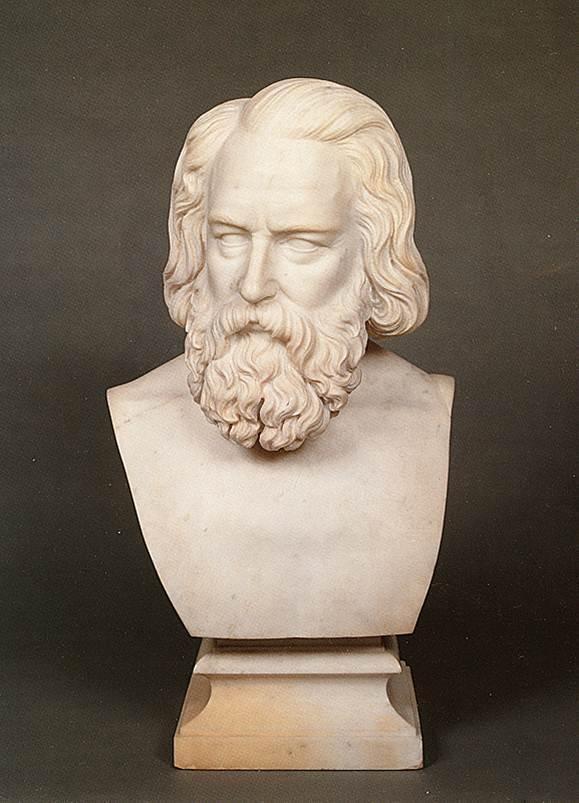
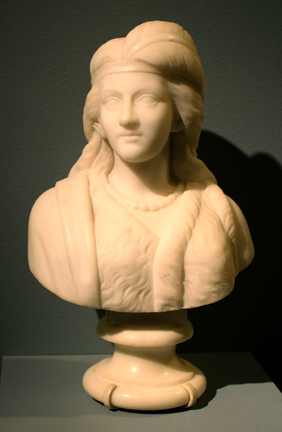
She also did sculptures based on Henry Wadsworth Longfellow’s epic poem, "The Song of Hiawatha". Despite the support from the abolitionist community, Lewis did not want to receive praise for being “a colored girl” and felt her race limited her in the United States. Sales of copies of her sculptures allowed her to sail in 1865 to Rome. Famous American actress Charlotte Cushman, Harriet Hosmer, and other members of the American art community took her under their wing. She mastered working in marble and refused to hire Italian stone carvers to transfer her plaster models to marble, in order to quell any question that the work was her own. Lewis spent most of her adult career in Rome, where Italy's less pronounced racism allowed increased opportunity to a Black artist.
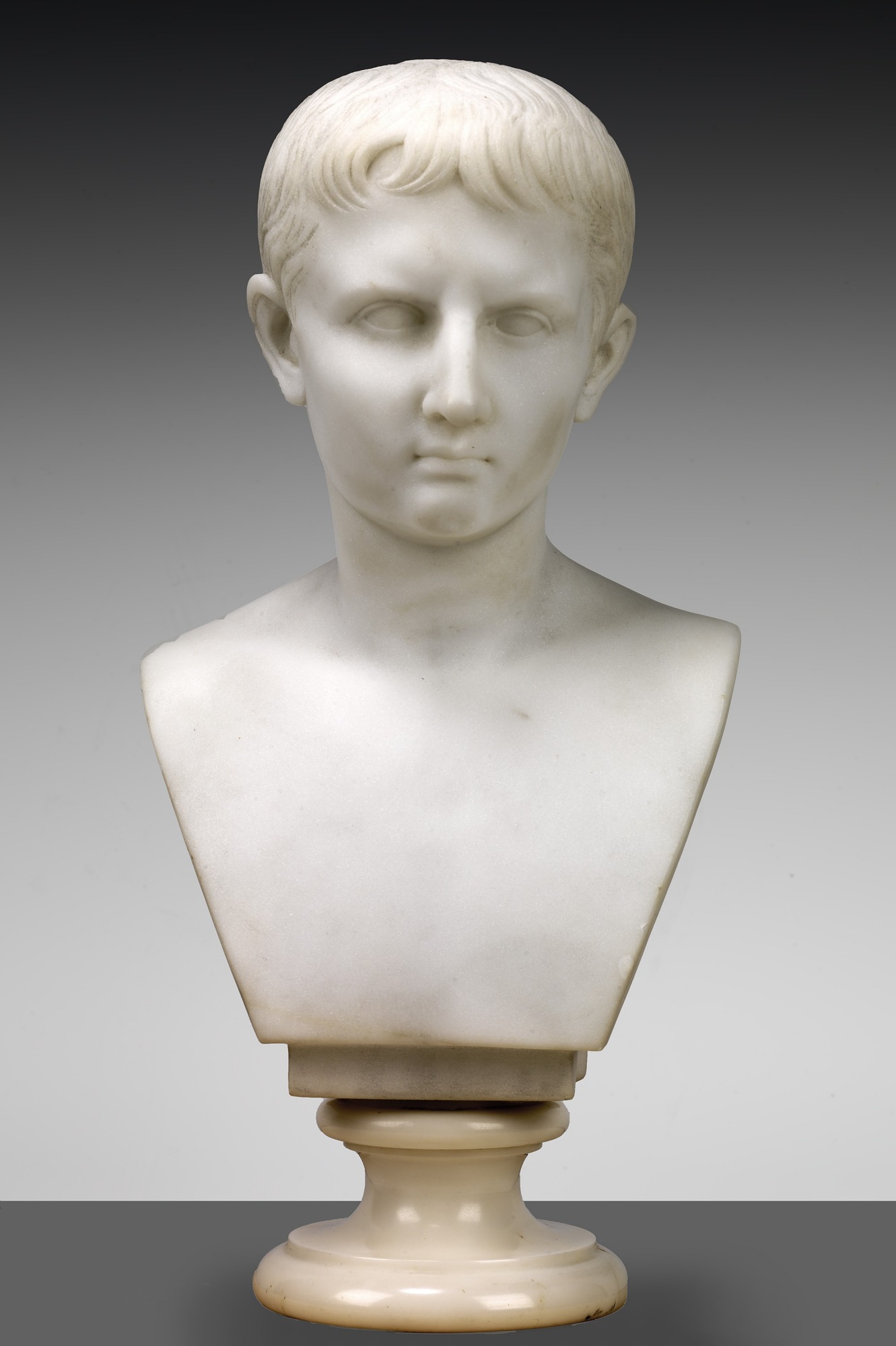
Edmonia Lewis was unique in the way she approached sculpting abroad. She insisted on enlarging her clay and wax models in marble herself, rather than hire native Italian sculptors to do it for her – the common practice at the time. Male sculptors were largely skeptical of the talent of female sculptors, and often accused them of not doing their own work. Mary distinguished herself with many noteworthy works. While she made periodic trips back to the U.S., she built an extraordinarily successful career in Rome, employing as many as six assistants in her studio. Italy was a popular destination for neoclassical sculptors in the mid-19th century. Some of her most productive period in terms of her art was while in Italy.
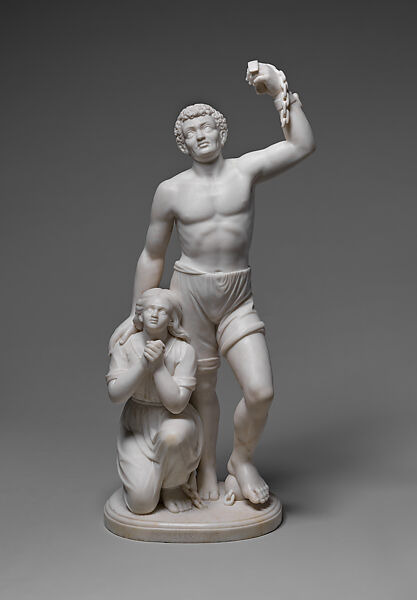
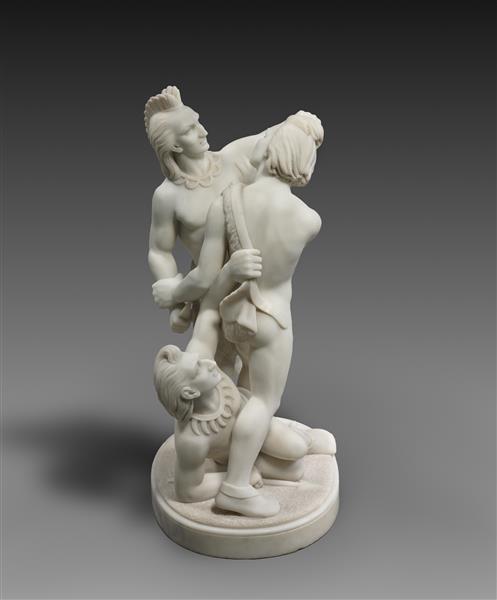
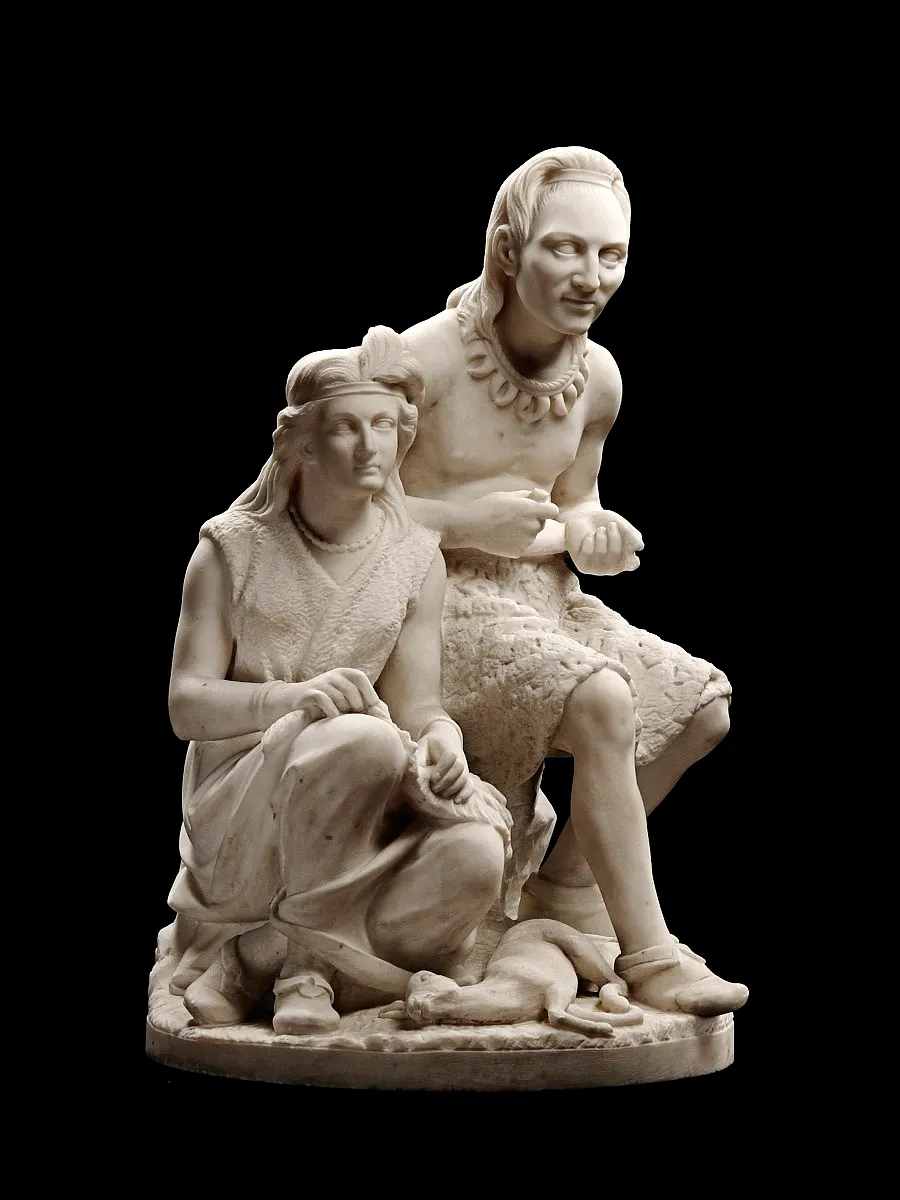
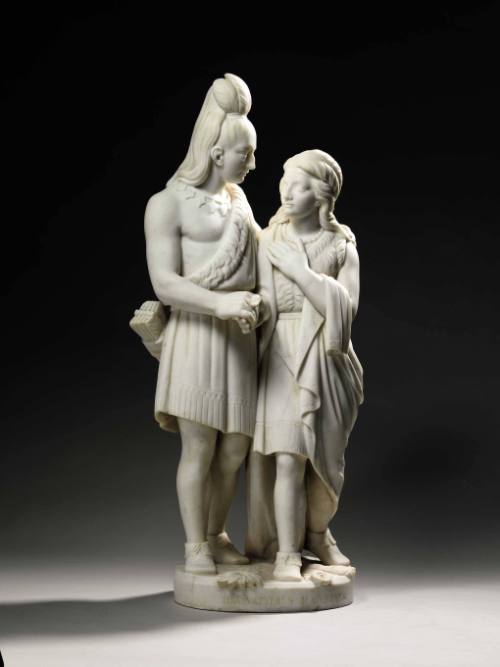
While in Rome, Lewis continued to express her African-American and Native American heritage. In 1867-68, she completed her best-known work, "Forever Free", celebrating the end of slavery. The marble statue shows a Black man raising his arm, with the chains broken, to the heavens; at his feet a woman kneels, her hands clasped in prayer. Another piece, "The Arrow Maker" (1866), draws on her Native American roots and shows a father teaching his young daughter how to make an arrow. Lewis had many major exhibitions during her rise to fame, including one in Chicago, Illinois, in 1870, and in Rome in 1871.
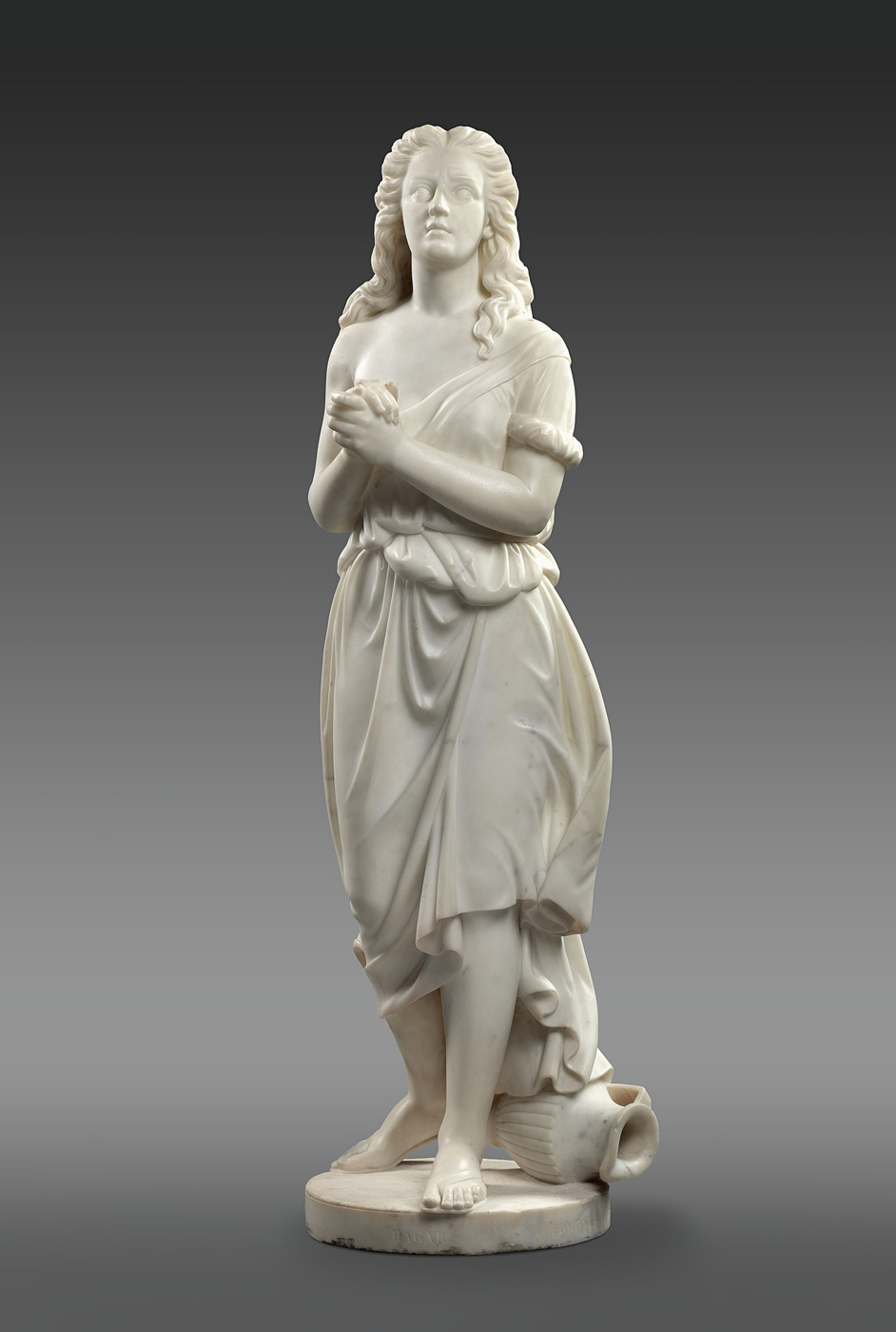
She created several religious works, including a figure of Hagar (1875), noting "I have a strong sympathy for all women who have struggled and suffered." "Hagar", embodies the Old Testament figure, a female slave to Abraham and Sarah who is exiled, but very likely alludes to the sufferings of women and of the formerly enslaved in the US who had been so recently freed. Her works sold extremely well. Her studio was a stop for prominent tourists such as Frederick Douglass. Over the years, Lewis continued to sculpt leaders of the anti-slavery movement, religious figures, and subjects that her own dual heritage inspired. Tourists bought and also occasionally commissioned work when they visited her studio in Rome.
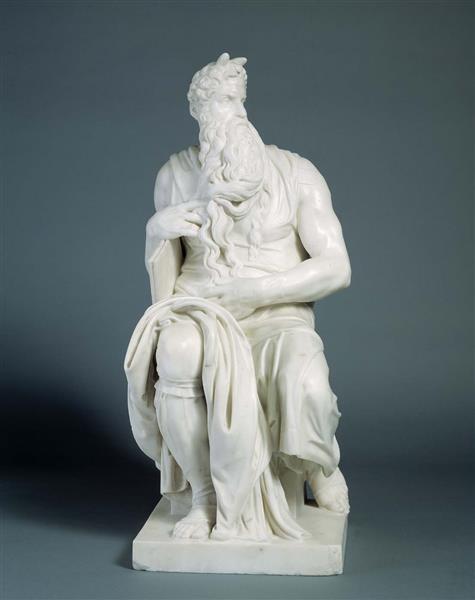
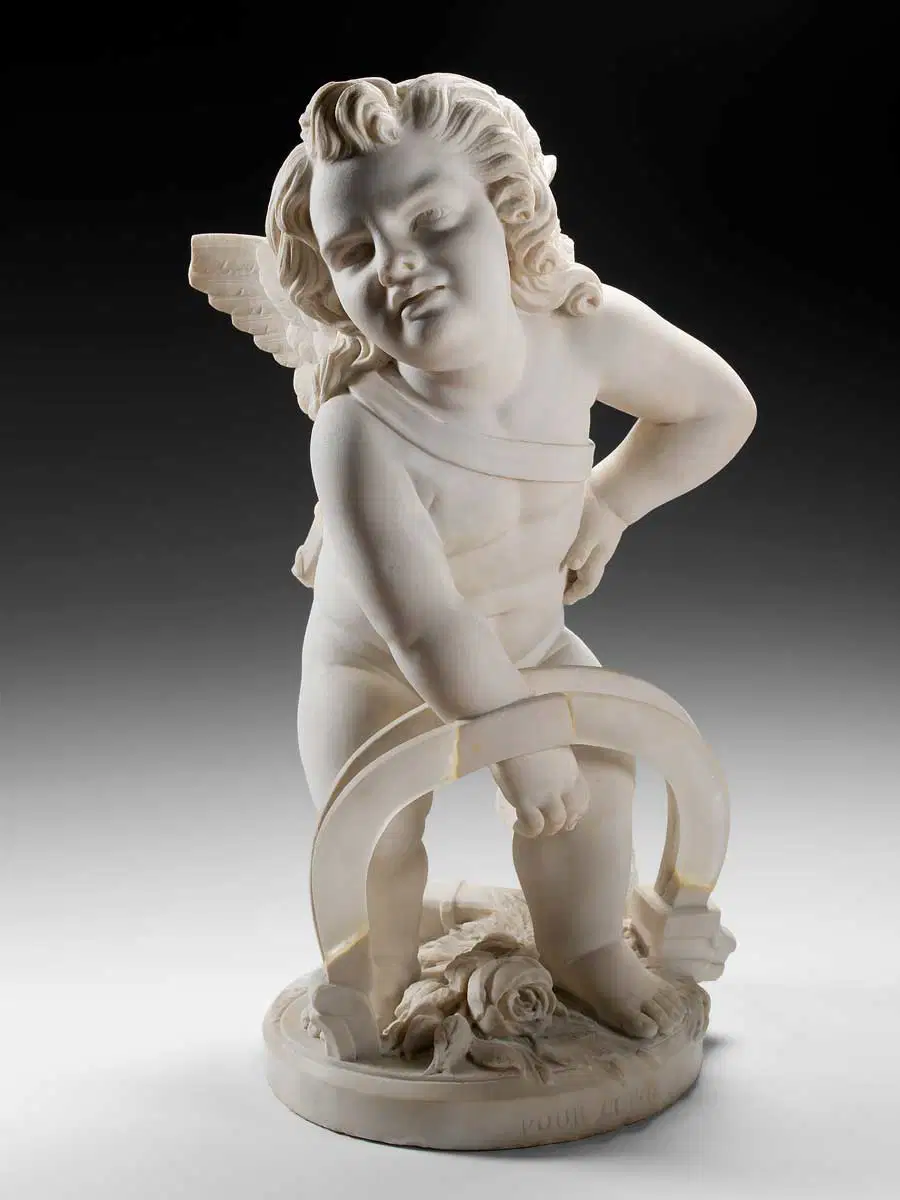
Her works included marble sculptures that draw from her mixed Black American and Native American heritage as seen in works like “Old Arrow Maker” (1866). Lewis’s output of work also incorporated mythological and biblical motifs in pieces like “Poor Cupid” (1872), “Moses (after Michelangelo)” (1875). By that time, she had gained recognition in the United States with an 1872 exhibition of her works at the San Francisco Art Association. In 1872, Edmonia was summoned to Petersboro, New York, to sculpt wealthy abolitionist Gerrit Smith, a project conceived by his friends. Smith was not pleased and what Lewis completed was a sculpture of the clasped hands of Gerrit and his beloved wife Ann.
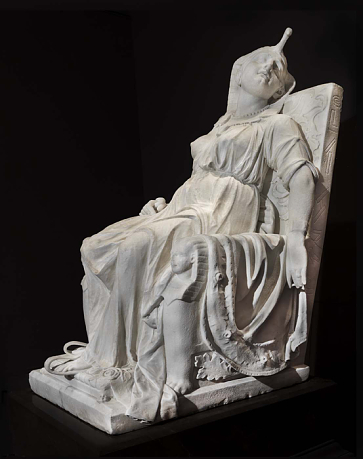
Mary Edomina Lewis studio garnered her invitations to major exhibitions around the world. One of her most important and ambitious sculpture, "The Death of Cleopatra", was exhibited at the 1876 Centennial Exposition in Philadelphia. For this, she created a monumental 3,015-pound marble sculpture. Her depiction of a sensuous, disheveled queen in her death throes drew criticism, but also huge crowds. Cleopatra was called ‘the grandest statute in the exposition'. When Mary made occasionally visited the United States, she would delivered and completed commissioned work. In 1877, former President Ulysses S. Grant commissioned her to carve his portrait. In 1883 she received her last major commission, for her "Adoration of the Magi".
Edmonia Lewis (she rarely used her first name) was the first Black woman and Native American woman sculptor to achieve national and then international prominence. She took only a handful of additional trips to the US after 1880, and there are only a small number of sculptures she is known to have produced after 1879. She was still actively making art in Rome in 1887, when Frederick Douglass visited and found her plying “her fingers in her art as a sculptress,” “cheerful and happy and successful.” But by the early 1890s, she had left Rome for Paris, where she possibly made her one and only bronze bust or medallion, of Phillis Wheatley in 1893, for the World’s Colombian Exposition in Chicago.
At the end of the 19th century, she remained the only Black woman artist who had participated in and been recognized to any extent by the American artistic mainstream. Mary moved to London by 1901, for unknown reasons, and was gradually forgotten. She continued to live in London until her death in 1907. Mary Edmonia Lewis shattered expectations about what female and minority artists could accomplish. As the first Black or indigenous American, of either sex, to achieve professional status and international acclaim as a sculptor, Lewis was no doubt a beacon for many of the artists of color who followed in her footsteps.