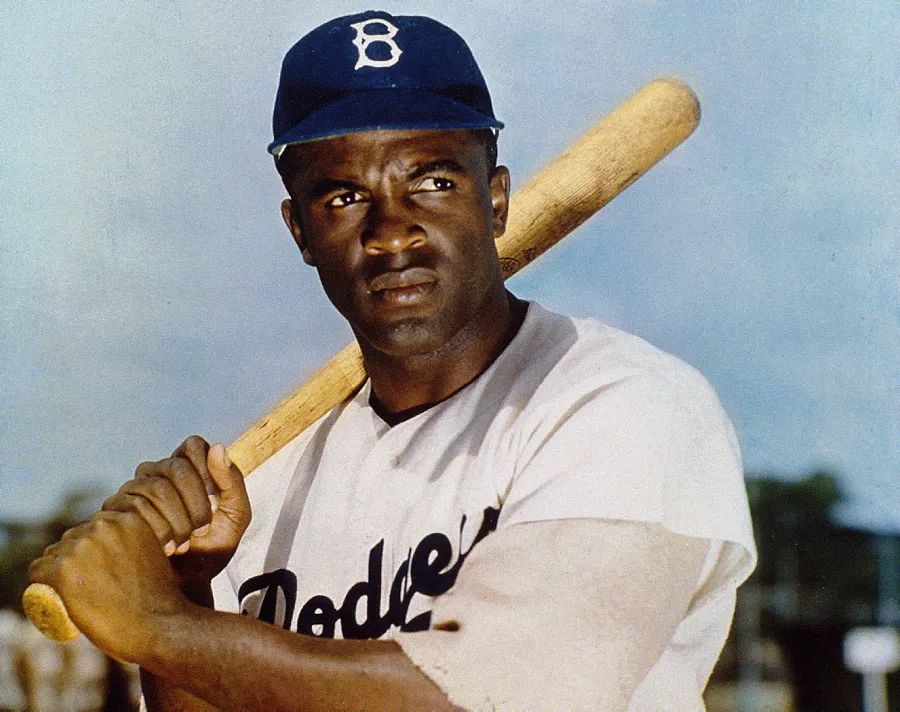
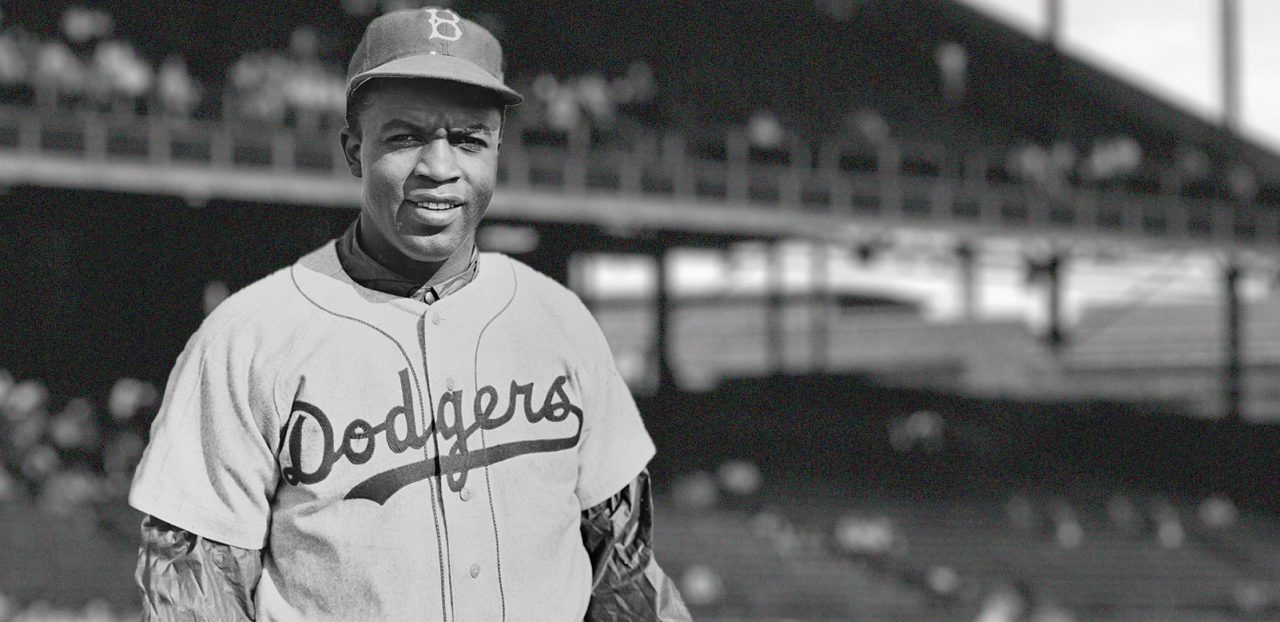
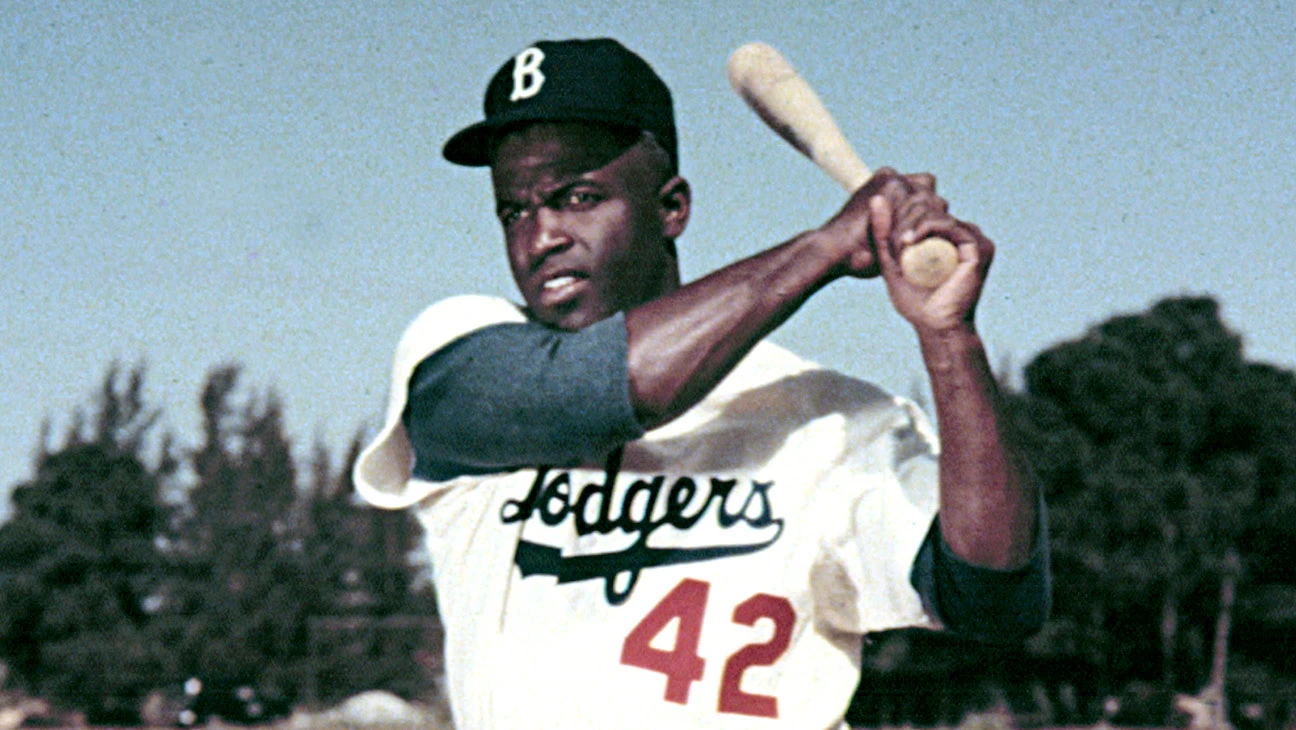
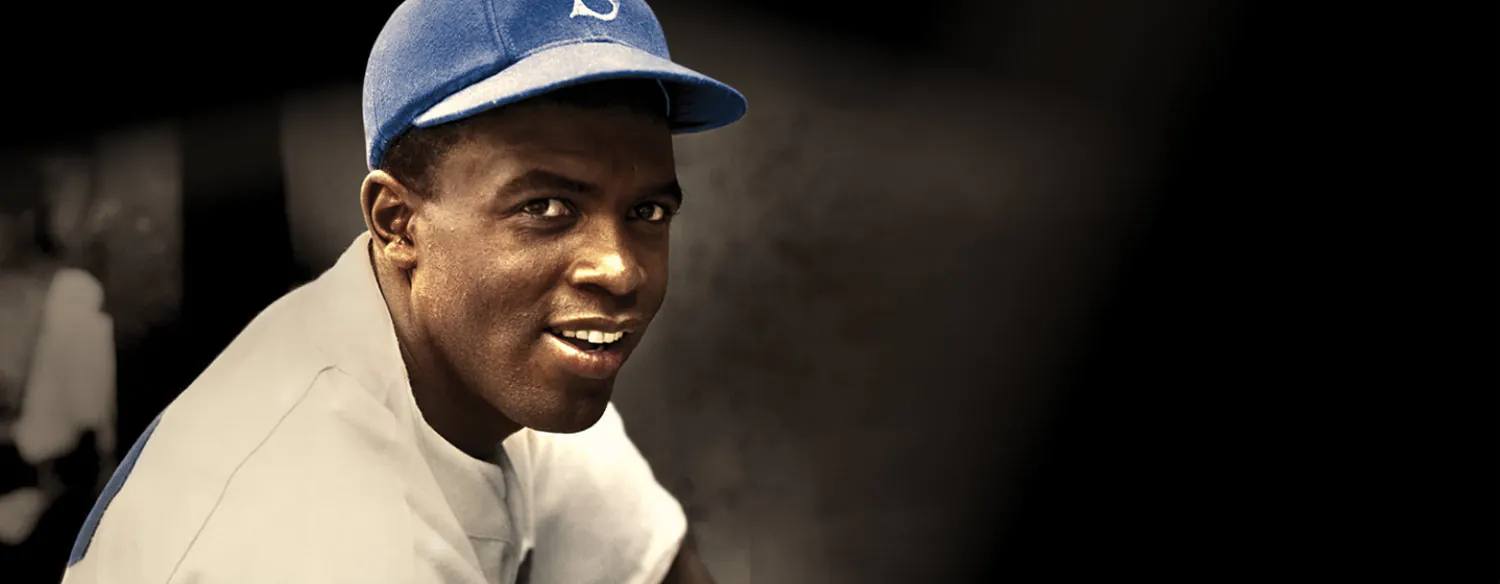
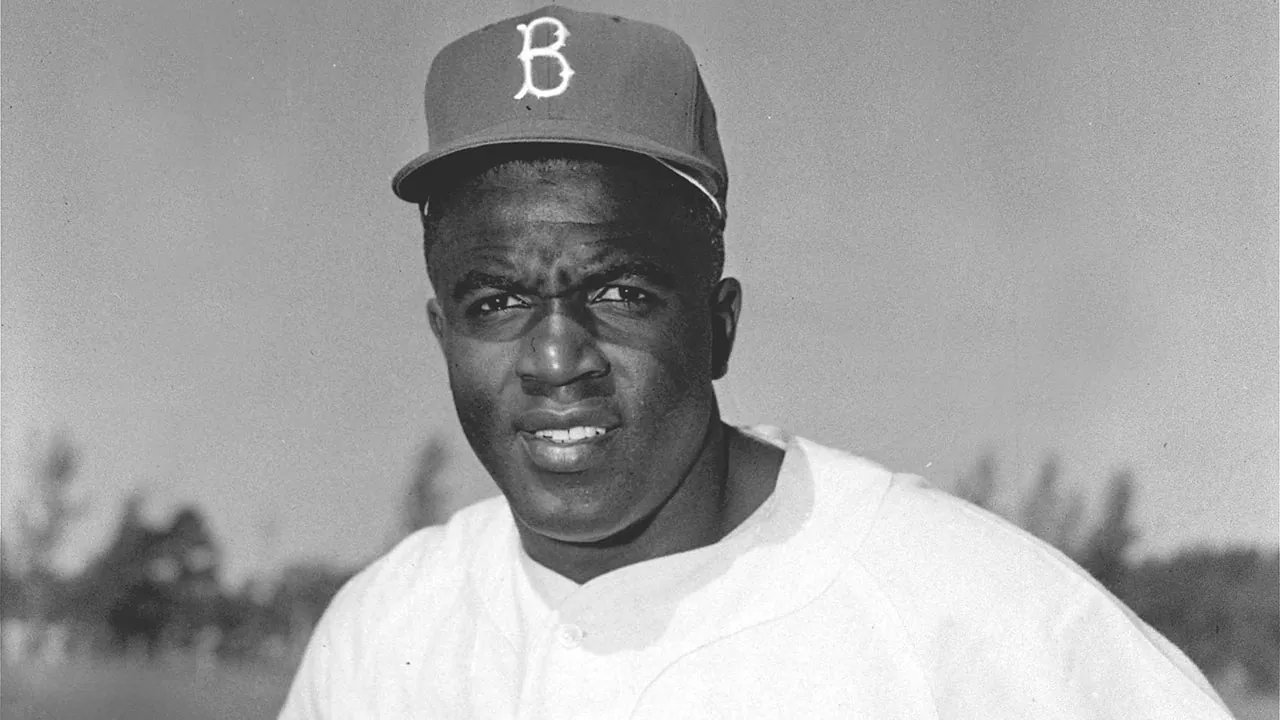
Jackie Robinson, was the first Black baseball player to play Major League Baseball during the 20th century. On April 15, 1947, Robinson broke the color barrier of Major League Baseball when he appeared on the field for the National League Brooklyn Dodgers. Jackie Roosevelt Robinson was born on Jan. 31, 1919 in Cairo, Georgia, the son of sharecroppers and grandson of enslaved Americans. His middle name honored former President Theodore Roosevelt, who died 25 days before Robinson was born. He was the youngest of five children. After his father deserted his mother, the family moved in 1920 to Pasadena, California, where his mother, Mallie, worked a series of odd jobs to support herself and her children. Though Pasadena was a fairly affluent suburb of Los Angeles at the time, the Robinsons were poor, and Jackie and his friends in the city’s small Black community were often excluded from recreational activities.
Robinson attended Muir Technical High School in 1935. His older brother Mack, a silver medalist in track and field at the 1936 Olympics in Berlin, inspired him to pursue his interest in athletics, where his athletic feats opened college doors. In 1936, Jackie won a tennis championship. He also made an all-star baseball team. A newspaper called him "the outstanding athlete at Muir" for his skills in many sports. After graduating high school, Jackie attended Pasadena Junior College for two years, where he continued to have success in all four sports. Like at Muir High School, most of Jackie's teammates White. In 1938, he was chosen for the All-Southland Junior College Team for baseball. That year, Jackie was recognized for his "outstanding service to the school" and his good grades and character. This showed that Jackie was not just a great athlete, but also smart and a good person.
He continued his education at UCLA, where he became the university’s first student to win varsity letters in four sports. There, he became the first Bruin to earn varsity letters in four sports — the same four in which he starred in high school—and he won the NCAA long jump championship in 1940. Jackie also met his future wife, Rachel Isum, while at UCLA. In 1941, family financial problems forced him to leave the University of California without a degree. After moving to Honolulu, he played football for the semi-professional Honolulu Bears. After a short season, Jackie came back to California. In 1942 he enlisted in the Army and and assigned to a segregated Army cavalry unit at Fort Riley, Kansas. After completing the Officer Candidate School, he was commissioned a second lieutenant.
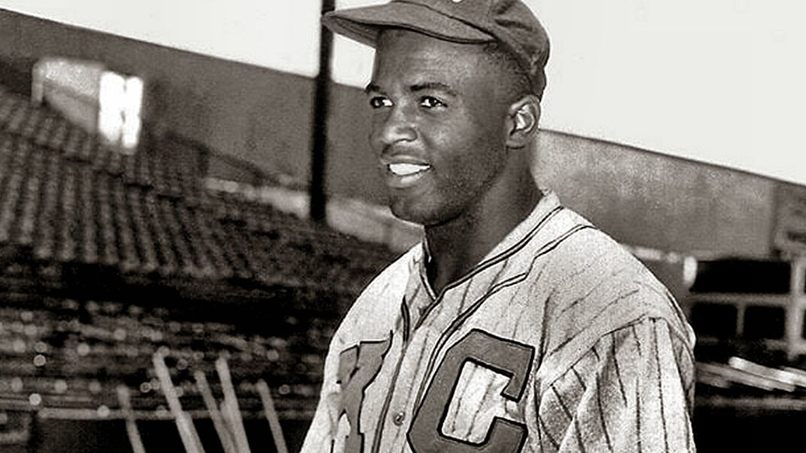
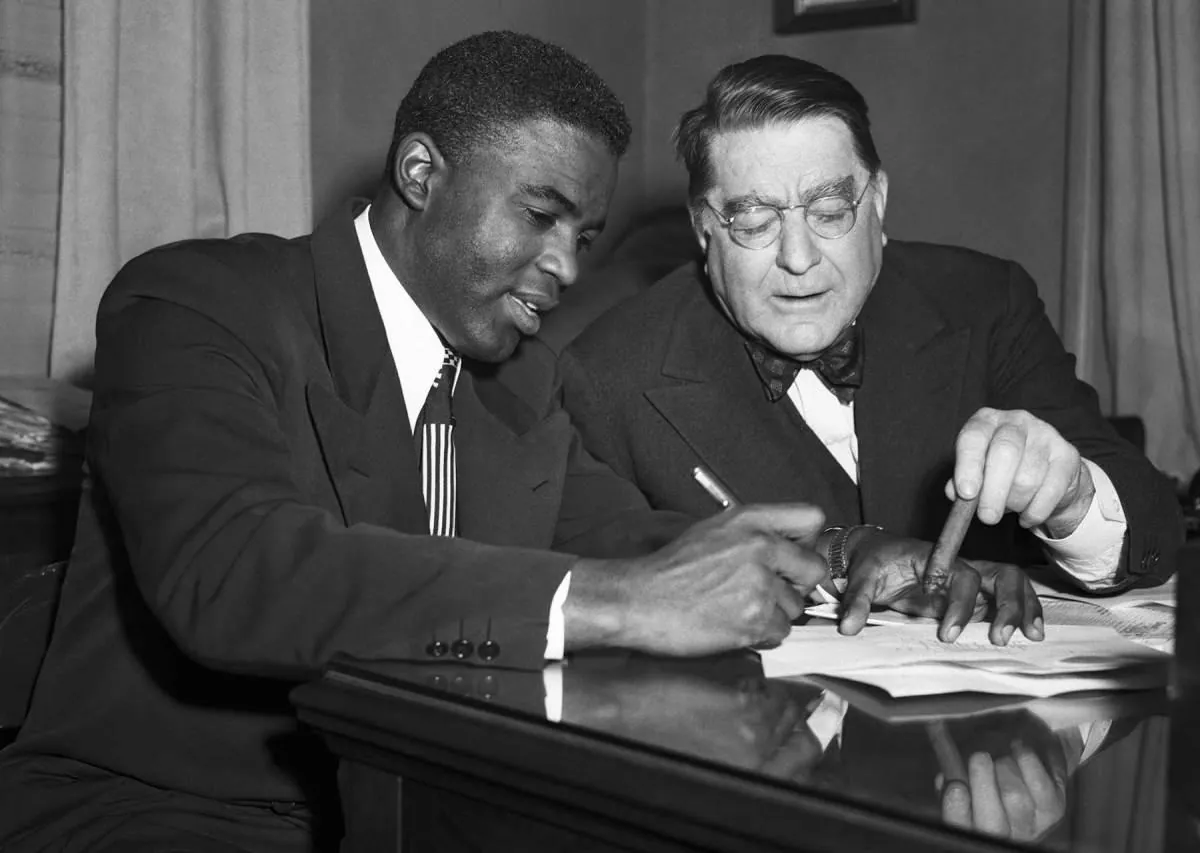
During this time, however, he remained close to Rachel with whom he became engaged in 1943. In 1944, Jackie was nearly court-martialed after he boarded a bus at Fort Hood in Texas and refused the driver’s order to sit in the back, as segregationist practices in the United States dictated at the time. He was acquitted on all the charges. The incident, however, presaged Robinson’s future activism and commitment to civil rights. After his honorable discharge from the Army in November 1944, Jackie took a job coaching basketball at a college in Austin, Texas. After his discharge from the Army, Robinson began to play baseball professionally in 1945 for the Kansas City Monarchs of the Negro Leagues. During this point in time, Branch Ricky, had been looking at players in the Negro Leagues. Ricky was the president, and general manager of the Brooklyn Dodgers. Rickey was actively seeking to integrate Major League Baseball.
Rickey was looking for a Black pioneer who — in addition to possessing the requisite talent — was educated, sober, and accustomed to competing with and against White athletes. Robinson met those conditions. He grew up in a racially mixed environment, attended school with White classmates, and matriculated at UCLA. He’d been an officer in the military, was well-spoken, personable, and comfortable in front of crowds. Certainly there were other Black ballplayers who possessed the qualifications Rickey sought. Monte Irvin and Larry Doby were two obvious candidates. Rickey sent out a flood of scouts seeking the right man, and received favorable reports on several players, but he fixed on Robinson for a number of reasons essential to his grand plan.
Robinson, though he was not the best player in Negro League baseball, was available due to the early termination of his own military obligation. Rickey wanted the right man off as well as on the field. He wanted positive press and support from the African-American community. He wanted to win acceptance from Dodger teammates. As an officer and a gentleman, as a superior athlete and a solid family man, as an articulate individual who sprang from poverty, Robinson became the pioneer. In the spring of 1945 Branch Rickey interviewed Robinson for three hours, during which he hectored, lectured, and tested the young athlete. He wanted Robinson to wear a "cloak of humility" as part of a long-term strategy designed to win acceptance. To a skeptical Robinson, he said: "I want a ball player with guts enough not to fight back! You've got to do this job with base hits and stolen bases and fielding ground balls, Jackie".
On August 28th 1945, he signed Robinson to a contract with the all-White Montreal Royals of the International League. Rickey knew there would be difficult times ahead for the young athlete, so he made Robinson promise to not fight back when confronted with racism. Rickey also personally gauged Robinson’s reactions to the racial slurs and insults he knew the player would endure. From the beginning, Robinson’s will was tested. Some of his new teammates objected to having a Black man on their team. People in the crowds sometimes jeered at Robinson, and he and his family received threats. Robinson was set to play the 1946 season for the Dodgers top minor league. Robinson led that league in batting average in 1946 and was the minors most valuable player.
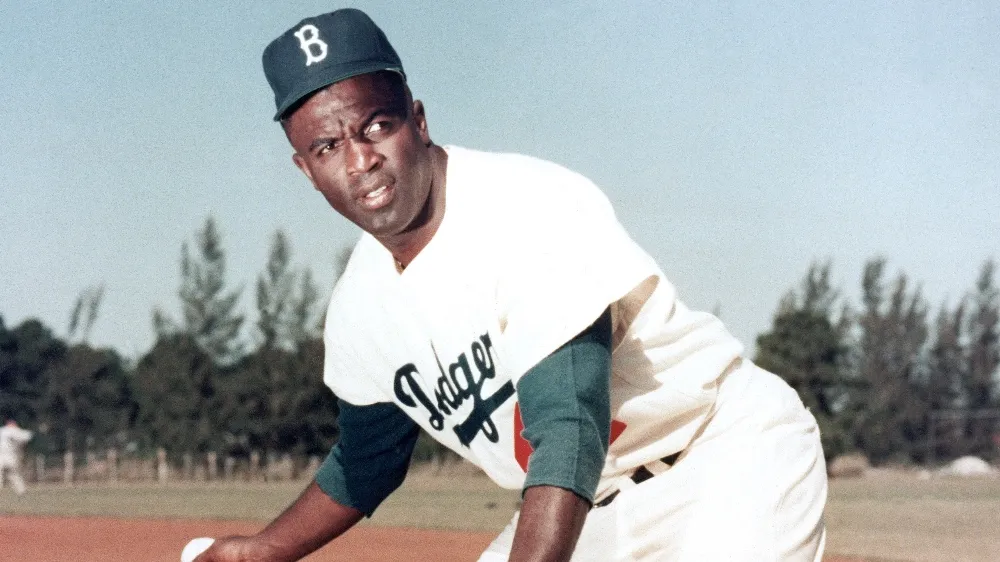
At the start of the 1947 baseball season, Robinson was called up to join the Brooklyn Dodgers. His debut with the Dodgers on April 15, 1947 was greeted with a lot of attention—not all of it positive. Although Robinson quickly proved he belonged as a player, the color of his skin was an issue for opposing teams and fans. Jackie faced all sorts of racial abuse from the fans and from other baseball players. He even received death threats. Harassment over his skin color continued in the majors, most notably from the Philadelphia Phillies and their manager Ben Chapman. During one infamous game, Chapman and his team shouted derogatory terms at Robinson from their dugout. Others defended Robinson’s right to play in the major leagues, including National League President Ford Frick, Detroit Tiger's First baseman, Hank Greenberg, Baseball Commissioner Happy Chandler, as well as Dodgers shortstop and team captain Pee Wee Reese.
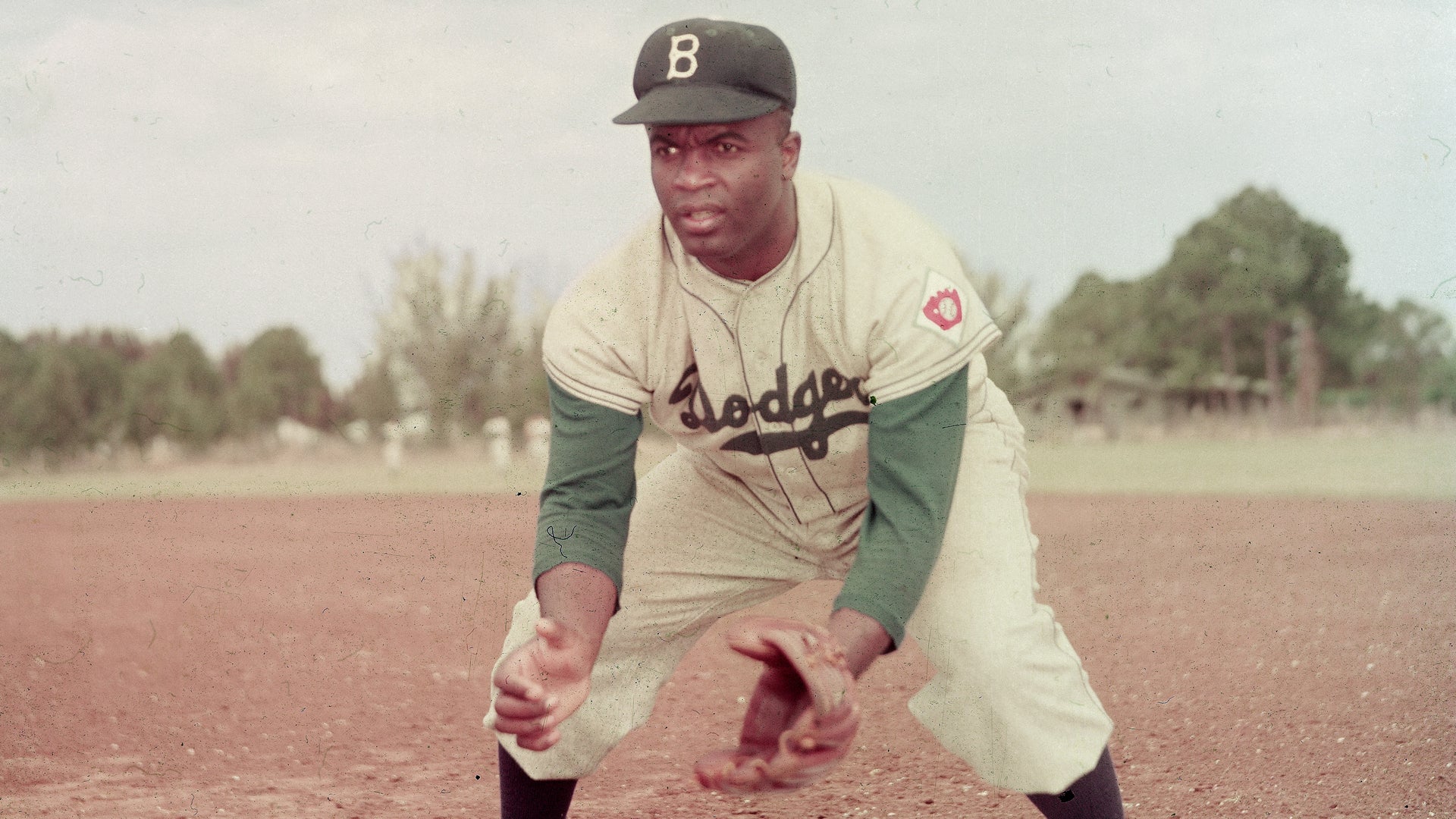
Despite the insults, he continued to play. Robinson succeeded in putting the prejudice and racial strife aside and showed everyone what a talented player he was. Although he predominantly played second base, Robinson was versatile enough to be positioned all over the infield. In his first year, he was an immediate success on the field, leading the National League (NL) in stolen bases, batted .297 with 12 home runs. That year the Dodgers won the pennant and Jackie earned the inaugural “Rookie of the Year” award, at the relatively old age of 27. In 1949 Rickey's restraints on Robinson were removed, and the "Flatbush Flash" had a banner year with a league-leading and career-high .342 batting average, 16 homers, and 124 RBIs. He led the league in stolen bases with thirty-seven. Voted the National League's Most Valuable Player (MVP), Robinson crested as the Dodgers won an exciting pennant race on the season's final day.
Between 1947 and 1953, Robinson and the Dodgers won the National League pennant four times. However, they repeatedly came up blank in their ensuing World Series appearances against the New York Yankees. Then, in 1955, the Dodgers had For the next five seasons he was the catalyst for the Dodgers, with his exciting baserunning and clutch hitting (.328, .338, .308, .329, and .311), and the Dodgers won two more pennants, in 1952-1953, but lost the World Series to the Yankees each time. The 1955 World Series was yet another crosstown rivalry between the Dodgers and the Yankees. Facing a two-game deficit, the Dodgers rallied to win three in a row, but the Yankees were able to win game six, setting up a decisive game seven. The ultimate victory went in the Dodgers in a 2-0 win.
The following season, Robinson helped his team win one more National League pennant. It set them up for a rematch against the Yankees, but this time, their opponents prevailed in another seven-game thriller. In December 1956, Robinson was traded to the New York Giants, but he never played a game for the team. He retired on January 5, 1957. After baseball, Robinson worked for the Chock Full O’ Nuts coffee company. Robinson was a vocal champion for Black athletes, civil rights, and other social and political causes, serving on the board of the NAACP until 1967. In July 1949, he testified about discrimination before the House Un-American Activities Committee, concerning statements made that April by athlete and actor Paul Robeson. Robinson was reluctant to testify, but he eventually agreed to do so, fearing it might negatively affect his career if he declined. Robinson would later express regret for the assault on Robeson.
Jackie served as chairman of the National Association for the Advancement Colored People (NAACP) Freedom Fund Drive, and later joined its Board of Directors. He became embroiled in politics. Though a strong supporter of Martin Luther King and the NAACP, he endorsed Richard Nixon over John F. Kennedy for president in 1960 because he felt Kennedy had not made it “his business to know colored people”. Reportedly it was an action that he later came to regret. Robinson later praised Kennedy effusively for his stance on civil rights. Robinson was close friends with Martin Luther King Jr. In October 1958 Robinson and King served as honorary chairmen of the Youth March for Integrated Schools in Washington, D.C. Robinson remained a relentless crusader for civil rights. In October 1959, Robinson entered the Greenville Municipal Airport's whites-only waiting room. Airport police asked him to leave, but he refused. At a NAACP speech in Greenville, South Carolina, Robinson urged "complete freedom" and encouraged Black citizens to vote and to protest their second-class citizenship.
In his first year of eligibility for the Baseball Hall of Fame, Robinson encouraged voters to consider only his on-field qualifications, rather than his cultural impact on the game. In 1962 Robinson became the first African American to be inducted into the Hall. He was inducted along with former Cleveland Indians pitching great Bob Feller, manager Bill McKechnie and center fielder Edd Roush. Robinson continued to work with King and donated the proceeds of a dinner in his honor to SCLC’s voter registration project. Jackie, his wife Rachel and his son, Jackie Jr. attended the 1963 "March on Washington for Jobs and Freedom", where King delivered his “I Have a Dream” speech. Robinson and his wife also organized a jazz concert at their home to raise bail money for King and other activists arrested during protests. His collaboration with Martin Luther King Jr., demonstrated his will to place his vision and beliefs into action.
Robinson was angered by the 1964 presidential election candidacy of conservative Republican Senator Barry Goldwater of Arizona, who had opposed the Civil Rights Act of 1964. In 1964 he co-founded and became chairman of the interracial Freedom National Bank in Harlem. In 1966 New York Governor Nelson Rockefeller hired him as a Special Assistant for Community Affairs. During that same year, he helped found, with Harlem businessman Dunbar McLaurin, Freedom National Bank—a Black-owned and operated commercial bank based in Harlem. He also served as the bank's first chairman of the board. In 1968, he broke with the Republican party and supported Hubert Humphrey against Nixon in that year's presidential election.
Robinson identified himself as a political independent, although he held conservative opinions on several issues. He disagreed with King’s opposition to the Vietnam War and his calls for the United States to stop its bombing campaigns. He once wrote to Martin Luther King Jr. to defend the Johnson Administration's military policy. In an open letter published in his regular Chicago Defender newspaper column in May 1967, Robinson questioned King’s stance: “I am confused Martin, because I respect you deeply. But I also love this imperfect country” (Robinson, “An Open Letter”). After Dr. King called Robinson to elaborate on his beliefs, Robinson replied that despite disagreeing with King, he still saw King as “the finest leader the Negro people have and one of the most magnificent leaders the world has today”. In 1970, Robinson established the Jackie Robinson Construction Company to build housing for low-income.
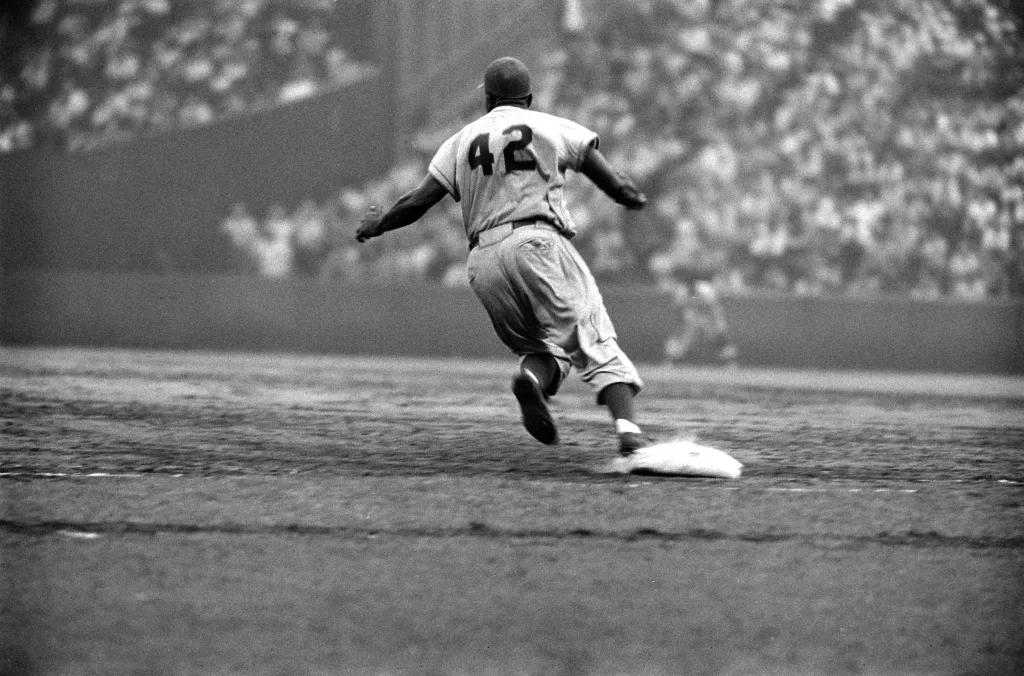
Robinson protested against the major leagues' ongoing lack of minority managers and central office personnel, and he turned down an invitation to appear in an old-timers' game at Yankee Stadium in 1969. On June 4, 1972, the Dodgers retired Robinson's uniform number, 42, alongside those of former teammates Roy Campanella (39) and Sandy Koufax (32). In his later years, Robinson faced increasing health problems. He suffered from type 2 diabetes complications for years. Robinson also had abnormally high blood pressure. In 1968, he had his first of three heart attacks. The third heart attack ultimately caused Robinson’s death. Early on the morning of October 24, 1972, Robinson collapsed in his Stamford, Connecticut, home. He was 53 years old. Many of his former teammates, other famous baseball players, and basketball star Bill Russell served as pallbearers, and the Rev. Jesse Jackson gave the eulogy. Jackie Robinson's breaking of the color barrier in baseball paved the way for other African American players to join the major leagues. He also led the way for racial integration into other areas of American life. Jackie Robinson’s life and legacy will be remembered as one of the most important in American history.