Henry Ossawa Tanner, was the most renowned African American painter of the late nineteenth and early twentieth centuries. Tanner was born in Pittsburgh, Pennsylvania on June 21, 1859. Tanner’s middle name, Ossawa, was derived from the Kansas town of Osawatomie where abolitionist John Brown began advocating against slavery in the wake of the 1854 Kansas-Nebraska Act. Tanner’s parents were cultured and educated, and they owned property. The family moved from Pittsburgh to Philadelphia in 1869, so that he could serve as editor of the Christian Recorder. There his father became a friend of Frederick Douglass, sometimes supporting him, sometimes criticizing. His father was a college-educated teacher and minister who later became a bishop in the African Methodist Episcopalian Church. Henry attended Lombard Street School for Colored Students in 1868. The next year he enrolled at the Robert Vaux Consolidated School for Colored Students, then the only secondary school for Black students in Philadelphia. Tanner graduated as valedictorian in 1877.
Tanner was about 13 years old when, while on a walk with his father, he saw a landscape painter working in Philadelphia’s Fairmount Park near his home. From that random experience, Tanner knew he wanted to be an artist. So he committed himself to a career in art despite his father’s initial discouragement. His father, Benjamin Tanner, did not initially encourage this ambition. Benjamin was a prominent minister who hoped his son would pursue a more practical and respectable profession. As a teenager Tanner was a frail young man, and suffered from serious health problems. Around age 13 or 14 he began working at the family friend's flour mill, where the work broke his already fragile health. During his recuperation, his father relents and allowed him to pursue art. During several years of recuperation, Tanner painted constantly. His parents, seeing his determination, gradually relented and encouraged his artistic pursuits.
In 1880 Tanner began two years of formal study under Thomas Eakins at Philadelphia’s prestigious Pennsylvania Academy of the Fine Arts (PAFA), where he was the only Black student in his class of 100. Many artists refused to accept an African American apprentice. Eakins was an American realist painter, photographer, sculptor, and educator — who advocated new approaches to the artistic study of human anatomy, and greatly influenced Tanner’s early style. While at PAFA, he becomes ill again, which interrupted his studies. While he recuperated in the Adirondacks and then in Florida, he sketched and painted. His parents encouraged his painting during his recuperation, and Tanner lived at home during the next few years except for several trips to the Adirondack Mountains and Florida for his health. Throughout his teens, Tanner painted and drew constantly in his spare time painting harbor scenes, landscapes, and animals from the Philadelphia Zoo. He tried to look at art as much as possible in Philadelphia art galleries. During a relatively short time at the Academy, Tanner developed a thorough knowledge of anatomy and the skill to express his understanding of the weight and structure of the human figure on the canvas.
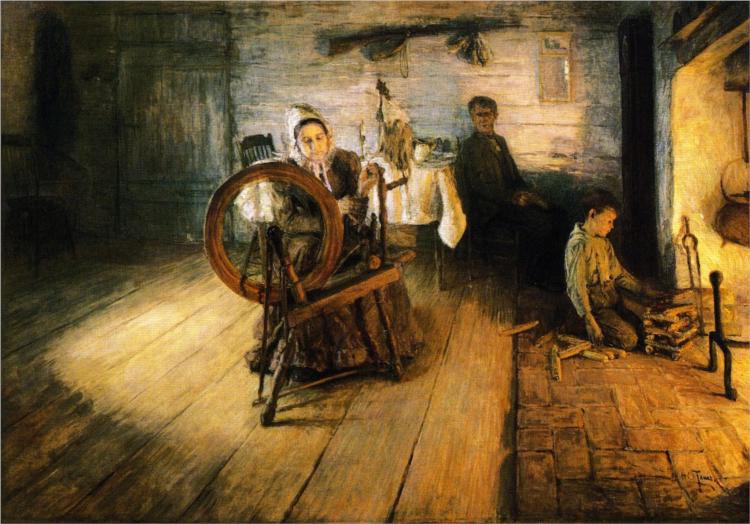
He achieved modest success as an artist in Philadelphia. Tanner befriended artists with whom he kept in contact throughout the rest of his life. Although Tanner gained confidence as an artist and began to sell his work, he faced racism working as a professional artist in Philadelphia. In 1888 Tanner left the Academy before graduating in order to establish a photography gallery in Atlanta, Georgia, then known as a major center for Black education, where he attempted to earn a living selling his art, making photographs. Although this venture failed, Tanner remained in Atlanta through 1890. This failed attempt spurred his belief that only in Europe could he pursue his dream of becoming a successful artist. He opened a photography studio, hoping the well-educated Black community would support him. While in Atlanta, Tanner met Mr. and Mrs. Joseph Crane Hartzell, a bishop from Cincinnati, Ohio, who were to become his primary White patrons over the next several years. They recommended him for a teaching job a teaching position at Clark University.
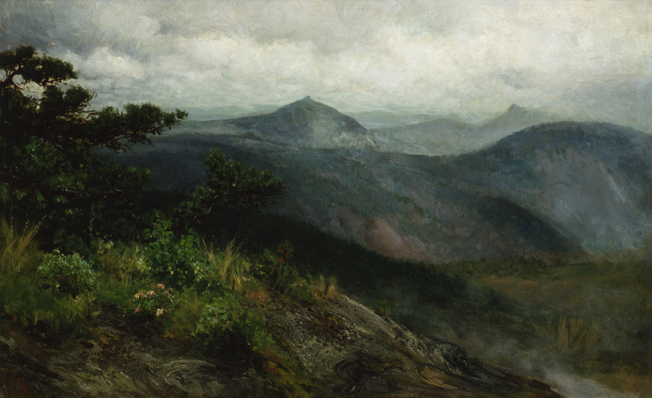
In the summer of 1888 Tanner sold his small gallery and moved to Highlands, North Carolina, in the Blue Ridge Mountains where he hoped to study and earn a living by his photography. He also felt that the mountains would be good for his delicate health. While there, Tanner may have made many sketches and photographs of the region and its African American residents, some of which were later used as subjects in his most important early paintings. In the fall of 1888, Tanner returned to Atlanta and taught drawing for two years at Clark College. In the hope of earning enough money to travel to Europe, Tanner began discussing his ambitions to Bishop and Mrs. Hartzell. They arranged an exhibition of Tanner’s works in Cincinnati in the fall of 1890. When no paintings sold, Hartzell purchased the entire collection himself. In 1902, Tanner would paint a large portrait of Bishop Hartzell in tribute to his earliest patron.
With the Hartzell's support, on January 4, 1891, Tanner sailed from New York for Europe. After brief stays in Liverpool and London, England, Tanner arrived in Paris, France. Henry found the environment stimulating and a stark contrast to the oppression and segregation he experienced in Atlanta and Philadelphia. He was so impressed by this center of art and artists that he abandoned his plans to study in Rome. In Paris, Tanner enroll at the Académie Julian where he studied under painters Jean-Paul Laurens and Jean Joseph Benjamin-Constant. He also joined the American Art Students Club of Paris, and quickly found acceptance in Parisian society. He spent his first summers in the countryside, painting the landscape and its people. After a summer at Port-Aven on Brittany's coast, he painted his first entry into the Salon. Although, "The Bagpipe Lesson" is rarely published and not widely accepted, The Bagpipe Lesson is a well-executed painting of Breton peasants. It depicts a Scottish Highlander teaching a boy to play the bagpipes. "The Bagpipe Lesson" is accepted into the Salon of 1894, marking Tanner’s first major European exhibition success and the beginning of his international recognition.
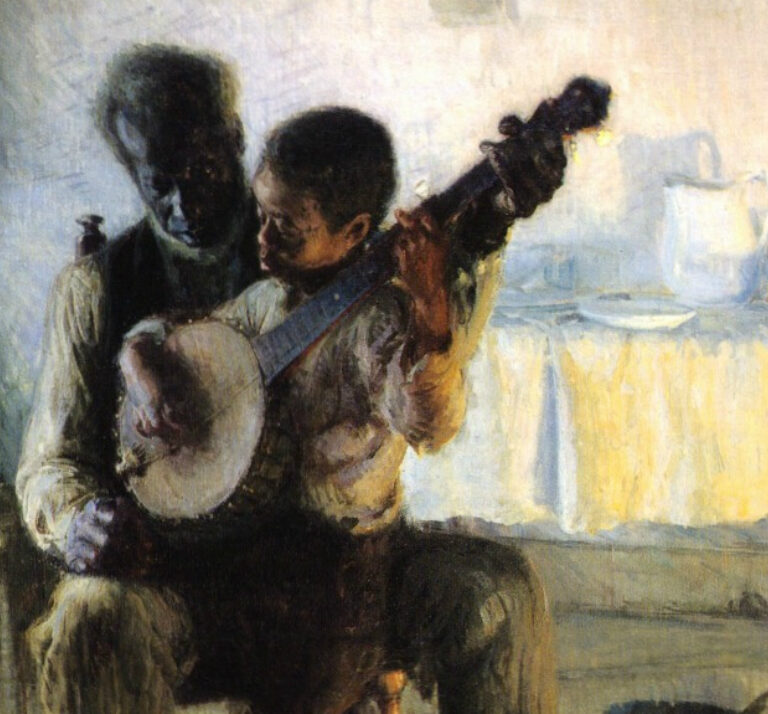
In 1893, Tanner contracted typhoid fever and returned to Philadelphia to recover. While recovering, Tanner begins to raise funds and gather material for new work. In the summer of 1893, he delivered a paper on “The American Negro in Art” before the World’s Congress on Africa, held in Chicago in conjunction with the World’s Columbian Exposition. With his thoughts focused on issues of Black identity and productivity, Tanner began depicting genre scenes of African American life. Tanner traveled through the Carolinas and Kentucky, making these observations. He heads back to Philadelphia and begins sketching scenes that will inform "The Banjo Lesson" painting. This is his first major depiction of Black domestic life, which was inspired by Paul Laurence Dunbar’s poem "A Banjo Song", and it becomes a turning point in his career. The painting shows an elderly Black man teaching a boy, assumed to be his grandson, how to play the banjo. It was completed in late 1893 and exhibited at the same World's Columbian Exposition, that he delievered his speech.
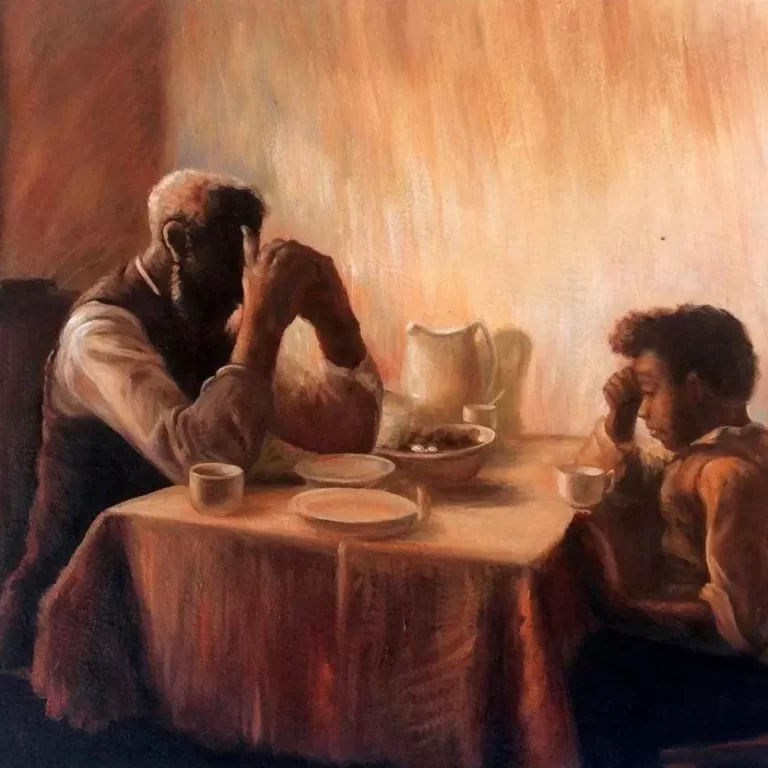
Tanner painted "The Thankful Poor" in Philadelphia in 1894, during his extended stay in the States, before he returned permanently to Paris. The Thankful Poor also features an old man and a boy to show how the Black family passed on moral and spiritual lessons to its children. Tanner was known as well for his poignant depictions of African Americans as individuals with grace and dignity, which was rare during a time where stereotypes and caricatures were the norm. Black people had long been stereotyped as entertainers. They appeared in minstrel shows as buffoonish, ridiculous and dim-witted. Images propagated this idea that even if Black people were no longer slaves, they were still inferior. His depictions of Black Americans actively countered the derogatory stereotypes and racist minstrel caricatures prevalent in 19th-century media. Tanner was one of the first to reel against this idea. He painted Black people with grace, dignity and sensitivity. Although these genre paintings are cultural milestones, Tanner found that American critics primarily defined him by his race rather than his artistic merit. Though he painted relatively few genre scenes, some of them, are among his best-known paintings.
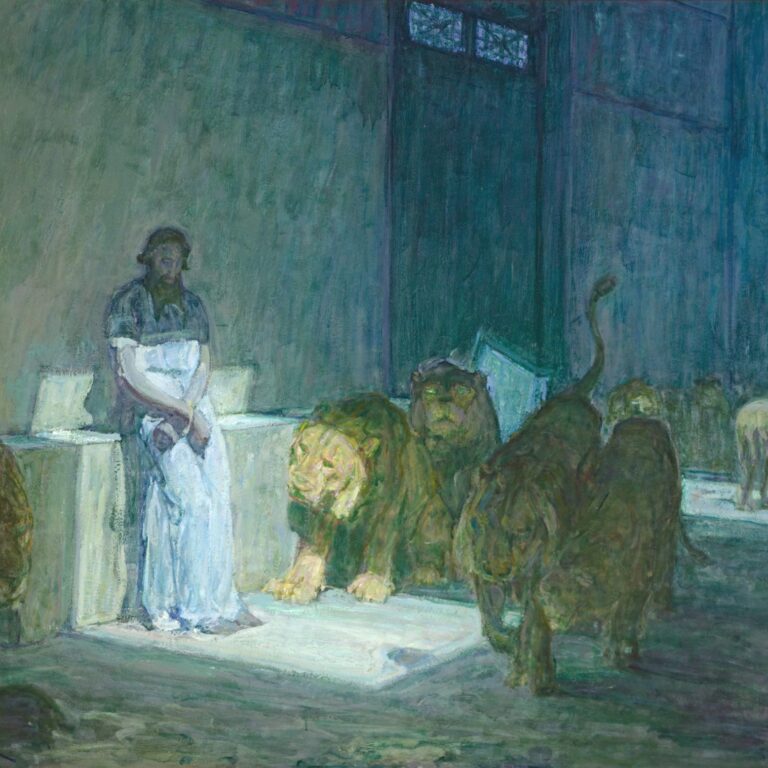
After finishing The Thankful Poor, he worked hard to get his work accepted by the prestigious Salon of Paris. He painted "The Young Sabot Maker" for the Salon exhibition of 1895. The painting depicts two figures, an older man who is proudly watching a boy push with his weight against the crossbar handle of an auger to carve a sabot, or wooden shoe in the sabot maker's workshop. When Tanner returned to Paris in late 1894, biblical and religious subjects became the dominant focus of his career. Although he had explored such themes earlier, they became the central focus of his artistic career. Tanner also experimented with different colors and light to achieve the desired results of portraying the intensity and fire of religious moments. Henry Tanner was gaining acceptance for his religious scenes. In 1895, his painting "Daniel in the Lions’ Den" was accepted into the Salon. Praised for its quiet spirituality and innovative use of light over overt melodrama, the acclaimed work earned Tanner international recognition. His work began to be acquired by French museums.
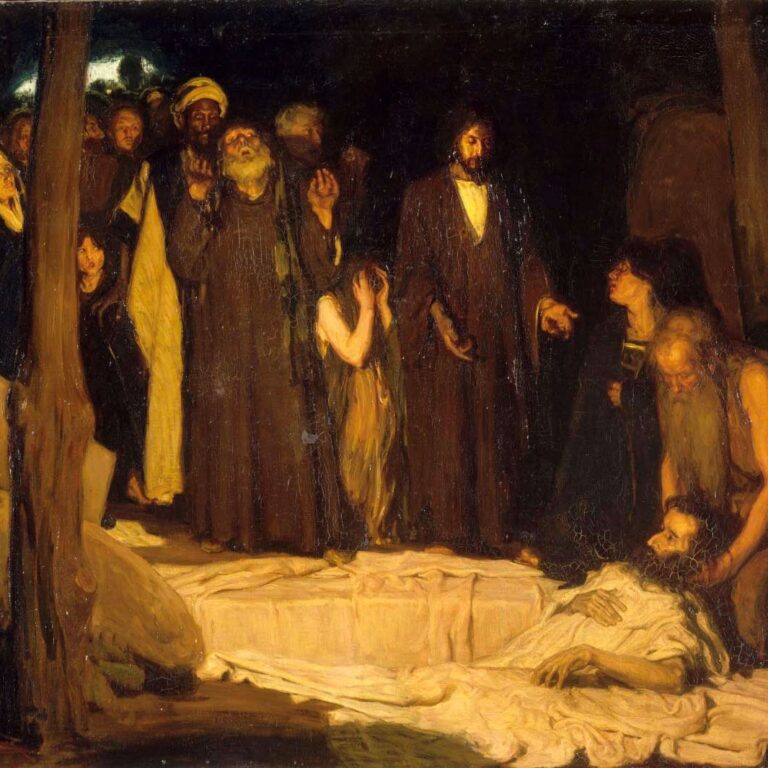
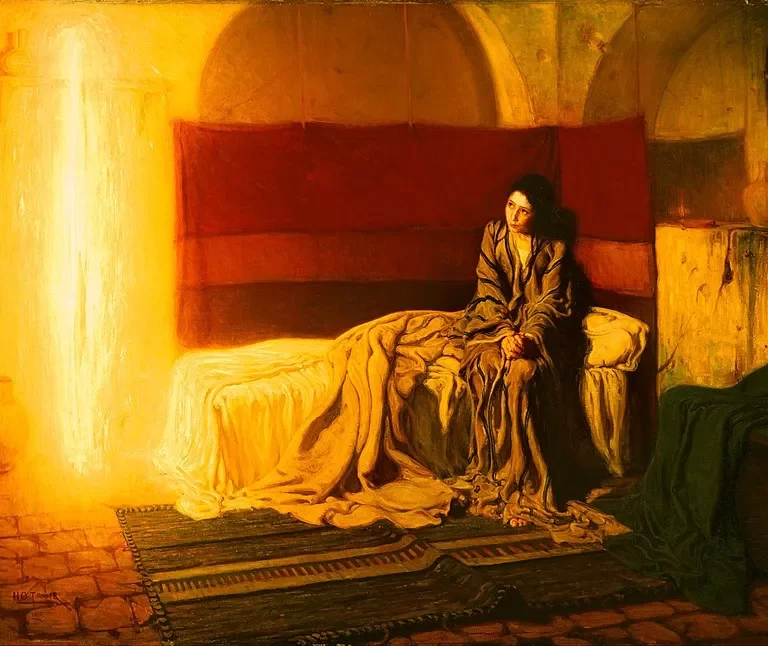
Two years later, Tanner's "Resurrection of Lazarus", won a medal at the Paris Salon of 1897, a rare achievement for an American artist. The painting was later purchased by the French government for the Luxembourg Gallery, where the works of living artists were displayed. The Resurrection of Lazarus and The Annunciation, established his international reputation and remain among his most celebrated works. The Annunciation became the first of Tanner’s works to be purchased for an American museum. In 1897, at the height of his career, Tanner left Paris to visit his parents, who had relocated to Kansas City, Kansas. During this visit, Tanner’s artistic style transformed. Influenced by the city’s vibrant community of Black artists, he adopted a more abstract style, using quick, heavy brush strokes and thick paint. While in Kansas City, he created three portraits, one of his father and two of his mother, in much the same style as he had painted previously. His mother’s portrait was done in a style similar to that used by the American artist James Whistler.
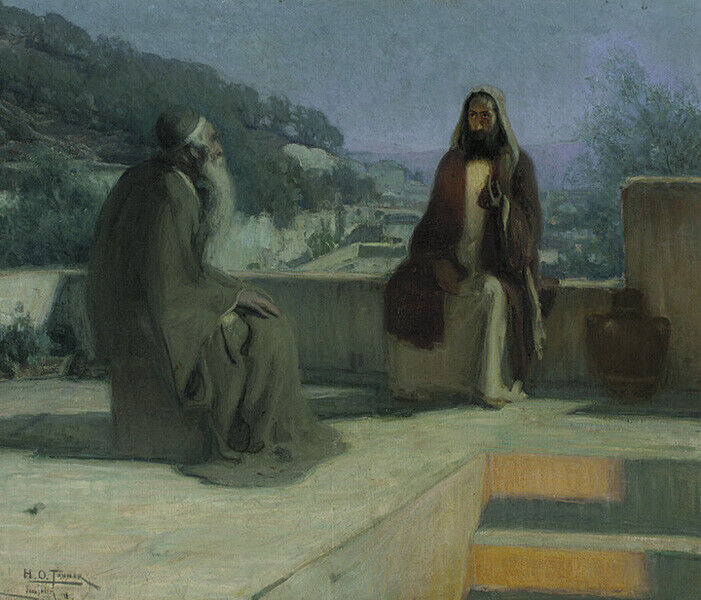
Tanner's illustrations appeared in American journals such as Harper's Young People and Our Continent, as well as in exhibition catalogs at the Pennsylvania Academy of the Fine Arts. His work was seen in exhibitions at the academy in 1888, 1889, 1898, and 1906 and was frequently shown at the prestigious Salon de la Société des Artistes Français in Paris during the period 1894 to 1914. Tanner toured the Holy Land in 1897–98, to observe the people and geography of the ancient lands and to enhance the historical accuracy of his paintings with biblical themes. This had a profound impact on his paintings. Among the most celebrated religious compositions was "Nicodemus Visiting Jesus", which in 1900 won the PAFA’s Lippincott Prize. The Salon paintings were followed by a series of critically acclaimed religious works that established Tanner as one of the most celebrated artists of that time. That same year he received a medal at the Universal Exposition in Paris. He remained an expatriate in France, routinely exhibiting in Paris as well as the United States, winning several awards.
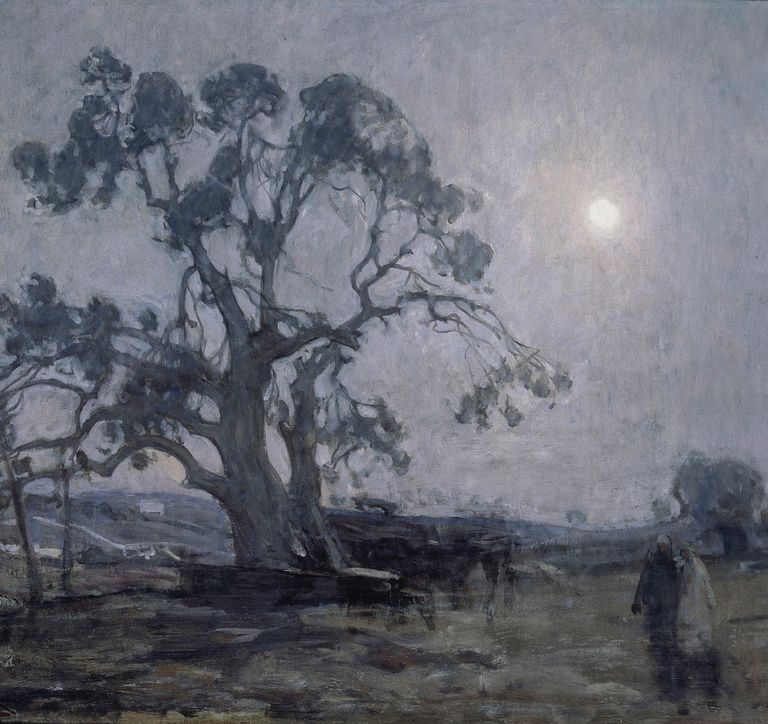
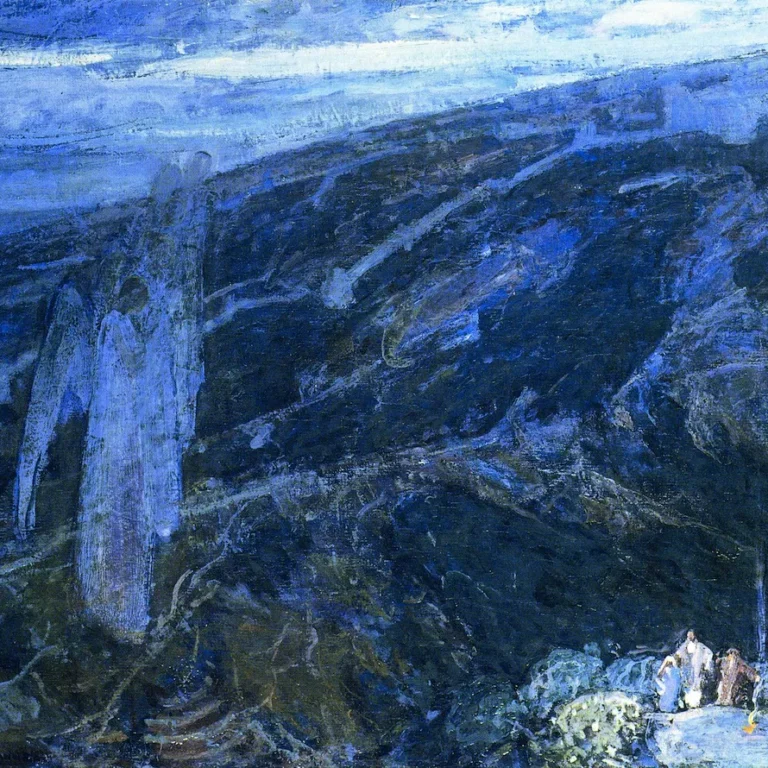
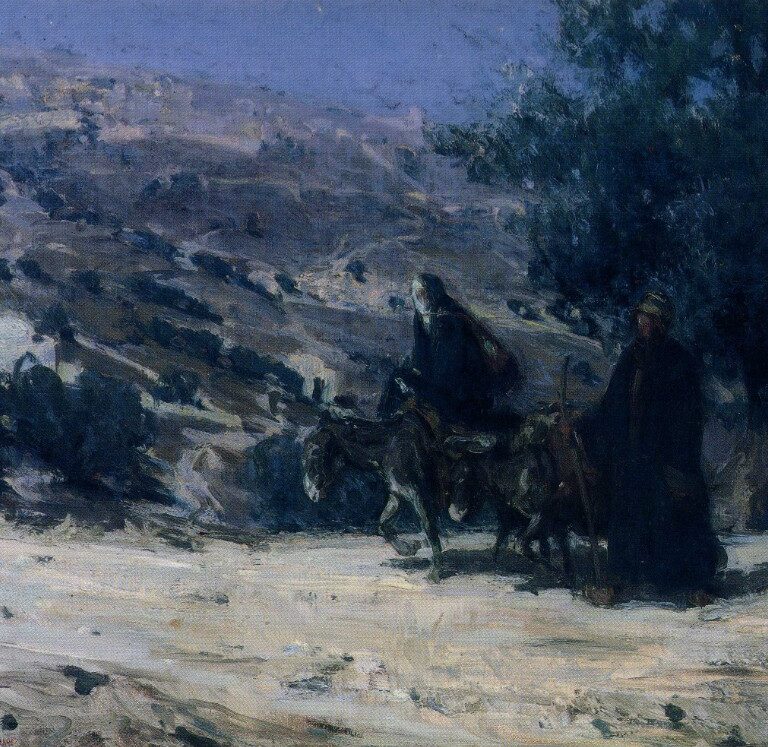
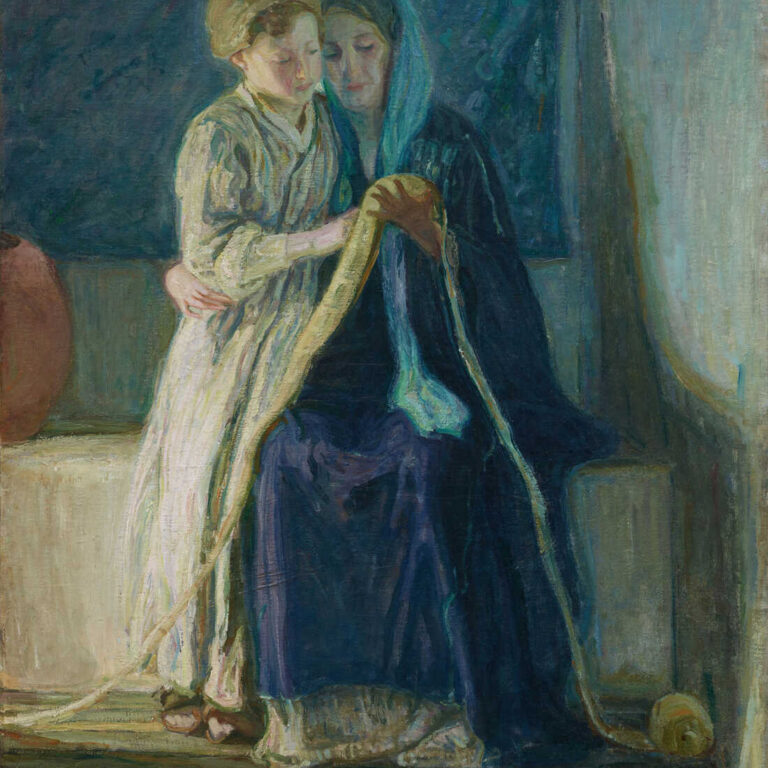
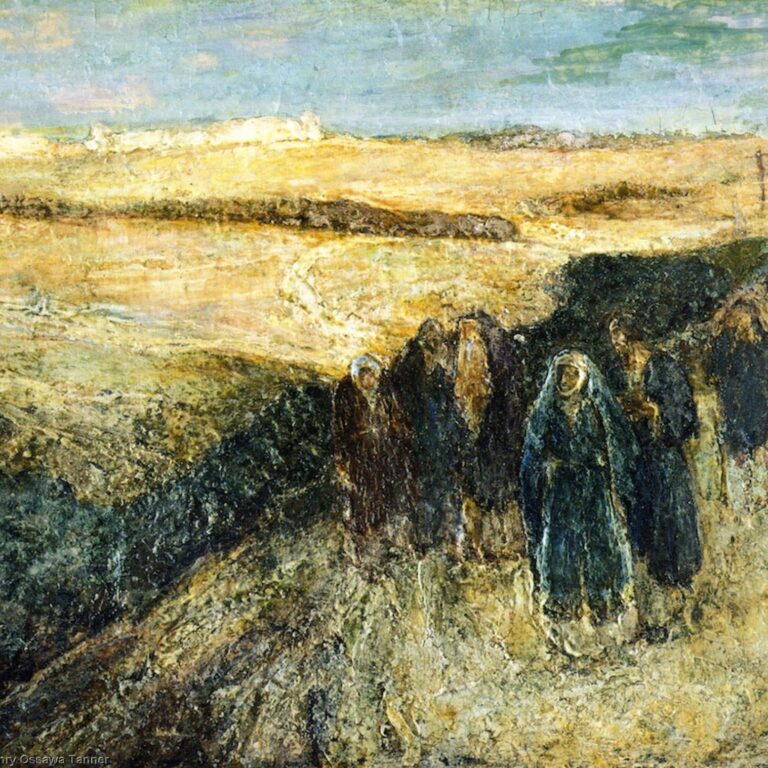
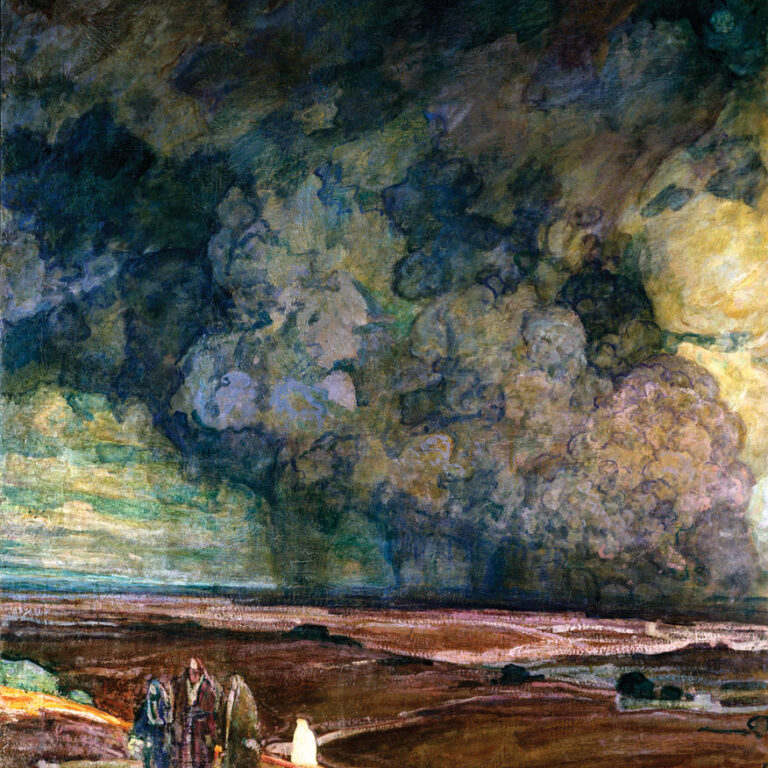
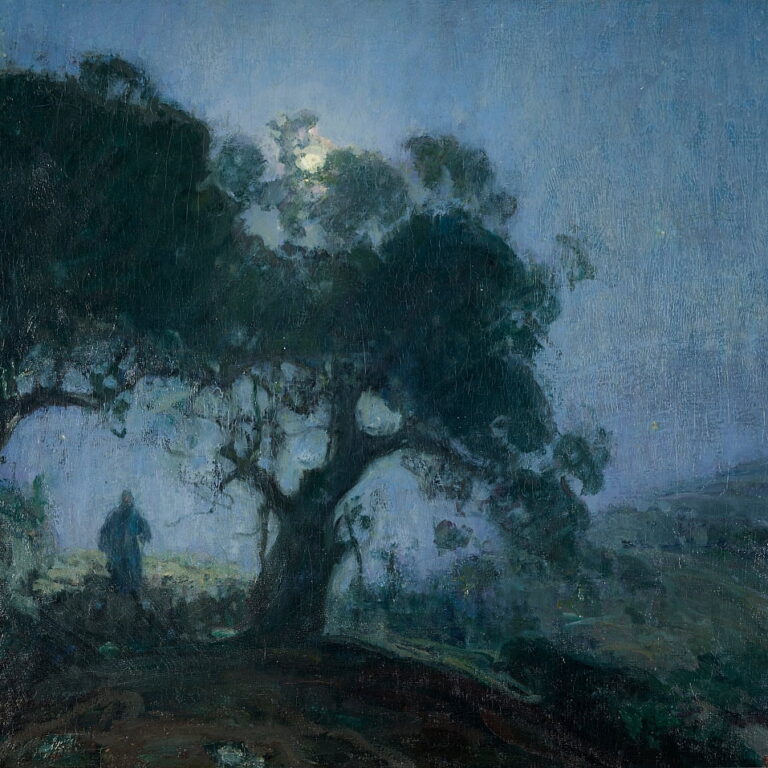
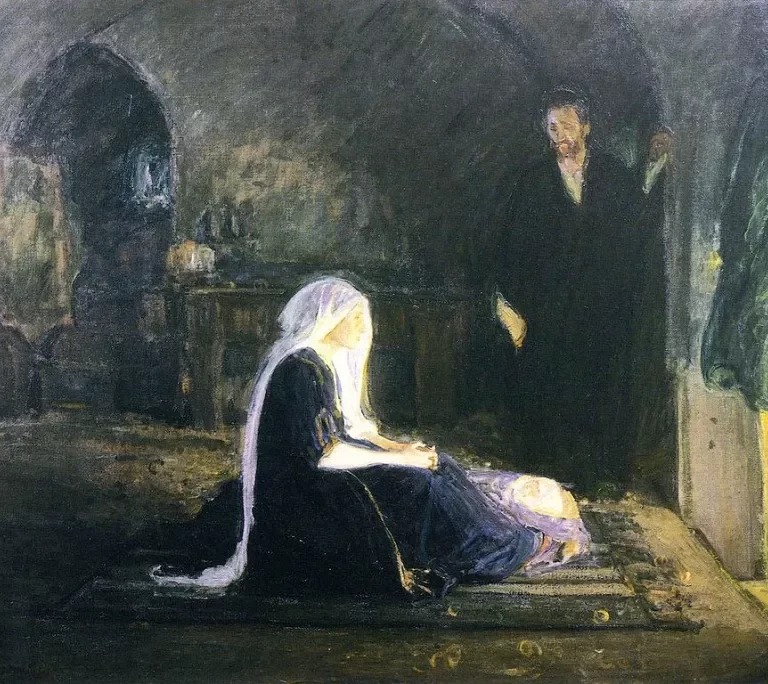
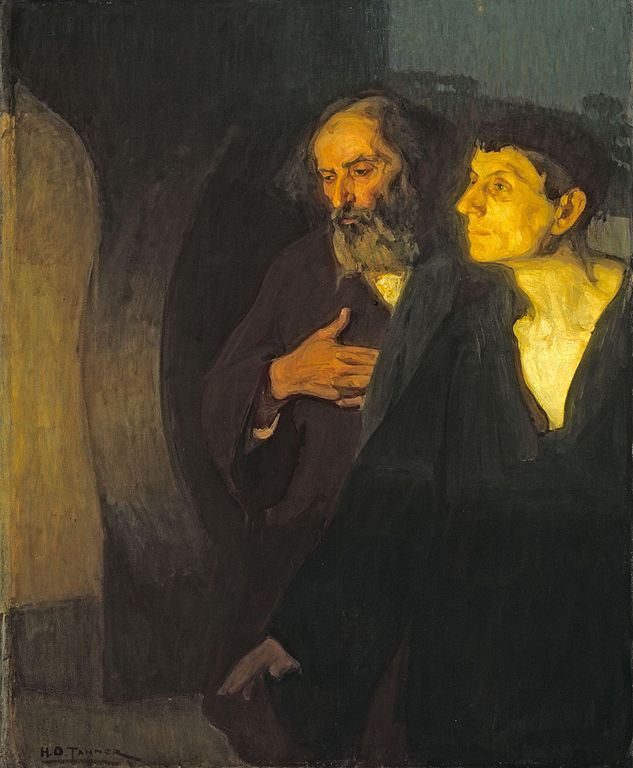
By the mid-1890s, Tanner was a success, critically admired both in the United States and Europe. In 1899, Tanner painted Flight into Egypt, the first of more than 15 versions he would paint on this theme. Other paintings reflecting his trips to the Holy Land include "A View in Palestine". Among his other religious works are "The Annunciation", "Abraham’s Oak", and "The Two Disciples at the Tomb", which is now part of the permanent collection of the Art Institute of Chicago. All of these works were celebrated award-winners that firmly established his lasting reputation as a painter of religious themes. Other paintings on sacred subjects included, "Mary", "Return of the Holy Women", "Christ at the Home of Mary and Martha", "The Disciples on the Sea of Galilee", and "The Good Shepherd". In 1899, Tanner met Jessie Macauley Olssen, an American of Swedish descent who was 15 years his junior and was vacationing with her family in France. She was a gifted musician and moved to France to study voice. Their interracial marriage was considered scandalous, even in progressive Paris. The family took up residence in Paris, buying a farm near Etaples in Normandy where they spent many summers near an artist colony.
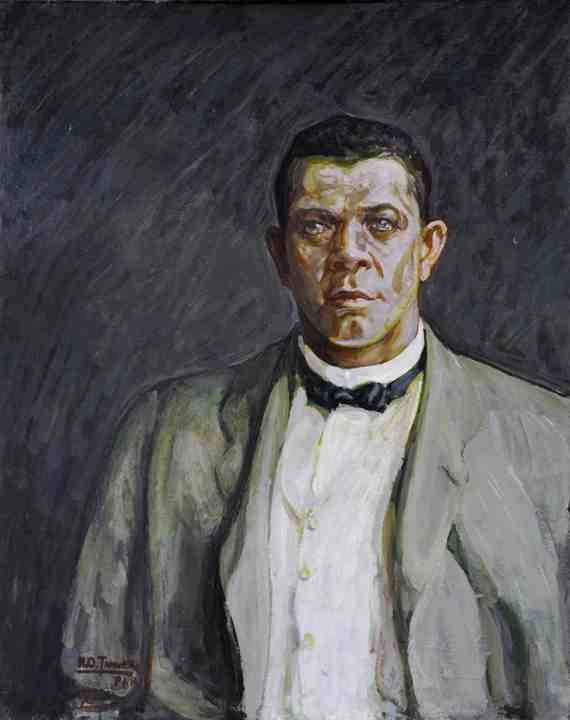
Around the turn of the twentieth century, Booker T. Washington visited Henry Ossawa Tanner’s Paris studio and sat for a formal portrait. Washington was in Europe several times during these years, and although the precise date of the sitting is not firmly documented, his presence in Paris during this period makes the encounter historically credible. Tanner began the portrait from life during Washington’s visit, but—true to his habit of revisiting important works—he did not complete the canvas until 1917, two years after Washington’s death. The finished portrait, now held by Tuskegee University, reflects both the likeness captured from the original sitting and the mature, atmospheric style Tanner had developed by the 1910s. It represents two of the most internationally recognized African Americans of their generation—Tanner in art and Washington in education and racial leadership, especially following his 1895 Atlanta Exposition speech. Tanner and Washington were not strangers. Their families had known one another for years, and Washington was an admirer of Tanner's success in France. In 1900, his 1895 painting, "Daniel in the Lion's Den", was awarded a silver medal at the Universal Exposition in Paris.
In 1908, his first solo exhibition of religious paintings in the United States was held at the American Art Galleries in New York. A few years later, Tanner was made an associate member of the National Academy of Design. Tanner traveled to Algeria and Morocco later that year and the years prior to World War I. His trips there and to Palestine helped him capture the historical essence of his biblical subjects. While in Morocco and Algeria he painted in the Orientalist tradition, popular with French artists since Napoleon’s conquest of North Africa. Tanner and other artists were attracted by the exotic nature of Islamic countries in the Mediterranean region. Tanner painted street scenes in Tangier and the Casbah. Tanner’s painting activities were interrupted in 1914 by the start of World War I. He was profoundly depressed by the war and did very few paintings until the war was over. During the war he served as a lieutenant with the Red Cross in France and made sketches and paintings of the soldiers on the front lines. While he was serving in the war, the prejudice he encountered left deep emotional scars that were reflected in his stiff paintings of American soldiers. His works featuring Black troops were rare during the war.
After the war’s end in November of 1918, Tanner returned to painting, continuing to paint biblical scenes. He was a regular contributor to the National Association for the Advancement of Colored People (NAACP) after it was founded in 1909. Tanner made his last trip to the United States in 1923. Also in 1923 he was decorated by the French government as as Chevalier of the Legion of Honor, the highest national order of merit. He considered this citation by the French government to be the greatest honor of his illustrious career. When Tanner’s wife died in 1925, Tanner was griefstricken and unable to paint for a while. He became reclusive, and his paintings became more mystical. In 1927 he became the first Black man to be granted full membership in the National Academy of Design in New York, the first Black artist to ever receive the distinction. He presented the painting, "Miraculous Haul of Fishes" as his reception piece.
In his later years, Tanner was a symbol of hope to young Black artists, many of whom visited him in Paris. Though he wasn’t part of the Harlem Renaissance, many African American artists of that era took inspiration in what Tanner achieved during his lifetime. In his later years, Tanner was a symbol of hope and inspiration for African American leaders and young Black artists, many of whom visited him in Paris. Tanner met with fellow artist Palmer Hayden in Paris around 1927. They discussed artistic technique and he gave Hayden advice on interacting with French society. He was also helped other Harlem Renaissance artists, studying in France, including Hale Woodruff, and Romare Bearden. By the 1930s, though, Tanner was a respected elder whose work may have seemed “old-fashioned” to the younger generation. Tanner continued to pursue his inner vision, and he completed his final painting, Return from the Crucifixion, in 1936. On May 25, 1937, Tanner died at his home in Paris. After his death in 1937, Tanner’s artistic stature declined until 1969, when the Smithsonian Institution in Washington, D.C., exhibited several of his works. This was the first major solo exhibition of a Black artist in the United States. His artistic legacy is that of an incredibly talented and innovative artist who achieved international success, despite the racism that plagued him throughout his personal and professional life. Henry Ossawa Tanner is the first African American artist to have his or her paintings exhibit at the Louvre.