The Amistad Mutiny, was a slave rebellion that took place on the slave ship Amistad near the coast of Cuba and had important political and legal repercussions in the American abolition movement. The mutineers were captured and tried in the United States, and a surprising victory for the country’s antislavery forces resulted in 1841 when the U.S. Supreme Court freed the rebels. A committee formed to defend the slaves later developed into the American Missionary Association.
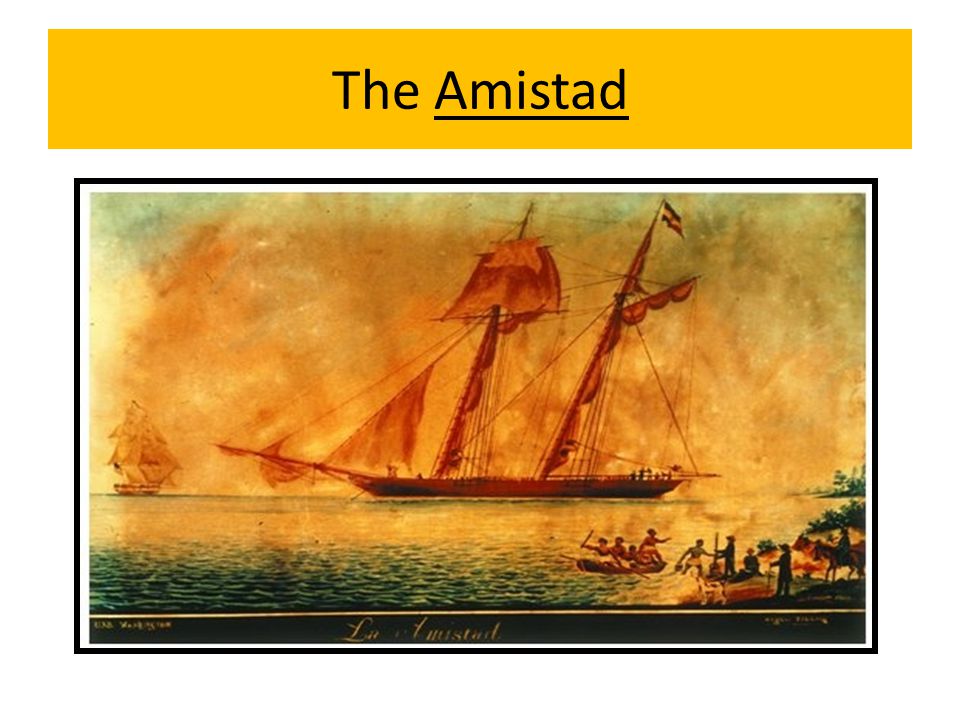
In August 1839, a U.S. brig came across the schooner Amistad off the coast of Long Island, New York. Aboard the Spanish ship were a group of Africans who had been captured and sold illegally as enslaved workers in Cuba. The enslaved Africans then revolted at sea and won control of the Amistad from their captors. U.S. authorities seized the ship and imprisoned the Africans, beginning a legal and diplomatic drama that would shake the foundations of the nation’s government and bring the explosive issue of slavery to the forefront of American politics.
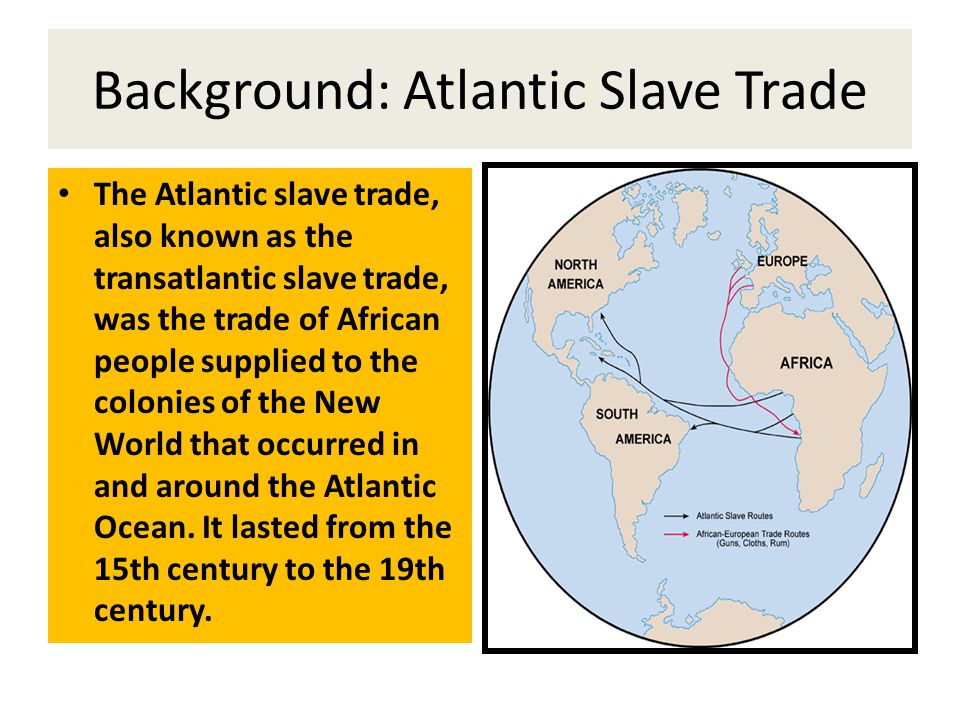
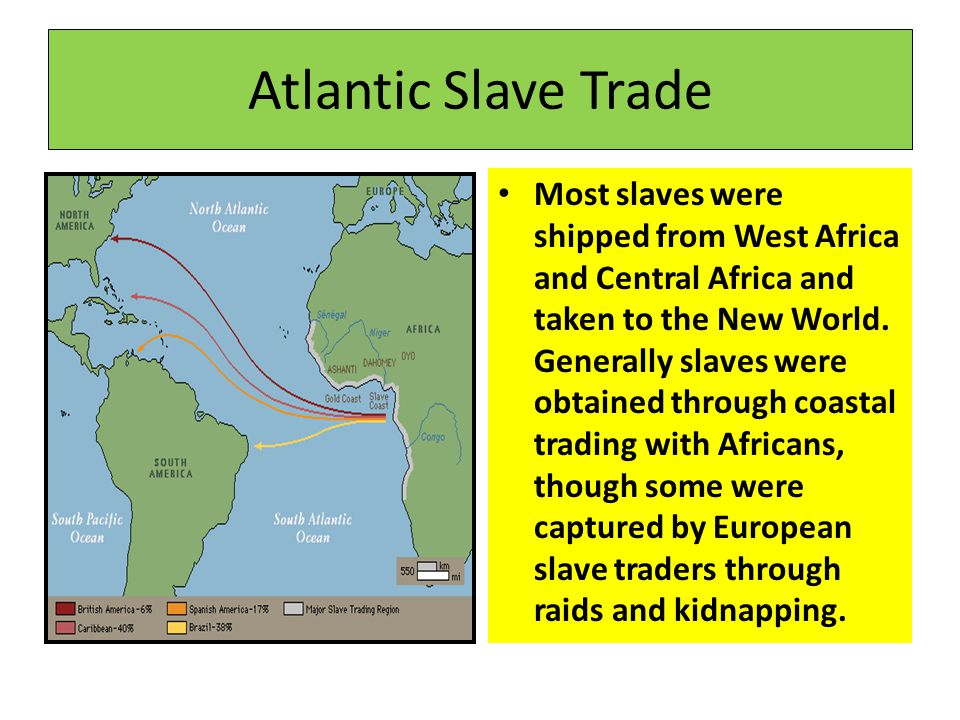
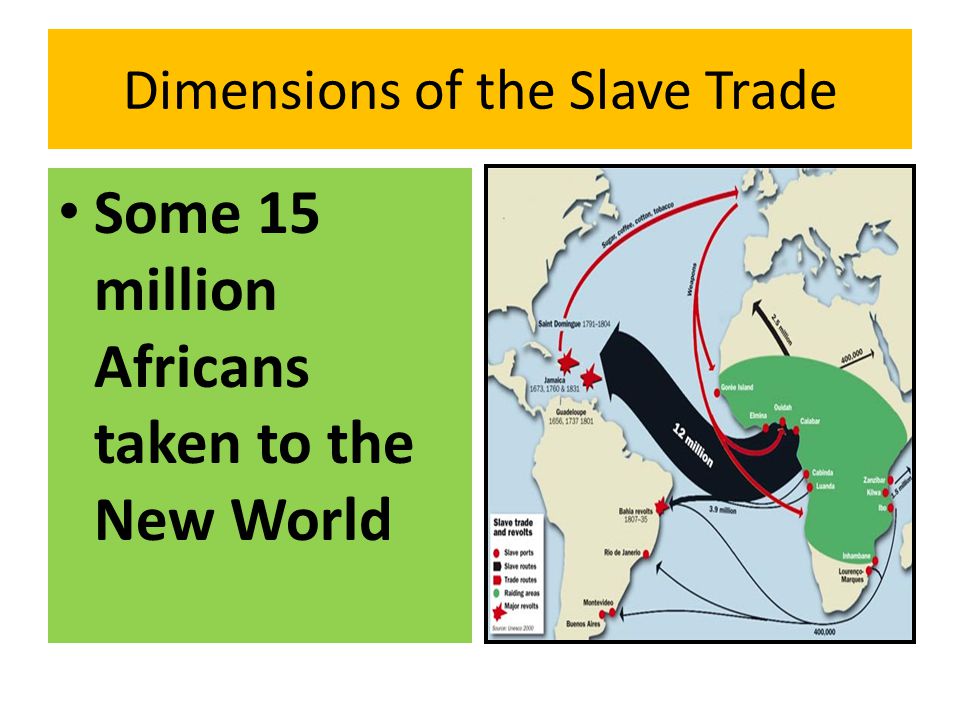
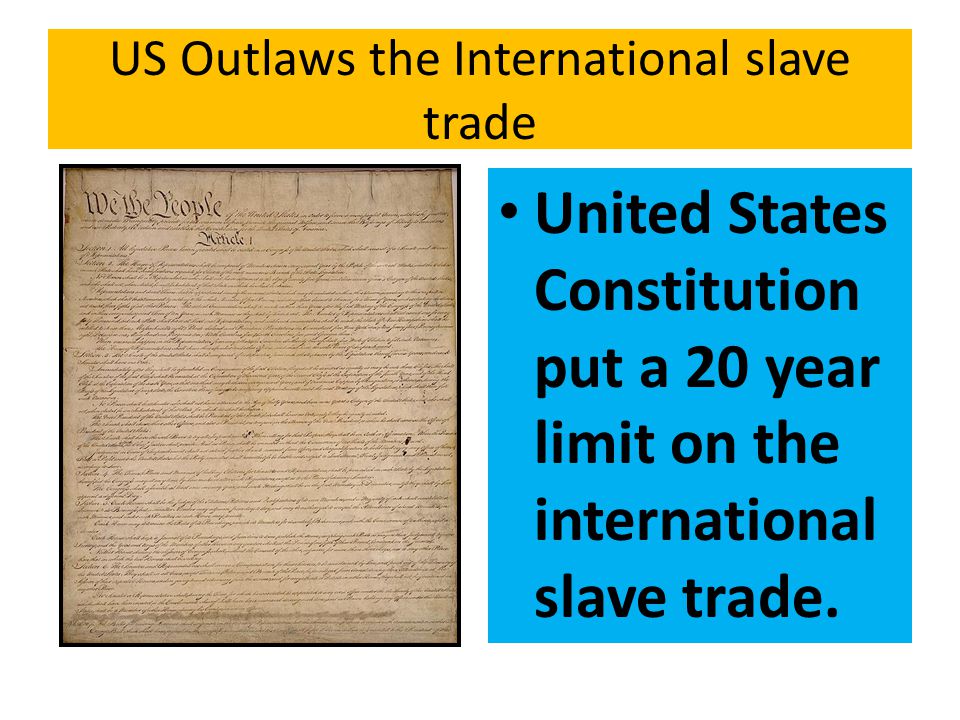
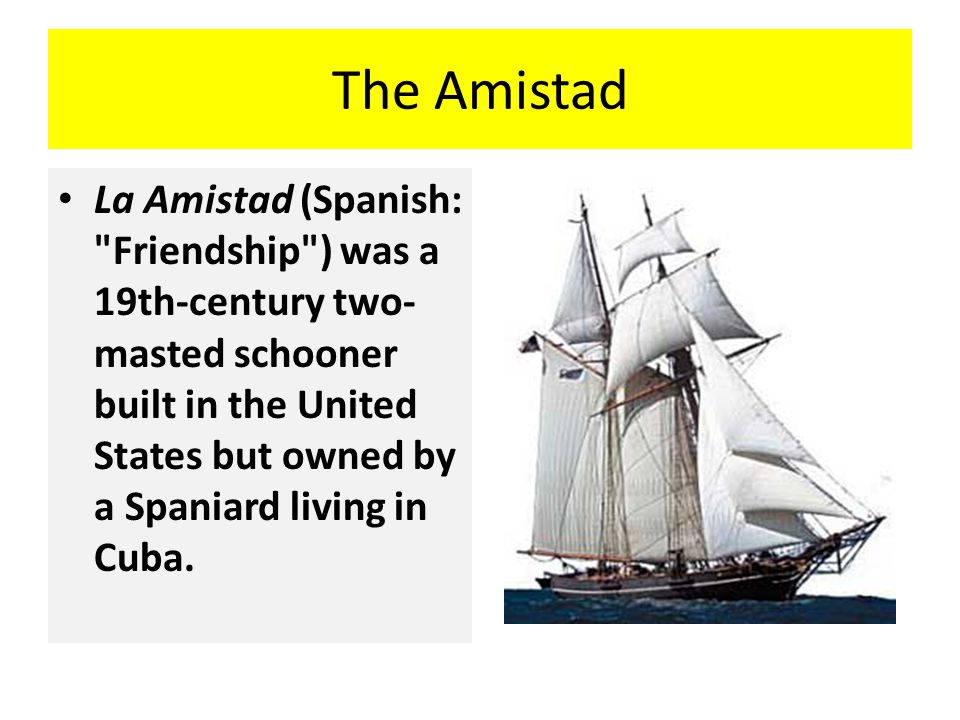
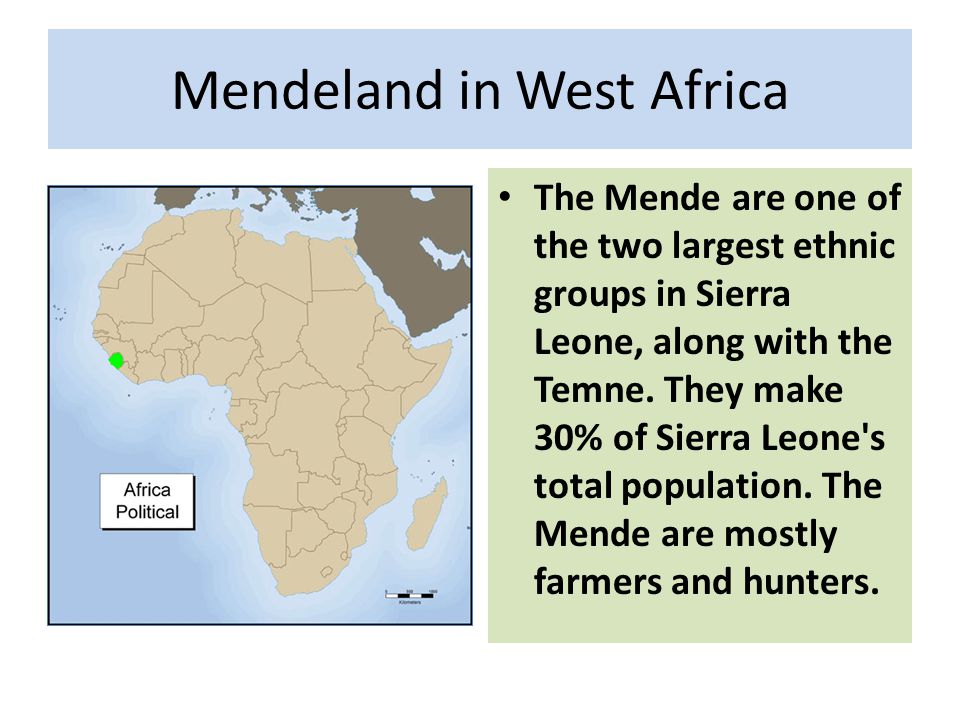
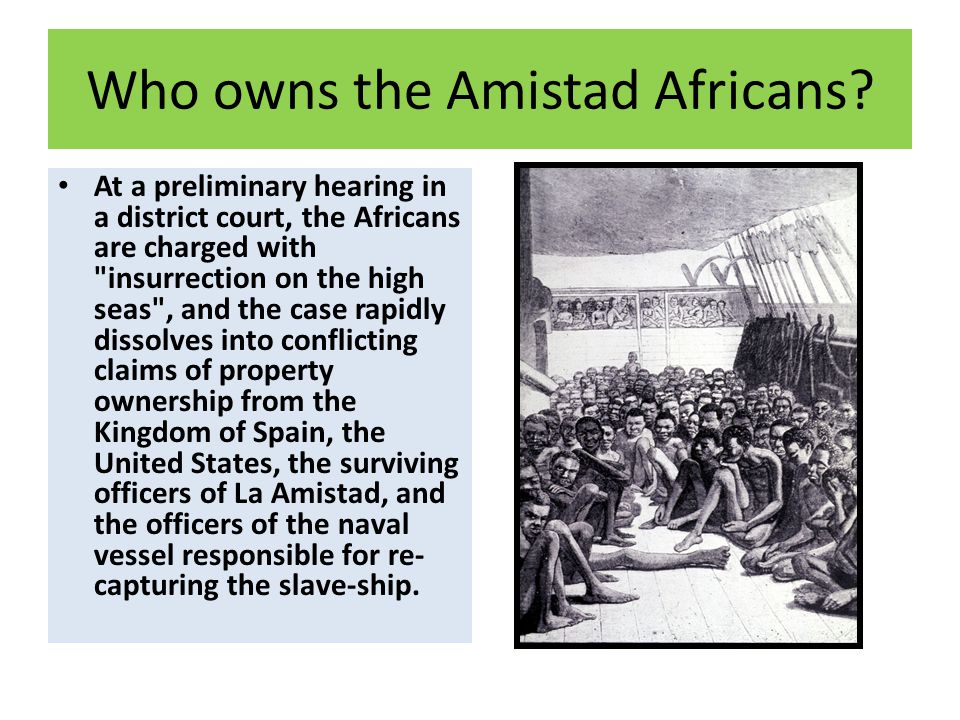
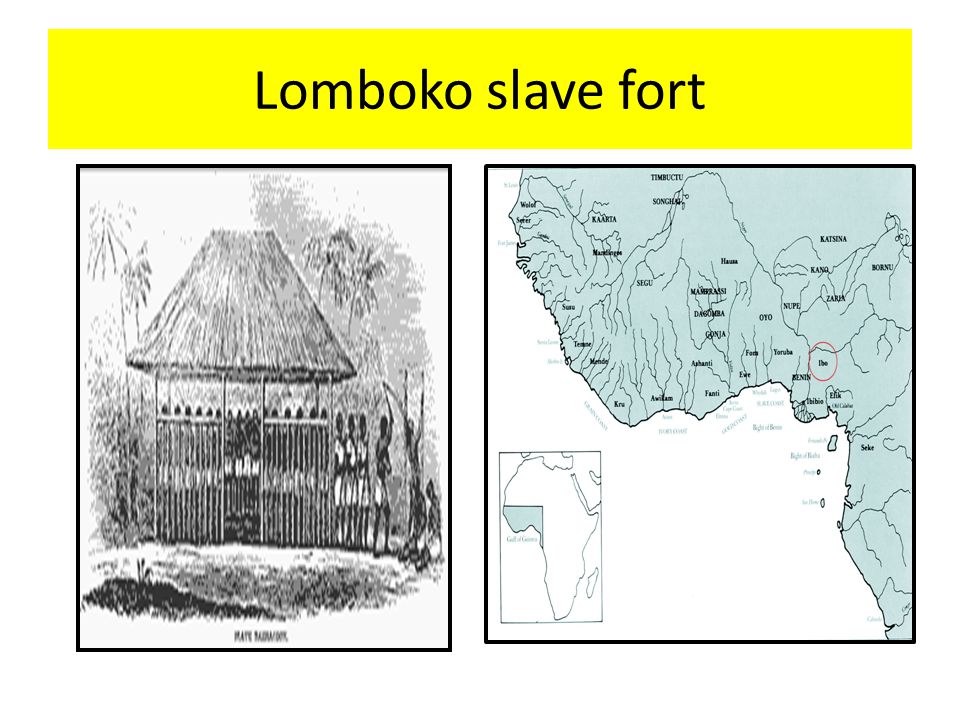
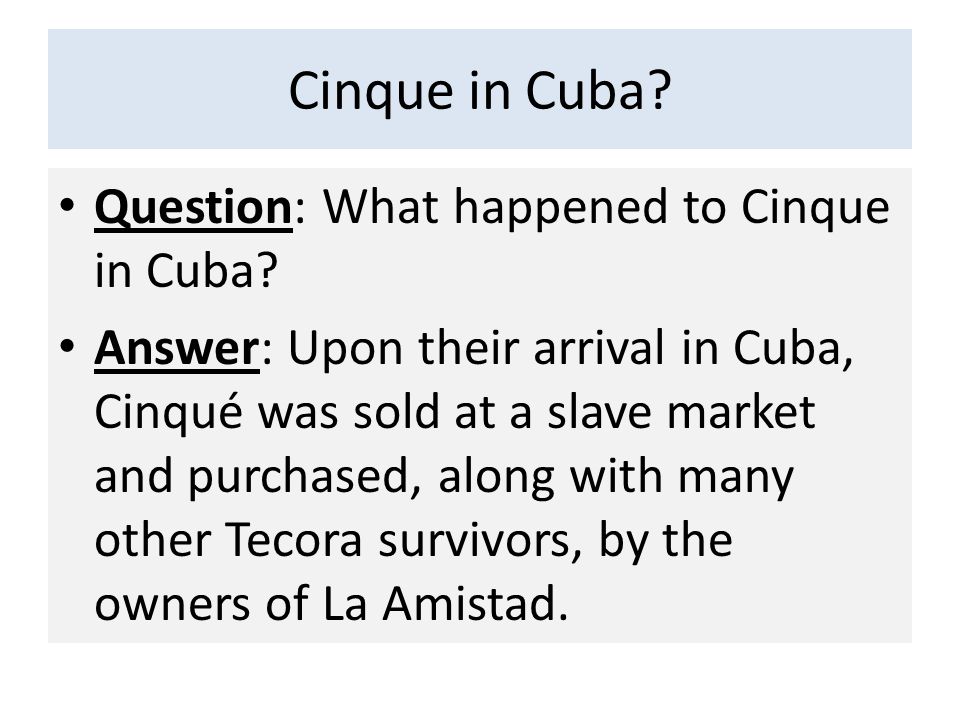
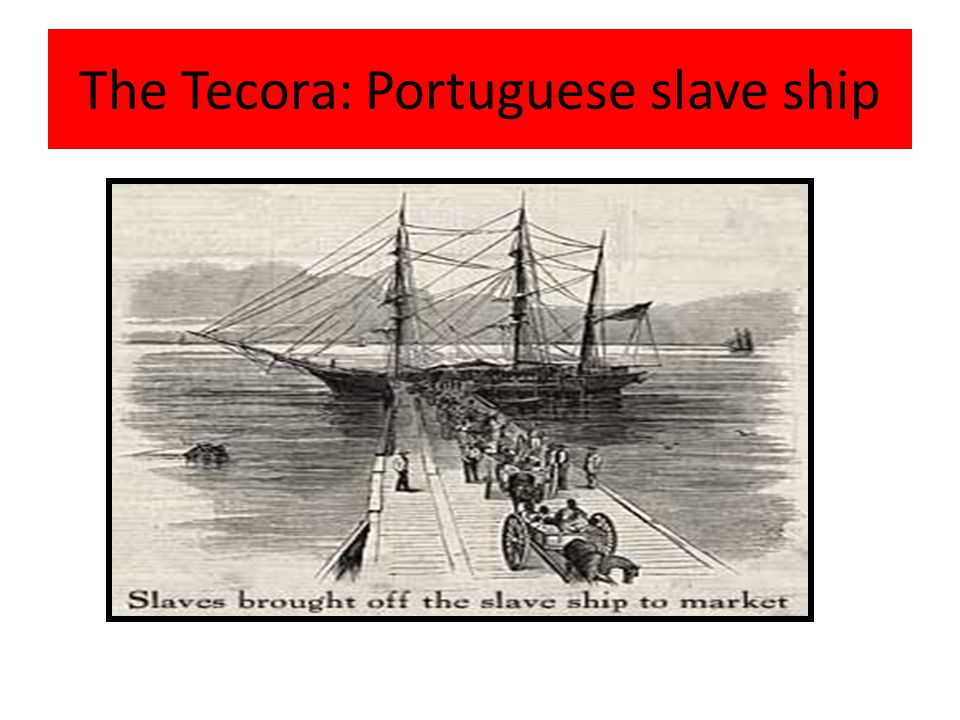
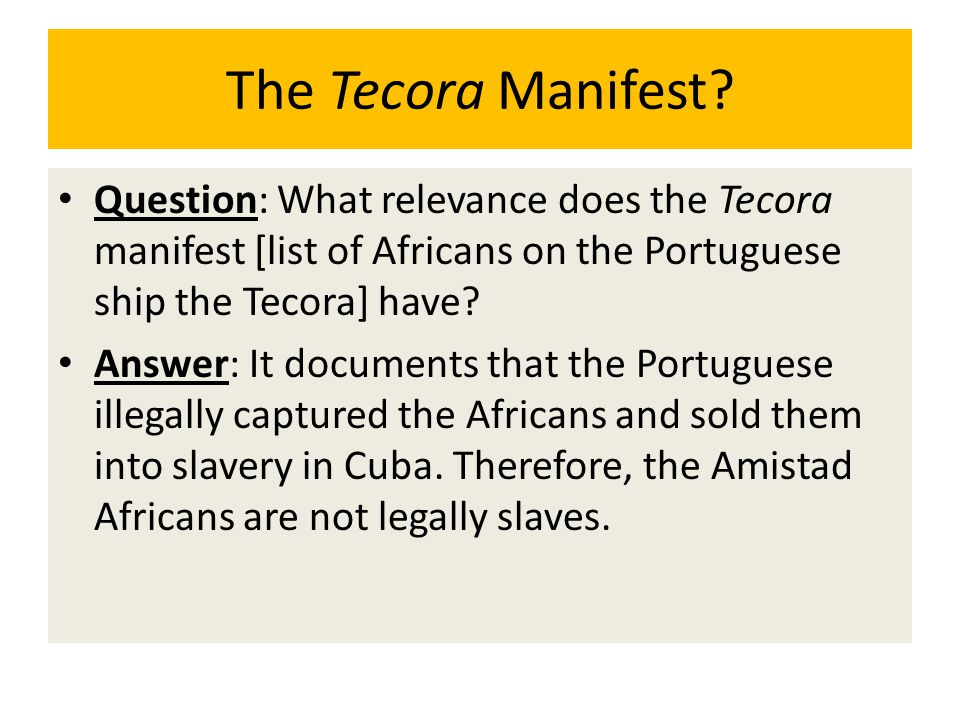
The story of the Amistad began in February 1839, when Portuguese slave hunters abducted a large group of African people in Sierra Leone. They transported them aboard the slave ship Tecora to Havana, Cuba. Then to a Spanish colony, the Lomboko Fort, for auction to the highest bidder. The United States, Britain, Spain and other European powers had abolished the importation of slaves by that time. But, the transatlantic slave trade continued illegally. And Havana was an important slave trading hub.
This abduction violated all of the treaties then in existence. The Spanish plantation owners Pedro Montes and Jose Ruiz purchased 53 of the African captives as slaves, including 49 adult males and four children, three of them girls. On June 28, Montes and Ruiz and the 53 Africans set sail from Havana on the Amistad (Spanish for “friendship”) for Puerto Principe.
The schooner Amistad, cleared out from the port of Havana, in the island of Cuba, for Puerto Principe. On board of the schooner were the master, Ramon Ferrer, and Jose Ruiz and Pedro Montez, all Spanish subjects. The former had with him a negro boy, named Antonio, claimed to be his slave. Jose Ruiz had with him forty-nine negroes, claimed by him as his slaves, and stated to be his property.
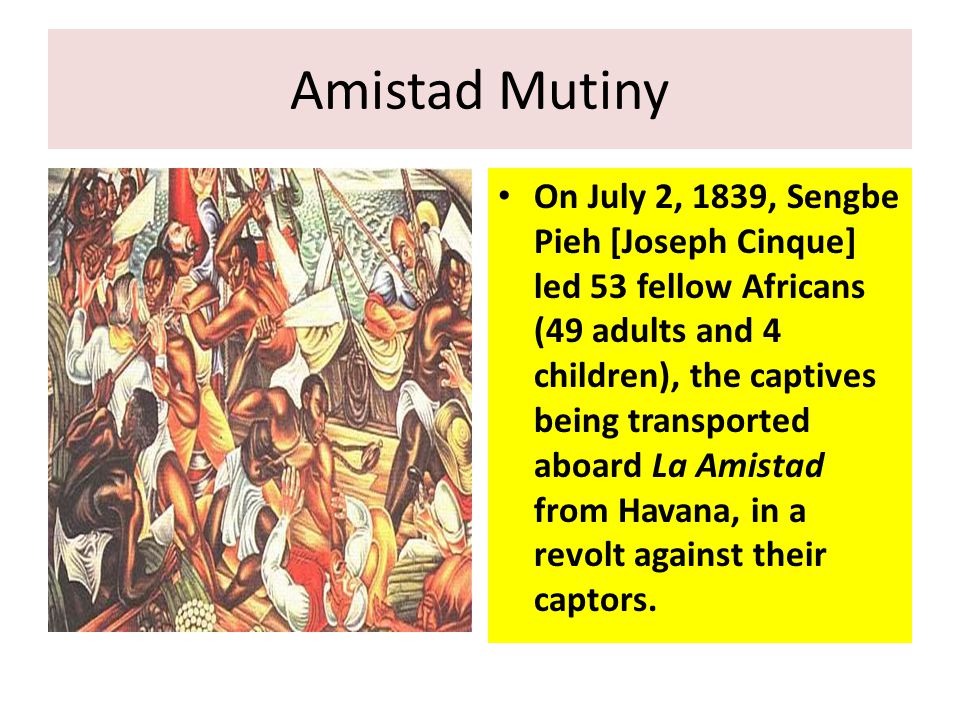
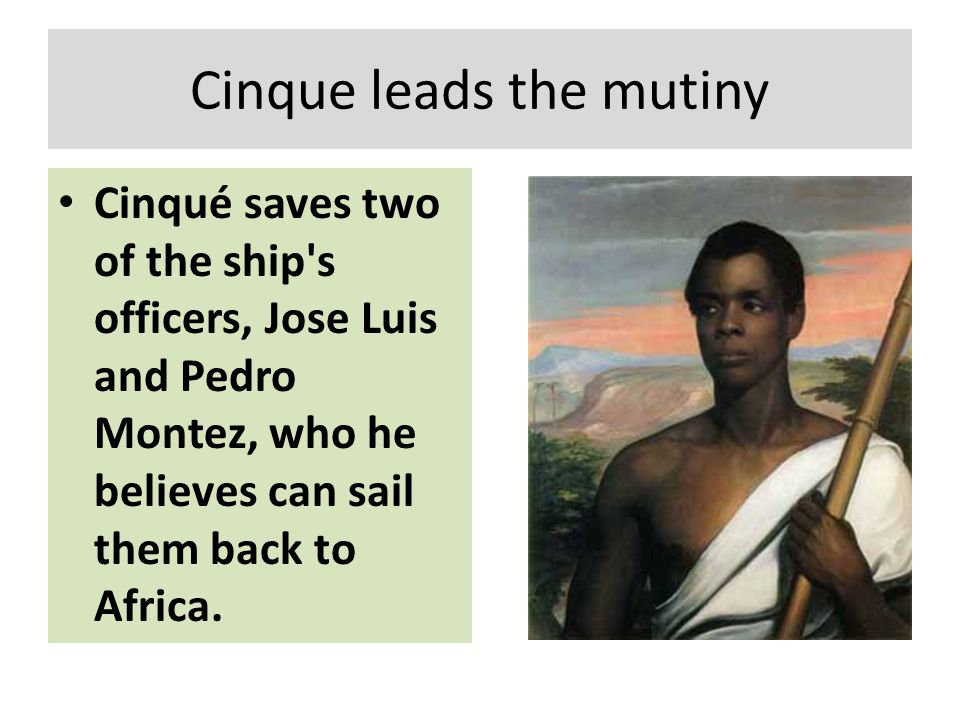
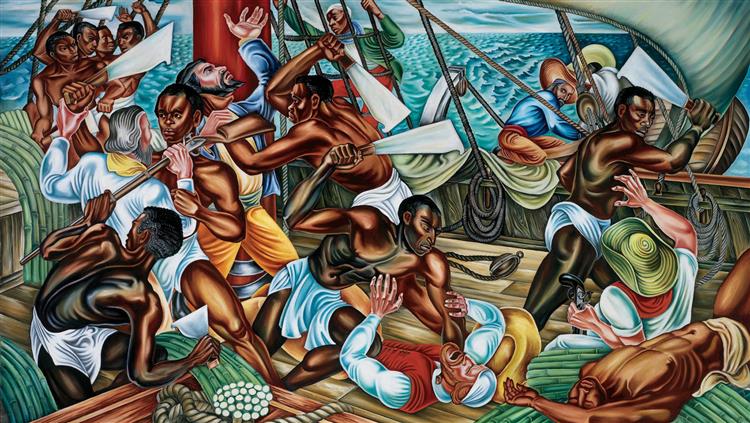
Pedro Montez had with him four other negroes, also claimed by him as his slaves, and stated to be his property. Four days into the voyage on July 2, 1839, one of them, Joseph Cinqué (also known as Sengbe Pieh), freed himself. After freeing other captives and helping them find weapons,
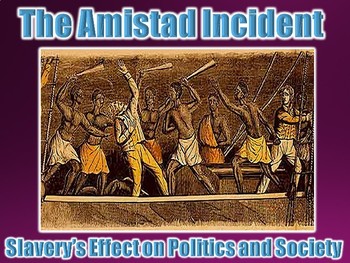
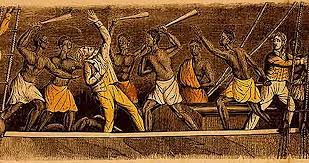
Cinqué led them to the upper deck where they killed the ship’s cook, Celestino. They then killed the ship’s captain, Ramon Ferrer, although in the attack two captives died as well. Ruiz and Montes were spared during the revolt on the promise that they would sail the Amistad back to Sierra Leone as captives demanded.
In need of navigation, the Africans ordered Montes and Ruiz to turn the ship eastward, back to Africa. But the Spaniards secretly changed course at night, and instead the Amistad sailed through the Caribbean and up the eastern coast of the United States.
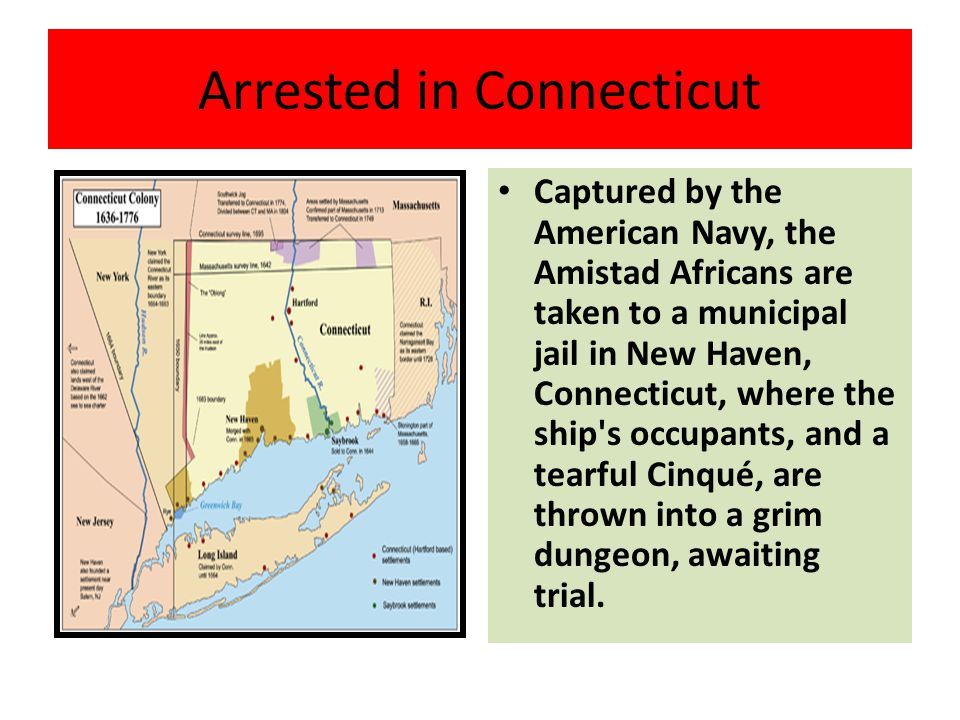
On August 26, the U.S. brig Washington found the ship while it was anchored off the tip of Long Island to get provisions. The naval officers seized the Amistad and put the Africans back in chains, Ruiz and Montes were freed while the surviving Africans were arrested and imprisoned at New London, Connecticut.
Charged with murder and piracy, Cinque and the other Africans of the Amistad were imprisoned in New Haven. Though these criminal charges were quickly dropped, they remained in prison while the courts went about deciding their legal status.
Upon learning of the capture of the Amistad, Spain’s foreign minister argued that the holding of the ship and its cargo constituted a violation of a 1795 treaty between the United States and Spain, and he demanded their return.
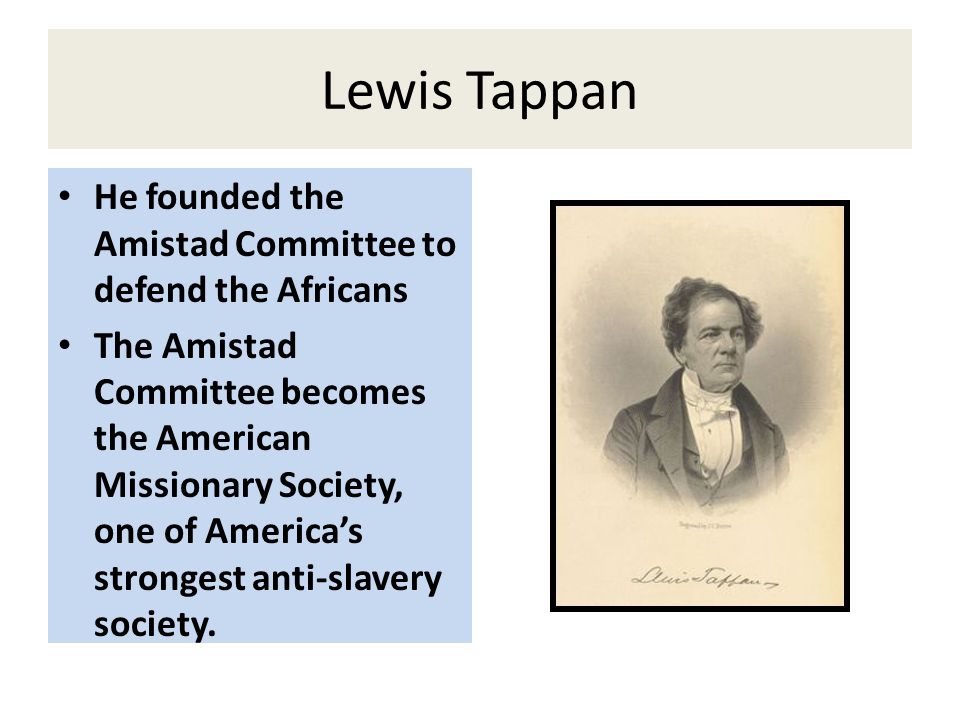
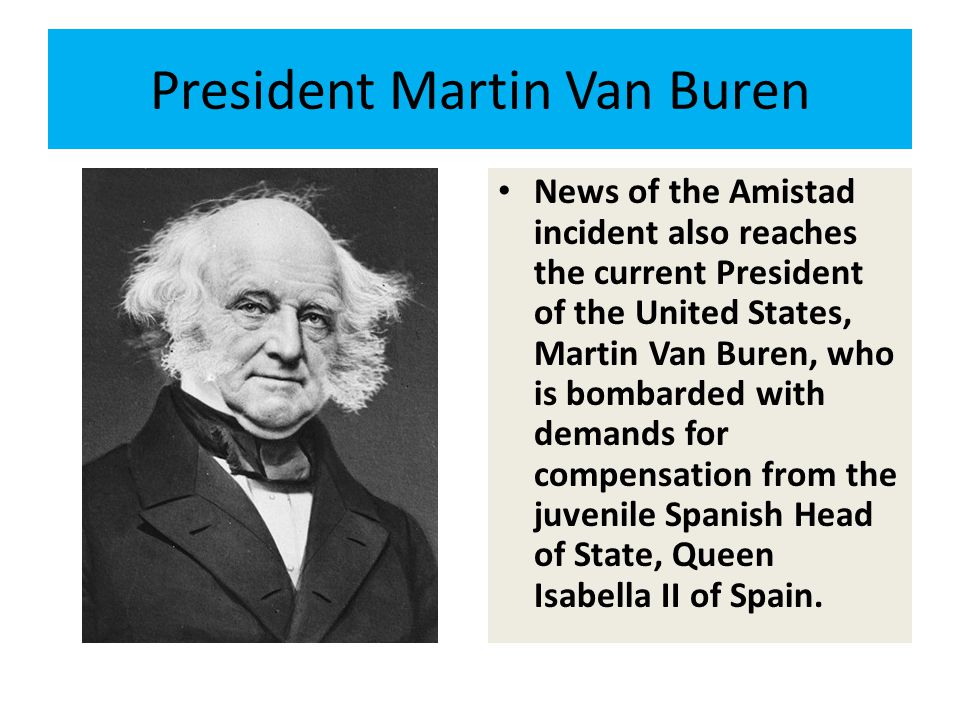
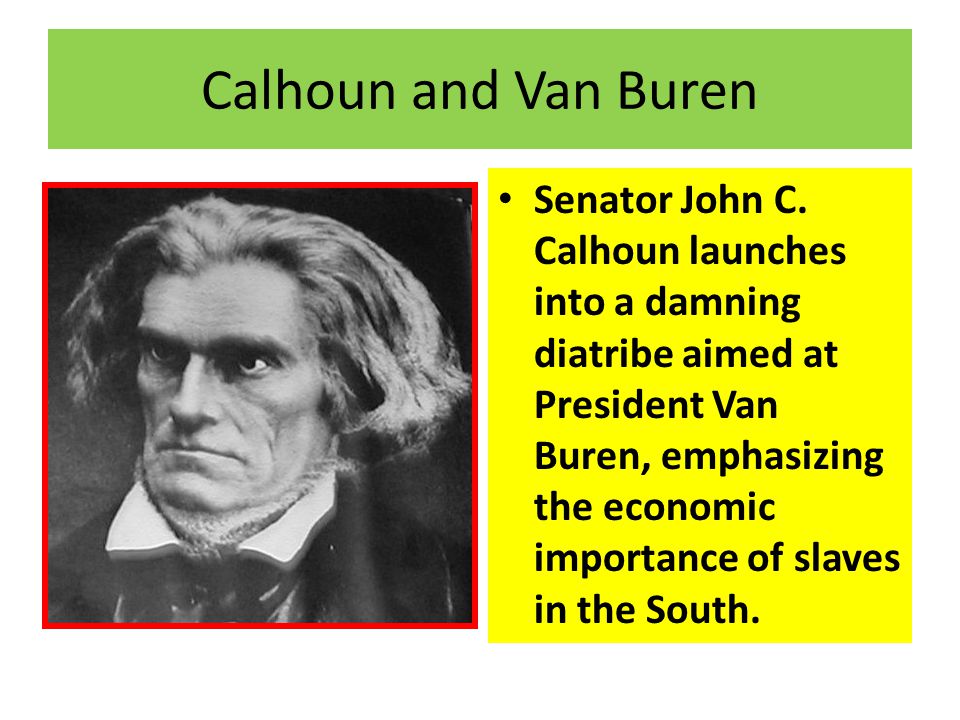
While President Martin Van Buren sought to extradite the Africans to Cuba to pacify Spain, a group of abolitionists in the North, led by Lewis Tappan, Rev. Joshua Leavitt and Rev. Simeon Jocelyn, raised money for their legal defense, arguing that they had been illegally captured and imported as enslaved workers.
Fear of inflaming relations with Spain, President Martin Van Buren decided to comply. But, Secretary of State John Forsyth stepped in and explained that the President could not order the release of La Amistad and its cargo because the executive could not interfere with the judiciary under American law. He also could not release the Spanish traders from imprisonment in Connecticut because that would constitute federal intervention in a matter of state jurisdiction.
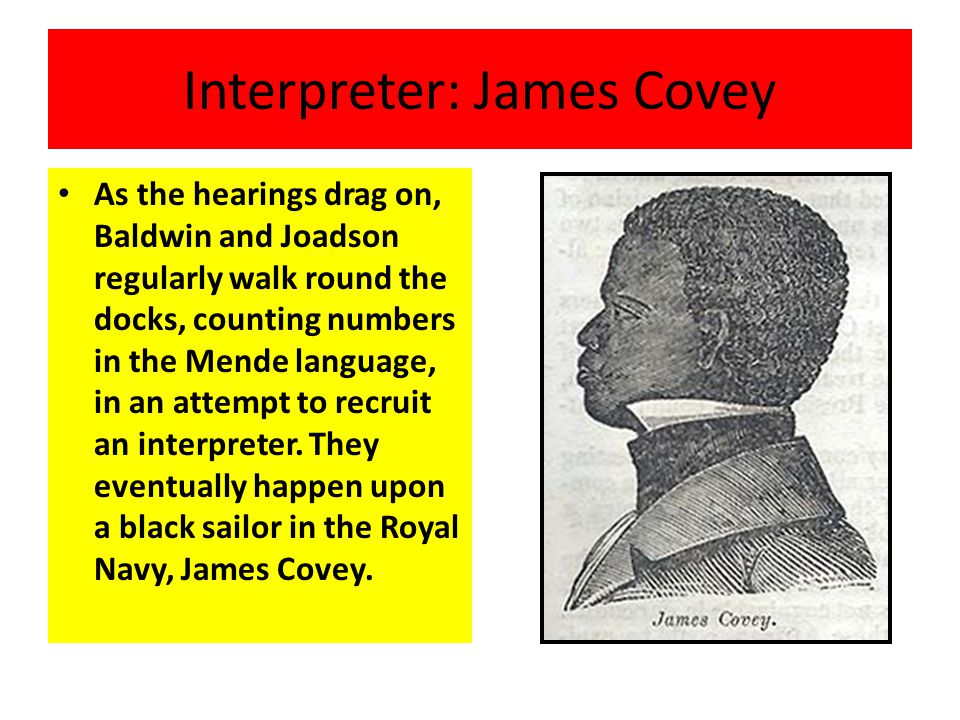
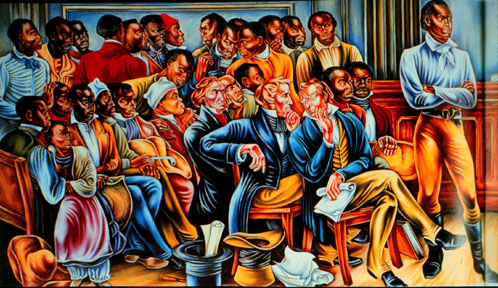
The American court system needed to decide the fate of the Mende captives. The defense team enlisted Josiah Gibbs, a philologist from Yale University, to help determine what language the Africans spoke. After concluding that they were Mende, Gibbs searched New York waterfronts for anyone who recognized the language. He finally found a Mende speaker who could interpret for the Africans.
In January 1840, a judge in U.S. District Court in Hartford ruled that the Africans were not Spanish enslaved peoples, but had been illegally captured. He ordered the captives released and returned to Africa. Once again, however, considerations of international diplomacy complicated the case.
After appealing the decision to the Circuit Court, which upheld the lower court’s decision, the U.S. attorney appealed to the U.S. Supreme Court. They argued that anti-piracy agreements with Spain compelled the U.S. to return the Africans to Cuba.
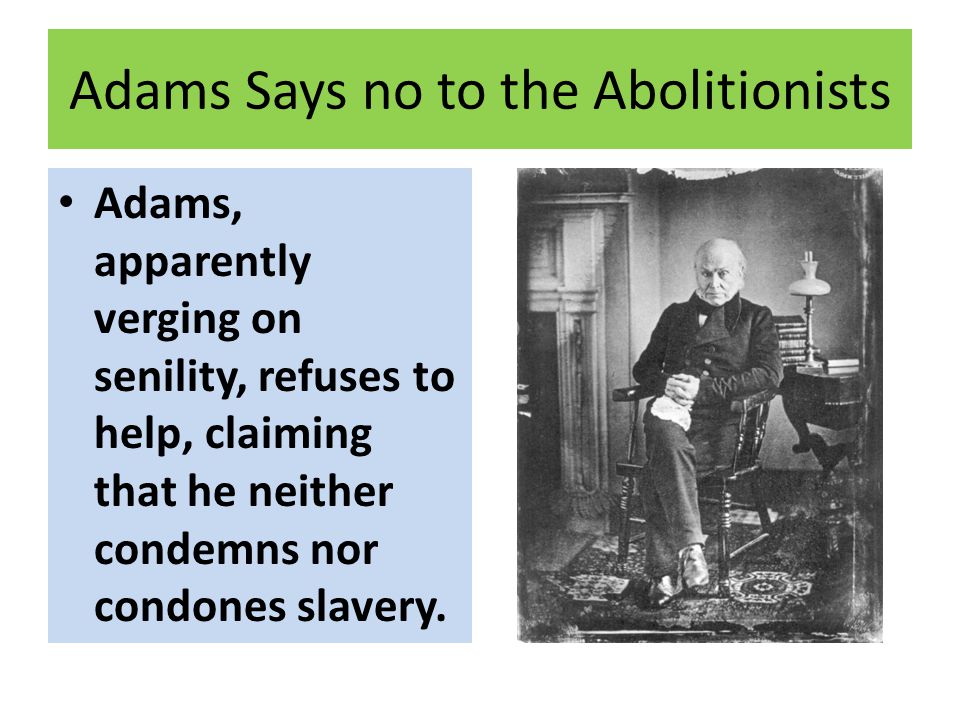
Meanwhile, abolitionist Lewis Tappin organized the Amistad Committee in New York City to support the legal defense of the Africans. Former President John Quincy Adams, then a Massachusetts Congressman, agreed to represent the Africans before the U.S. Supreme Court.
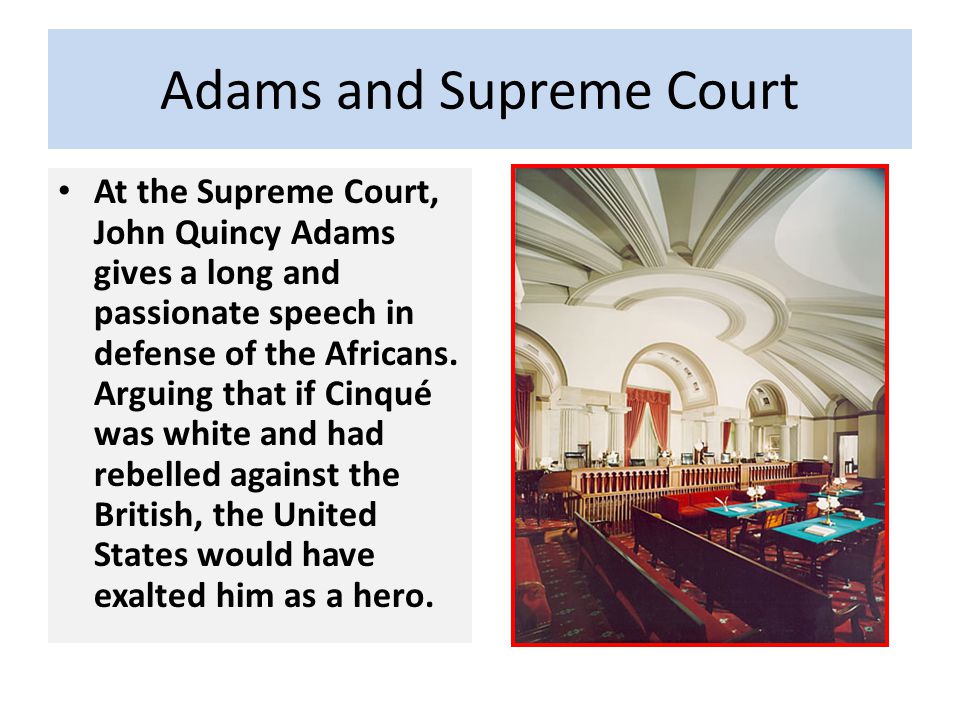
To defend the Africans in front of the Supreme Court, Tappan and his fellow abolitionists enlisted former President John Quincy Adams, who was at the time 73 years old and a member of the House of Representatives. Adams had previously argued (and won) a case before the nation’s highest court. He was also a strong antislavery voice in Congress, having successfully repealed a rule banning debates about slavery from the House floor.
In a lengthy argument beginning on February 24, Adams accused Van Buren of abusing his executive powers, and defended the Africans’ right to fight for their freedom aboard the Amistad. At the heart of the case, Adams argued, was the willingness of the United States to stand up for the ideals upon which it was founded.
“The moment you come to the Declaration of Independence, that every man has a right to life and liberty, an inalienable right, this case is decided," Adams said. "I ask nothing more in behalf of these unfortunate men, than this Declaration.”
The Verdict
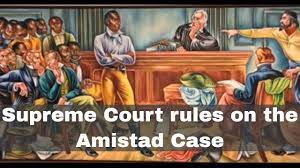
On March 9, 1841, the Supreme Court upheld the lower court ruling in The United States v. The Amistad with a 7-1 decision declaring that the captives were illegally kidnapped and thus were free. Justice Joseph Story delivered the majority opinion, writing that “There does not seem to us to be any ground for doubt, that these negroes ought to be deemed free.”
But the Court did not require the government to provide funds to return the Africans to their homeland, and awarded salvage rights for the ship to the U.S. Navy officers who apprehended it.
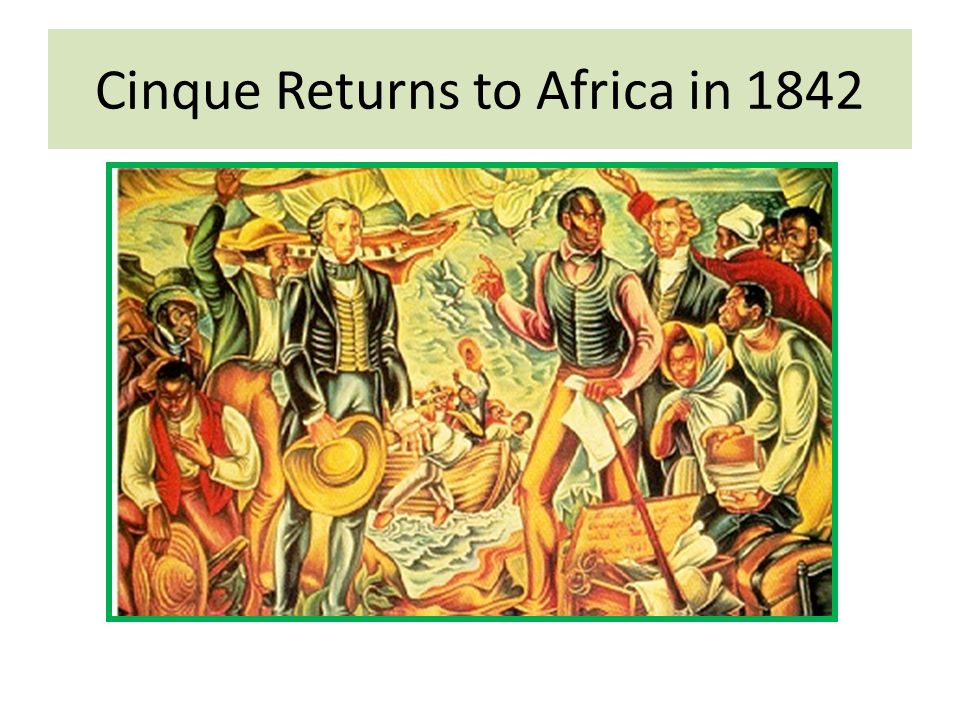
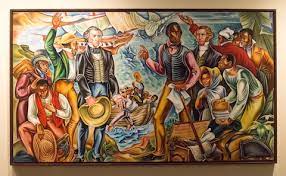
After Van Buren’s successor, John Tyler, refused to pay for repatriation, abolitionists again raised funds. Soon afterwards Northern abolitionists raised funds to pay for African men and boys, and three girls, to return to Sierra Leone. On November 25, 1841, Joseph Cinque and the other 34 surviving Africans of the Amistad (the others had died at sea or in prison awaiting trial) departed from New York harbor for Sierra Leone.
They were accompanied by James Covey, a British sailor and former slave who spoke their language, and five white missionaries, all sailing on the Gentleman. The British governor of Sierra Leone, William Fergusson, led the colony in welcoming the captives when they arrived in Freetown, in January 1842.
Amistad Timeline
A detailed look of the Amistad Rebellion.
It would end when a second trial opened in the federal district court in Hartford Conn, as abolitionists tried to get
the case dismissed.
As the year concluded, U.S. House of Representatives, John Quincy Adams accuses the Van Buren administration
of falsifying documents in the case.
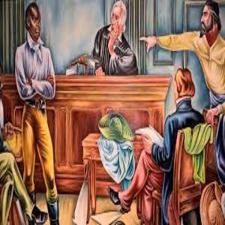
decision declaring that the captives were illegally kidnapped and thus were free!
JANUARY
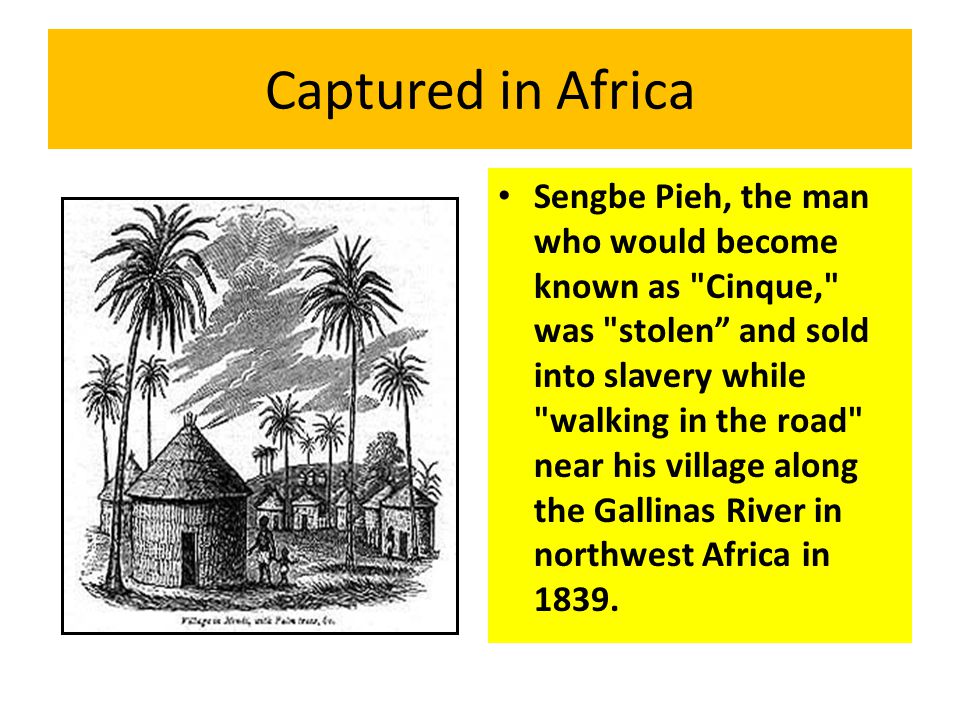
Sengbe Pieh (Joseph Cinque) is kidnapped and sold into slavery.
APRIL
Portuguese ship Tecora is loaded with enslaved Africans off Spanish slave trader Pedro Blanco's slave depot known as Lomboko.
JUNE
Mid June
Jose Ruiz buys 49 adult male Africans for $450 each. Pedro Montes buy four children, three of them girls.
22nd - 26th
Montes and Ruiz obtain passports to transport “ladinos” (Africans born in the New World) to Puerto Principe, Cuba.
28th
Jose Ruiz, Pedro Montes, and the 53 captive Africans board La Amistad.
JULY
2nd
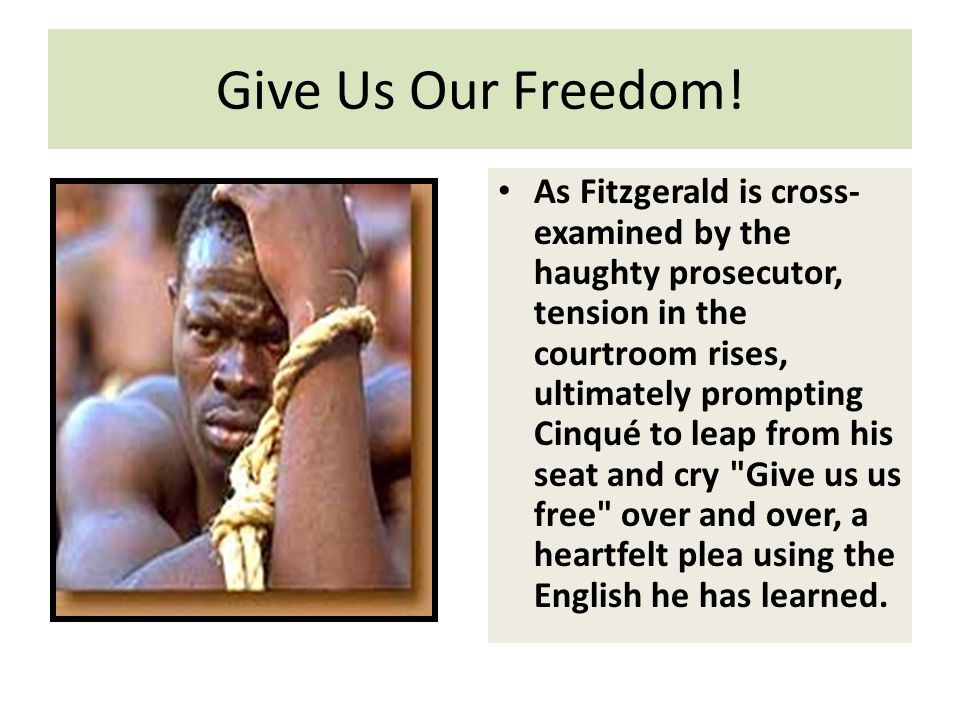
Led by Cinqué, a rice farmer also known as Joseph Cinqué or Sengbe Pieh, unshackled himself. After freeing other captives he then climbed up to the main deck armed himself along with the others, where they killed the ship's cook, Celestino. The captive Africans, led by Pieh, revolt around 4:00am.
Pieh ordered Ruiz and Montes to sail to Africa. Instead, they sailed north up the east coast of the United States, sure that the ship would be intercepted and the Africans returned to Cuba as slaves.
AUGUST
21st
Several New York pilot boats came across La Amistad as on 21 August 1839, when she was discovered thirty miles southeast off New York, leading to rumors of pirates.
25th
The Amistad anchors off Long Island and was seized by the USS Brig Washington, commanded by Lt. Thomas R. Gedney.
26th
Lt. Richard W. Mead of the USS Washington seizes the Amistad and escorts it to New London in the morning. Claims a salvage award.
27th
Amistad reaches New London, CT. At an inquiry with U.S. Federal District Judge Andrew T. Judson aboard the Washington, Ruiz and Montes demand as property the 39 surviving adult African males, the four children, and the Creole cook Antonio. Judson decides to put the matter to a grand jury at U.S. Circuit Court in Hartford in September. The African captives are taken to jail in New Haven, CT.
SEPTEMBER
4th
President Van Buren was in favor of extraditing the Africans to Cuba. However, abolitionists in the North opposed extradition and raised money to defend the Africans. New York abolitionists announce the formation of the “Amistad Committee” to raise funds for the legal counsel and to support the Africans while jailed. Lewis Tappan, Rev. Joshua Leavitt and Rev. Simeon Jocelyn take the lead.
6th
The Spanish minister in Washington formally demands that the Africans be returned to Cuba to stand trial for mutiny and murder.
9th
Yale professor Josiah Gibbs finds Mende speakers on the docks of New York- James Covey and Charles Pratt - and takes them to New Haven to interview the Africans. New York abolitionists Lewis Tappan, Joshua Leavitt, and Rev. Simeon Jocelyn from the Amistad Committee to raise funds for the defense of the Amistad captives.
19th
First trial begins in the U.S. Circuit Court at Hartford, Judge Thompson presiding.
23rd
Though he expresses doubt as to the legality of the Africans’ enslavement, Judge Thompson denies their motion for writ of habeas corpus, keeping them in custody in the New Haven jail.
OCTOBER
17th
Lewis Tappan has several of the Africans bring civil suit against Ruiz and Montes for assault and battery and false imprisonment. The Spaniards are arrested in New York City.
22nd
Hearings begin in the New York Court of Common Pleas, Judge Ingless presiding. Within a week, the court frees Montes, and reduces Ruiz’s bail. Montes flees to Cuba. Ruiz eventually makes bail and flees as well.
NOVEMBER
19th
The second trial opens at the federal district court in Hartford, Judge Judson presiding. Abolitionists try to get the case dismissed on grounds the “salvage” (what the crew of the USS Washington called them) should have been taken to New York. They then introduce evidence demonstrating that the Africans were not legally enslaved. The court postpones the hearing until January and moves it to New Haven.
DECEMBER
President Van Buren received an extradition request for the Amistad captives from the Spanish government. Van Buren sent this request to the courts while Secretary of State John Forsyth readied a ship to return the captives to Cuba.
January
2nd
Secretary of State John Forsyth orders the Navy to prepare to transport the Africans to Cuba as soon as the district court ruling is reached, before an appeal can be lodged. The Navy dispatches the USS Grampus to wait in New Haven harbor.
7th
District court proceedings resume in New Haven. U.S. District Attorney for Connecticut William S. Holabird announces that the Spanish government has merged the claims of Ruiz and Montes with those of the U.S. Various witnesses testify that the Blacks are Africans Mendes, and not native to the country.
8th
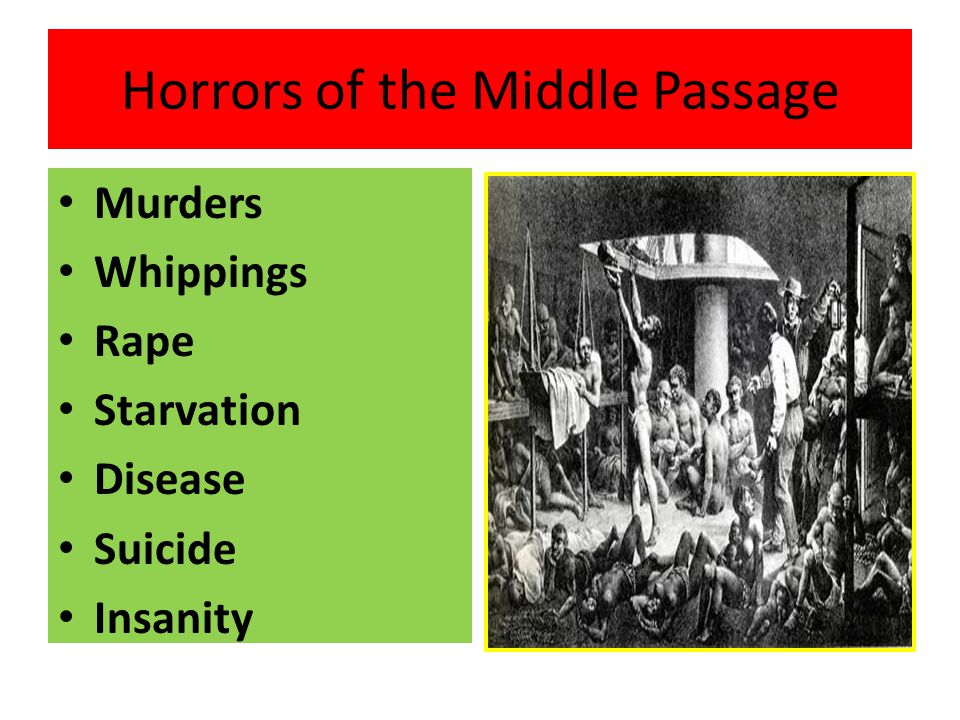
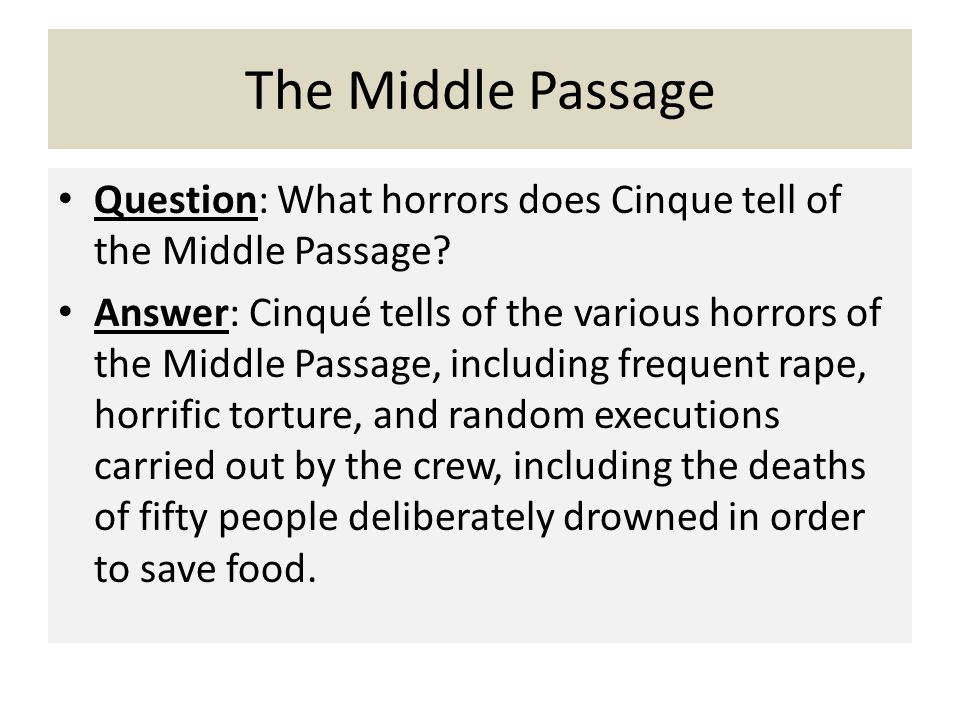
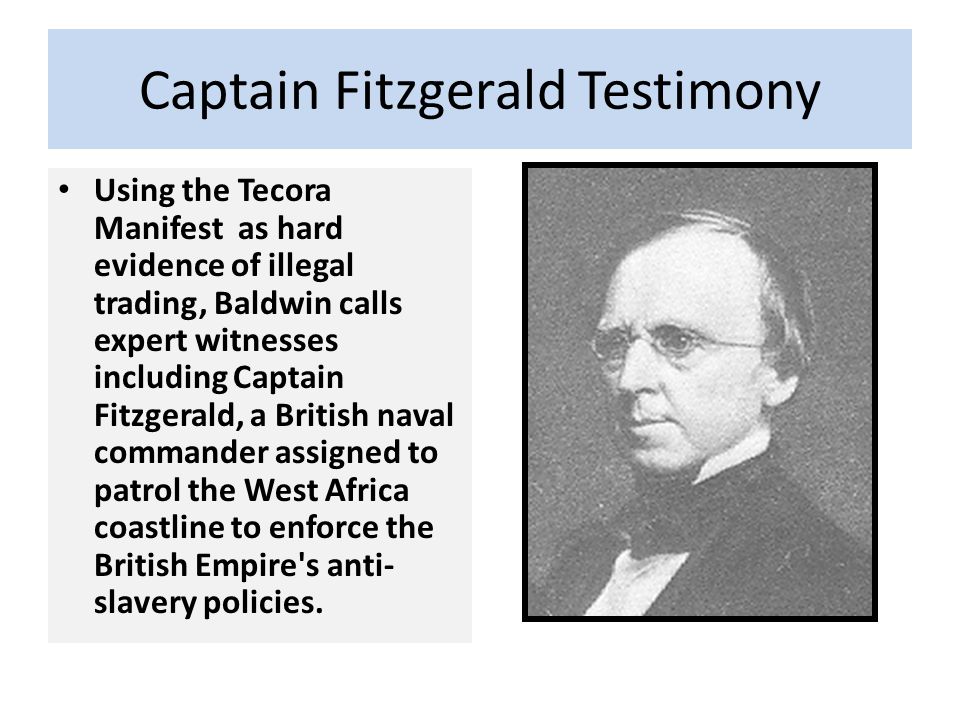
Joseph Cinque testifies, describing his capture, enslavement, middle passage, sale in Havana, revolt and encounter with Henry Green and Pelatiah Fordham -- who had nothing to do with the Washington, separately captured the Africans who had come ashore for water. His fellow captors at the slave depot Lomboko.
13th
Judge Judson affirms the jurisdiction of the district court, and dismisses Henry Green’s salvage claim. The court awards salvage to Gedney and the two Spaniards. The court also rules that the Africans were not legally enslaved. On the question of murder and piracy, the court holds that only a Spanish court can rule, but since Spanish law would have effect only if the Africans were bozales - and they were not - there was no point in returning them to Cuba.
The court places the captives in the charge of the U.S. President, to be returned to Africa. President Van Buren orders the U.S. District Attorney to appeal the District Court ruling to the U.S. Circuit Court in April. The Spaniards also appeal.
April
29th
Trial opens at the Circuit Court at New Haven, Judge Thompson presiding. Thompson eventually affirms the decision of the District Court, setting the stage for a show down at the U.S. Supreme Court.
December
10th
In the U.S. House of Representatives, John Quincy Adams accuses the Van Buren administration of falsifying documents in the case. A committee is appointed to investigate the affair.
January
4th
The House of Representatives adopts Adams’ committee report, but does not censure the administration.
February
22nd
The U.S. Supreme Court begins hearing the Amistad case. Adams's address to the court, which extended over two days, stands today as an impassioned defense of the principle of habeas corpus and is widely credited with persuading the justices to rule, with only one dissent, in favor of the Africans and order their return to Africa.
23rd
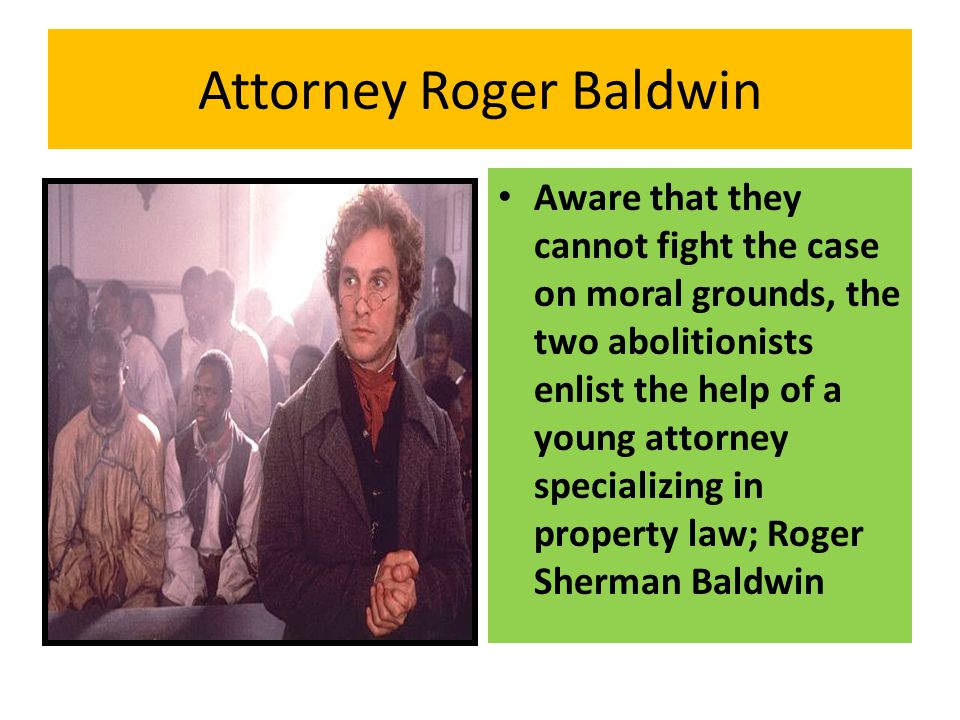
Roger Baldwin, who agreed to open for Adams, concludes his arguments.
24th
Adams begins presenting his argument. For 8 ½ hours, the 73-year-old Adams passionately and eloquently defended the Africans' right to freedom on both legal and moral grounds, referring to treaties prohibiting the slave trade and to the Declaration of Independence.
March
9th
The Supreme Court upheld the lower court ruling with a 7-1 decision. Justice Joseph Story delivers the decision of the Court, affirming the Africans’ freedom. He wrote and read the decision: "...it was the ultimate right of all human beings in extreme cases to resist oppression, and to apply force against ruinous injustice." The opinion asserted the Africans' right to resist "unlawful" slavery.
November
19th
John Quincy Adams receives a Bible sent to him by Pieh and the other Mende involved in the Amistad case. The Bible is now among over 14,000 volumes in the Stone Library at Adams National Historical Park in Quincy, Massachusetts.
November
27th
Thirty five of the original Fifty-Three survivors (the others died at sea or in prison while awaiting trial) depart New York for Africa aboard the barque Gentleman, accompanied by two Black Americans, Mr. and Mrs. Henry Wilson, and three Whites, Rev. and Mrs. William Raymond and Rev. James Steele, to minister the “Mende Mission.”