Frederick Douglass
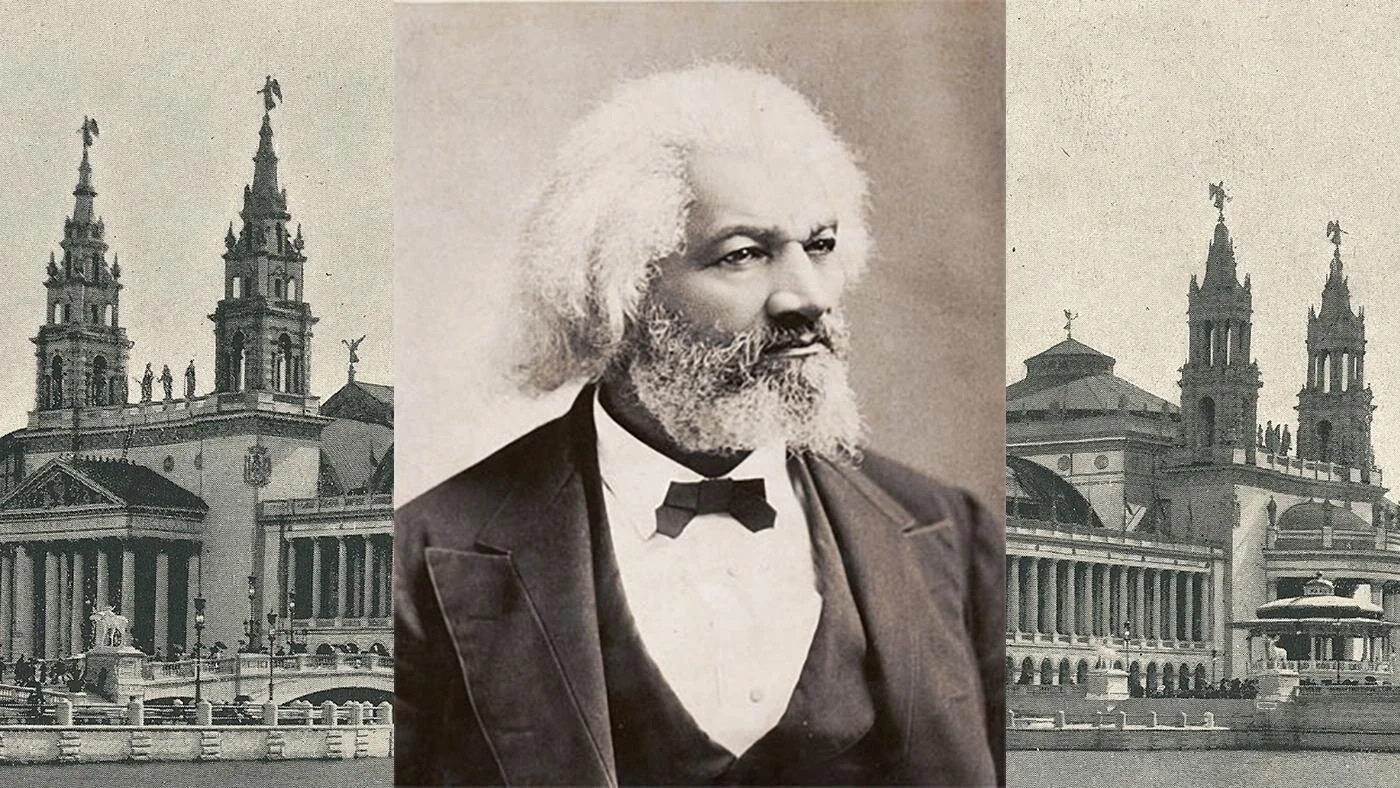
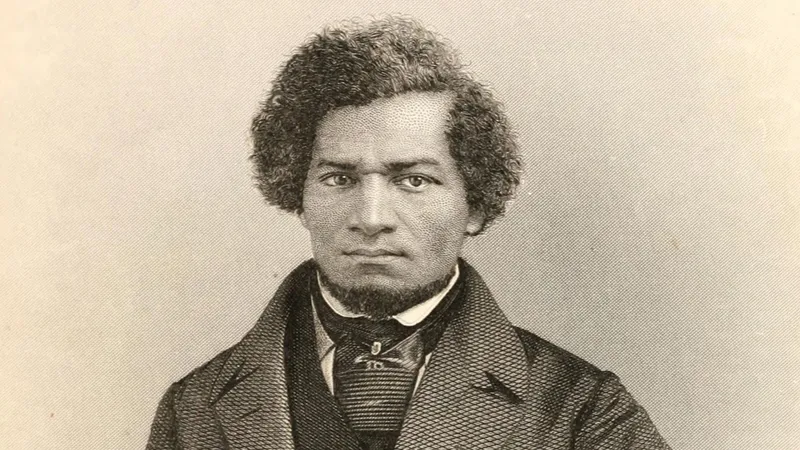
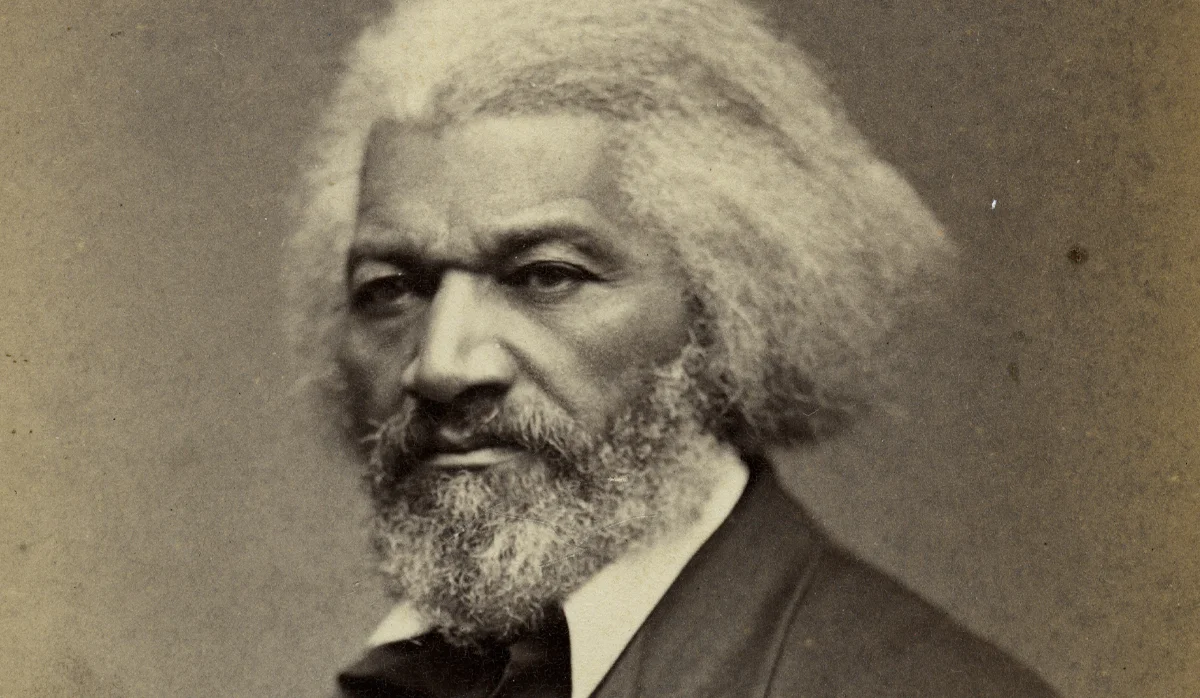
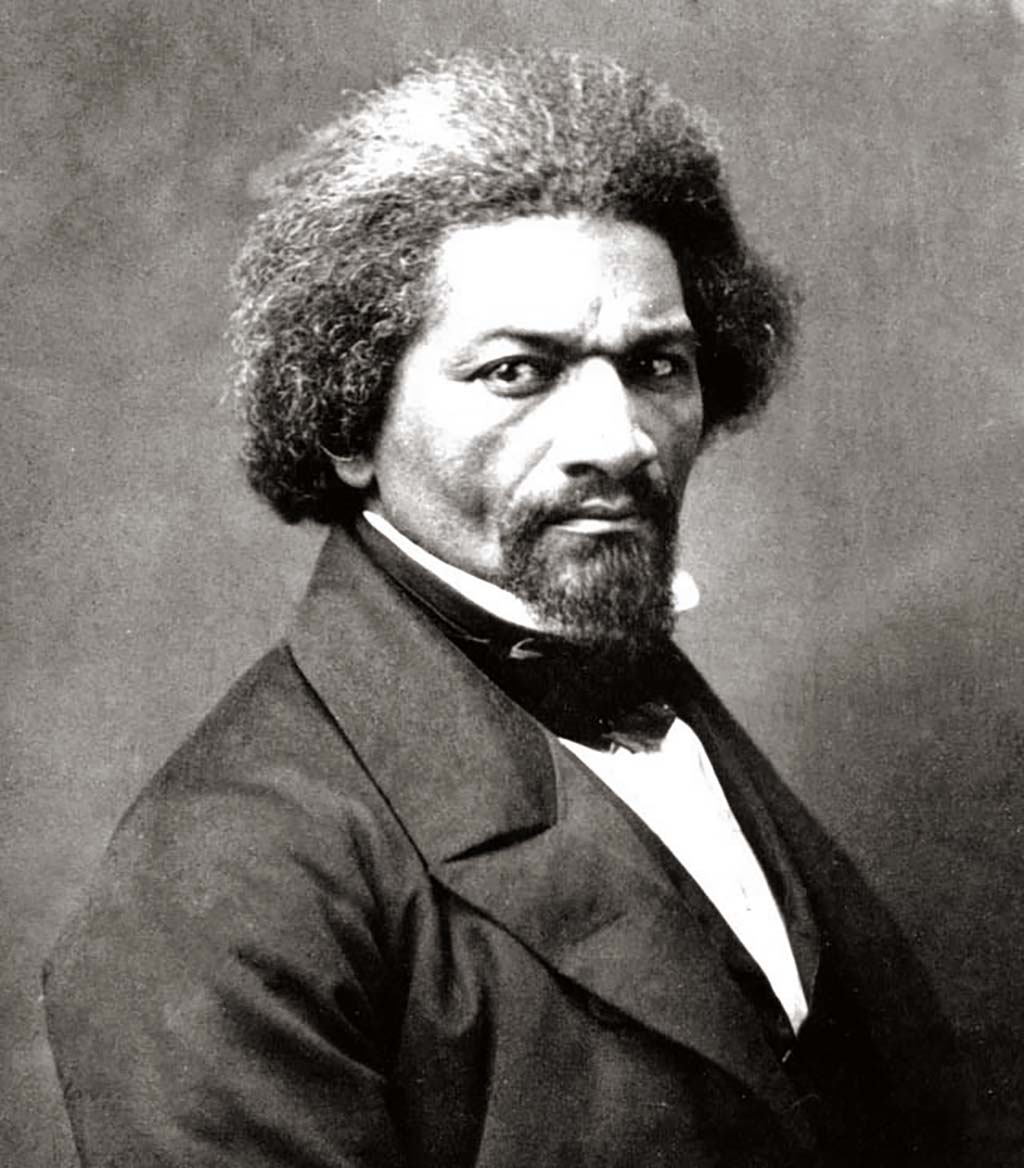
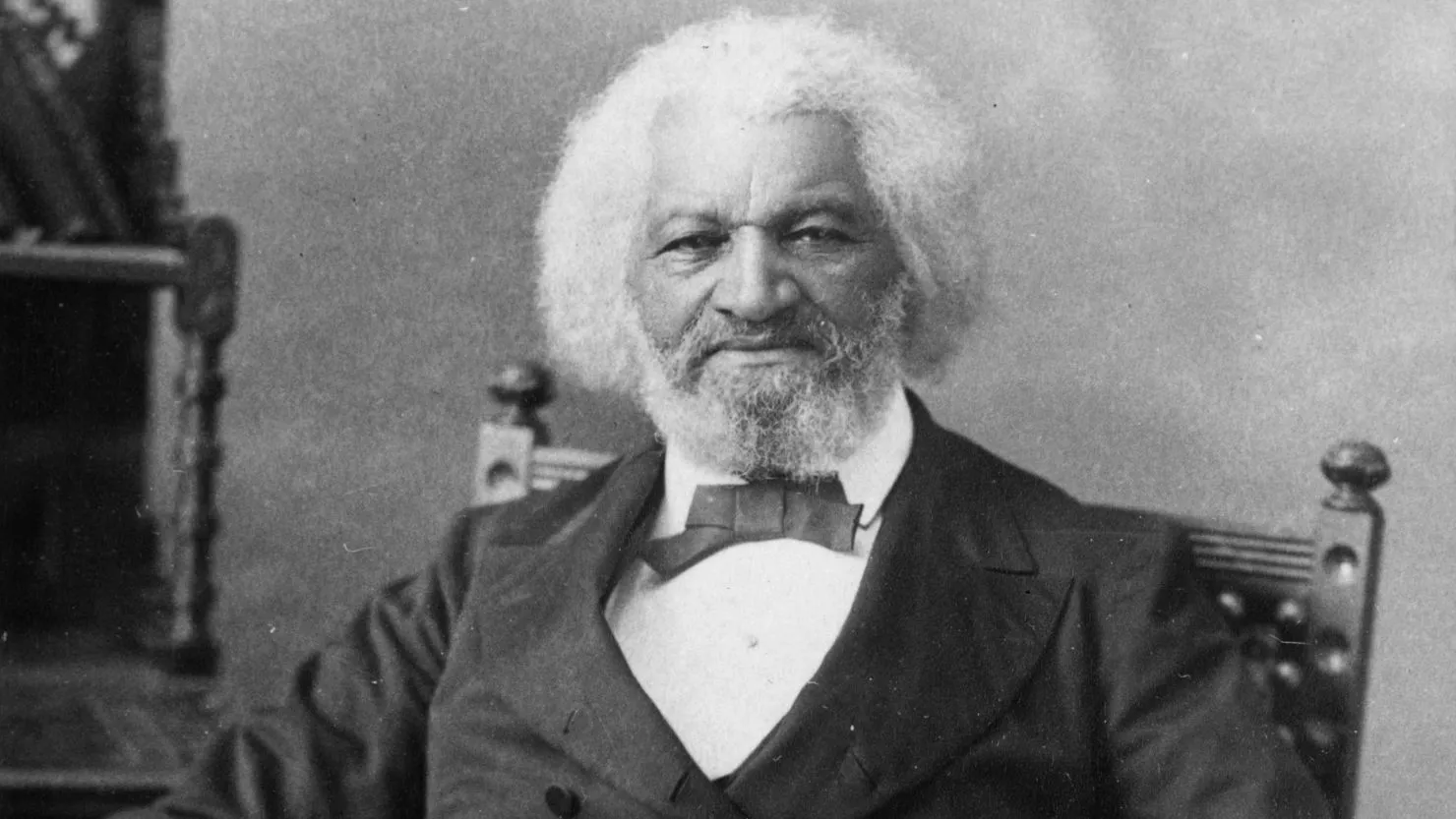
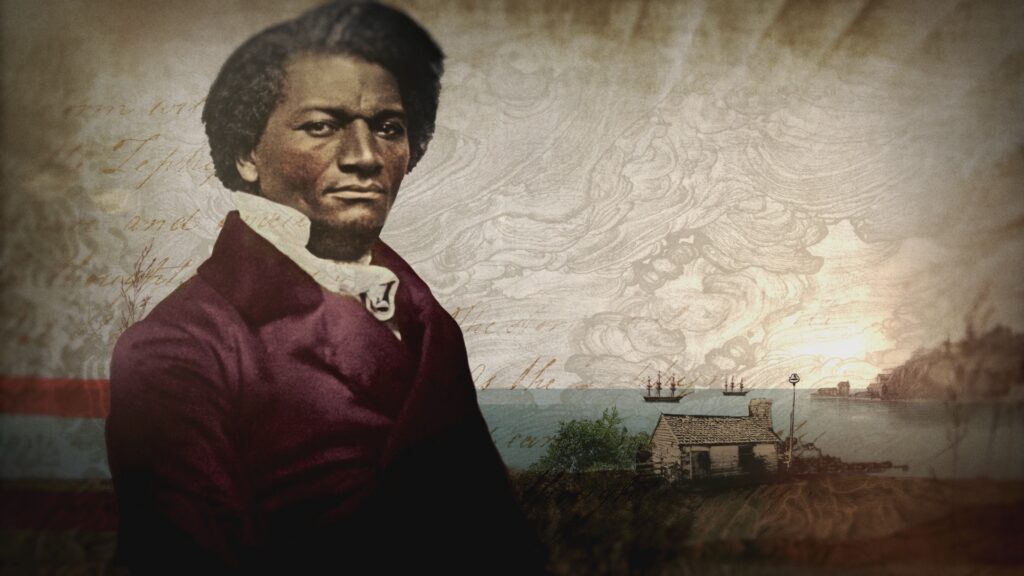
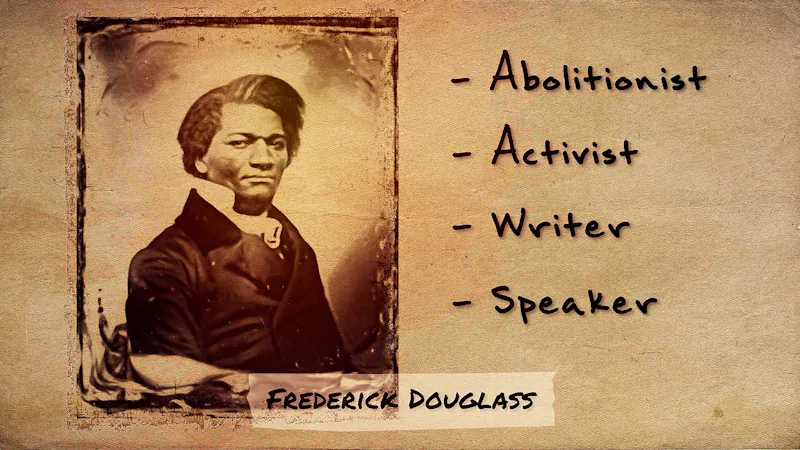
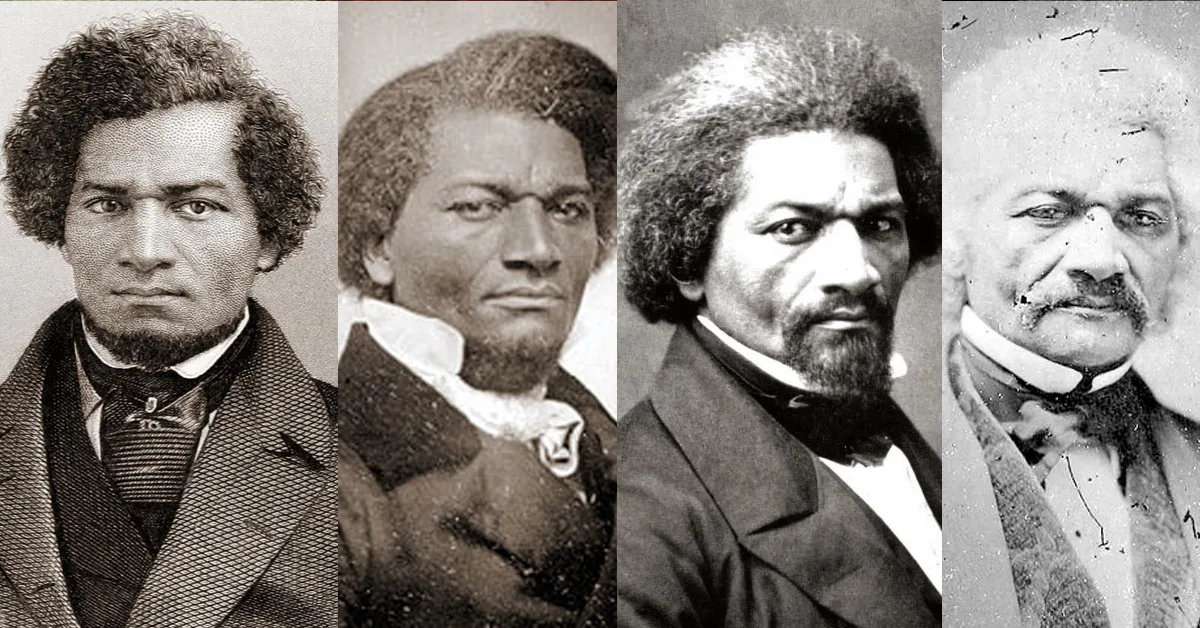
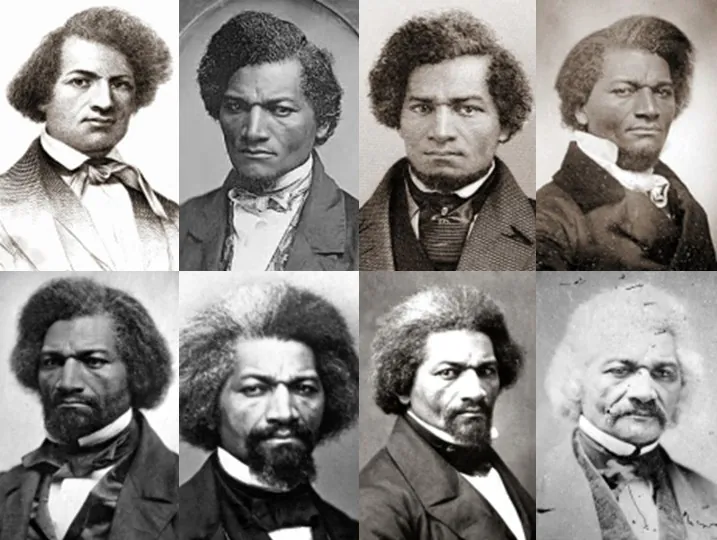
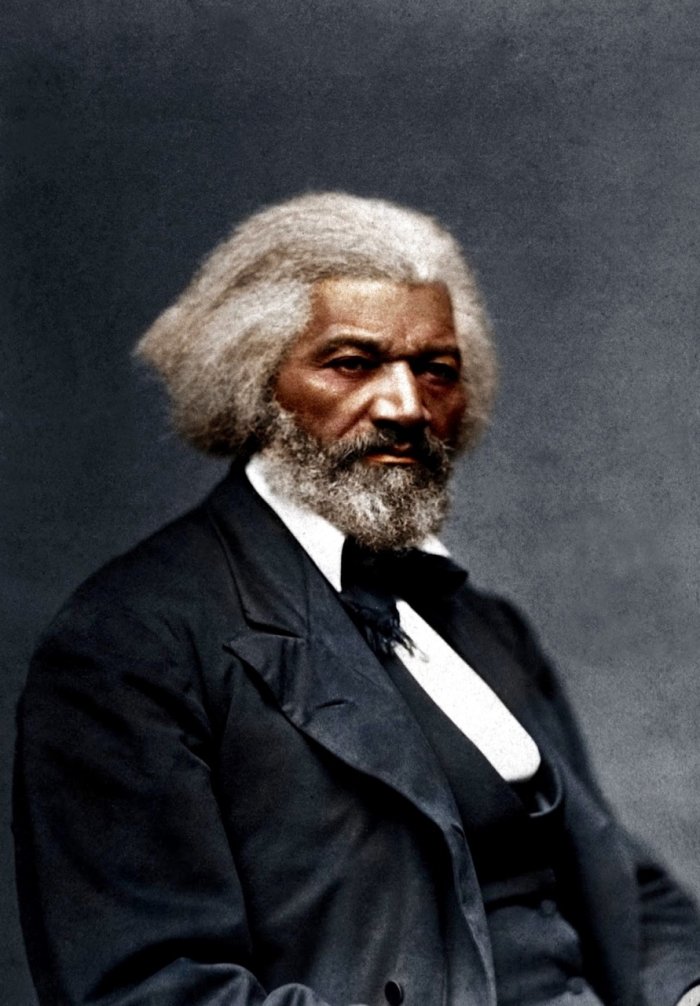
A civil rights activist, abolitionist, orator, writer, and statesman, Frederick Douglass is renowned for his rise from slavery to the highest levels of American society. He was born Frederick Augustus Washington Bailey on February 14th, 1818 in Talbot County, Maryland. Though the exact date of his birth is unknown birth dates of slaves were rarely recorded. He chose to celebrate February 14 as his birthday, remembering that his mother called him her "Little Valentine". He was separated from his mother when he was very young, experiencing the profound loss and isolation that would be a hallmark of his early years. Frederick spent his early years with his grandparents and with an aunt, seeing his mother only four or five times before her death when he was seven.
As a young boy, Douglass was moved between various plantations, each with its own set of hardships. In 1826 at approximately age eight, Frederick was given to Thomas Auld, who sent him to serve Thomas's brother Hugh Auld and his wife Sophia in Baltimore. In defiance of a state law banning slaves from being educated, Frederick, as a young boy, was taught the alphabet and a few simple words by Sophia Auld. Frederick’s lessons ended abruptly one day when he heard Hugh Auld scold his wife, telling her that if a slave knew how to read and write it would make him unfit to be a slave, and it would encourage enslaved people to desire freedom. However, the seed had been planted, and Douglass's quest for education and self-empowerment had begun.
From that moment on, Frederick knew that education would be his pathway to freedom. Later in his autobiography he wrote, "Knowledge unfits a child to be a slave.' I instinctively assented to the proposition, and from that moment I understood the direct pathway from slavery to freedom." Frederick Washington Bailey spent seven relatively comfortable years in Baltimore before being sent back to the country, by Thomas Auld, who had taken Frederick back from his brother Hugh. Thomas then hired young Frederick out to a farm run by a notoriously brutal "slavebreaker" named Edward Covey. The treatment he received was indeed brutal. Douglass was whipped so frequently that his wounds had little time to heal. Douglass said that he was "broken in body, soul, and spirit".
The 16-year-old Bailey finally rebelled against the beatings, however, and fought back. After Bailey won a physical confrontation, Covey never tried to beat him again. Bailey was now more determined to escape his bondage. Recounting his beatings at Covey's farm in Narrative of the Life of Frederick Douglass, an American Slave, Douglass described himself as "a man transformed into a brute! On January 1, 1836, Bailey made a resolution that he would be free by the end of the year. He planned an escape. But early in April he was jailed after his plan was discovered. Two years later, while living in Baltimore and working at a shipyard, Frederick would finally realize his dream. Earlier, Frederick met and fell in love with Anna Murray, a free Black woman in Baltimore about five years his senior. Traveling by steamboat and train, disguised as a sailor, he escaped in September 1838 to New York City.
Once Bailey had arrived, he sent for Murray to follow him north to New York. New York City was a dangerous place for enslaved people seeking freedom. Numerous slave catchers traveled to the city to track down those who had escaped. She brought the basic supplies for them to set up a home. They were married on September 15, 1838. By this time, at age 20, he took the surname Douglass, having already dropped his two middle names. Several weeks later he had settled in New Bedford, Massachusetts. There, Douglass found work as a laborer, but his ambitions extended far beyond manual labor. Always striving to educate himself, Douglass continued his reading. He joined various organizations in New Bedford and regularly attended abolitionist meetings.
Douglass thought of joining a White Methodist Church, but was disappointed, from the beginning, upon finding that it was segregated. Later, he joined the African Methodist Episcopal Zion Church, an independent Black denomination first established in New York City, which counted among its members Sojourner Truth and Harriet Tubman. He became a licensed preacher in 1839, which helped him to hone his oratorical skills. After settling in the northeast with his wife, Anna, the man who would be forever known to the world as “Frederick Douglass” dedicated his life to the abolitionist movement and the equality of all people. In 1840, Douglass delivered a speech in Elmira, N.Y, then a station on the Underground Railroad, in which a Black congregation would form years later.
He saw William Lloyd Garrison speak at the Bristol Anti-Slavery Society's annual meeting. Douglass was inspired by the speaker. It was Garrison who encouraged Douglass to become a speaker and leader in the abolitionist movement. Douglass subscribed to Garrison's weekly newspaper, "The Liberator". He later said that "no face and form ever impressed me with such sentiments [of the hatred of slavery as did those of William Lloyd Garrison." Garrison was likewise impressed with Douglass and had written about his anti-colonization stance in "The Liberator" as early as 1839. In 1841, Douglass began operating as a spokesperson for the abolitionists, giving numerous speeches about his life and experiences for William Lloyd Garrison’s American Anti-Slavery Society. Several days later Douglass gave a rousing, impromptu speech at an antislavery convention in Nantucket, Massachusetts.
Overwhelmed by Douglass’s eloquence, Garrison asked the crowd, “Have we been listening to a thing, a piece of property or a man?” Douglass participated in the American Anti-Slavery Society’s “Hundred Conventions” project, a six-month tour through the United States. It was the launch of a career that would continue throughout Douglass' long life. In 1843, Douglass joined other speakers in the American Anti-Slavery Society's "Hundred Conventions" project, a six-month tour at meeting halls throughout the eastern and midwestern United States. At this time, Douglass was becoming famous for his oratory and incisive antislavery writings. Douglass's best-known work is his first autobiography, "Narrative of the Life of Frederick Douglass, an American Slave". It was written during his time in Lynn, Massachusetts and published in 1845. Douglass's narrative was a powerful tool for the abolitionist movement, providing firsthand accounts that were difficult for pro-slavery advocates to refute. Within three years, it had been reprinted nine times, with 11,000 copies circulating in the U.S.
Douglass's writing style, marked by clarity, eloquence, and emotional depth, made his work accessible and compelling to readers from all walks of life. The book received positive reviews and became an immediate bestseller. It's success led to its translation into several languages, broadening its impact and helping to galvanize international support for the abolitionist cause. Douglass's friends and mentors feared that the publicity would draw the attention of his ex-owner, Hugh Auld, who might try to get his "property" back. They encouraged Douglass to tour Ireland, as many former slaves had done. Douglass set sail on the Cambria for Liverpool, England, on August 16, 1845. Douglass spent two years in Ireland, Scotland and Great Britain, lecturing in churches and chapels. During this trip Douglass became legally free, as British supporters raised funds to buy his freedom from his American owner Thomas Auld. With his wife still in Massachusetts and three million of his African American brethren in bondage in the United States, he returned to America in the spring of 1847.
After returning to the U.S. in 1847, Douglass would issue the first of a four-page newspaper, that he called "The North Star", despite objections from abolitionists Garrison and others. The North Star's motto was "Right is of no Sex – Truth is of no Color – God is the Father of us all, and we are all brethren". Through this publication, he provided a platform for anti-slavery advocacy, civil rights, and social reform. Douglass used his editorial voice to challenge injustices and promote the principles of equality and human dignity. His writings were instrumental in shaping public opinion and advancing the cause of abolition. Originally, Pittsburgh journalist Martin R. Delany was co-editor but Douglass didn't feel he brought in enough subscriptions, and they parted ways. Douglass also participated in the Underground Railroad, providing lodging and resources to more than four hundred fugitive slaves.
Ever since he first met Garrison in 1841, the White abolitionist leader had been Douglass' mentor. But the views of Garrison and Douglass ultimately diverged. Garrison represented the radical end of the abolitionist spectrum. Garrison denounced churches, political parties, even voting. He believed in the dissolution of the Union. William Lloyd Garrison also believed that the United States Constitution was a pro-slavery document. Earlier Douglass had agreed with Garrison's position that the Constitution was pro-slavery, because of the Three-Fifths Clause. But, Douglass changed his mind after reading, Lysander Spooner book "The Unconstitutionality of Slavery" (1846), which examined the United States Constitution as an antislavery document.
Douglass announced at a meeting in Syracuse, New York, that he did not assume the Constitution was a pro-slavery document, and that it could even "be wielded in behalf of emancipation," especially where the federal government had exclusive jurisdiction. This angered Garrison even further. Douglass also did not advocate the dissolution of the Union, since it would isolate slaves in the South. This led to a bitter dispute between Garrison and Douglass that, despite the efforts of others such as Harriet Beecher Stowe to reconcile the two, would last into the Civil War. The AME Church and North Star joined in the freedmen community's vigorous opposition to the mostly White American Colonization Society and its proposal to send free Black people to Africa.
In 1848, he was the only Black person to attend the Seneca Falls Convention on women's rights convention, in upstate New York. Elizabeth Cady Stanton asked the assembly to pass a resolution asking for women's suffrage. Many of those present opposed the idea, including influential Quakers James and Lucretia Mott. Douglass stood and spoke eloquently in favor of women's suffrage. He said that he could not accept the right to vote as a Black man if women could also not claim that right. But when the 15th Amendment giving Black men the right to vote was being debated, Douglass split with the Stanton-led faction of the women's rights movement. Stanton opposed the 15th Amendment because it limited the expansion of suffrage to Black men. Douglass and Stanton both knew that there was not yet enough male support for women's right to vote, but that an amendment giving Black men the vote could pass in the late 1860s. Stanton argued that American women and Black men should band together to fight for universal suffrage. Stanton wanted to attach women's suffrage to that of the Black men to assure success. Douglass assured the American women that at no time had he ever argued against women's right to vote.
In 1859 Douglass met with abolitionist John Brown. Shortly after the Harper’s Ferry raid (October 16–19), Douglass received word that the authorities were looking to arrest him as an accomplice. He quickly fled to Canada before heading to Europe for a scheduled lecture tour. Douglass returned from Europe at the outbreak of the Civil War in 1961. Now, Frederick Douglass was one of the most famous African American men in the country, known for his orations on the condition of the African American race and on other issues such as women's rights. During the brutal conflict that divided the still-young United States, Douglass continued to speak and worked tirelessly for the end of slavery and the right of newly freed Black Americans to vote.
Douglass strongly advocated for inclusion of Black soldiers in the Union army. He became a recruiter for the Massachusetts 54th, an all-Black infantry regiment in which his eldest son, Charles served. His other two sons Lewis and Frederick Douglass Jr., also served. In 1863, Douglass visited the White House to meet with Pres. Abraham Lincoln to advocate for better pay and conditions for the soldiers. With the Union's victory and the Emancipation Proclamation, which took effect on January 1, 1863, declaring freedom of all slaves in Confederate-held territory, millions of Black people were free. Douglass dedicated himself to securing the community’s rights to this new freedom. He strongly supported the passage of the 13th amendment, 14th amendment, and 15th amendment. Collectively, they outlawed slavery, granted former slaves citizenship and equal protection under the law, and gave Blacks the right to vote.
After Lincoln had been assassinated, Douglass conferred with President Andrew Johnson on the subject of Black suffrage. On April 14, 1876, Douglass delivered the keynote speech at the unveiling of the Emancipation Memorial in Washington's Lincoln Park. He spoke frankly about the complex legacy of Abraham Lincoln, noting what he perceived to be both positive and negative attributes of the late president. Calling Lincoln "the White man's President", Douglass criticized Lincoln's tardiness in joining the cause of emancipation, noting that Lincoln initially opposed the expansion of slavery but did not support its elimination. Most famously, he added: "Viewed from the genuine abolition ground, Mr. Lincoln seemed tardy, cold, dull, and indifferent; but measuring him by the sentiment of his country, a sentiment he was bound as a statesman to consult, he was swift, zealous, radical, and determined." The crowd, gave Douglass a standing ovation. During this Reconstruction period, Douglass continued to work for equality for African Americans and women.
Meanwhile, White insurgents had quickly arisen in the South after the war, organizing first as secret vigilante groups, including the Ku Klux Klan. Powerful paramilitary groups included the White League and the Red Shirts, both active during the 1870s in the Deep South. They operated as "the military arm of the Democratic Party". Starting 10 years after the war, Democrats regained political power in every state of the former Confederacy and began to reassert white supremacy. They enforced this by a combination of violence, late 19th-century laws imposing segregation and a concerted effort to disfranchise Blacks. To combat these efforts, Douglass supported the presidential campaign of Ulysses S. Grant in 1868. In 1870, Douglass started his last newspaper, the New National Era, attempting to hold his country to its commitment to equality. After the midterm elections, Grant signed the Civil Rights Act of 1871 (also known as the Ku Klux Klan Act). Under his leadership, Grant's vigor in disrupting the Klan made him unpopular among many Whites but earned praise from Douglass.
Due to his prominence and activism during the war, Douglass received several political appointments. He served as president of the Reconstruction-era Freedman's Savings & Trust Co., also known as the Freedman’s Bank. Freedman’s Bank was a private corporation chartered by Congress to educate and handle the finances of recently freed people. In 1872, Douglass became the first African American nominated for Vice President of the United States, as Victoria Woodhull's running mate on the Equal Rights Party ticket. He was nominated without his knowledge. Douglass neither campaigned for the ticket nor acknowledged that he had been nominated. Throughout the Reconstruction era, Douglass continued speaking, emphasizing the importance of work, voting rights and actual exercise of suffrage. His speeches following the war emphasized work to counter the racism that was then prevalent in unions.
When Republican Rutherford B. Hayes was elected president, he named Douglass United States Marshal for the District of Columbia, making him the first person of color to be so named. The United States Senate voted to confirm him on March 17, 1877. Douglass accepted the appointment, which helped assure his family's financial security. Many Blacks, called Exodusters, lead by Benjamin “Pap” Singleton and others, wanted to escaped the racially discriminatory laws in the South by moving to the Midwest, where some formed all-Black towns to have a greater level of freedom and autonomy. It gathered support from Black leaders such as George Thomas Downing, John Mercer Langston and Isaac Myers. Douglass favored neither this nor the Back-to-Africa movement. He thought the latter resembled the American Colonization Society, which he had opposed in his youth. In 1892, at an Indianapolis conference convened by Bishop Henry McNeal Turner, Douglass spoke out against the separatist movements, urging African Americans to stick it out and develop their area.
After his wife Anna Murray Douglass died in 1882, Douglass was devastated. Douglass and Anna Murray had five children: Rosetta Douglass, Lewis Henry Douglass, Frederick Douglass Jr., Charles Remond Douglass, and Annie Douglass. After a period of mourning, he remarried in 1884 to Helen Pitts, a White suffragist and abolitionist from New York. During the latter years of his life, Douglass remained committed to social justice and the Black community. Douglass also continued his speaking engagements and travel, both in the United States and abroad, with new wife Helen. Douglass cultivated relationships with younger activists, most notably Ida B. Wells-Barnett. President Benjamin Harrison appointed Douglass as the United States's minister resident and consul-general to the Republic of Haiti and Chargé d'affaires for Santo Domingo in 1889. Douglass resigned the commission in July 1891 when it became apparent that the President was intent upon gaining permanent access to Haitian territory regardless of that country's desires. Haiti made Douglass a co-commissioner of its pavilion at the 1893 World's Columbian Exposition in Chicago, although he did not attend. Instead he was represented by Ida B. Wells-Barnett.
On February 20, 1895, after attending a meeting of the National Council of Women in Washington, D.C., Douglass fell ill and later died of a heart attack. Because the exact date of his birth is unclear, he would have been either 76 or 77. Douglass was an American icon who fought for social justice and equity. He became known as the “Lion of Anacostia.” Through his writings, speeches, and photographs, he boldly challenged the racial stereotypes of African Americans. His life’s work still serves as an inspiration to those who seek equality and a more just society. Throughout his life, Douglass was steadfast in his commitment to break down barriers between the races. His courage, passion, intellect and magnificent written and oratory skills inspired hundreds of the world’s most prominent civil rights activists of the 20th century, as well as pioneers of the women’s rights movement. Douglass will forever be remembered for his passionate work to ensure that America lived up to the ideals upon which it was founded, and guaranteed freedom and equality for all its people.
QUOTES
“Experience demonstrates that there may be a wages of slavery only a little less galling and crushing in its effects than chattel slavery, and that this slavery of wages must go down with the other.”
“Fugitive slaves were rare then, and as a fugitive slave lecturer, I had the advantage of being the first one out.”
“The white man’s happiness cannot be purchased by the black man’s misery.”
“The thing worse than rebellion is the thing that causes rebellion.”
“No man can put a chain about the ankle of his fellow man without at last finding the other end fastened about his own neck.”
“I didn’t know I was a slave until I found out I couldn’t do the things I wanted.”
“Power concedes nothing without a demand. It never did and it never will.”
“The soul that is within me no man can degrade.”
“If there is no struggle, there is no progress.”
“Man’s greatness consists in his ability to do and the proper application of his powers to things needed to be done.”
“A little learning, indeed, may be a dangerous thing, but the want of learning is a calamity to any people.”