Bessie Coleman
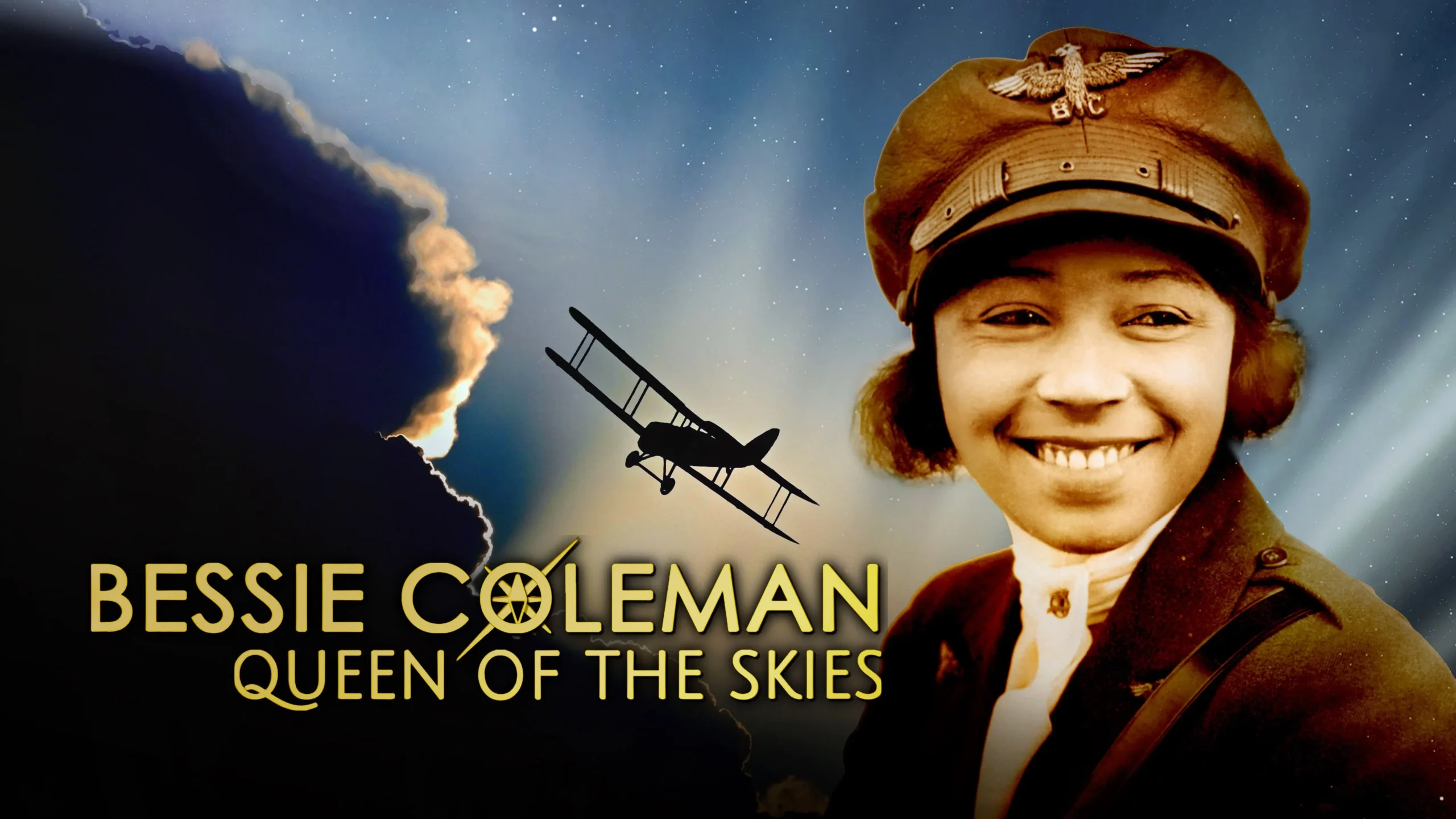
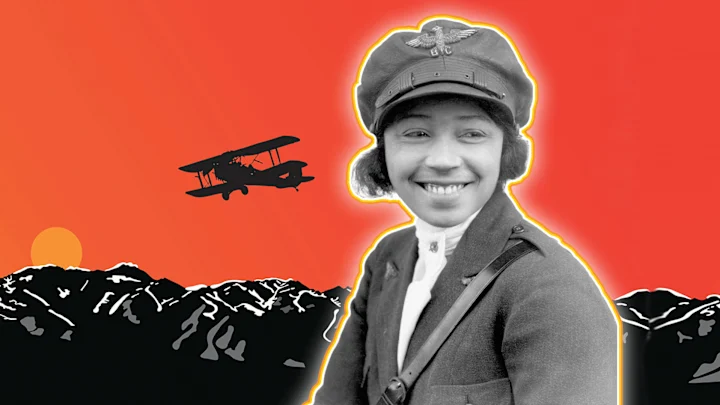
Pioneering aviator Bessie Coleman was the first Black woman to hold a pilot license. Coleman was born in Atlanta, Texas, on January 26, 1892, the 12th of 13 children, one county over from Paris, Texas, where Whites lynched at least nine Black men between 1890 and 1920. The family moved to the town of Waxahachie when she was a toddler. Her father, who was part Native American, left the family to return to the Indian Territory when Bessie was young. Money was tight, and education was hard to come by. Coleman picked cotton for months each year. She also worked as a washerwoman and watched over her younger sisters. Still, she yearned for more. Upon graduation from high school, she enrolled in Oklahoma Colored Agricultural and Normal University in 1910, in Langston, OK, but had to drop out because she didn’t have the money to pay for school.
In 1915, when Coleman turned 23 she headed to Chicago to live with two of her older brothers, hoping to make something of herself. She went to beauty school in the city and soon became a manicurist at the White Sox Barbershop. Pretty and quick-witted, Coleman preferred to work at barbershops, where she would charm male customers for generous tips and provide manicures to proud patrons in the front window. Apparently in early 1917 Bessie Coleman married Claude Glenn, but she never publicly acknowledged the marriage, and the two soon separated. She also befriended Robert Abbott, the founder and publisher of the Chicago Defender, the nation’s leading Black newspaper, who would become a valued mentor. A Defender news item in 1918 praised her as a “shining example” of a “progressive up-to-date young woman.”
One day, her older brother John, a World War I veteran, came into the barbershop and proclaimed that Black women would never be able to fly airplanes. Coleman took the insult as a challenge and soon began researching where she could pursue training. She found that no White pilots in the area were willing to teach her. Military training was also a non-starter, since the U.S. Army Air Service (a forerunner to the Air Force) did not accept women. Abbot assisted her in contacting schools abroad and even provided financial backing. She began studying French and saving money for a passage to Europe, where women pilots were not so disdained. On November 20, 1920, at the age of 28, Coleman embarked on the SS Imperator for France. She would train at the École d’Aviation des Frères Caudron at Le Crotoy, one of France’s most prestigious flight schools.
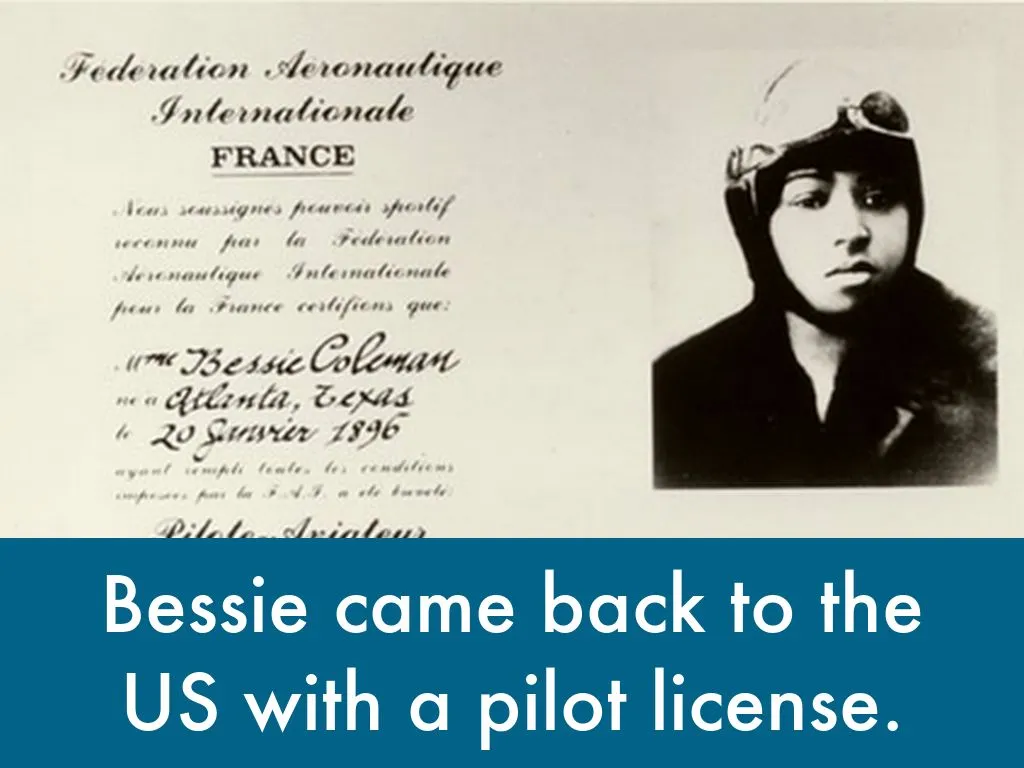
Coleman spent seven months learning loop-de-loops and banking turns in a French biplane used for training. During her training Coleman witnessed a fellow student die in a plane crash, which she described as a “terrible shock” to her nerves. But the accident didn’t deter her. She was determined to prove that she—and people who looked like her—could conquer this new frontier. “I thought it my duty to risk my life to learn aviating and to encourage flying among men and women of the Race,” she said. “I made up my mind to try; I tried and was successful.” After studying for ten months in France she was issued a license on June 15, 1921, by the Fédération Aéronautique Internationale, giving her the distinction of being the first Black person in the world to become a licensed pilot. The license granted her the ability to fly anywhere in the world.
Word of Coleman’s unusual achievement soon reached the States. She returned to the United States in 1921 a full-blown celebrity. A gaggle of reporters awaited her arrival in New York on the SS Manchuria. A series of profiles in the Chicago Defender soon followed. When she attended a popular Broadway musical in Manhattan, the cast presented Coleman with an engraved silver cup, and the multiracial (but segregated) audience gave her a standing ovation. Her goal, in addition to making flying her career, was to open a flying school for Black students, especially for women. Still, Coleman remained focused on her craft. In 1922 she made a second trip to Europe, gaining more aerial training from leading aircraft experts in Amsterdam and Berlin. During her studies she took lessons from the chief pilot for the Fokker Aircraft Company in Germany.
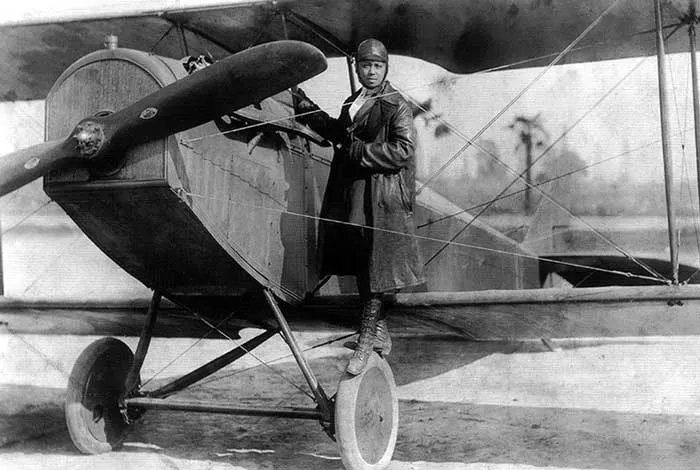
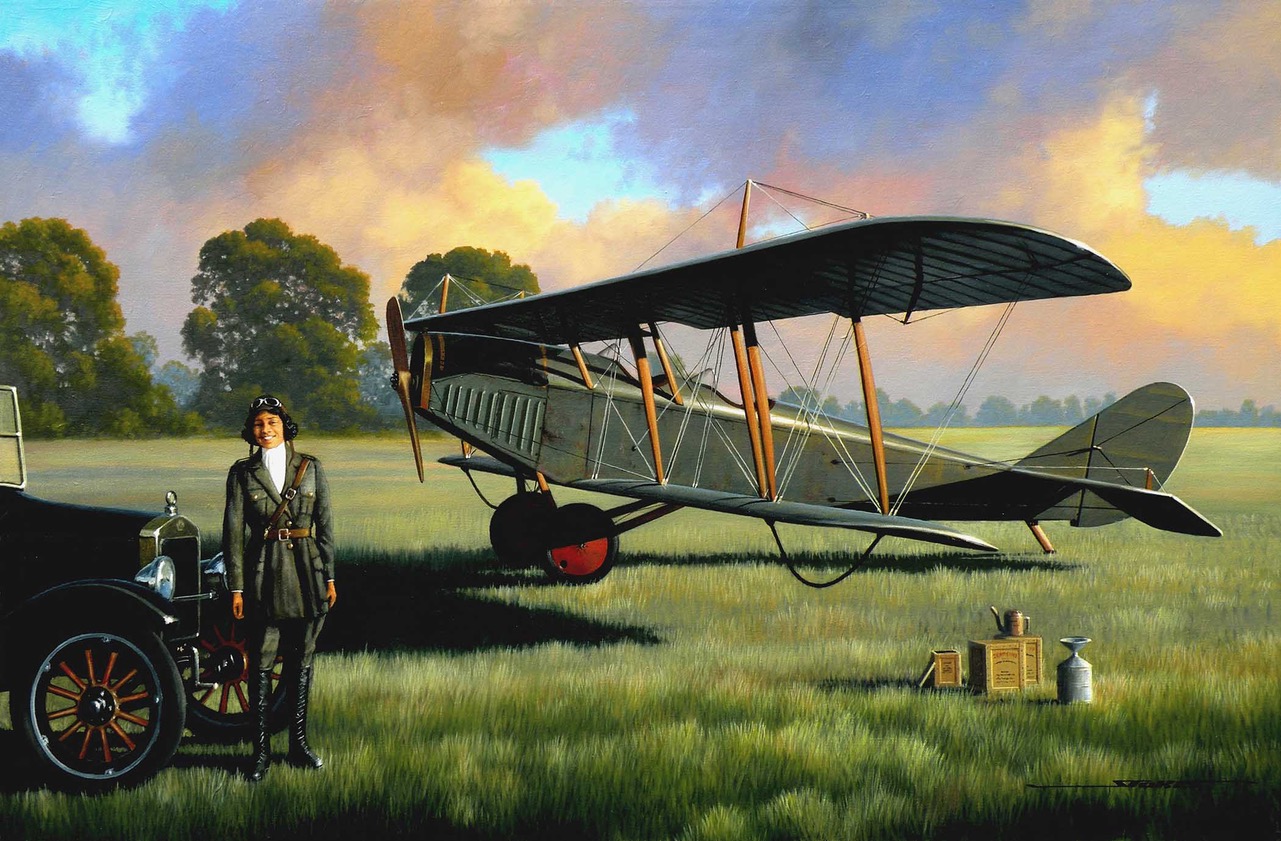
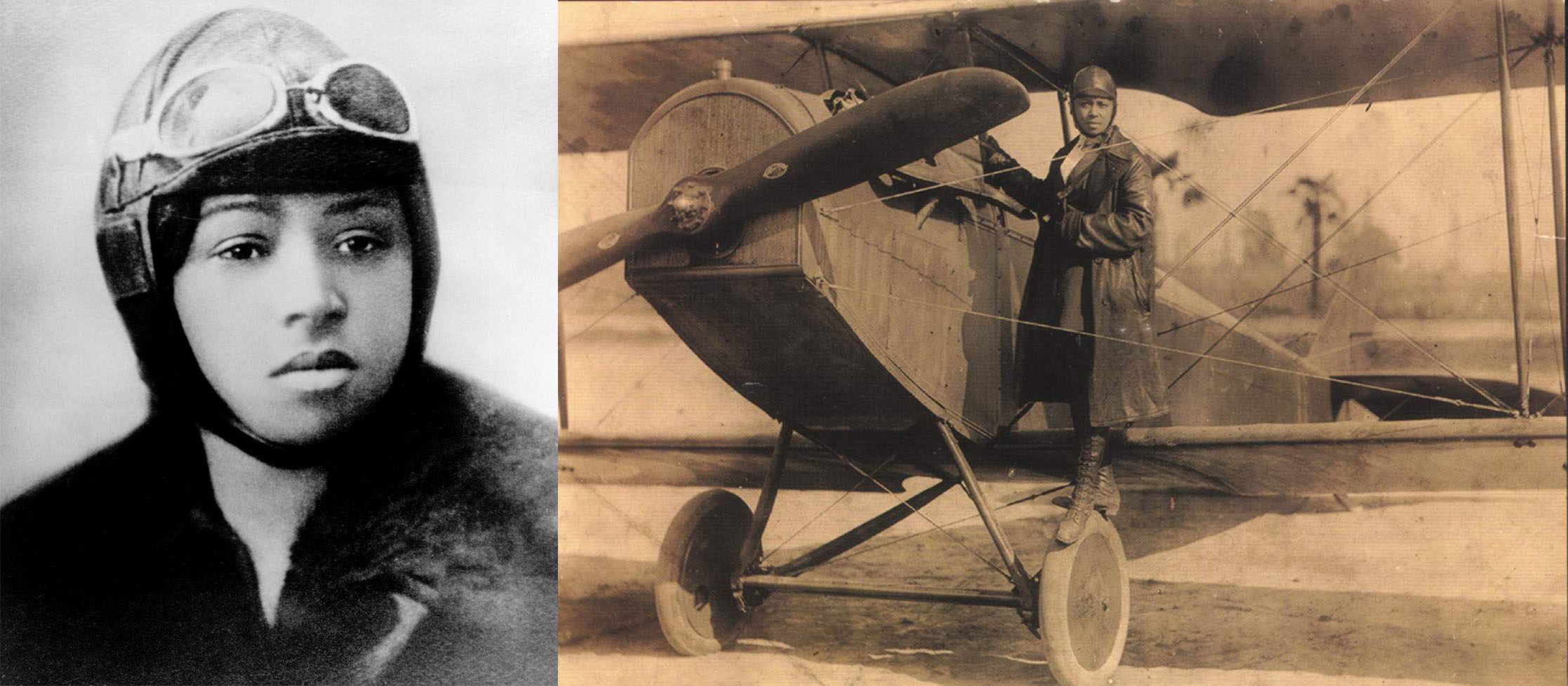
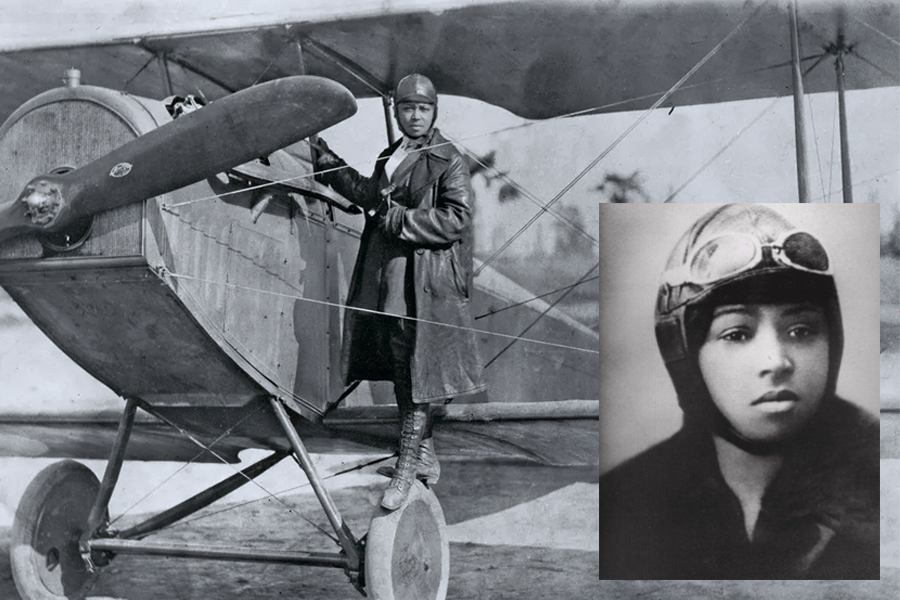
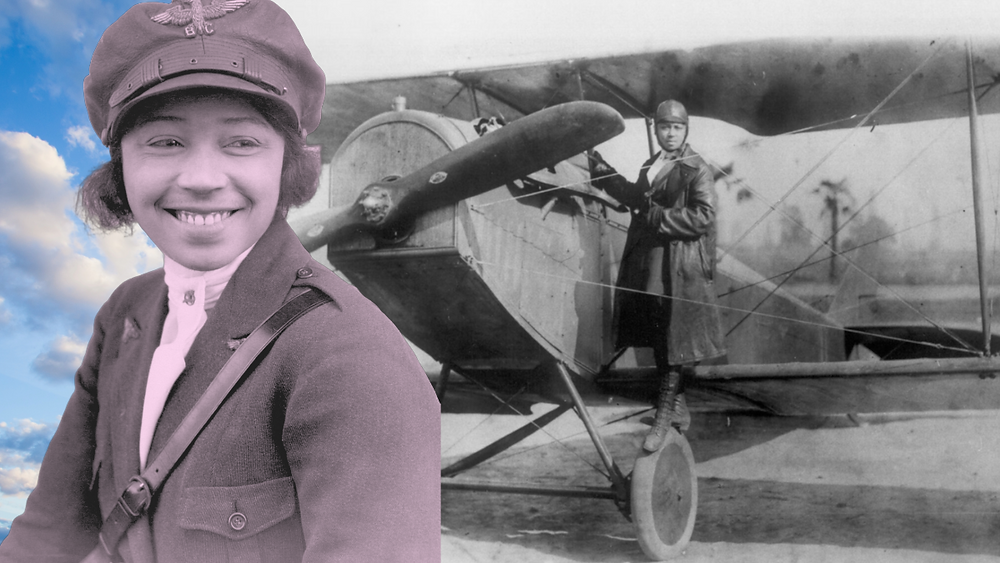
In the late summer of 1922, when she again returned to the States, she began conducting flying circuses in New York and Chicago and at various state fairs. Coleman's first American air show was at Curtiss Field, near Manhattan, on September 3, 1922. She followed the success of this show with exhibition flights all over the country, many of them in her native South. Thousands of fans attended the events, which often cost between a quarter and 75 cents per head and sometimes included a chance for attendees to go airborne themselves, with Coleman piloting. Her stylish clothes enhanced her showmanship. Her typical uniform was a custom leather coat, shiny boots and a leather helmet and goggles. Coleman often would be criticized by the press for her opportunistic nature and the flamboyant style she brought to her exhibition flying.
She refused to perform for Whites-only audiences, and while her shows often had segregated seating, she wouldn’t allow venues to force her Black fans to come through a separate entrance. A movie in which she was set to star fell apart when she got hold of the script and saw that she’d be portraying an ignorant, poverty-stricken Black woman. “No Uncle Tom stuff for me!” she told the film’s manager as she walked out on her contract. But even with the glamour of celebrity, making a living was a constant challenge. As a member of an ensemble in her early aerial shows, she rarely raked in major profits. When she finally purchased her own plane in 1923, she crashed it in California on the way to a performance. The accident put her in the hospital for three months with fractured ribs and a broken leg. From her hospital bed, she insisted her career wasn’t over.
After her injury, Bessie struggled to book gigs and cycled through a series of dubious managers. After a few years of touring the East and West coasts, she traveled back to Texas and established her headquarters in Houston in 1925. In Texas, things finally started to turn back around. She found fresh income by lecturing on her European exploits, which only boosted fans’ eagerness to see her take to the skies. Her first performance in Texas took place on June 19, 1925. Her daredevil stunts and hair-raising maneuvers earned her the nickname "Brave Bessie", and "Queen Bess". At one show she did a “wing walk,” stepping out onto the wing of the plane while airborne and leaping down into the crowd via parachute.
The June 19th festivities cemented her comeback. When Coleman returned to the ground, one reporter observed, “more than a dozen pairs of hands were outstretched to help her from the machine.” She was invited to meet with Miriam Ferguson, the state’s first woman governor, at the Texas governor’s mansion. Coleman was planning to transition away from daredevil stunts and toward speaking and building her flight school for African American pilots. During her trips she often gave lectures to schools and churches to encourage young Black men and women to enter aviation. At the heart of the 1920's, Bessie Coleman had become one of America's most popular stunt fliers.
Tragedy struck in April 1926, when Coleman and another pilot named William Wills were conducting an aerial survey of an airfield in Jacksonville, Florida, where Coleman was prepping her next big show sponsored by the Negro Welfare League. She had recently purchased a Curtiss JN-4 (Jenny) in Dallas. About twelve minutes into the flight, the plane did not pull out of a nosedive as planned. At about 3,500 feet, Wills lost control of the plane, and the aircraft flipped upside-down. Coleman fell out of her seat and plummeted to her death; Wills died when the plane crashed into a nearby farm. Although the charred condition of the wreckage prevented a full investigation, investigators later found that a wrench had jammed the plane’s control gears; rumors swirled that someone had sabotaged Coleman, but no evidence of foul play ever emerged.
Coleman’s death had the weight of a national tragedy, at least in Black America. More than 5,000 people attended her memorial service in Jacksonville. In Chicago, where Coleman had first pursued her dream of becoming a pilot, 10,000 mourners honored her coffin ahead of her funeral at Pilgrim Baptist Church. Congressman Oscar De Priest and civil rights activist Ida B. Wells-Barnett participated in the homegoing ceremonies. The Defender published several obituaries, mournful but proud. Coleman was just 34 when she died, never achieving her lifelong dream of training a new generation of Black pilots. But her legacy as an aviator would touch many lives. For a number of years starting in 1931, Black pilots from Chicago instituted an annual flying over her grave on Labor Day. Over the ensuing decades, Coleman’s legend quietly grew. When astronaut Mae Jemison became the first African American woman to travel to space, she carried a photograph of Coleman with her.