Archibald John Motley Jr was a highly original modernist and one of the great visual chroniclers of twentieth-century American life. He is considered one of the major contributors to the Harlem Renaissance, or the New Negro Movement. Unlike many other Harlem Renaissance artists, Archibald Motley, Jr., never lived in Harlem. He was born in New Orleans, Louisiana on October 7, 1891, but his family moved to Chicago when he was quite young. He lived and worked in a predominantly White neighborhood on Chicago’s Southwest side, a few miles from the city’s growing Black community known as “Bronzeville.” Motley spent the majority of his life in Chicago, where he was a contemporary of fellow Chicago artists Eldzier Cortor and Gus Nall.
In 1909 at the age of eighteen, after having spent a few years working for his father he graduated from Englewood Technical Prep Academy in Chicago. In the beginning of his career as an artist, Motley intended to solely pursue portrait painting. He decided that he would focus his art on Black subjects and themes, ultimately as an effort to relieve racial tensions. Motley graduated from Englewood High in 1914 and enrolled in the School of the Art Institute of Chicago. After graduating in 1918, however, Motley found difficulty in acquiring employment as an artist because of his race. Upon graduating from the Art Institute, Motley took odd jobs to support himself while he made art.
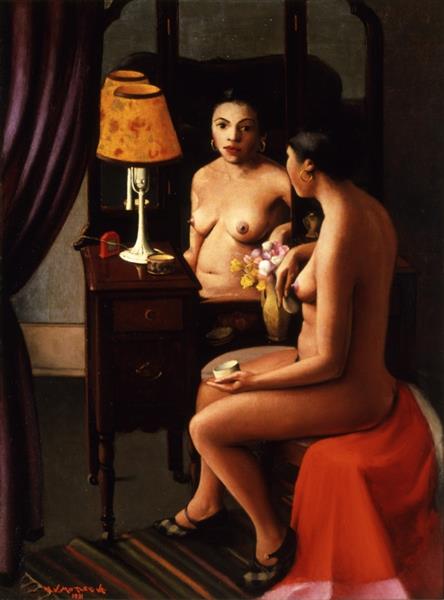
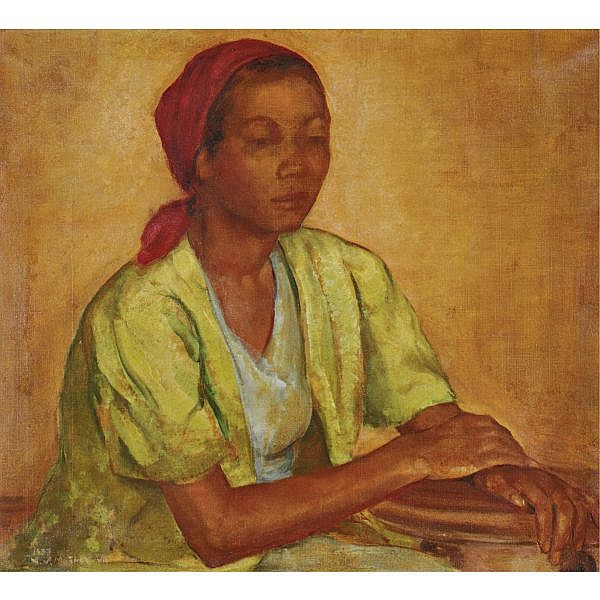
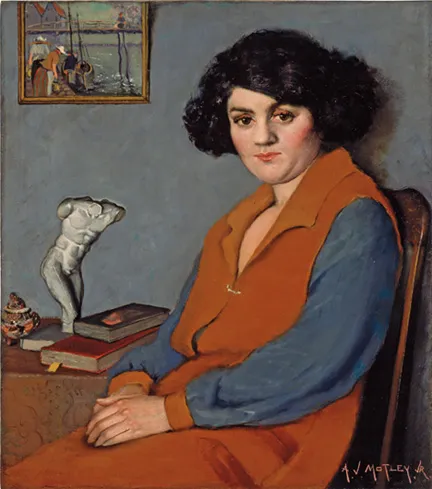
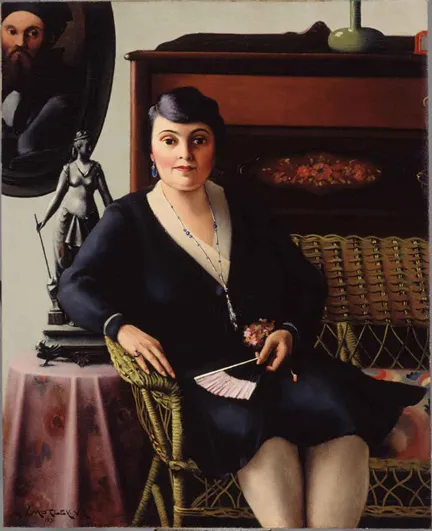
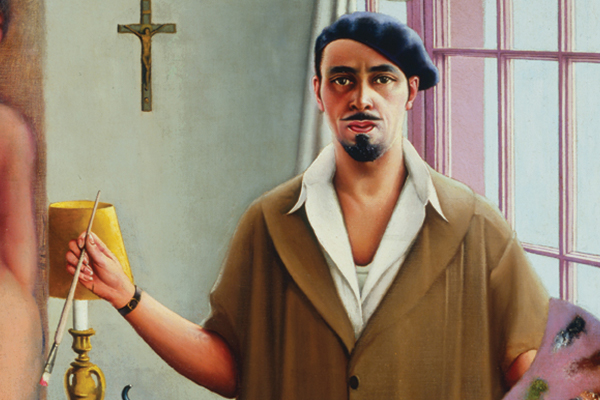
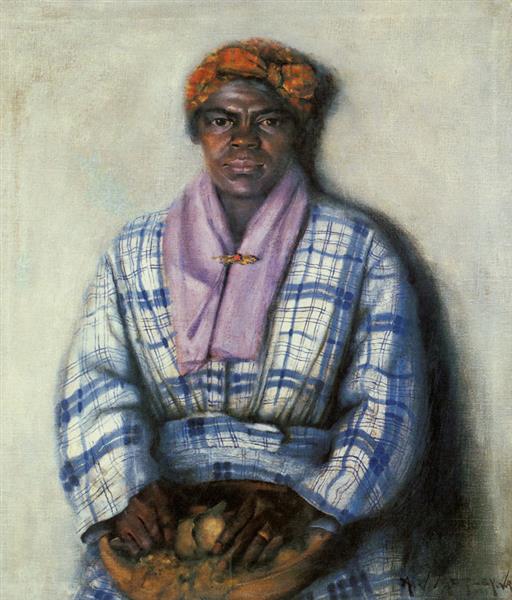
During the "Red Summer" of 1919, Chicago's south side race riots rendered his family housebound for over six days. In the midst of this heightened racial tension, Motley was very aware of the clear boundaries and consequences that came along with race. He understood that he had certain educational and socioeconomic privileges, and thus, he made it his goal to use these advantages to uplift the Black community. In the late 1910s and 1920s, as racial barriers thwarted his ambition to be a professional portraitist, Motley hired models and asked family members to pose for him. His sensitive, highly naturalistic portraits show his strong feeling for composition and color.
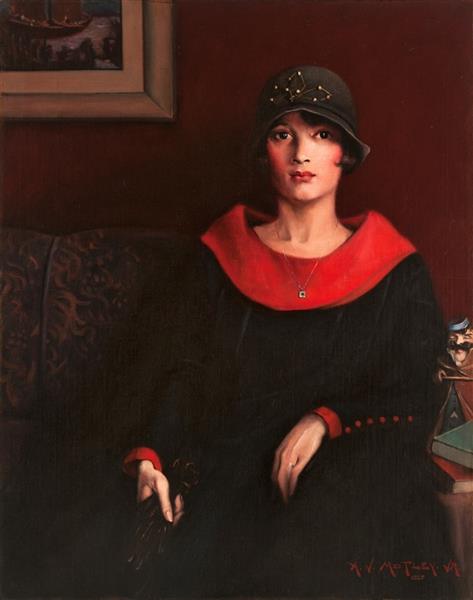
During the 1920s he began painting primarily portraits, and he produced some of his best-known works during that period, including "Woman Peeling Apples" (1924), a portrait of his grandmother called "Mending Socks" (1924), and "Old Snuff Dipper" (1928). However, there was an evident artistic shift that occurred particularly in the 1930s. His series of portraits of women of mixed descent bore the titles "The Mulatress with Figurine and Dutch Seascape" (1924), "The Octoroon Girl" (1925), and "The Quadroon" (1927), identifying, as American society did, what quantity of their blood was African.
In 1924, Motley married Edith Granzo, who helped support him financially during the rest of the decade. That support enabled the artist to focus completely on his work which had begun to receive recognition from various institutions. In 1928 Motley had a solo exhibition at the New Gallery in New York City, an important milestone in any artist’s career but particularly so for an African American artist in the early 20th century. That same year for his painting The Octoroon Girl (1925), he received the Harmon Foundation gold medal in fine arts, which included a $400 award. He had became the first African-American to have a one-man exhibit in New York City. Archibald sold twenty-two out of the twenty-six exhibited paintings–an impressive feat for an emerging Black artist.
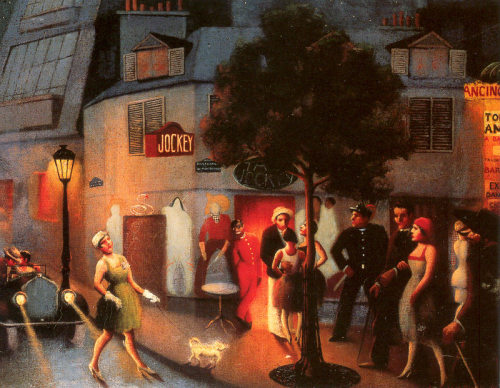
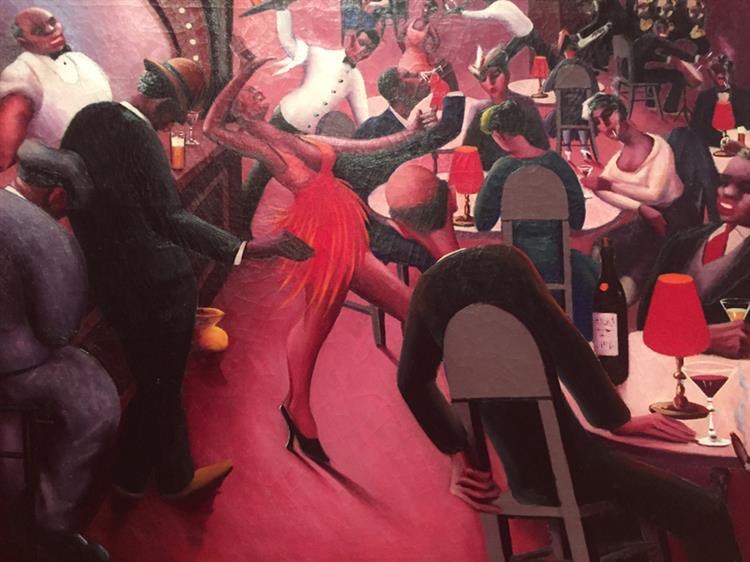
Motley would go on to become the first Black artist to have a portrait of a Black subject displayed at the Art Institute of Chicago. He had applied for a Guggenheim Fellowship and and won the fellowship in 1929. It allowed him and his wife to move to Paris for a year to work on his art. Motley portrayed the streets and cabarets of the French capital. In Blues, perhaps his best-known painting, he captured the vibrant and energetic mood of nightlife among Paris's African community. Motley studied in France for a year, and chose not to extend his fellowship another six months. While many contemporary artists looked back to Africa for inspiration, Motley was inspired by the great Renaissance masters available at the Louvre.
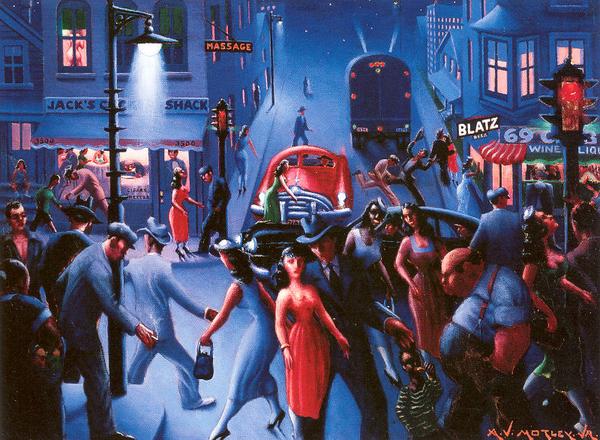
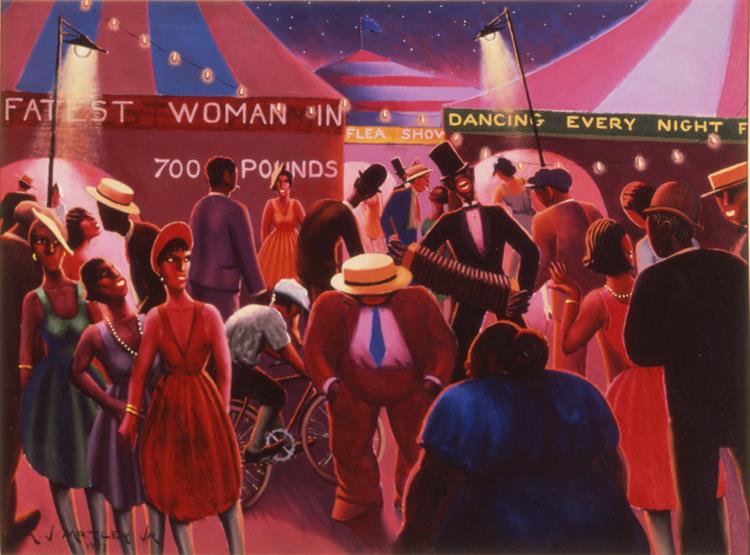
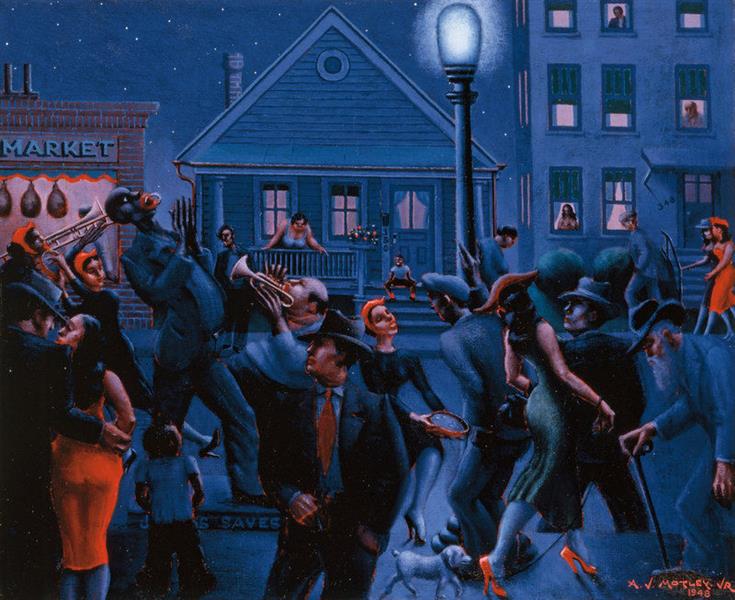
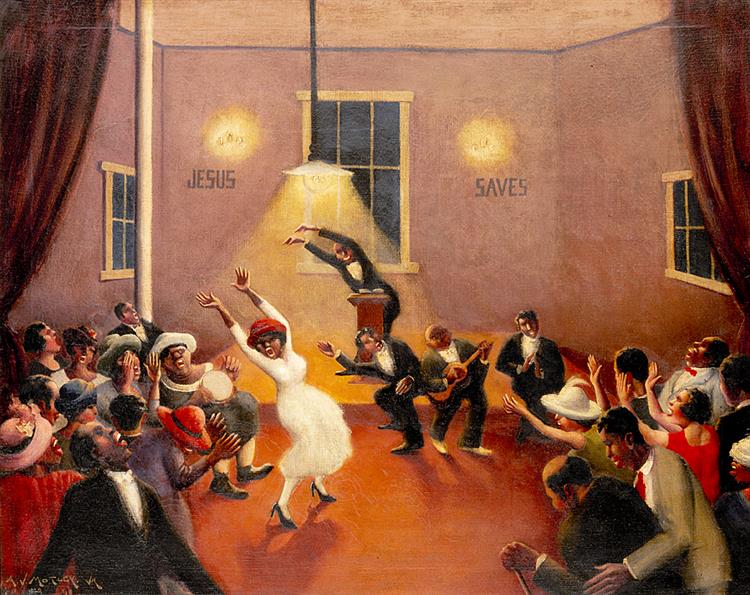
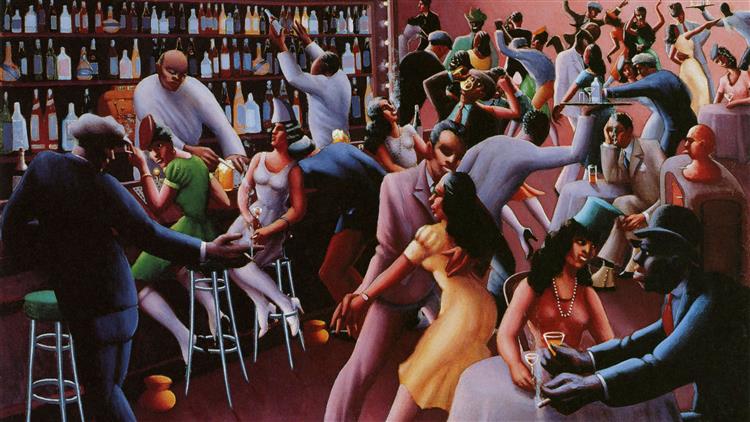
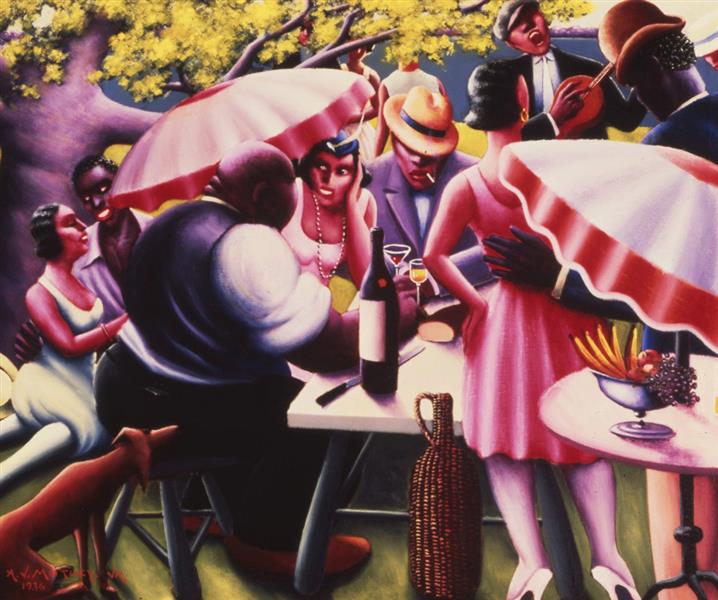
He found in the artwork there a formal sophistication and maturity that could give depth to his own work, particularly in the Dutch painters and the genre images of Delacroix, Hals, and Rembrandt. Upon Motley's return from Paris in 1930, he began teaching at Howard University in Washington, D.C. Beginning in 1935, during the Great Depression, Motley’s work was subsidized by the Works Progress Administration of the U.S. government. In the late 1930s Motley began frequenting the center of African American life in Chicago, the Bronzeville neighborhood on the South Side, also called the “Black Belt.” The bustling cultural life he found there inspired numerous multifigure paintings of lively jazz and cabaret nightclubs and dance halls.
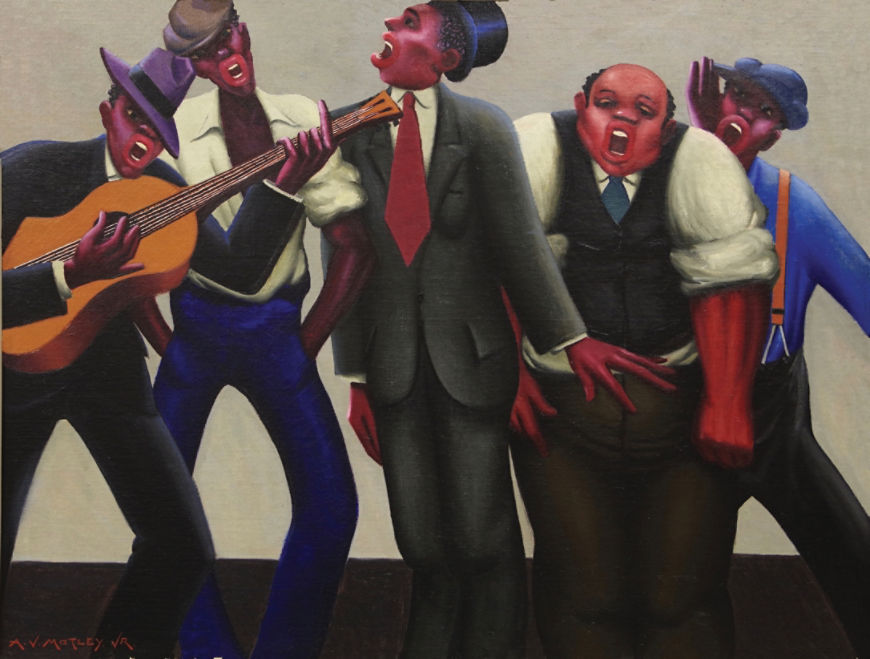
Notable works depicting Bronzeville from that period include Barbecue (1934) and Black Belt (1934). He was influenced by the syncopated rhythms, vibrant colors, and melodic harmonies of jazz. His paintings evoke the streets, bars, and outdoor gathering spots of Chicago's Bronzeville during its heyday of the 1920s and 1930s. He treated these subjects in a broad, simplified abstract style distinct from that of his portraits. Between 1938 and 1941, he joined numerous other Illinois artists as an employee of the federally sponsored arts projects of the Depression era.
After the death of his wife Edith in 1948, Motley put his artistic career on hold to support his family. During the 1950s he traveled to Mexico several times to visit his nephew. While in Mexico on one of those visits, Archibald eventually returned to making art. He created several paintings inspired by the Mexican people and landscape, such as Jose with Serape and Another Mexican Baby, both in 1953. At the end of his career, Motley experimented in several new directions. Today Motley is recognized as one of the founding figures of twentieth-century African-American art.