Alain LeRoy Locke
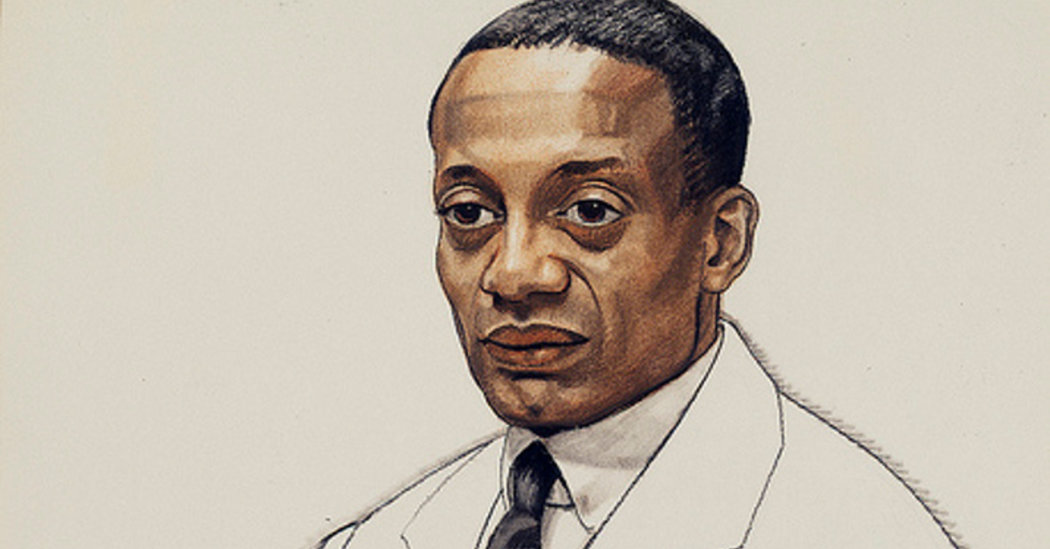
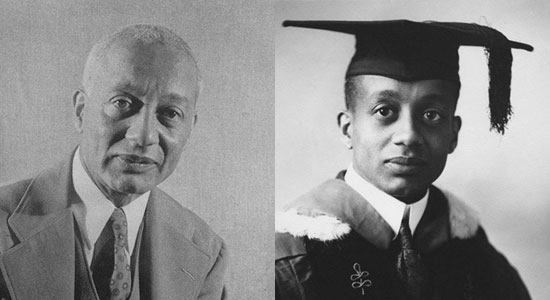
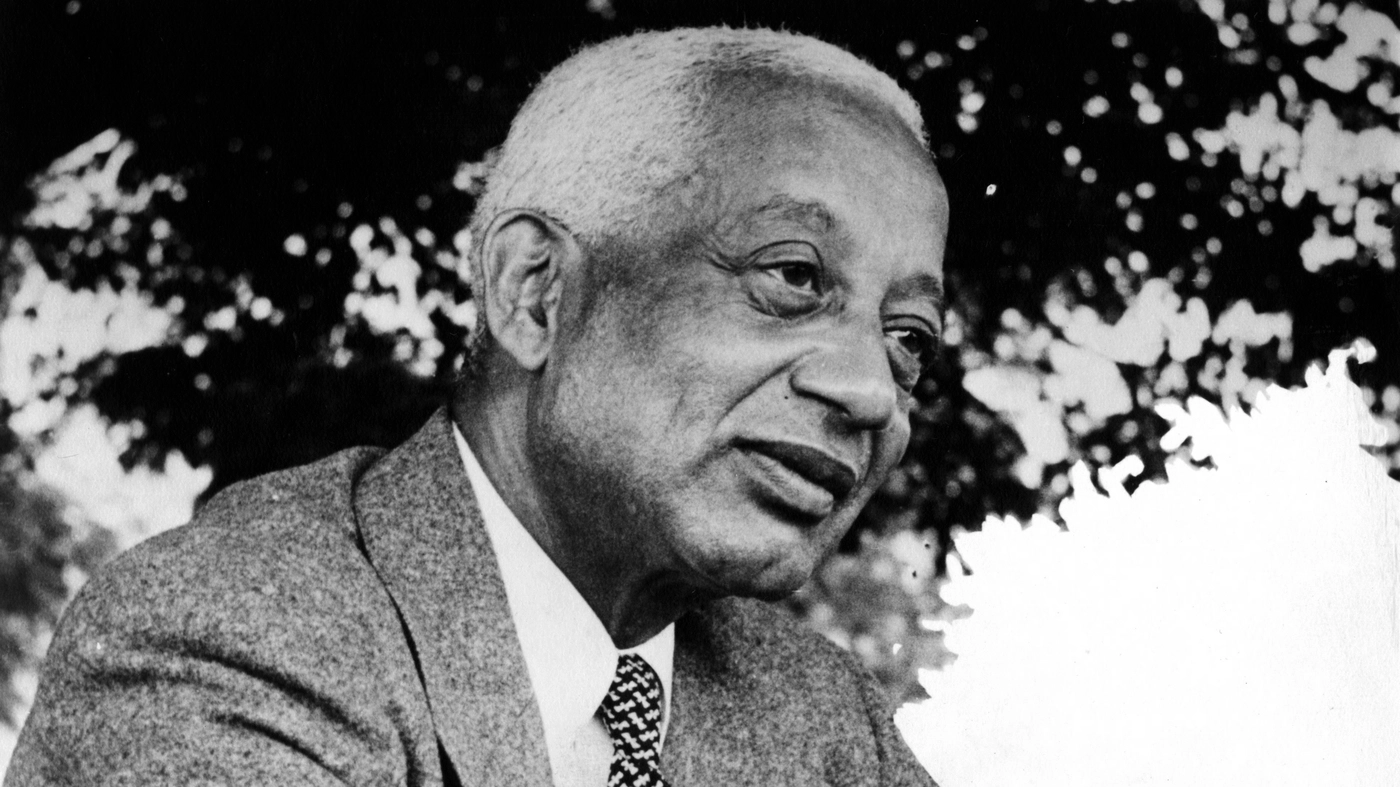
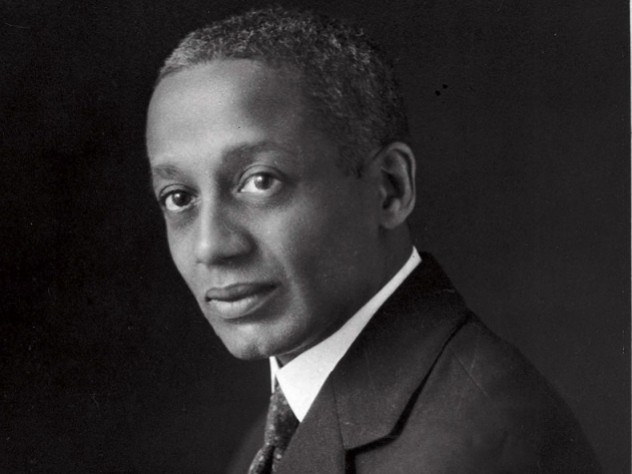
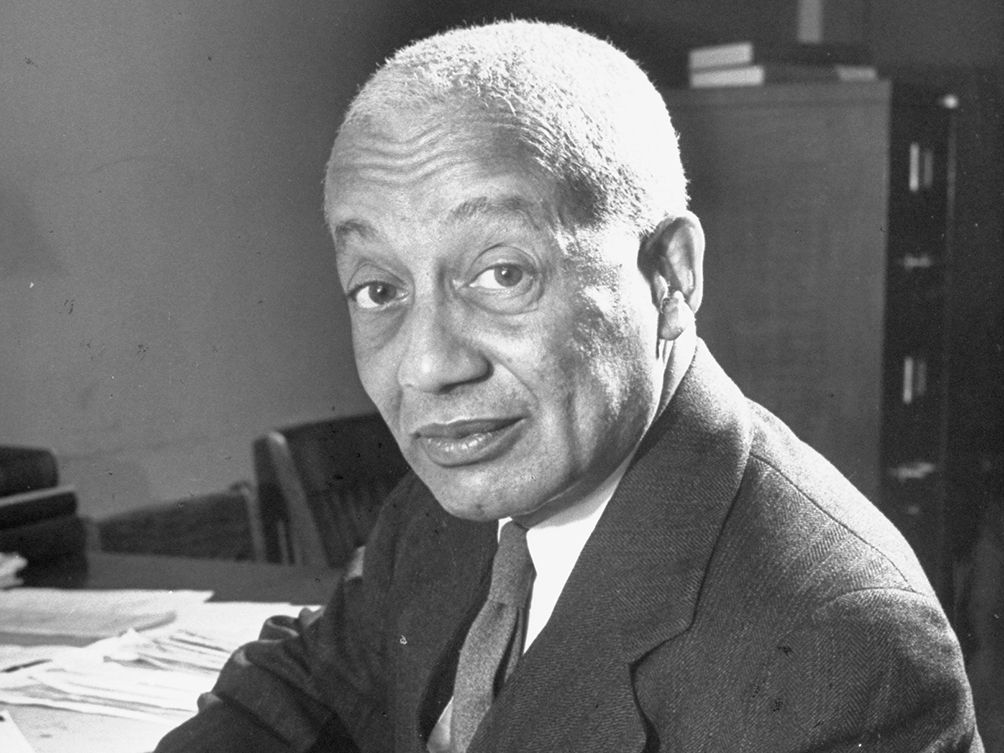
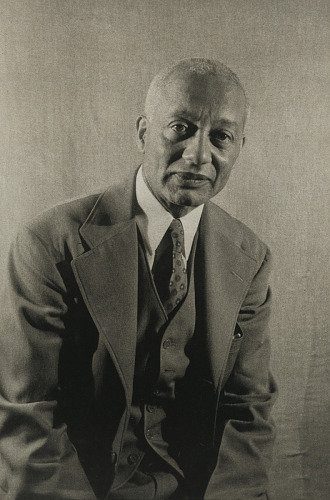
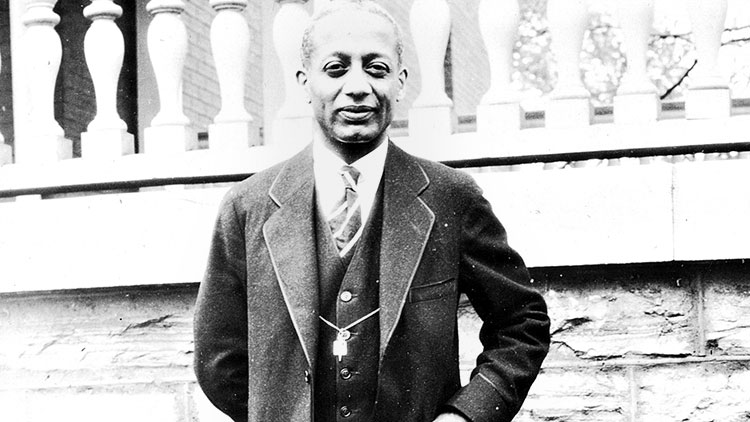
Philosopher, essayist, editor and educator, and one of the foremost promoters of Black culture and advocates, Alain LeRoy Locke is best remembered as the leader and chief interpreter of the Harlem Renaissance. Born in Philadelphia, Pennsylvania, on September 13, 1885, Locke was a studious child who loved to read. Alain was only six years old when his father died. His mother supported her son through teaching. Young Alain contracted rheumatic fever early in his childhood. The disease permanently damaged his heart and restricted his physical activities. In their place, he spent his time reading books and learning to play the piano and violin. At age 13, he was admitted to Central High School. He was called "Roy" as a boy, but at the age of 16, Locke chose to use the first name of "Alain". In 1902, Locke graduated from Central High School in Philadelphia, second in his 107th class.
Then he studied at the Philadelphia School of Pedagogy, a teacher’s college, where he graduated first in his class. Continuing to excel academically, he completed Harvard College's four-year course in three years. By 1907, Locke received his Bachelor of Arts degree magna cum laude, was elected to Phi Beta Kappa and earned the prestigious Bowdoin Prize for an English essay. It was a remarkable achievement for anyone, not to mention an African American during this highly segregated era. While many White American scholars were seeking to prove the intellectual inferiority of Blacks to justify racial segregation, Locke became a symbol of Black achievement and a powerful argument for offering African Americans equal opportunity at White educational institutions.
That year he was the first African American to be selected as a Rhodes Scholar to the University of Oxford. Upon arriving at Oxford, Locke experience extreme racism. He was denied admission to several colleges and some of his fellow Rhodes Scholars refused to live in the same college or attend events with him. He was known as a very intellectual, studious person with a warm personality, a good sense of humor, and an elegant way of dressing. After studying at Oxford he moved to Germany for advanced work in philosophy at the University of Berlin from 1910 to 1911. This time in Europe helped to intensify his interest in modern music, literature, art, and dance, along with his meeting many Africans and other nonwhites from around the world, created new perspectives for viewing American society and culture. Racial discrimination, he realized, was a global problem. He started writing about racism, African colonialism and the arts while studying in Europe. In September 1912, Locke returned to the United States and was faced with an unusual dilemma.
Given his academic training and intellectual experiences, he was more qualified than many White college professors. But being Black, he was unable to teach at a White college. To better familiarize himself with the everyday segregated world of Black America, he took a six-month tour of the southern states. Witnessing widespread prejudice and discrimination, he decided that only by setting high standards and demonstrating similar accomplishments as whites could blacks gain respect and equality. By teaching young Blacks at the college level and promoting African and African American culture, he would further this goal. That September, he joined the faculty of Howard University. He would later become chairman of its philosophy department. While at Howard, he became a member of Phi Beta Sigma fraternity, and was a prominent member of the Bahá’í Faith. He set about to establish Howard as the country’s preeminent African American university, a training ground for Black intellectuals, and a center for African American culture and research on racial problems.
The school’s board of trustees twice refused to approve his teaching courses on comparative race relations or Black studies, maintaining that the Howard was a nonracial institution. Locke returned to Harvard in 1916 to work on his doctoral dissertation, "The Problem of Classification in the Theory of Value". He received his PhD in philosophy from Harvard University in 1918. Upon attaining his degree, he stepped confidently into the Black intellectual vanguard, although he never gained the celebrity of the hetero-patriarchal “race men” of his time, like W. E. B. Du Bois and Marcus Garvey. Locke returned to Howard University as the chair of the department of philosophy. His return to Howard coincided with a power struggle between the predominantly African American student body and faculty, who desired a more Black-oriented institution, against the university’s White president and board of trustees.
At Howard, Locke became a leading proponent of the Black self-awareness movement that gained momentum in the 1920s. His beliefs only strengthened during a sabbatical to the Sudan and Egypt (where he was present for the reopening, King Tut’s tomb), reinforced his belief in the strong historic and cultural roots of Africa and Black civilization. Lecturing widely upon his return to the United States, Locke stressed the contribution of African Americans to Egypt’s multiracial society, the world’s first advanced civilization, a contribution not widely acknowledged by White scholars. In 1923, Locke was contributing essays on a range of subjects to the "Opportunity: Journal of Negro Life", the journal of the National Urban League. These gained him even wider prominence.
Along with several other professors, Locke was dismissed for three years from Howard University in the mid-1920s after advocating for pay equity between White and Black professors. He also disagreed with the university over its path—he lobbied that Black education had a responsibility to develop its own interests and aims. It was during this hiatus from teaching that Locke moved to New York. In March 1925, Locke was the guest editor and a writer of the periodical Survey Graphic, a national sociology magazine. He wrote a periodical titled “Harlem, Mecca of the New Negro,” a specially on Harlem and the Harlem Renaissance. This special issue was devoted entirely to race, and Locke turned it into a showpiece for the gifted young Black writers gathering in Harlem. Locke expanded it into a book shifting the focus from Harlem to overall Black cultural life that included poetry, fiction, essays, and artwork.
It quickly became a classic, which brought him national recognition. The magazine helped educate White readers about Harlem’s flourishing arts scene. Locke believed that Black people had a special ability to draw on their pasts to create personal works of art that conveyed universal themes. He became the preeminent authority on Black culture and promoted the works he found most worthy. Langston Hughes, Countee Cullen, Claude McKay, Jean Toomer, and Zora Neale Hurston are among the many Black creatives who were mentored, by Locke, along with then-student, actor Ossie Davis. It was an outstanding anthology of poems, essays, drawings, musical pieces, stories, and music by Black artists. The "New Negro" embodied Locke's definition of essential features of Black culture. It was intended as a work "by" rather than "about" Blacks, a text exuding pride, historical continuity, and a new spirit of self-respect.
The book was widely interpreted as a resounding rebuttal to the argument that African Americans were not capable of great literature and art. Publication of the book and its acclaim would place Locke at the forefront of "The New Negro Movement". In "The New Negro", Locke examined the famous Harlem Renaissance for the general reading public. It also became a platform where he attacked the legacy of European supremacy by pointing out the great achievements of Africans. It also displayed Locke’s ideas about how African American intellectual and cultural life was to proceed. Alain Leroy Locke differed sharply from those of other Harlem Renaissance leaders, including W.E.B. Du Bois (who was also a friend of Locke's). Locke agreed in essence with Du Bois’s theory of “the Talented Tenth”: that the progress and achievements of the most educated and skillful Blacks would help the entire race achieve equality.
Locke disagreed with Du Bois’s belief that all art must have a directly political or moral purpose. His view was that artistic expression would cause a cultural awakening among African Americans, and this awakening would help to improve self-image and a sense of community. While Du Bois believed that African American artists should aim in the social uplift their race, Locke argued that the artist's responsibility was primarily to himself or herself. He felt that the function of the artist is to express his own individuality, and in doing that to communicate something of universal human appeal. Locke also believed passionately that the richest sources for inspiration lay in the Black folk tradition—the treasure trove of stories and music that Blacks had produced during their several centuries in the United States. He felt that Black writers and artists could help their race most by producing a broad spectrum of high-quality art.
Locke also published pieces on the Harlem Renaissance, communicating the energy and potential of Harlem culture to a wide audience of both Black and White readers. More than promote, he also began collecting Black art. He quickly amassed one of the most important collections of African and contemporary Black art in the United States, and, over time, put together many significant exhibitions and catalogs of these works. After spending the 1927-1928 academic year as an exchange professor at Fisk University, Locke was reinstated to Howard in 1928, following the appointment of Mordecai W. Johnson, the university's first Black president. He became a close adviser of university president Johnson, urging him to implement a detailed African studies program to examine African anthropology, art, culture, ethnology, and history. He taught until his retirement in 1953. At Howard, he taught classes on race relations. Having studied African culture, he encouraged Black artists to look to Africa as well as Black history and subjects for identity and inspiration.
Locke stimulated and guided artistic activities and promoted the recognition and respect of African Americans by the total American community. The year after Locke returned to Howard, the American stock market crash and resulting economic decline that marked the beginning of the Great Depression. In the 1930s, he helped restructure the social science department and revamp the liberal-arts curriculum, opening both to deeper study of the Black experience. Locke also acted as secretary and editor of a new university program for adult education. As editor, he was in charge of a series of nine "Bronze Booklets" by Black scholars, two of which he wrote himself: "Negro Art: Past and Present" and "The Negro and His Music." He wrote two other well-received books during these years: "The Negro in America" (1933) and "Frederick Douglass: A Biography of Anti-Slavery".
In 1935 he helped organize the university's social sciences division, incorporating his department of philosophy within it. This new division then began to sponsor annual conferences on racial issues. That same year, Locke took a leading role in reforming Howard's liberal arts curriculum, integrating all the university's major academic disciplines into a general education program, similar to changes recently incorporated at Columbia and the University of Chicago. This new curriculum reflected his lifelong belief in the importance of critical analysis for determining values to guide human conduct and interrelationships. He continued to write critical essays and, until 1942, edited an annual review of Black literature for Opportunity.
Despite his many other interests, Locke continued his work in philosophy, actively promoting his theory of cultural pluralism. Locke lectured widely, contributed to a variety of publications, and in 1942, co-edited "When People Meet: A Study in Race and Culture Contacts", a landmark anthology in social studies. He also guest edited a special issue of Survey Graphics that linked America’s fight overseas to a plea for ending of segregation at home, referred to a the Double V campaign. As Alain LeRoy Locke’s influence and reputation spread, more opportunities and doors opened. By the end of World War II, he had been named to the editorial board of the Phi Beta Kappa society's "The American Scholar" and became the first Black person to preside over the American Association for Adult Education. When World War II ended, Locke was one of the best known African American scholars in the country.
A regular contributor to many magazines, journals, and reference works, he was a member of the editorial board of the American Scholar and, in 1945, the first African American elected president of the American Association for Adult Education, a predominantly White national organization. As American universities slowly began to desegregate in the North and West, Locke was suddenly in great demand as a visiting scholar. Beyond Howard, he received visiting academic appointments at the University of Wisconsin, the New School for Social Research in New York, and the City College of New York. Just before retiring, he helped Howard garner the first Phi Beta Kappa chapter ever awarded to a Black school. Locke has been called one of the most important philosophical thinkers of his day. In 1951 Locke received a grant from the Rockefeller Foundation to produce a work summarizing his studies of African American culture. His work on this project was interrupted when he was hospitalized for a heart ailment.
Locke moved to New York City in 1953 after his retirement from Howard University. In 1954, Howard University started its African Studies Program. It was not a new concept. Thirty years earlier Locke suggested the program to the Howard University administration. The next year, he suffered a fatal heart attack derived from his life-long heart problems. As a patron of the arts, Locke's legacy on African American history and culture would impact many generations to come. Locke was a distinguished scholar and educator and during his lifetime an important philosopher of race and culture. Principal among his contributions in these areas was the development of the notion of “ethnic race”. He became one of the world's foremost scholars in African studies.
Locke's conception of race as primarily a matter of social and cultural, rather than biological, heredity. Throughout his life, Locke promoted African-American artists, writers and musicians. Having studied African culture, he encouraged African-American artists to look to Africa as well as African American history and subjects for identity and inspiration. Alain Locke made a career of thinking about Black culture in innovative ways, and in the process, he became one of the most important Black intellectual leaders of the 20th century. His philosophical theories focused on race relations, cultural relativism, and pluralism, interests he extended to his promotion of writers and artists associated with the Harlem Renaissance. He lived a controversial life because his ideas of values, race, and culture often went against popular ideas. On March 19, 1968, the Rev. Dr. Martin Luther King Jr. proclaimed: “We’re going to let our children know that the only philosophers that lived were not Plato and Aristotle, but W.E.B. Du Bois and Alain Locke came through the universe.“